There’s nothing terribly sensational here to get excited about in the first two official stills from The Twilight Saga: Breaking Dawn – Part 2 , except for — ZOMG! — a certain pair of blood-red vampire eyes staring out at us amidst the smoldering looks and pale prettiness on display. And the almost surreal perfection of Robert Pattinson , Kristen Stewart , and Taylor Lautner ‘s complexions. Fun fact: Twilight ‘s vampires not only sparkle in the sunlight, they never have to blink. Hit the jump for images! For those who haven’t been caught up to speed on where we’re at by the time Breaking Dawn – Part 2 rolls around: The last time we saw Bella (Stewart) she was dying a horrible death while giving birth to her half-vampire spawn when her undead hubby, Edward (Pattinson) saved her by turning her into a vampire. Hence the blood-red eyes — the mark of a newborn vampire. Breaking Dawn – Part 2 brings the whole saga to a close as Vampire Bella embraces and adjusts to her newfound vampire-ness, which is a pretty awesome deal — super strength and speed, even more flawless skin, no need to worry about being ripped to shreds along with the pillows during sexytime… and, Twilight Fun Fact #2: Vampires don’t cry. The intricacies of Stephenie Meyer’s vampire physiology make it so that vampires pretty much have no use for tears. I’ll give her the benefit of the doubt and say that’s a metaphor for Bella’s newfound strength and self-confidence after spending so many movies unsure of herself and weeping over her star-crossed romance. The Twilight Saga: Breaking Dawn – Part 2 hits November 16.
In this week’s The Raven , John Cusack brings 19th century author Edgar Allan Poe to life in a mystery-thriller that envisions Poe locked in a battle of wills against his biggest fan: a serial killer murdering in the style of Poe’s most twisted stories. The piece is a paradox in itself, literary-minded meta-meditation masquerading as a pulpy mainstream entertainment; between genre beats and moments of Sherlock Holmesian heroism, Cusack and director James McTeigue leave provocations to be found or ignored, depending on your inclination. Whether or not audiences choose to dive in, Cusack just hopes they take the film on its own merits: “If you want a very different, quiet, Masterpiece Theater version of this, someone will go make that movie. But this is what we made. We made a dream about Poe.” To play the enigmatic and complex author, poet, and critic — who died of still-unknown causes at age 40, days after being found delirious on a park bench in Baltimore in 1849 — Cusack went deep into his life and work, attempting to understand the psyche of the man who loved (and tragically lost) the women in his life, bitterly fought his foes, yearned for recognition and celebrity, and yet carried such deep melancholy. “He was definitely an artist who was famous and wanted fame and wanted recognition,” Cusack mused. “He wanted to destroy the other poets of the day. He really was crazy, in an interesting way. He was such a lunatic!” And yet much of The Raven plays on the audience’s expectation, or perceived demand, for sensational storytelling — R-rated kills, gruesome murders, suspense. As Cusack explains, that is entirely the point. “[Poe] was satiric and fucked-up and pop-pulp, and he was also totally rarefied. So the movie is both of those things.” [Movieline’s chat begins with a round of My Favorite Scene in which Cusack picks Sidney Lumet ‘s The Verdict . More on that here .] I think when you watch [films] you just get affected by them and you let them wash over you. When you’re watching something good, you’re not thinking about anything, the story is taking you over. But then as you try to think back about the technique behind why it works, then you can dissect it a little bit. As I watched it I thought, you can’t do that anywhere but on a big screen. A novelist can’t do that because it’s an actor and [Paul] Newman’s whole life — all of the actor’s life and the character’s life, the character and the actor blur — a mature man at 65 with all the regrets, this conscience, these ethics. All into a moment, a cinematic moment. And in those three words you have everything. It’s just what washes over his face, what the camera sees. It’s beautiful. Have you always watched and read films so closely, so analytically? That’s what I do, and I’m a filmmaker too. I make films and, you know — the stuff that I’ve done that’s worked, I think it’s done by feel but then you look back on it… I don’t believe too much in technique, I think technique can sort of get in the way. I think there’s a way technique can liberate you by simplifying things. How conscious are you of the mechanics of a scene when you’re giving a performance, and how a director is going to bring the performance and the camera and the script together? It’s a collaboration and a conversation that you have with the director and the cameraman. It’s a conversation you have. Does that collaboration factor heavily into your decision to do a project or not? Yeah — I’ll say, too, if I’m working with James and we’re working on this and I see the shots he’s set up, and if I see something or a way to do something, I tell him. It’s very collaborative. If I say, “Are you going to be in here for this?” We’ll have a shorthand and he’ll go, “Yeah, yeah, yeah.” So you start to tell the same story together. James is a very sophisticated guy and a great filmmaker so by the end of the movie we were finishing each other’s sentences. But of course you have ideas. I saw the set, we were on a huge set, and I was talking with James — it was this opera hall and I said, “Wouldn’t it be cool if we had Poe standing up top, kind of like a raven looking down?” And James was like, “And maybe we’ll put him over here…” So you come up with these things that have that language. I think it’s still in the movie, the scene where he’s watching the ball. Yes, it is. In that shot he’s perched above watching his lady from afar and there’s such a sadness in his face. That was a shot we came up with on that day, me and James. What drew you to Poe to begin with, and then to this project? The film is obviously being sold to audiences as a thriller and a mystery but it’s also got a lot of interesting ideas about what it means to be an artist, to be be an artist who needs and wants an audience… I’m so happy you see all of that! It’s nice that you are picking up on that. Were those themes always there when the project first came to you, or did you help develop them along the way? James had the structure and the script was terrific, but I worked when I came onboard to try to elevate the language and texture of Poe’s vernacular and his idiom, because I thought it was so specific, and so textured and rich, that it has to really be at the very highest level. So there are some times in the script — because Poe was a mixture of esoteric, intellectual, rarefied air and pulp – Saturday afternoon thrillers, ‘I’m going to scare the audience and play on their fears, I’m going to give you a cliffhanger, I’m going to have a forensics detective thing where the killer is an orangutan with a razor – he was satiric and fucked-up and pop-pulp, and he was also totally rarefied. So the movie is both of those things, and creates that genre. It absolutely is. How do you think that will be received? So if you’re looking for The King’s Speech or some very serious, ultra-important movie, maybe you can make that movie. But that’s not really Poe! If you know Poe, that’s not really Poe; he was both. And so I thought the convention of Poe becoming a character in one of his own stories — the circular thing, the dream within the dream, very Poe-like — and within that we had the responsibility to make him as real as possible. Having now played him, what’s your take on Poe himself? He was famous, he was vain, he was at war with the world, he was theatrical. He went to West Point, he did all those things. He was an alcoholic, he loved his women, but I think he loved the women almost religiously, I don’t think it was sexual. He said, “I could not love except where death mingled his with beauty’s breath.” Just because of his past, with his mother and stepmother and his wife all dying in his arms, he was like an alchemist in that he was taking all of his misery and turning it into this great new art form. But he was totally fucked up by the deaths of all these women, and he revered them. I don’t think he played around. He wasn’t a playboy. But he loved the company of women and he loved to be revered by women. He hated men. I think he was only friends with a couple of men, and they were brief friendships. So he was definitely an artist who was famous and wanted fame and wanted recognition, he was competitive with other artists, he put them down — he said, “I don’t intend to put up with anything I can put down.” He wanted to destroy the other poets of the day. He really was crazy, in an interesting way. He was such a lunatic! A man of contradictions and extremes. A total paradox. And that, I think, is where you have to understand that about Poe to understand at least the premise of this movie. So if you want The King’s Speech , this isn’t that. This isn’t sort of measured and reverential. You’ve clearly done a lot of research into Poe’s life and work and complications, but do you feel like you related to him as well, personally, in any of those ways? Yes. I think Jung said that there’s a shadow archetype and in movies, or in art, we have these characters that become archetypical and I think it’s because they represent a part of our collective consciousness. So Poe, I think, was this pioneer into the underworld and into the subconscious and he housed all of our collective shame and fear and sorrow and expressed it so deeply that the image of him became sort of an archetype. So I think he was like a shadow figure, a figure now of your subconscious and your dreams. He’s like the raven – the raven was a harbinger to another world. Now Poe, for us, is sort of like the raven, sitting at the door of us, trying to say “You know, in your imagination and your subconscious is stuff that can frighten you and make you more in awe of anything you can imagine.” He was straddling both worlds artistically. So I think if you have a character like that, it allows you to tap into that in you. I can go use the Poe character to tap into my crazy stuff, you know — good and bad. So I don’t know if you feel you relate to Poe personally as much as you can find him in you. The Raven makes a number of amusing jabs at critics — Poe’s literary critics and rivals and enemies, at least one of whom meets a poetic end. Is the intent behind that to send a message to film critics reviewing this film about the film itself or how it might be perceived? My attitude is around what we’ve just been talking about, which is if you don’t like the conceit of the movie… review the movie that we shot. If you want a different version of a Poe movie, if you want a very different, quiet, Masterpiece Theater version of this, someone will go make that movie. But this is what we made. We made a dream about Poe. Our dream about Poe. Lou Reed made his album , and it was his dream about Poe. So this is me and McTeigue. But I think if they really know his writing, they’re going to really respect that we’ve done our homework. The Raven is in theaters Friday. John Cusack is on Twitter! Check him out here . Follow Jen Yamato on Twitter . Follow Movieline on Twitter .
Can a person really be charming enough to get away with murder? Especially if the victim is a super-beeyotch to begin with? That’s the question asked, and almost answered, by Richard Linklater’s Bernie , in which Jack Black plays a Carthage, Texas, assistant funeral-home director who’s so beloved in his community that his fellow citizens are almost willing to look the other way when he breaks the sixth commandment. Bernie , written by Linklater and Skip Hollandsworth, was drawn from a Texas Monthly article about the real-life Bernie Tiede, now serving a prison sentence for the 1996 murder of 81-year-old widow Marjorie Nugent. Tiede shot Nugent in the back four times with a rifle and then proceeded to stuff her body into a freezer in her own home. Nugent was missing for the better part of the year before her body was discovered; Tiede defended himself by claiming that she’d abused him emotionally, driving him to the breaking point. It was a stroke of genius, at least a miniature one, to cast Black in this role – he’s made to play the affable teddy bear who could snap at any moment. Linklater structures the movie so that almost before we even see Bernie, we know just what kind of a guy the townspeople think he is. In the opening sequence we see him giving a glossy-ghoulish presentation on how to prepare corpses for viewing: “Don’t overcosmetize!” he warns, and Linklater follows up with a series of on-camera testimonials from the locals, giving witness to the fact that before he snapped, Bernie took just as much care with the living as he did with the dead. (One of these townspeople is played, with sharp, wicked glee, by Matthew McConaughey’s mother, Kay .) Bernie keeps track of which people’s kids had gone off to which colleges; he sings boisterously with the church choir; and in the line of duty he pays special attention to the bereaved, particularly fragile widows, though he doesn’t seem to be particularly interested in their money. At least, not until he buries the husband of the cantankerous Marjorie Nugent (Shirley MacLaine), who habitually terrorizes the town with her rudeness and self-involvement. She also happens to be loaded, and somehow she takes a shine to Bernie, even though she appears to hate everyone else. Before long, the two are traveling first-class to New York and Paris, seemingly thrilled with each other’s company – until Marjorie begins wrapping Bernie around her little finger, demanding countless numbers of errands and household chores. Her harping takes the spring out of Bernie’s step, plus it interrupt his important community activities, like directing and starring in a production of The Music Man . Local sheriff Danny Buck Davidson, played by a breezily laid-back Matthew McConnaughey, makes it clear he never bought any of Bernie’s shtick, and as far as he’s concerned, it doesn’t matter how much everyone hated Marjorie Nugent – murder is murder, no two ways about it. But Linklater and Black keep us squarely on the other side, with the townspeople, who seem to believe Bernie has committed a selfless community service. MacLaine nudges us in that direction, too: Her performance isn’t big – it’s small and pinched and calculating, though it’s also rather unformed. Marjorie Nugent is a caricature, which is probably all she needs to be, particularly when all eyes are supposed to be trained on Bernie. As Black plays him, he’s a roly-poly PSA for the joys of small-town life, as happy to raise his eyes to heaven during a church service as he is to march, skip and bunny-hop his way through a community-theater production. (Bernie’s possible homosexuality is strongly hinted at, though the movie addresses the issue with a noncommittal shrug.) Linklater allows Bernie’s story to unfold in a way that’s a little arch but mostly toothless. At times he comes close to talking down to his small-town subjects, but somehow he always pulls back just in time: Linklater, a Texan himself, is earnest enough not to want to score jokes off people, and he seems to genuinely understand the allure of small-town life. The movie is mild fun, though its persistent self-consciousness keeps tugging us away from some of the pleasures it might offer; Linklater is perhaps a little too taken with the quaint, quirky elements of this story, and its folksiness becomes too much of a cartoon. As Bernie, Black is both likable and unreadable, as we can imagine the real Bernie might be. This isn’t a deep performance – everything slides off Bernie’s surface, so we never really know what he’s thinking. That makes sense for a guy who kills a woman and then goes about his business for months while the body of the deceased lies in the deep freeze. It’s a supreme example of comic cold-bloodedness, and yet somehow the whole enterprise should be funnier, darker and more pointed. Bernie, like its lead character, has a degree of diffuse, aw-shucks charm, but it’s also maddeningly opaque. Why does Bernie behave the way he does? We never really know, but even worse, we don’t have much reason to care. Follow Stephanie Zacharek on Twitter . Follow Movieline on Twitter .
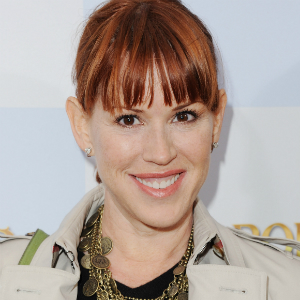
“I’m here to answer all of your questions about Rampart .” With that sly nod to Woody Harrelson ‘s infamous fiasco of an internet Q&A, Molly Ringwald arguably won Reddit’s Ask Me Anything (AMA) for all of eternity — and that was even before she named Nights of Cabiria as her all-time favorite movie, answered Redditor memes with other memes, quoted American Psycho , and told tales about John Hughes and The Breakfast Club and applying lipstick with her boobs. For example, on the subject of her famed lipstick trick: Regarding lipstick, it’s all movie magic. There is a story behind that: John Hughes wrote it but never actually thought about me having to do it. He kept putting it off until the end of filming that long scene. I kept bringing it up, like, “Hey. We gotta figure this out. Are we going to have robotic breasts?” Finally we decided it was better to see less and let everyone assume that I was particularly skilled. Let the record show that Molly Ringwald did not, in fact have robo-boobs! (That should make some of us ladies who still have to apply by hand a little bit better.) Elsewhere, she was asked to clear up the rumor that Breakfast Club co-star Judd Nelson was almost fired from the shoot for giving her a hard time. This is true. I think Judd was doing the method actor thing during rehearsals. He was wearing Bender’s clothes and trying to annoy me. I was fine but John Hughes was very protective of me. We ended up having a powwow, led by Ally. I remember her telling me, “We have to get him focused. Like a laser!” I think a bunch of us including myself called John and asked him to reconsider. I am thankful he did. Ringwald, who can currently be seen on ABC Family’s The Secret Life of the American Teenager , joined Twitter days ago and set up the Reddit AMA after admitting to being a longtime lurker and Reddit fan. Head here for her full Reddit AMA, which will only ignite your totally ’80s Molly Ringwald obsession/crush anew. [ Reddit via @ifctv]
The Cannes jury is now complete. The Descendants director Alexander Payne and actor Ewan McGregor have joined the festival’s competition jury, which will judge the 65th annual event’s 22 films in competition . They join previously announced jury president Italian director Nanni Moretti ( We Have a Pope ) who will announce the Cannes winners on stage at the closing ceremonies on May 27th. And it’s not just filmmakers and actors taking on this year’s festival competition in the hallowed maze that is the Palais des Festivals in Cannes. French designer Jean Paul Gaultier – forever famous for designing Madonna’s external lingerie way back in the Blonde Ambition days – is on the jury. Joining him are Haitian director Raoul Peck ( Moloch Tropical ), actor Diane Kruger ( The Host ), actor Emmanuelle Devos ( In the Beginning ), British writer-director Andrea Arnold ( Fish Tank ) and Palestinian actress Hiam Abbass ( Miral ).
From the people who brought you 16 & Pregnant , Date My Mom , A Shot at Love With Tila Tequila and Jersey Shore where once you found proud, pioneering music videos roaming free on the TV plains: Five new categories for this year’s MTV Movie Awards! Including “Best Music”! This should turn out great . And there’s more . From the official MTV press release just over the transom, which doesn’t even read like English after a while: “The Movie Awards will be a re-imagined celebration of the most popular films and performances from the past year,” said Stephen Friedman, President of MTV. “This year, we’ve overhauled categories and added a Breakthrough Performance award that will be chosen by some of the best directors in the world. We’re also making music a more central experience to the overall show creative, and are thrilled to announce fun. – a band that has already imprinted a new anthem on a generation – as our first musical moment.” Once again, MTV fans will hold the “Power of the Popcorn” awards in their hands. This year’s brand new “Best Music” category will allow fans to vote for a specific movie moment when the perfect song played during the perfect scene. In returning category favorites like “Movie of the Year,” will the final installment of Harry Potter bring home the crown or will the record-shattering The Hunger Games shake things up? Last year, Emma Stone took home the prize for “Best Comedic Performance” but could she receive a nomination for “Best Female Performance” for her role in The Help ? One thing is for certain, it’s Hollywood’s wildest awards ceremony and anything can happen. Categories for the “2012 MTV Movie Awards” include: “Movie of the Year” “Best Female Performance” “Best Male Performance” “Breakthrough Performance” “Best Comedic Performance” “Best Music”* “Best On-Screen Transformation”* “Best Gut-Wrenching Performance”* “Best Kiss” “Best Fight” “Best Cast”* “Best On-Screen Dirt Bag”* * New category The “2012 MTV Movie Awards” nominees will be elected by a special voting Academy, including members of the MTV audience. In addition, the winner of “Breakthrough Performance” will be decided on solely by a special Academy of Directors who will lend their expertise for spotting and developing new talent. What could go wrong, etc. etc. Find out June 3! [ MTV ]
Sundance ’11 darling Brit Marling is now a year and change removed from the stunning festival debut that made her one to watch thanks to two films she co-wrote, produced, and starred in: The moody sci-fi drama Another Earth , released last summer, and the mesmerizing Sound of My Voice . The latter film finally hits theaters this week, giving audiences a chance to see a different side of Marling: Earthy, enigmatic, dangerously charismatic, and — as the leader of a cult amassing members in a basement in the Valley — possibly from the future. Movieline spoke with Marling last year about Sound of My Voice , in which a would-be documentarian and his girlfriend (Christopher Denham and Nicole Vicius) find themselves falling deeper under the spell of Marling’s Maggie as she prepares her followers for an unknown event. As with Another Earth , which was co-written and directed by Mike Cahill , Marling penned the script for Sound of My Voice with director Zal Batmanglij (who is currently at work on his SOMV follow-up The East , a drama centered around an anarchist group starring Ellen Page , Alexander Skarsgard , Julia Ormond , Patricia Clarkson , and Marling). Marling herself has since filmed the dramatic thriller Arbitrage with Richard Gere and Susan Sarandon and will be seen in Robert Redford ‘s The Company You Keep . In Movieline’s chat she discusses the borderline illegal guerrilla filmmaking tricks that made Sound of My Voice possible, her thoughts on taking professional risks, her dream director list, and how to avoid the “morally-corrupt swamp” that is Hollywood. (A longer version of this interview was previously published here .) Sundance was a huge coming out event for you. How did you process the sudden attention of being named a Sundance darling in your first major festival appearance? To be perfectly honest, it’s a little weird. It’s weird because, I guess, you’re working for so long in a vacuum — writing this work, making this work — and you’re doing it really on your own. It hasn’t met up with the world, and you’re totally sustained by just making the work. So it’s a completely different experience for it to enter the world and to get responses and reactions. And of course, the Sundance experience was amazing. I’m incredibly moved by the programmers of that festival — that they would search out these films that are so small, handmade, truly outside of the system of filmmaking, and that they would bring these movies that were made in little caves in Silverlake and take them and bring them into the light. It’s pretty amazing. Not only that, you also got to bring two films to Sundance with two of your close collaborators, Mike Cahill and Zal Batmanglij. You were all three roommates once upon a time, right? For a long time in L.A. the three of us lived together and we were kind of each others’ family in L.A., in a way. We’d all left family on the East Coast and come out to the West Coast, and L.A. can be a very isolating city. Doing this kind of work is really extreme work. I think we were really lucky that we had each other and could encourage each other, because there was quite a bit of time before we were able to make these movies. And of course you’re filled with doubt; can you really do this? So it’s nice to have each other for encouragement, to keep going. Otherwise I’m not sure. Maybe I would have ended up doing something else. What would you be doing instead? When I think about what I would be doing if I wasn’t an actor… maybe an environmental activist? An eco-terrorist of some kind? I don’t know. [Laughs] Take us back to your days at Georgetown. How did you meet Zal and Mike in the first place? I was a freshman and they were seniors and there was a film festival at Georgetown, which is really odd because everyone there is going to work on Capitol Hill or at an investment bank. But they had a festival, and it was the first year they’d had one, and the films were all horrible. I mean, the worst student filmmaking ever. And then there was this film that came on at the end, and it was colorful and poetic and it was digital filmmaking like you’d never seen before. It had all this breadth to it, really beautiful imagery, the rhythm of it, an interesting story. I remember it won first place and I just popped up and led the standing ovation for the film. The filmmakers came onstage to get the award and it was Mike and Zal, and I saw them and I was like, “Okay. I have to be friends with these people.” And the three of us started making movies together. That was an amazing time; I don’t think we thought we would ever end up making movies that way later. We came out to L.A. and assumed we’d learn to make films properly, whatever that means, but because of the recession, because of the way filmmaking and technology has changed, we pretty much ended up making movies in the same sort of completely illegal guerrilla fashion that we’d been using to do stuff at Georgetown. You folks still talk, and openly so, about the semi-legit hustle of getting Sound of My Voice made… Like returning our Mac every 14 days! It was actually really hard; we would pull up, I would put on the emergency lights and Zal would run in with this heavy computer. Tamara Meem, the editor, had to reinstall the Final Cut software every time. It was an intense way to go about it but it was also the only way we could afford to do it. [Laughs] Yeah, we were pulling a lot of tricks like that. You have to think that somewhere out there, aspiring filmmakers are hearing these stories and thinking to themselves, “Brilliant idea!” Yeah, I think one of the things we realized is that sometimes in life when you’re doing your craft, you’re often waiting for permission — for someone to give you money, for someone to read a script and say yes, you can go do it. And I think at some point I was like, “I don’t want to wait for permission anymore.” Let’s just do this, let’s make these movies for whatever money we can raise, we’ll figure it out. And it’s kind of cool because there ends up being as much creativity in the execution of figuring out how to make a movie with limited resources as there is in the screenwriting or in the acting. You multi-task with your films, acting, producing, writing — but you studied a very different field. At what point did you decide to go full-force into filmmaking? I had done plays and studied acting a bit in high school, and I think when I was graduating a lot of my friends were going to theater school. I really wanted to act, but I felt like I knew a lot about plays, about Shakespeare and Chekhov and plays, but not enough about being a human being in the world. I didn’t understand how you could be an actor if you didn’t also study philosophy and study political science, astronomy. And also just go out and live life and have experiences. These are all somehow part of being able to bring something to Chekhov, or bring something to any play or any story. Or just merely having something to say. Yes! And at the time I decided that I was going to get a broader liberal arts education and also just go live some life, because the drama world felt small and a bit self-referential. Not a lot from the outside was coming in. I ended up studying economics — I don’t know exactly how all of that happened — and I ended up working in an investment bank for a while, then I think at some point I just decided that I didn’t want to be afraid. I think when you decide you’re going to go act in L.A. it’s just an overwhelming wave of fears: I’ll never make any money, I won’t survive, I’ll waste all this time in my life that I could have used pursuing another direction, I’ll fall behind… the feelings of illegitimacy, of struggling for so long and not getting to do the work you want to do. Everybody’s writing you off as another young girl who’s gone off to L.A. It’s a huge risk. And I guess I finally came to a point when I was working at this bank and studying econ when it didn’t feel like a risk anymore because I was so not living the life I wanted to live. And that felt like its own kind of death. So at some point you realize that your life is not just going to start one day in the future, that you’re living it. You are nothing more than the sum of the small choices you make on a daily basis, so if you choose to study economics or you choose to be a banker, this is going to be who you are. It gave me more courage to go be an actor, because the more time I spent acting the more I liked who I was. I feel like I’m a much better person when I’m developing my imagination and my innocence and my vulnerability. I like that version of me better than the version where I’m just working on my analytical mind. Since moving to L.A. have you been doing the regular aspiring actor thing, sending out head shots and resumes and hitting auditions? It’s funny, right when I got out to L.A. I realized pretty quickly that one, it’s just difficult to go on auditions as a young unknown. And then even if you can get an audition, what you’re auditioning for is probably garbage. I mean, it’s just horror films, the torture porn genre, or it’s just bad comedies, girlfriend characters, girl in bikini running from man with chainsaw. I thought to myself, “Oh my gosh, I don’t know how I can do this stuff.” People said to me you just have to start somewhere, everybody’s got this kind of work, the skeletons in their closet, and eventually you’ll get to the other side and you’ll get to do substantive work. I remember thinking to myself, nobody says to an aspiring heart surgeon, “One day you’ll get to operate on patients at Cedars-Sinai — but for now, come over to this back alley and remove kidneys illegally and sell them on the black market.” Nobody asks that of any other profession, that you wade through this morally-corrupt swamp. Also what I felt really strongly about was that I didn’t want to play these roles where women are constantly in these submissive positions or being sexually abused or harassed or just sexual objects. I did not want to do that. I didn’t want to be responsible for putting storytelling into the world that other young girls would watch and think, that’s what it means to be a woman. Hell no. So writing became a way to get to act in things that I thought were meaningful, and hopefully write stronger roles for other women. The Lorna character, to write [ SOMV character] Carol Briggs, to create work for other women that wasn’t like the stuff I was reading. Speaking of strong female characters, Maggie in Sound of My Voice is mesmerizing, manipulative, transfixing. There is an amazing power to her that’s almost inhuman. Where did that magnetism and power come from in your performance, and where did you draw her characteristics from when you were writing her? In the beginning when we wrote this, Maggie for a while was a bit of a blank placeholder. She was there, but we had a hard time determining her character. For a while she read pretty one-dimensionally, and then she started to flesh out the moment that we came up with the scene between her and Peter [Christopher Denham], where she kind of pressures Peter about his past and gets him to throw up, physically and emotionally. I think that scene gave us as writers insight into her character, in that she’s deeply intuitive, really compassionate on one hand, but on the other hand there’s a scorpion- or viper-like quality to her. If she feels dismissed or threatened, or if she feels someone accusing her of being a fraud, she will attack and it will be fearless and aggressive and very dangerous. I think that seed from that scene gave birth to this girl who’s at once potentially magical — is she a time traveler, is there something ethereal, or is she ordinary? And look, even if she is a time traveler, which I’m not going to answer, but if she is a time traveler, a time traveler is just a person from the future who comes back in time. She can be sort of an ordinary girl who, like, smokes menthol cigarettes and is kind of crass in the future and travels back in time. That ordinariness doesn’t leave her. I think we liked the idea of that juxtaposition, that she’s telling people the future and smoking softpack menthol cigarettes and has really badly chipped nail polish on her fingernails. [MILD SPOILERS] About that ending; you don’t have to tell us the answer, but is there an answer? Yeah. And that’s what’s amazing about this; this was actually conceived as the first part of a larger story. Oh my gosh, there are hours of storytelling that could be had. Whether or not that’s a trilogy of films or a TV show or a miniseries, it doesn’t matter — there is an ending that you come to between Peter and Maggie that is so, I think, beautiful and complicated. A really great love story. And I hope that we get a chance to tell that, because right now only Zal and I and another person know that ending. [END SPOILERS] It might just drive people crazy to know that more story is out there, even if it only exists in your minds. [Laughs] We’d love a chance to share it. Maggie’s a character that I think there’s still a lot to mine, in who she is. After Sundance, you signed with an agency. Did Sundance completely change things for you in terms of career opportunities, and what kind of roles have you been approached with since? It’s a very cool thing to begin to have the opportunity to read really great scripts, to actually go in and meet the people who are making those stories and really be in a position to be a part of them. That is awesome. But so far I haven’t been approached with anything similar. You do have to be careful of that, but because these films haven’t fully entered the world yet people still don’t really know. Absolutely, I don’t want to do another role that’s similar to Maggie or similar to Rhoda; I think as an actor once you’ve explored that territory it becomes safe and you begin seeking out the dangerous territory, something new that you feel you maybe cannot do. So I’m looking for that, and it obviously becomes much easier when you have an agent and managers and people supporting you that believe in your work and your ability to do it. As far as studio vs. independent films, I’m interested in any story that’s good and a lot of the great stories that I watch are huge studio films. I love 12 Monkeys , it’s one of my favorite movies of all time. I love The Princess Bride , I love The Fugitive . I also love Dogville and Edge of Heaven and I Am Love . So it doesn’t really matter to me, the budget or how it’s being made. It’s really a question of the story and the people behind it. The common thread in many of those films seems to be that they’re made by iconoclastic directors with very strong visions . Yeah, and I think that’s what interests me the most about being an actor. You have to surrender. You have to really trust the director and the way that they see things, and how can you surrender to anyone who doesn’t move you deeply and whom you don’t trust? I’m excited to meet those other directors and writers that will move me so much that I’m like, “Take me on the journey with you.” I will do my homework and know this human being that I’m playing inside and out and I’ll trust you to keep me safe. You have to be willing to make yourself really vulnerable. Who are some directors you can name who have inspired you that you’d like to work with as an actor? Oh, gosh. Ryan Fleck and Anna Boden; I love their work and Half Nelson is, I think, the most stunning film that’s come out of our generation. Fatih Akin blows my mind. Luca Guadagnino. So many people. In terms of directors working closely with their actors as you have in your films, Guadagnino developed I Am Love over a long period of time with Tilda Swinton. And her performance in it is transcendental! She’s speaking Italian with a Russian accent and then Russian? It blows my mind. Also Elegy , directed by Isabel Coixet. Beautiful film based on the Philip Roth novel. For whatever reason it came out at the same time as Vicky Cristina Barcelona and it got sort of got buried, but it is an amazing movie and she is a stunning director. A female director who also camera operates, which I think is so cool. Oh my gosh, there are so many directors I look forward to getting to know. Sound of My Voice opens in limited release Friday. Follow Jen Yamato on Twitter . Follow Movieline on Twitter .
Unveiling 10 minutes of Hobbit footage in 3-D at the revolutionary frame rate of 48 frames per second (vs. the standard 24 fps), as Warner Bros. did Tuesday at CinemaCon, should have been the first big buzz moment for Peter Jackson ‘s return to Middle Earth. The immediate reaction to the presentation, however, was anything but good news for the studio or for proponents of the kind of cutting-edge high frame rate cinema technology Jackson and folks like James Cameron and Douglas Trumbull have been championing as the future of film. Instead, it left members of the blogger corps. calling it ” jarring ,” ” non-cinematic ,” and ” like a made for television BBC movie ,” predicting that audiences will be split in embracing the brave new advance. The footage, preceded by a taped introduction by Jackson, drew breathless raves for portions of aerial footage whisking, in the style of an IMAX nature doc, over wide landscape shots that seemed to prompt unanimous praise. Then came the character footage, which told another story: At its increased frame rate, Jackson’s 48-fps scenes were reportedly almost too realistic, approximating what many compared to an HD TV or television soap-like quality. Badass Digest’s Devin Faraci described the effect thusly : …Here’s what The Hobbit looked like to me: a hi-def version of the 1970s I, Claudius . It is drenched in a TV-like – specifically 70s era BBC – video look. People on Twitter have asked if it has that soap opera look you get from badly calibrated TVs at Best Buy, and the answer is an emphatic YES. Slashfilm’s Peter Sciretta concurred : The movement of the actors looked… strange. Almost as if the performances had been partly sped up. But the dialogue matched the movement of the lips, so it wasn’t an effect of speed-ramping… It didn’t look cinematic. Variety’s Josh Dickey was a bit more reserved in his reaction: 48 fps has an immediacy that is almost jarring. And lighting it just right will be a learning process, as 3D was and still is…48 fps also, unfortunately, looks a bit like television. But it does bring 3D to a different level. And The L.A. Times’ Amy Kaufman called the feel of 48fps “hyper-realistic,” quoting one anonymous projectionist in attendance (“It was too accurate — too clear”) as well as an unnamed film buyer who wasn’t quite ready to discount The Hobbit ‘s playability: “The question is if people want to watch movies that really look real or not. I was expecting a subtle difference, but this was dramatic,” he said. “Might that work against a narrative? I don’t know. But I’m not going to judge it based on 10 minutes.” Stay tuned for more from the Hobbit camp as Warner Bros. and Jackson regroup from the CinemaCon blow, and in the meantime sound off below: Does 48 fps still seem like the future of cinema?
I know at least part of the feeling : “The Tribeca Film Festival premiere of Una Noche , a film about three Cuban teens trying to escape the Communist island nation for a better life in the U.S., was marred by the disappearance of two of the film’s lead stars — who went missing as soon as their plane from Cuba touched down in Miami. Anailin de la Rua de la Torre and Javier Nunez Florian, the 20-year-old Cuban-born actors, were flown from Cuba to the United States on Wednesday and were supposed to make their way to New York on Friday in order to promote the film. But instead, the pair stayed in Miami, according to 20-year-old Dariel Arrechada, the third star of the film who traveled with them.” [ Huffington Post ]
British actress Emily Blunt has traveled both the studio and indie route during her career, most recently appearing in Lasse Hallström’s specialty feature Salmon Fishing in the Yemen and starring this week opposite Jason Segel in Universal’s romantic comedy The Five-Year Engagement . Meanwhile, another project Blunt is promoting in New York, writer-director Lynn Shelton’s Your Sister’s Sister , joined Engagement as part of this year’s Tribeca Film Festival, still underway in Manhattan. The smaller of her two Tribeca titles, Sister proved something of career déjà vu for Blunt, who told an Apple Store audience that her experience working on the feature reminded her of her very first film feature role. “The whole time I was shooting my first film My Summer of Love [2004], I was terrified because it was all improvised,” Blunt said at the event, co-hosted this past weekend by Indiewire . “I hadn’t worked that way in years, so I was [eager] to do it again. It’s daunting, but I was excited.” Your Sister’s Sister co-stars Blunt as Iris, who sends her good friend Jack (Mark Duplass) to her family’s island following the death of his brother. After he arrives at the island getaway, he has a surprising encounter with Iris’s sister Hannah (Rosemarie DeWitt), which unleashes a revealing stretch of antics over the course of several days. While the film is intended to be dramatic, comedic elements surface even in surprising ways for the actors. “I almost felt sorry for my character because when I was playing her, I was thinking very seriously,” said DeWitt, commenting on audience laughter during some scenes with her character. “But I think that when people laugh, they’re seeing themselves in the character,” Blunt added. Filming Your Sister’s Sister , Shelton worked with Blunt, DeWitt and Duplass as collaborators, in a working style she calls “collaborative and improvisational” — reminiscent of Shelton’s more recent feature Humpday (which also starred Duplass) and her debut feature We Go Way Back (2006). “I like to attach the actors first and then get the script together,” Shelton said. “The studio way is to have a script first, then you get the actors.” Shelton added that her methodology for making a film is akin to a playdate: “My way is to get friends together and say, ‘Let’s make a film this summer.’ It’s hard to do that with the studio system.” Shelton will next put her approach to the test with her upcoming — and comparatively larger-budgeted — Touchy Feely . The film will have a 20-day shoot boasting an ensemble cast (including DeWitt and Ellen Page) and many story lines, a departure from the more streamlined plot in Sister . “I’ve made five features in my cheap way, so I think I deserve this,” Shelton said. As for Blunt, the rising star will continue to promote The Five-Year Engagement , in which she stars opposite Segel as a bride-to-be chasing a fleeting wedding day, and has a number of other projects waiting in the wings. “I love the variety and choices out there,” said Blunt. “I want to do all things. As an actor, you want to have a bag of tricks that you never get to the bottom of.” Your Sister’s Sister opens June 15 in limited release from IFC Films. Read all of Movieline’s Tribeca 2012 coverage here . [Top photo: Getty Images; middle photo of (L-R) Blunt, DeWett, and Shelton: Movieline]