The mysterious Ferris Bueller-themed Honda commercial that I was telling you about last week has been unveiled. On the one hand, it’s just Matthew Broderick and a string of references to Ferris Bueller’s Day Off , with the actor calling out ill to work to go frolic around town in his Honda CR-V. So technically, no legacies were harmed in the making of this TV spot. On the other hand, for a guy who’s supposed to be having a day off, I don’t know if I’ve never seen Broderick work harder in my life. Anyway, give it a try! It’s only 145 seconds, and will at least buy you a built-in bathroom break this coming Super Bowl Sunday. Follow S.T. VanAirsdale on Twitter . Follow Movieline on Twitter .
The mysterious Ferris Bueller-themed Honda commercial that I was telling you about last week has been unveiled. On the one hand, it’s just Matthew Broderick and a string of references to Ferris Bueller’s Day Off , with the actor calling out ill to work to go frolic around town in his Honda CR-V. So technically, no legacies were harmed in the making of this TV spot. On the other hand, for a guy who’s supposed to be having a day off, I don’t know if I’ve never seen Broderick work harder in my life. Anyway, give it a try! It’s only 145 seconds, and will at least buy you a built-in bathroom break this coming Super Bowl Sunday. Follow S.T. VanAirsdale on Twitter . Follow Movieline on Twitter .
“I wanted to run Michael Parks from Red State for an Oscar this year, and I was told I’d need $250,000 minimum to do that. We thought we were eligible for SAG Awards, but it turns out that you have to actually submit to the SAG Awards, even if you’re a SAG member, which doesn’t make sense to me. And then the Golden Globe people didn’t want to give Michael Parks consideration because we didn’t screen the movie for them specifically when the movie was out in theaters, but it never was out in theaters so it was kind of ridiculous. You have to jump through these ridiculous little rings to even be considered, and then it’s a popularity contest around who has the most money to run.” [ Moviefone ]
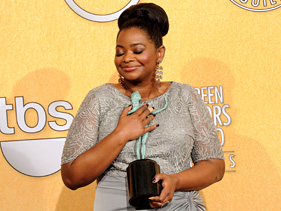
‘The Help’ nabs Best Ensemble’ in a stunning upset, while awards-show fave ‘The Artist’ leaves light on wins. By Eric Ditzian Octavia Spencer at the SAG Awards on Sunday Photo: Jason Merritt/Getty Images The SAG Awards, as we have noted , often have a curious way of letting us know what the Oscars are going to deliver. So when the Screen Actors Guild doled out its golden statuettes on Sunday night (January 29), we couldn’t help but feel there were more than a few hints at how the Academy Awards might shake out in a few weeks. What are we to make of the upset SAG win for “The Help” in outstanding cast in a movie, for instance? Where does this leave “The Artist,” which had been looking increasingly, inevitably like the big champ come Oscar night, yet only won outstanding male performance (Jean Dujardin) at the SAGs? Things were more predictable on the TV side of things. In 2012, for the second year in a row, “Modern Family” (Outstanding Cast in a Comedy) and “Boardwalk Empire” (Outstanding Cast in a Drama and a Lead Actor win for Steve Buscemi) had strong showings. Check out the full list of winners: Outstanding Performance by a Cast in a Motion Picture “Bridesmaids” “The Artist” “The Descendants” “The Help” “Midnight in Paris” Outstanding Performance by a Male Actor in a Leading Role George Clooney, “The Descendants” Demian Bichir, “A Better Life” Leonardo DiCaprio, “J. Edgar” Jean Dujardin, “The Artist” Brad Pitt, “Moneyball” Outstanding Performance by a Female Actor in a Leading Role Michelle Williams, “My Week With Marilyn” Glenn Close, “Albert Nobbs” Viola Davis, “The Help” Meryl Streep, “The Iron Lady” Tilda Swinton, “We Need to Talk About Kevin” Outstanding Performance by a Male Actor in a Supporting Role Nick Nolte, “Warrior” Kenneth Branagh, “My Week With Marilyn” Armie Hammer, “J. Edgar” Jonah Hill, “Moneyball” Christopher Plummer, “Beginners” Outstanding Performance by a Female Actor in a Supporting Role Octavia Spencer, “The Help” Berenice Bejo, “The Artist” Jessica Chastain, “The Help” Melissa McCarthy, “Bridesmaids” Janet McTeer, “Albert Nobbs” Outstanding Performance by a Stunt Ensemble in a Motion Picture “The Adjustment Bureau” “Cowboys & Aliens” “Harry Potter and the Deahtly Hallows – Part 2” “Transformers: Dark of the Moon” “X-Men: First Class” Outstanding Performance by a Male Actor in a Television Movie Or Miniseries Laurence Fishburne, “Thurgood” Paul Giamatti, “Too Big to Fail” Greg Kinnear, “The Kennedys” Guy Pearce, “Mildred Pierce” James Woods, “Too Big to Fail” Outstanding Performance by a Female Actor in a Television Movie Or Miniseries Diane Lane, “Cinema Verite” Maggie Smith, “Downton Abbey” Emily Watson, “Appropriate Adult” Betty White, “The Lost Valentine” Kate Winslet, “Mildred Pierce” Outstanding Performance by a Male Actor in a Drama Series Patrick J. Adams, “Suits” Steve Buscemi, “Boardwalk Empire” Kyle Chandler, “Friday Night Lights” Bryan Cranston, “Breaking Bad” Michael C. Hall, “Dexter” Outstanding Performance by a Female Actor in a Drama Series Kathy Bates, “Harry’s Law” Glenn Close, “Damages” Jessica Lange, “American Horror Story” Julianna Margulies, “The Good Wife” Kyra Sedgwick, “The Closer” Outstanding Performance by a Male Actor in a Comedy Series Alec Baldwin, “30 Rock” Ty Burrell, “Modern Family” Steve Carell, “The Office” Jon Cryer, “Two and a Half Men” Eric Stonestreet, “Modern Family” Outstanding Performance by a Female Actor in a Comedy Series Julie Bowen, “Modern Family” Edie Falco, “Nurse Jackie” Tina Fey, “30 Rock” Sofia Vergara, “Modern Family” Betty White, “Hot In Cleveland” Outstanding Performance by an Ensemble in a Drama Series “Boardwalk Empire” “Breaking Bad” “Dexter” “Game of Thrones” “The Good Wife” Outstanding Performance by an Ensemble in a Comedy Series “30 Rock” “The Big Bang Theory” “Glee” “Modern Family” “The Office” Outstanding Performance by a Stunt Ensemble in a Television Series “Dexter” “Game of Thrones” “Southland” “Spartacus: Gods of the Arena” “True Blood” Screen Actors Guild Awards 48th Annual Life Achievement Award Mary Tyler Moore Stick with MTV News all night for the 2012 SAG Awards winners, and don’t miss all the fashion from the red carpet ! Related Photos Backstage At The 2012 SAG Awards
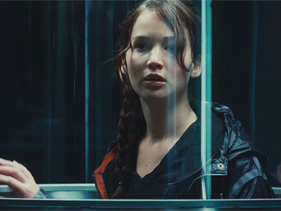
As Harry Potter weathers his final Academy snub, Hobnobbing wonders if Katniss Everdeen can carry the genre’s mantle. By Amy Wilkinson Jennifer Lawrence in “The Hunger Games” Photo: Lionsgate ” The Hunger Games ” star Jennifer Lawrence set aside her flaming bow and arrow in favor of a gilded envelope Tuesday morning to announce the 2012 Oscar nominations alongside Academy of Motion Picture Arts and Sciences President Tom Sherak. And sadly — though not entirely surprisingly for young-adult-literature aficionados — the “Harry Potter” franchise was once again (and for the final time) overlooked for a Best Picture nomination . Which raises the question: Does the Academy have something against YA adaptations?* Curiously, adaptations have historically been strong performers at the Academy Awards. Past statuettes have gone to the literary likes of “All Quiet on the Western Front,” “One Flew Over the Cuckoo’s Nest” and “Silence of the Lambs.” And this year’s contenders are no different. Six of the nine Best Picture nominees, including “The Descendants,” “Hugo,” “The Help,” “Moneyball,” “War Horse” and “Extremely Loud & Incredibly Close,” can be found lining the shelves of your local Barnes & Noble, while five of last year’s 10 nominees were also based on bound works, according to USA Today. The side of the equation, then, troubling Academy voters seems to be the “young adult” variable. Though to be fair, there’s not much of a precedent for awards recognition seeing as mining teen lit for film fodder is a relatively new phenomenon. Sure, there are exceptions like S.E. Hinton’s “The Outsiders” (made into a film all the way back in 1983, starring Matt Dillon and Patrick Swayze), but for every “Nick and Norah’s Infinite Playlist” or “The Princess Diaries” there are tens (if not hundreds) of seminal works, like “The Catcher in the Rye” or “Are You There God? It’s Me, Margaret,” languishing in pre-production hell or undeserved obscurity as far as film financiers are concerned. Which leaves us with “The Hunger Games,” the latest YA sensation, which blazes into theaters in less than two months. And while it’s hard to predict the awards-season viability of a movie we haven’t even seen yet, there are at least a few indicators to suggest it could be the first YA novel adaptation to win (or at the very least be nominated for) Best Picture. For one, Oscar’s already made acquaintance with many members of the cast and crew. Our friends at NextMovie crunched the numbers, discovering that the actors and technical experts behind “The Hunger Games” boast 30 Oscar nominations — even Effie Trinket couldn’t turn her nose up at that. And while a film like “Twilight” (which, let’s be honest, won’t be sharing a feather-strewn canopy bed with the Academy anytime soon) focuses on a fantastical, star-crossed-lovers plotline, “The Hunger Games” deals more seriously with issues of life, death and government control, likely giving it more credence with voters. Though most of the above could surely have been said of “Harry Potter,” it apparently wasn’t meant to be. Hopefully with “The Hunger Games” (and the slew of approximately 4 million teen novels in various stages of adaptation ) the Academy will begin recognizing artful YA adaptations as the deserving films that they are. Because we already do. Do you think “The Hunger Games” is blazing a path for YA novel adaptations? Sound off in the comments below and tweet me @amymwilk with your thoughts and suggestions for future columns! *Whether, in fact, “Harry Potter” constitutes YA is a topic of much debate in and of itself, though for the sake of this piece, I assert that the final novel’s dark tone and subject matter secure its spot at the teen table. Check out everything we’ve got on “The Hunger Games.” For young Hollywood news, fashion and “Twilight” updates around the clock, visit HollywoodCrush.MTV.com . Related Videos The ‘Hunger Games’ Cast Answer Your Burning Twitter Questions Related Photos The Hunger Games
It may be a relatively quiet Sundance year – even Pixar’s Lee Unkrich, in town for the festival, Tweeted his dismay at the “mixed bag” of movies – but films are selling. Granted, they’re mostly the ones with name actors and mostly okay-to-decent reviews (with a few exceptions), but buyers continue to be getting busy in the snow. The latest batch of pick-ups (Olsens and robots and scares, oh my!) after the jump. Liberal Arts (IFC Films) – Josh Radnor’s follow up to happythankyoumoreplease , another Sundance pick, features Radnor as a thirty-something man who returns to his college campus and is intrigued by both his former professor (Alison Janney) and a young coed (Elizabeth Olsen). IFC picked up Liberal Arts and plans on releasing it later in 2011. Robot and Frank (Sony Pictures Worldwide Acquisitions/Samuel Goldwyn Films) – It’s Frank Langella and a robot. What more do you need to know? Oh, fine: Directed by Jake Schreier and co-starring Susan Sarandon, Peter Sarsgaard, and Liv Tyler, this charmer won over critics during Sundance. V/H/S (Magnolia) – The horror anthology opened to such a raucous, receptive Midnight debut that it’s no wonder a specialist like Magnolia snapped up the surefire genre pleaser. Did reports of a seizure at this week’s screening help? The Pact (IFC) – This deal’s a bit of a surprise, given the negative-to-lukewarm reviews Nicholas McCarthy’s feature debut (adapted from his own Sundance short of the same name) received this week. Yet another spooky tale, about a young lady investigating bumps and scares in her dead mother’s house, it went to IFC for a reported ” high-six-figure deal ” as the distrib hopes it catches fire in limited release/VOD. Previously: Arbitrage (Lionsgate/Roadside Attractions) – Nicholas Jarecki’s dramatic feature-filmmaking debut stars Richard Gere as a billionaire hedge-fund fraud seeking to cash in before he’s exposed. Susan Sarandon, Brit Marling and Tim Roth co-star. Look for the studio duo to duplicate the multi-platform success they enjoyed in 2011 with Margin Call , another financial-world potboiler picked up in Park City. The Surrogate (Fox Searchlight) – Sundance favorite John Hawkes turns in an brave performance as real life poet Mark O’Brien, who yearns to lose his virginity with a sex therapist (Helen Hunt) despite being paralyzed from the head down. Fox Searchlight paid a reported $6 million for the pic, which may face tricky ratings deliberations due to Hunt’s full frontal nudity. Beasts of the Southern Wild (Fox Searchlight) – The smallest narrative to get a deal thus far at Sundance comes off of strong buzz and acclaim for the tale of a young girl and her ailing father who live in a fantastical alternate version of the American South. Red Lights (Millenium Films) Negative reviews hurt the profile of this Rodrigo Cortes ( Buried ) thriller, despite featuring Cillian Murphy, Sigourney Weaver, Robert De Niro, and last year’s Sundance darling Elizabeth Olsen. For a Good Time, Call… (Focus Features) – The feature debut of shorts director Jamie Travis pairs Lauren Anne Miller and Ari Graynor as frenemies who start a phone sex line together, one of a gaggle of raunchy female-driven comedies in this year’s line-up. Celeste and Jesse Forever (Sony Pictures Classics) – With Rashida Jones and Andy Samberg leading a cast of familiar players, this was bound to attract buyer attention galore. Sony Pictures Classics snatched it up for a reported $2 million, adding C&J to their previous Sundance acquisitions Searching for Sugar Man and The Raid . Searching for Sugar Man (Sony Classics) – The documentary about 1960s musician Rodriguez played well to critics and was snatched up by SPC for a reported six figures. The Queen of Versailles (Magnolia Pictures) – Another well-received doc, Lauren Greenfield’s examination of Florida real estate mogul David Siegel was picked up by Magnolia on Friday. Black Rock (LD Distribution) – Katie Aselton’s thriller about three female friends (Aselton, Lake Bell, Kate Bosworth) surviving a weekend getaway gone wrong was the first Midnight selection to seal a deal, partnering with newbie venture LD Distribution. The Words (CBS Films) – Bradley Cooper, Zoe Saldana, and Jeremy Irons lead a cast of recognizable stars in this literary drama about a writer (Cooper) who claims credit on someone else’s manuscript and is confronted by its real author, so it’s easy to see why buyers were interested. CBS Films reportedly made the most expensive buy of the fest so far, laying down $2 million for the film. Whether or not that move was smart remains to be seen, as this first review over at The Playlist is less than encouraging. Follow Jen Yamato on Twitter . Follow Movieline on Twitter . Get more of Movieline’s Sundance 2012 coverage here .
Wolves, like most animals, know a lot of things that humans don’t. When bad white men move onto their turf to do bad white-man stuff – like drilling for oil – they instinctively know something’s amiss in the balance of nature, and damned if they’re going to just sit back in their dens and fuhgeddaboutit. In The Grey, wolves unleash their fury at mankind in a bloody yet tasteful flurry of stamping paws and gnashing teeth; mankind fights back as best he can, which in this particular case, is not very well. What’s not surprising about the picture, considering it was directed by the guy behind movies like Smokin’ Aces and The A-Team, Joe Carnahan, is how absurdly macho some of the dialogue is. (My favorite line, uttered by a character after he’s witnessed one too many wolf-inflicted deaths: “This is fuck city, population 5 and dwindling.”) What is surprising is how poetic the movie is, partly thanks to its high-lonesome sound design and the desolate beauty of its visuals, but mostly because of its star, Liam Neeson. He knows what the wolves know, only he’s not telling. Neeson plays Ottway, a sharpshooter stationed at an Alaskan oil refinery, where hard men work even harder shifts, toiling for five weeks straight before being freed for two weeks of vacation. It’s Ottway’s job to pick off the bears and other assorted critters who might prey on the men as they work. He’s good with a gun for sure, but he also takes the killing part of his job seriously: In the movie’s early moments, he approaches a wolf he’s just shot — it lies in the snow, bloodied but hardly drained of its dignity — and places his hand on the animal’s flank as it draws its last breath. Ottway may be good at his job, but he doesn’t derive any pleasure from it. And we learn early on that something is deeply amiss in his personal life as well: We see him scratching out a desperate letter to a loved one — with a fountain pen, no less — even though he knows it can’t possibly bring her back. We also see him draw back from the brink of taking his own life: Ottway is one unhappy guy, but what happens shortly thereafter galvanizes him. He and a bunch of the oil workers board a plane bound for civilization. The craft goes down somewhere in sub-Arctic territory. A handful survive the crash — they’re played largely by a cache of actors you’ve vaguely heard of, people like Dallas Roberts, James Badge Dale and Frank Grillo; Dermot Mulroney, mildly disguised by thick glasses and unruly hair, is the one immediately familiar face. But it’s only after the group has managed to pull themselves from the wreckage and patch themselves up that they face the real threat: A group of wolves who stalk them with an almost mystical zeal, not for food but seemingly for sport. Or revenge. Ottway, being the guy who knows all about wolves, urges the men — whose numbers, predictably, dwindle as the story tramps through the snow to its half-rousing, half-bittersweet ending — to fight back, using home-made weapons like improvised bang sticks fashioned from sharpened sticks and bullet casings. (If you’re like me, you probably have no idea what a bang stick is; but if you watch The Grey, you will.) Carnahan has fashioned a movie that’s largely an endurance test. Some pretty awful things happen to some characters we come to care about, and the picture carries you along on a wave of vaguely sickening feelings: You keep watching, wondering what bad thing is going to happen next. But The Grey also offers plenty of moments of grace and beauty, moments that are less pure hokum than pure movie. Just before that plane goes down, as the sleepy travelers doze, we sense that the cabin has suddenly become very cold: The men’s breath hangs in the air, taking wispy forms that just might be — wolf ghosts? Later, after the men have trekked across a broad swath of blank, snowy terrain toward a stand of trees, they peer into the darkness of the forest only to see multiple sets of glowing pin-dot eyes staring back at them. The Grey is all about man vs. nature, and how. There’s also some man vs. man and a lot of man vs. himself mixed in there too. You can bet that the most obnoxious crash survivor — the one every other character not-so-secretly despises, and the one you really wish had died early on, played with cranky effectiveness by Grillo — will redeem himself spectacularly by the end. There are many instances, perhaps too many, of men speaking sentimentally of their families, or of their lack of family. But the picture — which was written by Carnahan and Ian Mackenzie Jeffers, from a short story by Jeffers — keeps working, almost in spite of itself, partly because of its despairing, gorgeous visuals. The picture was shot on location in damn-cold British Columbia. (The cinematographer is Masanobu Takayanagi, whose credits include the recent underground stealth hit Warrior. ) And the very quietness of the movie is a big selling point. There’s gore here, but it’s the artful sort, consisting of things like tableaus of half-glimpsed bloody carcasses nestled in sparkly-white snow. And Carnahan is smart enough to know what not to show. When those largely unseen wolves start hooting and moaning, the sound goes right through you: It’s a howl of existential pain from nature’s peanut gallery. No wonder Ottway feels that pain so keenly. And yet Neeson keeps him from becoming a caricature. Even though the role demands a significant amount of action and physical derring-do, most of Ottway’s struggle is happening inside, and Neeson reveals his character’s suffering gradually, in small bursts of light and shadow. I can’t imagine what it’s like for an actor who has only recently lost his wife to play a man who feels kinship, anger and exquisite loneliness in the company of wolves. Whatever Neeson’s private thoughts and feelings are, you can’t escape the suspicion that he’s channeling them here, placing them before us in muted, unspoken form. It doesn’t hurt that Neeson looks more handsome and noble than ever, particularly with that defiantly regal nose: The Romans, supposedly, never took up residence in Ireland. So how, then, did Neeson’s profile find its way onto their coins? You can take or leave most of the dialogue The Grey requires Neeson to utter, perfunctory stuff along the lines of “They weren’t eating him –- they were killing him” and “We’re a threat –- we don’t belong here.” But it’s hard to ignore the shifts of dusky feeling that play across his face. It’s as if those vaporous wolf ghosts have taken up residence there, in a place where macho posturing is only a small part of what the movies are about. Follow Stephanie Zacharek on Twitter . Follow Movieline on Twitter .
Some adaptations of great literature become so beloved and important in their own right that it can be hard to separate where the book ends and the movie begins. To Kill a Mockingbird is one of those cases. Released in 1962, two years after Harper Lee’s novel was published, the movie propelled the nationwide discussion on racial inequality and introduced characters that went against the norm yet were easy to relate and aspire to. Scout and Atticus Finch are finding their footing in a challenging environment, not an alien concept for generations of junior high and high school kids who are assigned to read the book. These days, those students might also be shown director Robert Mulligan’s classic film — featuring Gregory Peck in an indelible, Oscar-winning turn as Atticus Finch, a Southern attorney who defends an African-American man unjustly accused of rape — as a complement to Lee’s book. The movie has left an impression on generations of Americans, but two women with a close relationship to it — Peck’s onscreen daughter, Mary Badham, and his actual daughter, the filmmaker Cecilia Peck — found that it steered them into adulthood in a more direct way. (The Atticus role is so inseparable from Peck and his legacy that Badham, herself an Oscar nominee for her performance as Scout Finch, still refers to the actor as Atticus half a century later.) Indeed, an adult revisiting To Kill a Mockingbird will discover a new perspective on the story and its lessons, going beyond the adventures of Scout, Jem and Dill. For Badham and Peck, taking a look back also reveals how Atticus, and the man who played him so perfectly on film, shaped them as adults and as parents. Mockingbird is celebrating its 50th anniversary with a new collector’s edition DVD, due Jan. 31. Movieline caught up with Mary Badham and Cecilia Peck to talk about their memories of Gregory Peck, their affinity for Scout and the influence the film had on them and the nation. What was your relationship with each other at the time, and in the years since? Peck: It’s a family. I was 3, but Mary was like part of the family and has been ever since. Right, Mary? Badham: Yes, she’s the little sister I never had. And, yeah, Atticus was my other daddy. I lost my parents very early in my life. My mom died three weeks after I graduated from high school, and my dad died two years after I got married. So it was nothing for me to pick up the phone, and he [Peck] would be calling to check and make sure I was doing OK. If he was going to be somewhere doing his one-man show, he’d find out if I could come to him, and sometimes he’d come visit me. It was great, and whenever I’m out in California I go visit the family. Atticus and [Peck’s wife, Veronique] were great role models for me as parents, and I just can’t say enough things about what a great role model Atticus was especially. That’s so important for children when they’re growing up, to have a strong male role model. Did you realize at the time of the film’s release how important and beloved the story of To Kill a Mockingbird was? Badham: I had no idea, being all of 9 or 10 years old at the time, anything about the importance of the film at all. Now that I’m an adult, I am so pleased and honored to be a part of something that was so important to so many thousands and millions of people, and that has done so much good in this world. Peck: I had always known that my father was in a great film, and one of the favorite films of all time, and he won the Oscar for it. But for me, when my father was doing that one-man show that Mary mentioned that I filmed for a documentary called A Conversation With Gregory Peck in ’99 and 2000 — and Mary was often there — I heard how many people in the audiences had gone to law school because of Atticus or named their child Gregory or Atticus or named their daughters Scout. It wasn’t until then that I realized how lasting the influence of the film was on our whole nation, or fully became aware of how many generations of people it affected, and still does. Badham: The book is taught in all the high schools. It’s mandatory reading. A lot of my time is spent on the road visiting high schools, colleges, universities, libraries, talking about the importance of the book and the film and doing historical studies of then and when I was growing up, and to now and how it’s pertinent today. Peck: [My son] Harper’s reading it this year, in seventh grade. Badham: There you go! Peck: They’re just starting it. Badham: It’s so great that they teach it. I’ve been to England and Russia with this, and it’s just amazing. It has touched people all over the world. Has Harper seen the film? Peck: Yes, he’s seen the film. He’s seen it ever since he was little, and we all got together and watched it this spring when Mary was in Los Angeles at Grauman’s Chinese Theater as part of the TCM Classic Film Festival. So he was there — which we all were, onstage — and we were all talking about it. I think he does have a sense of what the film means. His school is doing a program on Martin Luther King right now, so reading the book and seeing the film is connected to their studies of the Civil Rights Movement. I think the film, which did come out before the civil rights legislation in our country, and before Martin Luther King’s “I Have a Dream” speech, was one of the ways that allowed people to start the dialogue about racism, which was so important at the time. It was ahead of its time, don’t you think, Mary? It was one of the first films that dealt with that subject. Badham: Exactly. And it gave the nation a way to talk about a subject that desperately needed to be discussed, and people were past ready to talk about it, but they didn’t know how to begin. But this gave them a stepping stone to work through it. That’s the way I understand it. To have a film such as The Help coming out this year, and up for nominations as well — it’s got some nominations for Academy Awards — I really feel it’s interesting that here, 50 years later, we have another film that’s still discussing this. It speaks to so much that’s going on today. To me, the root of all evil is ignorance, and this book speaks directly to the importance of getting an education because ignorance breeds things like bigotry and racism, and all that hatred. We’re still dealing with that, right here in the United States, if we’re talking about Muslims or Mexicans or immigrants, you know, it’s a major deal right now. So we’re still grappling with these issues. It’s just that people have changed their clothes, that’s all. This is not a 1930s black-and-white issue, this is here and now, today. (L-R) Mary Badham, Cecilia Peck and Veronique Peck at a screening of To Kill a Mockingbird in 2011 Do you think the 50th anniversary will shed more light on the film and introduce it to a new generation? Badham: I hope so. Peck: I know the collector’s edition that Universal has put together is such a beautiful gift and keepsake. I don’t know if you’ve seen it yet, Mary … Badham: Not yet. Peck: It’s got great script notes, some of the pages of the script with [Peck’s] notes of shooting, notes in the margin, and there are two documentaries … what else is in there? Harper [Lee] wrote something. My mother wrote something. It’s absolutely beautiful, and just full of treasures. The book, as Mary talked about, is read every year, and the movie is seen every year, but they have a really beautiful new edition coming out. What are each of your relationships with the character Scout Finch, and how would you say it’s changed over the years? Badham: Well, for me, I really feel like Scout was me as a child. I was very much a tomboy. I’ve always been rather outspoken [laughs], headstrong, and I’m pretty much that way to this day. I think that’s why they picked me for the role, and picked each of the actors for their role, because they were, in real life, so much like the character that they would be portraying. Gregory Peck was totally Atticus. I mean, there couldn’t have been anybody else picked for that role. Peck: For me, I think of all the little girls in the world who must have wished that they had Atticus as their dad, being Scout, and I did. And I think my father was so much an Atticus and became even more of an Atticus after playing this role. He parented us exactly like Atticus parented his children, except for the constant presence of his true love, my mother, Veronique. I think I wanted to be Scout, and tried to be like Scout, and look like Scout, too — right Mary? We did look alike … Badham: [Laughing] Yeah! Peck: … and maybe I took on a little bit of that dynamic with him of being a little bit of an outspoken, rebellious daughter, and then getting to have him as a real-life dad. Badham: He was such a proud but gentle daddy. He was the perfect balance, but the best thing about him was he had his sense of humor. Wouldn’t you agree, Cecilia? He loved to laugh and make other people laugh. Peck: Yes, people don’t really know that about him, but he was so witty and so charming, and so much fun to be with. I tried to show that side of him in A Conversation With Gregory Peck, which I did think gave people an insight into how funny he was. Badham: Yeah. Right. I thought you did a brilliant job with that. Peck: He was half Irish, and he had a real Irish wit. Did your view of the Atticus character change as you reached adulthood and became parents yourselves? Badham: I think it made us more mindful of what it is to be a parent. It’s one thing to have children. It’s something else to be a true parent, and the character of Atticus helped lead the way. And we had it in living, breathing reality with him because he embodied that whole sensibility of needing the respect of his children and demanding of himself to be the best role model for us that he could be. Wouldn’t you agree, Cecilia? Peck: Yes. I can’t even separate my dad and Atticus as far as parenting. My dad was extremely strict with us, but also fair and decent, but very strict. I rebelled against it, and we clashed a lot in my teenage years and I felt misunderstood, but now I’m exactly like he was. Badham: [Laughs] Peck: [Laughing] You have to set boundaries when you’re a parent, and you don’t always understand it as a teenager, but it’s so important for the parent to draw the line. How else does your child know where the boundaries are? Badham: And that’s where they find their safety. I’ve heard the saying that to say “no” is the most loving thing that you can say to your children. To Kill a Mockingbird doesn’t shy away from difficult subjects. How did your parents guide you during the making of the film, and what impression did that have on you? Peck: I think it’s a film that exists on so many different levels that you’re able to understand what you’re able to at the time of seeing it. I know that when I was little I was drawn toward the father-daughter story and the Boo Radley story, but I didn’t understand everything about the trial. So it is a movie about parenting as well, about Atticus being a single parent, as well as the issue of racism and the issue of abuse, or rape. I don’t think that my dad addressed that, or my mom, before we were ready to understand it. That’s something I came to later, and now I’m actually doing a documentary on the subject of rape, so it’s definitely something that’s been part of my awareness, and I think as a parent it’s one of the most important subjects to address. I think you get from the book and the film what you’re ready for at the time. Badham: I would agree with that. I don’t think there was any discussion on that subject. It was sort of a larger question of good against evil. And what I found with this book and this film is I have a lot of parents come to me and they say, “I just don’t know if my child is ready for that.” And I say, well, you as the parent are the only one who can judge that, and a lot of times you don’t need to worry about that. Children are going to take away from it what they want to. Most of the time, children concentrate on what the kids are doing in the film, and the trial stuff just goes by the way. So, you know, and then adults focus on the trial because that’s more the adult thing. I think that’s the way our parents approached it. If we didn’t ask, they didn’t talk about it because there was no need to. We weren’t concerned about it. Even as you were making a movie that dealt with issues so straightforwardly? Peck: Scout doesn’t know, sitting on that balcony, exactly what Tom is accused of, right? Badham: Right. I mean, Atticus said it so simply, you know, it was the carnal knowledge of a woman. OK, well, fine. A child back then was so innocent. They had no clue about any of that. What they knew was that this person accusing Tom Robinson was a very bad person. He was a very ignorant, mean person. And what the children were more concerned about was that Atticus was going to try and help Tom, who was innocent, and make everything all right. And then they’re just totally devastated when he doesn’t win. But Atticus knew he was going to lose — and that’s part of the lesson of life. You don’t always win, but you have to try. The 50th anniversary edition of To Kill a Mockingbird arrives Tuesday, Jan. 31, on DVD and Blu-ray. [Photos: Getty Images]
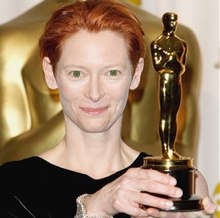
Remember Patton Oswalt’s Oscar-snubbee Twitter fan fiction — specifically the part wherein Tilda Swinton and Andy Serkis rocked out together to “Life on Mars”? Well, Jimmy Fallon or Stephen Colbert or someone might want to get on that, if Swinton’s priceless reaction is any indication. Per Vulture : “Oh, how fun! Is he there now?” she said. We explained that it was merely his Twitter feed. “But is it real? We should go! Where is he?” she asked, grabbing for her keys and heading for the door. Actually, we explained, he was kidding. “Oh, he’s making jokes. What a shame. I think we should do it for real. How faaabulous!” she said. When she read the tweet, “Serkis & Tilda are singing ‘Is There Life on Mars?'” Swinton said, “That’s a dare! That’s an excellent dare. Okay, Patton, you’re on. Let’s get Andy and let’s go for it!” Genius . Or maybe Swinton could finally fulfill her promise to portray Conan O’Brien on Conan , introducing her and Serkis? There would not be enough health insurance in the world to cover all the exploded heads. [
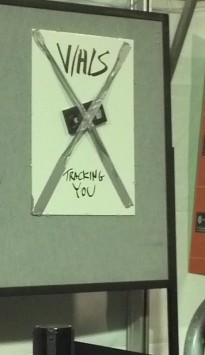
As Sundance 2012 passed the halfway point, the celebs and hangers-on and people watchers started filtering out of Park City, leaving the sidewalks actually walkable and the shuttles downright spacious. I prepare to go home tomorrow, with many more interviews and reports to come, but the glorious peacefulness has me misty-eyed about the week that was; here’s a quick rundown of highlights from the first week of the fest — the movies I loved, the events that transpired, and yes, the time I met with Ice-T and Coco to talk hip-hop while they munched on pancakes. Select highlights, in no particular order: – Ice-T and Coco (above): I spotted her, badonk-first, at the premiere for Ice-T’s The Art of Rap: Something from Nothing . The next day we met over breakfast — theirs, not mine — and I chatted with Ice about his directorial debut. – On Air : Joined indieWIRE’s Eugene Hernandez on his fest radio show, The Daily Buzz, broadcast live from Park City’s NPR affiliate KPCW, which is conveniently located directly above the nearest state liquor store. Just sayin’… – V/H/S : As if the horror anthology itself wasn’t great enough, the poster for V/H/S was simple and clever enough. Plus, it probably cost about $.35 to make. – Anthony Mackie and His Eyelashes Ride the Shuttle : Who knows why, but I looked over and caught the Hurt Locker star riding the shuttle to Eccles one day. With us normies ! – Napoleon Sigh-namite : Meanwhile, one day on Main St. I watched as a mob of autograph seekers followed Jon Heder as he strode uptown, clamoring the whole time, “Hey, it’s Napoleon Dynamite!” Poor Jon Heder. – Drop Drop Dat… Uncle Luke of 2 Live Crew stars in a short film in competition ( Life and Freaky Times of Uncle Luke ) which is one of the most fun and fresh (to def, even) films I saw here. Plus, who can resist a man who has his own whoopee cushion? (Image via @BorschtCorp) – Group Cry : That moment during The Surrogate when I could hear the entire theater quietly crying, a symphony of sob sniffles all moved to the core in the same single moment… – Leave the Favorite : That moment during Stephen Frears’ Lay the Favorite when a dozen people around me walked out and I daydreamed that they’d taken me with them… – Spike + Mic : That moment in the Red Hook Summer Q&A when Spike Lee shut down a woman who was less than pleased with his film’s ending: “Miss, Miss, Miss… it’s early in the morning, let’s not start.” – And Last But Not Least…: Karaoke . Obviously ! Follow Jen Yamato on Twitter . Follow Movieline on Twitter .