Tag Archives: agriculture

U.S. court rules against Obama’s stem cell policy

A U.S. district court issued a preliminary injunction on Monday stopping federal funding of human embryonic stem cell research, in a slap to the Obama administration's new guidelines on the sensitive issue. link: http://www.reuters.com/article/idUSTRE67M4HA20100824 added by: eva2

Super weeds put USDA on hotseat

“Farmers who expanded farm size are finding it difficult, if not impossible, to manage the larger operations now that additional time is required for weed management.” The U.S. Congress got an earful from farmers, university researchers and pro-food groups during the first round of hearings into the increase in super weeds, deemed so because some are becoming resistant to multiple modes of actions and families of chemistries used in popular herbicides. Eyes and ears for the U.S. House of Representatives in the case of super weeds is the Domestic Policy Oversight Subcommittee. The late July hearings were called to evaluate the impact of genetically engineered, herbicide-resistant crops on the environment and on the abundance and quality of the U.S. food supply. The Congressional Committee is chaired by Rep. Dennis Kucinich (D-Ohio). The hearings are titled “Are Superweeds an Outgrowth of USDA Biotech Policy?” An Indiana farmer Troy Roush, who was the target of a 2000 suit brought forth by Monsanto, gave a scathing indictment of GM plants. The suit was dropped by Monsanto, but Roush says he and his family spent two years fighting it. In his testimony to the House sub-committee, Roush documented the development of glyphosate resistant weeds on his 5,500 acre family farm. “In 2005, we first began to encounter problems with glyphosate resistance in marestail and lambsquarters in both our soybean and corn crops. Since there had been considerable discussion in the agricultural press about weeds developing resistance or tolerance to Roundup, I contacted a Monsanto weed scientist to discuss the problems I was experiencing on the farm and what could be done to eradicate the problematic weeds. “Despite well documented proof that glyphosate tolerant weeds were becoming a significant problem, the Monsanto scientist denied that resistance existed and instructed me to increase my application rates,” the Indiana farmer reported. “The increase in application rates proved ineffectual, and I was forced to turn to alternative methods for weed management including the use of tillage and other chemistry. “In 2007, the weed problems had gotten so severe that we turned to an ALS inhibitor marketed as Canopy to alleviate the problem in our preplant, burndown herbicide application. “In 2008, we were forced to include the use of 2,4-D and an ALS residual, to our herbicide programs. Like most farmers, we are very sensitive to environmental issues and we were very reluctant to return to using tillage and more toxic herbicides for weed control. However, no other solutions were then or are now readily available to eradicate the weed problems caused by development of glyphosate resistance,” Roush said. There is little doubt the discovery of genetically altered, target herbicide tolerant plants has made billions of dollars for U.S. farmers. Few can argue the management decisions on farms across the U.S. being made easier by having this technology. In fact, the ease of operation has made good land out of marginal land and some contend, good farmers out of fair farmers. Again, there is little doubt that the introduction of Roundup Ready cotton and soybeans has allowed growers in the Southeast to expand their acreage — a reality that is coming back to bite some large farmers who are having problems managing weeds with resistance to multiple families of herbicides. Roush, who is also vice-president of the National Corn Growers Association, says bigger farms with multiple herbicide resistance problems are in great danger. “The increased ease of use and convenience of herbicide tolerant crops enabled many farmers to significantly increase crop acreage which helped to offset higher production costs and, in some cases, lower yields. Biotech companies encouraged farm expansion by offering discounts for buying seed in bulk. “The advent of glyphosate tolerant weeds necessitated the return to using tillage for weed control, eliminating the time savings that was initially afforded by using biotech crops. “Farmers who expanded farm size are now finding it difficult, if not impossible, to manage the larger operations now that additional time is required for weed management,” the Indiana farmer said. The driving force behind the congressional look into super weeds is the Center for Food Safety (CFS), which is a project of the International Center for Technology Assessment (ICTA). CFS is headed by Andrew Kimbrell, who was mentored by Jeremy Rifkin at the Foundation on Economic Trends. For sure there is plenty of ammunition to be fired by both sides: Corn (85 percent of U.S. production is GM), soy (91 percent GM), cotton (88 percent GM), canola (85 percent GM) and sugar beets (95 percent GM) are all genetically engineered to withstand large amounts of glyphosate herbicide. Since the introduction of Roundup Ready technology yields per acre have gone up and continue to increase, especially for corn and soybeans. Worldwide the adoption of GM products is astounding. The latest figures come from 2008, at which time herbicide tolerance deployed in soybeans, corn, canola, cotton and alfalfa occupied 63 percent, or roughly 200 million acres of the global biotech area of 325 million acres. HT soybeans are currently grown mostly in the United States, Argentina, Brazil, and other South American countries, accounting for 70 percent of worldwide soybean production. Insect resistance to GM products, primarily based on different genes from the soil bacterium Bacillus thuringiensis, worldwide is estimated at 50 million acres. These Bt genes control the European corn borer, the corn rootworm, different stemborers, and of most importance to the Southeast, bollworm and budworm in cotton Kimbrell, an attorney and founder and head of the watchdog group Center for Food Safety, testifying before the House Subcommittee laid much of the blame on development and proliferation of super weeds at the feet of the U.S. Department of Agriculture. “The history of USDA’s oversight of genetically engineered (GE) crops is littered with failures. The Government Accounting Office (GAO), the USDA’s own Office of Inspector General (OIG), and the Federal Courts have repeatedly condemned USDA for oversight deficiencies and inadequate management,” Kimbrell testified. “Regulation of GE crops has in part been defined by judicial decisions in lawsuits brought by CFS and others on behalf of farmers, consumers, and environmental groups. American agriculture cannot afford such “regulation by litigation,” an approach that has become standard operating procedure at USDA,” Kimbrell said In response to the testimony from farmers, watchdog groups and university scientists, Rep. Kucinich said, “the Agriculture Department (USDA) has been too quick to approve new varieties of herbicide-tolerant crops and other biotech products. “Now, more than ever, farmers need to have a Department of Agriculture that takes care to preserve and protect the farming environment for generations to come,” Kucinich concluded. added by: JanforGore

SeaWorld fined $75,000 by OSHA

SeaWorld has been fined $75,000 by the Occupational Safety and Health Administration for three safety violations, including one classified as willful, after an animal trainer was killed in February. In a statement Monday, Cindy Coe, OSHA's regional administrator, said that SeaWorld knew of the inherent risks of allowing trainers to interact with dangerous animals. “Nonetheless, it required its employees to work within the pool walls, on ledges and on shelves where they were subject to dangerous behavior by the animals,” Coe said in the statement. SeaWorld denied what it called “unfounded” allegations by the U.S. Department of Labor agency and said it would contest the citations. “OSHA's allegations in this citation are unsupported by any evidence or precedent and reflect a fundamental lack of understanding of the safety requirements associated with marine mammal care penalties,” a SeaWorld statement said Monday. In February, a 12,000-pound killer whale at the Orlando, Florida, SeaWorld pulled trainer Dawn Brancheau, 40, underwater and killed her as horrified park visitors watched. An autopsy report showed Brancheau died from drowning and traumatic injuries to her body, including her spine, ribs and head. The OSHA statement said the whale involved was one of three also involved in the death of an animal trainer in 1991 at a Vancouver, British Columbia, water park. The agency's investigation “revealed that SeaWorld trainers had an extensive history of unexpected and potentially dangerous incidents involving killer whales at its various facilities, including its location in Orlando,” the OSHA statement said. “Despite this record, management failed to make meaningful changes to improve the safety of the work environment for its employees.” OSHA issued one “willful” citation — defined as a violation committed with plain indifference or intentional disregard for employee safety health — for “exposing its employees to hazards when interacting with killer whales,” the statement said. A second citation classified as “serious” was issued for failing to install a stairway railing system on one side of a stadium stage, the OSHA statement said, adding that such a violation is when “death or serious physical harm is likely to result from a hazard about which the employer knew or should have known.” A third citation considered less serious involved a failure to put weatherproof enclosures over outdoor electrical receptacles, the statement said. In response, the SeaWorld statement said its internal review reached a different conclusion. Without providing details, the statement said the conclusions were “drawn from decades of experience caring for marine mammals.” “The safety of SeaWorld's killer whale program was already a model for marine zoological facilities around the world and the changes we are now undertaking in personal safety, facility design and communication will make the display of killer whales at SeaWorld parks safer still,” the SeaWorld statement said. It noted that killer whales at SeaWorld “are displayed under valid federal permits and under the supervision of two government agencies with directly applicable expertise: The U.S. Department of Agriculture Animal and Plant Health Inspection Service and the U.S. Department of Commerce National Marine Fisheries Service.” The SeaWorld statement also said its trainers were “among the most skilled, trained and committed zoological professionals in the world today.” “The fact that there have been so few incidents over more than 2 million separate interactions with killer whales is evidence not just of SeaWorld's commitment to safety, but to the success of that training and the skill and professionalism of our staff,” the SeaWorld statement said. added by: Replicant

India’s Farmers Injecting Veggies With "Love Hormone"

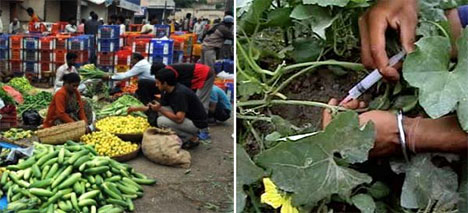
Images: Times of India (AFP) and Channel News Asia It’s a vegetal plot fit for a bad zombie flick: desperate to make their produce look fresher, bigger and mature faster, some Indian farmers are injecting their veggies with hormones on the sly. The most commonly-used substance: oxytocin, a reproductive hormone found in mammals. Oxytocin acts primarily as a neurotransmitter in the brai… Read the full story on TreeHugger

Go here to read the rest:
India’s Farmers Injecting Veggies With "Love Hormone"

Vanishing of the Bees: Film Documents Ongoing Honeybee Decline (Video)

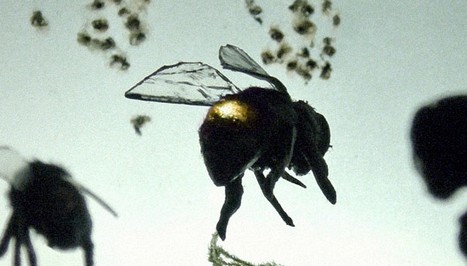
Image credit: Vanishing Bees Honeybees have had a hard time of late. Yet while Colony Collapse Disorder (CCD) was all over the news last year, this year the media have found other crises to focus on. Sadly, that doesn’t mean the problem has gone away—in fact, Planet 100 reported only this week that h oneybee colonies are continuing to disappear at alarming rates. Now, on the… Read the full story on TreeHugger

More:
Vanishing of the Bees: Film Documents Ongoing Honeybee Decline (Video)

7 Great New Food Books For Sustainable Eating

Image: Jeff Nield When we published our list of 9 Must Read Books on Eating Well over a year and a half ago, it felt like the good food fad may have reached its peak: The 100 Mile Diet had swept the continent, Michael Pollan had laid out the common sense problems and solutions surrounding our food system plain enough for all to understand, and

The rest is here:
7 Great New Food Books For Sustainable Eating

Super Cheap Nanotech "Tea Bag" Cleans Water Instantly (Video)

Could a simple “tea bag” of carbon and antimacrobial fibers that costs just pennies be the solution for quickly filtered drinking water on the go? Scientists from Stellenbosch University in South Africa hope they’ve found the solution to drinking water problems in rural African communities. Lacking water sanitation services, the communities can turn to a simple water bottle that uses cheap, removable sachets to clean their drinking water. And comparing the clean water solution to tea bags isn’t far off — they’… Read the full story on TreeHugger

View post:
Super Cheap Nanotech "Tea Bag" Cleans Water Instantly (Video)

Federal Judge Bans Genetically Modified Sugar Beets

Photo via Wikipedia On Friday, U.S. District Judge Jeffrey S. White revoked a five-year-old approval of genetically altered sugar beets from the U.S. Department of Agriculture. Judge White cited the USDA’s insufficient testing of weedkiller-tolerant sugar beets and their possible effects to the environment. Genetical… Read the full story on TreeHugger

More:
Federal Judge Bans Genetically Modified Sugar Beets

Two Brothers with Two Buckets Take on World Hunger

A few weeks ago Daniel Vivarelli sent us a link to Global Buckets. and gushed about having come across “two young lads (brothers I believe) who have taken it upon themselves to cook up solutions for solving world hunger. WORLD FREAKIN’ HUNGER … I mean, no small challenge right? And they’re onto an amazing solution.” The lad… Read the full story on TreeHugger

Go here to see the original:
Two Brothers with Two Buckets Take on World Hunger

Two Brothers with Two Buckets Take on World Hunger (Video)

A few weeks ago Daniel Vivarelli sent us a link to Global Buckets. and gushed about having come across “two young lads (brothers I believe) who have taken it upon themselves to cook up solutions for solving world hunger. WORLD FREAKIN’ HUNGER … I mean, no small challenge right? And they’re onto an amazing solution.” The lad… Read the full story on TreeHugger

Read this article:
Two Brothers with Two Buckets Take on World Hunger (Video)