If you think his screenplay is implausible , check out Pablo Fenjves’s earlier work: “Fenjves, who lived in Brentwood in the early ’90s, was the person who heard a dog wailing at the time of the murders of Nicole Simpson and Ron Goldman. Even odder, Fenjves found himself years later ghost-writing Simpson’s If I Did It pseudo-memoir.” [ THR ]
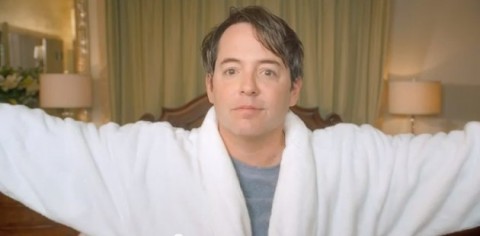
It would be too easy to seethe and writhe with dismay about Matthew Broderick — who’ll turn the big five-O(MG I’m old ) in March — reprising his role as everyone’s favorite truant teen from the ’80s, Ferris Bueller, for Honda. But factor in a 10-second teaser and a few other implications reported this morning, and the spasms of outrage might just ensue involuntarily. Indeed, there is something more than a little destabilizing about a doughy, gray-haired Bueller ripping open his curtains, uttering a midlife-crisis variation on his indelible dictum from the 1986 John Hughes classic Ferris Bueller’s Day Off : “How can I possibly be expected to handle school on a day like this?” The new video’s most optimistic observers wondered, “Sequel?”, while a new dispatch from Jalopnik may prompt a more piercing cry of, “Heresy?” A source familiar with Honda’s operations hinted to us earlier this year that the company was going to do a Ferris Bueller -style ad for the Super Bowl starring none other than Matthew Broderick. The source also added that the spot was going to mimic much of the original film, except this time prominently featuring Hondas. The big jump the two valets do in Cameron’s dad’s Ferrari? We hear this time it’s going to be a Honda CR-V. Honda is pouring a lot of money into this ad and, according to our source, hired The Hangover writer/director Todd Phillips to put it all together. Ah… ha . [Cue prolonged silence] I reached out earlier to both Phillips and Hughes’s family for insights and reactions to the news; neither has yet responded, but as far as I can tell, licensing the Bueller likeness is a two-party process involving Honda and Paramount, so you probably don’t have any legal drama or the like to anticipate. Coaxing Broderick, meanwhile, probably wasn’t too hard but couldn’t have been cheap at all . It’s strange, too — I always thought of Sarah Jessica Parker as the paycheck-part pants wearer in the family. According to the teaser’s YouTube page, viewers can “[s]tick it out until the Super Bowl, or take a ‘day off’ on Monday and catch the big reveal.” Your call. Developing… Follow S.T. VanAirsdale on Twitter . Follow Movieline on Twitter .
“I’m trying to work in studio movies, but they won’t hire me. I get feedback from my agent saying, ‘She’s too much of an indie queen.’ And then on the other side, my name doesn’t get the financing to do a movie over $1 million. And I’m called ‘the indie queen.’ So it’s really a challenging path because I know so much about the indie side of the business. Because I grew up in it. It’s like I’m back in junior high here at Sundance . There’s John Cooper and Trevor Groth and we all grew up together, you know? But it’s different times. And this stuff gets projected onto me. People are like, ‘You’re here every year, you do so many indie movies.’ And I’m like, ‘No, I did Broken English five years ago.'” [ indieWIRE ]
Wolves, like most animals, know a lot of things that humans don’t. When bad white men move onto their turf to do bad white-man stuff – like drilling for oil – they instinctively know something’s amiss in the balance of nature, and damned if they’re going to just sit back in their dens and fuhgeddaboutit. In The Grey, wolves unleash their fury at mankind in a bloody yet tasteful flurry of stamping paws and gnashing teeth; mankind fights back as best he can, which in this particular case, is not very well. What’s not surprising about the picture, considering it was directed by the guy behind movies like Smokin’ Aces and The A-Team, Joe Carnahan, is how absurdly macho some of the dialogue is. (My favorite line, uttered by a character after he’s witnessed one too many wolf-inflicted deaths: “This is fuck city, population 5 and dwindling.”) What is surprising is how poetic the movie is, partly thanks to its high-lonesome sound design and the desolate beauty of its visuals, but mostly because of its star, Liam Neeson. He knows what the wolves know, only he’s not telling. Neeson plays Ottway, a sharpshooter stationed at an Alaskan oil refinery, where hard men work even harder shifts, toiling for five weeks straight before being freed for two weeks of vacation. It’s Ottway’s job to pick off the bears and other assorted critters who might prey on the men as they work. He’s good with a gun for sure, but he also takes the killing part of his job seriously: In the movie’s early moments, he approaches a wolf he’s just shot — it lies in the snow, bloodied but hardly drained of its dignity — and places his hand on the animal’s flank as it draws its last breath. Ottway may be good at his job, but he doesn’t derive any pleasure from it. And we learn early on that something is deeply amiss in his personal life as well: We see him scratching out a desperate letter to a loved one — with a fountain pen, no less — even though he knows it can’t possibly bring her back. We also see him draw back from the brink of taking his own life: Ottway is one unhappy guy, but what happens shortly thereafter galvanizes him. He and a bunch of the oil workers board a plane bound for civilization. The craft goes down somewhere in sub-Arctic territory. A handful survive the crash — they’re played largely by a cache of actors you’ve vaguely heard of, people like Dallas Roberts, James Badge Dale and Frank Grillo; Dermot Mulroney, mildly disguised by thick glasses and unruly hair, is the one immediately familiar face. But it’s only after the group has managed to pull themselves from the wreckage and patch themselves up that they face the real threat: A group of wolves who stalk them with an almost mystical zeal, not for food but seemingly for sport. Or revenge. Ottway, being the guy who knows all about wolves, urges the men — whose numbers, predictably, dwindle as the story tramps through the snow to its half-rousing, half-bittersweet ending — to fight back, using home-made weapons like improvised bang sticks fashioned from sharpened sticks and bullet casings. (If you’re like me, you probably have no idea what a bang stick is; but if you watch The Grey, you will.) Carnahan has fashioned a movie that’s largely an endurance test. Some pretty awful things happen to some characters we come to care about, and the picture carries you along on a wave of vaguely sickening feelings: You keep watching, wondering what bad thing is going to happen next. But The Grey also offers plenty of moments of grace and beauty, moments that are less pure hokum than pure movie. Just before that plane goes down, as the sleepy travelers doze, we sense that the cabin has suddenly become very cold: The men’s breath hangs in the air, taking wispy forms that just might be — wolf ghosts? Later, after the men have trekked across a broad swath of blank, snowy terrain toward a stand of trees, they peer into the darkness of the forest only to see multiple sets of glowing pin-dot eyes staring back at them. The Grey is all about man vs. nature, and how. There’s also some man vs. man and a lot of man vs. himself mixed in there too. You can bet that the most obnoxious crash survivor — the one every other character not-so-secretly despises, and the one you really wish had died early on, played with cranky effectiveness by Grillo — will redeem himself spectacularly by the end. There are many instances, perhaps too many, of men speaking sentimentally of their families, or of their lack of family. But the picture — which was written by Carnahan and Ian Mackenzie Jeffers, from a short story by Jeffers — keeps working, almost in spite of itself, partly because of its despairing, gorgeous visuals. The picture was shot on location in damn-cold British Columbia. (The cinematographer is Masanobu Takayanagi, whose credits include the recent underground stealth hit Warrior. ) And the very quietness of the movie is a big selling point. There’s gore here, but it’s the artful sort, consisting of things like tableaus of half-glimpsed bloody carcasses nestled in sparkly-white snow. And Carnahan is smart enough to know what not to show. When those largely unseen wolves start hooting and moaning, the sound goes right through you: It’s a howl of existential pain from nature’s peanut gallery. No wonder Ottway feels that pain so keenly. And yet Neeson keeps him from becoming a caricature. Even though the role demands a significant amount of action and physical derring-do, most of Ottway’s struggle is happening inside, and Neeson reveals his character’s suffering gradually, in small bursts of light and shadow. I can’t imagine what it’s like for an actor who has only recently lost his wife to play a man who feels kinship, anger and exquisite loneliness in the company of wolves. Whatever Neeson’s private thoughts and feelings are, you can’t escape the suspicion that he’s channeling them here, placing them before us in muted, unspoken form. It doesn’t hurt that Neeson looks more handsome and noble than ever, particularly with that defiantly regal nose: The Romans, supposedly, never took up residence in Ireland. So how, then, did Neeson’s profile find its way onto their coins? You can take or leave most of the dialogue The Grey requires Neeson to utter, perfunctory stuff along the lines of “They weren’t eating him –- they were killing him” and “We’re a threat –- we don’t belong here.” But it’s hard to ignore the shifts of dusky feeling that play across his face. It’s as if those vaporous wolf ghosts have taken up residence there, in a place where macho posturing is only a small part of what the movies are about. Follow Stephanie Zacharek on Twitter . Follow Movieline on Twitter .
Parts of Valérie Donzelli’s Declaration of War , which details a young couple’s struggle to keep their lives together in the face of their child’s illness, are bracingly intimate and believable. Yet there’s so much filmmaking packed around them that they flicker and fade before you know it: Between the Truffautish voice-overs and Jacques Demy-style musical interludes, it’s a wonder anyone in this sort-of drama, sort-of comedy ever gets any rest. Declaration of War is the classic example of the small-scale movie with lofty intentions that simply tries too hard. That’s a shame, because the story’s emotional nuts and bolts are fairly sturdy, and the picture represents the kind of collaborative effort — a semi-autobiographical one, in fact — that generally suggests everyone involved is on the same page. The script was written by Donzelli and Jérémie Elkaïm, who have a child together in real life; they drew from their own experience of dealing with their son’s serious illness. They also star in the film, playing a couple named, adorably, Romeo and Juliette. Romeo and Juliette meet cute in a nightclub, spying one another across the noisy, sweaty terrain. Romeo sends a peanut flying across the room; Juliette, with lightning-quick reflexes and the luck of true love on her side, catches the tiny missile in her mouth. After a sunny montage in which the two run through the streets, cuddle, kiss and eat cotton candy together, they’re suddenly blessed with an infant who cries all the time and simply exhausts them. That’s a normal problem, but the one Romeo and Juliette go on to face is far more daunting: When their son, Adam (played at this stage by César Desseix; in a later scene, he’s played by Elkaïm and Donzelli’s real-life son, Gabriel Elkaïm), is still a toddler, the couple discovers he has a brain tumor. Surgery removes some but not all of this malignant intruder, and child and parents are left to wage a long, uphill cancer battle. Declaration of War is not your average cancer movie. In fact, it’s more about the parents than about the cancer, or for that matter, the child — that’s what’s refreshing about it. The idea, as the title suggests, is that Romeo and Juliette are galvanized by their shared mission rather than torn apart by it. Even though their child is essentially a prisoner of the hospital, they still do plenty of fun things together, like go to parties and amusement parks. Maybe that’s a French balance-of-life thing — parents may be more willing to take time away from the horrors of excessive worry and child care — but if it doesn’t seem exactly believable, the idea of it, at least, is intriguing. The American culture of childrearing suggests that parents ought to erase themselves as human beings for the good of the child: The shared goal of keeping a child safe, happy and healthy must, by necessity, subsume everything else. Gone are the days of ’50s, ’60s and even ’70s childhoods, when benign neglect was a popular parenting tool and children were expected to learn to live in the world of adults, instead of enjoying the luxury of having adults tailor the world to their comfort and safety. Whatever its stylistic flaws may be, Declaration of War doesn’t cave to the idea that children are king; Romeo and Juliette are brought closer by the fear that they’ll lose Adam — he’s a part of their shared life, not a special star that shines well outside of its orbit. Then again, Donzelli may be a little too focused on Romeo and Juliette’s coupledom: Their adorableness gets too many jolts from the saccharine dispenser, and when we’re in doubt about how to feel about them, we have that handy voice-over to give us the play-by-play that covers how they’re surviving as a couple. At one point, that voice-over does a fast-forward recap of their future, and while the outcome of their ordeal seems believable in some ways, the movie Romeo and Juliette are living in – the movie we’re watching – doesn’t adequately point the way toward that future. What’s more, as actors, Donzelli and ElkaÏm seem a little too taken with their own charms; they seem to be always aware of how they’re playing for the camera. Donzelli, who has directed a previous feature — the 2009 The Queen of Hearts — is clearly intent on making a film that feels alive and spontaneous. The picture was shot almost entirely, except for a sequence at the end, with a Canon still camera, using natural light, and it survives the experiment admirably: It has a clean, naturalistic look. But Donzelli just doesn’t know when to stop: There’s so much of everything in Declaration of War — so many unruly emotions (there’s much melodramatic collapsing and crying among the extended family when they first learn of Adam’s cancer), so many stylistic doodads and curlicues (the way, for instance, the sound fades out during moments of deep dramatic intensity) — that at any given moment, you almost don’t know where to look. And the movie’s starkest, most affecting details — like the sight of a sick child being wheeled off for a CAT-scan in a hospital crib that looks altogether too much like a cage — sometimes get lost in the swirl. There’s a great deal of raw feeling in Declaration of War , crying to get out. But the movie is a prisoner of its own stylish waywardness. In comparison, the emotional maze Romeo and Juliette are forced to navigate is nothing. Follow Stephanie Zacharek on Twitter . Follow Movieline on Twitter .
As you may have heard or read, the 2012 Academy Award nominations have stirred strong reactions in certain pockets of the Oscar snubculture. And you just know that Extremely Loud & Incredibly Close filmmaker Stephen Daldry — a first-time non -nominee for Best Director — is seething somewhere out there: “But at least two of those guys won’t even show up! ” Fair enough! Or is it? While everyone expects Michel Hazanavicius, Alexander Payne and Martin Scorsese to attend the 84th Oscars ceremony on Feb. 26, the odds do not especially favor appearances by Woody Allen and Terrence Malick. Allen, who used to have his longstanding jazz dates at the Cafe Carlyle to excuse him from from the old Monday night Oscars (he has never formally accepted any of his three Academy Awards — two in 1978 for Annie Hall , one for Hannah and Her Sisters in 1987), has only deigned to drop by the Sunday night Oscars once: In 2002, mere months after the Sept. 11 attacks, he drew a standing ovation before introducing a montage of classic films set in New York. By all indications, Allen’s opinion of the event and its organizers hasn’t changed much from 34 years ago, when he lobbed one of history’s most enduring Oscar dismissals : “I have no regard for that kind of ceremony. I just don’t think they know what they’re doing. When you see who wins those things — or who doesn’t win them — you can see how meaningless this Oscar thing is.” That said, Allen would do well to represent the biggest professional success of his career — particularly on a night that’s already shaping up as a showcase for Hollywood’s complicated relationships with both nostalgia and the future. Moreover, this year’s class of Director nominees contains three world-renowned masters (including Allen) at whom it would be pretty unreasonable to cast aspersions, plus a man who made a silent film about the futility of pride. Industry back-patting aside, this year — of all years — would be the one to express a little artistic solidarity with peers like Scorsese and Malick. Oh, right: Malick. Terry, Terry, Terry. The legendarily publicity-shy filmmaker attended the Cannes premiere of Tree of Life last May but delegated producer Bill Pohlad to accept the Palme d’Or on his behalf. But according to Pohlad , Malick was “genuinely happy” to hear about Tree ‘s nominations and may be responsive to persuasion when it comes to attending. “I’m hesitant to push Terry to do something he doesn’t like doing, but I also want him to enjoy it,” Pohlad told the LAT , adding: “Sometimes, its frustrating how removed from it he tries to keep it, but it comes from a real place. He’s tried to do something original and adventurous and he wants the focus to be on that.” Hmm. Well, trust me, Mr. Malick: We all pinky-swear to focus on The Tree of Life and all of its originality and adventurousness and the rest if you just drop in for a little while. Ryan Seacrest promises not to accost you on the red carpet; Christopher Plummer promises not to bring up any more hard feelings about The New World . The Academy even promises not to vote for you if not having to take the stage would guarantee your attendance. We’ll do anything! Just say the word. Follow S.T. VanAirsdale on Twitter . Follow Movieline on Twitter .
This just in at Movieline HQ: “With the return in popularity of the moustache, the organizer of New England’s largest moustache pageant is introducing the world’s first known International Moustache Film Festival in 2012.” And, with a whole $100 in prize money, so remunerative! I’d have preferred the Stache d’Or, but hey. Here’s a video call for submissions, with full press release and submission details below. Beware: Hipsters ahoy! ================= International Moustache Film Festival – The World’s Hairiest Film Festival Portland, Maine– With the return in popularity of the moustache, the organizer of New England’s largest moustache pageant, No Umbrella Media, is introducing the world’s first known International Moustache Film Festival in 2012. The festival will be be held immediately before the fifth annual Stache Pag on March 30, 2012. The film selection committee must receive all film submissions by March 24, 2012. This festival is open to film makers the world over. The finalists will have their 8 minute or less films shown and judged at the festival. The winner will be chosen and awarded a cash prize. Dr. Lou Jacobs, director of The New England Bureau of The American Mustache Institute will be the host of the film festival. “This is an important moment in moustache history,” says Dr. Jacobs. “Never has there been a film festival dedicated to the unique art of filming the mustached male (or female). The American Mustache Institute would like to congratulate the IMFF for it’s efforts to preserve the mustached arts.” Silly as this may sound, the festival is quite serious. The beneficiaries of the festival and 5th Annual Stache Pag will be Northeast Historic Film, MENSK and Mystache Fights Cancer. The events put on by No Umbrella Media are designed to preserve the arts and save lives. Some of the many film categories will be: Best Foreign Moustache Film, Best Growth Story, Best Collection of Moustaches in One Film and Best Fake Moustache Movie. Video announcement is located at www.stachefilmfest.com No Umbrella Media is Portland, ME-based video production company specializing in authentic storytelling through video. www.noumbrella.com The American Mustache Institute has been “protecting the rights of, and fighting discrimination against moustached Americans, by promoting the growth, care, and culture of the moustache.” AmericanMustacheInstitute.org Details: Date: March 30, 2012 Venue: Port City Music Hall – 504 Congress Street, Portland, Maine. Film Festival Begins: 7:30pm Stache Pag Begins: 10pm For more information, including ticket info, and how to enter the Moustache Pageant or Film Festival, please visit the websites. ###
Racks on racks on racks, racks on racks on racks, racks on racks on racks she got racks on racks on racks! We were very happy to hear Octavia Spencer has been nominated for an Academy Award for Best Supporting Actress for her role in “The Help.” Apparently her racks are also excited because they will also be having a big night as well. “It’s numbing!” Spencer, who won a Golden Globe for her role as Minny Jackson in “The Help”, told PEOPLE of her Oscar nomination. “There were no guarantees. I didn’t think I was in it and then they said my name and it was just a sigh of relief.” Once it sinks in and she has time to congratulate fellow nominee Melissa McCarthy – “I’m just going to call her and do a drive-by today,” she says. “I’m thrilled for her!” – Spencer, 42, will have some decisions to make about what to wear on her big night. “For me, it’s about comfort and looking good for you,” she says of her approach to fashion. “I don’t need to wear a dress that a size-two woman can wear. I don’t need to show a lot of skin. I have more skin than a size-two woman!” Spencer also believes in dressing to flatter her fuller figure. “It’s just about accentuating the positives and blurring the negatives,” she says. “I want to accentuate the positive which would be cleavage – even though it’s saggy cleavage, it’s cleavage! – and give myself an hourglass.” So which designers are on her short list? Tadashi, David Meister and Adrianna Papell, to name a few. Add accessories designer Judith Leiber and jeweler Neil Lane. “I’m all about being loyal to the people who gave me free clothes for the publicity tour when there was nothing in it for them. … I love it that the other people are clamoring but when I needed something, they weren’t there,” says Spencer, who appreciates that these designers “really know how to cut for more soft figures.” “My mom always taught us to dance with the one that brought you,” she adds, “so I’m going to dance with the ones that brought me.” The 84th Annual Academy Awards will air live from Hollywood’s Kodak Theatre on ABC, Sunday, Feb. 26, at 7 p.m. ET. Billy Crystal, returning for the first time in eight years, will serve as host, for the ninth time. We loved Octavia’s character Minnie in “The Help”. If you haven’t seen the film yet, try and check it out before the awards, you will really appreciate her performance. And now ‘Tavia got us all excited to see what she wears to the Oscars! Source More On Bossip! Put On Blast: Amber Rose’s Former Publicist Goes H.A.M. On Twitter! Says She And Yeezy Broke Up Cuz She’s A Lyin’ Thievin’ A$$ Beyotch!!! X-Rated Bangers: The Hottest Black Adult Movie Stars In The Biz…Would You Wife Any Of Them? Part 4 “The Money Shot” Woosah, Woosah: Do You Live In One Of The 10 Most Stressful Cities In America? More To Love: A Gallery Of Plus-Sized Women Making It Rain…Who Would You Wife?
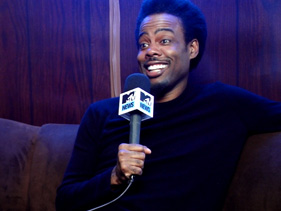
‘I just asked a normal question,’ Rock tells MTV News about what prompted the director’s passionate criticism against Hollywood. By Josh Wigler, with reporting by Eric Ditzian Chris Rock Photo: MTV News PARK CITY, Utah — The old refrain of “more money, more problems” seems to apply to Spike Lee’s “Red Hook Summer,” the director’s new drama he unveiled at the Sundance Film Festival on Sunday. During a Q&A session following the screening of the filmmaker’s religion-focused feature, actor and comedian Chris Rock (at Sundance for his new film “2 Days in New York” from Julie Delpy) asked Lee if he would have done anything differently had he “actually gotten… studio money” for the film. Lee’s response was a fiery one, fueled with comments that condemned the Hollywood studio system for knowing “nothing about black people.” “We never went to the studios with this film. I bought a camera and said we’re gonna do this mother[bleeping] film ourselves. I didn’t need a mother[bleeping] studio telling me something about Red Hook! They know nothing about black people,” Lee said in response to Rock’s question, according to the New York Post . “And they’re gonna give me notes about what a 13-year-old black boy and girl do in Red Hook? [Bleep] no!” Lee’s response was nothing short of perplexing to Rock, who told MTV News that he “just asked a normal question.” “I just asked him how it would have been different if he’d had it financed by a studio. If he had more money,” he continued. “That was it. That’s all I said. Everything else, I don’t know. You gotta ask Spike.” In “Red Hook Summer,” Lee tells the story of a young boy sent by his mother from Atlanta to spend the summer in Red Hook, Brooklyn, with his grandfather, a strict preacher he’s never met. The film stars Clarke Peters, Jules Brown and Thomas Jefferson Byrd. Do you think Spike Lee’s criticism at Sundance out of line? Sound off in the comments section! The 2012 Sundance Film Festival is officially under way, and the MTV Movies team is on the ground reporting on the hottest stars and the movies everyone will be talking about in the year to come. Keep it locked with MTV Movies for everything there is to know about Sundance. Related Videos Sundance 2012: Interviews From Park City Related Photos Sundance 2012: Behind The Scenes Photos Celebrities Hit The Ground At Sundance 2012 Film Fest
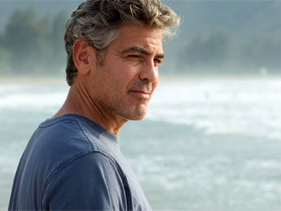
We leave the Oscar odds up to the professionals, in Bigger Than the Sound. By James Montgomery George Clooney in “The Descendents” Photo: 20th Century Fox My buddy Corey (