
Tag Archives: awards

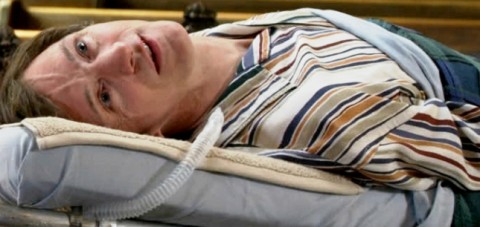
John Hawkes On ‘The Sessions’: Challenging Role Hurt, But It Was Worth It

Ben Lewin’s The Sessions (formerly The Surrogate ) emerged as the undisputed hit of Sundance 2012, landing a $6 million sale with the unlikeliest of subjects: A paralyzed man’s quest to lose his virginity, based on the life and writings of Bay Area poet Mark O’Brien. Thanks to Lewin’s sensitive and honest script and an impressive turn by indie favorite John Hawkes — who shines with wit and grace in a physically demanding performance as O’Brien, who has no use of his limbs due to polio but begins to explore his sexuality with the help of a hands-on sex therapist (Helen Hunt) – The Sessions earned consecutive standing ovations and got critics buzzing with the possibilities for next year’s Academy Awards. Movieline sat down with Hawkes after the film’s Sundance debut to discuss the indie labor of love, why O’Brien’s story resonates so powerfully, and how opportunities have expanded for him since breaking out two years ago in Park City with his Oscar-nominated turn in Winter’s Bone . I grew up close to Berkeley and was a little familiar with Mark O’Brien before seeing the film, but it captured that sense of place for me – especially with little touches like Pink Man to set the atmosphere. Yes, of course! That’s good, because we shot in Los Angeles because we couldn’t afford to shoot up there. We had to make our own Pink Man and everything. [Laughs] Luckily there are a couple of Victorian streets in Los Angeles that we were able to utilize. How familiar were you with O’Brien’s story beforehand? I was minutely aware of Mark because I had heard of Jessica Yu’s amazing, Academy Award-winning short doc about Mark, called Breathing Lessons . I’d just vaguely kind of remembered that, and I may have seen an article about him at that time, but it was a new kind of story to me when I picked up the script and read it. I was pretty taken with the script itself, by Ben Lewin, and knowing he was going to direct the film which is often a wonderful thing – it’s the person who wrote the script, directing the movie. I just thought he was an extraordinarily interesting man, a polio survivor himself and very uniquely qualified to tell the story. When the project came to you – a very challenging role, to say the least – what made you decide you had to do it? My first question to Ben, as we sat down to meet before he’d offered the role and before I’d accepted the role, was ‘Why not a disabled actor?’ And he assured me that he had taken the last couple of years, he’d put out feelers to disabled groups, and had auditioned several people – a couple of them are in the film – and just felt like he hadn’t found his Mark. So with that huge question answered, I talked to Ben a lot about how he saw the film as a whole, how he saw the character of Mark; I had my ideas, we chatted and seemed to get along really well, so it was a good fit. We went forward from there. And this is a very small project. Ben raised the money by appealing to friends, basically, and so this tiny little script suddenly attracting William H. Macy, Helen Hunt, and a bunch of other wonderful actors – it’s vindicating to read something and think, ‘This is really good!’ And then you realize other people think so too. I’m not insane, it is a great script! How challenging was the shoot itself, physically? It was very challenging – again, a minute amount of the challenge that a disabled person faces, moment to moment, but certainly it was physically challenging. I helped invent a device that we used to curve Mark’s spine, basically a large piece of foam that we nicknamed ‘The Torture Ball’ because it would lay under the left side of my body and curve my spine for every shot in the movie. Sometimes I’d have to lay on that for an hour at a time, and it was hard – it apparently displaced my organs. [Laughs] My chiropractor told me that my organs were migrating and to hopefully finish the movie soon. I have minor health issues that may relate to laying on that thing, but nothing compared to what many people suffer daily, and it’s a small price to pay for what’s turned out to be a really beautiful film. To paraphrase Mark himself in the film, it may have hurt – but it was worth it? Yes! Definitely. It’s an interesting choice that Ben made to present Mark’s story here not as a straight biopic but with a focus on his relationship with his sex surrogate. What do you think that shifted angle brings, as opposed to a more conventional portrayal? Interesting. I think Ben originally had seen the movie as a biopic and then began to realize that the part of Mark’s life that interested him the most was his quest to learn his sexual possibilities as a disabled man. I think it’s a really wise choice; biopics are interesting, but I’d rather see a documentary of a person’s whole life, and I’d much rather see a narrative feature focused on a small piece of their life. And if you can focus on a small piece of someone’s life and tell it well enough, I think it informs the whole of their life. And there’s a real interesting story there – there’s a relationship that develops, certainly heightened in our film, but with the blessing of the real surrogate, Cheryl Cohen Green, to heighten and complicate their relationship a bit and to make it a love story of sorts. The subject matter, as you describe it, doesn’t have wide appeal but I think it has so much humor and so much truth, it’s a breath of fresh air. Mark’s voice really comes through – the same painfully honest, witty spirit you can see in his writings. It was important to me to fight self-pity at every turn, and for the film as a whole to fight sentiment as much as possible. He certainly never wanted people to feel sorry for him . No! The idea that he was a courageous person and stuff, he thought was bullshit. Like, how do you presume to know what I feel, what I go through? I think through his articles he was very interested in the political and social aspects of his disability. One thing that’s striking about Jessica Yu’s film, and I believe I also read something Mark wrote about it, is that to the taxpayer – to those of us who help support disabled people by paying taxes – it was half or maybe one-third of the cost of him being in an institution and live on his own, to pay rent, to hire attendance, way less of a strain on the taxpayer than keeping him an institution, where he was sadly stuck for a few years of his life when his parents were too old to take care of him. Luckily, the University of California, Berkeley in the ‘70s said, we’ll take care of any student who qualifies, who can pass our admission – it doesn’t matter what their disability. There’s an amazing photograph of his iron lung, 800 lbs. of it, hanging from a crane right outside his dorm room window as they’re trying to get it inside. So I know Mark always had a really felt beholden to Berkeley and felt a wonderful debt to that college and that town. They opened up his life, he was kind of reborn in his 30s in Berkeley. Sex and love are central to Mark’s journey in this film, and it’s such a fascinating terrain to explore – the relationship between disability and sexuality, and sexuality and manhood, and what they all might have meant to him. I can’t exactly speak in exact detail to his innermost thought, but he was quite effusive in his writings. In Jessica Yu’s film there is a brief mention of his surrogate time. Bill Macy’s made the point that he worked with a group, and disabled people, like able-bodied people, want to be independent as much as possible and live their lives that way, and they also want to love and be loved. Those are commonalities among people everywhere, and certainly disabled people are no exception. I think that Mark mainly was interested in sex because he was more largely interested in love and in a relationship with someone, and I think that he felt that if he ever met someone he could love, that he would want to have explored his possibilities, sexually. So that’s where the surrogate comes in. The minute that the first screening here ended, folks were buzzing about next year’s Oscars. It’s a little early! [Laughs] It’s a lot early. I mean, there may be twenty more amazing films that come out in the next year. I hope so! So who knows? It’s way too early and it doesn’t exactly make me nervous, I just turn a deaf ear to it because low expectations have always been the key to happiness for me. I don’t want to expect things to happen as much as hope, and if those Oscar predictions come true, fantastic – because it will bring more people to this film. After the success of Winter’s Bone , perhaps, how much did things change for you? Has the way that you’ve chosen projects in the last few years evolved at all? No, though I’ve certainly been afforded the opportunity to choose what I might be a part of. It’s not like every director in every movie is seeking me out by any means, there are a lot of things I’m not suited for, a lot of things I’m not interested in, and a lot of things that directors wouldn’t be interested in me for. What are you interested in? I’m interested in amazing stories told by talented people, and to get to play a terrific role. The three things I try to find are story, parts, people. Has it gotten easier to find the great characters? You know, I think it maybe is. It’s certainly changed for me because when I first got to Los Angeles 20 years ago, I had worked a lot of my life and was still working regular jobs. Acting was more fun to me, and paid better when I could get the gigs, so in order to avoid any further carpentry and restaurant work and things I’d been doing for many years, I just took whatever came my way. I was happy to be able to pay rent and eat. Certainly I’m freer now; I don’t get to do everything I want to do, but I no longer have to do things I don’t want to do – so that’s good. This interview previously ran as part of Movieline’s Sundance 2012 coverage. Follow Jen Yamato on Twitter . Follow Movieline on Twitter .
Read more here:
John Hawkes On ‘The Sessions’: Challenging Role Hurt, But It Was Worth It

Ewan McGregor’s Jack Gets Re-titled; David Duchovny, Hope Davis Head To Fall: Biz Break

Also in Thursday morning’s round-up of news briefs: The National Board of Review releases details for its awards event; Tyler Perry revs up for a second Double Cross ; a Toronto heist thriller heads to U.S. theaters; And remembering Dutch actress Syliva Kristel and Japanese director Koji Wakamatsu. Meredith Vieira to Host National Board of Review Awards Gala The event will take place January 8th at Cipriani 42nd Street in New York. The NBR will announce their Award Winners on December 5th. “It’s a true honor to be reteaming with my friends at the NBR for their special night,” said Vieira in an NBR statement. “I look forward to working with Annie and the organization in the coming months to put together a fantastic evening in honor of the best films of the year.” Wasteland Heads to U.S. Theaters The film, directed by Rowan Athale, centers on Harvey Miller, a young Englishman recently released from prison, recruits his three best friends and devises a complex scheme to rob the local drug kingpin (who also happens to be the reason for Harvey’s incarceration). To complicate matters further, Harvey must balance exacting his revenge and pulling off this major score with trying to win back his reluctant but still-caring ex-girlfriend. Distributor Oscilloscope, which picked up rights to the film, plans a 2013 release. Around the ‘net… Tyler Perry and James Patterson Finalize Alex Cross Film Sequel Tyler Perry will star in a second movie based on Patterson’s crime novel Double Cross The first opens this Friday, Deadline reports . David Duchovny, Hope Davis, Timothy Hutton Undergo After The Fall The three are starring in the film being directed by Anthony Fabian ( Skin ) based on the true story of parents grieving for the unexpected death of their daughter, but use it as a motivation to build a state of the art children’s hospital where families are welcomed into the healing process, Deadline reports . Bryan Singer’s Jack Gets New Title and Release The director’s fantasy-adventure starring Ewan McGregor, Stanley Tucci and Ian McShane is now titled Jack the Giant Slayer from the previous Jack the Giant Killer . The move will give the PG-13 tale that stars Nicholas Hoult about a young mean who unintentionally opens a gateway between earth and a race of giants, a more “family friendly” title. New Line and Warner Bros. plan an August 9th release, THR reports . R.I.P. Koji Wakamatsu The Japanese filmmaker had just been honored as Asian Filmmaker of the Year at the Busan International Film Festival in South Korea. He got his film start in pornography but went on to make independent productions that won praise. The Caterpillar director, however, said he thought his films were under appreciated in Japan, Deadline reports . Emmanuelle Actress Sylvia Kristel Dies The Dutch actress starred in the 1974 erotic French film. The 60 year-old actress had been suffering from cancer and was admitted to a hospital in July after suffering a stroke. Emmanuelle , which told the story of a sexually promiscuous housewife, spawned numerous sequels and played in a cinema on the Champs-Elysees for 11 years, BBC reports .

Read more:
Ewan McGregor’s Jack Gets Re-titled; David Duchovny, Hope Davis Head To Fall: Biz Break

Joaquin Phoenix Doesn’t Want Your Bull**** Oscar Carrot

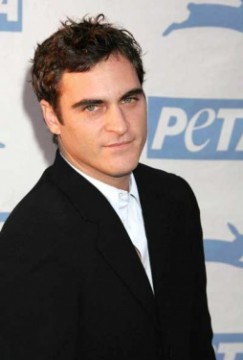
Joaquin Phoenix has a collection of awards nominations and wins that many actors would look upon with envy, but he is calling, “bullshit.” The actor won applause at the Toronto International Film Festival for his role in Paul Thomas Anderson ‘s The Master and he even picked up a Best Actor prize at the Venice Film Festival last month (shared with Philip Seymour Hoffman ). But the actor said he thinks the whole process is the “stupidest thing in the whole world.” Speaking with Interview magazine in their latest issue about a wide-range of topics, the two-time Oscar nominee blasted the awards race, saying he’d like to stay clear of the machine, even as the current season – and industry – of awards goes into full throttle. “I’m just saying that I think it’s bullshit. I think it’s total, utter bullshit, and I don’t want to be a part of it. I don’t believe in it. It’s a carrot, but it’s the worst-tasting carrot I’ve ever tasted in my whole life. I don’t want this carrot. It’s totally subjective. Pitting people against each other . . . It’s the stupidest thing in the whole world.” Phoenix received Oscar noms for Walk the Line (2005) and Gladiator (2000) and has been all but anointed with another one this year for The Master . He’s also received many festival nods throughout his lengthy acting stint and even a Golden Globe for Best Performance for an Actor in a Motion Picture Comedy or Musical for Walk the Line in which he played musician Johnny Cash. “It was one of the most uncomfortable periods of my life when Walk the Line was going through all the awards stuff and all that. I never want to have that experience again. I don’t know how to explain it – and it’s not like I’m in this place where I think I’m just above it -but I just don’t ever want to get comfortable with that part of things.”
 [ Sources: Interview via Huffington Post ]

View original post here:
Joaquin Phoenix Doesn’t Want Your Bull**** Oscar Carrot

Willem Dafoe Joins Lars Von Trier’s Nymphomaniac; Nicole Kidman Heads Out

Charlotte Gainsbourg and Willem Dafoe played a crazily estranged couple in Lars von Trier ‘s erotic/thriller/surreal Antichrist in 2009. And now, Dafoe is set to return to Von Trier’s latest, Nymphomaniac along with Gainsbourg, Shia LaBeouf , Christian Slater , Stellan Skarsgard and Uma Thurman . Others are joining the cast, while one big name has pulled out. Nicole Kidman had been rumored as another possible addition to the cast, but she has more regal obligations and cannot join, according to THR. Kidman, who played the lead role in von Trier’s Dogville is currently busy playing Grace Kelly in Olivier Dahan’s Grace of Monaco . Dafoe, meanwhile, will play a supporting role in the two-part erotic Nymphomaniac , which will be released in both a hardcore and soft core version. Dafoe is currently in Hamburg, starring in Anton Corbijn’s drama A Most Wanted Man . Von Trier veteran Udo Kier, who has taken part in a number of von Trier’s films including his most recent Melancholia has also joined the cast along with French actor Jean-Marc Barr ( Dogville ), Caroline Goodall ( Schindler’s List ), Kate Ashfield ( Shaun of the Dead ), Saskia Reeves ( Butterfly Kiss ) and Danish actor Omar Shargawi ( R ). In the film, Gainsbourg stars as Jo, a self-described nymphomaniac who reveals her story to an older bachelor played by Stellan Skarsgard. Rumors have flown over the summer whether named actors would take part in sexually explicit scenes, though porn-star “stand-ins” have also been rumored to be engaged on camera. Shia LaBeouf fueled the rumor when he said he was ready to “go all the way” in Nymphomaniac . [ Source: THR ]

Originally posted here:
Willem Dafoe Joins Lars Von Trier’s Nymphomaniac; Nicole Kidman Heads Out

Transformers 4 And The Great Michael Bay Gender Equality Tease

A surge of intrigue rippled through the blogosphere this week when a rumor hit, sourced from the barest of suggestions ( a secondhand casting breakdown ), that Michael Bay ‘s fourth and allegedly final outing with the Transformers series might revolve around the rarest of Bay creatures: A female heroine. Sad, yes — Bay’s filmography is so male-driven, his portfolio so stacked with binders full of supermodel-hot leading ladies, that even the slightest move toward gender equality in Bay’s work force warrants an onslaught of hopeful speculation. That’s not to say Michael Bay has that much in common with Presidential hopeful Mitt Romney . One’s a clean-cut Mormon Presidential candidate who appears to think in unfortunate Eisenhower-era terms of sexual politics, the other is Hollywood’s reigning alpha male blockbuster guru with an eye for explosions and hot ladies who was once described by an actor — lovingly so — as a barking dog . Well, they both have good hair. But these two white male millionaire Americans converge this week the most when it comes to talking about the roles of women in their respective worlds of film and politics. Could it be Michael Bay is really making room for a strong female star in his testosterone-fueled oeuvre? The rumors trace back to a flimsy two-sentence report on SpoilerTV : It looks like Transformers 4 will have 2 new leads. The new female lead that they are looking for is a high school senior and her boyfriend a Texas racing driver. Many bloggers picking up the story focused on the latter sentence, extrapolating that it meant Transformers 4 will revolve around a female protagonist with a male love interest — the opposite of the three Shia LaBeouf + Megan Fox/Rosie Huntington-Whitely films to date. Understandably, the notion is promising. Enough with LaBeouf’s Sam Witwicky saving the world with his robot pals and a hot lady on his arm — bring on the scrappy (but most likely model-gorgeous and stick-thin) female lead to save Earth, or the galaxy, or whatever! Consider it wishful thinking by way of selective reportage, if you give SpoilerTV’s clumsily-worded report any credence at all. For starters, it clearly states two new leads — beside which Fox and Huntington-Whitely were technically “female leads” even if they payed second fiddle to LaBeouf. It sounds more like Bay’s trying to reboot the franchise with a new dynamic romantic duo fans can root for, and lust after, like they did for LaBeouf and Fox at first but never quite did for LaBeouf and Huntington-Whiteley, Fox’s supermodel replacement. Maybe this “high school senior” and her “Texas racing driver” boyfriend will fight evil robots together, as equal partners on equal footing, although he already has a leg up on her with the mere fact that he has a vocation useful for fighting in a war with giant robots who turn into cars and she’s technically a schoolgirl. Look at Bay’s filmography and not one film has an actual female protagonist, though he’s got a memorable lineup of female leads/love interests under his belt: Tea Leoni in Bad Boys , Liv Tyler in Armageddon , Scarlett Johansson in The Island . His eye for the female form is undeniable, and moreso in his earlier films, translated to casting talented actresses in their popcorn movie breakthroughs. But Bay did surprise with his latest project, the modest (by Bay standards) true crime tale Pain & Gain . Not another CG-heavy spectacle, and not a film stitched together from the wet dreams of a 12-year-old boy, the forthcoming black comedy stars another group of muscly men (it is about thugs who meet at a gym, after all) including Mark Wahlberg, Dwayne Johnson, Anthony Mackie, and Kurt Angle. Rebel Wilson, one of the cast’s lone women, plays a key role and is a terrific hire on Bay’s part. Still, when I asked her in a recent interview what she’d learned most about her director, she noted that “he loves push-up bras” and shoots Victoria’s Secret commercials for fun . So let’s hope that Bay’s turning over a new leaf and embracing a more progressive attitude toward the female characters in his movies. It’s entirely possible that he could use his whirling hero shots and explosiony adventures for good, to introduce strong new heroines into the cinematic landscape. I’m just not terribly optimistic that it’ll happen in Transformers 4 . Follow Jen Yamato on Twitter . Follow Movieline on Twitter .

View post:
Transformers 4 And The Great Michael Bay Gender Equality Tease

Welcome To The New Movieline − Tell Us What You Think

Over the last two weeks, you may have noticed some big changes in the look and functionality of Movieline.  In addition to a sweet new logo, we’ve redesigned the home page to give you easier accessibility to a greater array of stories.  Top Stories  and  Hot Topics  in the film world and popular culture are now just a click away on the home page, as are the week’s  Big Films , the latest trailers and major cinema milestones such as the 50th anniversary of James Bond  and the vibrant debate over the plot and symbolism of Prometheus . These are just a few of the improvements, new features and surprises that we have planned in the coming months as part of our commitment to you, our savvy, witty and outspoken readership. On behalf of Movieline’s Executive Editor Jen Yamato and Managing Editor Brian Brooks , I invite you to give us your feedback. In the comments section below, please tell us what you like and don’t like about the changes we’ve made and how we can make your Movieline experience a better one.  We’re listening. Sincerely, Frank DiGiacomo Editorial Director Follow Movieline on Twitter and Facebook .

See original here:
Welcome To The New Movieline − Tell Us What You Think

Marvel’s ‘Ant-Man’ Gets A 2015 Release Date

Marvel hero Hank Pym AKA Ant-Man will get his shot at the big screen in 2015, Disney announced today as they updated their slate of upcoming films. Also revealed: You’ll be able to see Iron Man 3 and Thor 2 in 3-D. Yawn . Let’s hear more about Ant-Man ! I’ll be honest: Even after Disney/Marvel unveiled the Ant-Man logo card at Comic-Con alongside the likes of Iron Man 3 , Thor: The Dark World , and Guardians of the Galaxy I had my doubts that Edgar Wright’s long-gestating superhero pic would make it to the screen in my lifetime. Now that it’s got a release date — albeit one in 2015, which is only three years away but feels like the distant future (seriously, how are we almost to the year 2015?!) — it finally feels like Ant-Man is happening. Also announced in Disney’s press release were dates for the Phineas and Ferb movie (moved up from 2014 to July 28, 2013), Saving Mr. Banks (December 20, 2013), DisneyNature’s Bears (April 18, 2014), “Disney Animation Untitled” (November 7, 2014) and “Pixar Animation Untitled” (November 25, 2015). Ant-Man , meanwhile, is slated to hit theaters on November 6, 2015. And while it’s unlikely since it came from an entirely different character who inherited the Ant-Man legacy (I know, I know), I’m holding out hope for a few scenes like this, because LOL.

Read the original:
Marvel’s ‘Ant-Man’ Gets A 2015 Release Date

ARRIVALS: Martin McDonagh Takes On Tarantino With ‘Seven Psychopaths’

If there’s a case to be made that turning one’s dark, twisted fantasies into plays and movies is good for the soul, Martin McDonagh is Exhibit A.  The platinum-haired Irishman has given the world some breathtakingly black comedy, such as his 2003 play about a child serial killer The Pillowman and, as of Friday, the slightly lighter Seven Psychopaths . But if he’s nursing a tortured soul, there was very little evidence of it when I interviewed him at the Toronto International Film Festival in September.  McDonagh, who looks like a character actor from a Bond film, laughs easily when he talks, often at his own wit. He’s also cheekily confident about his writing, which he should be. His 2008 directorial debut, the hitman buddy flick In Bruges  was cinematic poetry, and his bloody but surprisingly deep follow up,  Seven Psychopaths,  easily propels him into Tarantino territory. I smell a Bond film in his future. There’s been plenty written about the plot of the movie, so I’ll get right to the interview in which McDonagh talked about the unwritten film-industry rule that it’s okay to kill women but not pets in movies, his plans to take a break from psychopaths in the near future and why the next project we see from him will likely be another play. Movieline: What a cast you have.  Were they hard to line up?   McDonagh: No, strangely I knew four of the boys from before. Obviously, I know Colin [Farrell], and Sam [Rockwell] and Chris [Walken] and I did a play two, three years ago in New York, A Behanding in Spokane .  Actually, I knew Sam for about five years before we did that. Woody, strangely, I’ve known for about nine or 10 years because he’s a big theater fan. We hooked up in Dublin about 10 years ago and have stayed in touch since. I’d known a couple of the other actors socially. I met Abbie [Cornish] a year or two before and Olga Kurylenko a year or two before. And they were all first choices. With Woody, there was a situation with someone else. He almost did us a favor really because he came in at the last minute and knocked it out of the park. And Tom Waits I knew a little bit before, too.  Chris and Tom have been heroes of mine since I was eight or nine. I got Swordfish Trombones when it came out. I was 11 or so. He’s more than a musician or an actor. He’s an idol and a icon of American letters. I agree. So, to make an offer and have Tom say, “yes” made me go ‘Fuck!  I’m going to have to direct these people!  What am I going to say? I know nothing! [Laughs]    RELATED: McDonagh talks about  revisiting the “creepy fucked-up musical” he was working on with Tom Waits called A Very Dark Matter. The role seem tailor made for each of the characters. Is that a function of  how good a writer you are? Yes, let’s go with that. [Laughs]  None of these parts were written for those boys because the script was written about seven or eight years ago.  It was written just after the script of In Bruges but before I made Bruge . I knew at the time that I didn’t have the wherewithal to make this as my first film because there’s so much going on in it and so many cinematic aspects to it.  I thought it was best to go with something small-scale like Bruges where you have three characters in one town.  It’s almost like a play really. I think it’s a credit to how good they are as actors. They just take it and make it feel like it’s completely natural, as if they’re making this stuff up on the spot. No one talks like Chris. No one breaks up a script like he does. Even with the play we did,  I can’t hear anyone else’s voice in that character ever again.  Unless the next actor broke it up exactly like he did, it would feel wrong,  But, you know, none of that is on the page. Seven Psychopaths is framed by two suicides:  You’ve said this movie is about the deranged and the spiritual, and one of the suicides is deranged. The other is spiritual — a sacrificial statement made in an effort to end violence. But isn’t suicide an act of violence?   No, I don’t. I mean, it’s horrible, but I could never — I guess lots of my heroes went that way: Kurt Cobain, Richard Brautigan, the Beat writer. But yeah, I could never criticize it. It’s terribly sad, obviously, but I guess there’s some aspect of me that finds something honorable about it. For a movie in which a woman gets shot in the stomach and a head explodes, the final scenes are quite surprising.  After all of this outrageous violence and black comedy, it’s quite spiritual and moving. That was the hope: to have all these crazy comic elements but still totally go to that place. I’m glad you felt that way. I kind of feel like we did get there, and I’m happy about that.  It’s a much crazier movie than In Bruges was. Bruges was more simple and funny but melancholic and it’s own thing. But this is a crazy bag of lizards — on fire — that had to be spiritual. [Laughs] I loved Sam Rockwell’s riff on Gandhi’s “eye for an eye” line. [See the trailer below.] Is that something you’ve been thinking about for a long time? No, That just came out on the day when I was writing the script.  I don’t think there’s anything I could have done about it, but the next line — the punch line almost — always gets missed because there’s a big laugh. Sam says, ‘Gandhi was wrong’ but then what gets missed is “but no one’s got the balls to come right out and say it.” I think that would be good to go on a poster. Violence is a big theme in your work.  Where does Gandhi’s pacifism fall into your worldview? I’m a big believer. I just saw Alex Gibney’s   Mea Maxima: Culpa Silence in the House of God, and I was thinking you’d be great to direct a dramatic movie or a black comedy about that subject. Can you make a black comedy about sexual abuse these days?  I think it’s almost impossible, although what’s that one with Phil Hoffman that Todd Solondz did?   Happiness .  It’s black and it’s funny, but fuck. That kind of stuff is just too horrific for me to ever want to fool with.  Stuff like that is just too depressing to even get into. In the movie, Christopher Walken’s character Hans tells Colin Farrell that psychopaths “get tiresome after a while.” Since your work has dealt with quite a few psychopaths, is that you sending a hint that you’re thinking of moving in a different direction? Probably not!  Psychopaths are so much fun to write about.  Like Sam’s character in the film: if he doesn’t know what the fuck he’s going to say or do next, then you don’t.  That’s a joy as a writer.  Although I do want to get away from it a little bit. Gunfights and shootouts are exciting, but I think the next film is going to be much more of a quieter character piece and quite female based. There’s going to be a strong female lead — an older female lead, too. The script is already written. Do you have an actress in mind? Yeah, but I should talk to her first. [Laughs] What else can you tell me about it? I think that all I can say is that there’s a very strong female lead and two other male characters. Do you have a title? It’s convoluted deliberately:  Three Billboards Outside of Ebbing, Missouri You really seemed to be having fun with thriller movie conventions in Seven Psychopaths . Christopher Walken tells Colin Farrell that the his dialogue for women is so terrible. [Laughs] Yes.  I admire that.  My own plays have very strong women characters, so, thankfully, I know that the next movie is going back to strong female leads. I wasn’t accusing you of doing that. Well, you should. It’s true. [Laughs]  The female characters are terrible in this. The actresses are fantastic, but they all die.  They all have only a scene and a half. Rockwell’s character also a cites a rule that “you can’t let the animals die in a movie. Just the women.”  Is that an unwritten rule of movie-making? It is. There were [studio] notes about a gun to a dog’s head and killing or not killing the dog. Not a word about shooting a woman in the stomach.  That’s the way it works. How many dead animals have you seen in the last year in movies?  And how many dead women have you seen?  I know what I’m putting my money on. Did you put that line in before or after the notes?  After. You’ve worked with Colin Farrell twice now. Why do you like him so much as an actor? We have a shorthand — we don’t really have to speak. We hardly saw each other for the three years or so in between films, and when we got together to read the script for Seven Psychopaths at his house, it was like not a day had passed since the last day of shooting. He’s very honest and very open to going anywhere and being truthful. And he’s very supportive. With the last film, I came in not having made a feature before. And he was the star. But every day, he’d help me through it. He’s just a lovely guy as well. Not starry at all. Did you have as much fun off the set as you did on it? It was lovely. Colin drove Sam and I out to Joshua Tree about four or five weeks before shooting because you can sense it if people are playing friends or lovers and there isn’t any kind of chemistry.  So, I wanted to make sure. They didn’t know each other terribly well before the film, so I wanted to make sure that they were both safe with each other. So we went off for a little weekend. And Sam and I drank too much, but we worked through the script in these little cabins in the desert. It was quiet and real and proper work.  But it was also the drive out there. Colin went into a service station and he got Sam that hat he wears in the movie. Right, and the cheese puffs and chocolate milk.  Eating cheese puffs and drinking chocolate milk was Colin’s idea.  Even when we were doing the play, Sam loves acting and eating at the same time.  And there are like ten scenes of him doing that. At the Toronto premiere they had their arms around each other. It sure looked like they had bonded. Yeah, I think they’ve stayed in touch. I’d like to do something with them again, too. And Chris and Sam are the same way. They are really good friends.  I guess the play helped, too.   So, for me, it was just capturing that love and chemistry, and I hope it’s one of the main things that comes through. What’s your relationship to theater right now?  I remember you saying not so long ago that you “respect film and disrespect theater.” I used to say that because it was true. I grew fond of a type of theater that I or Tracy Letts or Mamet or Shepard do.  I was disrespectful of that snooty, shitty English type of theater — or shitty American theater. It’s so expensive and sometimes it exudes that snottiness from the stage. So, that was what I was always fighting against. But I won the fight. [Laughs]  And I’ll keep coming back to it because it’s fun.  It’s also  easier to write a play. Or it was.  I’m going to go off after this and not do anything for a bit and let whatever story comes to me come.  If it’s a play, fine.  The play I did with Sam and Colin was done after making In Bruges . It was very easy to do. The good thing about a play is you can get in and out and do one in the course of six months. A film is two straight years. But I kind of like the fact that, having finished a film, it will be there for good.  Some of the plays I’ve done in the past — as happy as I’ve been with them, or as well as they’ve been received, they’re gone forever. I could never show you Sam and Chris’s performance. It’s just gone. So, there’s that aspect of it. When you say “after this,” do you mean after the next movie you’re making? No, I’m going to be really lazy. [Terrence] Malick was always one of my heroes and not just for the movies themselves. He could just stop for ages.  And now he’s doing the opposite. So we could see a play from you next instead of a movie? Possibly. I think it will probably be the next thing I will write. I’ve probably got two films that are sort of ready to go. And at the same time, I’d like to write something again for all the guys in this film.  Whether it’s a pairing or three of them. When you’ve got a relationship like that, you want to keep  working with them. I’m dying to know. Have you and Quentin Tarantino ever met? No.  Never. That’s interesting.  Given that you share a lot of influences, like Sam Peckinpah, for instance, I’m guessing that you guys would either love each other or hate each other . Yeah. I wonder, too. [Smiles] Follow Frank DiGiacomo on Twitter. Follow Movieline on Twitter.

Visit link:
ARRIVALS: Martin McDonagh Takes On Tarantino With ‘Seven Psychopaths’

ARRIVALS: Martin McDonagh Takes On Tarantino With ‘Seven Psychopaths’

If there’s a case to be made that turning one’s dark, twisted fantasies into plays and movies is good for the soul, Martin McDonagh is Exhibit A.  The platinum-haired Irishman has given the world some breathtakingly black comedy, such as his 2003 play about a child serial killer The Pillowman and, as of Friday, the slightly lighter Seven Psychopaths . But if he’s nursing a tortured soul, there was very little evidence of it when I interviewed him at the Toronto International Film Festival in September.  McDonagh, who looks like a character actor from a Bond film, laughs easily when he talks, often at his own wit. He’s also cheekily confident about his writing, which he should be. His 2008 directorial debut, the hitman buddy flick In Bruges  was cinematic poetry, and his bloody but surprisingly deep follow up,  Seven Psychopaths,  easily propels him into Tarantino territory. I smell a Bond film in his future. There’s been plenty written about the plot of the movie, so I’ll get right to the interview in which McDonagh talked about the unwritten film-industry rule that it’s okay to kill women but not pets in movies, his plans to take a break from psychopaths in the near future and why the next project we see from him will likely be another play. Movieline: What a cast you have.  Were they hard to line up?   McDonagh: No, strangely I knew four of the boys from before. Obviously, I know Colin [Farrell], and Sam [Rockwell] and Chris [Walken] and I did a play two, three years ago in New York, A Behanding in Spokane .  Actually, I knew Sam for about five years before we did that. Woody, strangely, I’ve known for about nine or 10 years because he’s a big theater fan. We hooked up in Dublin about 10 years ago and have stayed in touch since. I’d known a couple of the other actors socially. I met Abbie [Cornish] a year or two before and Olga Kurylenko a year or two before. And they were all first choices. With Woody, there was a situation with someone else. He almost did us a favor really because he came in at the last minute and knocked it out of the park. And Tom Waits I knew a little bit before, too.  Chris and Tom have been heroes of mine since I was eight or nine. I got Swordfish Trombones when it came out. I was 11 or so. He’s more than a musician or an actor. He’s an idol and a icon of American letters. I agree. So, to make an offer and have Tom say, “yes” made me go ‘Fuck!  I’m going to have to direct these people!  What am I going to say? I know nothing! [Laughs]    RELATED: McDonagh talks about  revisiting the “creepy fucked-up musical” he was working on with Tom Waits called A Very Dark Matter. The role seem tailor made for each of the characters. Is that a function of  how good a writer you are? Yes, let’s go with that. [Laughs]  None of these parts were written for those boys because the script was written about seven or eight years ago.  It was written just after the script of In Bruges but before I made Bruge . I knew at the time that I didn’t have the wherewithal to make this as my first film because there’s so much going on in it and so many cinematic aspects to it.  I thought it was best to go with something small-scale like Bruges where you have three characters in one town.  It’s almost like a play really. I think it’s a credit to how good they are as actors. They just take it and make it feel like it’s completely natural, as if they’re making this stuff up on the spot. No one talks like Chris. No one breaks up a script like he does. Even with the play we did,  I can’t hear anyone else’s voice in that character ever again.  Unless the next actor broke it up exactly like he did, it would feel wrong,  But, you know, none of that is on the page. Seven Psychopaths is framed by two suicides:  You’ve said this movie is about the deranged and the spiritual, and one of the suicides is deranged. The other is spiritual — a sacrificial statement made in an effort to end violence. But isn’t suicide an act of violence?   No, I don’t. I mean, it’s horrible, but I could never — I guess lots of my heroes went that way: Kurt Cobain, Richard Brautigan, the Beat writer. But yeah, I could never criticize it. It’s terribly sad, obviously, but I guess there’s some aspect of me that finds something honorable about it. For a movie in which a woman gets shot in the stomach and a head explodes, the final scenes are quite surprising.  After all of this outrageous violence and black comedy, it’s quite spiritual and moving. That was the hope: to have all these crazy comic elements but still totally go to that place. I’m glad you felt that way. I kind of feel like we did get there, and I’m happy about that.  It’s a much crazier movie than In Bruges was. Bruges was more simple and funny but melancholic and it’s own thing. But this is a crazy bag of lizards — on fire — that had to be spiritual. [Laughs] I loved Sam Rockwell’s riff on Gandhi’s “eye for an eye” line. [See the trailer below.] Is that something you’ve been thinking about for a long time? No, That just came out on the day when I was writing the script.  I don’t think there’s anything I could have done about it, but the next line — the punch line almost — always gets missed because there’s a big laugh. Sam says, ‘Gandhi was wrong’ but then what gets missed is “but no one’s got the balls to come right out and say it.” I think that would be good to go on a poster. Violence is a big theme in your work.  Where does Gandhi’s pacifism fall into your worldview? I’m a big believer. I just saw Alex Gibney’s   Mea Maxima: Culpa Silence in the House of God, and I was thinking you’d be great to direct a dramatic movie or a black comedy about that subject. Can you make a black comedy about sexual abuse these days?  I think it’s almost impossible, although what’s that one with Phil Hoffman that Todd Solondz did?   Happiness .  It’s black and it’s funny, but fuck. That kind of stuff is just too horrific for me to ever want to fool with.  Stuff like that is just too depressing to even get into. In the movie, Christopher Walken’s character Hans tells Colin Farrell that psychopaths “get tiresome after a while.” Since your work has dealt with quite a few psychopaths, is that you sending a hint that you’re thinking of moving in a different direction? Probably not!  Psychopaths are so much fun to write about.  Like Sam’s character in the film: if he doesn’t know what the fuck he’s going to say or do next, then you don’t.  That’s a joy as a writer.  Although I do want to get away from it a little bit. Gunfights and shootouts are exciting, but I think the next film is going to be much more of a quieter character piece and quite female based. There’s going to be a strong female lead — an older female lead, too. The script is already written. Do you have an actress in mind? Yeah, but I should talk to her first. [Laughs] What else can you tell me about it? I think that all I can say is that there’s a very strong female lead and two other male characters. Do you have a title? It’s convoluted deliberately:  Three Billboards Outside of Ebbing, Missouri You really seemed to be having fun with thriller movie conventions in Seven Psychopaths . Christopher Walken tells Colin Farrell that the his dialogue for women is so terrible. [Laughs] Yes.  I admire that.  My own plays have very strong women characters, so, thankfully, I know that the next movie is going back to strong female leads. I wasn’t accusing you of doing that. Well, you should. It’s true. [Laughs]  The female characters are terrible in this. The actresses are fantastic, but they all die.  They all have only a scene and a half. Rockwell’s character also a cites a rule that “you can’t let the animals die in a movie. Just the women.”  Is that an unwritten rule of movie-making? It is. There were [studio] notes about a gun to a dog’s head and killing or not killing the dog. Not a word about shooting a woman in the stomach.  That’s the way it works. How many dead animals have you seen in the last year in movies?  And how many dead women have you seen?  I know what I’m putting my money on. Did you put that line in before or after the notes?  After. You’ve worked with Colin Farrell twice now. Why do you like him so much as an actor? We have a shorthand — we don’t really have to speak. We hardly saw each other for the three years or so in between films, and when we got together to read the script for Seven Psychopaths at his house, it was like not a day had passed since the last day of shooting. He’s very honest and very open to going anywhere and being truthful. And he’s very supportive. With the last film, I came in not having made a feature before. And he was the star. But every day, he’d help me through it. He’s just a lovely guy as well. Not starry at all. Did you have as much fun off the set as you did on it? It was lovely. Colin drove Sam and I out to Joshua Tree about four or five weeks before shooting because you can sense it if people are playing friends or lovers and there isn’t any kind of chemistry.  So, I wanted to make sure. They didn’t know each other terribly well before the film, so I wanted to make sure that they were both safe with each other. So we went off for a little weekend. And Sam and I drank too much, but we worked through the script in these little cabins in the desert. It was quiet and real and proper work.  But it was also the drive out there. Colin went into a service station and he got Sam that hat he wears in the movie. Right, and the cheese puffs and chocolate milk.  Eating cheese puffs and drinking chocolate milk was Colin’s idea.  Even when we were doing the play, Sam loves acting and eating at the same time.  And there are like ten scenes of him doing that. At the Toronto premiere they had their arms around each other. It sure looked like they had bonded. Yeah, I think they’ve stayed in touch. I’d like to do something with them again, too. And Chris and Sam are the same way. They are really good friends.  I guess the play helped, too.   So, for me, it was just capturing that love and chemistry, and I hope it’s one of the main things that comes through. What’s your relationship to theater right now?  I remember you saying not so long ago that you “respect film and disrespect theater.” I used to say that because it was true. I grew fond of a type of theater that I or Tracy Letts or Mamet or Shepard do.  I was disrespectful of that snooty, shitty English type of theater — or shitty American theater. It’s so expensive and sometimes it exudes that snottiness from the stage. So, that was what I was always fighting against. But I won the fight. [Laughs]  And I’ll keep coming back to it because it’s fun.  It’s also  easier to write a play. Or it was.  I’m going to go off after this and not do anything for a bit and let whatever story comes to me come.  If it’s a play, fine.  The play I did with Sam and Colin was done after making In Bruges . It was very easy to do. The good thing about a play is you can get in and out and do one in the course of six months. A film is two straight years. But I kind of like the fact that, having finished a film, it will be there for good.  Some of the plays I’ve done in the past — as happy as I’ve been with them, or as well as they’ve been received, they’re gone forever. I could never show you Sam and Chris’s performance. It’s just gone. So, there’s that aspect of it. When you say “after this,” do you mean after the next movie you’re making? No, I’m going to be really lazy. [Terrence] Malick was always one of my heroes and not just for the movies themselves. He could just stop for ages.  And now he’s doing the opposite. So we could see a play from you next instead of a movie? Possibly. I think it will probably be the next thing I will write. I’ve probably got two films that are sort of ready to go. And at the same time, I’d like to write something again for all the guys in this film.  Whether it’s a pairing or three of them. When you’ve got a relationship like that, you want to keep  working with them. I’m dying to know. Have you and Quentin Tarantino ever met? No.  Never. That’s interesting.  Given that you share a lot of influences, like Sam Peckinpah, for instance, I’m guessing that you guys would either love each other or hate each other . Yeah. I wonder, too. [Smiles] Follow Frank DiGiacomo on Twitter. Follow Movieline on Twitter.

Visit link:
ARRIVALS: Martin McDonagh Takes On Tarantino With ‘Seven Psychopaths’

Producer Jason Blum Talks ‘Sinister’ & The ‘Paranormal Activity’ Recipe For Success

Jason Blum had produced a dozen projects before he hit upon 2007’s sleeper phenomenon Paranormal Activity , a micro-indie horror pic with no stars that in turn became the model for Blumhouse Productions, his own genre-leaning multimedia label. Fast forward just five years and Paranormal Activity 4 is set to continue the series’ low-budget thrills (with webcam technology!) next week, while the Blum-produced Sinister , about a writer (Ethan Hawke) contending with a house haunted by insidious forces, opens today. (For a third new venture, The Blumhouse of Horrors, Blum & Co. take over a historic theater in downtown Los Angeles. More info here .) Movieline caught up with the man behind many of the most profitable — and cost-effective — horror hits in recent memory for a peek behind the curtain: What’s the Blum secret to success? What was it that first interested you in Sinister , these filmmakers, and this story – and given your past horror projects, how do you think it fits into your portfolio? I’m super happy with the movie. I think it works because very simply [writer C. Robert] Cargill and [director Scott Derrickson] did a terrific job on it. They first pitched it to me a year and a half ago and the movie they first described to me in my office and the movie you’ll see are very close, they’re virtually the same thing. All I did was give these guys the creative freedom to make what they wanted to make. Your name has been so closely associated with the Paranormal Activity franchise and its success – how do you feel about being known for these particular films? I love genre movies. I’ve made a handful of other ones in addition to the Paranormal movies, and my favorite thing about what Paranormal allowed our company to do is that the company is based on this idea of betting on yourself. That’s what Oren Peli did on Paranormal Activity , that’s what James Wan did on Insidious , and that’s what Scott and Cargill did on Sinister . It’s given birth to all these movies and I’m really pleased that our company is associated with them. I’m really interested in genre, but I’m also doing TV shows and a haunted house in L.A. Having Paranormal and it allowing my company to expand in all things genre, I feel really lucky. Has the Paranormal franchise gotten a bad rap, a reputation it doesn’t deserve? It’s been so successful and the more these sequels charge on the more complaints you hear about found footage, or sequel fever, and all that. I’m sort of proud of the way the franchise has evolved. We’ve taken directors with very specific visions – Kip Williams was a real art house director and Henry and Rel who did 3 and 4 did Catfish . All the directors of the sequels of Paranormal , none of them had ever done genre movies before. And not that we would do that or not do that specifically going forward, but I feel that’s kept it fresh. The way each sequel has built on what’s come before and evolved the mythology has been fresh, but how much can you keep innovating? How much more difficult does it then become to find a new angle for the next one? The cool thing about Paranormal is now we have a real built-in mythology, of the demon and the family that the demon has upset, so it allows for a lot of places to go. And obviously technology changes so fast, so found footage can shift. Paranormal Activity 4 uses Skype webchat technology, which is new to movies – but it was also used recently in V/H/S . I did see that in V/H/S . It’s an interesting coincidence, that both of these films picked up on that same emerging technology at the same time. Sure. And I think I’ve seen it in some other movies too. I think because Skype is becoming so much more prevalent and you’re looking at someone else on a screen it’s going to work its way into movies and TV shows in all different ways, which I think is really cool. Where do you go from there? In this franchise alone you’ve gone through film, video, home movies, now Skype – are cell phone cameras and iPads and the rearview camera on my Prius next? I hope so! I think surveillance, and cameras are so prevalent everywhere that it allows for different possibilities for found footage. I wish I could see the future but I can’t, but I do think that cameras are everywhere now, and they’re so inexpensive. That’s a great thing. I read an interview where someone said “It’s a shame that anyone can make a movie now” and I feel the exact opposite. It’s much less cost-prohibitive… and to answer your question, that will allow Paranormal hopefully to grow and be different each time out. You came across Paranormal Activity early on, and that was a case in which the film was almost curated and then brought into the mainstream consciousness. The idea of discovering a micro-budget independent film and having that platform to bring it to audiences, is that a formula that’s easy to replicate — and is that even your plan at this stage? A hundred percent. I saw Paranormal as a rough cut, but I felt my job on Paranormal and my job on Sinister weren’t wildly different. I’m proud of Sinister because Scott and Cargill did a great job on the movie and I set up a framework for them to make what they wanted to make. They gave me the idea and I figured out how to get it out into the world. Oren did the same thing. I don’t have any aspirations to be a writer or director; I really like identifying a story or a pitch, whether it’s a script or a rough cut of a movie that resonates with me, and trying to get it out into the world. That’s what our company does and that’s what, personally, I’m passionate about. That’s kind of our mission. This is a big question, but: What is the state of horror cinema now, in your eyes? The realm of independent horror and studio-released mainstream horror are divided, with independent original stories balancing against studio-released sequels and remakes. Where do you feel you stand in the grand scheme of it all? I feel the state of horror cinema is the same as it’s been for the last ten or 20 years. When there’s a great horror movie, people are like, “Horror’s back!” And when there’s a series of not so good ones, “Horror’s dead.” I think it’s all about the quality. When there are one or two good horror movies in a row, people come out interested again. I think our company’s specific role is that we straddle both of those worlds. We make all of our movies independently – with the exception of the sequels of Paranormal – but Sinister , Insidious , and the first Paranormal Activity were made completely outside of the studio system but then distribution is through the studio system. Paranormal Activity was the model for what my company does, from that experience. For me, and I can’t speak to other people, it’s the best of both worlds. We get to make these movies with the director’s vision and a singular vision, and to me that’s the definition of an independently made film – it’s one person’s vision. The movies that our company is involved with have the director’s vision, and then we get the great benefit of studio distribution – which no one has figured out a way to compete with. Maybe in five years someone will but at the moment it’s virtually impossible to compete with the studios in terms of distribution. You’ve used the word “independent” to describe your films, but when I think of indie horror I think of the You’re Next and V/H/S filmmakers. They seem to be in a separate camp within the world of indie horror, while you tend to bring in directors from outside the genre community and work with studios. Do you see that as a distinct separation? From a consumer’s point of view I don’t think there’s a separation. You’re Next is going to come out wide from Lionsgate. I loved the movie, I think it’s a terrific movie. I think it’s a very commercial movie. It’s going to be released by a studio and was made independently, so I don’t think from a consumer’s perspective it’s radically different from the movies we’re doing. You have identified something; we tend to work with directors who have a few movies under their belt. You’re opening a haunted house attraction in L.A. – The Blumhouse of Horrors. Where did that concept come from? It’s a great extension of what we’re doing in movies and TV – almost all of our movies shoot in L.A. and we work with the same crews, so we approached the haunted house as if it was a movie production. We got a big crew of people who’ve been prepping for about as long as it takes to prep a movie and we took over a building in downtown L.A. It’s going to be a really cool live experience that’s scary, and hopefully great. That sounds like a clever extension of horror culture, taking it off the screen. But horror cinema has been going increasingly meta in recent years – look at Cabin in the Woods , for example – and it already feels like the serpent is eating its tail. What happens after horror comes all the way full circle ? Boy, I wish I had the answer to that. I just love that people are into it and I’m just really passionate about exploring all different media to scare people, whether it’s a haunted house or a reality show or a scripted show or a movie, it’s a really fun, creative place to be playing in. But what eventually happens… your guess is as good as mine. Follow Jen Yamato on Twitter . Follow Movieline on Twitter .

Read more:
Producer Jason Blum Talks ‘Sinister’ & The ‘Paranormal Activity’ Recipe For Success






