Tag Archives: awards

David Ayer Tells Why He Returned To The Cop Drama With End Of Watch

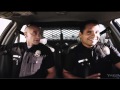
Just the words South Central will conjure up an image of mean streets and gangs, even by people who don’t live in Los Angeles. The neighborhood is infamous for its hardened criminals and its gang-banger imagery has permeated the popular culture everywhere. Director David Ayer returns to the neighborhood he knows well in his latest film End of Watch , starring Jake Gyllenhaal (who is also an executive producer) and Michael Peña who give gripping performances as LAPD cops Brian Taylor and Mike Zavala tackling a better armed group of very tough group – both guys and gals. Ayer grew up in the neighborhood and knows the people he’s brought to the big screen well. South Central was the setting for his first directorial feature, Harsh Times back in 2005. And LAPD cops were at the heart of his 2008 pic Street Kings . Ayer told ML that he initially wanted to move away from the cop-crime scenario after working on those films, but headed back to the genre even as he was trying to talk himself out of it. In the feature that opens wide Friday, Gyllenhaal and Peña play LAPD officers Brian Taylor and Mike Zavala. The action plays out on screen through the P.O.V. of hand-held cameras implanted on police officers with more footage “shown” by gang members, surveillance cameras, dish cams and citizen-caught images in the line of fire. While there are moments peppered throughout the feature showing moments of levity between the their characters that prompted outbursts of laughter during the film’s premiere in Toronto, the scenes quickly turn to present a mosaic of dark violent streets, human trafficking, gang confrontation and a barrage of shoot-outs. Just try and fall asleep in this movie – aint gonna happen… David Ayer chatted with ML the day after the premiere of End of Watch in Toronto the other week and gave shared why he decided to return to the cop story, they unique visual style he’s going for in the pic, and just how real all the seemingly outrageous dramas the two officers face in the film are… [ Related: Jake Gyllenhaal’s Life-Changing End Of Watch Prep: ‘Someone Was Murdered In Front Of Me’ and End Of Watch Star Michael Peña Sees Racial Barriers Coming Down In Hollywood ] I heard you wrote the script for End of Watch in six days, how did that play out? Yes, I did. It just kind of exploded out of me. It was six days by way of twenty years, you know what I mean? It’s a world I’ve spent a lot of time in. I grew up in South Central L.A. I have a lot of friends in law enforcement, so a lot of things that happen in the script happened to a close friend of mine. I have been writing down stories he told me. So the challenge of writing this story lead me to do this pseudo-documentary style that makes it really natural and not just using the usual story landmarks that you might intuitively feel. Were there certain documentaries that informed some of your style choices for End of Watch ? This one friend of mine takes cameras to work and guess what – he films things just like we all do with our phones etc anywhere. It can be riveting and it seemed like a fantastic device to tell a story, but at the same time, the “found footage” aspect can become a bit tedious if it’s not from a place of total reality. It can become like a gimmick and the allusion alters. So we brought in conventional coverage to augment that and the movie is a hybrid. There was a point where you went away from telling the Cop Stories, what made you do that and what brought you back? I really want to direct. Whenever you want to start over in Hollywood, you have to start from the bottom. I did Street Kings and it was for a studio which is a different process as a director. I tried mounting up some projects afterward including a science fiction movie and nothing was working out. The surest way I could get back on set was to do another cop movie. A friend of mine in the studios said I should do a found-footage cop [story] but I thought that I should not do that. But as I was talking myself out of it, I talked myself into it. But you didn’t want to do it from the “corrupt cop” viewpoint? No, the corrupt cop story is so freaking played out. I mean, it’s so 2003. The real challenge becomes, if you don’t have that dramatic engine of the corruption, what is the dramatic engine? What is the story? I made this movie about the friendship and the journey these guys are going through. The bad guy stuff is sort of an appendage to that story. They’re not investigators solving crimes, they’re just guys doing their jobs who end up way over their heads and that’s how it is for real cops. There’s a whole world they’re not privy too, yet they keep running into it, they keep sighting the shark fin in the water. That’s the one thing that struck me – that great rapport between Jake Gyllenhaal and Michael Peña’s characters. There’s of course all this fantastic crazy tough shit going on in this film with the shoot-outs and grim discoveries that make for great viewing, but there’s also these hilarious moments of banter between their characters that really draw you into their lives. To write the way people talk and not just make movie dialog and to get them to pull off a breezy, natural style together and live in the history of that friendship was the real challenge as a director. It’s ironic because what appears so easy is insanely difficult as a filmmaker and insanely difficult as an actor. And it took the three of us a long time in the trenches to get them to the point to pull it off. My favorite scenes in the movie are the two guys in the car talking. Did you have a regimen in mind for Jake and Michael off the bat in order to get them to be believable cops in the lead-up to the actual shoot? A good friend of mine does martial arts training and what that does is get the mindset down of hitting people and being hit. Often it can be hard to override the instinct of not hitting someone. You have to overcome that. You have to have that ability and understanding of violence to become a cop and it starts to change everything including your body language. And there was firearms training. They were taught by a 35 year-veteran LAPD-SWAT officer who gave them training in LAPD by the numbers shooting style. We went to the same LAPD outlets to get their equipment and uniforms because I wanted everything to be incredibly accurate. And they went on an incredible number of ride-alongs with officers and I wanted them to go with a number of different agencies so they can see just how different the LAPD itself is. I think they were shocked by the cultural differences between those departments. I had an idea of a program in mind, but obviously logistics and demands evolved. I think at first they were cursing me, but once they realized they had the real skills, they appreciated it and it just made it all the more real on set. I think audiences everywhere and even in L.A. may be surprised that the Mexican drug cartels have such direct operations in the U.S. as this movie suggests. Obviously everyone knows they’re involved with drug trafficking across the border, but I think people don’t know there’s such a direct connection to day-today operations on the U.S. side of the border. Yeah, they control the wholesale of drugs in the United States and human trafficking. Nothing moves across that border without their permission. They’ll give illegal immigrants drugs and will say, ‘you’re now a drug mule.’ It’s a busy organization and they’re incredibly efficient – drugs, human trafficking, weapons. Everything that’s happening in the movie is happening now. Friends of mine in the department pull over cartel runners all the time and do multi-kilo seizures. I know someone working in narcotics just last week who took a huge haul of cartel drugs off the street. They’re here, they’re operating…I feel like people have no idea that there’s such a huge presence of the cartels not only in Southern California, but throughout the United States, even in the northern part of the country. How were you able to get under the skin in portraying the gang members in the movie? It’s a distinct subculture and it would be very easy to mis-represent that… People not from L.A. and are not familiar with the gangsters there will look at something like this and think they’re almost cartoonish, you know? But that’s how they role. This is bang on. [ End of Watch gangster] Lala, played by Yahira Garcia, is unbelievable in the movie. She’s a rapper and was brought up in that neighborhood and her brothers are caught up in the life. And she’s seen some tragic things. And “Demon” played by Richard Cabral is from a multi-generational gang family and just recently got out of it and now working in film. The only one who wasn’t a former gang-banger was Maurice Compte who plays “Big Evil.” He’s incredibly soft-spoken, incredibly smart and such a nice guy and somehow he pulled off this alter-ego “Big Evil” persona out.

Go here to read the rest:
David Ayer Tells Why He Returned To The Cop Drama With End Of Watch
Crew Member Drowns On Set Of Johnny Depp’s ‘The Lone Ranger’

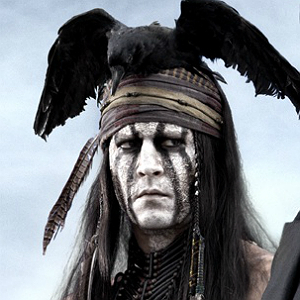
According to TMZ , a diver working on a water tank on the set of The Lone Ranger drowned this morning in Los Angeles: “Law enforcement sources tell TMZ the movie wasn’t being shot today, and the person who died in the tank was prepping it — possibly cleaning it — when someone noticed no bubbles from the gear were surfacing. That’s when they pulled the man out of the water.” The Johnny Depp blockbuster is filming for a July 3, 2013 release. More info to come. [ TMZ ]

Continued here:
Crew Member Drowns On Set Of Johnny Depp’s ‘The Lone Ranger’

Clint Eastwood Owns The Chair(s); John Travolta Eyes Vince Lombardi: Biz Break

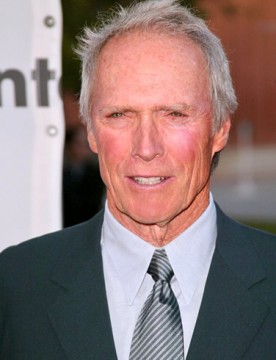
Also in Friday morning’s round-up of news briefs, Jesse Eisenberg has tapped Vanessa Redgrave for an Off-Broadway play. A judge has ruled on a request to close Innocence of Muslims video. And a look at the Specialty offerings coming out this weekend. Clint Eastwood Owns The Chair Thing at Premiere The 82 year-old Oscar winner has taken some heat for his empty chair speech at the Republican National Convention, but at his premier for Trouble With the Curve he chatted with a press contingent that – somehow – noticed there were 16 empty chairs nearby – “Oh my god yes,” he said with a laugh. He added that he worked with people on the film that fall across the political spectrum, but his latest is not a political film. And he will continue to stomp for Romney, A.P. reports . John Travolta Eyes Vince Lombardi Biopic At the Zurich Film Festival, Travolta said he’s considering a remake of the John Woo film, The Killer as well as starring in a biopic of legendary football star Vince Lombardi. The Killer remake will shoot in 3-D, Screen Daily reports . Jesse Eisenberg, Vanessa Redgrave Set for Off-Broadway in The Revisionist Redgrave will star along with Eisenberg in The Social Network ‘s Off-Broadway play that will be directed by Kip Fagan. The plot centers around Eisenberg’s character is a blocked sci-fi writer attempting to escape his problems in Poland. “A 75-year-old cousin played by Redgrave latches onto him as a means of connecting with her distant American family, gradually revealing details of their complex post-war past.” THR reports . Riots Continue as Judge Denies Actress’ Move to Shut Down Innocence of Muslims Western embassies closed in anticipation of Friday prayers as protesters fought police in Pakistan. The government there ran ads on television showing U.S. President Obama and Secretary of State Hillary Rodham Clinton condemning the video made by a U.S. resident that prompted the furor. A judge in California did not agree with an Innocence of Muslims actress that the film should be taken down, Deadline reports . Wallflower , Diana Vreeland , Head Games , How To Survive a Plague A run down of this weekend’s specialty openers, with a spotlight on some documentaries about a fashionista extraordinaire, sports risks and pioneers who faced down AIDS. Also check out a coming-of-age feature that has been all the rage on MTV (and it’s even good). Deadline reports .

See the original post:
Clint Eastwood Owns The Chair(s); John Travolta Eyes Vince Lombardi: Biz Break

REVIEW: Adams Steals Trouble With The Curve From Eastwood − But Baseball Drama Chokes In Final Inning

Clint Eastwood is not the type of movie star to disappear into a role, especially not at this point in his career. He’s more icon than actor, and a grumpy, bristly icon at that. Tonewise, there’s not actually that much separating the improvised shtick Eastwood offered to the Republican National Convention in August and the scripted routine (by writer Randy Brown) he goes through at the start of Trouble With The Curve . On the small screen he addressed an empty chair. On the big one he talks to his penis, which is not cooperating with him in his morning micturition. In both cases, he’s gruffly displeased. Eastwood’s screen persona may have calcified over the years, but it’s still enjoyably familiar to take in, and  Trouble With The Curve , the directorial debut of Eastwood’s go-to producer Robert Lorenz, is constructed around his immovable, surly-with-a-soft-center performance like a house built around a tree that’s been growing in the same spot for years.  Trouble With The Curve  is an ode to the old ways of doing things, both in terms of acting and baseball. Clint Eastwood plays Gus, a scout for the Braves and one of the last holdouts against the stats-based system represented by his obnoxious, ambitious coworker Phillip (Matthew Lillard). In terms of perspective, Trouble With The Curve is exactly the opposite of  Moneyball. It lauds the types of things that Bennett Miller’s film dismissed as out-of-date sentimentality: scrutinizing a player’s hands when he swings, listening to the crack of his bat, and looking into his face to know if he’s got heart.  Where Moneyball ‘s hero was the bright kid with the computer,  Trouble With The Curve ‘s is the old man with the ingrained instincts;  the family with baseball in its blood. The film basks in the analog side of putting together a team, in traveling on the road to high school games and listening to a hit. Gus is getting on in years and is in denial about the fact that his eyesight is going, but by the film’s judgement he’s still the best there is — even if he has to depend on his ears. Here, character is destiny, and so we know that Bo Gentry (Joe Massingill), the North Carolina up-and-comer Gus and the other scouts are all eager to evaluate as a potential first draft pick, is lacking before we ever see him play, because he’s an arrogant ass. Trouble With The Curve ‘s old-fashioned qualities and romanticism veer into hokiness, but , but the film gets a major charge from Amy Adams, who plays Gus’ daughter Mickey.  In a spirited, nuanced performance, Adams subtly undermines the film’s tacit approval of its protagonist’s ways. A dedicated lawyer on track for partnership at her Atlanta firm, Mickey’s learned to hide in her work and to keep people at an emotional distance from her dad, who shipped her away to live with family when she was six and her mother passed away. Adams doesn’t play Mickey as brittle or snippy, which has become lazy actor shorthand for the workaholic females in movies. She’s guarded but warm, and keeps reaching out to her father via calls and dinners, despite his apparent indifference and unintentionally harsh words. We know that Gus loves his daughter, he just has trouble expressing it. When Mickey isn’t around, he has no trouble praising her in the presence of others.  But over the course of the film,  Mickey’s refusal to give up on her relationship with her father, despite being repeatedly rebuffed by him, starts looking more like strength than her remaining parent’s growling dedication to doing things the right way. The same qualities show up in Mickey’s tentative romance with new scout Johnny (Justin Timberlake, always welcome), a former pitcher scouted by Gus years ago who blew out his arm and now aims for an announcer job. He charms his way past her defenses, and she in turn acknowledges her tendency to keep people at a distance. Mickey demonstrates that being able to bend, to acknowledge your faults and work on them requires more courage than always standing your ground. Adams quietly steals the movie out from under her co-star, and she does it while steering clear of the stereotypical ruts that could have mired her performance in mediocrity. Adams and her unexpected approach to her scenes with Eastwood bring Trouble With The Curve  to life and give it more animation than its formula would suggest. Despite this, the film loses a lot of that energy in a final act that makes Lillard’s character needlessly and foolishly villainous, and then wraps every element up in an overly neat happy ending. Even baseball is entitled to a few fairytale moments, but it’s a wrap-up than oversimplifies the more complex portrait of a father and daughter and their lifelong struggle to connect. Follow Alison Willmore on Twitter. Follow Movieline on Twitter.

Excerpt from:
REVIEW: Adams Steals Trouble With The Curve From Eastwood − But Baseball Drama Chokes In Final Inning

WATCH: Daniel Craig Appears In SkyFall Heineken Ad − Martini Drinkers Shaken, Not Stirred

I’m going to need more than one martini — Ketel One, straight up, lots of olives — to swallow this ad. Daniel Craig appears with Bond Girl Berenice Marlowe in a new Heineken ad tied to the release of the upcoming 007 feature, Skyfall . Craig’s brief appearances book-end the commercial and martini lovers will find some consolation in the fact that he doesn’t actually drink from the bottle of Heineken that he orders in the clip. I do have to give Wieden + Kennedy Amsterdam props for the zany, international flavor of the recent Heineken TV ad spots. The scene in the clip below where the actor mistaken for Bond recreates a miniature replica of Moscow’s onion-domed St. Basil’s Cathedral by shooting playing cards from the palms of his hands is a smart touch. Although Heineken has had a 15-year relationship with the Bond franchise, this commercial represents part of a stepped-up marketing and product placement campaign that was announced this past spring. Follow Frank DiGiacomo on Twitter. Follow Movieline on Twitter. 

Originally posted here:
WATCH: Daniel Craig Appears In SkyFall Heineken Ad − Martini Drinkers Shaken, Not Stirred

Pen An ‘End Of Watch’ Haiku, Win A Signed Poster

Jake Gyllenhaal and Michael Peña spent months developing the brotherly rapport they share as LAPD officers under fire in End of Watch , out Friday from director David Ayer. Channel a fraction of that effort in composing your best haiku ode to the Gyllen-Peña cop drama and you could win a T-shirt and signed poster from the film. Unholster those typing fingers! In order to be eligible, entries must follow these guidelines: – Haiku entries must follow the 5-7-5 syllable format (otherwise that ain’t a haiku, duh). – Entries must be original compositions. – Entrants must register with their email address in order to be contacted if selected. – Only one entry per person. – Winner must be in the U.S. -Submit your entries in the comments section, on Movieline ‘s Facebook page , or tweet them @movieline. Contest will end Monday, September 24 at 12pm PT/3pm ET.

Read more from the original source:
Pen An ‘End Of Watch’ Haiku, Win A Signed Poster

Top 10 Nude Emmy Nominees 2012

As the stars gear up for Sunday’s 64th annual Primetime Emmy Awards , Mr. Skin is focused on which of the boob tube beauties have gotten bare. Everyone is a winner when act-chests like Julia Ormond , Uma Thurman, and Nicole Kidman are the nomi-nudes. So polish your own trophy to our Top 10 Nude Emmy Nominees 2012:

See more here:
Top 10 Nude Emmy Nominees 2012

Penny Marshall Looks Back On Life — And The Movies — In Memoir ‘My Mother Was Nuts’

In her new memoir My Mother Was Nuts , actress-comedienne-filmmaker Penny Marshall writes of her remarkable life: Growing up the youngest of three in The Bronx, she had a daughter followed brother Garry into showbiz, got famous as one-half of Laverne & Shirley , got married twice, got divorced twice, opened her home to friends like John Belushi, Carrie Fisher, Steven Spielberg, and Robert De Niro, and became the first female director to break the $100 million mark with 1988’s Big , also notching films like Awakenings , A League Of Their Own , Renaissance Man , and The Preacher’s Wife along the way. Ringing Movieline to discuss her baldly honest, often hilarious memoir — which also reveals darker times, recreational drug use, an abortion, an on-set miscarriage — Marshall explained why she set out to write her life story to begin with: “You want to set the record straight on certain things, because there are so many rumors.” Among them: Her dramatic backstage relationship with Laverne & Shirley co-star Cindy Williams and her recent lung cancer and brain tumor diagnosis. “The rags still say ‘She’s dying,'” she laughed, emphasizing that her health has improved and she’s ready for the next project. “But I dodged a major bullet.” You’ve really lived such a fantastic life. I’ve really been very lucky and fortunate. And I appreciate that! There comes a time when you give back, you know, so I do a lot of that stuff when I can. Why was now the right time to write your memoirs? Well, my brother just finished his second book, and so I figured well, since the rags have me dying every couple of months… [Laughs] That’s not helping me get work! Someone suggested it, and my friend Carrie Fisher’s a writer, so I went, well, I’ll try it. Did you take to it naturally? No. I did a lot of stream of consciousness, but I talked into a tape recorder — and it’s hard to understand me, I understand that. I do go off on tangents sometime. But I talked into a tape recorder then had it transcribed. I have a terrible memory when it comes to recalling my childhood, but you have such vivid memories of your experience growing up in The Bronx, in what seemed like a very special neighborhood that turned out so many talented people . It was a very working class neighborhood. Everyone worked; my mother was the only woman who worked. Mostly the dads worked, but my mother was a tap dancing teacher. It was a very colorful neighborhood, and it had a good work ethic for some reason — or maybe everyone wanted to get out of there! One or the other. There was so much of a sense of community, of family, throughout your life — family related by blood, a familial network of friends. It feels so special and rare, the group of people you surrounded yourself with. Well there’s more to life than show business, you know? Family and friends are part of your life, and sometimes life takes a priority over a job, or a business. And so those that you remain friends with, I think it’s important to fulfill your life. I don’t think just doing a movie fulfills your entire life — it’s important to have people around you that you like, you enjoy, you can do things with. Looking at your career, it’s so interesting to see how directing kind of just fell into your lap. You had such success in front of the camera, and all of a sudden comes a directing career. And you first learned from Spielberg, of all people! Well he was always encouraging. He’d come over to the house and see me doing jigsaw puzzles, which I had an addiction to, and he’d say, “That’s editing.” And then he’d see me talk to all these neurotic guys. He’d say [whispering] “That’s directing.” You have to hold their hand, and tell them what to do. I never said I wanted to direct; I had done a couple of Laverne & Shirley ’s but everyone did. Cindy [Williams] did! Michael McKean! The script girl! Anyone around! Who wants to direct this week? You bore witness to so many changes in the industry, on both sides of the camera, over your career. The way television works now compared to how it was made back in the Laverne & Shirley days… there was so much more freedom and looseness then. Well remember, there were only three channels! Now there are so many channels and so many reality shows that I don’t really watch, because they’re cheap. I don’t mind if there’s a game or a contest; I don’t mind American Idol . I don’t mind The Amazing Race . There’s a contest involved! But just people blabbing and fighting with each other… although Mob Wives did get me. They made me laugh. But that’s what they do. There are 20 people sitting watching monitors. Why don’t you watch the actors, they’re there! I watch the actors. I use a monitor to fill out a screen, but I’m watching the actor — and I have a strange memory. I’m in a wedding scene, I say “That lady was up here, she can’t be back there.” I have this strange memory, I remember what we shot. Before we hit the clacker, the slate, he said something — we could use it. But times have changed. The economy stinks, the whole world’s gone mad, so it’s a little difficult as far as it was simpler back then. I mean, the writers worked their butts off but any actors, you always wanted better, you know? And I don’t know what they do now. They all watch a monitor. You’re pretty honest about the role that nepotism played in your career, getting you in the door through your brother Garry. But you also talk about the idea of “giving someone a life” — paying it forward, giving someone new an opportunity to do with what they can. Do you feel like that sentiment still exists in Hollywood today? No. [Laughs] Everyone needs a life right now! But I think it’s important to give back, to give someone a life. I help take care of this kid, Germain, who’s in a wheelchair. He calls me Mommy Penny, because his mother was not so good. She moved while he was in the hospital because she wouldn’t take care of him. But he’s going to college. He got an apartment. I got him an air conditioner. May I ask how your health is these days? My health is fine, not good. I dodged a big bullet, even though the rags still say “She’s dying” and they have the wrong thing wrong with me. But I dodged a major bullet. And I’m the only one who gained 60 lbs. and got hard nails from it! You’re fortified! A strange constitution, I have. Maybe because I went through everything. [Laughs] You really have. And you’re so open in your book about them all: Marriages, divorces, abortion, miscarriage, illness. Yet your spirit seems to be so buoyant throughout. Whenever anything terrible happens, I stay very calm. I’m a Libra, what can I tell ya? [Laughs] It has to balance out. But if someone’s going crazy, I’m very calm. Or if I’m sick, I’m calm. Nothing hurt me [when first diagnosed with cancer]. I had no idea what they were talking about. So I ordered White Castle.

Read the rest here:
Penny Marshall Looks Back On Life — And The Movies — In Memoir ‘My Mother Was Nuts’

Judge Sides With James Cameron In Avatar Copyright Case; Philip Seymour Hoffman To Direct Ezekiel Moss: Biz Break

Also in Tuesday morning’s round-up of news briefs, Charlie Kaufman has turned to crowd funding (seemingly quite successfully) for a stop motion animation project. Richard Gere ‘s Arbitrage is set to open a Middle Eastern film festival. And Park Chan-wook is set to direct a Corsican mafia story. Judge Rules James Cameron & Fox Did Not Interfere with Copyright for Avatar A U.S. district court said that Avatar did not infringe on the copyright of a screenwriter’s novel, Bats and Butterflies . The court said the novel is a “children’s story with a simple protagonist,” while Avatar is a “more complex story about a conflicted protagonist,” Deadline reports . Philip Seymour Hoffman to Direct Supernatural Drama Ezekiel Moss The script, written by Keith Bunin, which appeared on the 2011 Black List revolves around a mysterious stranger with the power to speak with the dead. He arrives in a small Nebraska town, transforming the lives of the people there including a widow and her young son, THR reports . Charlie Kaufman Stop Motion Project Turns to Crowd Funding Kaufman and his producing partners are using crowd funding source Kickstarter for their adaptation of a play, Anomalisa and have raised $406,237 for its production in 60 days. “We want to make Anomalisa without the interference of the typical big studio process,” said a pitch video, Deadline reports . Arbitrage to Open Abu Dhabi Film Festival The Richard Gere starrer, which open to initial box office success in the U.S. in limited release last weekend will open the Abu Dhabi Film Festival. Gere and co-star Nate Parker are expected to attend the screening of the film set against the backdrop of hedge fund manipulation. The festival in the United Arab Emirates takes place October 11 – 20, THR reports . Park Chan-wook to Direct Corsica 72 Park Chan-wook ( I’m a Cyborg, But That’s OK ) will direct from the script that made the 2009 Black List. Set on the French island of Corsica in 1972, the story revolves around two friends heading in two different directions. One toward the a life in the mafia while the other toward a simpler life with his sweetheart. But when the Corsican mob kills the latter’s brother, the two enter a blood feud that leads to a final showdown, Variety reports .

See the original post:
Judge Sides With James Cameron In Avatar Copyright Case; Philip Seymour Hoffman To Direct Ezekiel Moss: Biz Break

‘My Mother Was Nuts’ Book Excerpt: How Robert De Niro, Not Tom Hanks, Almost Starred In Penny Marshall’s ‘Big’

Actress and funny lady Penny Marshall made her name in television ( Laverne & Shirley ) before making an unexpected leap into directing with 1986’s Jumpin’ Jack Flash . But it was her sophomore feature, a fantasy about a boy transformed into a 30-year-old by a wish, that launched a career behind the camera — and made her the first woman director to gross $100 million. But as Marshall tells it in her wry, vivid memoir My Mother Was Nuts , everyone in Hollywood had passed on Big , Tom Hanks included — until, that is, an unlikely actor threw his hat into the ring: Robert De Niro . Marshall recalls the struggle to cast Big ‘s leading man — and the names who went out for the part, from Sean Penn to Gary Busey to John Travolta (“at the time he was box office poison”), in Movieline’s exclusive excerpt from My Mother Was Nuts . In the release (in stores today) the 69-year-old Marshall writes her life story, from her childhood growing up in the Bronx alongside sister Ronny and brother Garry, to her introduction to Hollywood and famous friends, colleagues, and lovers including John Belushi, Carrie Fisher, Rob Reiner, Art Garfunkel, Joe Pesci, Steven Spielberg, and many of the brightest talents of New Hollywood, to her successful second career directing films like Big , Awakenings , and A League Of Their Own . Stay tuned for Movieline’s exclusive interview with Marshall. ===== Jim Brooks and I both had offices on the Fox lot and one day while I was in post-production on Jumpin’ Jack Flash he came into my office and put a script on my desk. “This is your next movie,” he said. It was Big . What he didn’t tell me was that everyone in the world had turned it down. From Chuck Shyer to Steven Spielberg. Because I didn’t read the trades or follow the business, I had no idea. Nor did I know there were three similar movies in the works: Like Father, Like Son ; Vice Versa ; and an Italian version. But Jim was a mentor and friend. He knew that I had liked directing and making things up. He also knew that I wanted to do it again. I was grateful for his help because I probably wouldn’t have known how to look for a project on my own. Luckily I didn’t have to. I read the draft and liked the story. Twelve-year-old Josh Baskin can’t get the girl he likes; she’s interested in an older boy who can drive. He wishes he were bigger and wakes up the next morning as a thirty-year-old. He gets a job at FAO Schwarz, rises up the corporate ladder, and becomes the object of affection of a beautiful executive. It was a theme that everyone could identify with: When I’m big I’m gonna . . . To make the high concept work, I wanted it to be real and believable. The biggest challenge would be casting the lead. I went straight to the three big box-office stars at the time: Tom Hanks, Kevin Costner, and Dennis Quaid. All of them passed. Everyone passed. I tried a different approach. I looked for the kid who would be Josh’s best friend, and I picked Jared Rushton. He had the most spunk of those I saw. He worked well as I brought in actors, including Sean Penn, who was terrific but too young, and Andy Garcia, who was also great, though one of the studio executives said, “We don’t want to spend eighteen million on a kid who grows up to be Puerto Rican.” That was how they talked. “He’s Cuban,” I said. I also read Gary Busey, who had the energy of a child, but I didn’t think he could pull off playing an adult. John Travolta was dying to do it, but at the time he was box office poison and the studio didn’t want him. I started to get worried. Despite not having a lead actor, we were in pre-production in New York. I met with Robert Greenhut, one of our executive producers. This was our first film together. He was a slick line producer who had come up through the ranks and done all of Woody Allen’s films. He had excellent ideas, and he turned into an ally and confidant when I decided to take my search for a lead actor in a different direction. I went to Robert De Niro. Bobby — or Bobby D. as I called him — was in the middle of making The Untouchables , playing Al Capone. Although I knew he didn’t ordinarily read other material when he was in the middle of a project, I called him anyway. That’s where I’m not at all shy or hesitant. I will call anyone. What’s the worst they can say? “Bobby, there’s a script,” I said. “I want you to read it, see if you like it.” I got him the material and called him back. “Did you read it?” “Yeah.” “What do you think? “I like it.” It turned out that he wanted to make a commercial film. He had done all of Marty Scorsese’s movies, but hadn’t broken out in a film the whole family could watch. I told Jim and Scott Rudin, who was running production at the studio, that De Niro was interested. They were surprised and somewhat intrigued. They were also skeptical. Besides having a hard time envisioning him in the role, they’d heard stories about him. They told me to get him to commit. The way they said it was like a challenge. I called Bobby. “What do I tell them when they ask me?” I asked. “Do you want to do it or not? I’ve got to give them an answer.” “Yeah, tell them I’ll do it,” he said. I hung up. I had Bobby. I told Jim and Scott, and I guess word spread. The next day I flew to Los Angeles to go to an event celebrating Paramount’s seventy-fifth anniversary and posed for a photo with everyone who ever worked at the studio. Word had spread about Bobby D. and a handful of actors who had turned me down, including Kevin Costner, now asked about Big . Bobby had given me validity. As work began on the script, Bobby told me to look at his movies and tell him what I wanted and didn’t want. What I wanted was the energy he had in Mean Streets in the scene when he was first in the bar and coming out around the car. That’s exactly what I got when he came to my house one day. I got him on tape with Jared. They skateboarded, shot baskets, and rode bicycles in my driveway. Bobby doesn’t give you much until the cameras are on. Jared yelled, “Come on, De Niro. Move it!” It was exciting. I didn’t know exactly where the process was leading, in terms of the script, but it was moving in a good direction. I would have paid to see Bobby dance on piano keys. Barry didn’t want Bobby, though. I said, “Counter me.” He said, “How about Warren Beatty?” To me, Warren was the same as De Niro, but different. He had already done something similar in Heaven Can Wait. But the two of us had dinner in New York and then we went up to my apartment. I asked if he would listen to me if I directed him. In the nicest way, he said no. Well, that was thrilling. Why bother? At least Warren was being honest. That’s all I ever ask. Just tell me the truth. I’ll deal with it. But I can’t deal unless I know the truth. Bobby was taken aback when I told him the studio had wanted me to meet with Warren. It’s never easy to hear that you aren’t someone’s top choice, even at his level. But that was only a small part of what became an even bigger problem. An article came out in the papers about how much money Chevy Chase, John Candy, and other people were paid for movies, and all were getting a hell of a lot more than Fox was going to pay Bobby. To be blunt, they were going to pay him shit and they weren’t budging. They just didn’t want him. Jim Brooks suggested I give Bobby my salary. I offered. Bobby didn’t want it. “We’re working together,” he said. “You and me, you know? I’ll take Jim’s.” However, he had second thoughts and called the next day. Apologetic, he explained he couldn’t do the movie anymore. He’d be too angry. I understood. But now I was back to square one. Sort of. Excerpted from “My Mother Was Nuts” by Penny Marshall. ©2012 by Penny Marshall. To be published by Amazon Publishing/New Harvest September 2012. All Rights Reserved. My Mother Was Nuts is available today in stores and on Amazon . Follow Jen Yamato on Twitter . Follow Movieline on Twitter .

See the article here:
‘My Mother Was Nuts’ Book Excerpt: How Robert De Niro, Not Tom Hanks, Almost Starred In Penny Marshall’s ‘Big’