Shots fired! Tyrese appears to have fired shots at the likes of Usher at the 2012 BET Awards over his new sound of R&B music. Usher gave a performance of his smash hit single ‘Climax’ at the awards last night. However, one person who appears to not have been impressed with Usher’s dance music sound is Tyrese, who claims he is bringing back real R&B with his super group consisting of Tank and Ginuwine. He then tweeted: “R&B just got a face lift. We’re going to remind y’all why you fell in love with R&B music. TGT is coming soon.” Are you feeling Usher’s new sound? Can TGT really bring back the essence of R&B? Twitter
Are those scrubs?? Laurieann Gibson On The BET Awards Red Carpet Black Hollyweird was on the scene in L.A. for the 2012 BET Awards Sunday Night. Plenty of star-power hit the red carpet in stunning fashion, while others seemed to have opted out of a stylist for the evening . Choreographer Laurieann Gibson came out sporting a shaved head and ready for bed casual pants outfit. Though Ms. Boomkat has never been much of a fashionista, we have to say we were a little surprised at her outfit choice. What did you think of Laurieann’s skinny-jean scrubs look? Did you Hate It or Love It ? Images via Getty
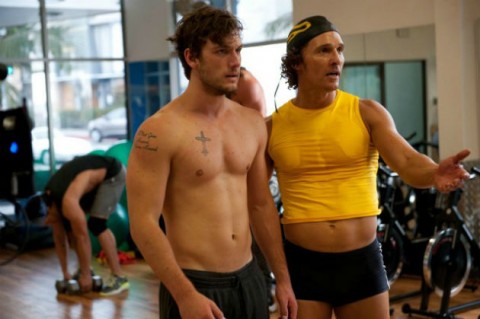
“We’re trying to do our part to objectify men for the first time in movies.” Steven Soderbergh ’s male stripper pic Magic Mike shimmies into theaters today powered by a charismatic turn by Channing Tatum and a hard-bodied supporting cast — but the tale isn’t all thongs, pelvic thrusts, and bachelorette party thrills. (Well, okay — it’s got a lot of those things , too.) What secrets did Soderbergh, Tatum, and co-stars Alex Pettyfer , Joe Manganiello, and Matt Bomer spill about on-set nudity, overzealous extras, cross-dressing, and Tatum’s real life experience as a male stripper? The director and cast, along with newcomer Cody Horn, shared these and more stories recently in Los Angeles. Read on for their best anecdotes, advice, and revelations… 1. Magic Mike is based on observations from Tatum’s eight-month stint as a male stripper. How did he get into it — and why did he ever stop? “Look, I was eighteen years old and I worked three jobs,” Tatum began. “This was just one of them, and I really enjoyed performing. It was probably my first performing job ever.” So what ended the 19-year-old Tatum’s stripping career? “I really like to dance, obviously, but then I didn’t really love taking the clothes off at the end…” 2. Tatum on the “very dark world” of male stripping… Magic Mike depicts a backstage world filled with camaraderie, g-strings, and baby oil, but as Pettfyer’s Adam discovers, it’s also one filled with drugs, casual sex, and recklessness. Tatum remembers the real world of male stripping as an even darker place. “The world in itself was just a very dark world in a way. I don’t think we even scratch the surface of really how dark that place can get and how slippery of a slope it can actually be. This was probably the most palatable version of this movie. Otherwise, you wouldn’t want to see it twice, you’d just be like, ‘Okay, I feel dirty now.’ I think we blade-ran that topic.” 3. Tatum denies allegations that he stole Magic Mike ’s story from two ex-stripper acquaintances. Also: Everyone, including his Magic Mike co-stars, has seen Tatum’s old stripping videos. “Look, there’s nothing that’s factual in this whole movie other than I was an eighteen year old kid and went into this world and I dropped out of college and playing football and was living on my sister’s couch,” Tatum explained. “There’s not one character that I took from my real life. This is just a world that I went into and that I had a perspective on and we created everything from a fictional place.” Tatum has mixed feelings about his would-be accusers. “Those guys have been trying to make money off of me since I’ve gotten into this business,” he said. “Literally, London was one of the guys that sold the video that essentially, thank God, my friend here [Soderbergh] saw and liked it and then we made a movie of it. They’re just very interesting people. I don’t want to say anything bad about them because they’re part of the reason why I think this world is so interesting. “They’re very interesting, intriguing, bizarre characters and I’m thankful for the weird people out there because they’re some of the most creative people. I mean, watch his YouTube video. It is really, really entertaining. I mean, that’s how he starts every one, and you’re just like, ‘Oh, we’re back, baby. We’re back!’” Manganiello : ‘The world famous Jungle Boooooy!’ 4. Picture this: Full-length. Dance. Routines. ( Yes please. ) Soderbergh and his cast filmed a dozen full-length stripping routines for the film, although only snippets of each — including Bomer as a living Ken doll, Mangianello painted head-to-toe as a golden god — made it into the film. Those full, unbroken dance scenes would make quite the popular DVD bonus feature, but Soderbergh isn’t sure the entire audience would appreciate all the “gory parts.” “I think it’s not for men, these things,” said Soderbergh. “It made me really uncomfortable to watch them. To watch them all back to back was really disturbing. So, I don’t know.” 5. About that one time Channing Tatum dressed in drag as Marilyn Monroe… Tatum not only strips down to a thong, he dons a halter dress and wig in Magic Mike and serenades Pettyfer in a scene also inspired by real life. “Yeah, I did that to a buddy of mine on his birthday. He was eating at a restaurant and I walked in as Marilyn and basically sang him happy birthday and embarrassed the hell out of him. So, we just decided to put it in this movie for fun.” 6. Though they got a bit overzealous at times, the female extras on-set became the guys’ biggest supporters. McConaughey famously had his thong ripped right off during the filming of his big strip scene (which stayed in the final cut), but having female extras who were really, really into their work helped the cast do their jobs. “I think those were all happy accidents when those happened,” recalled Bomer. “It was a part of the world, and if they wanted to lick you in certain places or touch you, or whatever, it was welcome. It was just a part of the world we were creating.” 7. How to rock a thong: Fellas, take note. “As far as trusting wardrobe, it is one of the larger leaps of faith to trust a thong,” said McConaughey. “It weighs like what a dollar bill weighs. It weighs nothing, and you’re going, ‘At the end of this performance, this is the only protection that I have.’ So, the first time you put it on you’re going, ‘What is every possible angle I can be in?’ I’ve got to check to see if it’s really covered, everything is covered.” Still, added Tatum — who was known to pull double duty as producer between scenes standing around in just his red thong — “sometimes they completely betray you.” 8. Magic Mike , art house movie? “I think we all signed on to this one coming from the independent spirit. This was filmed as this little indie movie expose and I think we all signed on to work with who we got to work with, on the script that we got to work on, in the world that we got to work in,” recalled Manganiello. “The big shock to me was when all the studio executives were coming to filming every day. I went, ‘Wait a minute, this little tiny art house movie… wait, everyone is going to see what I just did to that girl ?’ “I think the fact that it’s snowballed into what’s snowballed into is exactly what you hope for. I mean, that’s it. You work on this project to make the artists happy and you wind up, hopefully, making the bill payer happy, too.” 9. Why men should be just as eager as ladies to see Magic Mike : “Men tend to define themselves by what they do, and so if you’re dealing with a character who’s trying to figure that out, or multiple characters, then there’s something there for guys, too,” explained Soderbergh. “When we tested the film the female scores were not significantly bigger than the male scores. I mean, guys liked it. The trick is, I think, getting them to come, but we’ll see what happens.” And if that doesn’t convince the guys out there, Manganiello has a more practical reason for buying a ticket on opening weekend: “I think if you’re a smart, single guy you’re going to go see this on a Friday or Saturday night… because guess who’s going to be in the theater?” “If you’re really smart you’ll wear a fireman’s outfit,” added Tatum. “And you just might go home with a few numbers, or even better, someone.” So fellas, don’t be scared! And just remember one last bit of advice, from Manganiello. “Don’t forget your axe.” — So just think… only a few years ago, Tatum was stripping for cash (and, apparently, botching the “YMCA” dance). Now he’s turned that skeleton in the closet into a major Hollywood picture that has legitimized him as a serious actor more than any of his previous films. As they say, there’s no shame in that game. Magic Mike is in theaters today. Follow Jen Yamato on Twitter . Follow Movieline on Twitter .
Take This Waltz is an unusually kind film about infidelity — not because it sidesteps or shortchanges heartbreak, but because it doesn’t let any one of its characters bear the full burden of blame. That such a thing needs to or should even be assigned in this scenario is beside the point, as the film defers to the vagueries of the human heart and the way we can, despite our better judgment, form a connection with someone that can’t easily be set aside. It’s tempting to glibly connect this clear-eyed empathy with the fact that Take This Waltz is Canadian and somehow inherently prone to niceness — it’s set in a rosy version of Toronto in which the characters all live in charmingly shabby chic houses and sporadically work in quirky jobs. But what it actually comes from, I think, is that the film is the sophomore feature of actress-turned-director Sarah Polley, who constructs her central love triangle with a determinedly feminine perspective and places all of the choice on her female protagonist Margot, played with typical grace by Michelle Williams. Margot wants anything but to have to make a difficult call, especially one that will result in someone getting hurt. One of the film’s first scenes finds her visiting the living history museum of the Fortress of Louisbourg for work and getting pulled in front of a crowd by costumed, in-character staffers to help with a flogging. “Put your back into it!” yells a man from the crowd when she ineffectually flails at the prisoner, clearly mortified. Later, she ends up sitting next to the heckler on the plane. His name is Daniel (Luke Kirby), and he’s just watched her board in a wheelchair despite not having needed one before, leading her to confess that she pretends at airports because of her terror of missed connections, something born not out of a need not to miss a flight but because, as she puts it, “I’m afraid of wondering if I’ll miss it. I don’t like being in between things.” Margot will, however, spend the movie in between things — between Daniel, who turns out to live across the street (“Shit!” she mutters when she finds out), and Lou (Seth Rogen), the husband of five years with whom she shares a loving if childlike and seemingly no longer passionate relationship. Margot loves Lou — the two tussle like kids and talk adoring about the terrible violence they’re going to do one another (“I’m going to put your spleen through a meat grinder,” Lou sighs) — but she may not be in love with him any longer, and she has an undeniable heated spark with Daniel, an artist who pulls a rickshaw and who watches her with guarded longing. Take This Waltz , which was also written by Polley, has moments of overdetermined dialogue — the line about airport connections is one, and another finds Margot describing Lou, who’s a cookbook writer, as “a really good cook, if you like chicken.” It’s stronger in its moments of wordless sensuality, from its opening scene in which Margot makes muffins, the camera drifting to her bare feet and then her face as she leans it against the over glass. Daniel offers to take Margot and Lou downtown in his rickshaw when they’re headed out to celebrate their anniversary, and we track her gaze across the muscles of his arms and back, catching his eye in the side-view mirror. The draw of the flesh is not inconsiderable, and Take This Waltz doesn’t make it so easy as being a kind of passing temptation, an indulgence to be resisted. Margot and Lou have a stable and relatively happy life together — we see them at home and in the company of their friends and family, including Lou’s sister Geraldine (a memorable Sarah Silverman), a recovering alcoholic. It’s a lot to trade for attraction, no matter how significant, but the film feasibly puts the two on a level, leaving Margot to navigate the decision with growing distress as she tries to avoid Daniel, only to go out of her way to run into him, and then flees back to Lou professing her love and fear. Kirby makes his improbable swain just dangerous enough, the embodiment of the promise of the new, while Rogen shows off his dramatic chops as a man who’s obviously never given thought during his time with Margot of what things would be like without her. But the weight of the film rests on Williams, and she finds a poignant and quiet agony in her character as she realizes she’s the only one who can make this decision and must deal with the consequences either way, after time and again trying to push it off or onto other people. It’s a world of bittersweet sophistication from Polley, and one that accepts that, as a stranger reminds Margot at a swim class, “new things get old,” but that doesn’t make them any less appealing.
Take This Waltz is an unusually kind film about infidelity — not because it sidesteps or shortchanges heartbreak, but because it doesn’t let any one of its characters bear the full burden of blame. That such a thing needs to or should even be assigned in this scenario is beside the point, as the film defers to the vagueries of the human heart and the way we can, despite our better judgment, form a connection with someone that can’t easily be set aside. It’s tempting to glibly connect this clear-eyed empathy with the fact that Take This Waltz is Canadian and somehow inherently prone to niceness — it’s set in a rosy version of Toronto in which the characters all live in charmingly shabby chic houses and sporadically work in quirky jobs. But what it actually comes from, I think, is that the film is the sophomore feature of actress-turned-director Sarah Polley, who constructs her central love triangle with a determinedly feminine perspective and places all of the choice on her female protagonist Margot, played with typical grace by Michelle Williams. Margot wants anything but to have to make a difficult call, especially one that will result in someone getting hurt. One of the film’s first scenes finds her visiting the living history museum of the Fortress of Louisbourg for work and getting pulled in front of a crowd by costumed, in-character staffers to help with a flogging. “Put your back into it!” yells a man from the crowd when she ineffectually flails at the prisoner, clearly mortified. Later, she ends up sitting next to the heckler on the plane. His name is Daniel (Luke Kirby), and he’s just watched her board in a wheelchair despite not having needed one before, leading her to confess that she pretends at airports because of her terror of missed connections, something born not out of a need not to miss a flight but because, as she puts it, “I’m afraid of wondering if I’ll miss it. I don’t like being in between things.” Margot will, however, spend the movie in between things — between Daniel, who turns out to live across the street (“Shit!” she mutters when she finds out), and Lou (Seth Rogen), the husband of five years with whom she shares a loving if childlike and seemingly no longer passionate relationship. Margot loves Lou — the two tussle like kids and talk adoring about the terrible violence they’re going to do one another (“I’m going to put your spleen through a meat grinder,” Lou sighs) — but she may not be in love with him any longer, and she has an undeniable heated spark with Daniel, an artist who pulls a rickshaw and who watches her with guarded longing. Take This Waltz , which was also written by Polley, has moments of overdetermined dialogue — the line about airport connections is one, and another finds Margot describing Lou, who’s a cookbook writer, as “a really good cook, if you like chicken.” It’s stronger in its moments of wordless sensuality, from its opening scene in which Margot makes muffins, the camera drifting to her bare feet and then her face as she leans it against the over glass. Daniel offers to take Margot and Lou downtown in his rickshaw when they’re headed out to celebrate their anniversary, and we track her gaze across the muscles of his arms and back, catching his eye in the side-view mirror. The draw of the flesh is not inconsiderable, and Take This Waltz doesn’t make it so easy as being a kind of passing temptation, an indulgence to be resisted. Margot and Lou have a stable and relatively happy life together — we see them at home and in the company of their friends and family, including Lou’s sister Geraldine (a memorable Sarah Silverman), a recovering alcoholic. It’s a lot to trade for attraction, no matter how significant, but the film feasibly puts the two on a level, leaving Margot to navigate the decision with growing distress as she tries to avoid Daniel, only to go out of her way to run into him, and then flees back to Lou professing her love and fear. Kirby makes his improbable swain just dangerous enough, the embodiment of the promise of the new, while Rogen shows off his dramatic chops as a man who’s obviously never given thought during his time with Margot of what things would be like without her. But the weight of the film rests on Williams, and she finds a poignant and quiet agony in her character as she realizes she’s the only one who can make this decision and must deal with the consequences either way, after time and again trying to push it off or onto other people. It’s a world of bittersweet sophistication from Polley, and one that accepts that, as a stranger reminds Margot at a swim class, “new things get old,” but that doesn’t make them any less appealing.
Today I learned two things. 1) You can never predict SCOTUS and 2) I’m gonna punch the next guy in the eye who calls the Supreme Court of the United States ‘SCOTUS.’ You don’t need to have been swallowed up in the abyss of indifferent bureaucracy to know that our medical system is FUBAR. (Oh, God, enough with the acronyms!) All you need to do is go to the movies. Here are some of cinema’s highlights that have made me want to try chewing cardamom seeds and holding a crystal rather than make that $15 copay. The Hospital (1971), Arthur Hiller, director Writer Paddy Chayefsky was raging against failing institutions before his masterpiece Network . The Hospital stars George C. Scott as a hospital administrator whose personal life and his place of work are in a race to see which more quickly turn to shambles. It’s a movie that will anger up the blood, but worth checking out if for no other reason that to hear the term “zapping” as a euphemism for the sex act. — Critical Care (1997), Sidney Lumet, director Chayefsky’s future collaborator on Network got to take his turn tsk-tsking the medical system with Critical Care . The film is primarily a romantic comedy, but it has more than its share of startlingly frank scenes of how emergency care is weighed against ownership of insurance. For those who thought Drive was the first time Albert Brooks played a murderer, check out the below clip. — The Rainmaker (1997), Francis Ford Coppola ’97 was not a good year to be in the health insurance business. In The Rainmaker , the evil HMO “Great Benefit” don’t just deny Mary Kay Place’s son a necessary bone marrow transplant, they’re big fat jerks about it in a letter. Memo to self: don’t call a grieving mother “stupid, stupid, stupid” when she’s got an idealistic young attorney like Matt Damon on their side. — Saw VI (2009), Some Gross Guy, director We can all send letters of gratitude to John Roberts for not spiking Obamacare. Nobody deserves the fate the insurance company employees got in Saw VI , which explained why Jigsaw started torture-punishing his victims in the first place. (They were tools of the bureaucracy that denied ailing folks’ necessary care.) And the last thing we need is a Saw reboot. — The Death of Mr. Lazarescu (2005), Cristi Puilu, director Of course, it could be worse. You could live in Romania. This film (presented as a dark comedy in the trailer, but I didn’t do much laughing) is a near 3-hour exercise in frustration. Watch in horror as a dying man is shuffled between selfish neighbors, CYA-pencil pushers and disinterested physicians. It’s a difficult flick, and, unfortunately, a reminder than no amount of government legislation can force people not to be idiots. — Contagion (2011), Steven Soderbergh, director Woah, woah, let’s close this out with a little positivity! Contagion taught us a few things. Number one was STOP TOUCHING YOUR FACE, and number two was that there are some people who are (shock!) employed by the government who will put themselves in harm’s way for the betterment of society. Jennifer Ehle’s CDC character saves the day, while Kate Winslet’s is a martyr. I dunno about you, but every real life doctor I’ve ever spoken to wishes the nightmare of insurance, malpractice, referrals and general mishigoss would just disappear so they can do what they first set out to do: help people. Jordan Hoffman is a regular critic at ScreenCrush , columnist at StarTrek.com and contributor to a great number of your favorite websites. He has produced two independent films and was named IFC’s Ultimate Film Fanatic of the NorthEast. Follow on Twitter at JHoffman6 .
Today I learned two things. 1) You can never predict SCOTUS and 2) I’m gonna punch the next guy in the eye who calls the Supreme Court of the United States ‘SCOTUS.’ You don’t need to have been swallowed up in the abyss of indifferent bureaucracy to know that our medical system is FUBAR. (Oh, God, enough with the acronyms!) All you need to do is go to the movies. Here are some of cinema’s highlights that have made me want to try chewing cardamom seeds and holding a crystal rather than make that $15 copay. The Hospital (1971), Arthur Hiller, director Writer Paddy Chayefsky was raging against failing institutions before his masterpiece Network . The Hospital stars George C. Scott as a hospital administrator whose personal life and his place of work are in a race to see which more quickly turn to shambles. It’s a movie that will anger up the blood, but worth checking out if for no other reason that to hear the term “zapping” as a euphemism for the sex act. — Critical Care (1997), Sidney Lumet, director Chayefsky’s future collaborator on Network got to take his turn tsk-tsking the medical system with Critical Care . The film is primarily a romantic comedy, but it has more than its share of startlingly frank scenes of how emergency care is weighed against ownership of insurance. For those who thought Drive was the first time Albert Brooks played a murderer, check out the below clip. — The Rainmaker (1997), Francis Ford Coppola ’97 was not a good year to be in the health insurance business. In The Rainmaker , the evil HMO “Great Benefit” don’t just deny Mary Kay Place’s son a necessary bone marrow transplant, they’re big fat jerks about it in a letter. Memo to self: don’t call a grieving mother “stupid, stupid, stupid” when she’s got an idealistic young attorney like Matt Damon on their side. — Saw VI (2009), Some Gross Guy, director We can all send letters of gratitude to John Roberts for not spiking Obamacare. Nobody deserves the fate the insurance company employees got in Saw VI , which explained why Jigsaw started torture-punishing his victims in the first place. (They were tools of the bureaucracy that denied ailing folks’ necessary care.) And the last thing we need is a Saw reboot. — The Death of Mr. Lazarescu (2005), Cristi Puilu, director Of course, it could be worse. You could live in Romania. This film (presented as a dark comedy in the trailer, but I didn’t do much laughing) is a near 3-hour exercise in frustration. Watch in horror as a dying man is shuffled between selfish neighbors, CYA-pencil pushers and disinterested physicians. It’s a difficult flick, and, unfortunately, a reminder than no amount of government legislation can force people not to be idiots. — Contagion (2011), Steven Soderbergh, director Woah, woah, let’s close this out with a little positivity! Contagion taught us a few things. Number one was STOP TOUCHING YOUR FACE, and number two was that there are some people who are (shock!) employed by the government who will put themselves in harm’s way for the betterment of society. Jennifer Ehle’s CDC character saves the day, while Kate Winslet’s is a martyr. I dunno about you, but every real life doctor I’ve ever spoken to wishes the nightmare of insurance, malpractice, referrals and general mishigoss would just disappear so they can do what they first set out to do: help people. Jordan Hoffman is a regular critic at ScreenCrush , columnist at StarTrek.com and contributor to a great number of your favorite websites. He has produced two independent films and was named IFC’s Ultimate Film Fanatic of the NorthEast. Follow on Twitter at JHoffman6 .