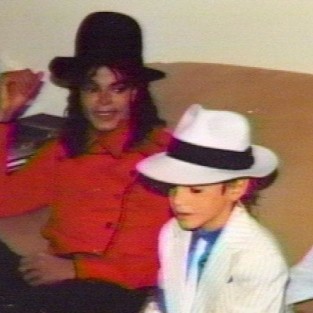
Wade Robson has outlined the child molestation allegations against Michael Jackson, along with “coaching” he later received from the King of Pop. Robson, 30, says he was molested in various ways and at various times beginning on February 4, 1990 and continuing for the next seven years. Much of the alleged abuse of Wade has been redacted, but some notable details – such as Michael’s response to his first molestation accuser – remain. According to TMZ, documents filed by Robson against MJ’s estate say that after Jordan Chandler made allegations against MJ, Michael called Wade. Jackson then “brainwashed him into being a good soldier.” Michael would allegedly role-play with Wade Robson , saying “They are saying we did all of this disgusting sexual stuff. We never did any of that, right?” The role-playing sessions continued all the way to 2005, during the molestation trial where Robson adamantly defended Jackson under oath. Michael allegedly told Wade at the time, “They are making up all these lies about you and I, saying that we did all this disgusting sexual stuff.” “They are just trying to take us down, take away my power and my money, take away our careers. We can’t let them do this.” The documents also state that a housekeeper witnessed the abuse . During the 2005 trial, she testified that she walked by Michael’s shower and heard him playing with “little Wade,” with two pairs of underwear outside. Robson is seeking damages for the emotional trauma he says he suffered, while Jackson’s family members have adamantly denied his claims.
Columnist Says Black Churches Criticize Black Men Too Much Is the African-American community contributing largely to the increasingly negative perception that society has of black men? Marcia Dixon of The Voice Online says yes……and she also says it needs to stop. via The Voice Online We live in a society where it seems to be OK to poke fun at and publicly deride men. Whether it’s because they are unfaithful in their relationships, commit domestic violence, don’t look after their children, aren’t able to multi-task, aren’t emotional, are aggressive, OR more prone to commit acts of crime. The list could go on. But surely the criticisms levelled at men, even within the church, is only half the story. Shouldn’t we stop and think about the impact all this negativity is having on the young boys in our midst? Not all men are badly behaved. Too many of the discussions we have in the black community about gender issues focus on the inadequacy of men. Isn’t it time for the negative rhetoric to stop and look at new ways to move forward – together? Marcia goes on to point out that there are both positive and negative examples of black men in the African-American community, those that aren’t handling their responsibilities tend to get much of the focus, which sets a poor example for young black men to follow. She also alludes to the fact that those who are doing what they are supposed to often go unnoticed by the very institution that should be uplifting them: the church. Some of our communities have imploded on themselves and become no-go areas when men have absconded on their duties. Women are left to fend for themselves and their children. Communities where men are absent become breeding grounds for gang leaders and criminals to train up the next generation in negative behaviour. And many young men themselves are bemoaning the absence of their father, or a father figure in their life, with some attributing the lack of a strong male presence in their life as the reason why they descended into crime and anti-social behaviour. Seeing as churches are perceived as the key institutions within the black community, they should be at the forefront (which some are) of bigging up men, and using the platform they have to promote the many good men that we have in our community. Not every man is absconding on his marital and parental duties. The black community is filled with lots of men who have integrity, are responsible, successful in their careers and utilising their talents in a God-honouring way. Plus there are the guys, who were, as described by the Bible, ‘on the path that leads to destruction’, but with either the help of God, the church, role models or their own personal discipline, have turned their lives around and are now exemplary role models. These are the guys are community needs to be focus on. So, what say you Bossip fam? Are we as black people getting in our own way when it comes to the downfall of our men? Or is the rest of society just as much to blame for the increasingly negative depiction of black men?
The poster for Small Town Gay Bar filmmaker Malcolm Ingram’s newest documentary, Continental , has been unveiled in time for its SXSW debut, and, well, it’s just the ticket for a look back at one of gay culture’s most iconic playgrounds of the late 1960s and 70s. Here’s the official synopsis: “Malcolm Ingram’s lively new documentary CONTINENTAL takes viewers back in time to the sexually charged New York of 1968, when the notorious Continental Baths opened its doors. This groundbreaking den of debauchery (advertised as a place “for sophisticated men only”) came to transcend sexual identity and became a cultural beacon to the hip, beautiful and infamous. Not only host to newly-empowered gay men of all shapes and sizes, eager to take full advantage of their sexual freedoms at a lavish venue, the Continental brought both high and low culture to the bathhouse’s stage week after week, becoming instrumental in the careers of ‘60s and ‘70s icons like Bette Midler , Barry Manilow , Patti LaBelle, Peter Allen and countless others. Those countless others included the late comic Andy Kaufman , confetti-tossing Jackass fixture Rip Taylor and cross-dressing proto-punkers The New York Dolls, and so many other performers who became regulars on TV variety and game shows during their heyday in the 70s. Ingram takes the journey with the club’s owner Steve Ostrow, members of his former staff and those who were present and actually remembered what happened. Sounds like a must-see — like the poster below. Follow Frank DiGiacomo on Twitter. Follow Movieline on Twitter.
There’s a question that The Impossible , the new film from Juan Antonio Bayona ( The Orphanage ), demands be asked, and that is — is it easier for audiences to relate to tragedy when it’s filtered through white characters? This is not a new issue. The movies have a long tradition of approaching stories about people of color, both at home and abroad, through the experiences of Caucasian protagonists, a habit that speaks to both (probably not unfounded) ideas about audience preferences and prejudices and the linked reality of what most of our movie stars still look like. The Impossible is set during the 2004 tsunami that hit South East Asia the day after Christmas, killing over 230,000 people and devastating Indonesia, India, Thailand and other countries, but it’s about how one expat family on holiday weathers the tragedy, an uplifting tale of survival and endurance amidst the ruin. On one hand, yes, it feels undeniably strange and selective to approach the worst tsunami in history by way of vacationing foreigners, with representatives of the local Thai population limited to those who come to their aid. The film begins with the family — Henry (Ewan McGregor) and Maria (Naomi Watts), and their sons Lucas (Tom Holland), Simon (Oaklee Pendergast) and Thomas (Samuel Joslin) — arriving on a turbulent flight, and ends with their worse for the wear departure on another one, and the relief that accompanies that trip to safety comes with an awareness that many of the other people left behind do not have a home elsewhere to go back to. On the other hand, The Impossible , which was written by Sergio G. Sánchez, is based on the true story of a Spanish family (transformed here into a British one) who were some of the many visitors to the area whose trip abroad turned into a nightmare. Their experiences aren’t unworthy of being dramatized simply because they’re not representative of the underreported norm, and the film recreates the horrifying saga in ways that are startlingly visceral, including a masterful sequence in which the first wave arrives like a monster in a horror flick. This story being told doesn’t mean that others are silenced, and The Impossible benefits from taking a limited perspective on an awful larger incident rather than try for something more panoramic. What may be a more relevant question for The Impossible is what its aims are as a movie. It’s a thoroughly and effectively sappy effort about a family searching for one another after an incredible catastrophe in the trappings of traumatic gore film — or vice versa, but either way the two halves sit uneasily beside one another on screen. As in The Orphanage , Bayona demonstrates he has a talent for the disturbing or flat out frightening and a taste for the sentimental, and it’s perhaps because this is a film about a real and recent disaster that both feel amplified, the shock and suffering turned up to apologize for or counterbalance the unabashed drippiness that follows. From a pure filmmaking perspective, it’s the first half that really impresses and perturbs, as Henry, Maria and the kids arrive from Japan to spend their holidays in a gorgeous beachside resort in Khao Lak. They film themselves on Christmas morning opening presents on the veranda, they release a paper lantern on the beach at night, and they sit poolside getting sunburns with other Western tourists and talking about their careers while the boys frolic in the water. The tsunami takes them completely by surprise, as it did almost everyone affected, rumbling from the horizon and taking out everything in its path. We stay with Maria as she’s swept away in the chaotic mass of water, the camera sticking with her as she clutches a tree and howls in pain and upset, then cutting over to Lucas as he’s pulled in the current, the two trying to reach each other in a world suddenly upended. It’s a tour de force sequence, and one that manages to outdo a similar one in Hereafter with little effort. But it’s what follows that’s enough to evoke a physical reaction, as Maria trudges through the wreckage, too stunned to notice the tattered muscles exposed in the gaping wound in her leg. The suffering Watts portrays — she climbs, dripping blood and crying in pain, into a tree and in a later scene coughs up what looks like lung tissue — looks all too agonizingly real, and enabling that requires a committed and deeply believable bit of acting. But watching her ordeal is enough to make you feel shaky, and almost as troubling are the sequences that follow in which Henry trudges through the splintered remains of their hotel, looking for the rest of his family, either alive or dead. The Impossible drops you into the experience of living through the tsunami in specific, achingly realized detail, then pulls back to provide a happier ending. After so much anguish, the need to balance it out with something positive is understandable, but it’s difficult not to be aware of just how much Bayona is yanking on heartstrings as he arranges for near misses and hospital misunderstandings, teary phone calls and kindly old women (Geraldine Chaplin!) providing companionship to forlorn children. Any glimpses of good amidst the destruction are welcome, but after that jarring, unforgettably immediate account of the tsunami, the latter half of The Impossible is so disappointingly movie -ish, tying a bow on the events after portraying them too vividly to allow them to be wrapped so neatly. It wrings out tears with an industrious efficiency that leaves you feeling manhandled after the exhilarating, terrifying footage that’s unfolded before. Follow Alison Willmore on Twitter . Follow Movieline on Twitter .
rapper says Nicki and French haven’t been thorough about how he helped them early in their careers. By Rob Markman Nicki Minaj Photo: Samir Hussein/ Getty Images
Need a job? Then this post is for you! List Of Cities Where Unemployment Is Up, Careers With Job Openings It’s tough to make a dollar out here nowadays. With that said, we thought we’d give you a look at careers that have job opportunities opening up on a regular basis as well as some cities NOT to move to if you are considering relocating. Hit the flipper to check out how you can get ahead and makes some racks on racks. Image via Shutterstock
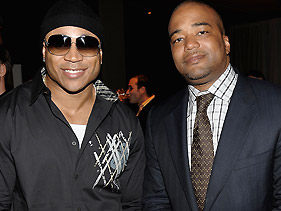
Hip-hop mogul rose from carrying record crates for DJ Red Alert to guiding the careers of the biggest names in music. By Rob Markman LL Cool J and Chris Lighty Photo: Jamie McCarthy/ Getty Images
Glamour Models aren’t all bad….cuz they get topless and most of the time they have rockin’ fuckng tits….to compensate for their average looking faces that are usually the reason they aren’t actual models….but are still getting paid to be in pictures….which is better than most whores who don’t embrace being whores…. I have no choice but to love that they brand stripper looking bitch, willing to do softcore porn shoots, but not show pussy, as Glamor Modeling, like it is a fucking thing…that’s like calling strippers exotic dancers…or prostitutes escorts…..but as someone who endorses any girl to be a professional slut…I love that it works… Here are Sabine and Rhian for a Calendar shoot….
Lia Lor is a fresh face in porn, that won’t be so fresh for long, cuz most pornstars, if they aren’t already fucking wrecked, will be early into their careers, because coming up in porn doesn’t always land you top paying contract jobs that are more like fucking on camera, than being raped and violated on camera, something more and more young girls are into, cuz more and more young girls look up to whores like Sasha Grey….all hipster, young, stupid and fucked in the head…. Like all good hipster, young, stupid pornstars…she’s taken some time out of her busy schedule of getting fucked to get shot by Terry Richardson…here are the pics…..I have a feeling we will be hearing a lot more about this one….