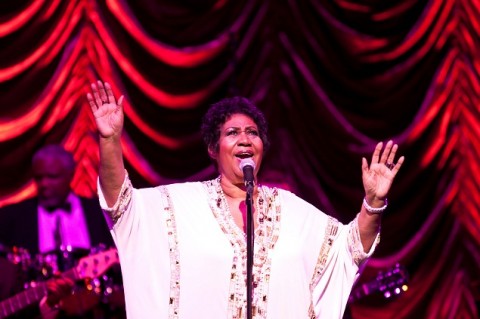
Aretha we hope you get better. The music game is f***** up. We need you around so people can remember what good music sounded like. Aretha Franklin Cancels Concerts On Doctors’ Orders According to The National Enquirer Music superstar ARETHA FRANKLIN cancels concerts per doctors’ orders as fans fear the worst. “Due to her doctor’s recommendation for treatment,” Aretha canceled two upcoming concerts according to her official Facebook page. Franklin, 71, was scheduled to perform this Monday May 20th at Members of the Chicago Symphony Orchestra to celebrate the 24th annual Corporate Night and from a gig at Foxwoods Resorts and Casino. Aretha has been plagued by health problems in recent years but did not disclose the condition for which her medical team is recommending treatment. In December 2010, she underwent surgery for a pain in her side that “was so hard it almost brought me to my knees” Franklin told media. We hope you recover. All hail the queen of soul. Wenn
‘I used to tell girls that I was mixed, which is a bold-faced lie,” the Chicago rapper tells Mixtape Daily of his verse on “Everybody’s Something.” By Nadeska Alexis
We not mad at tan mom for getting her weight up. We just hope she takes the money she earns from this freaky flick and gets her a therapist and some skin treatments. Tan Mom To Be In Gay Freaky Film According to TMZ Bad news: Tanning Mom Patricia Krentcil is going to be in a gay freaky flick. Good news: She won’t be having sex with anyone. Sources close to the SPF -5 mom tell TMZ … Krentcil first offered up her services to Vivid Entertainment, but they wisely passed. But Lucas Entertainment, a company that produces a series of gay freaky flicks called “Kings of New York,” became interested … and cast Krentcil in their latest episode. According to our sources, the role is just a cameo and Krentcil will be paid $1,000 for just a few hours work. Most importantly, we’re told Krentcil will be fully clothed for the shoot and there is NO sex involved. Whew, that was close. Thank God she will be fully clothed. Splash News
Hide ya kids, hide ya wife and hide ya peacocks. They raping everything these days. Man Sexually Abuses Peacock According to The Huffington Post A man sexually abused a peacock, which was later found dead in his garage, according to authorities in Illinois. Roselle police report that they discovered the dead bird, named Phyl, and learned about its abuse while investigating an alleged case of indecent solicitation of a child, NBC Chicago reports. David Beckman, 63, of the Chicago suburb, Roselle, faces three charges of harassment by telephone, unlawful possession of drug paraphernalia, two counts of drug possession, attempted indecent solicitation of a child, cruelty to animals, and two counts of battery NBC Chicago reports. Both the battery and solicitation of a child charges stem from a case earlier this week in Roselle, which involved a child between the ages of 13 and 17, according to the Daily Herald. Beckman was being held at DuPage County Jail on Friday on $10,000 bond. His arraignment is scheduled for June 12. Sadly, the alleged animal abuse isn’t the only one to make headlines recently. In April, Kurtis Peterson, a Michigan man, was sentenced to up to 15 years in prison for having sex with two dogs. In February, Andrew Mendoza pleaded guilty to public lewdness and criminal trespassing for trying to make a baby with his neighbor’s horse. “I was thinking it would have a horseman baby,” he stated in a court document. Poor peacock SMH. Shutterstock
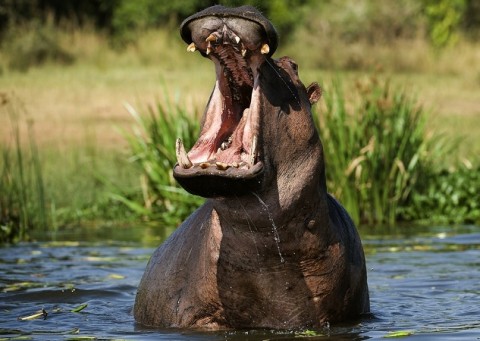
Whoa… Tour Guide Shares Story Of Being Swallowed Alive By Hippo This is some WILD ish….. via Huffington Post “There was a terrible, sulphurous smell, like rotten eggs, and a tremendous pressure against my chest,” Paul Templer said, recalling the moment he realized he had been swallowed by a hippopotamus. At the time, Templer was 27, a river guide taking groups of tourists down the Zambezi river near Victoria Falls, along the border of Zambia and Zimbabwe. His near-death story appeared in The Guardian’s “Experience” series on Friday and has since grabbed headlines around the world. “I remember looking up through 10 feet of water at the green and yellow light playing on the surface, and wondering which of us could hold his breath the longest,” he wrote in The Guardian. “Blood rose from my body in clouds, and a sense of resignation overwhelmed me. I’ve no idea how long we stayed under — time passes very slowly when you’re in a hippo’s mouth.” The hippo’s teeth savaged Templer’s chest and left arm. But he told The Chicago Tribune in an earlier interview that he still counts himself very lucky. “I went straight down his throat. It smelled like death,” Templer said in the Tribune. And yet, when the hippo “bit into my lungs he missed my heart. He missed my liver and kidneys.” Although Templer carried a .357-caliber Magnum firearm, he told the Tribune he never got a chance to pull it. After repeated bites, Templer managed to get ashore, but his wounds included a bite so deep it revealed part of his lung. No idea how he lived to tell about this! Shutterstock
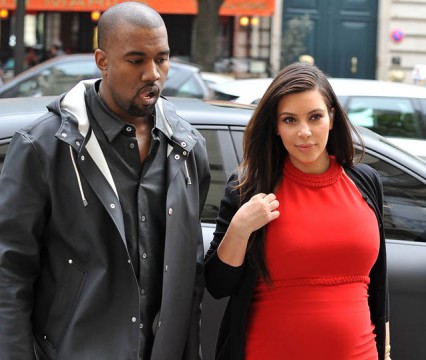
Its nice to see their swirl is doing some good in the world. Kim Kardashian And Kanye West Praised By Hospital According to TMZ Kim Kardashian and Kanye West are bona fide HEROES … this according to a Chicago Children’s Hospital which says the money raised by the couple will be used to treat sick babies. TMZ broke the story … Kim and Kanye are urging friends and family members to abstain from sending baby gifts — instead, they’re asking well-wishers to send donations to the Lurie Children’s Hospital of Chicago. Now, reps for the hospital are hailing the couple for the generous move — saying, “Ann & Robert H. Lurie Children’s Hospital of Chicago would like to extend its sincerest gratitude to Kim Kardashian and Kanye West for their thoughtfulness and support of the hospital.” The rep continues, “Funds donated on behalf of Kardashian and West will be directed to the Neonatal Intensive Care Unit Fund which will help care for the most critically ill babies and their families.” “We wish them all the best in the upcoming arrival of their baby.” Aww, isn’t that sweet. INF
Lil’ Reese do better man. Rapper Lil Reese Arrested According to The Chicago Tribune South Side rapper Lil Reese was caught sleeping in a car early Sunday and arrested on a warrant. The arrest warrant was issued Friday in Champaign County for Lil Reese, 20, whose birth name is Tavares Taylor. He was arrested about 4 a.m. Sunday in the 4400 block of South Wells Street after a police officer on patrol saw him sleeping in a vehicle, according to Cook County court documents. Taylor has risen to prominence in recent years as a pillar of Chicago’s “drill” rap scene. He is part of local rap luminary Chief Keef’s Glory Boyz Entertainment clique and has a deal with Def Jam Recordings, a label whose clients include Rihanna and Ludacris. The arrest warrant issued Thursday is connected to charges of criminal trespass to a residence with persons present, mob action and battery that allegedly took place in February 2012, according to the Champaign County Circuit Clerk’s website and Cook County court documents. Officials at the Champaign County Sheriff’s Office would not give further information about the charges Sunday, saying they could not comment because Taylor is not in their custody. Taylor was being held in lieu of a $100,000 bail Sunday. He pleaded guilty to burglary charges in May 2010 and received two years of probation, according to Cook County court documents. He was stopped April 13 in the 6600 block of South Wentworth Avenue in Chicago and charged with driving without insurance, no driver’s license and not signaling, according to court documents. He sparked outrage in October after video footage purportedly of him beating a young woman went viral. The grainy video taken with a camera phone reportedly shows rapper Lil Reese attacking the unidentified woman. It was posted on various hip-hop websites and angered thousands on Twitter. The video, which lasts a little more than a minute, shows a man entering a residence and arguing with a young woman. The two then get into a physical altercation. Lil Reese acknowledged the video on his Twitter account before suggesting the incident occurred “years ago.” When your the type of n**** to always be in some mess, you got to be vigilante at all times. The po-pos stay watching. Cook County Sheriff’s Police
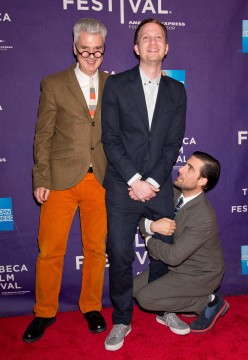
Teenage is as rebellious a film as the territory it covers. Based on punk author Jon Savage ‘s 2007 book Teenage: The Creation of Youth Culture 1875-1945 , Matt Wolf’s documentary eschews the talking heads and Chyroned dates that dominate the genre to immerse the moviegoer in a visually and aurally sumptuous history lesson. Wolf uses rare archival footage, period-piece recreations and a score by Deerhunter’s Bradford Cox to depict the evolution of teen culture via a number of influential and unconventional subcultures — swing kids, Boy Scouts, flappers, the German Wandervogel and even Nazi Youth — that coalesced from the late 19th century through the end of World War II. Understand them and today’s teens don’t seem so mystifying. I sat down with Wolf (he’s in the center of photo at left), Savage (he’s the one wearing orange pants) and the movie’s executive producer, actor Jason Schwartzman ( Moonrise Kingdom ) at the Tribeca Film Festival. Below is an edited version of our discussion: Movieline: Jason, how did you get to be the executive producer of Teenage ? Jason Schwartzman: When Matt’s movie about Arthur Russell came out, Wild Combination , I saw it multiple times in the course of a couple days, told everybody that I could possibly tell about it and showed it to one of my best friends Humberto Leon , who owns the fashion company Opening Ceremony . And when he saw that it was directed by Matt Wolf, he said, “Oh, Matt’s a really good friend of mine.” One thing led to another and Humberto connected Matt and I to make a short film for his store opening in Japan. We spent a lovely beautiful afternoon together in Toronto. It was just a beautiful day, and I felt instantly connected to Matt. I hope it’s okay that I say that. Matt Wolf: Please. Schwartzman: Does that make you feel uncomfortable? Wolf: No, I’m okay. Schwartzman: Too much pressure? After that, we started talking about books and music, and Matt said he was trying to make a documentary based on Jon Savage’s book Teenage . Being a fan of music and culture, I knew and loved Jon and was excited about this idea. And then a couple years later? Wolf: A year or two, I don’t know. Schwartzman: I reached out to Matt and said, “What’s going on with the movie? Is there anything I can try to do?” That began a process of getting the word out there and finding a way to finish the movie and make it happen. Movieline: You’ve taken a very unorthodox approach to making a non-fiction film. You call it “living collage.” Can you explain what you mean by that? Matt Wolf: When I read Jon’s book Teenage I didn’t just see it as source material. It helped me imagine a philosophy for the filmmaking. John is well known for his book on punk, England’s Dreaming , and in Teenage, he treated history in a punk way. Early on in our collaboration, he told me about something he observed in the 1970s: He saw these teenage punks wearing thrift clothes from the ‘30s, ‘40s and ‘50s and they would cut them up and reassemble them with safety pins into something new. He called that “living collage.” It really struck a chord with me and made me think, “Well what about living collage as a kind of filmmaking style, where we pick and choose these kind of documents and fragments from previous youth cultures and reassemble them into something that feels fresh and new.” And so living collage plays out visually in the way the film looks. In terms of the storytelling, the reason it probably feels unconventional is that, rather than telling the story with experts and historians, the film is told from the point of view of youth. And in John’s book, a huge basis of it is actual quotes from teenagers that are sourced from diaries and journalistic sources and books. And we kind of did a living collage of these quotes as well. You go so far as to not always identify who is talking. The moviegoer is essentially left to absorb what’s coming at him. Jon Savage: In an earlier edit we had lots of dates and times and Matt decided, and I thought it was a great idea, to actually take them out. Although it was good to have them, they were like the foundation. In any production, you have to start with a foundation and when the product is actually made, you don’t need [that foundation] any more. It’s not as if you need to explain Hitler Youth to a lot of people. It’s interesting that you say that because I thought the movie flowed like a piece of music — a punk symphony, you could say. Wolf: Yeah, that analogy makes sense to me, too. Music exists almost wall-to-wall through the film, and I perceive the voiceovers as being like lyrics. Very little of the archival footage we source has sound on it. . The voiceover is meant to provide a narrative foundation and to deepen the emotional impact of the film. It’s also meant to provide context in a personal way where it’s helpful. So kind of like lyrics in a song, you can just listen and hear it and have an emotional response to what you hear. Or that experience can be deepened by listening to the ideas in the lyrics. One of the first things I did when I started making this movie was to match archival footage to contemporary music that felt really transformational. It felt like a departure from how we normally see archival footage being used. How did you come to use Deer Hunter’s Bradford Cox to score the movie? Wolf: Bradford is my favorite contemporary musician, and we had actually corresponded as teenagers on an early blog that he ran. We reconnected over a music-themed film I made called Wild Combination years ago, and I approached him very early on in the process of Teenage to ask him if he’d like to score it. He wrote back saying, “Yes,” right away. But, like I said, the film is wall-to-wall music, and I’ve also included some pre-existing songs in the film as well. Savage: I gave Matt a hard drive. Wolf: Yeah, Jon gave me a lot of ideas for that music, too. I think our shared taste in music also was a helpful starting point. Jon, should someone who plans to see Teenage read your book before or after watching the movie? Savage: Whichever way, but, actually, I think the movie stands on its own. War plays an important role in this movie: On one hand, it’s responsible for the cross-pollination of teen cultures from around the world. On the other, it turns teens into adults very quickly. Wolf: It destroys them. At the beginning of this story, young people are perceived as a social problem. They need to be controlled. They’re sent to war and what happens to them in World War I is a kind of foundational trauma that creates teenage rebellion as we know it. It creates generational tension, and it drives the whole story. Then you have World War II, where young people are essentially sacrificed as cannon fodder by adults. But, at the same time, war stimulates the economy and enables teens to earn money and have a certain level of freedom. It’s as consumers that teenagers become the ultimate stakeholders in societies. War can lead to the destruction of their innocence, but it can also empower them with a certain level of freedom in terms of time and space and economics. War is the rear prism through which youth found their place in society. Savage: In our different ways, when I was doing the book and you were doing the film, we both fund the wartime stuff very hard. Wolf: Totally. I think the Hitler stuff is really intense. It’s at once totally intoxicating and absorbing. The reason Hitler and the Nazi experience for youth is a big part of the film is that Hitler both empowered and destroyed youth like no one else in history. In youth, he saw the potential to reimagine the world, but to very destructive and evil ends. It seems like every generation of adults laments how adventurous or promiscuous teens have become. But after watching this film, I wonder if that’s a myth. For instance, the German Wandervogel you depict from the late 19th and early 20th Centuries were quite free-spirited and daring. Savage: The cycle is the same, but the circumstances are different. Each generation has similar characteristics because it’s a physical and developmental stage of life that happens to everyone but within different societies and different context. I think there’s always a proportion of teens that are going to be rebels. There’s always a proportion that are going to be extremists and they’re always going to be the much larger proportion against whom the rebels and the extremists act: kids who just want to carry on and live life just like their parents did. Wolf: The focus of our film is these exceptional teenagers who are inventing new styles of communication, who are reimagining the future and the Wandervogel — this youth-led movement that’s incredibly liberated — is an example of that. Savage: Matt found extraordinary footage that hasn’t been seen. Schwartzman: I don’t believe that Wandervogel footage has ever been seen in a documentary. It comes from a museum for youth movements in Germany who do not typically license out their footage. When I look at pop stars like Justin Timberlake and Justin Bieber, I feel like we’ve entered a period of extended adolescence. Wolf: The starting point for me has always been, why is the culture obsessed with youth and where does this obsession come from? I do think that obsession has only intensified over time, but it’s hard to speculate about why that is. You mentioned the archetype of Justin Timberlake . In Teenage , we’re really finding the root and source of that, beginning with Rudolph Valentino, and with kids who fashioned their hair to look like him and who rioted at his funeral, and then progressing to Frank Sinatra , the first giant teen commercial pop star. Savage: Matt’s totally right. It has intensified because it’s become a huge industry. I’m much older than [Matt and Jason] and when I was a teenager it wasn’t this thing it is now. Since I was a young man, the whole area of pop culture and media has expanded exponentially. Wolf: Films that are about youth culture are usually focused on the now, and I thought it was a provocative strategy to make a film about youth that is based completely in the past — not even the recent past, the distant past. So it’s not working against the obsession with youth but it’s trying to attack the ideas and issue of youth culture in a totally different way. Instead of making a film about punks and hippies and skaters and Justin Bieber , it’s about flappers and jitterbugs. Schwartzman: He is making a movie about the punks and the skaters and Bieber. It’s called Teenage 2. That was going to be my next question. Would you consider making a Part 2? Wolf: Part of the reason Jon wrote the book in the style that he did is that, after the war, youth culture becomes this global phenomenon. The American model of the teen years spreads everywhere. It proliferates at such a rapid pace and is so gigantic that it’s probably not possible to explore the subject in a comprehensive way. Looking at this pre-history that led up to the creation of the teenager felt like the perfect way to explore the themes and ideas of youth culture in a deeper sense. So, to me, this film completes the idea. Schwartzman: He had planned to go to the ’60s but he ran out of computer space. Savage: If I was able to do a follow-up to the book — and I think it would actually make a good film — I would go from ’45 to say ’54. Elvis. But then it just gets insane. The level of data increases exponentially. Wolf: And then it becomes like a TV special or a textbook that doesn’t really go deep into much at all. After the war, it’s really difficult to not be just a greatest hits compilation. Watching Teenage left me with the distinct impression that if you had to choose the one medium that has had the most influence over youth culture, it would be music. Savage: Music is very, very important. Again, from a European prospective, America’s great gift to the world is black American music. I’m still in awe of it after listening to it for 50 years, and to me one of the high spots of the film is the section about Swing. My single favorite piece of footage is the Chicago Swing Jamboree with 200,000 kids going crazy in 1938. There’s an integrated audience, everybody is going nuts you see this black American guy with a bowler hat — and he’s pogoing. That said it all to me. Wolf: When I started making the film I thought it would be a deeper investigation of pop culture, but it ended up becoming much more political than I ever expected. I feel like the story of the German Swing Kids is the perfect synthesis of all the themes and the tension between politics and pop culture in the film. Here you have these kids who are like proto-punks: They have wild fashion, they dress very flamboyantly, they’re smuggling in music from America, and they’re doing it as a form of rebellion against the Nazi regime. They don’t perceive themselves as activists, but they’re doing it with great courage. It shows the political power of popular culture in a certain context. The film is also about the spread of American culture throughout the world and music facilitated that like nothing else. In the 1920’s, the British narrator says, “I got my hands on all the jazz records. My mum asked me why it was good and I said, ‘Because it comes from America.'” Savage: Swing looks to me like the proper birth of youth culture, certainly in a mass form, even more so than jazz in the ’20s. Wolf: The Chicago Swing Jamboree is so meaningful because you see these teenagers pioneering this new style of expression and dance. It has its own slang, its own music vocabulary. Savage: It’s own lifestyle. Wolf: And it spreads to become a mainstream phenomenon. What’s next for each of you guys? Wolf: I’m in the early stages of developing a bunch of projects. Jon and I are hoping to collaborate on a new film based on an unprecedented archive of gay life that this collector has. It’s a personal photography collection of early gay life. I’m also working on a documentary portrait of Hilary Knight , the illustrator of Eloise . Savage: I’m writing a new book about the year 1966 in pop culture and youth culture. Schwartzman: I just finished a film about the making of Mary Poppins . Sounds so dumb compared to what you guys just said. Follow Frank DiGiacomo on Twitter. Follow Movieline on Twitter.
Teenage is as rebellious a film as the territory it covers. Based on punk author Jon Savage ‘s 2007 book Teenage: The Creation of Youth Culture 1875-1945 , Matt Wolf’s documentary eschews the talking heads and Chyroned dates that dominate the genre to immerse the moviegoer in a visually and aurally sumptuous history lesson. Wolf uses rare archival footage, period-piece recreations and a score by Deerhunter’s Bradford Cox to depict the evolution of teen culture via a number of influential and unconventional subcultures — swing kids, Boy Scouts, flappers, the German Wandervogel and even Nazi Youth — that coalesced from the late 19th century through the end of World War II. Understand them and today’s teens don’t seem so mystifying. I sat down with Wolf (he’s in the center of photo at left), Savage (he’s the one wearing orange pants) and the movie’s executive producer, actor Jason Schwartzman ( Moonrise Kingdom ) at the Tribeca Film Festival. Below is an edited version of our discussion: Movieline: Jason, how did you get to be the executive producer of Teenage ? Jason Schwartzman: When Matt’s movie about Arthur Russell came out, Wild Combination , I saw it multiple times in the course of a couple days, told everybody that I could possibly tell about it and showed it to one of my best friends Humberto Leon , who owns the fashion company Opening Ceremony . And when he saw that it was directed by Matt Wolf, he said, “Oh, Matt’s a really good friend of mine.” One thing led to another and Humberto connected Matt and I to make a short film for his store opening in Japan. We spent a lovely beautiful afternoon together in Toronto. It was just a beautiful day, and I felt instantly connected to Matt. I hope it’s okay that I say that. Matt Wolf: Please. Schwartzman: Does that make you feel uncomfortable? Wolf: No, I’m okay. Schwartzman: Too much pressure? After that, we started talking about books and music, and Matt said he was trying to make a documentary based on Jon Savage’s book Teenage . Being a fan of music and culture, I knew and loved Jon and was excited about this idea. And then a couple years later? Wolf: A year or two, I don’t know. Schwartzman: I reached out to Matt and said, “What’s going on with the movie? Is there anything I can try to do?” That began a process of getting the word out there and finding a way to finish the movie and make it happen. Movieline: You’ve taken a very unorthodox approach to making a non-fiction film. You call it “living collage.” Can you explain what you mean by that? Matt Wolf: When I read Jon’s book Teenage I didn’t just see it as source material. It helped me imagine a philosophy for the filmmaking. John is well known for his book on punk, England’s Dreaming , and in Teenage, he treated history in a punk way. Early on in our collaboration, he told me about something he observed in the 1970s: He saw these teenage punks wearing thrift clothes from the ‘30s, ‘40s and ‘50s and they would cut them up and reassemble them with safety pins into something new. He called that “living collage.” It really struck a chord with me and made me think, “Well what about living collage as a kind of filmmaking style, where we pick and choose these kind of documents and fragments from previous youth cultures and reassemble them into something that feels fresh and new.” And so living collage plays out visually in the way the film looks. In terms of the storytelling, the reason it probably feels unconventional is that, rather than telling the story with experts and historians, the film is told from the point of view of youth. And in John’s book, a huge basis of it is actual quotes from teenagers that are sourced from diaries and journalistic sources and books. And we kind of did a living collage of these quotes as well. You go so far as to not always identify who is talking. The moviegoer is essentially left to absorb what’s coming at him. Jon Savage: In an earlier edit we had lots of dates and times and Matt decided, and I thought it was a great idea, to actually take them out. Although it was good to have them, they were like the foundation. In any production, you have to start with a foundation and when the product is actually made, you don’t need [that foundation] any more. It’s not as if you need to explain Hitler Youth to a lot of people. It’s interesting that you say that because I thought the movie flowed like a piece of music — a punk symphony, you could say. Wolf: Yeah, that analogy makes sense to me, too. Music exists almost wall-to-wall through the film, and I perceive the voiceovers as being like lyrics. Very little of the archival footage we source has sound on it. . The voiceover is meant to provide a narrative foundation and to deepen the emotional impact of the film. It’s also meant to provide context in a personal way where it’s helpful. So kind of like lyrics in a song, you can just listen and hear it and have an emotional response to what you hear. Or that experience can be deepened by listening to the ideas in the lyrics. One of the first things I did when I started making this movie was to match archival footage to contemporary music that felt really transformational. It felt like a departure from how we normally see archival footage being used. How did you come to use Deer Hunter’s Bradford Cox to score the movie? Wolf: Bradford is my favorite contemporary musician, and we had actually corresponded as teenagers on an early blog that he ran. We reconnected over a music-themed film I made called Wild Combination years ago, and I approached him very early on in the process of Teenage to ask him if he’d like to score it. He wrote back saying, “Yes,” right away. But, like I said, the film is wall-to-wall music, and I’ve also included some pre-existing songs in the film as well. Savage: I gave Matt a hard drive. Wolf: Yeah, Jon gave me a lot of ideas for that music, too. I think our shared taste in music also was a helpful starting point. Jon, should someone who plans to see Teenage read your book before or after watching the movie? Savage: Whichever way, but, actually, I think the movie stands on its own. War plays an important role in this movie: On one hand, it’s responsible for the cross-pollination of teen cultures from around the world. On the other, it turns teens into adults very quickly. Wolf: It destroys them. At the beginning of this story, young people are perceived as a social problem. They need to be controlled. They’re sent to war and what happens to them in World War I is a kind of foundational trauma that creates teenage rebellion as we know it. It creates generational tension, and it drives the whole story. Then you have World War II, where young people are essentially sacrificed as cannon fodder by adults. But, at the same time, war stimulates the economy and enables teens to earn money and have a certain level of freedom. It’s as consumers that teenagers become the ultimate stakeholders in societies. War can lead to the destruction of their innocence, but it can also empower them with a certain level of freedom in terms of time and space and economics. War is the rear prism through which youth found their place in society. Savage: In our different ways, when I was doing the book and you were doing the film, we both fund the wartime stuff very hard. Wolf: Totally. I think the Hitler stuff is really intense. It’s at once totally intoxicating and absorbing. The reason Hitler and the Nazi experience for youth is a big part of the film is that Hitler both empowered and destroyed youth like no one else in history. In youth, he saw the potential to reimagine the world, but to very destructive and evil ends. It seems like every generation of adults laments how adventurous or promiscuous teens have become. But after watching this film, I wonder if that’s a myth. For instance, the German Wandervogel you depict from the late 19th and early 20th Centuries were quite free-spirited and daring. Savage: The cycle is the same, but the circumstances are different. Each generation has similar characteristics because it’s a physical and developmental stage of life that happens to everyone but within different societies and different context. I think there’s always a proportion of teens that are going to be rebels. There’s always a proportion that are going to be extremists and they’re always going to be the much larger proportion against whom the rebels and the extremists act: kids who just want to carry on and live life just like their parents did. Wolf: The focus of our film is these exceptional teenagers who are inventing new styles of communication, who are reimagining the future and the Wandervogel — this youth-led movement that’s incredibly liberated — is an example of that. Savage: Matt found extraordinary footage that hasn’t been seen. Schwartzman: I don’t believe that Wandervogel footage has ever been seen in a documentary. It comes from a museum for youth movements in Germany who do not typically license out their footage. When I look at pop stars like Justin Timberlake and Justin Bieber, I feel like we’ve entered a period of extended adolescence. Wolf: The starting point for me has always been, why is the culture obsessed with youth and where does this obsession come from? I do think that obsession has only intensified over time, but it’s hard to speculate about why that is. You mentioned the archetype of Justin Timberlake . In Teenage , we’re really finding the root and source of that, beginning with Rudolph Valentino, and with kids who fashioned their hair to look like him and who rioted at his funeral, and then progressing to Frank Sinatra , the first giant teen commercial pop star. Savage: Matt’s totally right. It has intensified because it’s become a huge industry. I’m much older than [Matt and Jason] and when I was a teenager it wasn’t this thing it is now. Since I was a young man, the whole area of pop culture and media has expanded exponentially. Wolf: Films that are about youth culture are usually focused on the now, and I thought it was a provocative strategy to make a film about youth that is based completely in the past — not even the recent past, the distant past. So it’s not working against the obsession with youth but it’s trying to attack the ideas and issue of youth culture in a totally different way. Instead of making a film about punks and hippies and skaters and Justin Bieber , it’s about flappers and jitterbugs. Schwartzman: He is making a movie about the punks and the skaters and Bieber. It’s called Teenage 2. That was going to be my next question. Would you consider making a Part 2? Wolf: Part of the reason Jon wrote the book in the style that he did is that, after the war, youth culture becomes this global phenomenon. The American model of the teen years spreads everywhere. It proliferates at such a rapid pace and is so gigantic that it’s probably not possible to explore the subject in a comprehensive way. Looking at this pre-history that led up to the creation of the teenager felt like the perfect way to explore the themes and ideas of youth culture in a deeper sense. So, to me, this film completes the idea. Schwartzman: He had planned to go to the ’60s but he ran out of computer space. Savage: If I was able to do a follow-up to the book — and I think it would actually make a good film — I would go from ’45 to say ’54. Elvis. But then it just gets insane. The level of data increases exponentially. Wolf: And then it becomes like a TV special or a textbook that doesn’t really go deep into much at all. After the war, it’s really difficult to not be just a greatest hits compilation. Watching Teenage left me with the distinct impression that if you had to choose the one medium that has had the most influence over youth culture, it would be music. Savage: Music is very, very important. Again, from a European prospective, America’s great gift to the world is black American music. I’m still in awe of it after listening to it for 50 years, and to me one of the high spots of the film is the section about Swing. My single favorite piece of footage is the Chicago Swing Jamboree with 200,000 kids going crazy in 1938. There’s an integrated audience, everybody is going nuts you see this black American guy with a bowler hat — and he’s pogoing. That said it all to me. Wolf: When I started making the film I thought it would be a deeper investigation of pop culture, but it ended up becoming much more political than I ever expected. I feel like the story of the German Swing Kids is the perfect synthesis of all the themes and the tension between politics and pop culture in the film. Here you have these kids who are like proto-punks: They have wild fashion, they dress very flamboyantly, they’re smuggling in music from America, and they’re doing it as a form of rebellion against the Nazi regime. They don’t perceive themselves as activists, but they’re doing it with great courage. It shows the political power of popular culture in a certain context. The film is also about the spread of American culture throughout the world and music facilitated that like nothing else. In the 1920’s, the British narrator says, “I got my hands on all the jazz records. My mum asked me why it was good and I said, ‘Because it comes from America.'” Savage: Swing looks to me like the proper birth of youth culture, certainly in a mass form, even more so than jazz in the ’20s. Wolf: The Chicago Swing Jamboree is so meaningful because you see these teenagers pioneering this new style of expression and dance. It has its own slang, its own music vocabulary. Savage: It’s own lifestyle. Wolf: And it spreads to become a mainstream phenomenon. What’s next for each of you guys? Wolf: I’m in the early stages of developing a bunch of projects. Jon and I are hoping to collaborate on a new film based on an unprecedented archive of gay life that this collector has. It’s a personal photography collection of early gay life. I’m also working on a documentary portrait of Hilary Knight , the illustrator of Eloise . Savage: I’m writing a new book about the year 1966 in pop culture and youth culture. Schwartzman: I just finished a film about the making of Mary Poppins . Sounds so dumb compared to what you guys just said. Follow Frank DiGiacomo on Twitter. Follow Movieline on Twitter.