Tag Archives: climate

A Different Conservative View on Climate Change: It’s Happening

One of 52,400 Google images critical of Al Gore and Climate Change The one time I met Jonathan Kay he was rude and arrogant, and he often comes off that way in his column in the National Post. But unlike the Posties in the back pages who are rabid climate change deniers, Kay makes a lot of sense in his article Global-warming deniers are a liability to the conservative cause. Like many of us at TreeHugger, he despairs about how the climate change issue has become politicized into a left/right split, but he … Read the full story on TreeHugger

View post:
A Different Conservative View on Climate Change: It’s Happening

WaPo Story Laments Lack of ‘Awakening’ After Oil Spill to Need for Green Agenda

The Washington Post put the bad news for liberals right at the top of Monday’s front page, left side: “Climate debate unmoved by spill.” Reporters David Fahrenthold and Juliet Eilperin lamented that “great change” is not following the “great tragedy” of the BP oil spill. We haven’t had an “awakening” to our wasteful ways:   Environmentalists say they’re trying to turn public outrage over oil-smeared pelicans into action against more abstract things, such as oil dependence and climate change. But historians say they’re facing a political moment deadened by a bad economy, suspicious politics and lingering doubts after a scandal over climate scientists’ e-mails. The difference between now and the awakenings that followed past disasters is as stark as “on versus off,” said Anthony Leiserowitz, a researcher at Yale University who tracks public opinion on climate change. Only liberals are “awake,” while the public is “asleep.” They wonder why newspaper readership is declining. Here’s how the story started: For environmentalists, the BP oil spill may be disproving the maxim that great tragedies produce great change . Traditionally, American environmentalism wins its biggest victories after some important piece of American environment is poisoned, exterminated or set on fire. An oil spill and a burning river in 1969 led to new anti-pollution laws in the 1970s. The Exxon Valdez disaster helped create an Earth Day revival in 1990 and sparked a landmark clean-air law. But this year, the worst oil spill in U.S. history — and, before that, the worst coal-mining disaster in 40 years — haven’t put the same kind of drive into the debate over climate change and fossil-fuel energy. Fahrenthold and Eilperin palpably sympathize: “for the environmental groups trying to break this logjam, it’s hard to imagine a more useful disaster .” After all, “The BP oil spill has made something that is usually intangible — the cost of fossil-fuel dependence — into something tangibly awful.” When ClimateGate was raised, the Post reporters dismissed that as a tempest in a tea party While Dan Lashof of the Natural Resources Defense Council stressed this is the “last best chance to pass a comprehensive clean energy and climate bill,” the Post added: It’s hard to tell how many people are listening. In public-opinion polls taken after the spill by Leiserowitz and other academics, 53 percent of people said they were worried about climate change. That was only slightly different from January, and still down from 63 percent in 2008. Leiserowitz said there may be distrust of climate science among a small group after the “Climate-gate” scandal last year, in which stolen e-mails seemed to show climate scientists talking about problems in their data. Those scientists have been repeatedly cleared of academic misconduct , including in a report released Wednesday. The Post did quote Kenneth P. Green of the “conservative American Enterprise Institute,” on the “great change” question: “There’s a caveat,” Kenneth P. Green, a resident scholar at the conservative American Enterprise Institute, said of the rule that great change follows great disasters. “Which is: Great tragedy, with the right timing, can bring great change….When people are in a bunker mentality, sort of hunkered down over the economy, then that’s not going to produce significant change.” None of the advocates for onerous “climate change” bills featured in the story were labeled as liberal.

Read more:
WaPo Story Laments Lack of ‘Awakening’ After Oil Spill to Need for Green Agenda

UN’s IPCC Tells Scientists To ‘Keep A Distance From The Media’

The United Nations Intergovernmental Panel On Climate Change has instructed all 831 researchers contributing to the organization’s next round of assessments to “keep a distance from the media.” Such was disseminated in a July 5 letter from IPCC chairman Rajendra Pachauri which has already garnered some criticism from folks on both sides of the anthropogenic global warming debate. Even the New York Times’ Andrew Revkin expressed disgust with this revelation Saturday:   I know a number of supervising authors of the forthcoming reports are eager to revise policies and stress openness. There’s plenty of advice on the way from committees reviewing the panel’s practices. I also understand the reflexes involved here, particularly given how some media overplayed claims that the climate panel had erred in parts of its 2007 assessment. But any instinct to pull back after being burned by the news process is mistaken, to my mind. As I explained to a roomful of researchers at the National Academy of Sciences last year, in a world of expanding communication options and shrinking specialized media, scientists and their institutions need to help foster clear and open communication more than ever. Clampdowns on press access almost always backfire. Indeed. Supporting this view was IPCC contributor Edward R. Carr, an associate professor of geography at the University of South Carolina who wrote Friday: Part of the problem for the IPCC is a perceived lack of openness – that something is going on behind closed doors that cannot be trusted. This, in the end, was at the heart of the “climategate” circus – a recent report has exonerated all of the scientists implicated, but some people still believe that there is something sinister going on. There is an easy solution to this – complete openness. I’ve worked on global assessments before, and the science is sound. I’ve been quite critical of the way in which one of the reports was framed (download “Applying DPSIR to Sustainable Development” here), but the science is solid and the conclusions are more refined than ever. Showing people how this process works, and what we do exactly, would go a long way toward getting everyone on the same page with regard to global environmental change, and how we might best address it. So I was dismayed this morning to receive a letter, quite formally titled “Letter No.7004-10/IPCC/AR5 from Dr Pachauri, Chaiman of the IPCC”, that might set such transparency back. While the majority of the letter is a very nice congratulations on being selected as part of the IPCC, the third paragraph is completely misguided: “I would also like to emphasize that enhanced media interest in the work of the IPCC would probably subject you to queries about your work and the IPCC. My sincere advice would be that you keep a distance from the media and should any questions be asked about the Working Group with which you are associated, please direct such media questions to the Co-chairs of your Working Group and for any questions regarding the IPCC to the secretariat of the IPCC.” This “bunker mentality” will do nothing for the public image of the IPCC. The members of my working group are among the finest minds in the world. We are capable of speaking to the press about what we do without the help of minders or gatekeepers. I hope my colleagues feel the same way, and the IPCC sees the light . . . For an organization that has suffered a tremendous loss of credibility in the past twelve months, any attempt to shelter this process from complete sunshine would be totally misguided. The international community’s belief in AGW has been plummeting thanks to numerous missteps by those promoting the theory. With Global Warmingist-in-Chief Al Gore now in the middle of a divorce and a sex scandal, his contributions to helping publicize AR-5 could end up being limited. Regardless of recent findings largely in support of ClimateGate scientists — the realist community never expected anything other than this as these folks weren’t about to rule against their own! — America’s media have seemed largely detached from this debate in current months. Witness the relative lack of global warming hysteria this past week as temperatures in the northeast broke records. With this in mind, if the IPCC wants the normally compliant press to assist it in making its case when AR-5 is published in 2013, it had better do everything possible to make journalists a part of the process. Failing this, you could end up with far less media support for whatever is published. In the end, this could be the best thing for this debate AND the planet, for without the press banging the AGW drum, climate alarmists are going to have a very difficult time selling their gloom and doom. That is not to say realists should hope for a media blackout. As science has always been on the side of those not buying into Gore’s favorite money-making scheme, full disclosure and openness are in everyone’s best interest. 

More here:
UN’s IPCC Tells Scientists To ‘Keep A Distance From The Media’

EPA Approves First Mountaintop Removal Coal Mine Under More Stringent Guidelines

Mountaintop removal mine in Kentucky, photo: iLoveMountains.org via flickr. One more item that probably would’ve made more headlines had there not been a gigantic oil spill in the Gulf of Mexico (I know I missed it until now): As Solve Climate reports, the EPA has given approval to the first

View post:
EPA Approves First Mountaintop Removal Coal Mine Under More Stringent Guidelines

The Quest for ‘Perfect Climate Information’

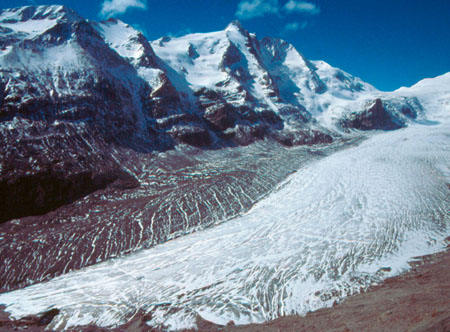
Photo via Joanneum What if the world had perfect climate information? If everyone had a perfect understanding of climate science and the threats posed by global warming, would that change most people’s limited commitments to individual action and our ability to implement good carbon-cutting policy? This question is a topic of an informal debate between the one-time NY Times climate reporter Andrew Revkin and Climate Progress’ Joe Romm, and it’s well worth thinking about in order to come to grips with why it is we’re so short of perfect climate information right now . …. Read the full story on TreeHugger

Here is the original post:
The Quest for ‘Perfect Climate Information’

Report: Forests Key to the Future of Clean Water

Photo via Chi King A new report by the US Forest Service shows that forests play a vital role in protecting watersheds from the impacts of climate change. After two years of research, Water, Climate Change, and Forests: Watershed Stewardship for a Changing Climate shows that ecosystems that have healthy watersheds can sustain changes and keep ecosystems functioning, especially if they’re from forested areas. So, protecting forests means protecting future water supplies…. Read the full story on TreeHugger

See the rest here:
Report: Forests Key to the Future of Clean Water

Gainor Column: New Technology Puts Journalists on Defense, Just Like Rest of Us

This is the way the world ends, not with a bang but a blogger. Millions of bloggers, actually. And they are taking back freedom of the press from journalists unwilling and unable to use it in a fair and responsible manner. A few weeks ago, we saw Helen Thomas confess her nutty anti-Semitism because a blogger caught her in an unusually candid moment. We found out what many have long suspected: that she’s a disgusting bigot. Then there was the Gen. McChrystal controversy as our top general in Afghanistan reportedly criticized the Obama administration to a Rolling Stone reporter. Blogger critics argued ” The Runaway General ” showed the journalistic beat system prevents warts-and-all portrayals such as this one. Reporters are often too cozy with sources to make them look bad. Adding to that ethical issue, The Washington Post followed with a story saying the reporter in this case might have violated rules about what would be off the record. Rolling Stone denied it of course. But nothing got more press than the seemingly simple resignation of self-immolating Washington Post blogger Dave Weigel. Weigel was hired by the Post three months ago and continued his previous anti-conservative efforts with an attack on those ” anti-gay marriage bigots ” and making a joke about Matt Drudge “diddling” an 8-year-old boy. He was forced to apologize but remarkably kept his job. Remember, this is the Post that ruined Sen. George Allen’s career because he said “macaca,” the most obscure offensive comment in modern politics. “Macaca,” which about 12 people knew to be a racial slur, has been used in the Post 187 times since Allen first uttered the term in August 2006. More than 110 of those were prior to the election that Allen then lost. But Weigel survived his “macaca moment” with nary a scratch. Every day afterward he would highlight the worst of the conservative movement in a great example of skewed reporting while the Post’s other bloggers literally celebrated the liberal world view. It was doomed to fail – more so since Weigel comments on Twitter often mocked the very movement he was covering. Then all hell broke loose. Just like Climate Gate, leaked e-mails created a stir. E-mail comments Weigel had sent to a list of lefty pundits and journalists reportedly blasted several top conservatives and caused Weigel to offer his resignation. Before Post editors could decide, The Daily Caller had a more complete version of Weigel’s e-mails that were even worse. In this batch, the Daily Caller quoted him saying when Rush Limbaugh went in the hospital, ” I hope he fails .” Weigel went on to attack pretty much anybody who’s anybody in the conservative movement – Gingrich, Beck, Drudge again – and everyone else, too. In one case, the Caller said Weigel claimed conservatives were “using the media to ‘violently, angrily divide America.'” The Post accepted the resignation two months too late. Weigel’s departure has been enormous news for the inside the Beltway crowd. It’s probably gotten more press than any resignation since Nixon. Pundits, journalism professors, the Post ombudsman and more have all chimed in on the issue. Virtually every lefty Web outlet that matters has opined, from HuffingtonPost to Slate to Salon. Tons of Twitter and Facebook posts have been devoted to either the justice or injustice of it all. The Weigel situation has become an object lesson in the way Washington really works – and the way the world has changed. D.C.’s in-crowd, both left and right, has closed ranks around him as one of their own. Some people I respect have had kind words about him, so he is no ogre. But many of his supporters also are letting their friendships cloud their judgment. Even Weigel admits he screwed up. He chalked his actions up to ” hubris ” in a piece he wrote that makes him appear more conservative than he ever did while actually working in Washington. “Was I really that conservative? Yes,” he wrote. Then he admitted he changed. “At ‘Reason,’ I’d become a little less favorable to Republicans, and I’d never been shy about the fact that I was pro-gay marriage and pro-open borders.” In an unsurprising move, Weigel signed on to a contributor to MSNBC, the most crazy lefty network he could find. “Welcome aboard and my condolences, uh, congratulations!” wrote “Countdown” host Keith Olbermann on Twitter. Perhaps now, his conservative supporters will acknowledge Weigel’s gone to the loony left. But there’s more to it than that. Helen Thomas and Weigel should serve as a wake-up call to every person in public life. The message: the rules have changed dramatically. Technology, Facebook, Twitter and more have made privacy more of a theory than a fact. What we all do in every part of our lives – e-mails, embarrassments and more – can have very real consequences. No one can easily survive that level of transparency. Ordinary Americans have lived with those rules for decades. New technology has made that reality more intrusive. Journalists are just discovering that now everyone is going to hold them to the same standards they’ve held everyone else. The rise of citizen journalism, of a few conservative news outlets and people like Andrew Breitbart, is letting everyone see what journalists are really like and reporters and editors are learning life on the other side of camera. Journalists are rightly terrified. Dan Gainor is The Boone Pickens Fellow and the Media Research Center’s Vice President for Business and Culture . His column appears each week on The Fox Forum and he can be seen on Foxnews.com’s “Strategy Room.” He can also be contacted on FaceBook and Twitter as dangainor.


Lord Monckton Claims Non-Scientists Shouldn’t Talk Climate Science?

Image credit: The Age From my post on why consensus matters in climate science to my follow up on why blogging is not science , it’s common for climate skeptic commenters to claim that any reference to the majority of expert scientific opinion on climate change is simply an “appeal to authority”…. Read the full story on TreeHugger

More here:
Lord Monckton Claims Non-Scientists Shouldn’t Talk Climate Science?

Margaret Thatcher Hailed as Champion for Climate Skeptics

Image credit: Iconic Photos Only a few weeks ago we saw conservative environmentalists evoking the ghost of Ronald Reagan to make the case for strong action on climate change . Now climate skeptics are getting in on the act, co-opting Reagan’s ally Margaret Thatcher as a key voice of climate skepticism. The trouble is, Thatcher’s legacy on climate change is muddled to say the least…. Read the full story on TreeHugger

Read more:
Margaret Thatcher Hailed as Champion for Climate Skeptics

Man Swims Across Mount Everest Lake To Highlight Global Climate Change

Photo via Business Innovation Factory We’ve heard of people doing some crazy swims to draw attention to a particular cause – for instance, Big River Man who swims some of the mightiest rivers in the world and in the process, points out their problems with pollution and other issues. But this latest swimmer is solid enough to make the toughest members of the Polar Bear club shiver. Lewis Gordon Pugh managed to become the first person to finish a long-distance swim in a lake … Read the full story on TreeHugger

View original post here:
Man Swims Across Mount Everest Lake To Highlight Global Climate Change