Tag Archives: country

M.I.A. Says MAYA Is ‘A 3-D Album’

‘It’s not this one-dimensional, shiny pop album,’ singer says. By James Montgomery, with reporting by Akshay Bhansali M.I.A. Photo: MTV News It’s been called everything from her “most personal” effort and “a towering work” (link http://www.clashmusic.com/reviews/mia-maya) to an outright “turd” , but according to M.I.A. , her new ///Y/&#92 album is really just her … in 3-D form. “I think my album’s really diverse, because I tried to make a 3-D version of who I was. Maybe that’s because I made it in the year when everything was f—ing 3-D, like ‘The World Cup … in 3-D!’ ‘Toothpaste adverts in 3-D!’And I was like ‘Fine, I’ll make an M.I.A. album in 3-D,’ ” she told MTV News. “And … that’s what I did. Sonically, it’s a 3-D album, it’s not this one-dimensional, shiny pop album, or, like, f—ed up dub-step album. It’s just 3-D. You’re not always high all the time, going like, ‘Oh My God, life’s so great! [I’m] at the beach!’ It’s way more complex that that, and I think it has those levels in it.” And ///Y/&#92 (which hits stores Tuesday), is most certainly complex, an album of multi-tiered dissonance, of whoops and wails, squelches and scuzz. From the paranoid rattle of opening track “The Message” to the stoned-out babble of closer “Space,” M.I.A. and her cadre of producers (a team that, this time around, included not just frequent collaborator Diplo — he of the “turd” comment — but also Blaqstarr, Rusko and Switch) go to great lengths to pack the album with as much sonic detritus as possible … everything from pneumatic tools (on “Steppin’ Up”) to screaming jet engines (“Story To Be Told,”) with Suicide samples, handclaps, Tablas, Jamaican radio chatter, muffled gunshots and an army of power chords thrown in for good measure. It’s enough to make your head swirl … or possibly explode. And it sounds that way because, during the year-plus she spent working on the album, M.I.A. very much felt like she would explode, too. Barred from leaving the country, pregnant with her first child, watching her homeland of Sri Lanka slog through the last stages of a bloody civil conflict, she felt helpless, confused and downright frustrated by everything going on around her. And ///Y/&#92 is the sound of her inner turmoil. “The last album was more about the environment and where you ended up and the people you met … on this one, there was just so much going on in my own world, and in my own life — whether it’s personal or professional — [that] there’s just no room for all that stuff,” she said. “And I’m still working off things I’ve seen and been inspired by that I haven’t fully explored in my other two albums. And so, having all that, and then with all this extra sh– that was going on in my personal life, I think it worked out great that I couldn’t leave the country, and I was just, like, locked up in a cave. It gave me time and space to just puke all this stuff out that was going on in my own life.” So while it’s by no means easy listening, ///Y/&#92 isn’t supposed to be. Born out of intense personal strife, it represents M.I.A. at her most cathartic, her most detached, her most free. Does all of that make for radio-friendly pop? Not especially. Does it make for an absolutely compelling listen? Most definitely. “I couldn’t even register another human being, or another influence, or the scene and the music that’s going on outside. I’ve always been like that, I’ve always been out there … and been really connected to everything and everyone before,” she said. “And this was the first time I had to just take time out and I think this is the music that reflects all the stuff that was going on — sometimes it was confusing and sometimes it was great.” Related Videos MTV News Extended Play: M.I.A. Related Artists M.I.A.

Read more:
M.I.A. Says MAYA Is ‘A 3-D Album’

Matthews to Democrat: What Percentage of Republicans Would You Put In the ‘Nut Bag?’

Chris Matthews, on Monday’s Hardball, brought on his own personal congressman, Maryland Democrat Chris Van Hollen, to review how his party was going to distinguish themselves from the GOP in the midterms with Matthews asking the Democratic Congressional Campaign Committee head if they were focusing on all the “crazy” Republicans, or in other words “nut collecting.” Matthews then, after playing a clip of Barack Obama singling out Republicans Joe Barton, John Boehner and Roy Blunt, also reminded Van Hollen the President missed another “crazy” person with “B” name as he proclaimed: “If you’re going out looking for nuts, it would seem like you’d put [Michele Bachmann] in your basket.” Matthews even tried to pin down Van Hollen by demanding: “What percentage of the Republican Party would you put in the nut bag right now?” The following exchange was aired on the July 12 edition of Hardball: CHRIS MATTHEWS: Okay let’s take a look. Here’s the President. He’s got a new tack out there, by the way. For a long time, after a year and a half in office, he never mentioned the opponent. He was like a Chicago pol. There is no Republican Party. Now he’s starting to name names. He’s advertising your opposition. Just like you advertised the Republicans and what they would do if they got in. Here he is advertising what the Republicans, he’s using names like Boehner, these curse words. Boehner! What’s the other guy’s name? REP. CHRIS VAN HOLLEN: Boehner and Barton? MATTHEWS: Barton! Boehner, Barton and Blunt, Blunt. He’s got em, all these B’s. Let’s take a look – BP of course – here he is in Missouri. Let’s listen. (Begin clip) BARACK OBAMA: You may have read the top Republican on the House Energy committee, Mr. Barton publicly apologizing to BP…Does anybody here think BP should get an apology? Mr. Barton did. He called this a tragedy. This, this, this fund that we have set up to compensate fishermen and small business owners throughout the Gulf. That’s not the tragedy. The tragedy is, is if they didn’t get compensated. So this is the leadership that we’ve gotten from Barton and Boehner and Blunt. Sometimes I wonder if, if that no button is just stuck in, in, in, in Congress. (End clip) MATTHEWS: Well, there you heard it. Barton and Boehner and Blunt. I love the names. Here he is, let’s take a look. Here he is Gibbs, the spokesman for the President, on Sunday underlying that this is, what you just heard is going to be the spiel from now until Election Day this November. Let’s listen. (Begin clip) ROBERT GIBBS: Joe Barton started his congressional testimony of the CEO of BP by apologizing not to the people in the Gulf, but to the CEO. I think that’s a perfect window, not into what people are thinking but the way they would govern. Joe Barton, John Boehner, those are the types of things you’ll hear a lot, I think both from the President and I think local candidates about what you’d get if the Republicans were to gain control. (End clip) MATTHEWS: You guys are out there nut collecting, aren’t you? I mean you, you, the Democrats have, we’ve had a tough economy in this country, everybody’s had a hard time. A lot of people have, maybe not the oil companies. So you’re going around looking for nuts. Like, you know, Barton is crazy enough to side with BP in the worst catastrophe. Another one, Bachman. You haven’t gotten the other “B” here. If you’re going out looking for nuts, it would seem like you’d put her in your basket. You haven’t gotten to her yet. She wants to investigate you guys for anti-American activities. VAN HOLLEN: Well look what’s surprising Chris is not what they claim to do- MATTHEWS: You love these nuts don’t you? VAN HOLLEN: Well, they have told us what they’re gonna do. They have forecast exactly what they’re gonna do. Joe Barton has always been on the side of the big oil companies and he said it publicly. They’ve been on the side of the big insurance companies in fighting health care reform- MATTHEWS: Who’s the guy that yelled out in the State of Union, “You lie?” VAN HOLLEN: That was Joe, that was Joe Wilson. MATTHEWS: Where do they get these guys from? VAN HOLLEN: But, but that’s the point. See people need to focus on the fact that if you were to hand over control over to the House, these are the guys who are gonna be running the policy and there the same guys that created the problems. MATTHEWS: What percentage of the Republican Party, right now, as it has changed in our life. You’re a bit younger than me, has moved to the right. What percentage of the Republican Party would you put in the nut bag right now? The party that, not just conservatives, but people that are just really crazy out there, even beyond the tea partiers? VAN HOLLEN: Let me, let me just say- MATTHEWS: You don’t want to give me a percentage. VAN HOLLEN: No, no but the out of the mainstream caucus- MATTHEWS: Okay. VAN HOLLEN: -of the Republican Party in the House is the largest caucus in the House by far. Which is why you had these situations where you have these right wing- MATTHEWS: Do they talk like this on the floor? Do you actually hear them talking among themselves, talking like this? “Isn’t BP great?” VAN HOLLEN: Well usually, no usually they’re a little more circumspect. Which is why it’s, you know, something when, when Joe Barton gets out and publicly makes these statements. MATTHEWS: Okay, okay. VAN HOLLEN: But it’s important that people understand what these guys really do. MATTHEWS: Okay you know usually when you vote, a regular person votes with their gut. They walk in there, they vote with their money too but mainly they’re gonna go “I don’t like the way things are going.” They go in and vote against incumbents. That’s called a referendum. Now you guys are trying to change that gut instinct to “No don’t go in there and vote with your gut” because that will screw your party. “Go in there and go, now which party is the worst? Let’s make sure I don’t have the worst party at least. So the Democrats have not exactly been a great success yet but the Republicans are far worse.” Right? How do you get people to change the question from “Yes or no? Do I like things the way they are or not like the way things are?” to “Let me think Democrats versus Republicans?” How do you get people to think like that? Because clearly you’re trying to get them to think like that, Gibbs is trying to do it. And the President is trying to get us to think like that? Choice not referendum. How do you change it like that? VAN HOLLEN: Well because people, at the end of the day, have a choice between two candidates? Right? And so it’s not- MATTHEWS: But they don’t think like that, usually. They usually go yes or no? VAN HOLLEN: No what we’ve said, though is it’s not just about us. It’s us versus them. What differences do you have between the parties on these issues that are critical to Americans? And if we can get people to focus on the fact that, you know, John Boehner describes the situation- MATTHEWS: So this the frying pan into the fire kind of thing? VAN HOLLEN: Well, this is, this is let’s have a real debate on the issues. MATTHEWS: I think it’s great. VAN HOLLEN: And what’s interesting is what they’ve told us they’re gonna do- MATTHEWS: I think it’s great you’re finally advertising your opponents. Because [guys] like Boehner, and Mitch McConnell and Eric Cantor and Jon Kyl have been getting a free ride in this country for months now. They just sit back like Burgers on Main Street, waiting for you guys to blow it. Then they get all the votes. VAN HOLLEN: Well they get to sit on the sidelines. They get to whine, they get to carp. And now we’re saying put up, let’s see what you guys are saying you’re gonna do. MATTHEWS: You have an interesting choice that you’re making for the American voters if they choose to make a choice, and not just go “nyah.” Anyway, thank you Chris Van Hollen, who happens to be my congressman.

Visit link:
Matthews to Democrat: What Percentage of Republicans Would You Put In the ‘Nut Bag?’

New Financial Regulations Create Diversity Czars for All Federal Financial Regulators

The financial regulations package recently passed by the House of Representatives would create a new diversity overseer at each of the major federal financial regulatory agencies, including the new ones created by the legislation itself. This new office, called the Office of Minority and Women Inclusion, would take over from any existing diversity or civil rights office already working at the agencies in question. It would also be responsible for making sure that each of the major federal financial regulators is hiring enough minorities and women, and contracting with enough minority-owned and women-owned businesses. However, each individual diversity czar is responsible for defining exactly how many minorities, women, and minority- and women-owned businesses are satisfactory. “[E]ach agency shall establish an Office of Minority and Women Inclusion that shall be responsible for all matters of the agency relating to diversity in management, employment, and business activities,” the legislation says. (The bill passed in the House on June 30; a Senate vote could occur as early as next week.)     In fact, each new diversity chief will be responsible for developing quota-like guidelines proscribing the ethnic and gender makeup of each regulator’s workforce, including upper management.   “Each Director shall develop standards for- (A) equal employment opportunity and the racial, ethnic, and gender diversity of the work-force and senior management of the agency,” it states.   These diversity offices will also be responsible for “assessing the diversity policies and practices of entities regulated by the agency.”   This means that in addition to monitoring every bank in the country, checking every financial institution in America to make sure they are not doing anything systemically risky, and trying to prevent another financial collapse, every federal financial regulator will also be counting the number of minority and female employees at banks and investment firms, big and small.   The proposed law would also mandate that federal financial regulators hire from certain types of minority- or women-only colleges and universities, advertise in minority- and women-focused publications, and partner with inner-city schools and other minority-focused organizations to hire or mentor more minorities and women.   The diversity offices will also be charged with enforcing the newly written diversity guidelines for each private sector company the regulator contracts with, meaning that they will be checking to ensure that each of the agency’s private contractors is following the agency’s diversity guidelines.   “The Director of each Office shall develop and implement standards and procedures to ensure, to the maximum extent possible, the fair inclusion and utilization of minorities, women, and minority-owned and women-owned businesses in all business and activities of the agency at all levels, including in procurement, insurance, and all types of contracts,” the bill states.   This provision is significant because some of the same federal regulators who must establish these diversity offices – Treasury and Federal Reserve – make heavy use of the private sector on a regular basis. They have also relied heavily on the private financial sector in their responses to the financial crisis.   For example, the Fed’s Term Asset-Backed Lending Facility (TALF) program, which backstopped the securitization market during the height of the financial crisis, was actually run with the help of Bank of New York Mellon, an institution regulated by the New York Fed.   The TALF program, along with other Fed lending programs, had to maintain a strict level of secrecy to protect the banks using the program from irrational runs on their businesses. Because the securitization market had essentially collapsed, TALF’s customers had to remain anonymous if the government was to avoid setting an arbitrary – rather than market – price for securitized debt.   Had the markets learned which financial institutions were using Fed lending programs like TALF, they would have known which securities the Fed was taking as collateral for a particular loan amount. With such information in the public domain, the government would have essentially been fixing the price of asset-backed securities, rather than letting supply and demand set the price in the normal way.   The new diversity office at the Fed – and other financial regulators – apparently would be empowered to dig into such sensitive relationships under the guise of diversity enforcement, possibly endangering the programs and hamstringing their effectiveness.   If one of the new diversity czars thinks a financial firm is not being diverse enough, he potentially could recommend that the regulator terminate the contract(s) the regulator has with that firm. Crossposted at NB sister site CNS News

Go here to read the rest:
New Financial Regulations Create Diversity Czars for All Federal Financial Regulators

Melissa Santiago PHOTOS: The-Dream Cheating On Wife Christina Milian

Music producer Terius “The-Dream” Nash, who is currently married to singer Christina Milian, and his “assistant” Melissa Santiago were caught frolicking on the beach in the Caribbean over the weekend MORE http://bumpshack.com/2010/07/12/melissa-santiago-photos-the-dream-cheating-on-wi… added by: c7girl

Democratic Leadership All Agree. If Obama Weren’t Black He Never Would Have Been Elected!

“If Obama was a white man, he would not be in this position. And if he was a woman of any color, he would not be in this position. He happens to be very lucky to be who he is. And the country is caught up in the concept.”“Every time that campaign is upset about something, they call it racist,” she said. “I will not be discriminated against because I’m white. If they think they’re going to shut up Geraldine Ferraro with that kind of stuff, they don’t know me.”…Geraldine Ferraro. 'Game Change' Excerpt: Bill Clinton On Obama: 'A Few Years Ago, This Guy Would Have Been Getting Us Coffee' also saying Barack Obama must 'kiss my ass! added by: congoboy

AP Video ‘Expert’: Being Here ‘Without Documentation’ Isn’t a Crime

One reason to hope that the Big 3 networks continue to muddle through their awful evening news ratings and somehow hang around is that there’s an alternative out there that would be much worse. If any of the networks ever considered outsourcing their nightly newscasts to the Associated Press, the likely result could be bad enough to make some long for the (relatively) good old days of Brian, Diane, and Katie. An object example of the AP’s pathetically one-sided, biased and completely not-transparent video reporting came last Tuesday when it covered the Department of Justice’s lawsuit against Arizona’s illegal immigration enforcement measure. The 1070 law tells police to verify citizenship status in “contact” situations (e.g., traffic stops and other routine matters) if they have a “reasonable suspicion” that the person or persons involved aren’t here legally. AP’s go-to “expert” acts as if it’s a given that the United States government has decided that being here illegally (“without documentation”) isn’t a crime. Seriously. During the 104-second report ( first go here , then type “Arizona immigration” in the search bar near the bottom, and select “Fed. Suing to Block Ariz. Immigration Law”), AP reporter Brian Thomas interviewed no one who defended the law’s constitutionality. Here’s the transcript: Brian Thomas, AP Reporter: The Obama administration is suing the state of Arizona over what the President has called “a misguided law.” Federal officials say the state’s new immigration policy tries to override the government’s authority under the Constitution. The measure requires police to question and possibly arrest illegal immigrants during the enforcement of other laws, like traffic stops. Steven Vladeck, American Univ. Law Professor: The federal government has long since decided that it’s not a crime to be in the United States without documentation. You can be removed from the United States, you can be deported, but you cannot be put in jail. And so the question is, “Do individual states, Arizona today, Maryland tomorrow, have the authority to decide for themselves to have a harsher regime?” Thomas: The Justice Department argues the state plan will lead to the harassment of American citizens and others who are authorized to be here. Tony Bustamante, Attorney in Arizona : Federal priority enforcement of immigration laws is to go after the criminals, the bad people who are causing havoc on society, not the gardeners and the landscapers and the cooks who make the economy go ’round and ’round. Thomas: Those who support the pending law have said the stringent rules are necessary to fight drug trafficking, murders and other crimes plaguing the border state. Maricopa County Sheriff Joe Arpaio: Maybe the federal government ought to ask for the help of local and state law enforcement to stop this illegal immigration situation. Thomas: The federal government is hoping its lawsuit will stop other states looking to follow Arizona’s lead. Vladeck: If the federal government can show the Arizona laws are inconsistent with federal policies, the federal government can, should, and will win. And I think it’s likely that they will do so. Thomas : The next step is for the case to be assigned to a judge who will decided temporarily whether to block the law from taking effect at the end of this month. A two-word, law-based response to Vladeck’s claim that “The federal government has long since decided that it’s not a crime to be in the United States without documentation” — Horse manure : Search 8 U.S.C. § 1325 : US Code – Section 1325: Improper entry by alien (a) Improper time or place; avoidance of examination or inspection; misrepresentation and concealment of facts Any alien who (1) enters or attempts to enter the United States at any time or place other than as designated by immigration officers, or (2) eludes examination or inspection by immigration officers, or (3) attempts to enter or obtains entry to the United States by a willfully false or misleading representation or the willful concealment of a material fact, shall, for the first commission of any such offense, be fined under title 18 or imprisoned not more than 6 months, or both, and, for a subsequent commission of any such offense, be fined under title 18, or imprisoned not more than 2 years, or both. (b) Improper time or place; civil penalties Any alien who is apprehended while entering (or attempting to enter) the United States at a time or place other than as designated by immigration officers shall be subject to a civil penalty of – (1) at least $50 and not more than $250 for each such entry (or attempted entry); or (2) twice the amount specified in paragraph (1) in the case of an alien who has been previously subject to a civil penalty under this subsection. Civil penalties under this subsection are in addition to, and not in lieu of, any criminal or other civil penalties that may be imposed. The “without documentation” portion of Vladeck’s statement is at best useless misdirection. If you aren’t here legally, you’re subject to the sanctions just noted. If you’re here legally and happen to be “without documentation” at any given moment, that’s a totally different situation, and I believe he knows it. The federal government (i.e., the executive branch) doesn’t get to “decide” what is and what is not a crime. To make illegal entry not a crime, the law has to be changed by the legislative branch. That hasn’t happened. Vladeck’s claim that “you cannot be put in jail” for being here illegally is objectively false, as bolded above in the excerpt from the law. Also note the use of the word “shall” (i.e., there is normally not supposed to be any discretion) as opposed to “may.” Arizona’s law is on target with the intent of federal law. Vladeck’s next bolded claim in the transcript above is tantamount to saying, “Policy becomes the law, no matter what the law says.” No sir. Of course there will always be prosecutorial discretion that will dictate the best and most appropriate use of an attorney general’s or county prosecutor’s resources, but that’s not what’s at play here. What Vladeck is saying it that because immigration enforcement officials have a policy of trying to avoid going after “non-criminals” (an illogical word, because you’re a criminal in this country the minute you cross the border illegally), that policy has in effect become the law, no matter what the law really is. Brian Thomas could have found dozens of people to make mince meat of Vladeck’s arguments, and chose not to. I wonder why? This is lazy, statist liberalism at its best: We don’t like a law, so we won’t enforce it, until that tradition of non-enforcement becomes the law. It’s the same bubble-headed logic that underlies the entire liberal mind-set towards the constitution: We don’t like it, so we’re going to decide that it means something other than what it clearly says, instead of going through the constitutionally mandated and deliberately difficult-by-design process of passing a constitutional amendment to change it to its desired meaning. Say what you will about whether or not the prohibition movement was misguided, but you have to acknowledge that they respected the constitution and the country enough to get their work done the right way. Contrast that with what the Clinton administration (and to an extent, the several administrations that preceded it) did to tobacco companies. From the “This was so predictable” Dept. — Vladeck’s views towards the executive branch powers are selection and arguably partisan, as you will see from the opening paragraph of his American University bio : Stephen I. Vladeck is a Professor of Law at American University Washington College of Law, where his teaching and research focus on federal jurisdiction, national security law, constitutional law (especially the separation of powers), and international criminal law. A nationally recognized expert on the role of the federal courts in the war on terrorism, he was part of the legal team that successfully challenged the Bush Administration’s use of military tribunals at Guantánamo Bay, Cuba, Here’s another “This was so predictable” item, this time about “Attorney in Arizona” Tony (Antonio) Bustamante, from the far-left Phoenix New Times : For our (40th) anniversary, we gathered many — not all — of those who’ve been targets of Sheriff Joe Arpaio and former County Attorney Andrew Thomas. Some, like politicos Phil Gordon, Mary Rose Wilcox, and Don Stapley, are converts to the struggle. Others, activists, stood up to protect the most vulnerable amongst us: Mexicans seeking to be part of the American Dream; prisoners looking to survive. … 17) Antonio Bustamante: Phoenix attorney and activist who advises those who monitor Arpaio’s anti-immigrant sweeps and defends demonstrators arrested for protesting the sheriff. Brian Thomas didn’t think viewers needed to know anything about Vladeck’s or Bustamante’s background. How typically pathetic. Oh, I almost forgot: The picture at the top right of the Mexican flag appearing to fly about the Arizona flag is what viewers of the AP video get to see during the report’s final seconds. It looks like a childish “in your face” move to me. And I didn’t get to the matter of what other states, including Rhode Island , are doing that is at least as “harsh” as what Arizona is set to do. As stated earlier, we could do worse than the evening news shows NBC, ABC, and CBS are currently feeding us. If AP’s video reports really are the go-to alternative, we should hope that Brian, Diane, and Katie remain mired in mediocrity instead of disappearing entirely. Cross-posted at BizzyBlog.com .

Read the original post:
AP Video ‘Expert’: Being Here ‘Without Documentation’ Isn’t a Crime

Roman Polanski Free After Switzerland Rejects Extradition

Oscar-winning director will not be sent to U.S. for sentencing in 1977 child sex case. By Gil Kaufman Roman Polanski in 1980 Photo: Central Press/Getty Images The decades-long legal saga of Oscar-winning filmmaker Roman Polanski took another twist on Monday (July 12), when Switzerland’s Ministry of Justice announced that it would not extradite the director of “The Pianist” to the U.S. to face sentencing for child sex charges. According to CNN , the 76-year-old director was set free after his arrest last year for the nearly 35-year old case, in which he pleaded guilty in Los Angeles to having unlawful sex with a 13-year-old girl in 1977. Polanski admitted to having sex with the underage girl after supplying her with champagne and quaaludes during a photo shoot, but he fled to Europe before his sentencing. In exchange for his guilty plea, rape and other charges were dropped at the time. Polanski had been fighting extradition from Switzerland since his arrest last year, and Justice Minister Eveline Widmer-Schlumpf said the decision by the Swiss authorities was not based on the severity of the charge or whether Polanski was guilty. “It’s not about qualifying the crime,” said Widmer-Schlumpf. “That is not our job. It’s also not about deciding over guilt or innocence.” CNN reported that the American request was rejected because U.S. authorities apparently did not supply all the legal records Switzerland had required and because Polanski had a reasonable right to think he would not be arrested if he visited the country. American authorities can’t apply again to have Polanski extradited from Switzerland, but could try if he’s detained in another country. Polanski fled the U.S. before he was sentenced in the case after learning that the judge might not go through with the short jail term the director expected in exchange for his guilty plea. He has been a fugitive from justice since 1978, mostly living in France before his arrest in Switzerland. The victim in the case, a now-married woman in her 40s named Samantha Geimer, long ago came forward to say she was unhappy with how the criminal case had been handled, but has called for it to be throw out because the airing of the details of the incident causes her harm every time it is re-examined in public.

See the original post here:
Roman Polanski Free After Switzerland Rejects Extradition

Sean Penn Blames Media for Failures in Haiti Recovery

Appearing on Monday’s CBS Early Show, actor Sean Penn described ongoing relief efforts in Haiti following January’s earthquake and condemned the media for its lack of coverage of the disaster beyond the initial weeks: “I think that the media has played an enormous part in the failures that are still going on today and the recovery here and the relief operations.” Those comments from Penn were prompted by co-host Harry Smith wondering: “People would be curious why you went in the first place. And then, why you stayed. What’s the best answer for that?” Penn replied: “…if they’re wondering that, then that would be an indictment of the American and the international press that came here in the immediate aftermath of this devastating earthquake.” Penn explained: “The United States sent its military, that did an extraordinary job in immediate relief….And then when they went on with other deployments, when the amputations en masse stopped, the media left.” Smith gave absolutely no reaction to Penn’s scathing criticism, but simply went on to tout praise for the left-wing actor’s work on the island nation: “I was reading the comments of a lieutenant general from the U.S. Southern Command who you came in contact with. And he said, ‘you know, maybe I don’t agree with Sean Penn’s politics but I can tell you this, he’s a doer, not a talker….I applaud the leadership he has shown. He doesn’t have to do this.'” While teasing the exclusive interview earlier in the show, Smith gushed over Penn: “Sean Penn went to Haiti right after January’s devastating earthquake….He has made a serious life commitment to these folks….one person who has been there much of the last six months, very much under the radar, doing really the Lord’s work there, quite frankly, is Sean Penn.” This is not the first time Smith has fawned over Penn’s work. On the February 23, 2009 broadcast, Smith described how he “wept openly” at Penn’s portrayal of gay activist Harvey Milk in the movie ‘Milk.’ On March, 7, 2010, CBS foreign correspondent Lara Logan did a profile piece on Penn’s work in Haiti for the network’s Sunday Morning program. At one point, Logan asked: “Does it make you angry when people talk about, you know, ‘Sean Penn, the Hollywood star, the movie star, coming in and trying to do something,’ and they’re kind of cynical about it?” Penn replied: “I haven’t had an awful lot of time to pay attention to them. You know, do I hope that those people die screaming of rectal cancer? Yeah, you know, but I’m not going to spend a lot of energy on it.” Here is a full transcript of Smith’s July 12 interview with Penn: 7:30AM TEASE HARRY SMITH: Also ahead this morning, a big Hollywood name takes on a big job. Sean Penn went to Haiti right after January’s devastating earthquake. His organization is now taking care of some 50,000 refugees. He has made a serious life commitment to these folks. He’s going to tell us exclusively about the challenges Haiti faces six months after the quake in just a little bit. 7:45AM TEASE SMITH: Still ahead, we’re going to go to Haiti and talk exclusively to actor and activist Sean Penn. He has been there almost nonstop since January’s deadly earthquake. He’s got quite a story to tell. We’ll get it from him in a couple of minutes. 8:00AM TEASE SMITH: Six months to the day since the earthquake in Haiti, and one person who has been there much of the last six months, very much under the radar, doing really the Lord’s work there, quite frankly, is Sean Penn. He joins us exclusively in just a couple of minutes to talk about the work that needs to be done there and the gaping reality gap between what needs to be done and what is actually getting accomplished. So, we’ll talk to him in just a couple of minutes. ERICA HILL: Beyond sobering, unfortunately. 8:08AM SEGMENT SMITH: Six months after Haiti’s earthquake, the numbers are still staggering. Between 220 and 300,000 died. Another 300,000 were injured. And about 1.5 million people still are homeless. That is as we head into hurricane season. Before the quake, actor Sean Penn had never been to Haiti. He has been there almost full time since January, building a relief organization that is helping tens of thousands of survivors. And Sean Penn joins us exclusively from Port-au-Prince this morning. Sean, good morning. SEAN PENN [CEO, J/P HAITIAN RELIEF ORGANIZATION]: Good morning. [ON-SCREEN HEADLINE: Six Months Later; Sean Penn on Haiti Relief Efforts] SMITH: In the six months that you have spent, most of the last six months that you have spent there in Haiti, what is the most important thing you have learned there? PENN: Well, I think there’s a – there’s a tremendous coordination issue between the international agencies, the government of Haiti. And so, what happens, is that floods and floods of money come in when people are seeing immediate trauma and the drama that goes along with that. And then there are agencies, big agencies, that have a lot of time sorting out the ways to best spend the money and that have the detailed capacity to do it. And so, what happens is that you get six months down the line and those things that would be preventative have not been put in place to – in any legitimate measure. And so, I think that there’s a big learning curve here and something that we’re going to have to take away with us for disasters to follow and the disasters that are likely to continue happening in Haiti. SMITH: People would be curious why you went in the first place. And then, why you stayed. What’s the best answer for that? PENN: Harry, I’ll tell you, the very best answer for that is, frankly, that if they’re wondering that, then that would be an indictment of the American and the international press that came here in the immediate aftermath of this devastating earthquake. The United States sent so much money. The United States sent its military, that did an extraordinary job in immediate relief, the most decisive action of any organization so far to date in this country. And then when they went on with other deployments, when the amputations en masse stopped, the media left. And so many of the questions and criticisms could have been answered. People could understand what’s going on here, they could understand the heart and the courage of the Haitian people and the necessity for the coordination efforts that still are not happening, in anything close to an effective way. I think that the media has played an enormous part in the failures that are still going on today and the recovery here and the relief operations. SMITH: You know, it’s interesting. I was reading the comments of a lieutenant general from the U.S. Southern Command who you came in contact with. And he said, ‘you know, maybe I don’t agree with Sean Penn’s politics but I can tell you this, he’s a doer, not a talker.’ And he said, ‘Sean knew how to work, both with the U.N., break its bureaucracy down.’ He said, ‘I applaud the leadership he has shown. He doesn’t have to do this.’ Why do you do it? PENN: You know, I came here – I’d never been to Haiti before, but I came here with a group of people who would all have their own answers for that and we found ourselves surrounded by thousands of others who would, again, have their own response to that. But I guess generically is the best way to answer it, is that you come to Haiti, in our case we came down with the idea of spending about two weeks and trying to help out. And there’s something that takes over and it’s really an obligation because you see the strength of the people who have never experienced comfort and the gifts that that can give to people like myself and to our country and culture. You see the enormous gaps. And you see that at least in your own small way, it’s each of us, every agency in its own small way, that chips into what is such an immeasurable problem here and one that Sanjay Gupta early on had said – had called ‘awful, indelible, fixable.’ And it is fixable. And it’ll be – you know, it remains to be seen whether or not the American people, the world community, are going to join together and maintain the kind of commitment that the United States military showed here and to do this completely rather than to do a cosmetic emergency response and then let a country that’s been suffering for so long suffer that much longer. SMITH: Sean Penn, we thank you very much for doing what you’re doing down there and also for taking a few minutes to clue us into just what it’s like there in Haiti six months later. Thank you so much. PENN: Thanks for bringing attention to it. SMITH: Alright, you bet.

See the article here:
Sean Penn Blames Media for Failures in Haiti Recovery

Newsweek Shocker: ‘The Environment is No Longer a Surefire Political Winner’

After pushing manmade global warming for years, the folks at Newsweek appear to be cooling on the idea. Prominently placed at the front page of the magazine’s website Monday was a large, overhead picture of what appeared to be a golf fairway or park with the following headline in green: A Green Retreat: Why the Environment is No Longer a Surefire Political Winner Even more surprising was the contents (h/t Climate Depot ): Following two of the harshest winters on record in the Northern Hemisphere-not to mention an epic economic crisis-voters no longer consider global warming a priority. Just 42 percent of Germans now worry about climate change, down from 62 percent in 2006. In Australia, only 53 percent still consider it a pressing issue, down from 75 percent in 2007. Americans rank climate change dead last of 21 problems that concern them most, according to a January Pew poll. Last month Canada’s Prime Minister Stephen Harper, blasting climate change as a “sideshow” to global economic issues, canceled the meeting of environment ministers that has preceded the G8 or G20 summit every year but one since 1994. Merkel has slashed green-development aid in the latest round of budget cuts, while in Washington, Barack Obama seems to have cooled on his plan to cap emissions. In perhaps the most striking momentum reversal for environmental politicians, last month Rudd became the first leader to be destroyed by his green policies. Flip-flopping over planned emissions cuts as the opposition exploited Australian voters’ flagging support for climate measures, he was finally ousted by party rebels.  After discussing some of the politics involved at local levels around the globe, author Stefan Theil started pointing out the really inconvenient truths Nobel Laureate Al Gore has hidden from his followers:  Increasingly, the whole concept of radical, top-down global targets is coming under scrutiny as citizens and governments face tougher choices over costs and benefits. Green policies can be popular when they mean subsidizing renewable fuels or going after unpopular power companies, but can quickly hit a wall when they force lifestyle change, such as less driving and fewer swimming pools-fears Rudd’s opponents have exploited. Policies that push trendy green fuels also cost much more than other options, such as replacing dirty coal with cleaner gas or emissions-free nuclear power. Some schemes, such as America’s corn ethanol and Europe’s biodiesel made from rapeseed, have virtually zero net emissions savings, but any petroleum they displace is quickly bought up by China. Even in the ideal case that the United Nations’ goal of 80 percent emissions reduction by 2050 is technologically and politically feasible, economists disagree widely on whether the cost of the current set of policies, such as carbon caps and green-fuel subsidies, is justified by the avoided damage from warmer temperatures.  But here’s what should really grab the attention of those that either believe this myth or are still on the fence: In many ways, green projects have become just another flavor of grubby interest politics. Biofuels have become a new label for old-style agricultural subsidies that funnel some $20 billion annually to landowners with little effect on emissions (only Brazilian sugar-cane ethanol produces any significant savings; America’s corn ethanol and Europe’s biodiesel do not). Germany’s solar subsidies, a signature project in the country’s battle against climate change, are perhaps the most wasteful green scheme on earth, producing a mere 0.25 percent of the country’s energy at a cost to consumers of as much as $125 billion. A leading member of Merkel’s Christian Democrats in the German Parliament says there is growing unease both in his party and in the Bundestag “about the scary monster we’ve created that is sucking up ever larger amounts of money for a negligible effect.” With green politics losing its moral high ground, there is a growing realization that climate change is just one policy priority among many that compete for limited resources and attention. That means, first, that climate politics will likely fall off its pedestal of being the Western world’s overarching priority. Second, the new sobriety could give more space to a third stream of climate politics between those who see warming as an unmitigated catastrophe that must be stopped at any cost, and those who reject global warming as a hoax. A new climate realism would more carefully weigh the costs and benefits of emissions controls, and look at other options beyond the current set of targets. The new debate will be more pragmatic and include a broader mix of policies. That might include a shift of subsidies into research and development, as many climate economists have argued. It would also include greater efforts to adapt society to a warmer climate, rather than focusing only on stopping the warming process in its tracks. Those that have been following this debate from a grander perspective than what is typically presented by global warming-obsessed media know that climate realists have been saying this for years. Sociologists and economists from around the world have argued that moneys currently being devoted to try to “stop this problem” could be far better spent in ways that would more greatly impact citizens on every continent.  But as Theil pointed out: That idea has so far figured little in the debate, largely because mainstream environmentalists fear it will distract from their push for CO2 cutbacks. Yet adaptation may offer equally valid and much less expensive choices than cutting back on emissions. Imagine that: man could adapt to a changing environment more cheaply than trying — likely with little to no success! — to prevent the change: In other words, some of the money spent on current policies that often have only limited efficacy might be better spent on other measures, including protection against the worst effects of warming. What’s more, current economic worries are a reminder that every dollar spent on solar cells or biodiesel is a dollar less for education and other budget priorities. Truly shocking stuff, especially from a magazine that as Tom Nelson points out published a cover story almost exactly three years ago entitled “Global Warming Deniers: A Well-funded Machine.” So why the change of heart? Was it evidence that the weather really isn’t cooperating with the desires and computer model-driven predictions of the alarmists? Did last year’s ClimateGate scandal, despite the relative lack of press it got here in the states, open up some eyes as to the modus operandi and the deviousness of those spreading the myth? Did revelations concerning misreporting and truly bad science employed by Intergovernmental Panel on Climate Change contributors weaken the resolve of believers? Or was it all the controversy surrounding the Green Messiah Al Gore’s new home purchase in Montecito quickly followed by a separation from his wife and allegations of a four-year-old sex scandal? Or is it merely a consequence of a struggling economy and a federal government trying to figure out ways to finance all its current commitments without the additional burden of environmental spending? Whatever the reason or combination thereof, Americans should hope that this isn’t just a brief moment of sanity, and that Newsweek isn’t going to quickly reverse course once someone wakes up Monday morning and realizes what’s been so prominently placed at the front page of its website. 

Read the original here:
Newsweek Shocker: ‘The Environment is No Longer a Surefire Political Winner’

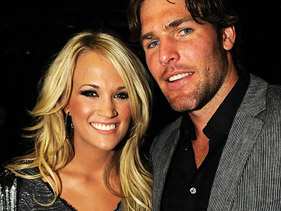
Carrie Underwood And Mike Fisher Marry In Georgia

The couple managed to keep their nuptials under wraps until the big day on Saturday. By Jocelyn Vena Carrie Underwood and Mike Fisher (file) Photo: Jeff Kravitz/ Wireimage Carrie Underwood and Ottawa Senators hockey player Mike Fisher tied the knot on Saturday at the Ritz-Carlton, Reynolds Plantation, a resort near Oconee National Forest in Greensboro, Georgia, according to CMT News . It had been rumored that the pair would make it official this weekend and they did as expected. They said their vows under a tent in front of 250 family and friends, People.com reports. The service included bible readings and classical music. Underwood wore a Chantilly lace gown by Monique Lhuillier. Her bridesmaids also wore dresses by the designer. E! Online reports that other country superstars including Tim McGraw and Faith Hill were in attendance. “We could not feel more blessed to have found each other and to have shared this day with our friends and family that mean so much to us!” the newlyweds said in a joint statement to People that they signed as “Mike & Carrie Fisher.” The wedding planner described the whole affair as “a spiritual expression of their love.” It reportedly cost upwards of $500,000, and security was so tight that guests weren’t even told where they were going until they boarded planes to the resort, which was booked exclusively for the event. The couple plans to live in Nashville and Peterborough, Ontario. As for the honeymoon, when Underwood spoke to UsMagazine.com about it last month, she said that it was all up to Fisher to plan. “That was Mike’s project,” she said. “It’s a surprise. I have no clue where we are going, which is nice. I know it will be warm, that’s about it.” The pair got engaged in December 2009. They met in October 2008 at one of Underwood’s concerts in Toronto. Before taking home several Buckle trophies at last month’s CMT Awards , she told Us, “No matter what happens, I go home a winner. I have the biggest prize, the guy sitting next to me. Win or lose, he is proud of me. Of course, it’s nice to share the good times too!” Leave well-wishes for the couple in the comments below! Related Photos Lovebirds: Carrie Underwood And Mike Fisher Related Artists Carrie Underwood

The rest is here:
Carrie Underwood And Mike Fisher Marry In Georgia