Tag Archives: democrats

Amidst Obama’s Falling Poll Numbers, MSNBC Tries to Suggest He Could Rebound Like Reagan

During the 3 p.m. MSNBC news hour Monday, anchor Chris Jansing asked the question and hosted an expert who supplied the seemingly desired answer. The question: Could President Obama make a mid-term comeback similar to President Reagan in 1982? The answer: Absolutely. The two discussed the similarities of the situations faced by the presidents, and seemed to conclude that if the economy turns around, President Obama would almost certainly be re-elected. It is a big if, but the short segment seemed quite focused on what would happen after the economy turns around. The two didn’t bother to discuss what would happen if the economy continues to be stagnant, or takes a turn for the worse. “Well you have a President facing a deep recession, high unemployment, dropping poll numbers, and a potentially game-changing midterm election. That was Ronald Reagan’s first two years in office. Then, two years later, he won re-election in a landslide,” stated MSNBC anchor Chris Jansing. “Could President Obama make the same comeback?” Guest Allan Lichtman, presidential historian at American University, answered in the affirmative.  “Absolutely,” he responded. “They are kind of mirror images of each other.” After Lichtman explained how the two Presidents’ situations are quite similar, Jansing asked her follow-up question. “If the economy starts to turn around in the next year to 18 months…is it likely to follow that Barack Obama will have a much easier time with re-election?” “It will follow like night to day,” Lichtman predictably answered. “And of course this all presumes the Democrats don’t commit internal suicide by challenging [Obama] in the primaries.” A full transcript of the segment, which aired on August 23 at 3:40 p.m. EDT, is as follows: KRIS JANSING: Well you have a President facing a deep recession, high unemployment, dropping poll numbers, and a potentially game-changing midterm election. That was Ronald Reagan’s first two years in office. Then, two years later, he won re-election in a landslide. Could President Obama make the same comeback? And with 30 years between them, is it realistic to compare the fate of these two very different presidents? Allan Lichtman is a political analyst and Presidential historian at American University. And we didn’t just come up with this. There are plenty of people who have made this comparison, and especially in recent months, when the poll numbers for President Obama have been dropping so precipitously. Are there fair comparisons to be made with Ronald Reagan? ALLAN LICHTMAN: Absolutely. They are kind of mirror images of each other. Each president won a pretty handy victory coming in against the grain of his times. Ronald Reagan was a conservative elected at the end of a liberal-to-moderate era. Barack Obama was a liberal, elected at the end of a conservative-to-moderate era. Both presidents passed major initiatives. Ronald Reagan with his big tax cuts. Barack Obama with his stimulus plan and his health care plan. Neither one got very much credit for that during their first two years. They both faced biting recessions, they both saw their poll numbers plummet into the low forties, remarkably identical poll numbers. And in both cases, the ideological wings of their parties were very unhappy. Conservatives were really unhappy with Ronald Reagan because he wasn’t cutting the budget, and he wasn’t pushing social issues like abortion, and we know the liberals are very unhappy with Barack Obama because of his escalation of the war in Afghanistan, and his failure to adopt a more liberal type of health care, and to push harder on global warming. So let me count the ways they are similar, as the poet would say. JANSING: If the economy starts to turn around in the next year to 18 months, if people start to get jobs again, if people start to feel more confident in their jobs, start buying houses and spending money again, is it likely to follow that Barack Obama will have a much easier time with re-election? LICHTMAN: It will follow almost like night to day that Barack Obama will win re-election if the economy picks up. Ronald Reagan faced a tough midterm, he lost a couple of dozen house seats, but the economy began to pick up in 1983, boomed in 1984, and he won one of the biggest landslide re-elections in the history of the United States. The same thing could happen to Barack Obama, although it’s unlikely the economy will boom the same way it did for Ronald Reagan. So he may not be looking towards a landslide, but if the economy significantly improves, especially as we head into the election year, then I think Barack Obama’s re-election is almost certain, particularly given the confusion within the opposition, and the lack of a clear, strong, Republican opponent. And of course this all presumes the Democrats don’t commit internal suicide by challenging him in the primaries. JANSING: Ah, well there’s always that. LICHTMAN: Always that. The Democrats can always snatch defeat from victory.

Originally posted here:
Amidst Obama’s Falling Poll Numbers, MSNBC Tries to Suggest He Could Rebound Like Reagan

ABC Singles Out ‘Hard-line, Tea Party Conservative,’ Ignores Antics of Florida Democratic Candidate

Good Morning America’s Jon Karl on Tuesday characterized a Republican senatorial candidate in Alaska as a “hard-line, Tea Party conservative” and someone who ” has also been known to attract assault weapon-baring weapon supporters at his political rallies .” He added, “In a recent interview on ABC’s Top Line, [candidate Joe Miller] suggested that unemployment benefits are unconstitutional.” [MP3 audio here .] Karl played a clip of Miller asserting, “The unemployment compensation benefits have got to- first of all, is not constitutionally authorized. I think that’s the first thing that has to be looked at. So, I do not favor their extension.” Yet, Karl and GMA ignored one of the day’s other big primaries, involving Democratic senatorial candidate Jeff Greene. The Florida hopeful has endured gaffes revolving around drugs, strippers and Mike Tyson. But, Karl made no mention of this. And while Miller was at least making a constitutional argument, wouldn’t the colorful, controversial statements by Greene also warrant a mention? Instead, Karl pivoted to the GOP’s primary in Arizona and used more ideological labeling: “Senator John McCain up against another Republican, who has carved a position even further to the right.” A transcript of the August 24 segment, which aired at 7:09am EDT, follows: DAVID MUIR: We’re going to turn to politics this morning. And three states are holding primaries today. And the stakes are high for former Alaska Governor Sarah Palin. She’s not on the ticket. But she is throwing her support behind candidates in the race. And the big question this morning, does that endorsement actually help? Senior congressional correspondent Jonathan Karl now in Washington. John, good morning. JONATHAN KARL: Good morning, David. And today, we’ll see how much political clout Sarah Palin has in her own state. She has taken sides in the Republican Senate primary in Alaska, launching a tough attack against her state’s Republican incumbent senator. It’s momma grizzly versus momma grizzly. Sarah Palin is trying to oust Alaska’s Republican Senator Lisa Murkowsi. Palin has endorsed Murkowski opponent Joe Miller, suggesting that unlike Murkowski, he’s tough enough to take on the President. SARAH PALIN: He’s got the backbone to take on Obama’s radical agenda. By contrast, Lisa Murkowski has voted with the Democrats more than any Republican up for re-election this year. KARL: The race is a test of Palin’s clout in her own backyard. Palin scored some impressive victories earlier this year in the lower 48. Providing critical endorsements to Nikki Haley for governor in South Carolina, and Carly Fiorina for Senate in California. But, lately, Palin’s been on a losing streak. Over the last five weeks, Palin-endorsed candidates have lost in Georgia, Tennessee, Kansas, Colorado and Washington State. Palin’s candidate in Alaska is a hard-line, Tea Party conservative . In a recent interview on ABC’s Top Line, he suggested that unemployment benefits are unconstitutional. JOE MILLER: The unemployment compensation benefits have got to- first of all, is not constitutionally authorized. I think that’s the first thing that has to be looked at. So, I do not favor their extension. KARL: Miller has also been known to attract assault weapon-baring weapon supporters at his political rallies. MUIR: And, Jon, while we’ve been following that race in Alaska, I know you going to be following what’s going on in Arizona, too. Senator John McCain up against another Republican, who has carved a position even further to the right. KARL: That’s right. And this has been a tough challenge FOR john McCain against J.D. Hayworth, a former Republican congressman. McCain has spent a staggering $21 million to fend off this Hayworth challenge. But, also important to point out, David, McCain is yet another Sarah Palin-endorsed candidate. MUIR: $21 Million. More than he spent in any of his Senate campaigns. But, I want to ask you about the stem cell judgment from the federal judge, too, while we have you. It’s going to be the big issue in Washington today. Blocking President Obama’s executive order last year that had expanded embryonic stem cell research. What does that mean for labs this morning? And what was behind the decision. KARL: Well, this is a major decision. Scientists are scrambling to figure out what the implications are. But, it effectively puts an end, at least temporarily, to all federally-funded embryonic stem cell research. It is a temporary injunction, David. The judge said he believes as a lawsuit challenging the Obama policy goes forward, that all federal funding of research must stop because he believes there’s a good chance that the policy will be overturned by the court.

See original here:
ABC Singles Out ‘Hard-line, Tea Party Conservative,’ Ignores Antics of Florida Democratic Candidate

Sunday Funnies: Voters More Scared of Democrats Than ‘Extremists’

I watched just about every major political talk show on television this weekend, and the funniest thing I heard was a comment by David Boaz of the libertarian think tank the Cato Institute. In the predictions segment of “The McLaughlin Group,” the Kentucky native spoke of the hotly contested race for Senate in that state between Tea Party candidate Rand Paul and Democrat Jack Conway. What ensued left the entire panel laughing – except, of course, Newsweek’s Eleanor Clift (video follows with transcript and commentary): DAVID BOAZ, CATO INSTITUTE: In Kentucky, the Democrats are calling Rand Paul an extremist. Rand Paul is responding by calling his opponent a Democrat. In the end, the voters will be more scared of a Democrat.   Hehehehehe.  

Original post:
Sunday Funnies: Voters More Scared of Democrats Than ‘Extremists’

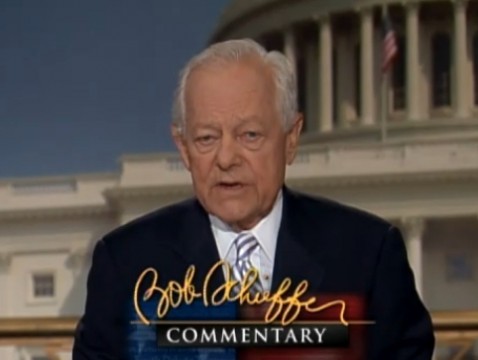
Bob Schieffer Blames Internet For Americans Believing Obama Is Muslim

Bob Schieffer on Sunday blamed the internet for the growing number of Americans that think Barack Obama is a Muslim. Namelessly referring to last week’s Pew Research Center poll finding that eighteen percent now believe this, the “Face the Nation” host concluded Sunday’s program saying that “in the internet age, ignorance travels as rapidly as great ideas.” He continued, “Now, not only great minds can find one another and compare notes, so too can the nuts and the perverts and those who are simply looking to validate their prejudices.” And continued, “So despite a mountain of evidence to the contrary, a new poll tells us a growing number of Americans, most of them on the right, believe Barack Obama is a Muslim. No doubt, due in part to the fact that stories to that effect have gone viral on the internet” (video follows with transcript and commentary):  BOB SCHIEFFER, HOST: Finally, today on another subject. The greatest advances in the store of human knowledge have always taken place when great minds found themselves in the same place at the same time, as when the Greeks gathered on the hillsides of Athens, when the political geniuses who founded this country came together. The great promise of the internet was that for the first time great minds no longer had to be in close proximity. But what we have also learned now is that in the internet age, ignorance travels as rapidly as great ideas. Now, not only great minds can find one another and compare notes, so too can the nuts and the perverts and those who are simply looking to validate their prejudices. So despite a mountain of evidence to the contrary, a new poll tells us a growing number of Americans, most of them on the right, believe Barack Obama is a Muslim. No doubt, due in part to the fact that stories to that effect have gone viral on the internet.   Disagreeing with our leaders is our right. And in truth, part of the fun of being an American. But to suggest the President is a Muslim is absurd. No matter how fervently some who dislike him may wish it so.   The purpose here, though, is not to argue politics but just to underscore how this illustrates the downside of the internet, the only news delivery system we’ve ever had that has no editor. We must always remember that that what we read there may not always be true. Indeed. Ironically, we must also remember that what we see on television may not always be true either. After all, when Schieffer said “a new poll tells us a growing number of Americans, most of them on the right , believe Barack Obama is a Muslim,” this was a nice little sleight of hand to disguise the truth. Here’s what the Pew poll really said : The view that Obama is a Muslim is more widespread among his political opponents than among his backers. Roughly a third of conservative Republicans (34%) say Obama is a Muslim, as do 30% of those who disapprove of Obama’s job performance. But even among many of his supporters and allies, less than half now say Obama is a Christian. Among Democrats, for instance, 46% say Obama is a Christian, down from 55% in March 2009. The belief that Obama is a Muslim has increased most sharply among Republicans (up 14 points since 2009), especially conservative Republicans (up 16 points). But the number of independents who say Obama is a Muslim has also increased significantly (up eight points). There has been little change in the number of Democrats who say Obama is a Muslim, but fewer Democrats today say he is a Christian (down nine points since 2009). As such, what Schieffer said about “most of them on the right” may have been accurate, but it certainly didn’t properly relay the poll’s findings. Maybe more importantly, the Pew survey didn’t ask participants where they get their news from. This means that Schieffer’s accusation that the opinions expressed by respondents he disagrees with must certainly come from the internet is only a speculation without any basis in fact. It appears despite his suggestion to the contrary, ignorance travels pretty quickly on television as well.  

More:
Bob Schieffer Blames Internet For Americans Believing Obama Is Muslim

Meet the Press: Dick Armey Slams Alan Greenspan’s View of Bush Tax Cuts

David Gregory on Sunday finally got an answer to his question about extending the Bush tax cuts, but it certainly wasn’t what he was expecting. For those that have been watching “Meet the Press” this month, the host has been grilling his conservative guests about this issue ever since former Federal Reserve Chairman Alan Greenspan told him on August 1 that tax cuts don’t pay for themselves. Having badgered Senate Minority Leader Mitch McConnell (R-Ky.) about this earlier in the program with no success, Gregory broached the subject with former House Majority Leader Dick Armey in a subsequent segment. With a hanging curveball coming into his wheelhouse, Armey whacked a long drive that still hasn’t landed (video follows with transcript and commentary): DAVID GREGORY, HOST: I want to, I want to address the tax debate . And what you hear from Republican leaders is an unwillingness to pay the bill as you move forward to extend the Bush tax cuts . FORMER REPRESENTATIVE DICK ARMEY (R): Not at all. MR. GREGORY: Is that wrong? You heard Alan Greenspan say that it’s borrowed money … REP. ARMEY: No. Right. MR. GREGORY: …and that they do not pay for themselves. REP. ARMEY: Where has Alan Greenspan been? John — I, I was a young undergraduate watching all my faculty celebrate the genius of John F. Kennedy as he taught us you cut taxes , revenues increase. Reagan cut taxes , revenue doubled. What — the first, most important, critical thing for the American economy is to cut the size of the federal government. This is a big, fat, sloppy, inefficient, obstructionist, Porky Pig that’s standing in the way of economic progress for the American people. It is counterproductive. It’s an extra weight. It is — and it needs to be cut or this economy can’t carry the weight. This is no thinking… D’oh! Now, that’s the way to hit a hanging curveball! With the crowd still on its feet, Gregory turned to his liberal guest for her view:  MR. GREGORY: This is the argument. GOV. JENNIFER GRANHOLM (D-MICHIGAN): Just quickly — this is the argument, and it’s a 20th century argument, it’s not a 21st century argument. When we’re competing in a global economy , the government has to partner with the private sector to create jobs. If you just slash spending, you slash the investments in the things that are going to move our economy forward, we miss out. Just very quickly, last year, the vice president came to Michigan , said we were going to get all these battery grants; we created — we have 16 companies now in Michigan just in the past year because we partnered with the private sector creating 62,000 jobs. Strategic investment with the private sector is what works in the 20th century. Actually, Granholm was playing rather fast and loose with the facts. As MLive.com reported on July 27 in an article titled “Experts Warn ‘Battery Bubble’ Could Burst Michigan’s Dreams”: Michigan and the federal government have placed a multibillion dollar bet that advanced batteries and electric vehicles will someday power the state and national economies. But experts at a National Academy of Sciences conference on the future of batteries, held here Monday, said the bet could go bust if consumers don’t buy those vehicles. And no one knows if they will. The Obama administration last year allocated $2.3 billion in stimulus funds to help develop the nascent advanced battery industry. More than half of that money — $1.35 billion — was awarded to Michigan companies and organizations. Much of the money is being spent on research and development, and on the manufacturing of advanced batteries. Michigan has supplemented that with lucrative tax credits for companies manufacturing cells and battery packs in the state. And those 62,000 jobs Granholm said were already created? Gov. Jennifer Granholm said the state expects to create 62,000 new battery jobs in Michigan over the next 10 years. Ah. So, with unemployment currently at 13.1 percent in her state, these are jobs Granholm hopes will be created in the next ten years. But that’s not what she told Gregory on Sunday. Sadly, he let her get away with it, although he did ask a good follow-up question:  MR. GREGORY: But should the Democrats be raising taxes on the wealthiest Americans during a recession? Understanding her previous faux pas concerning jobs “created,” listen to her answer:  GOV. GRANHOLM: It’s — the question is, should the tax cuts expire for the wealthiest 2 percent so that we can make the investments that will grow jobs? Yes. That’s the most effective way of creating job growth. The CBO has said that cutting taxes for the wealthiest 2 percent is the most ineffective way of creating job growth. Yep. The most effective way of creating jobs is to tax employers so the government can get the money rather than employees. Of course, what folks like Granholm and the current White House resident do is then claim they “saved” or “created” jobs regardless of any real impact to payrolls or unemployment. Pretty neat, huh?  Fortunately, Armey was having none of this:  REP. ARMEY: I’ll give you, I’ll give you anywhere from — a minimum of $2 trillion to a possible $8 trillion worth of real stimulus of the economy from the private sector if we can just relieve the private sector that’s sitting on its cash from the fear that this administration ‘s going to screw up the future of this economy. Let them understand this administration ‘s going to stand down from any new cockamamy ideas and not raise taxes and take away the return on an investment, and they’ll put that cash to work in America. MR. GREGORY: I’m going to make that the last word.  So am I. 

Read the rest here:
Meet the Press: Dick Armey Slams Alan Greenspan’s View of Bush Tax Cuts

On Martha’s Vineyard, ‘Miss Me Yet?’ Bush T-Shirts Outselling ‘I Vacationed with Obama’ Ones

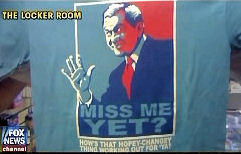
Picking up on a nugget ( my tweet ) surprisingly included in a Wednesday Boston Globe article, on Thursday night FNC’s Bret Baier reported in his “Grapevine” segment: “President Bush is apparently more popular than President Obama on Martha’s Vineyard – at least when it comes to clothing.” Baier relayed the day the First Family arrived on the Massachusetts island: When the First Family vacationed there last year, Obama-themed trinkets were flying off the shelves. Now, the owner of a store called the Locker Room says this summer’s best-selling shirt features Mr. Bush. And even Democrats are buying it. It reads: “Miss Me Yet? How’s that Hopey-Changey Thing Working Out for Ya?” In an August 18 Globe story, “ Vineyard buzzes less for Obamas’ second visit ,” Milton J. Valencia reported on the Oak Bluffs store: …One barometer of the plunge in excitement has been the sale of Obama-themed T-shirts, which designers had been banking on after the craze of last year. Clothing labeled with the president’s name sold by the thousands, helping to salvage a tough economic year for the island. But this year’s T-shirt sales are much less brisk, merchants say. “Last year, Obama gave you goose bumps, but I don’t think you’re going to see that this year,’’ said Alex McCluskey, co-owner of the Locker Room, who sold more than 4,000 “I vacationed with Obama’’ T-shirts last year. But so far this year, he said, his hot item is T-shirts of former President Bush asking, “Miss me yet?’’…

See the original post:
On Martha’s Vineyard, ‘Miss Me Yet?’ Bush T-Shirts Outselling ‘I Vacationed with Obama’ Ones

AP Praises Democrat Push To Abolish Filibuster

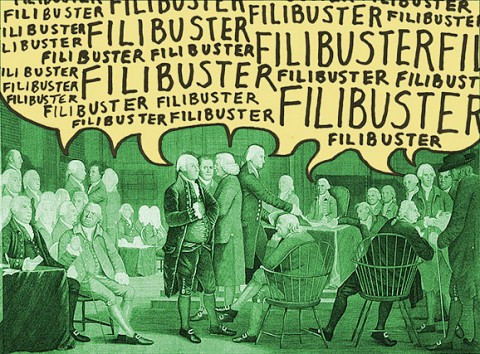
If you’re a Democratic Senator floundering in the polls and about to lose a reliably blue seat, what’s the best way to boost your image? Call up the Associated Press and spout clichés about reforming politics. It worked pretty well for one Michael Bennet, freshman Senator from Colorado. On Thursday, AP writer Jim Abrams interviewed him about a host of suggestions to change the rules in the Senate, allowing him to call the system “out of whack” and “broken.” Abrams then spoke with Senators Claire McCaskill and Tom Udall, from Missouri and New Mexico respectively – both states conveniently being places where the Democratic party is losing its edge. Abrams mentioned their reform proposals with very little background and failed to challenge their selective outrage. Get ready for 16 paragraphs of Democrat campaign talk dressed up as a news report : Those who hold the Senate in low esteem can get a sympathetic ear from some of the chamber’s newer members. These lawmakers also are fed up with the Senate’s ways and would like to change them. “A graveyard of good ideas” is how freshman Democrat Tom Udall of New Mexico sees the Senate. “Out of whack with the way the rest of the world is,” says another freshman, Michael Bennet, D-Colo. “Just defies common sense” is the impression of Claire McCaskill, a first-term Democrat from Missouri, in describing the filibuster-plagued institution. You see, everyday Americans are not fed up with Christmas Eve voting antics, efforts to stall the swearing-in of newcomers, or voting on bills that no one reads. Those ways won’t change. Just the part about Republicans blocking liberal agendas. What actual changes are being proposed? Abrams helpfully lists them: Bennet, the Denver school superintendent appointed to his post after former Sen. Ken Salazar became interior secretary, has put forth an elaborate plan to make the Senate more workable. It includes eliminating the practice known as a “hold” in which a single senator can secretly prevent action on legislation or nominees; ending the ability to filibuster motions to bring a bill up for debate; banning earmarks for private, for-profit companies; imposing a lifetime ban on members becoming lobbyists; and restricting congressional pay raises. “It was immediately apparent to me that the system was broken,” said Bennet, who won a hotly contested primary and faces a tough election this fall. Ah, no one knows more about the broken system than a public school administrator given a Senate seat. Party bosses were not thrilled with Bennet in 2009, claiming that his lack of experience and unpopularity with voters would inevitably give the seat to Republicans in 2010. The party went all-out to protect him from a primary challenger, securing Obama’s endorsement and spending millions on his campaign. It was mere days ago, on August 10, that Bennet won the primary, but since then he’s been trailing Republican Ken Buck. So he trots out familiar reform ideas on earmarks and lobbyists. Every time a political party is facing massive defeat, these things come up but are never imposed. The move to change filibuster requirements is a well-known mission among the far left – a cynical scheme to make slim majorities more powerful. As for anonymous holds, anyone who witnessed the public crucifixion of Rep. Bart Stupak (D – Mich.) immediately understands why Senators would want objections to remain private. Bennet’s reform plan would not allow holdout Senators to stall a vote discreetly. If anyone delayed a vote long enough to read the entire bill or consult with constitutional lawyers, the Senate would publicize their objection and wait for the media to Stupak them. The end result would be more hurried votes from Senators going along to get along. While some of Bennet’s suggestions are good, others will simply discourage dissent and weaken the minority. Yet the AP didn’t bother to examine any unintended consequences. Nothing negative was said about Bennet’s proposal. And in the case of Senator McCaskill’s ideas, Abrams used the vaguest wording possible: McCaskill also has worked with a Republican, Tom Coburn of Oklahoma, to bring more transparency to bills passed by “unanimous consent,” meaning they are approved without debate or roll call votes. Bringing more transparency! Who wouldn’t want that? But what exactly does McCaskill have in mind? This NBer had to search for an explanation elsewhere. Turns out that McCaskill doesn’t want to actually end the practice of passing bills without a vote – she even uses unanimous consent to forward things herself – but she joined Coburn on one superficial request . Coburn’s idea is that if his colleagues allow passage of a bill with no vote, they should at least sign a statement confirming they physically looked at it. That’s what McCaskill is trumpeting as brave new reforms. But without any actual details of the proposal, readers would have no idea how tedious it really was. If Abrams wanted to highlight reform efforts, it might have made sense to speak with Coburn and include his take on the “broken” system, perhaps even allowing him to explain the transparency thing. But Abrams didn’t quote anything positive from a single Republican. Up next was the reform plan from Senator Udall. Turns out Abrams saved the best for last: Udall has what might be the simplest but most radical proposal. He says that when the new session opens next January, he will offer a motion that the Senate adopt rules by a simple majority. That would make it vastly easier for the majority to modify filibuster rules with proposals. Doesn’t this sound great? Not only could the Senate pass controversial bills with 50 plus 1, they could change long-established rules, remove procedural hurdles, or rig the process to favor the majority’s whims. Each new session of the Senate could theoretically operate on a different playing field regarding everything from cabinet nominations to spending bills. The process to censure a senator or impeach a president could also be watered down. Toward the end, Abrams did at least acknowledge a certain amount of hypocrisy from Democrats who suddenly have no interest in protecting the minority: Udall calls his approach the constitutional option. Five years ago, Democrats called it by the more ominous name of the “nuclear option” when then-Majority Leader Bill Frist, R-Tenn., threatened to push through a simple majority rule for overcoming minority Democrats’ opposition to President George W. Bush’s judicial nominees. In the end, nothing happened. Udall’s idea has been put forward several times in the past, Senate historian Don Ritchie said. But “the Senate has always gotten up to the cliff and decided to step back.” “Some of the people advocating these changes might be very glad they didn’t succeed if they end up in the minority,” he said. That’s as close as Abrams got to discussing the negative possibilities. Four paragraphs from the end, he finally got around to quoting one Republican: “I submit that the effort to change the rules is not about democracy,” Republican leader Mitch McConnell of Kentucky said at a recent hearing on the history of the filibuster. “It is not about doing what a majority of the American people want. It is about power.” Supporters of the 60-vote supermajority say it helped prevent Democrats from attaching a government-run public option – an idea unpopular with many Americans – to the health care law. And growing national sentiment that Congress should quit adding to federal deficits was reflected when Democrats needing Republican votes to reach the 60-vote threshold were forced to cut future food stamp benefits and an energy program to pay for a $26 billion jobs bill this month. Just when it looks like Abrams was being fair, wait for the handy little nugget in the very last sentence: Both times, the changes grew out of considerable agitation for reform, in 1917 during World War I and in 1975 after years of civil rights advocates being stymied by filibusters, said Sarah Binder, a political science professor at George Washington University. That’s right, folks. The Senate successfully broke a filibuster to pass the Civil Rights Act in 1964, and that’s why they changed the rules 11 years later. But the internet is such a great thing. Turns out Time magazine has online archives from 1975, allowing NBers to see what contemporary accounts actually said. Turns out that liberal Democrats like Walter Mondale were trying to lower hurdles to pass – wait for it – national health insurance. In a news report that sounds eerily like 2010, Democrats back then were complaining that in “a period of economic crisis” the do-nothing Republicans were blocking them from creating more government programs. There was a side note that dealt with “civil rights,” but only because Democrats wanted voting ballots printed in multiple languages. So the last time these ideas were enthusiastically pushed in the Senate, liberal Democrats were angry because their pet agendas couldn’t pass through. Yet Abrams found a professor who white-washed it as heroic efforts to provide civil rights, and that’s the final sentence left ringing for readers in 2010. It’s nice to know that a prestigious news wire like the Associated Press is doing such hard-hitting investigations.

Read the original:
AP Praises Democrat Push To Abolish Filibuster

Nearly Half of United States Considering Arizona-Style Immigration Legislation

Twenty-two states are now in the process of drafting or seeking to pass legislation similar to Arizona’s law against illegal immigration. This is occurring despite the fact that the Obama administration has filed a lawsuit against the Arizona law and a federal judge has ruled against portions of that law – a ruling that is now being appealed.   Next month, two Rhode Island state lawmakers, a Democrat and a Republican, will travel to Arizona to speak with Republican Gov. Jan Brewer, local sheriffs, and other officials about how to better craft their own bipartisan immigration bill for Rhode Island, which already has been enforcing some federal immigration laws.    Meanwhile, 11 Republican state lawmakers from Colorado traveled to Arizona this week to meet with officials there on how to craft legislation for the Mile High state.    In addition, Alabama House Republicans announced this week that they would seek to “push an illegal immigration bill similar to the recently approved Arizona law.” This law would “create a new criminal trespass statute that allows local law enforcement to arrest illegal immigrants for simply setting foot in Alabama,” said Alabama’s House Minority Leader Mike Hubbard.    In Florida, proposed legislation against illegal immigration has been retooled to address some concerns raised by a federal judge who blocked the proposed bill, though it would still allow Florida state police to enforce immigration law.    In all, there are 22 states considering copycat legislation from the Arizona law against illegal immigration, according to the  Americans for Legal Immigration Political Action Committee  (ALIPAC), a group that advocates for stricter immigration enforcement. These illegal immigrants, deported to Mexico on Wednesday, July 28, 2010, are shown near the Nogales Port of Entry in Sonora, Mexico. (AP Photo/Jae C. Hong)Arizona’s law mirrors federal law. It requires local law enforcement officers during a lawful stop to determine the immigration status of an individual by asking the person to show identification that residents are already required to carry by law; and it authorizes law enforcement to securely transfer verified illegal aliens to federal custody.    The law prohibits racial profiling and gives state residents the right to sue local agencies for not complying with the state law.   In the lawsuit challenging the Arizona law, the Obama administration said the United States should not have a “patchwork” of 50 different immigration laws. In late July, U.S. District Judge Susan Bolton ruled against most of the major elements of the Arizona law, halting their implementation.  That ruling is now in the appeals process.    “We do not expand on federal law,” Florida state Rep. William Snyder, the sponsor of the bill in his state, told CNSNews.com. “We do not change penalties. The goal is not to create a new immigration framework at the state level.”   Snyder, the chairman of the Florida House Criminal Justice Committee, said his staff attorneys have taken the decision by U.S. District Judge Susan Bolton into consideration in re-crafting their bill for the next state legislative session.    Snyder said the office of state Attorney General Bill McCollum has reviewed the legislation, as have committee attorneys, and they believe it will withstand a potential legal challenge from the Obama administration.    McCollum, a GOP candidate for governor, supports the legislation. However, Gov. Charlie Crist, a Republican-turned-Independent candidate for U.S. Senate, opposes the proposal.  Alfredo Salas, 28, shows his license Thursday shortly after being pulled over and let off with a warning for a cracked windshield by the Maricopa County Sheriff’s Office during a crime and immigration sweep. (AP Photo/Amanda Lee Myers)”We will continue to work with the language,” Snyder said.    In Rhode Island, a bill that was introduced late in the session last year, and thus never reached a vote, is expected to be reintroduced in the 2011 session. Its two lead co-sponsors hope to have a bipartisan bill that will withstand a legal challenge after they meet with Arizona officials.    “It exactly mirrors the Arizona law,” Rhode Island state Rep. Peter Palumbo, a Democrat, told CNSNews.com. “We will tweak the bill.”   Palumbo will be going to Arizona with Rhode Island state Rep. Joseph Trillo, a Republican.    Their legislation would essentially codify an existing executive order signed in 2008 by Gov. Donald Carcieri, a Republican, mandating immigration checks on all new state workers and ordering state police to assist federal immigration officials.   This is Carcieri’s final year in office, so Palumbo said it is important to put the force of law behind what has already been Rhode Island policy. State troopers report illegal immigrants they encounter for speeding and other offenses to the U.S. Immigration and Customs Enforcement (ICE) office.   Because of the executive order in 2008, corruption was discovered in the Department of Motor Vehicles, with drivers licenses being sold to illegal aliens,  Palumbo said.     In New Jersey, state Rep. Allison Little McHose, a Republican, introduced a series of proposals that focused primarily on requiring employers to verify the legality of workers, and preventing state benefits from going to illegal aliens.    “New Jersey continues to be a sanctuary state for illegals because they know they can come to the state and receive many free benefits, like medical care,” McHose said in a statement. “The benefits may be free for those receiving them, but not the rest of the public because these costs are borne by the taxpayers.”   Other states with proposals that mirror the Arizona law are Arkansas, Idaho, Indiana, Maryland, Michigan, Minnesota, Missouri, Nebraska, Nevada, North Carolina, Ohio, Oklahoma, Pennsylvania, South Carolina, Tennessee, Texas and Utah.   “We are very pleased to announce 22 states are now following Arizona’s lead to pass versions of a law that has the support of 60 percent to 81 percent of Americans according to polls,” said ALIPAC President William Gheen in a statement. “State and federal candidates are rushing to display their support for Arizona’s law and immigration enforcement. We will not stop until all American states are protected from this invasion as mandated by the Constitution of the United States.” Crossposted at NB sister site CNS News

Link:
Nearly Half of United States Considering Arizona-Style Immigration Legislation

Andrea Mitchell Wistfully Yearns for Ted Kennedy’s Presence In Passing Liberal Legislation

On Friday’s edition of MSNBC’s Andrea Mitchell Reports, Mitchell brought on the Boston Globe’s Peter Canellos to pine for the widow of Ted Kennedy, Vicki, to challenge Republican Scott Brown for the Massachusetts Senate seat, as well as imagine how effective the liberal “lion” would be in championing health care and unemployment extension legislation if he were still around today. A wistful Mitchell remarked of the the late Senator: “It seems as though his legacy only grows in contrast to how low, what low regard the Senate is now held because of the gridlock and the, the sort of petty differences.” Mitchell then set up the Globe’s editorial page editor as she questioned if Kennedy “were trying to pull things together politically today, if we were blessed by his presence…do you think it would still be the passion for health care, or would he be looking to the larger economic issues?” To which Canellos remembered fondly: “When it comes to unemployment, I mean you can easily hear him…thundering against those who would deny unemployment to people who have been suffering.” The following is the full exchange as it was aired on the August 20 edition of MSNBC’s Andrea Mitchell Reports: ANDREA MITCHELL: Next week will mark the first anniversary of the death of Senator Ted Kennedy. There is increasing talk in political circles about whether his wife Vicki will enter politics in Massachusetts. Peter Canellos is the Boston Globe editorial page editor and a columnist and author of Last Lion: The fall and Rise of Ted Kennedy, now out in paperback. Peter thanks so much for joining us. A year later, what a change in Massachusetts politics. And we’ve seen also the pressure on Vicki Kennedy, I guess Democrats are looking for anybody to go up against the very popular political figure there, Scott Brown. PETER CANELLOS, THE BOSTON GLOBE: Yeah. I think that’s true. And I think there’s the feeling that the state has lost a lot with the Kennedy franchise kind of sidelined. And so it’s both a desire to have a good candidate against Scott Brown but also a desire to kind of rekindle the Kennedy mystique. MITCHELL: What is happening with the other members of the family and whether or not Joe Kennedy or, or any of his offspring might also be willing to get back into politics? CANELLOS: Well I think some of his offspring will get involved in politics but not run for the Senate. They would probably run for the House. MITCHELL: Right. CANELLOS: He has two 28-year-old sons. Whether he will run, whether Vicki will run, it’s all a matter of speculation right now. And they’re, they’re all downplaying it. So I would say that it’s probably more likely than not that none of the Kennedys will run. But, but nonetheless, as long as that possibility is out there, people are gonna cling to it. MITCHELL: Well one of the things that she said, that Vicki said to the Globe in an interview about this anniversary is, “My heart is so heavy. I like to just keep busy and keep moving on. And that’s why it’s been great to kind of get around. And when people honor Teddy, to be there, to always sort of look at it, from his point of view, the future, and to try to make a positive difference going forward. But when you get into that level of really thinking about, really living his life, that’s a step that’s just too hard. That’s too hard.” Thinking about trying to step into a campaign and the Senate seat. That is different from going and representing him and speaking about his legacy. CANELLOS: Oh, absolutely. And, you know, right now she’s kind of a beloved figure, and you know, people’s, you know, grief over, over his loss is sort of translated into kindness towards her. As soon as she runs for the Senate, you know, she’ll be hammered on the issues. You know she’ll have challengers. It will, will be very, very tough for her. So she has to be emotionally ready. And it doesn’t sound at all like she is right now. MITCHELL: And in thinking back over this past year, and we were up there in Hyannis a year ago and went through all of that with that extraordinary funeral and the procession and coming back to the burial at Arlington, it seems as though his legacy only grows in contrast to how low, what low regard the Senate is now held because of the gridlock and the, the sort of petty differences. CANELLOS: Yeah. I agree. And I think they miss, they miss him a lot in the Senate. I mean, he was a great sort of deal maker. And that’s, that’s precisely what they’ve missed in the last year. MITCHELL: One of the things that back in the, in the day when he was in the Senate really actively working with Republicans, if you recall back when Dan Quayle and Ted Kennedy were working on unemployment legislation together. That doesn’t happen these days. CANELLOS: Yeah. It really doesn’t happen these days. I think people were partly drawn to kind of the Camelot mystique in him, but then they were totally taken by him. He was very gregarious but he was an extraordinary hard worker and I think he, he sort of kept them honest in a way. MITCHELL: And if, if he were trying to pull things together politically today, if we were blessed by his presence, what would be his focus? Do you think it would still be the passion for health care, or would he be looking to the larger economic issues? CANELLOS: Yeah I think a little of both. He certainly would be working to shore up the health care achievement and would be out there promoting it probable more aggressively than the Democrats are right now. But I think when it comes to, to unemployment, I mean you can easily hear him, you know, thundering against those who would deny unemployment to people who have been suffering. You know he would have, he knows sort of, he knew when to make things a political issue. And, and for example, the unemployment insurance extension would have been one that he would, you know, thunder about at a, in a partisan way. But then when it came to sort of cutting a deal to get it done, he would be willing to sort of take half a loaf rather than nothing. MITCHELL: Well when you think that it was only two years ago that he came out of a hospital bed to make that farewell speech at the Democratic Convention in Denver, and then a year ago we were in, in Hyannis and in Boston, of course, for the funeral. Peter Canellos, thank you very much. This is a figure who becomes larger even after life, as large as he was in life. Thank you, Peter. CANELLOS: Thank you, Andrea.

Visit link:
Andrea Mitchell Wistfully Yearns for Ted Kennedy’s Presence In Passing Liberal Legislation

George Stephanopoulos Actually Grills Dem Politician on Ethics Violations

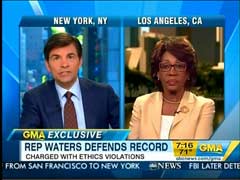
George Stephanopoulos on Friday showed that it is possible to force a Democratic politician to answer tough questions. The Good Morning America host grilled Representative Maxine Waters over allegations that she misused her office for personal gain. Every single one of Stephanopoulos’ questions was hard hitting, including this query: ” The ethics committee is bipartisan. Five Democrats and five Republicans. If these charges are so groundless, how did this happen to you?” Waters is charged with assisting in obtaining TARP money for a bank that her husband had $175,000 worth of investments. Stephanopoulos never bullied Waters, but methodically laid out the case against the Congresswoman: STEPHANOPOULOS: But, let’s look at the evidence compiled by the House Ethics Committee. They say that you did benefit, that your husband had a $175,000 investment in a bank called One United. And that the bank received $12 million in government bailout money from the TARP. And it goes on to say, “If One United had not received the money, your husband’s financial interests would have been worthless. Therefore, you did personally benefit.” Your response? After Waters asserted that the bank, One United, obtained private investments before getting TARP money, Stephanopoulos retorted, ” Well, wouldn’t they have failed if the money didn’t come through?” A transcript of the August 20 segment, which aired at 7:15am EDT, follows: STEPHANOPOULOS: We’re going to turn now to a GMA exclusive. Representative Maxine Waters of California speaking out in her first television interview since the bipartisan House Ethics Committee charged her with misusing her office for personal gain. The charges involve her husband’s investment in a bank that was granted millions in government bailout money. Specifically, the committee found that Waters chief of staff, who was also her grandson, worked to get that government help for the bank. The trial’s set for this fall. And Congresswoman Waters says she’s going to fight, not settle. She joins us this Morning from Los Angeles. Thanks for getting up so early, Congresswoman. MAXINE WATERS: You’re welcome. Nice to be with you. STEPHANOPOULOS: As I said, You said you’re going to fight the charges hard. And you summarized your defense very succinctly in a powerpoint presentation last week. We’re going to point it up now. It said, “No benefit. No improper action. No failure to disclose. No one influenced. No case.” But, let’s look at the evidence compiled by the House Ethics Committee. They say that you did benefit, that your husband had a $175,000 investment in a bank called One United. And that the bank received $12 million in government bailout money from the TARP. And it goes on to say, “If One United had not received the money, your husband’s financial interests would have been worthless. Therefore, you did personally benefit.” Your response? WATERS: That’s not absolutely not true. First thing you’ll find is the decisions about who to fund were made by the FDIC and by the Treasury Department. And Representatives from both of those agencies have said publicly nobody influenced them. Nobody called them. Nobody wrote to them. Nobody did anything that interfered with their decision making. One United was vetted properly. They met the criteria. And they received TARP funding. And you have to know, George, that the meeting that is referred to that I set up, was at a time when there was not any TARP program. program at that time. There was no TARP program at the time. So, I could not have influenced anybody about TARP. STEPHANOPOULOS: Let me stop you there. Because, that is true. WATERS: Yes. STEPHANOPOULOS: But, then , after that, and the ethics committee goes through this. Your chief in staff, they say he was actively involved in helping the bank request money from the Treasury Department and crafting legislation, authorizing the Treasury to set up this TARP fund. WATERS: That is absolutely not true. If you take a look at the allegations, you will see that they cannot identify anything that he actually did. Did he call somebody? Did he write a letter? Did he ask me to do anything? They have not been able to verify what it is he supposedly did. STEPHANOPOULOS: Well, let me- They did have at least one e-mail that I want to put up. It was from September 19th, 2008. WATERS: Sure. STEPHANOPOULOS: From your chief of staff, Mikael Moore, to a staffer for Congressman Frank, who was the chairman of the Financial Services Committee. It says, “OU,” which stands for One United, the bank, “is in trouble.” That does seem to be a kind of action alerting the chairman of the committee. WATERS: So, what does that mean? Is that the kind of e-mails that are sent between staff? It’s more staff chatter than anything else. It does not identify that he took any action. He responded to any e-mail. And we did not receive, and my husband did not receive, any benefit from any of this. As a matter of fact, it’s kind of a complicated case and a little bit hard to understand all of the details of it. But as you know, One United qualified because they were adequately capital and they were CDFI institution. Their capital came from the private market. They received private capital to secure that bank before they got TARP. money. So, that any investment that any of the investors had was secured by the private capital. And not by the TARP. funding. STEPHANOPOULOS: Well, wouldn’t they have failed if the money didn’t come through? WATERS: I beg your pardon? STEPHANOPOULOS: Wouldn’t they have failed if money didn’t come through? WATERS: That has nothing to do with my case. The fact of the matter is, if you’re accusing me of influence to get them TARP money, when in fact, there was no TARP money involved when I arranged access for the trade association, the MBA, to meet with the Treasurer, that’s not a question that deals with this case at all. Maybe they would have failed, I don’t know. But the fact of the matter is, they had private capital. And they would not have failed if they had not gotten any TARP money because they got the money from the private market to make them adequately capitalized. STEPHANOPOULOS: One of the things the ethics committee points out, you realize you shouldn’t be involved in this. I want to show an e-mail from you. It says, “I realize that I, perhaps, should take a distance from that. I should not be involved in that.” Yet, after you said that, and I think it was said to the chairman of the committee, you, your chief of staff did ha these various e-mails. Various contacts with these other staffers. WATERS: No. STEPHANOPOULOS: And they’re saying you should have stopped him from taking any kind of action. WATERS: No. George, that’s misinformation. As a matter of fact, the meeting that I arranged with the Treasury was about the loss of preferred stock investment by the banks in the trade association when we took over and placed Fannie and Freddie in conservativeship. That took place early September. And the conversation that you’re referring to, took place in early October, long after that meeting had taken place. And only when United- One United was interested in TARP. That’s when I said to Barney Frank, they’re your constituents. It’s your district. So, you should take a look at this. I was out of there. STEPHANOPOULOS: We only have a few seconds left. The ethics committee is bipartisan. Five Democrats and five Republicans. If these charges are so groundless, how did this happen to you? WATERS: Well, as a matter of fact, we have the OCE. That is the initial committee that takes up concerns or criticism or complaints from the public. They can take a telephone call, a newspaper report, anything. It is recently established. It’s not very tight. They don’t do very good work. Rather sloppy work. And a lot of complaints from members about the OCE. And, of course, when they referred it on to the subcommittee of the standards committee or the ethics committee, the ethics committee basically said- STEPHANOPOULOS: I’m going to interrupt you. We only have five seconds left. Thank you for your time. It is clear you’re going to fight. And thanks for sharing your story with us this morning.

Read the original here:
George Stephanopoulos Actually Grills Dem Politician on Ethics Violations