George Clooney also won a statuette for his performance in the Alexander Payne film. By Amy Wilkinson George Clooney in “The Descendants” Photo: 20th Century Fox No tissues were necessary for the cast and crew of weepy drama “The Descendants.” The Alexander Payne-written and -directed film took home the Golden Globe for Best Motion Picture – Drama, beating out star George Clooney’s other film “The Ides of March,” along with “The Help,” “Hugo,” “Moneyball” and “War Horse.” “We had an extraordinary ensemble cast of young and older actors, veterans and newcomers, but our quarterback was George Clooney,” said producer Jim Burke during his acceptance speech. “Besides giving a career-best performance, in my mind, he was a generous actor who helped everyone do his best. So thank you very much, George. And if this movie becomes a timeless movie, which I feel like it will be to me, I feel like it’s because of our filmmaker and friend, Alexander Payne.” “The Descendants” received five noms from the Hollywood Foreign Press Association, including Best Performance by an Actress (Shailene Woodley), Best Director (Alexander Payne), Best Screenplay (Nat Faxon, Alexander Payne and Jim Rash) and Best Performance by an Actor, which Clooney won . Clooney also paid tribute to Payne in his acceptance speech, saying, “Thank you very much to Alexander Payne, who makes wonderful films and is a great friend.” The flick, about a widowed land baron (Clooney) who’s forced to reconnect with his young daughters, has racked up plenty of awards-season buzz (and was among MTV’s top 10 films of 2011 ). The film earned seven nominations and won Best Actor for Clooney at the Critics’ Choice Movie Awards on January 12. The nods at tonight’s Golden Globes could be a harbinger for things to come, as the Academy Award nominations will be announced January 24. Stick with MTV News all night for the 2012 Golden Globes winners , and don’t miss all the fashion from the Golden Globes red carpet ! Related Videos On The Red Carpet At The Golden Globes 2012 Golden Globes: Highlights From The Show Related Photos MTV Style | 2012 Golden Globes Red Carpet Photos Golden Globes 2012 Press Room
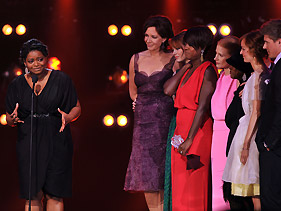
‘The Artist,’ George Clooney and Martin Scorsese among the other big winners at the show. By Ryan J. Downey Octavia Spencer and the cast of ‘The Help’ at the 2012 Critics’ Choice Movie Awards Photo: Kevin Winter/ Getty Images Donald Glover wagged his tongue at Charlize Theron , George Clooney talked Naugahyde leisure suits, Patton Oswalt drank scotch, and a pair of Muppets chimed in via satellite as “The Help” and “The Artist” cleaned up at the 2012 Critics’ Choice Movie Awards . Funnymen hosts Rob Huebel and Paul Scheer jokingly called it “the ninth most exciting night in Hollywood,” but while it may not be as prestigious as the Academy Awards, the Critics’ Choice Awards are traditionally the strongest indicator of who will get Oscars. All four winners from the major acting categories last year — Colin Firth, Natalie Portman, Christian Bale and Melissa Leo — later won Oscars. “The Artist” won Best Picture and earned Best Director for Michel Hazanavicius, who noted, “There are so many beautiful people here, I have to force myself not to ask [for] autographs.” And he wasn’t kidding. The beautiful people on-hand included Clooney, Theron, Brad Pitt, Meryl Streep, Leonardo DiCaprio, Kirsten Dunst, Michelle Williams and countless more stars from the screen and behind-the-scenes. Broadcast live on VH1 from the Hollywood Palladium, the Critics’ Choice Awards included three wins for “The Help”: Best Actress (Viola Davis), Best Supporting Actress (Octavia Spencer) and Best Acting Ensemble. Clooney won Best Actor for his role in “The Descendants.” The awards are voted on by the Broadcast Film Critics Association, made up of more than 250 television, radio and Web critics. Leonardo DiCaprio and Olivia Harrison, widow of late Beatles guitarist George Harrison, presented the Music + Film Award to DiCaprio’s longtime collaborator, filmmaker Martin Scorsese. Bob Dylan, whom Scorsese called “the great one,” performed. Fitz and the Tantrums were present throughout the night, playing as the house band in and out of commercial breaks. Sean Penn accepted the Joel Siegel Award live via satellite from Haiti, where he’s been continuously busy with the type of humanitarian work for which he was being honored. The show kicked off with a sketch featuring Huebel and Scheer as “inanimate object actors,” as folks like Jon Favreau, Michael Bay and Ray Liotta satirically praised their green-screen work as lamps, guns and spare tires in movies like “Transformers” and “Horrible Bosses.” The bit included a cameo from Martin Starr, who astute observers/ comedy fans love from “Party Down” and “Freaks and Geeks.” The hosting pair emerged onstage looking like the “Men in Black” with matching suits and launched into a monologue and faux Q&A that took lighthearted shots at the show itself (“there are no technical awards, because they are boring”), Vin Diesel and Adam Sandler. “Since this show started,” Scheer said, “seven more movies with Ryan Gosling have been released.” Dunst and Owen Wilson offered a toast to film critics (“Your words influence millions of movie lovers everywhere,” Dunst said) before presenting the first televised award of the night. Octavia Spencer was visibly moved as she accepted Best Supporting Actress. “Well, I’m not prepared. I wasn’t a Girl Scout,” she said. “Oh my God, this is kind of crazy. Whoo!” Wilson and Dunst returned (“Do you think the critics bought our toast a minute ago?” Wilson said dryly) to hand Best Supporting Actor to Christopher Plummer for his role as a gay man who comes out late in life in “Beginners.” “I’m completely turned on,” the 82-year-old screen legend said. “I feel terribly young tonight suddenly, and at my age, I need all the help I can get in that department. Thank you!” Next came a word from the “BFCA presidents” — Statler and Waldorf from “The Muppets”! The curmudgeonly duo from the Muppet Theater balcony said the show thus far “has more of a plot than ‘Tree of Life’ ” and “three times the laughs of ‘Contagion’ and ‘The Descendants’ put together!” During her first acceptance speech, Spencer had said, “I guess the operative word here is ‘Best Supporting,’ because I was truly supported by the most amazing cast and crew.” And not long after, she was elected by her castmates to speak as they accepted the Best Acting Ensemble Award together, which was presented by “Bridesmaids” costar Maya Rudolph and newcomer Elizabeth Olsen. Director Gore Verbsinski accepted the Best Animated Feature award for “Rango.” “Having never made an animated movie before — it is so incredibly difficult,” he acknowledged. “My respect and admiration for my fellow nominees this evening is tremendous.” Patton Oswalt, whose role in “Young Adult” had put him up against Plummer in the Best Supporting Actor category, swigged from a small bottle of scotch when he took the stage to introduce Best Comedy. He implored the audience not to feel sorry for him, however. “There are plenty of nuanced roles for schlubby actors out there. And the ones that [Paul] Giamatti and Philip Seymour Hoffman don’t take are all mine!” Producer Judd Apatow dropped two F-bombs as he spoke on behalf of the team behind Best Comedy “Bridesmaids.” “Jerry Lewis once said that he didn’t think women were funny,” he pointed out. “So I would just like to say, with all respect: F— him!” The next section of the show saw Best Foreign Film awarded to the Iranian movie “A Separation” and a sketch parodying Stephen Spielberg’s “War Horse,” complete with an “interview” with the horse from the movie and a scene featuring Michael Cera. Later in the night, the hosts saluted “fictional characters we lost in movies,” including (spoiler alert!) “this girl” and “some ninjas” in movies like “13 Assassins,” “Shark Night,” “Fast Five” and “Scream 4” as a montage that played to the sounds of Boyz II Men’s “Say Goodbye to Yesterday.” Paul Rudd presented the award for Best Young Actor/Actress to Thomas Horn from “Extremely Loud and Incredibly Close.” “Thank you film critics,” the former “Jeopardy Kids” champion gushed, “This is amazing!” Former child actor DiCaprio gave a long introduction to his friend and collaborator Scorsese before a series of clips from the filmmaker’s classic movies played. DiCaprio was joined by Harrison, and then Marty took the stage himself, shouting out the Hot Club of France, whom he listened to growing up in New York City in the ’40s. NBC sitcom stars Donald Glover (“Community”) and Mindy Kaling (“The Office”) gave out both of the screenplay awards. Kaling professed her adoration of versatile actor Michael Fassbender (“This is why I came here tonight, to meet him”) and Glover acted out what making out with Charlize Theron might look like. Best Adapted Screenplay went to “Moneyball.” Best Original Screenplay went to Woody Allen’s “Midnight in Paris.” “We accept this award on his behalf,” Kaling said of the absent Allen. “That’s awesome!” Muppet revivalist Jason Segel called all the guys in the Best Director category “my future directors” and told all of them, “I was really honored to learn that I’ll be making films with all of you this year” before he handed out the award to Hazanavicius for “The Artist.” “It feels like ‘The Help’ table is having more fun than us. Here’s a fun transition,” began Clooney, as he began to talk about continuing earthquake relief efforts in Haiti. “Very few have committed themselves as completely to the people of Haiti as Sean Penn. And he didn’t just dip his toe into the humanitarian pool, he dove in. … Sean isn’t here tonight because he’s in Haiti, but we have him live by satellite.” Penn thanked “the example” of Joel Siegel and of Clooney. “I was reminded that great filmmaking is truly a humanitarian act,” said Penn, referencing the earlier Scorsese montage. “The people of Haiti embrace the work that the committed among you do.” Penn’s ex-wife Robin Wright called 2011 “definitely the year of the woman” as she introduced the Best Actress category. “Everything beautiful and complicated about us was onscreen this year,” she said. Davis said she was “absolutely so humbled” by her win. Clooney hugged one of his competitors, buddy Brad Pitt, on the way up to accept his award from Dustin Hoffman, before sharing a story with the crowd about the time his father reminded him of his grandfather’s work as a sharecropper, which included a mention of the Naugahyde leisure suit his mother made for him in the sixth grade. “If you’re not proud of what you’re doing, then do it better,” Clooney said his father told him. “I have to say that I am very proud to be in this film.” After “The Artist” won best picture, Heubel and Scheer said their goodbyes. With a wide grin, Scheer advised: “Now let’s all get on Twitter and see who’s ripping us apart!” Stick with MTV News all night for the 2012 Critics’ Choice Awards winners , and don’t miss all the fashion from the red carpet ! Related Videos 2012 Critics’ Choice Awards Rep Carpet Highlights Related Photos Backstage At The 2012 Critics’ Choice Movie Awards
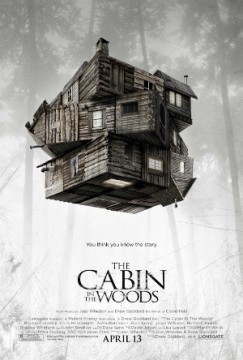
After debuting to geek enthusiasm at Butt-Numb-a-Thon in December, Joss Whedon ‘s long-awaited Cabin in the Woods will have its official world premiere at SXSW 2012 this March, the festival announced today. Also on deck to headline the film portion of the annual Austin conference are Jonas Akerlund’s Small Apartments , Kevin MacDonald’s music documentary Marley , and Lena Dunham’s post- Tiny Furniture , Judd Apatow-produced HBO series GIRLS , which will preview its first three episodes. More details after the jump. SXSW is a festival that always loads up on an insane amount of features, docs, and panels, so this first wave of selections is just the tip of the iceberg. Of these first announced titles, Whedon’s Cabin in the Woods should play to some fanfare (and, likely, with appearances by Whedon and some of his now-famous cast) while Dunham’s GIRLS should please the SXSW crowd that made her Tiny Furniture a hit last year. And the Lubitsch! Given the plugged in, tech-dominant personality of SXSW at large, it’s nice to see a revival like this on the docket for the film festival. The first seven SXSW titles, via press release: Beauty is Embarrassing (World Premiere) Director: Neil Berkeley A funny, irreverent and insightful look into the life and times of one of America’s most important artists, Wayne White. The Cabin in the Woods (World Premiere) Director: Drew Goddard, Writers: Joss Whedon & Drew Goddard Five friends go to a remote cabin in the woods. Bad things happen. If you think you know this story, think again. From fan favorites Joss Whedon and Drew Goddard comes The Cabin in the Woods, a mind-blowing horror film that turns the genre inside out. Cast: Kristen Connolly, Fran Kranz, Anna Hutchison, Chris Hemsworth, Jesse Williams, Richard Jenkins, and Bradley Whitford CITADEL (World Premiere) Director & Writer: Ciarán Foy An agoraphobic father teams up with a renegade priest to save his daughter from the clutches of a gang of twisted feral children. Cast: Anuerin Barnard, James Cosmo, and Wumni Mosaku, Jake Wilson, Amy Shiels GIRLS (World Premiere) Director & Writer: Lena Dunham Created by and starring Lena Dunham (Tiny Furniture), the HBO show is a comic look at the assorted humiliations and rare triumphs of a group of girls in their early 20s. Cast: Lena Dunham, Allison Williams, Jemima Kirke, Zosia Mamet, Adam Driver MARLEY (North American Premiere) Director: Kevin Macdonald The definitive documentary on the life, music, and legacy of Bob Marley. The Oyster Princess (1919) with original live score by Bee vs. Moth (World Premiere) Director: Ernst Lubitsch, Writers: Hanns Kraly & Ernst Lubitsch The Oyster Princess is Ernst Lubitsch’s tart 1919 silent comedy that parodies the rich and the spoiled. Austin jazz/rock band Bee vs. Moth performs their original score live with the film for the first time. Small Apartments (World Premiere) Director: Jonas Åkerlund, Writer: Chris Millis When Franklin Franklin accidentally kills his landlord, he must hide the body; but, the wisdom of his beloved brother and the quirks of his neighbors, force him on a journey where a fortune awaits him. Cast: Matt Lucas, Billy Crystal, James Caan, Johnny Knoxville, Juno Temple, James Marsden, Dolph Lundgren, Saffron Burrows, Rosie Perez, DJ Qualls SXSW Film runs from March 9-17. More info here .
Anthony Mackie does an interview with Fox while grubbing out on some fortune cookies. Look out for how he responded to his director when he suggested Mackie step out onto a ledge over 200 feet above the ground.
Curtis “50 Cent” Jackson may be pleading the indie case and fighting the unfortunate cultural fight to shore up interest in his cancer drama All Things Fall Apart , and the film’s marketing may have improved since its LOLtastic first teaser last year. But in the end, as the latest trailer will attest, the film still looks about as appealing as a ham-and-chemo sandwich — with extra ham, natch. I know what you’re thinking: ” Needs more ‘Yellow Ledbetter,’ ” amirite ? Don’t answer that. [Yahoo! via THR ]
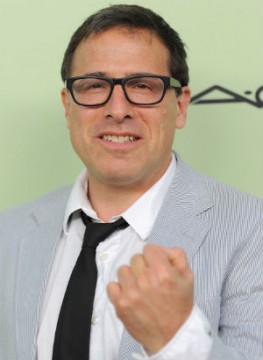
Oscar nominated director David O. Russell ( The Fighter ) has had his share of controversial moments in the public eye, but this takes the cake, and then some: According to a police report filed with the Broward County Police Department in Florida, Russell inappropriately groped his 19-year-old adoptive pre-op transgender niece while they were working out last week. Hit the jump for details if you dare, because this reaches a level of bizarre that can be a wee bit difficult to wrap your head around. An investigation is underway into the bizarre family incident, which Russell insists was innocent and consensual. But he’s at least admitted that the incident did happen. And the event seems to have gone down as follows, as TMZ reports, while Russell and his niece were doing abdominal exercises: The niece — who does NOT have a blood relation to Russell — told cops they began to talk about her breasts … and how certain hormones she’s taking have made them larger. According to the report, the niece claims Russell then “put his hands under [her] top and felt both breasts.” Cops say the woman said she felt “uncomfortable” … but admitted she “did not ask him to stop at any time.” Investigators later contacted Russell … and according to the report, the director confirmed he DID touch his niece’s breasts … but only after she gave him permission. Cops say Russell explained that during the conversation about her chest, the niece informed him that one of her breasts was bigger than the other. The official report says … Russell told cops his niece then “allowed [him] to feel both of [her] breasts.” So… yeah. According to Russell’s rep, “”David O. Russell emphatically denies any wrongdoing and has cooperated fully with the authorities.” We’ll have to wait and see how this one shakes out. In the least, it makes yelling at Lily Tomlin look like a totally normal tea party. And despite headlines like ” David O. Russell Fingered in Quasi-Incestuous, Transsexual Groping Claim ,” it’s not quite as incestuous as the setup of Russell’s feature debut Spanking the Monkey , so there’s that. Developing… [ TMZ , The Wrap ]
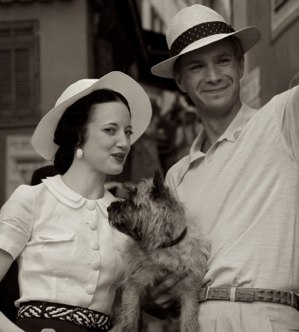
W.E. wasn’t just an undertaking for Madonna, who directed her Wallis Simpson/Edward VIII biopic with all the lavish heft of a gigantic watercolor landscape. It was also a labor of love for Andrea Riseborough, the 30-year-old actress playing Simpson, the American socialite whose romance with Edward led to his abdication of the throne in 1936. The film’s most enjoyable asset, Riseborough was saddled with making the polarizing Simpson a wholly charismatic figure — an Evita without the benefit of torch songs. She succeeds, and with her thoroughly photogenic Edward (James D’Arcy) in tow, she softens W.E. ‘s melodrama with fantastic ease. We caught up with Riseborough to discuss her fascinating director , her feelings about the subject matter, and the zaniness of the Venice Film Festival . You’ve been promoting this movie nonstop for months! Are you sick of corsets and gorgeous costuming at this point? Are the constraints of the couture caving in on you, so to speak? That’s very funny! No, I’m very much enamored with every different period. It’s so funny because people often say — or people talk about period pieces — and I never really faction different periods or divide them from one another. I just think that really everything is of a specific period whether it be 2016 or 1810. It was extraordinary, the architectural feats that some of the couture gowns entailed on W.E. entailed. You have no idea. It was extraordinary. But is it daunting to think of committing so much to the look and feel of a period piece again? It’s something I’m very familiar with. Because whether it is 2016 or 1810, it’s very arduous. Specificity in any project, even if it exists in the abstract [Laughs] or it exists in an alternate reality, there’s always a vision that everybody adheres to. Everybody very much passionately leans toward expressing that vision and the way we share it with the world. It’s something that’s very familiar to me, actually, I suppose is the answer to that. It’s something I enjoy very much. It’s transporting. You are stunning in this movie. You really have the face of a beautiful silent screen star, or a young Bette Davis. Have you seen Dark Victory ? Oh I have, yes! Very much a part of my lexicon as a child. Did you think your throwback looks would aid you in getting cast? Because you would definitely fit in with the stars of Wallis Simpson’s time. Not really, because when I’d been sent the script, I thought it was very unique. I wanted to explore a little more and was interested certainly in the character that was Wallis Simpson, when I went to meet with the director — but when I met her, I actually had what could only be described as sandy blonde hair and a false tan. I was playing a modern character elsewhere. I’d never seen myself in one particular period. I know that my face is pretty plain and can look reasonably attractive but can also look horribly unattractive, and it’s been something that’s been a real benefit to me — being a blank canvas. Muscularly, I can mold it anyway that I want to, if need be. Or I can completely relax it! So, no, I didn’t think that — no. What I saw ahead was like with any role, the journey of a transformation that was something so utterly far away from myself. It was something and is something I’m very fulfilled by. For the record, James D’Arcy also looks just like Anthony Perkins. You can tell him I said so. [Laughs.] Nobody’s ever told him, but I can e-mail him if you like! [Laughs again.] E-mailing him now. Madonna is known for being able to choose forthcoming trends, own them, and bring them to the pop culture fore. Before you met her, did you have any idea what would impress her, based solely on your knowledge of her before W.E.? Did you use that insight to get cast in the film? My desire was not to impress; I wanted to see what fueled her passion for the story. I wanted to know what her vision was for it, and whether she would respond to what I could her offer her as a potential duchess. I think it would’ve been — I would’ve been somebody else, actually. It’s not who I am, I suppose. I was interested to see what our complicit working relationship would be. That was exciting to me. The story of the duchess was something I thought would be potentially interesting to excavate. I wanted to see within what framework that might possibly happen. She, very fortunately, responded to what I had to bring to her. Really, we were artistically complicit from that point on, from the outset really. She’d seen me play Margaret Thatcher and this other character before, so she had a good grasp on the reality that I could inhabit somebody who existed and somebody who was young and innocent — this other character was young and innocent. One interesting thing about W.E. is the sheer continental difference in knowledge about Wallis Simpson. In the U.K., everyone knows. In the U.S., plenty of people know nothing about that era of British history. Oh, don’t do yourself down! I’m trying not to! But there’s definitely a gap in awareness about who Wallis Simpson was. How do you feel addressing that with different markets for the film? I think, really, the story transcends any historical context you might feel you need to put it in. Interestingly, of course, it was a reality. But what we have portrayed is our perception or version of the truth, Madonna’s version and vision of a woman who really existed. The heart of the piece is the thing that’ll tap on the door of the common man, if you will. Because, I hope, that was the thing that originally tapped on the door of the common man — every one of the working class areas that Edward visited, the working men so very much appreciated him, took him into their homes in a way that a prince had not been taken in before. It’s that same honesty and love and truth, I think, that people will feel and respond to. Wallis, she’d seen the writing on the wall. She ended up being as trapped as she imagined she would be, if he should abdicate, which he did as you know. It’s impossible for any one person — I mean, let’s not even reduce it to gender — it’s impossible for any one person to live up to the responsibility of the kingdom. How does one man fulfill a partner who has given up such an awful, awful lot for their relationship? Do you find yourself sorting out the fair criticism of W.E. from what might be considered a biased response to your director? Has the criticism been fair? I really believe that people have their own relationship with it. And I say “with it,” I mean everything that the film is. We were all part of making it. They can choose to absorb it and gain what is valuable from it any which way. I really have no opinion on it, to be truly honest, Louis. I know I’m incredibly honest to be part of something I found beautiful. That’s really all I know. Talk about the Venice Film Festival, where the world got its first taste of W.E. and the first swarm of responses to the film hit. Seemed pretty manic at the time. How do you remember it? It felt incredibly special. It was almost like our first offering at something we’d been so lovingly baking. The explosion that then ensued was quite breathtaking. It was almost funny being so surrounded by love. I’m just speaking as honestly as I felt it! Lastly, I heard you say that you and Madonna connected deeply in researching the “geeky” minutia of Wallis Simpson’s life. How deeply did that fixation go? Oh my gosh, that is such a long answer, Louis. Her fastidious research has no bounds! And that’s where the answer lies. When you approach something that you’re ignited by and are passionate about in such a way, really, until it seems to you’re getting to the point where no stone is unturned, only then can you stop. When you imagine chronicling an entire woman’s life from age 29 to 70, everything that went before 29 — since it must be taken into account — and everything that went after, you can imagine that’s no small feat. I ferociously lapped that up. I enjoyed it so much. But none of that is worth anything if you can’t just trust that it’s been inside of you so you can be present when you’re living out what might’ve been their life. Follow Louis Virtel on Twitter . Follow Movieline on Twitter . [Top Photo: WireImage]
The key to a list of moviegoing disappointments is the element of expectation: I am prepared to say I watched more suicidally bad films in 2011 than in any other year in my life; to be merely disappointed suggests a certain relativity. For example, I found The Ides of March to be a tremendous let down, I think partly because my hopes were inflated. George Clooney’s high political tragedy is perfectly cast, and that early, loaded exchange of glances between rival campaign managers Phillip Seymour Hoffman and Paul Giamatti goes off like a starter pistol. But The Ides of March is like that — it keeps threatening to start something interesting, right up to the point that it just… ends. I had the same issue with Good Night and Good Luck , another major disappointment and another film that played as if it were perpetually about to begin . The pleasures of Ryan Gosling’s performance as the fledgling spinmeister feel stingy — why tell us that he’s known to rock the microphone when we paid for the show? And Clooney’s Teflon governor is an empty, well-cut overcoat — perhaps the most glaring evidence of both the character and the director’s failure is that his one big scene with his golden boy star is the least exciting one in the movie. Given the improbable, stadium-rolling wave of appreciation that greeted The Artist , I expected much more than the mannered silent that Michel Hazanavicius and co. delivered. A mediocre movie with a couple of bright moments, The Artist also had too little to say about its chosen themes. Given the challenge of holding our attention across a silent film landscape, the music felt either too sparse or too sentimentally obvious, and the droopy patches felt twice as long as they needed to. The story of a silent film star left behind by the transition to sound was unconvincing when it needed to be clear and dolorous when it might have been lyrical. Similarly cranky friends have fixated on the issue of George Valentin’s (Jean Dujardin) refusal to speak on film—was it the accent? A principled stance? The fact that they were at all unsure points out a massive gap in the center of The Artist , one its title sews up too neatly. Any close follower of Werner Herzog’s career should know better than to bring expectations brewed from his last film into the next. Along with an auteurist consistency of preoccupations, Herzog shares with Woody Allen a prodigious output of wildly variable quality. The titles of this year’s Herzogian harvest — the sublime Cave of Forgotten Dreams and the slapdash Into the Abyss — seem interchangeable, but the latter felt to me like Achilles Herzog, a hot check of a documentary passed off as the real thing. Researched and assembled under extreme time constraints, Into the Abyss is an inquiry into the death penalty that gets by on artful narrative juxtapositions and moments of profound, almost invasive intimacy with its interview subjects. The reach for effect often feels more craven than considered, and the crime at the heart of the film is eventually clouded over for convenience. When a topic and a director — and a title! — of this magnitude collide, the viewer wants the Earth to shimmy; instead we had to settle for the Richter equivalent of a quick freehand sketch. I’ve watched Tinker, Tailor, Soldier, Spy twice now and I still couldn’t give you a basic plot summary. Having felt like a failure after the first viewing, after the second I’m prepared to push the better part of the blame onto director Tomas Alfredson and his Let the Right One In editor Dino Jonsäter. It’s a film that seems designed for le Carré obsessives, which means the rest of us may have to sit through all 57 hours of the 1979 BBC production just to get the facts straight. It’s a shame, because the performances and the production design knocked me out, but of all the ways to sex up a retro-procedural, I’d put mincing it into incomprehensibility second to casting Young Jeezy as George Smiley. With The Iron Lady Meryl Streep re-stamps her all-access passport to human history, and proves once again that the only thing she can’t seem to defy are superlative clichés. There are no words left to describe the kind of work Streep does — even those who dismiss her as a mere impressionist have to admit that her Margaret Thatcher is uncanny in its near-total self-effacement. But the film built around that performance is in some sense designed to disappoint: The biopic is an inefficient delivery system for dramatic tension or even, paradoxically, the human arc of a lifetime. It’s the movie equivalent of a greatest hits package, and while I’m not crazy about the appropriation of the still-living Thatcher’s dementia as a dramatic device, for me the more broadly director Phyllida Lloyd played her hand — ruining every successful visual cue by repeating it three times, leaping from one familiar milestone to the next — the farther we move away from the potential of Streep’s performance and the uneven richness of Thatcher’s story, into the straight flush of political iconography. Follow Michelle Orange on Twitter . Follow Movieline on Twitter .
The key to a list of moviegoing disappointments is the element of expectation: I am prepared to say I watched more suicidally bad films in 2011 than in any other year in my life; to be merely disappointed suggests a certain relativity. For example, I found The Ides of March to be a tremendous let down, I think partly because my hopes were inflated. George Clooney’s high political tragedy is perfectly cast, and that early, loaded exchange of glances between rival campaign managers Phillip Seymour Hoffman and Paul Giamatti goes off like a starter pistol. But The Ides of March is like that — it keeps threatening to start something interesting, right up to the point that it just… ends. I had the same issue with Good Night and Good Luck , another major disappointment and another film that played as if it were perpetually about to begin . The pleasures of Ryan Gosling’s performance as the fledgling spinmeister feel stingy — why tell us that he’s known to rock the microphone when we paid for the show? And Clooney’s Teflon governor is an empty, well-cut overcoat — perhaps the most glaring evidence of both the character and the director’s failure is that his one big scene with his golden boy star is the least exciting one in the movie. Given the improbable, stadium-rolling wave of appreciation that greeted The Artist , I expected much more than the mannered silent that Michel Hazanavicius and co. delivered. A mediocre movie with a couple of bright moments, The Artist also had too little to say about its chosen themes. Given the challenge of holding our attention across a silent film landscape, the music felt either too sparse or too sentimentally obvious, and the droopy patches felt twice as long as they needed to. The story of a silent film star left behind by the transition to sound was unconvincing when it needed to be clear and dolorous when it might have been lyrical. Similarly cranky friends have fixated on the issue of George Valentin’s (Jean Dujardin) refusal to speak on film—was it the accent? A principled stance? The fact that they were at all unsure points out a massive gap in the center of The Artist , one its title sews up too neatly. Any close follower of Werner Herzog’s career should know better than to bring expectations brewed from his last film into the next. Along with an auteurist consistency of preoccupations, Herzog shares with Woody Allen a prodigious output of wildly variable quality. The titles of this year’s Herzogian harvest — the sublime Cave of Forgotten Dreams and the slapdash Into the Abyss — seem interchangeable, but the latter felt to me like Achilles Herzog, a hot check of a documentary passed off as the real thing. Researched and assembled under extreme time constraints, Into the Abyss is an inquiry into the death penalty that gets by on artful narrative juxtapositions and moments of profound, almost invasive intimacy with its interview subjects. The reach for effect often feels more craven than considered, and the crime at the heart of the film is eventually clouded over for convenience. When a topic and a director — and a title! — of this magnitude collide, the viewer wants the Earth to shimmy; instead we had to settle for the Richter equivalent of a quick freehand sketch. I’ve watched Tinker, Tailor, Soldier, Spy twice now and I still couldn’t give you a basic plot summary. Having felt like a failure after the first viewing, after the second I’m prepared to push the better part of the blame onto director Tomas Alfredson and his Let the Right One In editor Dino Jonsäter. It’s a film that seems designed for le Carré obsessives, which means the rest of us may have to sit through all 57 hours of the 1979 BBC production just to get the facts straight. It’s a shame, because the performances and the production design knocked me out, but of all the ways to sex up a retro-procedural, I’d put mincing it into incomprehensibility second to casting Young Jeezy as George Smiley. With The Iron Lady Meryl Streep re-stamps her all-access passport to human history, and proves once again that the only thing she can’t seem to defy are superlative clichés. There are no words left to describe the kind of work Streep does — even those who dismiss her as a mere impressionist have to admit that her Margaret Thatcher is uncanny in its near-total self-effacement. But the film built around that performance is in some sense designed to disappoint: The biopic is an inefficient delivery system for dramatic tension or even, paradoxically, the human arc of a lifetime. It’s the movie equivalent of a greatest hits package, and while I’m not crazy about the appropriation of the still-living Thatcher’s dementia as a dramatic device, for me the more broadly director Phyllida Lloyd played her hand — ruining every successful visual cue by repeating it three times, leaping from one familiar milestone to the next — the farther we move away from the potential of Streep’s performance and the uneven richness of Thatcher’s story, into the straight flush of political iconography. Follow Michelle Orange on Twitter . Follow Movieline on Twitter .
Steven Spielberg’s holiday offering is a ‘litmus test’ for moviegoers’ feelings about the director, one critic says. By Eric Ditzian Tom Hiddleston in “War Horse” Photo: DreamWorks The Christmas holiday offers a staggering array of fresh cinematic choices. The last two weeks have given us films about chipmunks and tigers, 19th-century detectives and 21st-century spies, motion-captured adventurers and motorcycle-riding hackers . Shoot, there are not one but two Steven Spielberg flicks to choose from when all of your presents have been opened and that post-holiday-meal coma has set in. The most recent is “War Horse,” which nabbed two Golden Globe nominations and is likely to garner a slew of Oscar nods, including Best Picture and Best Director (even if the reviews are mixed). The movie, which hit theaters on Sunday (December 25), isn’t polarizing so much as it is, in critic Bill Goodykoontz’s lovely phrasing, a “litmus test” for moviegoers’ feelings about Spielberg’s films in general. Some reviewers have lauded the beautiful cinematography and stellar cast, while others have taken issue with the film’s overly sentimental tone. Read on for a deep dive into “War Horse” reviews. The Story “The film deals with the relationship between Albert Narracott (Jeremy Irvine) and his horse, Joey. It’s a sprawling story that uses the background of World War I as a framework, but it’s really a very direct journey. Albert’s father (Peter Mullan) buys a horse, Albert falls in love with it, WWI begins, the horse is sold to Captain Nicholls (Tom Hiddleston), and Albert decides to enlist so he can find his horse and keep him safe. The film follows Joey from owner to owner, using the horse’s journey as a way of dipping into a number of stories along the way, and eventually reaching a rousing and nakedly tear-jerking finale. It is an episodic film, and how you feel about the movie as a whole will depend largely on whether or not you are moved by the various stops along the way.” — Drew McWeeny, HitFix The Performances “The cast is exemplary down the line, with both names and newcomers delivering expansive, emotional and almost entirely sympathetic performances. Neither side in the conflict is ennobled or demonized; like Joey (and a striking black steed who’s his companion for a while), the grunts are just pawns in the hands of unseen manipulators of countless fates. Irvine is the very picture of a sturdy, well-intentioned, ruddy-faced English country lad of a hundred years ago and Mullan and [Emily] Watson look to have come from the earth they tread. Tom Hiddleston cuts a striking figure as an English officer who understands Joey early on, setting an example for the many others who briefly come and go through the horse’s life as the war grinds on.” — Todd McCarthy, The Hollywood Reporter The Action “Spielberg’s battle scenes are a marvel of sight and sound — the latter literally shakes the theatres from the pop of rifles and the thunder of cannons. Spielberg tugs at the heart strings, but he’s also not afraid to smack you upside the head with combat that realistically shows the madness of war. He interrupts the action too often, perhaps fearing a punitive censor rating. There are long stretches of ‘War Horse’ where Joey passes from hand to hand like the precious golden circle of ‘The Lord of the Rings,’ as this barnyard Balzac further demonstrates its wisdom and stoicism while dispensing silent life lessons.” — Peter Howell, Toronto Star The Dissenters “[It’s] overlong, painfully earnest and sometimes even hokey. Clearly, Spielberg intended ‘War Horse’ as a throwback, an homage to good, old-fashioned, heartrending storytelling, full of recognizable types and uplifting themes. The skies are so impossibly colorful in such a retro way, they look like hand-painted backdrops on a soundstage. And the dialogue is so frequently on-the-nose and repetitive, it might just make you cringe.” — Christy Lemire, The Associated Press The Final Word ” ‘War Horse’ is a sort of litmus test for how you feel about Steven Spielberg’s films. It’s a beautiful movie, stunning to look at, with echoes of film history all throughout, reaching back to ‘Gone With the Wind,’ ‘The Searchers,’ Spielberg’s own ‘Saving Private Ryan’ and more. It’s also unapologetically sentimental. Spielberg all but begs you to cry, and unless you’re a heartless cad, you probably will.” — Bill Goodykoontz, The Arizona Republic Check out everything we’ve got on “War Horse.” For breaking news, celebrity columns, humor and more — updated around the clock — visit MTVMoviesBlog.com .