Tag Archives: disaster

After Nearly Five Months, BP Scheduled to Release Findings of Inquiry Into Its Oil Rig Disaster

BP to release results of investigation into oil spill disaster By the CNN Wire Staff September 8, 2010 2:49 a.m. EDT The BP oil spill in the Gulf of Mexico released an estimated 205 million gallons of oil during an 87-day period. STORY HIGHLIGHTS * BP report comes nearly five months after oil rig explosion in the Gulf * Deep-water oxygen levels are down but not deadly, a federal report concludes * The federal study tracked dissolved oxygen levels from May to August (CNN) — BP on Wednesday is expected to release findings of an internal investigation into the Gulf oil disaster, the oil giant said. The report comes nearly five months after an April 20 explosion aboard an oil rig left 11 men dead and spewed millions of barrels of oil into the Gulf of Mexico over an 87-day period. A federal task report on Tuesday said scientists have found a decline in oxygen levels in the Gulf following the BP spill, but no “dead zones.” Levels of dissolved oxygen in deep water have dropped about 20 percent below their long-term average, according to data collected from up to 60 miles from the well at the center of the worst oil spill in U.S. history. But much of that dip appears to be the result of microbes using oxygen to dissolve oil underwater, and the decline is not enough to be fatal to marine life, said Steve Murawski of the National Oceanic and Atmospheric Administration and the head of the Joint Analysis Group studying the spill's impact. “Even the lowest observations in all of these was substantially above the threshold,” Murawski said. The samples were collected from 419 points at varying distances from the ruptured well at the heart of the disaster and at depths as far down as 4,800 feet, the group reported. The task force is made up of NOAA, the Environmental Protection Agency and the White House Office of Science and Technology Policy. The undersea gusher erupted in April, releasing an estimated 4.9 million barrels (205 million gallons) of crude before being temporarily capped in July. The volume of oil — and the amount of chemical dispersants used to break it up — have created concerns about the long-term health of the Gulf. The spill also delivered an economic blow to the region, where fisheries and beach resorts are major employers. Early findings from a mid-August survey led by the University of South Florida indicated oil had settled to the bottom of the Gulf farther east than previously suspected and at levels toxic to marine life. At about the same time, a team from Georgia Sea Grant and the University of Georgia released a report that estimates that 70 to 79 percent of the oil that leaked from the well “has not been recovered and remains a threat to the ecosystem.” The latest study “does not discuss the broad ecosystem consequences of hydrocarbons released into the environment,” NOAA said. But it concludes that the oil is continuing to break up and disperse underneath the surface, making the emergency of a major oxygen-poor dead zone unlikely. In early August, the federal government estimated that three-quarters of the oil spilled had either evaporated or been dispersed, or had been skimmed or burned off the surface. The well has been temporarily capped and operations are under way to permanently seal it. BP, rig owner Transocean and well cement contractor Halliburton have blamed one another for the disaster. http://www.cnn.com/2010/US/09/08/us.gulf.oil.disaster/index.html?hpt=T1 added by: EthicalVegan

Andrea Mitchell Blames American ‘Prejudice’ For Paucity Of Donations To Pakistan

You ee-vil Americans.  You haven’t contributed enough to Pakistani flood relief.  And now you’ve been busted by Andrea Mitchell, who knows why you’ve been so miserly.  It’s prejudice.  Prejudice I tell ya! View video here if not visible at right. Mitchell teased her prejudiced-Americans theory at the top of her MSNBC show this afternoon, then trotted it out while talking with Ann Curry, who is in Pakistan.  How over the top was Andrea?  Even fellow lib Curry had to gently talk Mitchell down, suggesting there was another very good reason why Americans would be cautious about sending money to Pakistan . . . ANDREA MITCHELL: Even before the president waded into that mosque controversy, a new poll shows a growing number of Americans wrongly believe that President Obama is a Muslim.  This as prejudice against Muslims in America might be contributing to a charity gap toward flood victims in Pakistan. And a bit later, while speaking with Ann Curry . . . MITCHELL: We’ve been looking at incredible pictures, Ann, while you’ve been talking about this, of this flooding. Secretary Clinton, the State Department, has announced, is going to be announcing a Pakistan relief fund, and the hope I’m told is that that will somehow validate it for Americans.  The incredible numbers are, in the early days of this disaster, only $50,000 was texted in for the Red Cross and other relief organizations to the State Department in answer to their appeal, in comparison to $34 million after the disaster in Haiti,  which tells you that the prejudice against Pakistan is pretty profound. ANN CURRY: Well, I think that’s right. I think that part of that may also be that Americans, and people all around the world, given the state of the world today, are concerned that money given to these flood victims in Pakistan could end up in the hands of extremists , like the Taliban. Getting schooled on hard-nosed realpolitik by Ann Curry? Ouch!   Let’s summarize Andrea’s view of her compatriots: Americans are a prejudiced lot, as proved by the fact that we haven’t donated nearly as much to Pakistan as we did to . . . the overwhelmingly black population of Haiti. Got it.

See the rest here:
Andrea Mitchell Blames American ‘Prejudice’ For Paucity Of Donations To Pakistan

Kurtz Does Lengthy Hurricane Katrina Segment Without Once Mentioning Bush

Is it possible for CNN to do a 7 1/2 minute segment about Hurricane Katrina without mentioning George W. Bush’s name? Given the media’s approaching five year obsession with blaming one of America’s largest natural disasters on a Republican president, it seems highly unlikely, doesn’t it? Yet that’s what happened on “Reliable Sources” Sunday when Howard Kurtz invited Harry Shearer on the program to talk about his new documentary “The Big Uneasy.” In it, Shearer claims the media badly missed the boat in their reporting of what caused the flooding in New Orleans (video follows with transcript and commentary): HOWARD KURTZ, HOST: But the other issue is the writing of the history as to why this happened and it could it happen again? Now, here, you zero in on the Army Corps of Engineers. You feel the mainstream media missed the mark, or is that overstating it? HARRY SHEARER: A, I don’t zero in. The people who did the investigations, the scientists and engineers who actually know what they’re talking about, zeroed in on the Army Corps of Engineers, four decades plus of malfeasance and misfeasance that led to this disaster. I think the national news media basically did take a walk away from that as the core of this story, that this was a manmade disaster. And that’s why I was led to make the movie, to sort of try to correct the record now five years on. KURTZ: Why do you think national journalists walked away from the story? I mean, in other words, was it just short attention span? Was it laziness? Or was it a failure to dig? SHEARER: Well, I think it’s all of those things. And again, I go back to this quote from this anchor person, that the emotional stories are what gets eyeballs. And this is deep stuff. I mean, I worried as I started to make this movie, I’m not taking people to engineering school. I can’t be an instructional film. I can’t — KURTZ: You’re not Al Gore standing up with the charts and the graphs. SHEARER: Right. What should jump out at readers and viewers alike is “four decades plus of malfeasance and misfeasance that led to this disaster.” Hmmm. Four decades. Wouldn’t that mean this disaster was caused by at least some  malfeasance that occurred before George W. Bush was in the White House? And wasn’t that a contention of many conservatives at the time: decades of malfeasance and corruption in New Orleans led to a levee system in a state of disrepair? But that didn’t fit the media template back then which was all about blaming Bush and anything that could possibly diminish this despicable accusation was verboten. Not surprisingly, five years later, Kurtz didn’t ask Shearer whether his research for this documentary uncovered anything that refuted the press’s claims that this disaster was all the 43rd President’s fault. By contrast, Bush’s name was mentioned seven times in a prior segment about how the media covered Michelle Obama’s Spanish vacation last week. Go figure. 

See the original post:
Kurtz Does Lengthy Hurricane Katrina Segment Without Once Mentioning Bush

4,500 Animals Killed in BP Spill … And Counting

Photo via CenCOOS As BP moves to permanently seal the blown-out well that unleashed 5 million barrels of oil into the Gulf of Mexico, the focus is turning to the toll of the disaster. It should be said that the true and total toll will not be known for some time, until scientists have had a chance to properly investigate the extent of the damage above and below the sea. But there are some things we can start looking at now: Like the direct numb… Read the full story on TreeHugger

Follow this link:
4,500 Animals Killed in BP Spill … And Counting

Oceana Launches Expedition to Learn Long-Term Effects of Gulf Oil Spill

Photo via Southerntabitha As BP pushes hard to shift attention away from the spill itself and on to clean-up and wrap-up efforts , Oceana has launched an expedition that will study the long-term effects of the disaster on the Gulf’s flora and fauna. Hopping aboard the 170-foot Oceana Latitude and using remotely operated vehicles, specialized divers and satellite tags, the team will investigate how the spill is impacting coral, fish, shark and other wi… Read the full story on TreeHugger

Read the original:
Oceana Launches Expedition to Learn Long-Term Effects of Gulf Oil Spill

CNN’S Anderson Cooper Charges Obama Administration With Censorship and Lack of Transparancy

Live from the Gulf: Obama Team Blocks Media from Oil Spill Last week, CNN’s Anderson Cooper reported that the federal government was blocking media access to coastal areas around the Gulf, preventing them from taking photos and reporting on the environmental damage of the oil spill. You can watch the video and see Cooper is livid that the Obama administration is treating him and his colleagues this way. Cooper of course compares this to Katrina when media were blocked from…well we’re unsure what the media was blocked from in Katrina, since the photos and video from the Superdome, the Convention Center, the overpasses, levees, streets and neighborhoods contributed to possibly the most photographed crisis in history. (Cooper points out that they were blocked from seeing people “dying in their homes” – yeah, uh, same thing) There are two real stories here, and we do appreciate Cooper bringing one of them to light. The media should of course not be blocked by the federal government from safely reporting on the spill and its effects. The heartbreaking images of oil soaked pelicans, turtles, tarballs and destroyed marshes achieve one important goal – to remind Americans of the disaster the federal government is ignoring. To this day, the media continue to have unnecessarily limited and prohibitive access to the disaster area, including reporters being hassled on public streets. NPR reported yesterday on a reporter who was asked to reveal the images on his camera, and his social security number by members of the local police, FBI and BP. But there is a second story. The second story is that while national reporters are fighting the Obama administration’s lack of transparency, they’re not reporting the Obama administration’s lack of competence. Every minute a correspondent scuba dives into the Gulf to reveal that oil is, well, murky, or an anchor shows you another tarball, we miss out on real journalistic oversight. The Obama administration is making catastrophic decisions every day that are crippling the Gulf Coast environment and economy, yet this story is not being told. A team of experts from The Heritage Foundation, without any credentials, were able to move along the coast unfettered, interview officials, fisherman, port workers and experts to discover major mistakes being made in the response efforts. These stories do not require a pristine camera shot, but rather some old fashioned investigating. Yes, the story that the White House is engaging in a cover-up mentality is important. As the Louisville Courier-Journal reported yesterday: “The National Press Photographers Association has sent a letter to President Obama expressing outrage at the new rules and requesting that he rescind them. The American Federation of Television and Radio Artists, a union that includes broadcast journalists, is monitoring reports of denial of access and censorship.” But as Billy Nungesser, President of Plaquemines Parish said to Anderson Cooper: “Maybe if [the Federal Government] spent more time getting things like that deployed to pick up the oil, they wouldn’t have to worry about blocking access from the media…if we did our job, and did the right thing, the news you would be reporting would be good news. You would be showing marsh being clean.” Exactly, let’s also focus on what the government is hiding rather than just the methods they’re using to keep things hidden. And if the government is held accountable for the cleanup they are solely responsible for managing, then the media will be let in because the story will finally get better. We hope. Tags: Anderson Cooper, BP, cnn, government, Gulf, Katrina, Live from the Gulf, media, oil spill, pelicans, response, tarballs Rory Cooper Author: Rory Cooper added by: congoboy

Vampires Suck Trailer: Yes, the Spoof Guys Finally Got to Twilight

What’s even more inevitable than another iteration of the Law & Order franchise? Another spoof movie from Jason Friedberg and Aaron Seltzer, the duo who’ve turned what really should have been three-minute Funny or Die videos into the feature-length Epic Movie, Disaster Movie , and Date Movie . Their latest is Vampires Suck (but how will I know that it’s a spoof if it isn’t called Vampire Movie ?), and the very first joke of the trailer is directly ripped off from Twilight with Cheeseburgers , so you know we’re in good hands here.

Visit link:
Vampires Suck Trailer: Yes, the Spoof Guys Finally Got to Twilight

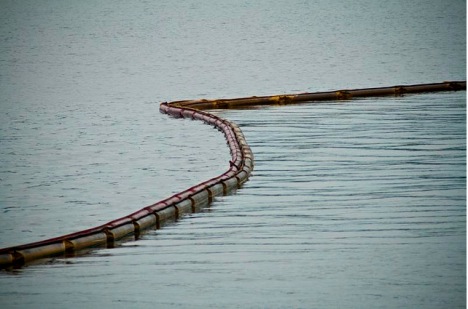
BP’s Tar Balls from the Gulf Disaster Have Reached the Shores of Texas and Louisiana’s Lake Pontchartrain

PART ONE… http://www.cnn.com/2010/US/07/05/gulf.oil.disaster/index.html?hpt=T1 By the CNN Wire Staff July 5, 2010 6:52 p.m. EDT New Orleans, Louisiana (CNN) — Tar balls linked to the worst oil spill in U.S. history have reached into Louisiana's Lake Pontchartrain and hit the beaches near Galveston, Texas, authorities in those states reported on day 77 of the disaster. Easterly winds and high waves that hindered skimmers drove blobs of weathered oil up into the eastern end of the lake, which sits north of New Orleans, said Anne Rheams, executive director of the Lake Pontchartrain Basin Foundation. She estimated the amount of oil that has reached the lake at less than 100 barrels, with no hydrocarbon smell. “They are about the size of a silver dollar, maybe a little bigger, kind of dispersed in long intervals. It's not as dense as it could be, so we're thankful for that,” she said. The Coast Guard reported over the weekend that a shift in weather patterns could send more oil toward sensitive shores in Mississippi and Louisiana, and bad weather over the past few days has significantly hampered cleanup efforts. Rheams said that pattern was expected to persist for at least three more days. Rear Adm. Paul Zukunft said Friday that the prospect of oil reaching up into Lake Pontchartrain “is where I'm losing the most sleep right now.” “I'm going to look, and if I see even sheen, I'm going to push to make sure that we're moving every and all available resources to respond to this particular area,” he said. Tar balls had previously been spotted in Rigolets Pass, which connects the lake with Mississippi Sound. Officials in Orleans and St. Tammany parishes have been using heavy booms, barges and skimmers to defend Pontchartrain since the early days of the disaster, but Rheams said high waves and strong easterly and southeasterly winds have complicated the effort. “The main thing is that they are an indicator that it could be coming more so this way,” she said. State officials closed a swath of the southern part of the 630-square-mile lake to fishing following the discovery, but there was no sign of an impact on wildlife as of Monday, Rheams said. And in Texas, about 400 miles west of the ruptured offshore well at the heart of the spill, Coast Guard Capt. Marcus Woodring said the total volume of tar balls found over the weekend amounted to about five gallons. And while authorities weren't sure how they made it that far, tests confirmed that at least the first batch collected came from the Deepwater Horizon spill off Louisiana, he said. None were found Monday, and the area's beaches and waterways remained open, Woodring said. The tar balls were less weathered than researchers would expect, leading to suspicions that the oil was either stuck to the side of a ship's hull or mixed in with ballast water from a passing vessel, Woodring said. Tar balls are fairly common along the Texas coast, in part because of seepage from undersea oil deposits or from sunken vessels, he said. CONTINUED… http://media.nola.com/2010_gulf_oil_spill/photo/barges-rigoletsjpg-a6271db372480… added by: EthicalVegan

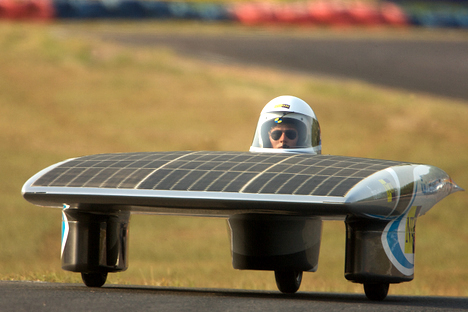
7 Awesome Solar-Powered Vehicles

Credit: Global Green Challenge The sun is shining. Hot weather makes gas expand . Gas emissions contribute to global warming. Dontcha wish there was a better way, like cars that ran on solar power ? There is, although they’re experimental and in the development and gee-whiz stages. Who knows if solar cars will ever take off ( maybe sola… Read the full story on TreeHugger

Read more:
7 Awesome Solar-Powered Vehicles

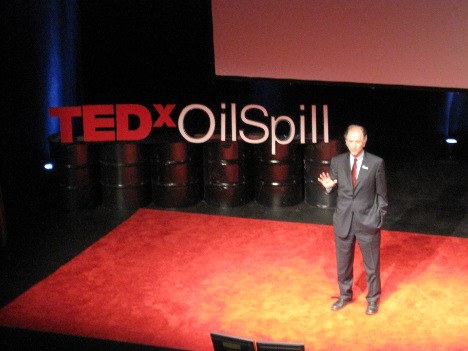
TEDxOilSpill: An Idea More Powerful Than a Faster Horse

Andrew Sharpless answered 10 tough arguments against ending offshore drilling. Image credit: David DeFranza “If I had asked my customers what they wanted, they would have said ‘A faster horse'” —Henry Ford Innovation may be a fundamental part of the American spirit but, Jackie Savitz of Oceana pointed out, introducing an age of clean energy in the face of “big oil,” is analogous to introducing the innovation of the automobile in the age of “big horse.” Dealing with the disaster in the Gulf, the speakers at TEDxOilSpill … Read the full story on TreeHugger

More here:
TEDxOilSpill: An Idea More Powerful Than a Faster Horse