Embattled Missouri Congressman Todd Akin is probably staying in the state’s U.S. Senate race, but left the door open for his departure in an interview today. “I’m never going to say everything that could possibly happen,” Akin, under fire for his ” legitimate rape ” comment, said. “I don’t know the future, but I do know this.” “I know that party voters took a look at our hearts, understood who we were, had an opportunity to meet us in many different ways and made a decision.” “And it makes me uncomfortable to think that the party bosses are going to dictate who’s running as opposed to the election process.”
2012 General Election Voter Registration Deadline: Tuesday, October 9th In order to vote in person in Georgia, you must provide photo identification. Acceptable identification includes: Any…
“Obamacare.” “Romney Hood.” The political name-calling sounds like campaign season is well under-way (though does it ever end or begin?). The art of the possible will get a comical twist this weekend with the release of The Campaign , starring Will Ferrell and Zach Galifianakis. The pic follows two rivals who clash in an election that will decide who will head to the U.S. Congress from their North Carolina district (Ferrell appears to even flash a not-so-subtle coif similar to former V.P. candidate John Edwards). The film, which opens this weekend, prompted ABC’s Political Punch reporter Jake Tapper to offer up his Top 10 political films of all-time (documentaries were excluded) and “political film” was kept to a narrow definition. See if you agree with this list and let the campaign begin. 10. In The Loop , directed by Armando Iannucci (2009) Starring Tom Hollander, Peter Capaldi and James Gandolfini, the 2009 Sundance premiere is a satirical play on the build up to the war in Iraq and the relationship between the U.S. and the U.K. In the film both countries are on the verge of launching a Middle Eastern war and the story follows a behind-the-scenes drama in which there are officials trying to promote armed action and those trying to stop it. A British government minister tells a radio interviewer that war may be inevitable, but is then shot down by the Prime Minister’s aide, played by Peter Capaldi. But then, the aide himself makes a further mistake saying there may be a need to “climb the mountain of conflict,” further muddying a delicate situation. 9. The Parallax View , directed by Alan J. Pakula (1974) Based on the 1970 novel by Loren Singer, Warren Beatty plays a newspaper reporter who takes on a dangerous investigation into a corporation that engages in political assassination. Presidential candidate Senator Charles Carroll (Bill Joyce) is assassinated atop the Space Needle in Seattle and one witness, journalist Lee Carter (Paula Prentiss) tells her former boyfriend, reporter Joe Frady (Beatty) that she believes there is more to the killing since six of the witnesses have died and she fears she may be next. The Parallax View is the third in director Alan J. Pakula’s political paranoia trilogy including Klute (1971) and All the President’s Men (1976) (and also the only one not to receive an Oscar nomination or win). 8. Z , directed by Costa Gavras (1969) Also based on a novel, this time the 1966 book of the same title by Vassilis Vassilikos, the French political thriller is a vaguely fictionalized take on the events around the assassination of democratic Greek politician Grigoris Lambrakis in 1963. Starring Jean-Louis Trintignant as an investigator, the film combines dark humor and a satirical view of politics though it managed to be the 10th highest-grossing film of the year in the U.S. in 1969. It also received both an Oscar-nomination for Best Foreign Language Film and Best Picture. 7. Dr. Strangelove or: How I Learned to Stop Worrying and Love the Bomb , directed by Stanley Kubrick (1964) Starring Peter Sellers, George C. Scott and Sterling Hayden this black comedy takes on the nuclear scare and the Cold War. Based on Peter George’s novel Red Alert , the story revolves around a rogue U.S. Air Force general who orders a nuclear assault on the Soviet Union. The President of the United States and his staff as well as a Royal Air Force officer attempt to return the planes as they head to deliver their apocalyptic payload, while separately the film follows the crew on one of the planes as it heads to its target. The U.S. Library of Congress called Dr. Strangelove “Culturally Significant” in 1989 and is preserved in the National Film Registry. 6. Bananas , directed by Woody Allen (1971) South American politics take the focus in this comedy in which Allen stars with Louise Lasser and Carlos Montalban. Allen plays Fielding Mellish, a bumbling blue collar guy who wants to impress his activist love interest Nancy (Lasser) by getting involved in a revolution in a fictional South American country. He shows concern for the locals, but after he’s nearly killed by a military chief, he is saved by the revolutionaries and he finds himself in their debt. Soon, he learns to be a revolutionary himself, but when the revolt succeeds and their Castro-esque leader goes mad, he inadvertently finds himself as their new top figure. Back in the U.S., he faces trial and he reunites with his love… 5. Mr. Smith Goes to Washington , directed by Frank Capra (1939) This classic has shown up on lists throughout the decades. Starring Jean Arthur and James Stewart and based on an unpublished story by Lewis R. Foster, the film proved a controversy when it was released back in ’39, but received 11 Academy Award nominations and a win for Best Original Story. The story revolves around an unnamed Western governor who by chance chooses Jefferson Smith (Stewart) to serve out a term in the U.S. Senate following the death of the sitting incumbent. The governor believes he’ll be able to manipulate the naive Smith. His good intentions soon collide with an apparatus of political corruption and then all hell breaks loose. 4. Charlie Wilson’s War , directed by Mike Nichols (2007) Aaron Sorkin adapted for the screenplay based on a true story by George Crile III’s 2003 book Charlie Wilson’s War: The Extraordinary Story of the Largest Covert Operation in History . The drama recounts how U.S. congressman Charlie Wilson, a Texas Democrat, played by Tom Hanks, teamed up with the C.I.A. to support the Afghan mujahideen during the Soviet occupation of Afghanistan. Also starring Julia Roberts, Philip Seymour Hoffman along with Amy Adams, Ned Beatty and Emily Blunt, Wilson’s political maneuvering and his allies in the spy agency’s Afghanistan task force results in the mujahideen being armed to the teeth complete with stinger missiles which can shoot down Soviet choppers. The result is a Soviet quagmire and ultimately a triumph for the mujahideen, but the unintended consequences imply an unwieldy Afghanistan that was left to fend for itself after the Soviet withdrawal. 3. Wag the Dog , directed by Barry Levinson (1997) This film came out before the Clinton/Monica Lewinsky scandal broke, though the film is often identified with it. The black comedy stars Dustin Hoffman and Robert DeNiro about a Washington spin-master who hires a Hollywood producer to create a fake war with Albania (of all places) in order to distract the electorate with a sex scandal just days before a presidential election. The caption at the beginning of the film says it all: “Why does the dog wag its tail? Because the dog is smarter than the tail. If the tail were smarter, it would wag the dog.” 2. All the President’s Men (1976) Bob Woodward and Carl Bernstein The 1976 Oscar-winning political thriller is based on the non-fiction work of Bob Woodward and Carl Bernstein, better known as the The Washington Post journalists who blew the lid off the Watergate scandal. Robert Redford and Dustin Hoffman play Woodward and Bernstein respectively. The crisis that ensued ended in the resignation of President Nixon, the first U.S. head of state to resign and the subsequent inauguration of Vice President Ford in 1974. 1. The Candidate , directed by Michael Ritchie (1972) Robert Redford also stars in this film about an unlikely and idealistic Democratic candidate from California. Bill McKay (Redford) is initially more interested in espousing his liberal views publicly than winning and decides to take to the campaign trail to vocalize his opinion since his challenger, the incumbent Republican is a given as the victor. McKay wins the party nomination, but then finds out he’s likely to be overwhelmingly trounced in the election. He figured he’d lose, but not by such a humiliating margin. So, in order to avoid embarrassment, he broadens his appeal by dousing his ardently liberal message resulting in a rise in the polls. He also appeals for his father’s help (a former governor) to endorse him since the media is speculating that his silence is a tacit thumbs up to the opposition. As the debate looms, more compromises are made and the result entrenches McKay in the political establishment. [ Sources: ABC News , Wikipedia ]
“Obamacare.” “Romney Hood.” The political name-calling sounds like campaign season is well under-way (though does it ever end or begin?). The art of the possible will get a comical twist this weekend with the release of The Campaign , starring Will Ferrell and Zach Galifianakis. The pic follows two rivals who clash in an election that will decide who will head to the U.S. Congress from their North Carolina district (Ferrell appears to even flash a not-so-subtle coif similar to former V.P. candidate John Edwards). The film, which opens this weekend, prompted ABC’s Political Punch reporter Jake Tapper to offer up his Top 10 political films of all-time (documentaries were excluded) and “political film” was kept to a narrow definition. See if you agree with this list and let the campaign begin. 10. In The Loop , directed by Armando Iannucci (2009) Starring Tom Hollander, Peter Capaldi and James Gandolfini, the 2009 Sundance premiere is a satirical play on the build up to the war in Iraq and the relationship between the U.S. and the U.K. In the film both countries are on the verge of launching a Middle Eastern war and the story follows a behind-the-scenes drama in which there are officials trying to promote armed action and those trying to stop it. A British government minister tells a radio interviewer that war may be inevitable, but is then shot down by the Prime Minister’s aide, played by Peter Capaldi. But then, the aide himself makes a further mistake saying there may be a need to “climb the mountain of conflict,” further muddying a delicate situation. 9. The Parallax View , directed by Alan J. Pakula (1974) Based on the 1970 novel by Loren Singer, Warren Beatty plays a newspaper reporter who takes on a dangerous investigation into a corporation that engages in political assassination. Presidential candidate Senator Charles Carroll (Bill Joyce) is assassinated atop the Space Needle in Seattle and one witness, journalist Lee Carter (Paula Prentiss) tells her former boyfriend, reporter Joe Frady (Beatty) that she believes there is more to the killing since six of the witnesses have died and she fears she may be next. The Parallax View is the third in director Alan J. Pakula’s political paranoia trilogy including Klute (1971) and All the President’s Men (1976) (and also the only one not to receive an Oscar nomination or win). 8. Z , directed by Costa Gavras (1969) Also based on a novel, this time the 1966 book of the same title by Vassilis Vassilikos, the French political thriller is a vaguely fictionalized take on the events around the assassination of democratic Greek politician Grigoris Lambrakis in 1963. Starring Jean-Louis Trintignant as an investigator, the film combines dark humor and a satirical view of politics though it managed to be the 10th highest-grossing film of the year in the U.S. in 1969. It also received both an Oscar-nomination for Best Foreign Language Film and Best Picture. 7. Dr. Strangelove or: How I Learned to Stop Worrying and Love the Bomb , directed by Stanley Kubrick (1964) Starring Peter Sellers, George C. Scott and Sterling Hayden this black comedy takes on the nuclear scare and the Cold War. Based on Peter George’s novel Red Alert , the story revolves around a rogue U.S. Air Force general who orders a nuclear assault on the Soviet Union. The President of the United States and his staff as well as a Royal Air Force officer attempt to return the planes as they head to deliver their apocalyptic payload, while separately the film follows the crew on one of the planes as it heads to its target. The U.S. Library of Congress called Dr. Strangelove “Culturally Significant” in 1989 and is preserved in the National Film Registry. 6. Bananas , directed by Woody Allen (1971) South American politics take the focus in this comedy in which Allen stars with Louise Lasser and Carlos Montalban. Allen plays Fielding Mellish, a bumbling blue collar guy who wants to impress his activist love interest Nancy (Lasser) by getting involved in a revolution in a fictional South American country. He shows concern for the locals, but after he’s nearly killed by a military chief, he is saved by the revolutionaries and he finds himself in their debt. Soon, he learns to be a revolutionary himself, but when the revolt succeeds and their Castro-esque leader goes mad, he inadvertently finds himself as their new top figure. Back in the U.S., he faces trial and he reunites with his love… 5. Mr. Smith Goes to Washington , directed by Frank Capra (1939) This classic has shown up on lists throughout the decades. Starring Jean Arthur and James Stewart and based on an unpublished story by Lewis R. Foster, the film proved a controversy when it was released back in ’39, but received 11 Academy Award nominations and a win for Best Original Story. The story revolves around an unnamed Western governor who by chance chooses Jefferson Smith (Stewart) to serve out a term in the U.S. Senate following the death of the sitting incumbent. The governor believes he’ll be able to manipulate the naive Smith. His good intentions soon collide with an apparatus of political corruption and then all hell breaks loose. 4. Charlie Wilson’s War , directed by Mike Nichols (2007) Aaron Sorkin adapted for the screenplay based on a true story by George Crile III’s 2003 book Charlie Wilson’s War: The Extraordinary Story of the Largest Covert Operation in History . The drama recounts how U.S. congressman Charlie Wilson, a Texas Democrat, played by Tom Hanks, teamed up with the C.I.A. to support the Afghan mujahideen during the Soviet occupation of Afghanistan. Also starring Julia Roberts, Philip Seymour Hoffman along with Amy Adams, Ned Beatty and Emily Blunt, Wilson’s political maneuvering and his allies in the spy agency’s Afghanistan task force results in the mujahideen being armed to the teeth complete with stinger missiles which can shoot down Soviet choppers. The result is a Soviet quagmire and ultimately a triumph for the mujahideen, but the unintended consequences imply an unwieldy Afghanistan that was left to fend for itself after the Soviet withdrawal. 3. Wag the Dog , directed by Barry Levinson (1997) This film came out before the Clinton/Monica Lewinsky scandal broke, though the film is often identified with it. The black comedy stars Dustin Hoffman and Robert DeNiro about a Washington spin-master who hires a Hollywood producer to create a fake war with Albania (of all places) in order to distract the electorate with a sex scandal just days before a presidential election. The caption at the beginning of the film says it all: “Why does the dog wag its tail? Because the dog is smarter than the tail. If the tail were smarter, it would wag the dog.” 2. All the President’s Men (1976) Bob Woodward and Carl Bernstein The 1976 Oscar-winning political thriller is based on the non-fiction work of Bob Woodward and Carl Bernstein, better known as the The Washington Post journalists who blew the lid off the Watergate scandal. Robert Redford and Dustin Hoffman play Woodward and Bernstein respectively. The crisis that ensued ended in the resignation of President Nixon, the first U.S. head of state to resign and the subsequent inauguration of Vice President Ford in 1974. 1. The Candidate , directed by Michael Ritchie (1972) Robert Redford also stars in this film about an unlikely and idealistic Democratic candidate from California. Bill McKay (Redford) is initially more interested in espousing his liberal views publicly than winning and decides to take to the campaign trail to vocalize his opinion since his challenger, the incumbent Republican is a given as the victor. McKay wins the party nomination, but then finds out he’s likely to be overwhelmingly trounced in the election. He figured he’d lose, but not by such a humiliating margin. So, in order to avoid embarrassment, he broadens his appeal by dousing his ardently liberal message resulting in a rise in the polls. He also appeals for his father’s help (a former governor) to endorse him since the media is speculating that his silence is a tacit thumbs up to the opposition. As the debate looms, more compromises are made and the result entrenches McKay in the political establishment. [ Sources: ABC News , Wikipedia ]
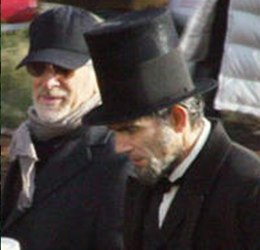
No one really doubted that Steven Spielberg’s long-gestating, class-AA historical biopic Lincoln wouldn’t land a release date in the middle of Oscar season. But with Disney announcing today that it will release the Daniel Day-Lewis-starring, Tony Kushner-written film in limited release on Nov. 9 — three days after Election Day — the studio has situated Lincoln in a zone ripe for hype. I mean, it’s not as though candidates, voters and pundits are going to spend much time contextualizing this year’s election against the political and historic implications of Skyfall (also opening Nov. 9) or The Twilight Saga: Breaking Dawn – Part 2 (against which Lincoln will compete in wide release one week later on Nov. 16). This makes the 16th president as relevant as ever among a polarized culture endlessly yearning to claim him for one side or another — Republican saint, the Great Emancipator, you name it. What story will Spielberg and Co. tell? How can we make the presidency great again? Tune in at 7, only on FoxSNBCNN to find out… Etc. etc. At least we won’t have to wonder which shadowy PAC is paying for the TV spots — which , we should not overlook, will provide many welcome 30-second respites between all the October mudslinging to come. Thanks, Disney. And well-played. [ Deadline ]
About dayum time!!! Congratulations ! Rev. Fred Luter Jr. is set to become the first African American president of the nation’s largest Protestant denomination organization when convention delegates vote next week in New Orleans. It’s a big step for a denomination that was formed out of a pre-Civil War split with northern Baptists over slavery and for much of the last century had a reputation for supporting segregation. In recent years, faced with growing diversity in America and declining membership in its churches, the denomination has made a sincere effort to distance itself from that past. Many Southern Baptists believe the charming and charismatic Luter is the man who can lead them forward. Many Southern Baptist leaders, when speaking of Luter, mention how respected he is for his determination to stay in New Orleans after Hurricane Katrina hit in 2005, destroying Franklin Avenue and scattering its members. Luter said the disaster shook his faith and he didn’t know at first if the church could recover. A photograph from that time shows Luter on a helicopter tour of the city, wiping tears from his eyes as he gazed at the flooded buildings and vans of his church. He told the Baptist Press the tragedy showed him that “life is like a vapor on this side of eternity. What you have today could be gone tomorrow. You can’t put your trust in earthly things.” As David Crosby, of First Baptist New Orleans, puts it: “It’s such a note of grace and favor from God that a man of this caliber would step forward to become the first African-American president of the SBC.” This sounds nice and all, but we have a couple of questions that need to be addressed. If he is elected, do you think it will have less to do with his qualifications, and more to do with demonstrating how the new Southern Baptists aren’t racists? Similar to how Michael Steele was elected head of the RNC right after Obama’s election. We support the organization “turning a new leaf” but we have to question the timing and motives behind the election. Just sayin’.
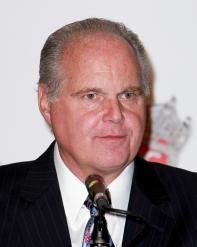
Rush Limbaugh, asserting that President Barack Obama spends too much time courting celebrities for campaign cash and endorsements during times of financial hardship for average Americans, referred to him as “Barack Kardashian.” The White House responded in kind. “Two words: Donald Trump. Next question,” said Obama’s press secretary, Jay Carney, when asked about Limbaugh’s most recent ridicule of his boss. Trump, an outspoken supporter of Mitt Romney, has become a foil for Obama since he started fueling “birther” claims that Obama was born overseas. Carney’s comments aboard Air Force One came as Obama jetted to California for a set of fundraisers, one at the home of Glee creator Ryan Murphy. Obama’s re-election bid has also harnessed the power of celebrities like Sarah Jessica Parker , George Clooney and Jon Bon Jovi, among many others. On Tuesday, Limbaugh hammered Obama’s celebrity connections, highlighting his 2012 campaign’s latest ad, starring Vogue editor Anna Wintour: “It’s an indication once again how out of touch they really are, how distanced they have become from the people who make this country work.” “It’s an indication of what they think the strong drawing power of the presidency is. I’ll tell you that’s what’s becoming. He’s Barack Kardashian.” “He is becoming the male Kim Kardashian with this stuff,” Limbaugh said. SIDE NOTE: Obama has said that he doesn’t let his daughters watch the Kardashians, and also famously called Kanye West a jackass . Just saying. SIDE NOTE #2 : Kim’s management team has yet to fire off a vapid Tweet about this, followed by a plug for some lame product. But give it an hour. Asked if the president might be sending the wrong message, Carney said Obama’s millions of mostly unknown small donors reflect his true nature. “The difference between President Obama’s support, financial support, and his opponent’s is stark, but not in the way that you describe,” he said. “The fundamental difference is President Obama has vast numbers of small donors who support him. That is not the case for the Republican nominee.” “The fact that the president enjoys that kind of support speaks to what his policy priorities are. He’s out there fighting for the middle class.” “The bedrock foundation of his support are millions of Americans who believe in his vision for this country’s future and believe that he has their back.” As for whether Obama is actually a fan of Murphy and Glee , Carney deferred. “I don’t know the answer to your question,” he said, unamused. If the election were held today, for whom would you vote?
Politics lurched to the forefront Tuesday in Cannes as director Andrew Dominik’s Killing Them Softly took its turn as the spotlighted world premiere here. But this isn’t just any world premiere: This one featured Brad Pitt, who manages to still excite even some otherwise jaded festival attendees. Mobs climbed over each other as the actor entered and exited the morning press conference for his new film about a group of criminals and mobsters vying for self-interest. One can only choose which bad guy to root for. Based on George V. Higgins’ ’70s-era novel Cogan’s Trade , Dominik adapted the story, setting his mob-infused drama against the backdrop of the economic crisis and the election of President Obama in 2008. “What I liked about the book was that it had great characters,” said Dominik, who previously directed Pitt in The Assassination of Jesse James by the Coward Robert Ford in 2007. “But when I was adapting it, I realized it was a book about economic crisis. I always feel crime films are about capitalism. All the characters are motivated by money only, and I realized also that people in America are concerned about money – and people in Hollywood are motivated by that… I was.” Brad Pitt plays Cogan, a pragmatic hit man whose job is to whack armed robbers who held up a gambling session packed with mobsters. Frankie (Scoot McNairy) and Johnny (Vincent Curatola) pull off the heist in a dingy back room brimming with scowling gangsters. Though a messy job, they manage to take off with the loot, humiliating their otherwise intimidating victims. “[While] reading this story, I realized it is a commentary on the times now, the foreclosure debacle and the economic crisis,” said Pitt, who also serves as a producer on the film. “It wasn’t until the end of the story that I saw it was in fact a microcosm of what’s happening now as a [manifestation] of the macro world.” As with John Hillcoat’s Lawless , which premiered here Saturday, the use of violence – and there certainly is a good amount of it in Killing Them Softly – became a momentary hot topic in the packed press conference with both Dominik and Pitt defending it as necessary and a reflection of society generally. “I don’t understand the obsession with violence,” Dominik said. “It’s like people who don’t want to show children fairy tales. But fairy tales dramatize children’s concerns and emotions.” Added Pitt: “Violence is an accepted part of the gangster world. It’s an accepted possibility when dealing in crime. I’d have a much harder problem playing a racist for instance than, say, shooting someone right in the face.” Continuing, Pitt related violence to everyday life and perhaps inadvertently ushered in 10 minutes of conversation about politics and even his personal life — some of which is bound to generate standalone headlines including rumors about his marriage, how he is likely to vote and even gay marriage. “We live in such a violent world,” he said. “I grew up hunting. If you have a hamburger… Have you seen how they butcher a cow? It’s so violent, it’s morbid. It’s part of the everyday. So violence has a place in film. I don’t see a world without it.” Pitt’s character in the film, which drew early mixed reactions here today, is centered on self-interest. He doesn’t particularly crave violence, but uses it as a means to an end. He’s not bloodthirsty nor does he particularly find murder palatable, but he’s willing to do it as painlessly as possible in order to get ahead. “It’s a metaphor for business — it’s cutthroat but has to be done,” he said. “I’d love someone to develop a documentary about what makes a Democrat or a Republican,” Pitt added. “How do people vote against their own self-interest? I lean Democrat and to the left, but I am interested in how all people think.” At one point, the conversation meandered way off the Killing Them Softly script and the titillating subject of Pitt’s pending marriage to Angelina Jolie came out. He said there is no truth to the rumors that they’ve set a date, but a wedding is in the future, but added, “I’m still hoping we’ll figure out the marriage equality situation in the States before that happens.” Pitt had said some years ago he and Jolie would marry once gays were allowed to be married. He also said they’d “love to do a movie together again sometime.” Despite the film’s not-so-subtle metaphors about the economic crisis and President Obama’s election, Dominik and Pitt said its planned Stateside rollout this September had nothing to do with the pending fall presidential campaign in the US. Pitt did, however, take a jab at the financial fallout that began in ’08 — as well as those responsible: “The economic crisis was criminal, by the way, and there have been no repercussions from that criminality.” Read more of Movieline’s Cannes 2012 coverage here .
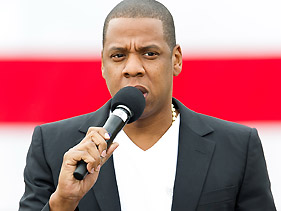
Made in America festival curator says, ‘What people do in their own homes is their business, and you can choose to love whoever you love.’ By Jocelyn Vena Jay-Z Photo: Gilbert Carrasquillo/ Getty Images Jay-Z has long backed President Obama, and after last week’s headline-making news that Obama supports same-sex marriage , the hip-hop mogul is applauding the president for breaking new ground and helping bring progress in the gay-rights movement. “I’ve always thought it as something that was still holding the country back,” Jay-Z told CNN in Philadelphia, where he announced the launch of the Made in America festival . “What people do in their own homes is their business, and you can choose to love whoever you love. That’s their business. It’s no different than discriminating against blacks. It’s discrimination, plain and simple.” Asked whether the declaration would cost Obama votes among religious African-Americans in his re-election bid, Hov said, “It’s really not about votes. It’s about people,” adding, “I think it’s the right thing to do as a human being.” Jay is hardly the first celebrity to come out in support of Obama’s comments. Everyone from “Jersey Shore” stars Snooki and JWoww to “Vampire Diaries” actress Nina Dobrev and boy banders the Wanted have all backed Obama. “It was definitely happy news, but I almost don’t want to applaud him too much, because I wish he would have done this a long time ago,” Perez Hilton told MTV News. “Having said that, it’s better that he did it than not. He could have waited until after the election. However, it’s clearly a calculated move in that he felt confident that this won’t hurt his chances at getting re-elected, and that’s why he did it.” Share your thoughts on this story in the comments below! Related Artists Jay-Z







 Breaking Sports Video