Tag Archives: entertainment media

‘The Other Guys’ Uses Michael Moore Tactics to Vilify CEOs, Investors, Wall Street

When the credits are the most intriguing part of the movie, there’s a problem. In the new film “The Other Guys,” starring Mark Wahlberg and Will Ferrell, two mismatched cops try to make a name for themselves by investigating a potential Ponzi scheme run by a corrupt investor. The villain is a pseudo-Bernie Madoff but rather than vilifying a single fraud, director Adam McKay (“Anchorman,” “Step Brothers”) lumped all investors together and attacked Wall Street as a whole. “The Other Guys” is a funny but not hilarious movie for 1 hour and 47 minutes but instead of simply rolling the credits and letting viewers leave smiling, McKay followed with graphics criticizing Wall Street and corporate executives. It was almost as if Michael Moore filmed the closing credits, as graphics included the anatomy of a Ponzi scheme, the ratio of CEO to employee salaries, a comparison of the New York Police Department’s pension fund to an average CEO’s pension fund, an average worker’s 401(k) account compared to a CEO’s, and the amount of taxes Goldman Sachs paid after the bailout. While the credits provided the most egregious anti-business attacks, there were other subtle pokes at business and Republicans within the film. For example, the villain, named David Ershon (whose last name rhymes eerily with ‘Enron’), is seen in a photograph with former President George W. Bush and is said to be friends with conservative Supreme Court Justice Antonin Scalia. Other chides included Ershon stealing from both the lottery and the NYPD pension fund — essentially stealing money from the state and a labor union — and the villains’ drive SUV’s while the heroes drive a Toyota Prius. The film grossed $35.5 million its opening weekend and has been a hit with film critics in the liberal media. According to  rottentomatoes.com , “The Other Guys” has a 77 percent “fresh” rating from critics, with The Washington Post giving it a B and Entertainment Weekly giving it an A-. Of course, the film reviewers have reveled in the anti-Wall Street message, such as Entertainment Weekly’s Owen Gleiberman: “A Wall Street villain (Steve Coogan) who embodies the sins of our time with a relative absence of cheek.” A.O. Scott, film critic for The New York Times, was disappointed by the “tease” of the end credits and pined for a stronger attack: “It may be that no team can humble the unrepentant fat cats of the financial sector, but it would be nice to give Mr. Ferrell and Mr. Wahlberg a shot.” In a way, Scott is correct: the film would have been a fun, goofy movie but the end credits suggested something more. It was almost as if McKay was adamant about attacking Wall Street but wasn’t confident that the film’s plot executed his attack, so he included the graphics at the end to reinforce his message. Given that McKay is a guest blogger for The Huffington Post and Ferrell’s history of impersonating Bush, another Hollywood film with a liberal agenda shouldn’t be a surprise. As the Business & Media Institute noted, TV characters are  21 times more likely to be killed by a businessman than the mob , and  50 percent of the villains  in 2005’s Oscar-nominated movies were businessmen. However, these movies relied on their plots and characters to promote their liberal agendas rather than colorful graphics over the end credits. Like this article? Then sign up for our newsletter,   The Balance Sheet .

‘The Lottery’ Exposes Truth About Public Schools

The children eager to attend Harlem Success Academies don’t care about partisan politics or ideological turf wars. They just want the best education possible. “ The Lottery ,” a new documentary by Madeleine Sackler, showcases families desperate for an alternative to the New York Public School system. The film, playing an exclusive engagement through July 15 at the Starz FilmCenter in Denver , follows four such families who enter a lottery system so their children can attend a prestigious charter school. Strip away the interpersonal dynamics and you’ll find a full-throated argument on behalf of charter schools. And those who think only Republicans support school choice measures will be surprised to see a large  number of Democrats eager to give charter schools a try. It’s an alternately fascinating and maddening film experience, and Sackler delivers the material with an elegant touch. It’s also a must-see for parents with school-age children – or just taxpayers saddened at the thought of children not reaching their potential. The families included here put a human face on the issue, but the film would be better served if we got to know them a little better. The quick glimpses at their lives – and dreams – tell us just enough about the stakes at play. Sackler intersperses sobering statistics throughout her film, showing how the charter schools in question offers a major upgrade from the status quo. But the film’s twin highlights come when Eva Moskowitz, the articulate founder of Harlem Success Academies, takes on her critics at two public forums. Viewers may lunge for their blood pressure meds as union lackeys play fast and loose with the facts, and double down on the race card, in order to defend a broken system. “The Lottery” is the second recent documentary to slam teachers unions. “The Cartel” examined New Jersey’s disgraceful public school system, blaming unions for much of the waste and horrific grades. “Waiting for Superman,” another documentary trumpeting the need for educational reform, will be released this fall. It’s hardly an accident. Parents are fed up with the sorry state of modern education and see school choice as a possible way out. And documentary filmmakers are following suit. “The Lottery” doesn’t traffic in the bait-and-switch stylings of a Michael Moore opus, but it’s still a one-sided affair. It isn’t entirely Sackler’s fault. The director recently told this critic she tried – and tried – to include union backers in the film for an entire year. But those sources refused to participate. Still, more neutral education experts might have added context to the arguments on display. And while Moskowitz is an ideal spokeswoman for the charter system, she’s given too much screen time given her intimate connection to the school in question. “The Lottery” is the kind of film that could very well change some stubborn hearts and minds. Political ideology – and knee-jerk sympathies – fall aside when you see families crying in relief as their names are plucked from “The Lottery.” Crossposted at Big Hollywood

View original post here:
‘The Lottery’ Exposes Truth About Public Schools

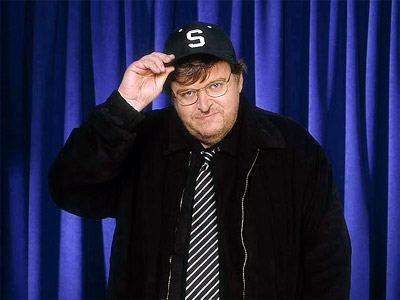
Michael Moore’s New Job: Oscar Board Member

Deadline Hollywood Daily’s Editor-In-Chief Nikki Finke has declared a Red State Alert over the news that documentary filmmaker and Oscar-winner Michael Moore has just been elected to the Academy of Motion Picture Arts and Sciences’ Board of Governors. She writes, Hollywood-hating conservatives are going to have a field day with this (And predictably the L.A. Times’ Patrick Goldstein knee-jerks with this: You could hear the outcry in conservative quarters from a million miles away.) If for no other reason than she saves me from having to spend money on a “Variety” subscription, I love Nikki, but this conservative has no problem whatsoever with Michael Moore being elected to the Academy’s prestigious Board of Governors, because this conservative believes Michael Moore has earned it. Yes, Michael Moore is a liar, a shameless propagandist and an anti-American leftist of the highest order. But he’s also one helluva talented filmmaker and it would be wildly hypocritical for me to believe or argue that anyone should be blacklisted from AMPAS due to their political beliefs. And that’s the only reason I could possibly use to argue against this appointment. In the medium of documentary filmmaking, Michael Moore is one of the very best at what he does, no more or less accomplished than Kathryn Bigelow, who was also elected this year. No more or less accomplished than the other Governors. We Hollywood-hating conservatives are not the ones looking to hold people back based on their political beliefs. If I have an argument with AMPAS it’s not that they should blacklist Michael Moore, it’s why not elect Jerry Bruckheimer, Jon Voight, Michael Moriarty, or Robert Davi to this board? For they are also no more or less accomplished than many of the others. I’m sorry to disappoint those looking for outrage over Michael Moore’s new gig, but we’re not the blacklisters here. I despise everything Moore stands for just as much as the Left surely despises everything Jon Voight stands for. But a blacklist is a blacklist is a blacklist. Big Hollywood will fight Moore in the arena of ideas and expose him as the liar he is any day of the week, and relish it. But my frustration with his agitprop – especially the fact that he’s good at it – isn’t about to turn me into what disgusts me. Crossposted at Big Hollywood .

Here is the original post:
Michael Moore’s New Job: Oscar Board Member