Jesse Eisenberg landed an Oscar nomination for his portrayal of Mark Zuckerberg in The Social Network and most recently, he is a love-sick architect opposite Alec Baldwin in Woody Allen’s To Rome with Love . Next up, the young star plays a piano prodigy who tries to check his mother (played by Oscar-winner Melissa Leo) into rehab. Things, however, go awry when he is taken hostage by her drug dealer (hate when that happens) and he is suddenly off on a wild adventure. The film was formerly titled Predisposed when it debuted at the Sundance Film Festival earlier this year. Despite the obvious that’s revealed in the trailer – namely the aforementioned mother who is hooked on drugs and a kidnapping by a drug dealer, the film appears to have some laughs. Phil Dorling and Ron Nyswanner co-direct the film and wrote the screenplay. IFC Films will release the film August 17th.
The unofficial and slightly bizarre-sounding Raging Bull II sequel may be currently filming , but that will be moot if original Raging Bull studio MGM gets its way in a lawsuit filed this week. Claiming breach of contract over a 1976 agreement signed by boxer Jake LaMotta, MGM claims they had first offer-rights to any sequels to the Martin Scorsese classic — and since the makers of Raging Bull II are billing the pic as a sequel (the numeric title is hard to argue around), the studio is crying foul. If MGM has its way, not only will the film never see release, its makers could face compensatory damages of an amount intended to deter future imitators. Could this be the end of Raging Bull II and similar faux-sequels? Developing… [ Deadline ]
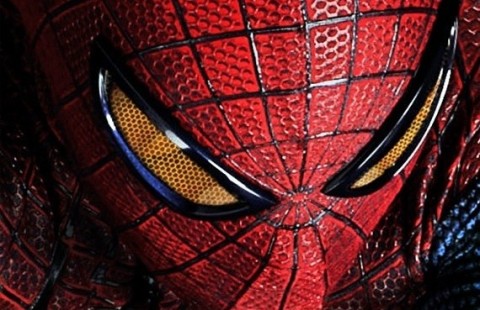
The feature starring Andrew Garfield as Spider-Man pounced the box office, earning $35 million in its first day of release in the U.S. including $7.5 million in midnight screenings. The figure is the biggest Tuesday ever, outpacing Transformers , which took in $27.8 million on a Tuesday back in July of 2007. That film went on to gross over $155 million in its first six days. IMAX netted $4 million of Tuesday’s $35 million record gross, now easily the biggest Tuesday debut of all time.. Of the $7.5 million taken in at midnight screenings, IMAX grossed an impressive $1.2 million from 300 screens for a $4,000 screen average. The 3-D The Amazing Spider-Man opened at 4,318 theaters in the U.S. Overseas, it has grossed $50.2 million for a worldwide total of about $85.2 million, according to the latest figures. [Source: Hollywood.com and Box Office Mojo ]
“Katy tells us that it’s okay to stand out,” one of pneumatic pop star Katy Perry’s disciples intones at the beginning of Katy Perry: Part of Me 3D , a shiny, brightly colored piece of fan candy that follows the performer as she embarks on her 2011 world tour. Also the Word of Katy: “How could you ever be too cartoon-y?” The latter, exclaimed as Perry’s being fitted into one of her Jetsons concession girl costumes, is a baldly rhetorical question. Somewhere in between those two lines of pop scripture lies the explanation for the only female artist to eke five number-one hits from a single album, her 2010 record Teenage Dream . Do we still talk in terms of albums? The record-keepers do, anyway, still bound by the standards of the past. And Perry, the daughter of born-again evangelists (her father’s aging rock god outfit makes more sense upon learning that he used to cook up LSD; no trace of her mother’s romantic history with Jimi Hendrix remains), likes to play with a retro look. But she is an unmistakably modern creation, as the brand-conscious Part of Me confirms, beginning with the webcam testimonials from fans about the realness and relatability of their heroine that segue to an 18-year-old Katy earnestly confiding into her own laptop. Except the teenage Katy, as though guided by shivering foreknowledge of this exact moment, expresses her desire to be a leader, and her doubts about taking on “all those responsibilities.” Madonna was 25 when Dick Clark got her to blurt out her plan “to rule the world.” Perry has cited pop music’s great survivor as an influence, but I couldn’t watch Part of Me without thinking of how thinly it compares to Madonna: Truth or Dare , a backstage concert film that documents the singer at the peak of world domination. Madonna the road-mother, Madonna the hardass, Madonna the cut-up, Madonna the boyfriend emasculator, Madonna the “even when I feel like shit they love me” fan mocker, Madonna the incandescent performer who terrifies her followers as often as she transfixes them. I became a Madonna fan as a little girl; I could still dance the entire Blonde Ambition tour if I had to, like, save the world. Not that I’ve envisioned such a scenario. But then as now I would have chewed through my own wrist to avoid an encounter with the star, and the idea of relating to Madonna in some sisterly or otherwise pals-y way feels universe-invertingly wrong. Part of Me works hard to establish that Katy Perry is just like you and me. At the same time, her coterie (including an assistant as well as costume and make-up teams) assure us that Perry deserves her fame. She’s a good person from Santa Barbara who charmed even the Cobra Snake (a louche nightlife photographer) when she lit out for Los Angeles with a few bikinis, zero bibles, and a dream. Small doubts are seeded through the introductory interviews – can she handle a tour this big? – and even her manager expresses surprise at her success. There’s a glaze to the talking head segments familiar from any number of MTV or VH-1 artist infomercials. The concert footage (from shows staged around the world) is meant to showcase the 3-D presentation; there are dancers bouncing around and some fleet camerawork, but the laser light effects make the best use of it. Reality TV figureheads and first-time directors Dan Cutforth and Jane Lipsitz produced last year’s wildly successful Justin Bieber: Never Say Never . The same formula of gifting a fan-made star back to the people is followed, but Cutforth and Lipsitz never ascend to a moment of kitsch ecstasy on par with Bieber’s slow-mo signature lid shimmy. Perry is no dancer and not much of a mover; she’s a more mannequin-ish presence, but an energizer mannequin, expressive and ever connecting. Her cabaret rendition of “I Kissed a Girl” has unprocessed flair, and a witty quick-change number sparks an absolute shitfit in the stands. Her solid and unsurprising voice sounds solid and unsurprising, but with any production as slick as this one – where personality is prized over performance – it’s hard to know what you’re getting. Unlike Bieber, Perry had several close encounters with the big time. We learn of her various blighted record deals and studio makeovers (Perry tried everything from gospel to country to angry-girl rock) and get a small sense of her musicianship. Then, in a preposterous sequence, the story of her professional bottom (involving a botched partnership with pop gurus The Matrix) is crosscut with a bondage number in which Katy wails about being held hostage. After that, we are told, Perry decided to just be herself, and the rest is chart and bullet-bra-busting history. And who is that? What can you say about someone whose real self resembles a marzipan anime character? Well, she’s a goofball and a charmer, to start. She’s sweet with fans and an everygirl champ with her crew. She’s in every way devoted to the job of being Katy Perry, and the state of her marriage to comedian Russell Brand soon replaces the “can she hack it?” storyline. Or maybe it’s another stem of the same storyline. “A baby can’t have a baby,” she pronounces after Brand texts her possible names for their kids. “And I’m still a baby.” Background drama builds to a meltdown in Brazil, the show goes dramatically on, and the split is reframed as a feminist conundrum: The baby wants to work. Despite this careful (and successful) depiction of a warm and decent person, Perry the pop star remains stubbornly two-dimensional. She’s a sexless sex symbol, too girlish to be a girl, and her crack about being a cartoon feels critical to her anodyne appeal. Perry might sing about seeing your peacock and cover the front rows in whipped cream shot out of a two-foot canister, but it couldn’t be more congenial or less erotic. Only an extreme fetishist could actually get off on her shtick; for the rest of us, especially her adoring tween army of fans, she’s a human Pez dispenser barking out candy-covered platitudes. Even her much-feted boobs seem friendly. Beckoning from behind them is the strangely modern conception of pop stardom, one that derives its powerful hold on (largely young, female) fans from the promise that if you can’t live the cupcake dream, Katy Perry will gladly live it for you. Follow Michelle Orange on Twitter . Follow Movieline on Twitter .
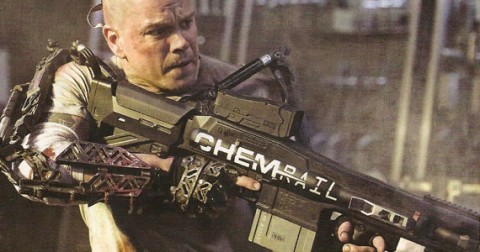
The first image of the mysterious Elysium has made its way onto the Internet and a smooth skulled Matt Damon sporting a severe weapon and futuristic bric-a-brac are revealed. Director Neill Blomkamp received an Oscar nomination for Best Screenplay for District 9 in 2010, which made over $115 million in the U.S. alone. Not bad for a feature directorial debut and no doubt a pass to move onto bigger and brighter things. The image, which came via The Playlist is reminiscent of District 9 weaponry. Sony said the sci-fi pic will be part of their presentation at Comic-Con. But, is it just me or does this image of Matt Damon make him look eerily similar to a notorious Dutch man currently sitting in a Peruvian prison? Joran van der Sloot looks like he could be a double for Damon in this pic if one just gave him some weapons (or maybe not a good idea), a tan shirt and some robotic attachments… Pardon the digress. Elysium also stars Jodie Foster, Sharlto Copley, William Fichtner, Alice Braga, Diego Luna and Wagner Moura and is slated to open next March. Set in 2159, a wealthy elite live on a man-made space station, while everyone else lives on a ruined Earth. It is one man’s mission (Damon) to bring back equality to the divergent worlds. [Source: Screenrant via The Playlist ]
The rich, F. Scott Fitzgerald famously (and much overabusedly) wrote, “are different from you and me,” and Crazy Eyes tests just how much an audience will be able to care about their problems despite this fact. Wealth isn’t the explicit topic of the film, but it colors everything about it, from the swank house in the hills in which Zach (Lukas Haas) lives to the women who trail after him with dollar signs in their eyes to the way that he seems to have nothing to fill his time with except alcohol. The privilege isn’t the problem so much as how it has shaped our protagonist — a self-absorbed, self-pitying Los Angeles asshole who happens to be in a self-destructive phase. The motivating factor of the film is Zach’s pursuit of something, for once, he isn’t easily able to have — Rebecca (Madeline Zima), to whom he’s given the nickname “Crazy Eyes,” a girl who’ll drink herself into oblivion at his side but who won’t sleep with him. Crazy Eyes is the third directorial effort from Adam Sherman, and is, like his 2010 Happiness Runs , based on his own personal experiences, suggesting he either has a staggering sense of self-laceration or a just as noteworthy lack of awareness about audience empathy. The close of the film would seem to indicate the latter, as it finds Zach murmuring in his periodic noir-style voiceover that “I could tell you pleasing details, like maybe I quit drinking or ended up with a beautiful girl, but I don’t feel like telling you stuff like that, because if I told, and it was true, then I’d probably mess it up like everything else.” Until that point, the film has done so little to make you hope for or invest in any way in Zach’s redemption that the moment is eyebrow-raising — were we supposed to be rooting for this jerk the entire time? Zach’s malaise is due in part to his recent divorce and in part to some lingering parental resentment. Between bouts with booze we see him neglect his adorable, lisping urchin of a son and deal with his folks as his father (Ray Wise) tries to recover from a stroke. His days bleed into his nights in a slurry series of drunk scenes blending into bleary daylight — one thing Crazy Eyes does do well is to offer a feel for the elasticity of time when you’re in the middle of a bender, the messy burnt ends of disastrous evenings followed by the characters groaningly waking up in the late afternoon with little sense of mooring (“Oh, man, is it the weekend?” Zach asks, dismayed, when he pulls up to an art exhibit on a date and sees the length of the line outside). We never see where Zach met Rebecca, but at first she’s not even at the top of his list of girls to call when he wants company for the evening. She gets Zach’s attention by refusing it — by letting him take her back to his home and then pushing him away when he tries to make a move on her, saying that she has a boyfriend. This pattern comes to define their relationship, as do attempts at what Zach fondly refers to as a “struggle-fuck.” She comes over and often ends up in Zach’s bed, but his attempts at anything physical generally end, unpleasantly, with her fighting him off, sometimes violently. Despite Zach’s name for her, how crazy Rebecca actually is is something of an open question. The film is a measure of Zach’s subjective experience, from his narration to the way it visually echoes his less-than-sober outlook with jittery editing and close camerawork, and so presumably she’s being seen through his biased personal filter, as is his snippy ex-wife (Moran Atias), “lingerie designer” Autumn (Tania Raymonde) and the girl in New York (Regine Nehy) who keeps calling him to profess her love and insist “I just want your dick so bad it hurts.” All the women in Zach’s world are beautiful and want his money, and Rebecca is something of an anomaly because she resists, though we start to feel this may be part of a calculated game for her to keep him in the chase. Sherman co-wrote Crazy Eyes with Rachel Hardisty, the real-life inspiration for Rebecca, along with Dave Reeves, who’s presumably the rough equivalent to Zach’s bartending/coke-dealing best friend Dan (Jake Busey) — another relationship based, at least in part, on an underlying monetary enticement. The film seems to aim for a gritty and real depiction of a drug- and drink-fueled not-quite romance, but it’s in fact just your worst fears about the kinds of people who populate L.A. brought to ugly, misogynistic and sometimes maudlin life. “You’re a rich asshole with no feelings — you don’t even know what it’s like to struggle!” Rebecca yells at Zach right after we’ve seen him get, and not share with her, terrible news about his family. But it doesn’t feel like she’s wrong — it’s all just fodder for his eventual movie. Follow Alison Willmore on Twitter . Follow Movieline on Twitter .
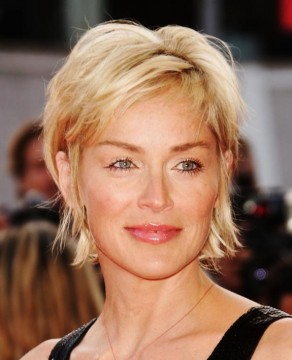
Also in Tuesday afternoon’s round up of news briefs, Susan Sarandon will lend her voice to an R-rated stop-motion comedy; Marvel moves the dates of its untitled 2014 super-hero juggernaut and Hollywood production stays flat. Sharon Stone Joins Mother’s Day She joins Andie MacDowell and her real-life daughter who joined recently . Fittingly, the film is about the relationship between 12 mothers and their daughters, Deadline reports . Susan Sarandon Joins Hell & Back Sarandon will voice the role of Barb the Angel in the R-rated stop-motion comedy. The pic stars Nick Swardson and TJ Miller as friends who go down to rescue their pal who was accidentally dragged to hell, Deadline reports . The Complete Comic-Con Party Grid Parties, exhibitions, band performances, major geek-out sessions. They’re allegedly all here with times and locations nicely organized into a grid. Go get ’em. The Tracking Board has the info . Marvel Moves Untitled 2014 Superhero Pic from May to August Details about the project will be unveiled at the upcoming Comic-Con in San Diego. It is believed to The Guardians of the Galaxy , THR reports . Hollywood Production Flat with TV Decline A 9.1% increase in features and a 28% gain in commercial activity augmented a 15.4% drop in TV production in Los Angeles in the second quarter. Advocacy group FilmL.A. blamed state government for the decline in TV production, Variety reports .
Like many other feminist moviegoers, I was more than a little disappointed that Pixar’s long-awaited first female protagonist, Brave ’s Merida, is a princess. But what’s striking, even astonishing, about Brave ‘s treatment of princessdom is its historical honesty; even though Merida convinces her parents to abolish the tradition of arranged marriage, the film’s resolution essentially has our heroine accepting that she has to get married and that her nuptials will be used as a bond between rival clans. (Score one for the patriarchy.) Brave can boast some narrative complexity, if not much feminist bona fides, for having Merida occupy the role that real-life princesses have held for most of history — as insurance against war. This gloomy take on the purpose of royal females aligns Brave more closely with HBO’s medieval misery-fest Game of Thrones than with any other Disney princess movie that’s come before. The anti-princess backlash is nothing new. For decades, cultural critics have been decrying princess movies for overvaluing qualities like beauty, passivity, and femininity, not to mention wealth and social privilege. The studios have made some grudging concessions in recent years: heroines still wear crowns, but they also have more guts. The Guardian’s Jaclyn Friedman recently named this new trend of royal female ferociousness the rise of the “Action Princesses,” specifically citing Snow White and the Huntsman and Brave , though Tangled ’s Rapunzel would also qualify. These films, in which princesses are bold, beautiful, and betrothed, serve as a kind of “you can have it all” message for the 14-and-under set. Unlike Tangled , though, which merely offers a pluckier-than-usual heroine, Brave and Snow White and the Huntsman represent a more radical response to the anti-princess backlash. They feature princess protagonists, but offer serious critiques of the institution of princessdom — highlighting in particular its dangers. Nowhere has that been argument been more emphatically made than in Game of Thrones , which could virtually qualify as anti-princessdom propaganda. Virtually all of Daenerys Targaryen’s (Emilia Clarke) troubles, for example, are a result of her royal lineage. Sold to a stranger by her brother as a teenager, the “mother of dragons” gained autonomy in her initially dehumanizing marriage, but remains exiled from her homeland after two seasons for her royal blood. Even more devastating is the plight of Sansa (Sophie Turner), a wannabe princess, who quickly discovers that life as a royal daughter-in-law would be an endless parade of humiliations and empty rituals — even if her would-be hubby weren’t the most evil character ever. Likewise, take Snow White and the Huntsman , in which the fairy-tale princess (Kristen Stewart) is doomed to imprisonment for her claim to the throne. For all these characters, being a princess confers uniqueness, but no privilege; it’s a liability, if not a customized bull’s-eye target. Interestingly, it’s no longer just cultural critics decrying the uniform blah-ness of princess narratives, but the cultural products themselves. By learning how to throw a punch and ride horses into combat, princesses win battles, but lose the war for narrative sophistication. After all, princesses may be less passive these days, but they continue to be morally unassailable. So while Snow White fights her usurping stepmother Ravenna (Charlize Theron) for the throne, the queen successfully launches a campaign to seize the hearts and minds, or at least the attention, of audiences. Ravenna doesn’t steal the movie because the actress playing her chews up the scenery more conspicuously than her younger co-star (though that doesn’t hurt), but because she’s a much more interesting and developed character than the “pure,” virginal Snow White. Not insignificantly, Ravenna gets as much screen time as Snow White, and the tragic nature of her back story rivals her stepdaughter’s; her thirst for power is born from a justified hatred of men in power, and her capture of the crown at the beginning of the film is actually easy to root for. The psychologically damaged and perpetually obsessed nature of Ravenna’s character makes her the female counterpart to the ethically perplexed antiheroes that are the de rigueur protagonists of cable dramas, like Mad Men ’s Don Draper or Breaking Bad ’s Walter White. Snow White and the Huntsman is far from the only example of princess movies receiving the Wicked treatment. Mirror Mirror , for example, tells the same tale from the POV of Queen Julia Roberts, who commandeers the film’s voiceover narration. And the anti-princess take will continue in 2014’s Maleficent , which will star a horned Angelina Jolie as the villainess of Sleeping Beauty . The appeal of these fairy-tale rewrites is, of course, the reorientation of sympathies. For example, the ability to understand, if not necessarily root for, the queen makes clear the audience’s fallacious identification with the princess. After a while, it seems eminently more reasonable to identify with Ravenna than Snow White, since she’s the one who more traditionally follows the hero’s path: a commoner with talent (in this case, beauty) who ventures into a strange land (the bizarro-universe of the aristocracy) and overcomes a weaker antagonist (the lovestruck king) to claim victory. Princess movies will be with us for a time yet, but it’s wonderful to see that even if princesses aren’t growing up, the movies about them certainly are. Now, if only we could convince studios that girls’ lives and experiences matter even if they don’t live in castles… Inkoo Kang is a Boston-based film journalist and regular contributor to BoxOffice Magazine whose work has appeared in Pop Matters and Screen Junkies . She reviews stuff she hates, likes, and hate-likes on her blog THINK-O-VISION .
Oliver Stone is certainly not afraid to court controversy. The two-time Oscar winner raised eyebrows with a sympathetic portrayal of Fidel Castro in his 2003 documentary Comandante , a less than sympathetic look at former President George W. Bush in W. and a positive chronicle of Latin America’s left-leaning presidents in 2009’s South of the Border and he’s long been outspoken on issues that win praise from the hard left and venom from the right. On the eve of his latest star-driven bigger budget release, Savages , Stone graced the cover of High Times magazine and over the weekend spoke of his own drug use, how it helped him through Vietnam as a twice-wounded soldier, and about his new movie opening Friday. In an interview with CBS This Morning Stone spoke sympathetically toward marijuana, which is at the center of his latest feature, and which he used while doing two tours of duty during the Vietnam War. “When I was in Vietnam, [pot] made the difference between being human and being a beast,” he said. “There were a lot of guys who were drinking and doing a lot of the killing that was so unnecessary and raping. The guys who did dope were much more conscious of the value of life.” Stone said he had served well, was a “good soldier” and added, “I wasn’t a slouch.” His latest crime-thriller is based on a novel of the same name by Don Winslow. Starring Taylor Kitsch, Aaron Johnson, Blake Lively, Salma Hayek, Benicio del Toro and John Travolta, the story revolves around two California marijuana growers who share a girlfriend who is kidnapped. The pair (Johnson and Kitsch) are then faced with confronting a Mexican drug cartel lead by Elena Sanchez (Hayek) and Miguel (del Toro) to rescue her. “I like power [stories], I like people who do the cat and mouse game,” Stone said. “You never get what you expect and that’s like life.” In order to prep for the film, Stone headed south of the border to get a proper feel for some real-life figures in the drug underworld. “Benicio and I hung out with some pretty heavy people on the other side of the border,” he said. “Don Winslow knows that world because he’s written other books about the subject.” Stone noted that “thank God” the cartels have so far had a limited role in cannabis growing in California since it’s still a comparatively small business vs. their much bigger and violent operations, but added: “Like California wine, the stuff being grown there is very high in its potency.” [Source: CBS This Morning ]
In Monday afternoon’s round up of news briefs, a network has bought the television rights to foul-mouthed teddy bear comedy Ted . Mirren appeals for more female filmmakers at the Karlovy Vary International Film Festival. Andie MacDowell and daughter join a project, and Paramount is pursuing a U.S. version of Inbetweeners . FX Picks Up TV Rights to Ted The network will premiere the Seth MacFarlane-directed comedy that make $52 million at the box office this weekend, Deadline reports . Craig Gillespie Catching Flamingo Thief Gillespie is in negotiations to direct Red Hour Films’ Flamingo Thief which Will Ferrell will likely star. He will play a lawyer who becomes obsessed with stealing figurines of flamingos after his wife leaves him, Variety reports . Helen Mirren Asks for More Female Filmmakers at Karlovy Vary Picking up her Lifetime Achievement Award at the Karlovy Vary International Film Festival in Czech Republic, actor Helen Mirren said, “I don’t know how many female directors are presenting their films in this festival. I very much doubt that it’s 50%. Not too many, I’m sure,” she said during a speech in which she paid tribute to the film-maker Nora Ephron, who died last week. “When I was making films [early in my career] there were very, very few female directors, and there were certainly no women on set, which made taking one’s clothes off all the more difficult…Things have moved on, but as far as I’m concerned, they haven’t moved on enough,” The Guardian reports . Andie MacDowell and Daughter Tie Up for Mother’s Day Andie MacDowell and Rainey Qualley have joined the cast of Mother’s Day , joining previously announced cast members Susan Sarandon, her daughter Eva Amurri Martino and Christina Ricci in the indie drama. The story revolves around the relationship between 12 mothers and their daughter, directed by Paul Duddridge, Deadline reports . Paramount Looking to Bring UK’s Inbetweeners to Big Screen The studio has tapped the series’ co-creator Iain Morris to write and direct a U.S. version of the popular British sitcom. The program follows several suburban teens who range from somewhere in the middle in the cool to geek spectrum, THR reports . Studios & Teamsters, Other Crafts Unions Reach Tentative Agreement The three tentative agreements include a 2 percent annual wage increase and additional funding of union health plans, THR reports .