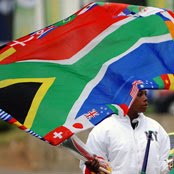
The World Cup has officially started, and the home team can hold its head high: South Africa tied group-favorite Mexico 1-1 on Friday. That means the host nation remains undefeated in opening World Cup matches, with a record of 15-0-5. South Africa took the early lead, despite playing defense most of the first half, when Siphiwe Tshabalala scored after 55 minutes. Rafael Marquez evened the scored for Mexico after 79 minutes, and the score remained there—the closest call being a shot by South Africa’s Katlego Mphela hit the post in the 90th minute of play. Meanwhile, The Daily Beast’s Gretchen L. Wilson reports a rumor is sweeping the country: When the soccer ends, a war on foreigners and the poor will begin. When the first whistle blows in the opening match of the World Cup Friday, think of Abdirahman Nuur Jilley, who will be watching at a friend’s house, wearing the yellow jersey of Bafana Bafana, the national team of his adopted country. Jilley was born in Somalia 22 years ago, but fled the war-torn country as a teenager to settle in Port Elizabeth, South Africa. Jilley calls himself a “soccer addict.” He’s thrilled to have tickets to see his two other favorite teams (Ivory Coast and Portugal) go head to head next week. But like many undocumented immigrants in South Africa, he is afraid of what will happen to him when the tournament ends on July 11. “I feel very scared,” he said. “We’re getting threatened—told that after the World Cup is over, we’re going to attack you, loot your property, and chase you away from South Africa.” “Everyone you meet on the street is saying, ‘Did you hear? The foreigners are going to be kicked out immediately after the World Cup,’” said one South African. South Africa is hosting the first World Cup on African soil just 16 years after the transition to democracy, and it’s a major achievement. In Johannesburg, the mood is jubilant. People of all races wear yellow T-shirts and don their cars in the South African flag. Horns are honking. Strangers are smiling. And everyone is ready to start drinking. For the nation’s urban elite, hosting the world’s single biggest sporting event is a feel-good, watershed moment—a chance for sports to unify the country, as rugby did in 1995, a year celebrated in the Clint Eastwood film Invictus. South Africa’s poorest neighborhoods, destitute areas where often more than 40 percent of adults are unemployed, and millions of black South Africans still live in apartheid-era shacks without electricity or running water. Some South Africans blame foreigners for the blight in their neighborhoods, or express frustration at immigrants operating successful small businesses there, reflecting a surge of xenophobic sentiment around the country. In South Africa’s poorest communities, locals are canvassing the streets, approaching African immigrants with formal letters or verbal warnings: go home now—or face vigilante violence after the World Cup ends on July 11. The notion that the World Cup final will be followed by a war on poor and African foreigners is sweeping the nation. And given South Africa’s recent history, these xenophobic tensions may become the story of this World Cup, or its aftermath. “The message that’s on the street is, ‘If you don’t have an ID, we are taking you out after the World Cup. We will take you to the police, and if the police don’t do something to you, we are going to do it ourselves,’” said 22-year-old Asmath Chauke, who lives in Alexandra, a congested neighborhood of ramshackle houses just a few miles from Johannesburg’s wealthiest suburb. Chauke said she’s scared of what may happen. “People who are spreading these rumors are saying, ‘We will beat them up to show the government we are very serious. We don’t want them around. If we have to kill them we’ll kill them. We will just do anything to get them out of South Africa.’” It wouldn’t be the first time. In May 2008, dozens of poor enclaves around South Africa flared up in violent uprisings against foreigners. Images broadcast around the world showed crowds raising sticks above their heads, looking ecstatic. More than 60 people, mostly foreigners, were killed in those few weeks. An estimated 200,000 fled to tent cities when their homes and businesses were looted or burnt to the ground. The images, reminiscent of the political violence under apartheid, traumatized the whole country. And South Africa’s genteel classes, black and white, asked, How could this have happened? The inequalities of apartheid are long lasting. The most recent U.N. Human Development Index, which rates nations on a number of factors, including income, life expectancy, and education, ranks South Africa at 129 among 182 countries. In rural areas and townships, many of the nation’s 47 million citizens live in poverty, surviving only on meager government pensions. Still, many Africans see it as a Shangri-la, and the borders are porous. South African Police Service said the country is home to between 3 million and 6 million undocumented immigrants. Most are Africans fleeing poverty, conflict and famine in their home countries—places such as Zimbabwe, Mozambique, the Democratic Republic of Congo, and Somalia. Most of these immigrants live under the radar in South Africa’s most destitute communities—from crammed urban ghettoes to remote rural settlements. As their numbers swell, more people go after the same few jobs, and there’s even greater pressure on housing, clinics, schools, and sanitation systems. “When everyone is competing for those scant resources, people look for scapegoats,” said South African political analyst Adam Habib. “Previously, those scapegoats were racial groups. Now it’s not cool to point to racial groups, so it’s foreign nationals.” I started hearing rumors about xenophobic attacks in early April. First one acquaintance mentioned it casually. Then another. So I asked people I met on the street: South African construction workers, Zimbabwean domestic workers, Malawian gardeners. I talked to dozens of strangers. And everyone knew what I was talking about: the violence will start again after the World Cup. As if it is a done deal. Isolated xenophobic attacks have continued since May of 2008, and living conditions haven’t improved much. But I am shocked how these new rumors have been codified into a kind of collective South African premonition. “Everyone you meet on the street is saying, ‘Did you hear? The foreigners are going to be kicked out immediately after the World Cup,’” said Elizabeth Mokoena, manager of a child welfare agency in Alexandra, which saw some of the worst xenophobic violence in 2008. Some people told me there is almost an excitement about it. And a kind of humor. Suddenly, crappy cars on the road are pointed out as “Zimbabwean” cars. “People are more and more calling us Zimbabweans kwerekwere (“foreigner”),” said Giyane Dube, a leader of Johannesburg’s Zimbabwean community. “They say, ‘You Zimbabweans are taking our jobs, occupying our spaces.’ Xenophobia is at a peak now.” South Africans have told me stories about civil servants talking back to foreigners: nurses demanding to see IDs before treating people. Or border control officials boasting about how, after the World Cup, they’re going to stop stamping the papers of those seeking status as refugees. Other people have told me anecdotes about how police tell foreigners in sotto voce to get out of the country, ostensibly as a humane gesture. “Save yourselves,” they say. Still others told me how commuters chat wistfully about how nice it will be in August, when foreigners no longer crowd Johannesburg’s streets. “Just imagine,” they say, “no more traffic!” So far, it’s just talk. There’s certainly no evidence that anything like organized pogroms will be unleashed on July 12, the day after the World Cup ends. Yet in recent weeks, humanitarian groups—including South Africa’s Human Rights Commission and Amnesty International—have issued warnings about new xenophobic violence, particularly in the run up to local government elections early next year. In response, South Africa’s cabinet has revived a high-level committee to respond to the threats. Cabinet spokesperson Themba Maseko last week told journalists that police would respond “speedily and decisively” to intimidation against foreigners. “It is totally unacceptable to attack foreign nationals. We will not tolerate it,” Maseko said. Many South Africans may not tolerate it either. The foreshadowing of xenophobic violence is so localized in poor communities that most upper- and middle-class South Africans may not yet have heard anything about it. Adirhaman Nuur Jilley, the Somali immigrant, said in recent weeks more than 20 Somali small business owners throughout the rural Eastern Cape province have called him to report being threatened by locals. But Jilley says South Africa is also home to “very good people,” and he’s counting on the World Cup to unify the country. “Only God knows what is going to happen, but what I hope is that after the World Cup, people here will love each other as Africans, and as human beings,” Jilley said. Gretchen L. Wilson is Africa correspondent for the public-radio program Marketplace. Wilson is also co-author of From Dust to Diamonds: Stories of South African Social Entrepreneurs.
See the rest here:
Will the World Cup Start a Riot?




 Breaking Sports Video