Are Johnny Depp and Vanessa Paradis, his partner of 14 years now, a thing of the past or headed in that direction fast? Such rumors have been swirling this week. The pair has not made a public appearance together for more than a year, and the Dark Shadows star’s solo trip to the Golden Globes fueled the split rumors. People reports that America’s favorite actor and the French singer-actress have called it quits, having led “separate lives” for some time now. The couple has long maintained separate homes , in West Hollywood and France. A source allegedly close to Johnny Depp and Vanessa Paradis said the following: “They bet that they could move to California for long stays for his career. They bet that things could continue there as they had in the south of France.” “They lost that bet. Vanessa has gone seven years between albums and several years between film projects while he became Jack Sparrow,” the source said. On January 6, a tired-looking Paradis was spotted shopping with daughter Lily-Rose, 12, at Los Angeles The Grove, adding to the speculation of trouble. The couple also has a nine-year-old son, John Christopher Depp III. For what it’s worth, in December 2010, Depp gave an interview to Extra about why he and Paradis had no plans for marriage – now or down the line. “I never found myself needing that piece of paper. Marriage is really from soul to soul, heart to heart. You don’t need somebody to say you’re married.” “If Vanessa wanted to get hitched, why not… But the thing is, I’d be so scared of ruining her last name. She’s got such a good last name,” he said. Neither party has commented on the rumored breakup. [Photo: WENN.com]
Seeing Uggie, the Artist ‘s celebrated Jack Russell terrier, onstage Sunday night at the Golden Globes might have been enough to placate some observers who’ve demonstrated an interest in the wonder dog’s awards-season recognition . But for most who’ve joined the “Consider Uggie” chorus — 6,218 fans and counting — our mission is only getting started. We’ve seen the most measurable growth at both Movieline’s “Consider Uggie” Facebook page and the Weinstein Company’s @Uggie_theArtist Twitter feed, the latter of which in particular has become a comprehensive clearing house for all the #ConsiderUggie news and developments you can stand. And I hope you can stand a lot of them, because:
One of the most fascinating and intimate moments in Frederick Wiseman’s Crazy Horse , a peek behind the shimmery veil of Paris’s legendary semi-nude cabaret, is the one in which the club’s no-nonsense manager, Andrée Deissenberg, tells a reporter that women find the performances just as compelling as men do, if not more so – that watching this highly orchestrated display of beauty on-stage speaks to them in a way that goes far beyond garden-variety titillation. “The key to eroticism is the woman,” she says flatly, a statement the reporter doesn’t seem to fully agree with, though he at least has the good sense to bow to her authority on the matter. She knows what she’s talking about, and Wiseman clearly does too. For all his intelligence and attention to craft, Wiseman is also among the warmest, the least clinical, of all documentary filmmakers; there’s never any pretense that he’s just turning the camera on and letting it capture reality. His eyes are open every minute, and his mind is awake. The lithe beauties of Crazy Horse may seem an unlikely subject for Wiseman, who’s revered – rightly – for pictures like his debut, the 1967 Titicut Follies, which documented human atrocities at Massachusetts Correctional Institution Bridgewater. More recently, he’s captured the ramshackle camaraderie of boxing enthusiasts in Boxing Gym . And in La Danse, his seemingly casual yet intense observation of the backstage workings at the Paris Opera Ballet, he traced the ways in which the human body, with all its earthbound limitations, can be trained to move in ways that come as close as possible to human perfection. Now, he’s looking at semi-naked women. And what women! Crazy Horse is neither prurient nor titillating, and it’s not out to make a bold statement. (If you’re looking for evidence that some/most/all women who work as erotic dancers are exploited, damaged or in some way compromised, you won’t find it here.) Instead, the picture is celebratory, in its own quiet way, as well as clear-eyed. The Crazy Horse, which has been operating since 1951, is known for dance routines that are lavish, flirtatious, possibly just a little bit tacky, though in an exquisitely French way. Wiseman’s camera is open to all of it, as it is to the grace and vulnerability of the dancers who perform these routines (many of whom have ballet training). It could be that Wiseman, who is now 81, is more attuned than ever to observing and marveling at the wonder of human movement. We already know there’s eroticism in ballet and boxing. The next natural step, maybe, is to find it in a chorus line of beautiful young women wearing modified – and extremely skimpy – Royal Guardsmen’s outfits. Wiseman’s camera, as always, captures the big moments and the small ones: Preparing to go on-stage, a dancer dots her lash line with glue before applying a lush, flirty faux fringe. Late in the picture, we watch an audition in process, and while the focus is on the hopeful young women angling for a job, Wiseman also clues us in to the practical-mindedness of the judges: They may note, among themselves, that one girl’s legs may not be quite as long as they’d like, but there’s always a degree of businesslike kindness at work, too – they try to make their decisions as swiftly as possible, not wanting to prolong a prospective dancer’s hopeful anxiety any longer than necessary. (It’s the exact opposite of what you see on so-called reality TV.) And, as always, Wiseman is acutely aware of the dollars-and-cents reality behind any illusion. He takes us behind the scenes as Deissenberg and the club’s director and choreographer, Philippe Decouflé, wrangle with the economic realities of running the Crazy Horse: At one point Decouflé begs to close the club for a short time, so he can come up with brand-new routines and even just clean the spotlights, which have become grimy and don’t highlight the contours of the women’s bodies as they should. Deissenberg shakes her head, asserting grimly that there’s no way the shareholders would go for it. Artistry, whether in ballet or burlesque, has to find ways to flourish despite economic restrictions. But mostly, Crazy Horse focuses on the dancing, the dancers, and the silly-wonderful nature of the Crazy Horse routines. Wiseman doesn’t focus on any single dancer – the word ensemble is key here – and yet the individual performers still emerge as distinctly human. At one point, as the dancers wait to go on-stage, they gather ‘round a TV to watch a Russian compilation tape of ballet flubs, laughing hysterically as presumably perfect dancers slip, stumble, and otherwise humiliate themselves. At another point, Decouflé discusses a routine, called Venus, that the performers dislike because it requires them to touch each other. “The girls often come out of it in tears,” he says. “They’re modest.” The moment is revealing, and more than a little touching: These women revel, publicly, in the beauty of their bodies, but feel awkward and strange when it comes to touching one another. It’s a boundary of privacy and intimacy that they’d rather not breach. When you see the Crazy Horse routines, this makes sense: We’re not talking about improvised bumping and grinding here (although, of course, in the right setting that can be perfectly OK too). These are meticulously orchestrated numbers in which the illusion of nakedness is more extreme than the actual fact of it. The women are both unsheathed and highly artificial. They might wear Rudi Gernreich-style unitards that consist of little more than a triangle of fabric held up, very helpfully, by two slender straps, leaving the breasts fully exposed. Slatted or polka-dotted lighting effects are often used to highlight specific womanly attributes. It’s worth noting, too, that there’s definitely a Crazy Horse type: We’re not talking about a celebration of all shapes and sizes here. At one point in the picture the dancers don headphones offstage to record a theme song, describing themselves, with marvelous tunelessness, as “the girls of the Crazy.” The girls of the Crazy typically have smallish breasts (not an implant in sight) and glorious, rounded bottoms, which they thrust out at every opportunity – at the Crazy, it’s all about the butt. But what about the dancing? There’s a great deal of physical discipline necessary to pull these routines together, as the rehearsal sequences show. The illusion of eroticism is a harsh taskmistress, and the shoes are killer, too. There’s nothing harder on feet than dancing en pointe , but it can’t be all that easy executing a Cirque du Soleil-style routine, as one dancer does, in a pair of shoes that consist of a Lucite spike heel attached to the bare foot with a few pieces of elastic. Like all dancers, the Crazy Horse performers are aware of the importance of elongating the body. And even if numbers like the one called “Baby Buns” are designed to celebrate certain parts of the anatomy, the reality is that there are a lot of hardworking muscles beneath all those comely attributes. Crazy Horse is a movie about process, about performance, about the exacting nature of producing an exquisite, entertaining sexual illusion. Yet Wiseman isn’t one of those documentarians who can’t see the forest through the trees: The girls of the Crazy are simply beautiful and delightful to look at. Even Wiseman, cerebral, perceptive, and a maestro in the editing room, can’t resist urging us, with images if not with words, “Just look at them!” And so we do. Follow Stephanie Zacharek on Twitter . Follow Movieline on Twitter .
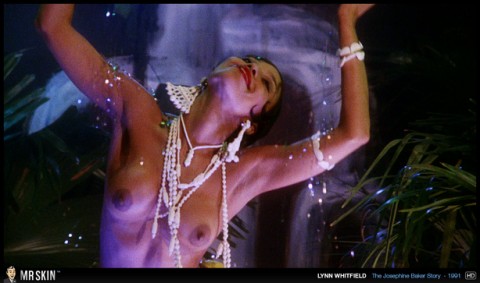
The girls are going wild this week on DVD and Blu-ray as Lynn Whitfield bares her tit-field as legendary lust object Josephine Baker in The Josephine Baker Story (1991)(nude on Blu-ray), Drew Barrymore baring her berries more in Bad Girls (1994) (nude on Blu-ray), and French sex icon Catherine Deneuve as a part-time hooker in Belle de Jour (1967), out now on a lavish Criterion Collection DVD and Blu-ray. Newer, but just as nude, are up-and-comers Meredith Giangrande , who bares her grandes playing a porn star in Bucky Larson: Born to be a Star (2011), and Juno Temple , who’s as dirty as you can get (without going nude) in Dirty Girl (2011). Tit’s also a good week for skinternational nudity, with high-class hooker Isabelle Huppert giving her clients Special Treatment (2010), Joni Kamen killing sperm cells in Killing Bono (2011), and slippery South American sexpot Camila Velasco making us break out into a Cold Sweat (2010). More after the jump!
Newt Gingrich is just throwing $h!t at the wall at this point. During his college years in the ’60s, Mitt Romney spent two years as a Mormon missionary in France. Now, Newt is trying to use that time against his rival as part of his desperate, scorched-earth campaign for the Republican presidential nomination. Here’s his new ad, titled “The French Connection” … Newt Gingrich Ad – French Connection The crux of the ad – that Mitt Romney isn’t too different politically from failed Democratic Massachusetts presidential hopefuls Michael Dukakis and Sen. John Kerry – might’ve been effective, but Newt is clearly just bitter at this point. In a parting shot, the voiceover explains: “Just like John Kerry,” the voice in the ad says, “he speaks French too!” Mitt Romney: He’s … multilingual! Guess he and Jon Huntsman are automatically DQ’d in Newt’s mind.
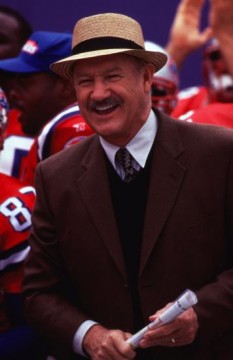
Oscar winner Gene Hackman airlifted to the hospital Friday afternoon after he was hit by a car while riding his bike in the Florida Keys, his rep said. Fortunately, the 81-year-old is alright and and on the mend. “Gene was airlifted (because he is on an island) to the hospital for routine tests,” the rep confirmed. “Everything is fine and Gene is on his way home now.” The actor suffered only “a few bumps and bruises.” TMZ, which first reported the accident, said that the collision occurred at around 3 p.m. EST Friday, and the Florida Highway Patrol is investigating the incident. Gene was assigned a special hospital room for high-profile patients where doctors could keep a close eye on the star, who suffered a cut on his forehead. Hackman won the Academy Award for Best Actor for 1971’s The French Connection and another Oscar for Best Supporting Actor in 1992’s Unforgiven . [Photo: WENN.com]
A new hard-hitting attack ad from the Newt Gingrich campaign titled “The French Connection” paints Republican front-runner Mitt Romney and 2004 Democratic nominee John Kerry with the same “Massachusetts moderate” brush. Calling Romney a “Massachusetts moderate” who will “say anything to win,” the ad juxtaposes clips of both Romney speaking French and Kerry windsurfing. The ad’s title is a throwback… Broadcasting platform : YouTube Source : The Blaze Discovery Date : 13/01/2012 00:00 Number of articles : 4
Matt Lewis passes along the latest Web ad from Newt Gingrich, which ends with the line “And just like John Kerry — he speaks French, too.” Coming next from the Gingrich campaign, “Mitt Romney Is A Big Giant Poopy Head” One wonders what Gingrich would say about Thomas Jefferson who was fluent in English, French, Broadcasting platform : YouTube Source : Outside the Beltway Discovery Date : 13/01/2012 00:17 Number of articles : 2
Mickey (Michael Biehn), the paranoid building superintendent unwillingly responsible for allowing the characters in The Divide to survive the apocalypse, didn’t plan for or want company. And who can blame him? These people are awful . Like so many groups left in a survival situations (at least in movies, books and MTV reality shows), they shed their veneer of civilization with alarming rapidity as their lives take a turn for the worse. Written by Karl Mueller and Eron Sheean and directed by Xavier Gens, who earned a place for himself in the New French Extreme movement with his 2007 Frontier(s) before heading to Hollywood to make Hitman , The Divide is a stylish and would-be shocking variation on a familiar scenario, in which the horrors isolated survivors inflict on each other turn out to be worse than those lurking outside. Gens has talent, if also tendencies to steer the visuals into the music video realm, but he treats the characters here like mobile props and nothing more — the curve of a shaved skull or a tear trickling down a cheek just another bit of nice art direction on the gradual path toward the inevitable destruction of everyone on screen. What happened to the outside world is left to speculation — what looks like a bomb hits the city in the first scene, sending the inhabitants of a New York apartment building scrambling downstairs in search of shelter. Eight people force their way into Mickey’s shelter in the basement before he locks the door. There’s angular heroine Eva (Lauren German), her whiny French fiancé Sam (Iván González), Delvin (Courtney B. Vance), Bobby (Michael Eklund), brothers Josh (Milo Ventimiglia) and Adrien (Ashton Holmes), and Marilyn (Rosanna Arquette) and her daughter Wendy (Abbey Thickson). Mickey has food and water saved up, though not enough — at least not after strange men in hazmat suits barge into the underground shelter, kidnap the little girl, and weld the door shut on the remaining inhabitants. Hell may be other people, but it can also be scenarios in which people endlessly bicker their way to certain doom (this is why I find The Walking Dead so hard to watch). Power games, alliances and divisions break out as time passes with no hope of rescue or an end, and as the characters grow more unstable and unhealthy, teeth falling out, hair growing patchy as they sit in the dark. Josh establishes himself as the alpha male, sharing Marilyn with Bobby in a scenario that degrades into violent sexual slavery — Arquette deserves either kudos or condolences for the degree to which she surrenders to a role that finds her being chained up, continually degraded and humiliated, treated like a dog, and smearing makeup on her face like some kind of crazed goth dolly. Eva is forced to protect Sam, who’s at the bottom of the totem pole, though she’s drawn to Adrien, who holds on to his sanity as the situation falls apart. These characters are at best doodles, and none of the performances are able to tease more depth out of them — the hints at history between them, like how Sam and Eva met, or the strained relationship between Josh and Adrien, are so sparse that when they’re thrown in they confuse more than they illuminate. The sprinkles of political relevance are clunkier and more problematic. Any film these days that includes the destruction of the New York skyline is going to calls up echoes of 9/11, but The Divide strongly suggests that Mickey was a firefighter working that day whose issues and isolation are all related to that trauma, from his convictions that “the ragheads” are responsible for bombing the city to his creation of the underground bunker, decorated with an American flag. (Admittedly, Gens makes the Frenchman the least likable character — if the film’s a rough metaphor for a world in decline, the U.S. isn’t alone in taking on the chin.) At two hours, with its elegiac tone and deliberate pacing, The Divide may lose gorehounds before it gets around to the finger chopping and corpse dismemberment. While there certainly are moments that will have the sensitive covering their eyes, the film’s most disturbing imagery isn’t actually related to carnage. A segment in which Josh heads outside to attempt to figure out what the suited-up soldiers are up to has a hallucinatory, medical nightmare feel to it, rich with the promise of terrible things going on just beyond our comprehension. Later, two characters shave their heads and eyebrows and transform themselves into near-alien figures out of a Matthew Barney video. Gens’s deftness with these visuals, and with the claustrophobic glide of his camera through the dim warrens of the underground space in which The Divide is almost exclusively set, is undeniable. It’s his apparent disinterest in the people filling it that makes the film such an uphill battle, in which the world ends and you can’t wait for the survivors just kill each other off already. Follow Alison Wilmore on Twitter . Follow Movieline on Twitter .
Mickey (Michael Biehn), the paranoid building superintendent unwillingly responsible for allowing the characters in The Divide to survive the apocalypse, didn’t plan for or want company. And who can blame him? These people are awful . Like so many groups left in a survival situations (at least in movies, books and MTV reality shows), they shed their veneer of civilization with alarming rapidity as their lives take a turn for the worse. Written by Karl Mueller and Eron Sheean and directed by Xavier Gens, who earned a place for himself in the New French Extreme movement with his 2007 Frontier(s) before heading to Hollywood to make Hitman , The Divide is a stylish and would-be shocking variation on a familiar scenario, in which the horrors isolated survivors inflict on each other turn out to be worse than those lurking outside. Gens has talent, if also tendencies to steer the visuals into the music video realm, but he treats the characters here like mobile props and nothing more — the curve of a shaved skull or a tear trickling down a cheek just another bit of nice art direction on the gradual path toward the inevitable destruction of everyone on screen. What happened to the outside world is left to speculation — what looks like a bomb hits the city in the first scene, sending the inhabitants of a New York apartment building scrambling downstairs in search of shelter. Eight people force their way into Mickey’s shelter in the basement before he locks the door. There’s angular heroine Eva (Lauren German), her whiny French fiancé Sam (Iván González), Delvin (Courtney B. Vance), Bobby (Michael Eklund), brothers Josh (Milo Ventimiglia) and Adrien (Ashton Holmes), and Marilyn (Rosanna Arquette) and her daughter Wendy (Abbey Thickson). Mickey has food and water saved up, though not enough — at least not after strange men in hazmat suits barge into the underground shelter, kidnap the little girl, and weld the door shut on the remaining inhabitants. Hell may be other people, but it can also be scenarios in which people endlessly bicker their way to certain doom (this is why I find The Walking Dead so hard to watch). Power games, alliances and divisions break out as time passes with no hope of rescue or an end, and as the characters grow more unstable and unhealthy, teeth falling out, hair growing patchy as they sit in the dark. Josh establishes himself as the alpha male, sharing Marilyn with Bobby in a scenario that degrades into violent sexual slavery — Arquette deserves either kudos or condolences for the degree to which she surrenders to a role that finds her being chained up, continually degraded and humiliated, treated like a dog, and smearing makeup on her face like some kind of crazed goth dolly. Eva is forced to protect Sam, who’s at the bottom of the totem pole, though she’s drawn to Adrien, who holds on to his sanity as the situation falls apart. These characters are at best doodles, and none of the performances are able to tease more depth out of them — the hints at history between them, like how Sam and Eva met, or the strained relationship between Josh and Adrien, are so sparse that when they’re thrown in they confuse more than they illuminate. The sprinkles of political relevance are clunkier and more problematic. Any film these days that includes the destruction of the New York skyline is going to calls up echoes of 9/11, but The Divide strongly suggests that Mickey was a firefighter working that day whose issues and isolation are all related to that trauma, from his convictions that “the ragheads” are responsible for bombing the city to his creation of the underground bunker, decorated with an American flag. (Admittedly, Gens makes the Frenchman the least likable character — if the film’s a rough metaphor for a world in decline, the U.S. isn’t alone in taking on the chin.) At two hours, with its elegiac tone and deliberate pacing, The Divide may lose gorehounds before it gets around to the finger chopping and corpse dismemberment. While there certainly are moments that will have the sensitive covering their eyes, the film’s most disturbing imagery isn’t actually related to carnage. A segment in which Josh heads outside to attempt to figure out what the suited-up soldiers are up to has a hallucinatory, medical nightmare feel to it, rich with the promise of terrible things going on just beyond our comprehension. Later, two characters shave their heads and eyebrows and transform themselves into near-alien figures out of a Matthew Barney video. Gens’s deftness with these visuals, and with the claustrophobic glide of his camera through the dim warrens of the underground space in which The Divide is almost exclusively set, is undeniable. It’s his apparent disinterest in the people filling it that makes the film such an uphill battle, in which the world ends and you can’t wait for the survivors just kill each other off already. Follow Alison Wilmore on Twitter . Follow Movieline on Twitter .