Tag Archives: imax

The Dark Knight Rises — To IMAX, Or Not to IMAX?

July 20 is the summer’s most anticipated date for Bat-fans, but if you haven’t yet pre-ordered for The Dark Knight Rises you might want to hop on the IMAX train and snag your ticket before too long. Why? With over an hour of footage shot with IMAX technology, Chris Nolan’s trilogy-ender is set to blow minds in the larger format. And that could make the IMAX experience worthwhile. Personally, I’m not an IMAX diehard (same goes for 3-D — obviously — though that can be done well on occasion). When it comes to Nolan and Wally Pfister’s meticulously crafted movies, however, color me interested in watching a movie in the intended format. With TDKR , I find I’m willing to spend a little more and get to the theater early enough to snag one of the dozen or so prime seats in the theater that don’t make me want to gouge my eyes out. (Seriously, have you ever been stuck in the nightmarish peripheral edge seats of an IMAX theater?) Of course, TDKR is pretty much the exception for me, though watching Tom Cruise scale the Burj Khalifa and whatnot was a thrill; I won’t go IMAX if I can help it otherwise. Who needs the headache, both literal and figurative? I’m hoping that The Dark Knight Rises will live up to the hype — Tom Hardy’s Bane already promises to be a hulking, monstrous entity leaping off the screen even without being the size of a building. The folks at IMAX want to make sure you don’t forget that Nolan & Co. went to the trouble of filming an hour of Batman’s last outing in IMAX (full press release follows). So who else is sold on Bat-MAX? Or The Hobbit in 48 fps ? Hell, Douglas Trumbull wants us to watch movies on giant screens at 120 fps, projected more brightly than ever before . By comparison, IMAX seems like an utterly conventional next step in movie-watching. Los Angeles, CA – June 11, 2012 – Tickets are now on sale for the IMAX release of The Dark Knight Rises, the third film of the critically acclaimed trilogy that introduces Gotham City’s newest super villains, Bane and leading lady Selina Kyle. Director Christopher Nolan’s highly-anticipated epic conclusion hits IMAX theatres worldwide day-and-date with the traditional release on July 20. While making the 2008 blockbuster The Dark Knight, Christopher Nolan was the first filmmaker to use IMAX® cameras in a major motion picture release. Nolan employed the extremely high-resolution cameras even more extensively on The Dark Knight Rises: The IMAX Experience® —including the film’s prologue — incorporating a record of more than an hour of footage filmed with IMAX cameras. These specific sequences, which will expand to fill the entire screen exclusively in IMAX, will deliver unprecedented crispness and clarity and a truly immersive experience for moviegoers. “Director Christopher Nolan, Producers Emma Thomas and Chuck Roven, and Cinematographer Wally Pfister’s cinematic vision is unparalleled and continues to set the bar for excellence,” said Greg Foster, Chairman and President of IMAX Filmed Entertainment. “They are long-term partners and we’re happy to team with them and our friends at Warner Bros. to offer IMAX fans an opportunity to experience this highly-anticipated conclusion to the Batman trilogy the way it was meant to be seen – in IMAX theatres.” Sequences shot in 35mm have been digitally re-mastered into the image and sound quality of The IMAX Experience® with proprietary IMAX DMR® (Digital Re-mastering) technology. The crystal-clear images coupled with IMAX’s customized theatre geometry and powerful digital audio create a unique environment that will make audiences feel as if they are in the movie. Leading an all-star international cast, Oscar® winner Christian Bale (“The Fighter”) again plays the dual role of Bruce Wayne/Batman. The film also stars Anne Hathaway, as Selina Kyle; Tom Hardy, as Bane; Oscar® winner Marion Cotillard (“La Vie en Rose”), as Miranda Tate; and Joseph Gordon-Levitt, as John Blake. Returning to the main cast, Oscar® winner Michael Caine (“The Cider House Rules”) plays Alfred; Gary Oldman is Commissioner Gordon; and Oscar® winner Morgan Freeman (“Million Dollar Baby”) reprises the role of Lucius Fox. More on TDKR in IMAX here .

View post:
The Dark Knight Rises — To IMAX, Or Not to IMAX?

Are We Actually Going To Let Industry Heads Advocate Texting in Theaters?

There’s nothing more enraging to me as a moviegoer than that dreaded moment when, in the middle of a movie, the unmistakable, un-ignorable glow of a cell phone screen cuts through the glorious darkness in my field of vision and takes me out of the viewing experience. Texting , sexting, checking emails, Tweeting — I don’t care what your excuse is, it’s not okay to ruin everyone else’s experience by using your phone (or talking or shaking the entire row of seats with your nervous-boredom knee jiggle or letting your stank feet air out in the aisles or snoring, you selfish prick.) So why would theater owners or studio heads, whose job it is to deliver an enjoyable movie-going experience to their paying customers, ever even entertain the notion of allowing or encouraging texting in a movie theater? That’s just what some members on a panel discussion entitled “An Industry Think Tank: Meeting the Expectations of Today’s Savvy Moviegoer” at CinemaCon reportedly proposed today in a conversation about issues facing the industry. Deadline’s David Lieberman reports : Regal Entertainment CEO Amy Miles says that her chain currently discourages cell phone use “but if we had a movie that appealed to a younger demographic, we could test some of these concepts.” For example, she says that the chain talked about being more flexible about cell phone use at some screens that showed 21 Jump Street . “You’re trying to figure out if there’s something you can offer in the theater that I would not find appealing but my 18 year old son” might. You know what else these hypothetical teenagers want when they go to a movie? To see R-rated boobs and sneak into other movies without paying, so let’s just let them do all of that, too. IMAX’s Greg Foster seemed to like the idea of relaxing the absolute ban on phone use in theaters. His 17 year old son “constantly has his phone with him,” he says. “We want them to pay $12 to $14 to come into an auditorium and watch a movie. But they’ve become accustomed to controlling their own existence.” Banning cell phone use may make them “feel a little handcuffed.” To which I say: Handcuff those kids! Teach them some self-control, for goodness sake. And what does it mean when the IMAX guy is totally okay with his kid being on the phone in a movie? In an IMAX theater there’s literally no room in your field of vision to look at anything else, but interrupting your experience to look down and text is cool? Which brings me to the first issue here: Kids. Not the kids themselves per se, but the fact that pretty much the entire hypothetical justification for allowing cell phone use in theaters stems from an attempt to solve the issue of dwindling attendance by blaming the teenagers. You think every kid out there is so ADD-addled and attached to their iPhones that they won’t or can’t focus on a movie for two hours? (I mean, maybe.) Does that mean we should let them or anyone of any age do whatever they want in a theater? HELL NO. Here’s the thing: You can’t just let The Text-Crazy Kids blaze up Facebook in a theater in order to boost box office without messing it up for everyone else — and that includes the rest of us old people and that segment of the teenage populace that, you know, doesn’t need to compulsively check their phones at the movies and maybe, just maybe, hates it as much as the rest of us when other people do it. To officially allow texting in a theater is to effectively encourage texting in a theater. And while folks like Miles might experiment with outside the box teen baiting strategies –and good luck to her in that — how can you even effectively host a text-friendly screening? By offering specialty showtimes, a la Baby Brigade or 21 and Up screenings, maybe? Who knows? Such an approach might just work, and I’m sure the theater owners would rejoice in the box office boom and bathe in the shower of gold coins and allowance money that followed. But here’s my request, if it comes to that: Keep those screenings segregated and instill a text-friendly screening surcharge; if moviegoers MUST TEXT during a movie, make them pay extra for the privilege. The real problem with this line of thinking, though, is its potential effect on film culture at large: Once texting is allowed, why not talking, or any of the plethora of bad theater behavior that could snowball from there? The thing is, texting in a movie isn’t just an issue of allowing overstimulated kids needing to be plugged into their apps and social networks and conversations at all times; it’s a far more problematic issue of engagement at the movies. And not just for the texters, who might be half-paying attention to a movie while chatting up their friends, but for those around them who deserve to be able to watch a film without interruption or distraction. By encouraging texters to engage half-way with a film and allowing their bad behavior to ruin fellow moviegoers’ ability to escape into the magic of the movies, we’d be killing the sanctity of film culture. Audiences will learn not to pay full attention to a film — and if you can’t focus on a film, how are you to appreciate it? Why come back to the movies every week if you care less and less about movies themselves? The exhibition and studio pros at CinemaCon seem to care less about the greater impact on film culture in their desperation to increase ticket sales. Thank goodness for Tim League . His Alamo Drafthouse cinemas, headquartered in Austin, Texas, take pains to protect the filmgoing experience — recall the infamous anti-texting video that went viral last year — and at CinemaCon it seems he was the lone reported voice of reason on the issue: “Over my dead body will I introduce texting into the movie theater,” [League] says. “I love the idea of playing around with a new concept. But that is the scourge of our industry… It’s our job to understand that this is a sacred space and we have to teach manners.” He says it should be “magical” to come to the cinema. Note that in response to League’s laudable declaration, Regal CEO Miles reportedly retorted that “one person’s opinion of magical isn’t the other’s.” In Miles’ world, “magical” probably means “profitable.” In other news, remind me to never patronize a Regal theater again. Going to the movies should be a magical experience, even for those casual ticket-buyers who just want to escape for two hours and who go to the cineplex maybe five times a year. My two favorite theaters in the world, League’s Drafthouse and L.A.’s New Beverly Cinema, notably enforce a no-talking, no-cell phone policy because the people who run them and their patrons, for the most part, agree that movie-watching is a special experience. They love the movies, and I’m not sure I can say that Miles and Foster proved at CinemaCon that they do, too. Movies are meant to transport, and by their nature that’s an intimate relationship between art and receiver. You should never have to compromise your movie-going experience because of some fidgety asshat in the row in front of you. So: Am I alone in this, or do other people have to fight the urge to wrestle texters’ cell phones out of their hands during a movie and hurl them at the wall whenever that dreaded light illuminates the dark? And at what point should we become alarmed if industry execs keep batting these ideas around to boost ticket sales? Sound off. Photo: A sign reminds people of strict rules regarding cell phones in the theaters on opening day of the 28th Telluride Film Festival August 28, 2001 in Telluride, CO. A ringing phone during a screening will result in immediate ejection from the theater and no refund. (Photo by David McNew/Getty Images) Follow Jen Yamato on Twitter . Follow Movieline on Twitter .

Read more:
Are We Actually Going To Let Industry Heads Advocate Texting in Theaters?

REVIEW: To the Arctic 3D Highlights Enviro-Woes, Polar Bear Cubs in Dazzling IMAX

Before IMAX became a way to boost action sequences — Tom Cruise dangling from the tallest building in the world, the Joker’s gang rappelling down from a Gotham City high-rise to rob a bank — the outsized format was primarily the domain of nature films like To the Arctic 3D , which aim to dazzle with large-scale shots of mountains and dolphins and Australia and other impressive-looking things. Forty minutes long and narrated by Meryl Streep , To the Arctic uses spoonfuls of cuteness — featuring walruses and caribou, though polar bears are its primary animal stars — to make its fairly grim environmental message go down a little easier. Directed by Greg MacGillivray, an old hand at IMAX docs,  To the Arctic tries to balance out its underlying sense of global warming alarm with spectacular imagery and footage of the far north ecosystem at work. Of course, even when it comes to the most roly poly of polar bear cubs, life at the top of the world isn’t easy, and while the film discreetly leaves the majority of the process of hunting and gobbling down seals off screen, it does include some potentially troubling sequences involving the food sources the male bears turn to when desperate. Polar bears aren’t easy to film — a segment about how would-be cinematographers camouflage remote-controlled cameras in order to get closer shots of the animals shows one bear breaking a device like an enraged celebrity attacking a paparazzo. So when the filmmakers find a family of bears and are able to stick with them for several days, they end up catching a chase across the ice. It’s a mother polar bear and her two cubs who are the heart of To the Arctic , the trio traveling across the diminishing sea ice as the mother searches for food for her offspring in the lean summer months when hunting is more difficult. Survival isn’t a certainty — earlier footage shows a mother swimming for nine days and hundreds of miles in search of meat, her cub not surviving the journey. But in the case of these bears, their most dangerous enemy turns out to be males of their own species, who will eat cubs when they can’t find seals to nosh on. The mother anxiously herds her children across the ice floes, always on the lookout for other bears, though despite her caution one finds them and tries to track them down. (Parents with children and sensitive stoners planning on seeing the film can rest assured there are no scenes of violent polar bear cannibalism.) To the Arctic flutters from place to place, peering in at some Inuit hunters and researchers who dive beneath the ice, then traveling with a pair of scientists tracking caribou migrations before pausing to watch walruses loll in the sun and then jumping to a ship departing from Svalbard. The only thematic ties beyond a shared region are the environmental threats being posed by global warming, which is making it harder to polar bears and walruses to hunt and is wreaking havoc on the caribou migration patterns. The film is marked by a few jarring stylistic touches, like a score that wavers between dramatic instrumentals and Paul McCartney songs (“Mr. Bellamy,” “I’m Carrying” and “Little Willow”) and opening credits that explode into shards of ice that fly at you — narrated by Meryl Streep BOOM! Streep offers her voiceover with nary a sly twinkle, even when delivering lines about the “frisky dance of the northern lights” or urging that “we can help keep the Arctic white.” But it’s the visuals you’re here to see, and they look great on the massive screen in three dimensions, especially in helicopter shots that whirl past waterfalls cascading off of glaciers or travel over the fantastic tundra like there’s an army of orcs to be discovered just over the next bluff. 3-D and IMAX may no longer be new, but in moments like those, they can still summon a sense of awe. Follow Alison Willmore on Twitter . Follow Movieline on Twitter .

Read more from the original source:
REVIEW: To the Arctic 3D Highlights Enviro-Woes, Polar Bear Cubs in Dazzling IMAX

REVIEW: Queen Latifah, Dolly Parton Can’t Cut Through the Static of Joyful Noise

The idea of seeing Queen Latifah and Dolly Parton in a movie together, not to mention a movie about a gospel choir, is a particular kind of heaven. Latifah is a radiant performer capable of elevating even the most mundane material to a level of charm and grace unachievable by most mere mortals. And Parton, aside from having one of the sweetest and most haunting voices in all of country music, is a firecracker presence by herself — if you could bottle force of will in a perfume bottle, you couldn’t name it anything but Dolly. But whatever Latifah and Parton might have achieved together in that mythical heavenly ideal, it’s just not coming together in this lifetime – or at least not in Joyful Noise , a well-intentioned, pleasant-enough picture that shoots off in too many directions to ever ignite. Latifah plays Vi Rose Hill, a sturdy, no-nonsense family woman who inherits the leadership of her church choir after the death of its beloved director (played, in just a few tiny scenes, by Kris Kristofferson). But this is a very small town we’re talking about — Pacashau, Georgia, pop. 233, or something like that — and petty rivalries and resentments abound. It turns out that G.G. Sparrow (Parton), who has contributed heaps of money to the church and who’s also a leading (and undeniably shapely) figure in its Divinity Church Choir, thinks she should inherit the mantle. She has some new ideas for the group, which she wants to implement before the all-important National Joyful Noise Competition. Vi Rose, a traditionalist, likes to do things the old-fashioned way. The two women start trading insults and play-fighting even before it becomes apparent that G.G.’s rapscallion grandson, Randy (Jeremy Jordan), who has just drifted into town from New York City, is madly attracted to Vi Rose’s daughter, Olivia (Keke Palmer), the choir’s obvious rising young star. Actually, there’s a new conflict every five minutes in Joyful Noise : It’s pretty much all writer-director Todd Graff ( Bandslam ) can do to tamp each one down, Whac-a-Mole style, before another one pops up. Vi Rose doesn’t much approve of Randy, until he takes her pop-music-loving, Asperger’s-afflicted son, Walter (Dexter Darden), under his wing. (Walter’s favorite song is the Left Banke’s Walk Away Renee , and if you’re going to have just one favorite, that’s not a bad one to have.) Randy, you see, is an ace pianist and arranger, and he also has some ideas for spiffing up the choir’s material and moves. Meanwhile, Olivia starts acting up, as young ‘uns will. And don’t look now, but a rival for her affections (Paul Woolfolk) is just about to show up at the local quarry, where Randy and Walter have gone to practice their vocals (it makes a handy echo chamber). That could be big trouble. And yet, somehow, it’s really not. There’s so much going on in Joyful Noise that there doesn’t seem to be much time for anyone to actually sing. Still, the gang manages to squeeze some in. Many of the numbers are pop songs reimagined as gospel material, some making the transition with ease (like Sly Stone’s “I Want to Take You Higher”) and others (“Maybe I’m Amazed”) that, no matter how you slice them — or tweak the lyrics — still sound like secular love songs rather than hymns of praise. One of the loveliest numbers is Latifah’s spare rendition of “Fix Me, Jesus”: It’s plain and unvarnished, in a way that too much of Joyful Noise isn’t. Parton sings a duet with Kristofferson (he returns from the grave specifically for this purpose), called “From Here to the Moon and Back,” which is pretty enough in its serene, wistful way. But even though there’s so much going on in Joyful Noise , there still isn’t much for its two stars to do other than trade one-liners masquerading as small-town insults. (Observing G.G.’s superblond tousle of hair, Vi Rose snickers, “What, you’re worried you’re not gonna be seen from space?”) Parton and Latifah are both high-spirited all right, and their sparring is reasonably fun to watch. But Parton’s face, as those of us who have loved her for years, is not what it used to be, and looking at it is a bit disconcerting. Latifah, on the other hand, looks as luminous as ever. As performers, the two clearly have a great deal of respect and admiration for each other, and that’s the motor that drives Joyful Noise . But movies need more than just good mechanics, or even just good chemistry, to bloom. They always need at least a scrap of divine intervention. And on that count, Joyful Noise could still use a little fixing from Jesus. Follow Stephanie Zacharek on Twitter . Follow Movieline on Twitter .

See original here:
REVIEW: Queen Latifah, Dolly Parton Can’t Cut Through the Static of Joyful Noise

Twitter Chatter: Paul Thomas Anderson Shooting The Master on 65MM

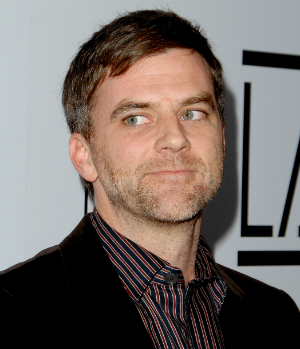
Paul Thomas Anderson diehards have gossiped for months over reports that the filmmaker is shooting an undisclosed portion of his next film, known as The Master , on 65mm — the IMAX film format used recently, and to great effect, by the likes of Christopher Nolan and DP Wally Pfister on The Dark Knight and Brad Bird and DP Robert Elswit on Mission: Impossible – Ghost Protocol . In a Twitter exchange yesterday, Pixar veterans Bird, Andrew Stanton and Lee Unkrich geeked out over the joys of 70mm film, dropping a bit of confirmation that Anderson is indeed shooting in the format. In a conversation about 70mm exhibition and 65mm film shooting, Stanton — who just finished his first live-action foray, John Carter , for Disney — Tweeted: ” The Master is indeed in 65. They nearly lost a camera shooting in the Bay.” You’d think Bird would’ve known seeing as Ghost Protocol DP Elswit is Anderson’s longtime cinematographer, but… there you have it. Assuming Stanton is indeed in the know, this would confirm a report earlier this year by the Anderson-watchers at Cigarettes and Red Vines that Anderson was shooting The Master in 65mm with DP Mihai Malaimare Jr., who lensed Youth Without Youth , Tetro , and the forthcoming Twixt for Francis Ford Coppola. Though many speculate that the plot of The Master has ties to Scientology, all that is known officially is that it’s a post-WWII set drama revolving around a charismatic leader of a faith-based organization (Philip Seymour Hoffman) and a drifter who becomes his right-hand man (Joaquin Phoenix). In any case, it promises to be an unusual use of 65mm/70mm than what modern audiences are used to since the scope and visual detail that the format can achieve hasn’t really yet been employed in non-action usage. Surely cause for excitement — right, Anderson fans? (And for you Pixar fans — how amazing was it to witness the Tweet circle between Bird, Stanton, and Unkrich? So nerdy. So awesome.) [@ AndrewStanton , CinemaBlend , Cigarettes and Red Vines ]

Go here to see the original:
Twitter Chatter: Paul Thomas Anderson Shooting The Master on 65MM

Please Help Find Tom Hanks’s Rapping Son Chet a Better MC Name

Tom Hanks’s son Chet, a proud Northwestern University student (just like Mamie Gummer !), is an even prouder rapper. The undergrad’s Facebook bio claims “his nights consist of absolutely murdering tracks, and living what he is really spitting,” and I cannot call shenanigans there. I do, however, protest the MC name “Chet Haze.” Listen to his rhymes and help offer new names after the jump.

Follow this link:
Please Help Find Tom Hanks’s Rapping Son Chet a Better MC Name

VIDEO: Trailer for The Simpsons Porn Parody Features Suprisingly Impressive Impersonations

Exclusive: ‘Batman 3’ Cinematographer Hopes To Shoot ‘Whole Movie In IMAX’

‘I like IMAX more than I like 3-D,’ says Wally Pfister, Christopher Nolan’s director of photography. By Eric Ditzian Christian Bale as Batman in “The Dark Knight” Photo: Warner Bros. Early on in the “Inception” preproduction process, director Christopher Nolan and director of photography Wally Pfister had a conversation that dragged on for weeks: After shooting a portion of “The Dark Knight” in IMAX, would they also shoot their Leonardo DiCaprio-starring thriller in the large-scale film format? “Finally I had to tell Chris that the way he was describing the film, so much of it wanted to be with a handheld camera and kind of running around,” Pfister told MTV News. “That’s just not physically possible with the IMAX camera. We ruled out shooting in IMAX.” Their thinking on how to shoot “Batman 3,” however, might turn out to be vastly different. “I can’t say until I read the script, but it would certainly be my preferred, amazing goal to shoot the whole movie in IMAX,” Pfister said. That sentiment jibes with rumors from last summer that suggested the next “Batman” could indeed be shot all in IMAX . At this point, though, Pfister is waiting to get his hands on the script and to find out when the threequel will shift into production. When it does, he’s hoping to work with IMAX cameras and hoping to avoid 3-D ones. “I must say I’m a huge IMAX fan. I like IMAX more than I like 3-D,” he explained. “Chris’ films are so densely layered and have so much going on visually in every way that IMAX helps enhance that because of the scope and the scale of it — it becomes a much larger canvas to paint on. That’s what we found on ‘Dark Knight.’ “I’m not a big fan of 3-D,” he continued. “I liken it to my View-Master I had 40 years ago. Are you really getting more out of the story with 3-D? When you separate those different planes and you’re creating artificial depth, it looks phony to me.” Nolan hasn’t jumped on the 3-D bandwagon either, saying in June, “I’m not a huge fan of 3-D.” Still, any decisions about how to shoot “Batman 3” will ultimately involve Warner Bros. and will certainly wait until Nolan and Pfister sit down and have a discussion similar to the one they had in the run-up to “Inception.” “We usually have lunch and he asks me, ‘Tell me what your thoughts are,’ ” Pfister said. “It’s very casual. It’s not very technical. And then we start to build toward, ‘How are we going to shoot this? Where are we going to shoot this?’ My preproduction is about four months long before principal photography begins. “I can’t imagine how we’re going to step it up [after ‘Inception’],” he added. “But we will.” Check out everything we’ve got on “Inception.” For breaking news and previews of the latest comic book movies — updated around the clock — visit SplashPage.MTV.com . Related Videos MTV Rough Cut: ‘Inception’

Continue reading here:
Exclusive: ‘Batman 3’ Cinematographer Hopes To Shoot ‘Whole Movie In IMAX’