Tag Archives: iraq

Colorado Springs Is PTSD City: Scenes from Vanguard

In this scene from Vanguard's “War Crimes,” correspondent Kaj Larsen investigates why Colorado Springs has become ground zero in what may be a coming tsunami: the alarming rise in the number of soldiers who have been traumatized by war and are now accused of bringing the violence home. Since the start of the Iraq War, 17 soldiers from nearby Fort Carson have been charged with murder or attempted murder. Of the more than 2 million men and women who have served in the recent wars in Iraq and Afghanistan, as many as a third of them may now have post-traumatic stress disorder, or PTSD. A growing number of these vets are being charged with violent crimes, and Kaj travels to prisons and mental health facilities in Arizona, Colorado and Oregon to hear their stories. “War Crimes” premieres Wednesday, July 7 at 10/9c on Current TV. “Vanguard,” airing weekly on Current TV Wednesdays at 10/9c, is a no-limits documentary series whose award-winning correspondents put themselves in extraordinary situations to immerse viewers in global issues that have a large social significance. Unlike sound-bite driven reporting, the show's correspondents, Adam Yamaguchi, Kaj Larsen, Christof Putzel and Mariana van Zeller, serve as trusted guides who take viewers on in-depth real life adventures in pursuit of some of the world's most important stories. For more, go to http://current.com/vanguard . added by: Kaj

MSNBC’s Ratigan: American’s Don’t ‘Give A Damn’ About Iraq and Afghan Wars; Calls for Draft

On Thursday’s The Dylan Ratigan Show, MSNBC host Dylan Ratigan went after the wars in Iraq and Afghanistan, and complained about the lack opposition to the conflicts: “Why isn’t there an alarm that we’ve been perpetrating this war?… there aren’t enough people in this country that honestly give a damn. No one really cares.” His solution to the supposed apathy? A draft. Ratigan began his rant by describing the financial and human toll of the wars. He particularly highlighted “the innocent civilians that our bombs are killing. As many as 105,000 dead in Iraq, the number in Afghanistan approaching 13,000, that we have killed.” He argued: “We might even be creating more terrorists….being there may be doing more harm than good.” On his May 13 program , Ratigan condemned the U.S. military for “dropping predator bombs on civilians willy-nilly.” Describing the limited number of Americans who have loved ones on the front lines, Ratigan proclaimed: “…it’s a way for the politicians to isolate on the poorest and the most isolated group of soldiers they can get and protect themselves from our society, were they to understand how violent and oppressive the actions we are taking against our own people are in perpetrating these wars.” Ratigan then proposed: “…we have to raise the stakes on this to decide whether we get out or keep going. And the only way I can see to do that is to return the draft.” He further declared: “Maybe if the sons and daughters of more Americans families, like those of our politicians, were either being killed in combat or facing the stresses of endless repeat deployment, our policymakers would start questioning why we’re still there…” After a discussing the topic with a panel of military experts, Ratigan admitted: “I’ll be the first to tell you, I’m the most ignorant at the table when it comes to the strategic analysis of this topic.” Even so, he concluded: “…the solution is still fairly simple….Either you’re on the side that is with this and is for it and is in there supporting it, or you are there making a strong case not to be there….that means that you, if you’re willing to go, are willing to send yourself and your family members into combat. And on the flip side, in my view, are not willing to do that and as such wouldn’t want to send a fellow citizen.” An on-screen graphic read: “Get Out or Get In! End the Wars or Bring Back the Draft.” Here is transcript of the July 1 segment: 4:30PM DYLAN RATIGAN: Well, day four in our ‘Fix It Week’ garage. And today we tackle a true matter of life and death in this country, the wars in Iraq and Afghanistan. One of them, already America’s longest war. The other, unfortunately, not far behind, long and costly. $731 billion spent so far in Iraq. $280 billion in our efforts in Afghanistan with no clear end in sight at the end of the deadliest month in the history of the war. The cost in American lives 4,396 soldiers dead in Iraq. 1,125 killed in Afghanistan. And then there are the innocent civilians that our bombs are killing. As many as 105,000 dead in Iraq, the number in Afghanistan approaching 13,000, that we have killed. There are two main problems with what we’re doing overseas, as I see it, and why we’re not doing it well. The first, we have no political will to shift from a strategy that has been repeating itself for years with no apparent end in sight. And two, there may not even be an honest understanding of our enemy and what a modern day insurgent war strategy is, let alone, how to actually fight an effective counterinsurgency. We all know about the heroin, the bribery, the rampant political corruption. But what about our overall strategy? And what we’re doing? We might even be creating more terrorists. Our leaders may not even understand the insurgency that they are fighting against. Think about how difficult it would be to launch a so-called counterinsurgency strategy if you haven’t been able to be truly honest about how a modern day insurgency works. Very few people, unrelated, using the internet and communications to disrupt society. Bottom line, us being there may be doing more harm than good. So why isn’t that conversation taking place in our Congress and in our homes? Why isn’t there an alarm that we’ve been perpetrating this war? Well, quite simply, like the cheap price of oil, there aren’t enough people in this country that honestly give a damn. No one really cares. They may say they care. But the politicians know, there’s no – the phone’s not ringing. No one really is expressing themselves. In fact, the number of active duty troops in Iraq and Afghanistan is at the lowest level since World War II. Which means the percentage of us that are exposed to the realties of war in this country, that we’ve been fighting for a decade, is the smallest it has ever been. Why is that? Well, more than a third of our soldiers have been sent back to the front lines multiple times. Some of the same soldiers sent back five and six times to the same war. Why is that? Well, it’s a way for the politicians to isolate on the poorest and the most isolated group of soldiers they can get and protect themselves from our society, were they to understand how violent and oppressive the actions we are taking against our own people are in perpetrating these wars. It means that the fewest number of Americans are truly feeling the brunt of our wars. Meanwhile, those who are feeling it, feel it harder than any troops in American history. I think we have to raise the stakes on this to decide whether we get out or keep going. And the only way I can see to do that is to return the draft. Maybe if the sons and daughters of more Americans families, like those of our politicians, were either being killed in combat or facing the stresses of endless repeat deployment, our policymakers would start questioning why we’re still there and come up with a different way to deal with insurgent warfare in the 21st century. [PANEL DISCUSSION WITH MILITARY EXPERTS] RATIGAN: I’ll be the first to tell you, I’m the most ignorant at the table when it comes to the strategic analysis of this topic. It’s why I asked these gentlemen to join me and benefit from it. But politically, for me, the solution is still fairly simple. I don’t see how, after all these years and all this time, we can continue these types of strategies without an either ‘get out’ or ‘get in’ strategy. Either you’re on the side that is with this and is for it and is in there supporting it, or you are there making a strong case not to be there. [ON-SCREEN GRAPHIC: The Fix Solution: Get Out or Get In! End the Wars or Bring Back the Draft] And explaining, not emotionally, but from a policy standpoint, why that is. And that means that you, if you’re willing to go, are willing to send yourself and your family members into combat. And on the flip side, in my view, are not willing to do that and as such wouldn’t want to send a fellow citizen. Either way, you have to let your politicians know how you feel. We, the people are critical to this process. Dylan.MSNBC.com has contact information for each and every member of Congress. Remember, you can get mad – or you don’t get mad, I should say, if you don’t get involved. This is a classic example.

The rest is here:
MSNBC’s Ratigan: American’s Don’t ‘Give A Damn’ About Iraq and Afghan Wars; Calls for Draft

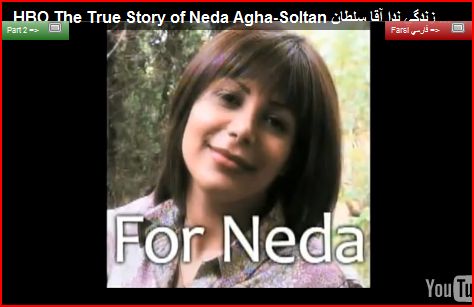
REVIEW: In HBO’s ‘For Neda’ the Symbol of Iran’s Green Revolution Comes to Vivid Life

The HBO documentary For Neda , directed by Antony Thomas and narrated by famed Iranian actress Shohreh Aghdashloo , first aired on HBO in the United States on June 14 but went viral in Iran on June 1, well before the regime even knew about it . In an HBO interview , Mr. Thomas stated that the goal of the film was to look beyond Neda Agha-Soltan as the most prominent symbol of the Green Revolution and into the soul of whom Neda was as a human being. To that end, Mr. Thomas and crew succeeded brilliantly. The emotional rollercoaster ride one undergoes while traversing Neda Soltan’s short but eventful life in For Neda ranges from the tender and sublime to black despair and furious outrage. At times, For Neda also induces in the viewer an unnerving sense of paranoia. Throughout much of the film, the regime is the evil villain unseen on the screen but whose ominous presence is most keenly felt. The rather ordinary but highly illicit home interview sessions in Iran with Neda’s family and others engender a dark foreboding to the point you almost expect regime jackboots to bust down the doors at any moment. The rest of For Neda is also fraught with many palpable dangers that make the fictional James Bond’s seem trite by comparison. In For Neda , we know that the consequences of regime discovery and reprisal are as perilous, real and horrifying as it gets. For those reasons and many others, Neda’s family refused to talk to the media for the longest time. After Neda’s death last June 20, the regime forcibly moved the family to prevent their home in Tehran from becoming a Green rallying point (which it had in fact become), then thoroughly silenced them. Yet after much coaxing online, Neda’s family finally (and fearlessly) agreed to a live interview in their home to tell Neda’s life story. The man chosen to travel to Iran to secretly interview Neda’s family and capture it all on video for HBO was Saeed Kamali Dehghan , a courageous 24-year-old Iranian expatriate and editorial contributor to the UK Guardian. What Mr. Dehghan lacked in formal journalism experience he would make up for with great human insight, derring-do and balls of titanium. He would need all of those qualities for this trip. The slightest slip-up, careless act or suspicion-inducing look could lead him straight to Evin prison and all that entails . Fortunately, Mr. Dehghan succeeded in entering Iran undetected and completing his lonely and dangerous mission. For that, we all owe him an enormous debt of gratitude. The video he smuggled from the homes and hearts of Neda’s mother, father, sister and brother is extraordinarily captivating and poignant. It reveals to us, layer by layer, the story of whom Neda Soltan was as a living person and kindred human spirit. Perhaps the most amazing aspect of Neda’s life, as revealed in For Neda, was how closely it mirrored those of most ordinary young American women. Rebellious at a very young age, Neda refused to wear the chadar in elementary school, which is required of all female students in the Islamic Republic. Even more amazingly, l’enfant terrible Neda won her fight. She would do battle with the chadar and other female clothing restrictions throughout her all-too-short life, one of many rebellions Neda would conduct against the repressive and misogynist Islamist legal codes in Iran. Neda Soltan’s subversion of thought also extended to literature. From Wuthering Heights to The Last Temptation of Christ , Neda’s widely varying and mostly illegal collection of books reveals a most curious and searching young mind that wanted to know and experience all the best that humanity had to offer, most of which was and is forbidden in the Islamic Republic. Perhaps the most poignant moment of all in For Neda is when her mother recalls the day Neda was fatally shot by a basiji sniper in the streets of Tehran. In phone call after phone call, Neda ignored her mother’s pleadings to come home. During her last call prior to her death, Neda had told her mother how dangerous the streets were becoming and promised that she would at last return home. The rest is now history in a revolution that continues to unfold before our eyes. Its ending is still unwritten, but is eyed by the Greens and the diaspora with great hopes for a free and democratic Iran. Were such a revolution of freedom to succeed, it would not only transform Iran itself beyond measure but the world at large, given the Islamic Republic’s larger-than-life place in it today. In summation, For Neda is one of the most compelling, moving and gut-wrenching documentaries I have ever seen. The film succeeds wildly in projecting the entire scope of the Green cause through one of its earliest, youngest and most defiant revolutionaries, and in the most human and personal of terms. Here is perhaps the ultimate insight into Neda’s persona as revealed in the film. On Election Night last year, Neda smelled a rat and refused to cast a vote when she found only Ahmadinejad observers were allowed at the polls. Yet despite the fact Neda did not vote herself, the news that the election was most likely fraudulent compelled her back out onto the streets to speak up for family and friends whose votes had been stolen. That courageous, selfless and defiant act, one which would ultimately cost Neda her life, captures the essence of Neda’s spirit, the spirit of the HBO documentary that bears her name, and the spirit of the Green Revolution itself. Crossposted at Big Hollywood .

Read the original here:
REVIEW: In HBO’s ‘For Neda’ the Symbol of Iran’s Green Revolution Comes to Vivid Life

CBS: Robert Byrd ‘One of the Hardest Working Senators in Modern History’

On Monday’s CBS Early Show, correspondent Whit Johnson reported breaking news of the death of West Virginia Senator Robert Byrd and proclaimed: “By all accounts, he was one of the hardest working senators in modern history.” Johnson touted Byrd’s “four volume history of the Senate” and described him as the “unequaled master of the Senate rules.” Part of the “hard work” Johnson cited was the massive number of pork barrel projects Byrd secured funding for over his long career: “Byrd said he owed his success to the long suffering people of West Virginia and he returned the favor by steering billions of dollars in federal government projects to the state, dozens of them, named for him.” Johnson noted how “Byrd reveled in his success at bringing home the bacon….His critics called him the king of pork. He called that hog wash.” Another aspect of Byrd’s career that Johnson highlighted was the West Virginia Democrat’s opposition to the Iraq war: “A harsh critic of the war in Iraq, Byrd said opposing the war in 2003 was his most important vote ever.” It was not until the end of his report that Johnson mentioned Byrd’s controversial past on race relations: “His life was not without mistakes. He deeply regretted joining the Ku Klux Klan as a young man and participating in a filibuster against the historic Civil Rights Act of 1964. Later in life, though, he became an advocate of civil rights.” Later, in a news brief in the 8AM ET hour, fill-in news reader Betty Nguyen declared that Byrd was “a master politician, an expert on Senate rules, and unrelenting lobbyist for his home state and a powerful force on Capitol Hill.” Here is a full transcript of Johnson’s June 28 report: 7:00AM TEASE ERICA HILL: Breaking news. The longest serving member of Congress, Senator Robert Byrd, has died. We’ll look back at his remarkable career and tell you how this could impact the balance of power in the Senate. 7:01AM SEGMENT ERICA HILL: First, though, we do want to get to the breaking news, of course, out of Washington this morning. The passing of Senator Robert Byrd early this morning. CBS News correspondent Whit Johnson is on Capitol Hill with the very latest. Whit, good morning. WHIT JOHNSON: Erica, good morning. Senator Robert Byrd checked into a hospital late last week. Originally, he was thought to be suffering from heat exhaustion, but doctors found further complications. The longest serving senator in U.S. history passed away this morning at the age of 92. ROBERT BYRD: The United States Senate, the greatest deliberative body in the whole world. JOHNSON: Robert Byrd won nine elections to the U.S. Senate. He was the longest serving senator in American history. He grew up in poverty in the hardscrabble coal fields of West Virginia, where he learned to play the fiddle. For decades he used it to entertain audiences on the campaign trail and even performed at the Grand Ole Opry. By all accounts, he was one of the hardest working senators in modern history. He went to law school at night, receiving his degree at age 45 from President Kennedy. He wrote a four volume history of the Senate, became the unequaled master of the Senate rules and climbed to the top of the ladder, spending 12 years as Democratic leader. Byrd said he owed his success to the long suffering people of West Virginia and he returned the favor by steering billions of dollars in federal government projects to the state, dozens of them, named for him. Byrd reveled in his success at bringing home the bacon. BYRD: Man, you’re looking at big daddy. Big daddy! Rolled up my sleeves, man. JOHNSON: His critics called him the king of pork. He called that hog wash. BYRD: This notion that earmark spending is inherently wasteful spending is flat out wrong. W-r-o-n-g. JOHNSON: A harsh critic of the war in Iraq, Byrd said opposing the war in 2003 was his most important vote ever. BYRD: How long must the best of our nation’s military men and women be taken from their homes to fight this unnecessary war? JOHNSON: His life was not without mistakes. He deeply regretted joining the Ku Klux Klan as a young man and participating in a filibuster against the historic Civil Rights Act of 1964. Later in life, though, he became an advocate of civil rights. His great loves included his children, grandchildren, and great grandchildren, a Senate, which he so revered he called ‘the temple,’ and the Constitution, a copy of which he always carried in his breast pocket. But above everything else, there was Erma, Byrd’s high school sweetheart and wife of 68 years. She passed away in 2006. Byrd said she was his greatest love of all. Washington is already reacting this morning to Senator Byrd’s death. He’s being remembered for his fighter spirit. Erica. HILL: Whit, thanks. Whit Johnson in Washington this morning.

Visit link:
CBS: Robert Byrd ‘One of the Hardest Working Senators in Modern History’

K’naan ft. Nancy Ajram – Waving Flag [Official Video – FIFA World CUP 2010]

Arabic version [Translation Provided] of K’naan’s song Waving Flag with Nancy Ajram. The song was chosen as Coca-Cola’s promotional anthem for the 2010 FIFA World Cup, to be held in South Africa. Lyrics are below and special thanks to www.allthelyrics.com for providing a translation. Yalla, all the best to whatever team you support! Lots of love from the Arab World, Middle East. Nancy Nabil Ajram (Arabic: نانسي نبيل عجرم‎) (born May 16, 1983) is a multi-platinum Lebanese singer and Goodwill Ambassador for UNICEF. By 2007, Ajram had sold over 2 million records ranking 3rd best selling female artist in Lebanese history. She has released seven studio albums to date and appeared in a number of music videos and commercials. She participated in the most significant Arabic festivals and won multiple awards, most importantly the 2008 World Music Award as Best-selling Middle Eastern Artist, the youngest Arab WMA winner to date. Nancy Ajram is the first and only female sponsor and spokesperson of Coca-Cola in the Middle East and Arab world. Considered by many as an Arabic music icon of the decade, Nancy was described on the Oprah Winfrey Show as one of the most influential personalities of the Middle East[4]. K’naan (pronounced /ˈkeɪnɑːn/;[1] born Keinan Abdi Warsame (Somali: Keynaan Cabdi Warsame, Arabic: كنعان وارسام‎) in 1978) is a Somali-Canadian poet, rapper, singer, and musician. He has won several Juno Awards, including Artist of the Year and Songwriter of the Year in 2010 …

http://www.youtube.com/v/t41T013H4rs?f=videos&app=youtube_gdata

See the original post:
K’naan ft. Nancy Ajram – Waving Flag [Official Video – FIFA World CUP 2010]

Robert Scheer Interviews Susan McDougal – Part Three

Author: truthdig Added: Wed, 17 Jan 2007 19:43:57 -0800 Duration: 699 From Truthdig.com: When Susan McDougal refused to implicate the Clintons in the Whitewater fiasco, she was thrown in prison, left alone with murderers and her own stubborn dignity. Savaged by Republicans and abandoned by Democrats, she would emerge from that dark chapter of American history a hero. Here she joins Truthdig editor Robert Scheer to tell her amazing story.

http://flash.revver.com/player/1.0/player.swf?mediaId=143315

See the rest here:
Robert Scheer Interviews Susan McDougal – Part Three

Scott Ritter in Conversation with Robert Scheer Part IV

Author: truthdig Added: Mon, 19 Mar 2007 23:43:05 -0800 Duration: 533 Scott Ritter speaks with Robert Scheer about American ignorance, the lies that led us to war, Iran’s nuclear program and more. Part IV: Nuclear weapons and the war on terror.

http://flash.revver.com/player/1.0/player.swf?mediaId=208804

Read more from the original source:
Scott Ritter in Conversation with Robert Scheer Part IV

Scott Ritter in Conversation with Robert Scheer Part III

Author: truthdig Added: Mon, 19 Mar 2007 23:43:05 -0800 Duration: 720 Scott Ritter speaks with Robert Scheer about American ignorance, the lies that led us to war, Iran’s nuclear program and more. Part III: Korea, Iran and why there aren’t more Scott Ritters.

http://flash.revver.com/player/1.0/player.swf?mediaId=208796

Follow this link:
Scott Ritter in Conversation with Robert Scheer Part III

Gore Vidal and Robert Scheer on Politics and Mortality

Author: truthdig Added: Fri, 27 Apr 2007 06:22:10 -0800 Duration: 493 Gore Vidal and Robert Scheer discuss the Democrats running for president and what the future holds for America. The iconic author explains why he thinks a depression is inevitable, and why that’s a good thing.

http://flash.revver.com/player/1.0/player.swf?mediaId=249915

Go here to see the original:
Gore Vidal and Robert Scheer on Politics and Mortality

Religion, Politics and the End of the World – Part 1

Author: truthdig Added: Fri, 15 Jun 2007 00:10:09 -0800 Duration: 1290 Sam Harris and Chris Hedges debate one another at UCLA’s Royce Hall in Los Angeles. Truthdig editor Robert Scheer moderates.

http://flash.revver.com/player/1.0/player.swf?mediaId=302086

Read the original here:
Religion, Politics and the End of the World – Part 1