Honestly, whenever a movie’s main selling point is “Hey, check it out! Oscar winners talking about poop and wieners!”, we’re skeptical. We’re sure Kate Winslet likes to show off her range and all, but there’s a reason she’s not known for her comedic roles. There are a lot of red flags surrounding the production of Movie 43 (2013), actually– that it took four years to finish, for example, or that 15 writers and 11 different directors, including Zack and Miri Make a Porno (2008) star Elizabeth Banks , were involved– but here’s the thing. The usual rules don’t apply to this movie, and here’s why: Ever wish that Peter Farrelly would make his version of The Kentucky Fried Movie (1977)? Well, here it is. Halle Berry plays a dirty version of truth or dare (let’s just say turkey basters are involved) in a restaurant, Naomi Watts dons a side ponytail as a mom who bullies her home-schooled son, and Anna Faris wants Chris Pratt to poop on her. Plus, a segment chronicling the invention of the “iBabe” promises to be Movie 43′ s answer to Uschi Digard ‘s mam-entous appearance as a “Catholic High School Girl in Trouble,” and that’s enough to sell us on almost anything. Movie 43 doesn’t hit theaters until January 25, 2013 , but you can see more from stars Halle Berry , Kate Winslet , Anna Faris , Naomi Watts , Emma Stone , Elizabeth Banks , Kristen Bell , Uma Thurman , Kate Bosworth , and (phew) Leslie Bibb right here at MrSkin.com!
New York City officials weren’t exactly helpful when Ken Burns and his daughter were making a documentary about the racially charged 1989 Central Park jogger case, but now they’re hoping the finished film, The Central Park Five , will be useful to them. The film, which got a special screening in New York on Tuesday night, explores the lives of the five men who were convicted and later cleared in the case which became a symbol of racial tension in a metropolis besieged by crime. (The terms “wolf pack” and “wilding” were added to the media’s lexicon of fear-inducing terms as a result of the case.) The documentary, which was shown at the Cannes, Telluride and Toronto film festivals, scrutinizes the initial convictions of the Central Park Five, noting, for instance that the five men did not appear to be in the area of the park where the rape occurred, that their DNA was not found on the victim and that their confessions did not jibe with one another’s. Despite the movie’s perspective, the New York Times reported that lawyers for the city of New York have subpoenaed notes and outtakes from the documentary, which Burns directed with his daughter Sarah Burns and her husband David McMahon, in order to determine whether the material can help them fight a $50 million federal civil rights lawsuit that five men filed nine years ago as a result of their experience. In 2009, on the 20th anniversary of the incident, their lawyer Jonathan Moore called that experience “the most racist prosecution that occurred in the City of New York.” Ken Burns told the Times that the Sept. 12 subpoena came after the city had spent years declining the filmmakers’ requests for interviews to explain the actions taken by law-enforcement officials involved in the case. “There is a great deal of disappointment that it came to this, given the fact that we had given so many of the factions in this complicated story many, many opportunities, on a regular basis, to comment,” Burns said. The city insists that cops and prosecutors acted appropriate given the information that they had available to them then.. “We believe that based on the information that the police and prosecutors had at the time, they had probable cause to proceed, and the confessions were sound,” a city spokeswoman told the Times. [ New York Times] Follow Frank DiGiacomo on Twitter. Follow Movieline on Twitter.
If you can’t get enough photos of Johnny Depp with a dead bird on his head, well, saunter over here and take a gander. On Tuesday, Disney released a new batch of stills and the teaser poster to Pirates of the Caribbean pardners, producer Jerry Bruckheimer and director Gore Verbinski’s take on The Lone Ranger . Depp plays the masked lawman’s oddly attired Native American sidekick Tonto, and, according to Disney, “recounts the untold tales that transformed John Reid”( Armie Hammer ) into the Lone Ranger.” Disney plans to release the movie on July 3, 2013. The Lone Ranger cast also includes Helena Bonham Carter, William Fichtner, Tom Wilkinson and Barry Pepper. Follow Frank DiGiacomo on Twitter. Follow Movieline on Twitter.
Elle Macpherson is a super hot Australian babe there is certainly no doubt about that, she really is “The Body” and now you will see why as she is looking stunning here in this video clip from the movie Sirens. Continue reading →
If you thought that the Beatles have been so pored over that there couldn’t possibly be anything new to see, hear or read about them, guess again. The former Fab Four’s business concern, Apple Corps has granted the BBC TV arts series Arena unseen footage of the band. Arena has cut this footage to make a short for its Arena Hotel online project with the digital-arts website The Space. Arena Hotel debuted the short exclusively on Tuesday. A spokesman for The Space says the footage was shot during the making of a documentary about the Beatles 1967 Magical Mystery Tour film and features the band on “a coach trip to a classic British fish-and-chip shop, en route to Newquay, the final destination of the tour.” You can watch it here , but also be sure to check out Movieline’s gallery of stills from the footage , along with shots of the band performing “I Am The Walrus” and “Your Mother Should Know.” (Really, she should.) Magical Mystery Tour was first broadcast by the Beeb on Boxing Day in 1967. At the time, the trippy film confused stodgy audiences and critics, but appreciation of the groundbreaking production has appreciated considerably since then. (That said, Magical Mystery Tour has been broadcast only one other time,on BBC Two in 1979.) The music to the film got a much better reception (and a Grammy nomination), although Rolling Stone magazine’s review of the album in January 1968 consisted of a single quote from John Lennon: “There are only about 100 people in the world who understand our music.” MOVIELINE GALLERY: UNSEEN ‘MAGICAL MYSTERY TOUR’ ERA PHOTOS OF THE BEATLES Follow Frank DiGiacomo on Twitter. Follow Movieline on Twitter.
Perhaps she’s taking a cue from her Harry Potter co-star Daniel Radcliffe , but Emma Watson has taken a shine for musical theater after performing some numbers from The Rocky Horror Picture Show in her latest film, The Perks of Being a Wallflower . Radcliffe headed to Broadway and London’s West End well before finishing up duties on Harry Potter , starring in Equus in 2007, which famously had the mortal Daniel Radcliffe appearing in the buff on stage. He more recently received awards accolades last year for his performance in How to Succeed in Business Without Really Trying on Broadway. “I love musical theater, so I would love to do a musical soon, that would be wonderful” Watson told Britain’s Sunday Telegraph . Watson’s first film since starring in the Harry Potter series, The Perks of Being a Wallflower has so far proven a box office success since opening two weekends ago in limited release. Summit Entertainment expanded it to 102 theaters last weekend, grossing just under $1.14 million for a very solid $11,150 average. In the film, she plays an awkward student who bonds with friends, seeking solace in Rocky Horror “I was terrified of the Rocky Horror scenes,” she said, explaining how singing and dancing scenes had given her a new-found affinity for cabaret. “But, as it turned out, it was fun, and once I got over how weird it was to go from wearing knitted [sweaters] to corsets and fishnets, I got it together.” Still, this was not her absolute first exposure to the medium. Watson appeared in a student production of Three Sisters at Brown University where is has been studying for a Liberal Arts degree. [ Sources: Sunday Telegraph , BBC ]
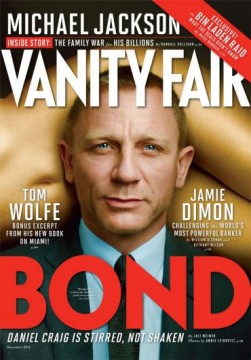
James Bond is not going all emo on us. In a new Vanity Fair cover story on 007 actor Daniel Craig , the actor defends the tear his character shed over the death of the girlfriend who betrayed him, and says Bond is not getting soft. “He didn’t sob. There was, like, a tear in his eye. No snot coming out of his nose, you know,” Craig says in the magazine’s November issue, which is out this month. With the latest Bond adventure, Skyfall , set for a Nov. 9 release date, Craig talks to the magazine about the responsibilities that come with the character. “Pierce [Brosnan] used to say that it’s like being responsible for a small country. It’s kind of like you have to look after it diplomatically. I kind of get that, but I can’t really say that’s my deal. I’m not going to be the poster boy for this. Although I am the poster boy.” And being the face of one of the biggest money-making franchises in cinema has its drawbacks. “You talk to people in the movie business who have been doing this 40 years and they all say the difference is that, back in the day, you could go and have a drink in the bar, get drunk, fall over, have a good time, relax,whatever, and no one would know about it. But now everyone’s got a camera” Craig says. So you can’t live a normal life anymore. Because it will become public knowledge that you’ve whatever—gotten drunk in a bar or skinny-dipped on a beach or something. Things that normal people do occasionally. And in a way that’s kind of—I’ve got to be high-class. I’ve done a lot of things in my life. But you have to think in that way. Which is sad, because I like bars.” The actor also takes a pragmatic look at the Heineken product-placement deal that will have the martini-drinking Bond drinking its beer in Skyfall. “Heineken gave us a ton of money for there to be Heineken in a shot in a bar. So, how easy is that? Just to say, O.K., there’s Heineken. It’s there—it’s in the back of the shot. Without them, the movie couldn’t get sold, so that all got kind of blown up. ‘Bond’s new drink is a Heineken.’ ” Craig says, pointing out atht Bond “likes a lot of drinks—Heineken, champagne; it’s all in there.” Not that Craig will totally sell out in the name of product placement. “I’ll drink a beer in the shot, I’m happy to, but I’m not going to do an ‘ Ahhhhh ’ [pantomiming an actor looking refreshed]. And I would say this because they’re paying, but they’re kind of respectful about it. They don’t want to screw the movie up.” If you need more Bond, check out Annie Leibovitz’s shoot with Craig here. Follow Frank DiGiacomo on Twitter . Follow Movieline on Twitter.
It’s been a frustrating four years for Joe Dante , whose latest feature, the kid horror flick The Hole , has endured a rough road to release since filming in 2008. The effective and spooky chiller, about two brothers (Chris Massoglia, Nathan Gamble) fighting the stuff of nightmares with their neighbor (Haley Bennett) after opening a mysterious void in their basement, was one of the first recent films to film in 3-D — but, as Dante recalled to Movieline, being at the forefront of filmed 3-D was ironically also what hurt The Hole ‘s distribution hopes. The Hole , an independent feature filmed in 3-D, found itself fighting for specialized screens with big studio fare and, as Dante tells it, “just got crowded out” of the marketplace. It opened domestically Friday in Los Angeles and Atlanta ahead of an October 2 DVD/Blu-ray/VOD/iTunes release , though the lack of a 3-D Blu-ray offering means most audiences won’t see it in its intended format. (A Region 2 3-D Blu-ray was released last year.) That’s a shame given that the critically-acclaimed PG-13 adventure marks a return to the milieu of youth horror for the iconic director of such classics as Gremlins , Explorers , The Twilight Zone , Innerspace , The ‘Burbs , and Matinee . Dante , who runs the fantastic Trailers from Hell and still, wonderfully, calls movies “pictures,” rang Movieline to discuss The Hole ‘s long road to release, his penchant for kid horror, the Glee actor he had no idea he’d cast four years ago in the film, and where Eerie, Indiana / Matinee teen actor Omri Katz — one of many promising young talents given an early start by Dante — went off to when he retired from acting. How does it feel to have The Hole finally come out, years after filming it and after all you’ve been through getting it seen? I feel kind of like the people who made Cabin in the Woods — it’s great relief. You don’t paint a picture to put it up in the attic and have nobody see it. You certainly don’t make movies for that reason. You usually assume that somehow it’s going to escape. And this was very frustrating because of the fact that I talked them into shooting it in 3-D was ultimately its Achilles heel, because by the time we were ready to release it all the theaters we were planning to play in were filled with big box office pictures that had been converted from 2-D into 3-D and didn’t take the time and trouble to shoot it in 3-D like we did. They were all high profile stuff and we had this little horror film with no stars, and we just got crowded out — and we continued to get crowded out, and then we had trouble getting a distributor. It was very frustrating. And we’re talking The Hole being pushed out of 3-D screens by movies like Clash of the Titans , one of the all-time worst examples of 3-D filmmaking. Particularly then the converted 3-D stuff when they were just starting out was terrible. It was too dark, and it’s badly done — it’s not intended to be shown that way. When you make a 3-D movie you actually have to plan the way the visuals look because there’s a parallax issue and there’s an issue of editing, you can’t edit very quickly in 3-D because the eye won’t adjust fast enough for it. There are a whole lot of rules that you have to go by if you want to make a good 3-D movie and most of these movies were just made like normal movies. It just doesn’t work that way. Tell me about your 3-D approach. How did you conceive of using the format? The idea was that because it’s a movie about people’s fears, I wanted them to identify strongly with the characters, and because it’s a very small film with six or seven characters and five locations, one of which is a basement. I thought that it would be much better to do a 3-D thing that drags you into the movie and puts you into the hole so that you feel like these people’s fears are your fears. Even watching it in 2-D I was taken by a number of very interesting camera moves and compositions — you play a lot with depth within the span of single shots. I remember watching movies on TV that had been shot in 3-D and thinking, this is much more imaginative than normal movies. Add to that your sound design, which had me nervously looking around the shadows as I watched the film, and the essence of the film itself — there’s something quite elemental about darkness and one’s own childhood fears that had me spooked. It’s rare that films made these days for younger audiences are actually, viscerally scary. Look at how Walt Disney chose to make his animated cartoon stuff. All the moments in Bambi and Snow White and Pinocchio that are really memorable are the scary ones. It’s primal. It’s a primal thing. It comes from sitting around the fire in caveman days and hearing stories. In The Hole these fears are primal but also very contemporary, in that you don’t often see stories about children dealing with issues like abuse. Well, that was a little tricky but that was one of the things that appealed to me about the script. It didn’t go where the standard horror movies went. It was a little deeper and a little more personal. The tightrope we had to walk was to try to find a way to suggest things that might have happened without having to freak out little kids who might be seeing it. There’s a wonderful secondary world you create within the film with fantastic sets that really convey a child’s perspective — the fog of memory where rooms feel huge, you feel tiny, and adults seem to be seven feet tall… Have you ever gone back to a school that you used to attend as a kid, and everything seems like it’s gotten smaller? The desks don’t fit as well anymore! And the halls are not as wide. The ceiling is lower. It’s really weird! This project came to you with a script already written. Had you been actively looking for films to direct? I’m always looking for films, but the horror scripts that I get tend to be very repetitive and often not that interesting. This one just stuck out because I liked the characters and I liked the setup, even though it was kind of familiar because I’d seen it in other movies, but it didn’t go where I thought it was going to go. That’s what piqued my interest. You have a great history of creating vivid film worlds for children, populated by children. Why do you think that is? I think it’s probably because I’m just a big kid myself. I don’t have any of my own, and I like actors in general but I find kid actors particularly fun to work with because they come with no preset conditions. They don’t give you acting tips. They just “be.” How did you find your cast? Haley Bennett in particular is tremendous here. She’s wonderful. That’s another reason I’m so sorry that this picture didn’t come out, because the kids didn’t get the benefit of the work they did. She’s great, she’s got a big future. Chris Massoglia had been in a picture called The Vampire’s Assistant , which I never saw because I was trying to get the producers to let me look at it before I hired him and they were so protective of their movie they never let me see anything. So I hired him because I thought he was the best kid for the part. And as far as Nathan [Gamble], he had been in the Batman movie and he was in The Mist , but it was really his own personality and presence that struck me. When I started to work with him, he really was the best child actor I’d worked with since Ethan Hawke. He’s got an innate ability to be natural and respond realistically to anything that you’d throw at him. He’s a 40-year-old in a 12-year-old body! Speaking of the great child actors you’ve worked with, Explorers was a fantastic showcase for its cast but you also worked a few times with a kid named Omri Katz. When I was growing up, I – Had a crush on him? Maybe. Maybe I had a crush on him. Well let me tell you something: Omri got out of the business and he came to visit me a couple years ago, and he is now the most striking-looking and handsome guy. I think he became a ski instructor. I said, “You should be acting!” But I haven’t heard from him since. So I can’t set you up on any dates, sorry! Let’s see if we can work something out, Joe. And by the way, it looks like in The Hole you cast Chord Overstreet from Glee before he became Glee -famous. What? Oh my god, yes, I remember him. I didn’t realize that! They blond guy who gets thrown in the pool? Well see, you told me something about my movie that I didn’t know. It’s a testament to your knack for discovering new talent. I’m still finding them! Follow Jen Yamato on Twitter . Follow Movieline on Twitter .
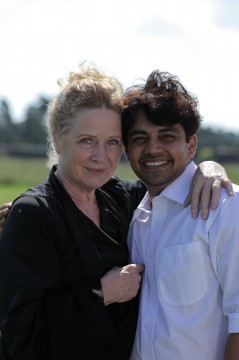
It’s too bad they don’t give Oscars out for individual performances in documentaries because Liv Ullmann’s work in Dheeraj Akolkar’s Liv & Ingmar would be worthy of consideration. The Norwegian actress and filmmaker discusses her 42-year relationship with the late Swedish filmmaking legend Ingmar Bergman with such emotional candor and poetic economy that the movie becomes something much more than just a re-telling of one of the most famous work-love relationships in cinema. Although Ullmann and Bergman — who was 22 years her senior when they fell for each other on the set of Persona in 1965 — lived together for only five tempestuous years, the friendship that they built in the aftermath is very much a love story. And Ullmann’s remembrances of their time together and apart until Bergman’s death in 2007, combined with Akolkar’s sumptuous and artful telling of the story, make Liv & Ingmar a story that can be enjoyed without an immersion course in their work together. Liv & Ingmar is at its essence a story of two people who love each other but cannot live with each other. (Think of it as a real-life Celeste & Jesse Forever .) Ullmann, 73 will attend the U.S. premiere of the film at the New York Film Festival on Monday night, and the Oscar-nominated actress spoke to Movieline about her initial reluctance to participate in Akolkar’s film, her happiness with the result, her rollercoaster relationship with Bergman, and Johnny Carson’s flirting during a Tonight show appearance. Note: The door to which she refers in the interview is located at the house on the Swedish island of Fårö where she and Bergman lived together. On the door’s surface, the couple kept a kind of hand-doodled calendar of their good — and bad days together, and Akolkar repeatedly depicts the drawings as a document of their union. Liv Ullmann and Dheeraj Akolkar Movieline: Liv & Ingmar was clearly an emotional experience for you. Your decision to talk so candidly about your relationship with Ingmar seems pretty brave to me. Was it a difficult one to make? Liv Ullman: Well, I did say no at first, but then I met with the director and the producer here in Norway. They really convinced me I would like to be part of this, but only on a very limited basis: two days to be interviewed and to produce my readings from my book. That was it. I did not have anything to do with how the movie was made. It wasn’t a brave decision because I’ve done so many interviews in my life about Ingmar or Ingmar and me. It was only when I saw the finished movie and saw what it was about that I thought, Oh, if I had know this before, I would maybe would have been more scared because it is so much deeper than I thought based on the interviews I did. The director is a tremendously creative person, and I believe that if Ingmar were alive, he would have liked this version. It’s not how I would have described this relationship, or how he would. But nonetheless, it’s terrifically true. You’re saying that if you had directed this movie, your interpretation of your relationship with Ingmar would have been different? Mine would be different, yes, but I’m not saying that mine would be truer or closer to the truth. It would be my kind of truth. I would have talked more about the memories and the longing, but this is true in a way that I never thought about our relationship. To me, this film is interesting because the person telling the story never met us before. [Dheeraj] only knew me through reading my book Changing and through our brief work together. He never met Ingmar. And yet, Liv & Ingmar may be closer to the truth in some ways because he’s looking in at us and he sees us in a different way than somebody who was completely involved with the experience. That’s interesting. The film left me with the impression that you had worked very closely with Akolkar. No! This movie is his creative work. Except for the interviews I gave, I had absolutely nothing to do with it. We had no discussions beforehand about it. We did not talk while he was editing it or finishing it. We did not talk about music. It was his film. How did Akolkar contact you? He wrote me [to ask if I would participate], and I said, “No.” And I was so glad that the Norwegian people who have money in the film called me and convinced me to meet with him. Sometimes you need to see a person and listen to a person to make your decision. When we met, I saw this young man who was very different from me — a different country and a different religion as far as I know. But I could tell that he was hearing me. We met for one hour, and that’s it. And then we shot two days in Fårö. That’s how much we knew each other. And then when I saw the movie, I just knew this man knows me in so many ways. One of aspects of the movie that I found fascinating was that when your on-camera comments are interspersed with scenes with the Bergman movies you did, the films seem remarkably autobiographical. Was that apparent to you when you were making them? No, I’ve never known this. But that is Ingmar’s genius. The movies may be autobiographical for a lot of people. It’s easy to say, “Oh God, this movie is about us..” But maybe some other woman can say, “Oh, it’s about me, too.” I know a lot of people who’ve said they recognize themselves in these movies. That’s another thing that I really liked about this film: You don’t need to have seen your work with Bergman to feel the emotional impact of this film. It’s a story about a very intense love affair that works on a universal level. Other people have said that to me — that you don’t have to know Ingmar, or me, or our movies to enjoy this movie. That surprises me because the first time I watched it, I thought, maybe this will only appeal to people who have seen the Bergman movies. Liv & Ingmar leaves the distinct impression that you couldn’t live with each other but you also couldn’t live without each other. Exactly. But one thing is true: if we had continued to live with each other, we probably could never have been together as friends afterwards. For some strange reason, it happened at the right time for us. It was so painful — so painful. I hope I’ll never have that pain again. But it led to a deep friendship and often those friendships don’t happen either. When you’re on camera, you really communicate the emotional complexity of your relationship with Ingmar. The scene where you learn that he kept one of your notes tucked away in a favorite teddy bear is pretty devastating. I’m so happy you’re saying that, but the credit goes to the director. The moment with the teddy bear that you talk about – no one knew about it until the housekeeper in Ingmar’s house [in Fårö] said, “Do you know what’s in that teddy bear?” It was kind of a friendship letter that I wrote Ingmar around the time that I did Faithless [in 2000.] And he took the letter and put it in his teddy bear that was always at the house. When I learned about the letter, it was like Ingmar saying again: “I love you –but, of course, not like when you were in Persona . I love you in a different way, and your throwaway letter is so important to me that I’m putting it in my teddy bear.” If I hadn’t done this movie, I would never have learned that. The housekeeper would never have told anyone. The same goes for the door at the house with our drawings. Since I left Fårö, I was so scared that Ingmar would take away the door, or his wife would take away the door. And when Ingmar died, I was sure I’d lose the door. But if you see the film, you see that every year, he did things to keep the sun from bleaching our drawings. Now that there’s no one there anymore to do that, in a couple of years you won’t be able to see what we did very clearly, but now I’ll never lose the door. It’s in the film. That door symbolizes so much. There’s a hand-drawn image of two side-by-side hearts with faces, but they’re both wearing frowns. Was that the essence of your relationship –that you had this great love and yet struggled to make each other happy? You always hope that the other one will make you happy before you think of all the ways that you can make the other one happy. It’s so strange—those doors came just before it was all over [between Ingmar and me]. Why we made the hearts, I don’t know. The other thing I noticed when we made the film is that Ingmar put airmail stamps over some of the dates. I don’t know what’s under them. It’s probably sad. But again, it’s another sign of him saying he cared. Do you still feel his presence? Yes, I do. In this movie, people might say, ‘Ah, he’s not here. He probably would not have made this movie. That happens not to be true. I am so sure that Ingmar would smile and care about this film. I even made a contract with the producer: if I don’t like the movie, I’m going to badmouth it and just say that I spent two days on it and what a shame. I made a contract: no payment but I am free. So, why do you think I’m talking about it? I think this is a great movie about a relationship. It’s a great movie about love. In the movie, you talk about struggling with living in Bergman’s shadow. Do you feel free of that now? I’m will always be proud of having worked with Ingmar. But at the same time, I’m directing Uncle Vanya in Oslo now and an English film version of Strindberg’s Miss Juliet . I will also probably direct Ibsen’s A Doll’s House on Broadway. So, I feel my life has always been apart from Ingmar’s but always connected to him. If I didn’t have him, I wouldn’t have the deep satisfaction of having worked so often with one of the great people of cinema. He has given me so much knowledge and trust and I use so much of what he taught me. When I was in Hollywood and maybe doing things that weren’t the best of the best, I could smile because my luggage were some of Ingmar’s great movies. So nobody could say, ‘Ah, she shouldn’t be filming.” What are your favorite performances in non-Bergman movies? My favorite films are Jan Troell’s The Emigrants (1971) and The New Land , (1972) about Swedish immigrants to the United States. I was nominated for an Oscar for the first one. I just love those two movies. It’s been 40 years since they were made, but they still reflect the attitudes and the realness of why the Swedish came to the United States. I think they would be very important to show now that you are having a new election. I have to ask: I loved the clip in the movie of you being interviewed by Johnny Carson on the Tonight show. He seems genuinely smitten with you. Did he continue to flirt with you when you were off-camera? My husband thought the same thing. He watched it. No, [Carson] didn’t flirt with me after the show didn’t, but he did have me on his program a number of times. And the strange thing is that he didn’t want me at first. He said, “Oh God no, she’s serious. I don’t want someone like that.” He was talked into having me on because I was so open. And then I was there a lot. And no, he did not start, though I wouldn’t have even minded. My husband was very jealous. Follow Frank DiGiacomo on Twitter. Follow Movieline on Twitter.