If you’re a fan of busty no-name MILFs in bikinis, you’re in luck with these shots. And if you’re not, what are you doing reading this site? Anyway, here’s VH1′s Hollywood Exes reality “star” Nicole Murphy paddleboarding at the beach. Which is weird, because after seeing these pictures, it looks like it’d be way more fun to go motorboating with her instead. » view all 11 photos Photos: PacificCoastNews
AllHipHop.com‘s resident rumor chief Illseed is reporting that one of Hollywood’s most notable bromances is having problems. Eddie Murphy and Arsenio Hall are reportedly…
Swirl 1, Black Women 0: Here is Eddie Murphy leaving Coffee Bean in Cali rocking an all white Adidas track suit while walking hand in hand with his all white boo, Paige Butcher. As you should already know, Australian born Paige sure likes her some black guys who love the swirl, having dated Russell Simmons and Tyson Beckford in the past. Peep more pics below: Fame/Flynet
N.Y. Jets quarterback Tim Tebow has been sidelined by sore ribs and mired on the bench, but the class act reached out Monday to a teen hurting far worse. Responding to a viral Twitter campaign, Tebow called Matt Hardy , a Shenendehowa (N.Y.) H.S. student hospitalized with injuries suffered in a two-car crash. Two fellow students, Chris Stewart and Deanna Rivers, were killed; the driver of the other vehicle failed alcohol tests at the scene, according to reports. Around 7 p.m., the hashtag #TebowCallMatt trended nationally on Twitter. By then, more than 50,000 users had re-tweeted the hashtag. By 9 p.m., Tim called. Tebow phoned Hardy after 9 p.m. Afterward, Hardy’s brother, Michael, tweeted: “TIM TEBOW JUST GOT OFF THE PHONE WITH MATT! SUCH A CLASS ACT!!” Seriously. The most amazing part is that from Tim, one of the true good guys in sports (whatever you think of his skill level), people almost expect this kind of thing. A short time later, Tebow himself tweeted: “Thanks to everyone who got #TebowCallMatt trending & helped connect us. Matt truly inspired me. God bless y’all.” Hardy, 17, plays football, baseball and basketball at Shenendehowa. He was upgraded to stable condition in Albany Medical Center on Monday night. He suffered a concussion and broken bones, according to area news reports. Another 16,000 re-tweeted #MissyCallBailey – a reference to Olympic swimmer Missy Franklin and Bailey Wind, another teen from nearby Shaker H.S. who survived the crash. Around midnight, Franklin tweeted that she’d left a phone message for Wind.
Forbes‘ list of the year’s most overpaid actors has been released, and coming in at #1 is a man whose immense past success leaves him in rarefied air in Hollywood. His recent films, however, have tanked. Eddie Murphy wins the magazine’s Most Overpaid Actor award for 2012, followed by Katherine Heigl and Oscar winners Reese Witherspoon and Sandra Bullock, surprisingly. Murphy’s earning power has steadily declined since his string of ’80s hits, his voiceover work in Shrek and Mulan , and family-friendly roles in Norbit and Dr. Dolittle . Imagine That, A Thousand Words, Meet Dave , and Tower Heist all flopped at the box office however, making him the biggest drain on expenses in town. At least he’s dating Paige Butcher . Silver lining? Hollywood’s one-time go-to rom-com leading lady, Heigl, fell close behind Murphy, with Bullock, Witherspoon and Jack Black rounding out the top five. Here’s the full list of the most overpaid actors : Eddie Murphy – Returns $2.30 for every $1 paid. Katherine Heigl – Returns $3.40 for every $1 paid. Reese Witherspoon – Returns $3.90 for every $1 paid. Sandra Bullock – Returns $5 for every $1 paid. Jack Black – Returns $5.20 for every $1 paid. Nicolas Cage – Returns $6 for every $1 paid Adam Sandler – Returns $6.30 for every $1 paid. Denzel Washington – Returns $6.30 for every $1 paid. Ben Stiller – Returns $6.50 for every $1 paid. Sarah Jessica Parker – Returns $7 for every $1 paid. Surprised? Not surprised? Which actor or actress do you think is the most (and least) talented on this list? And who do you think is the most underpaid star?
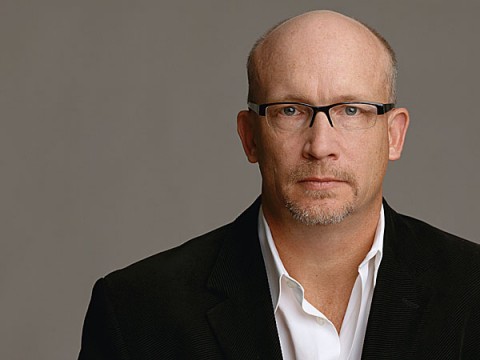
Sundays are a good time for soul-searching — which makes it a good time to check in with filmmaker Alex Gibney , whose chilling documentary about sexual abuse in the Catholic church, Mea Maxima Culpa: Silence in the House of God , is a must-see for anyone interested in the subject as well as the larger issue of what happens when religion becomes big business. Gibney’s documentary, which is in its second week of theatrical release and will run on HBO in February, begins with the headlines-making case of Father Lawrence Murphy, who, in a letter to the Vatican in 1998, admitted to abusing some 200 boys since the 1950s at the St. John’s School for the Deaf in St. Francis, Wisconsin. Although the Vatican had been aware of Murphy’s actions since 1963, he was never defrocked and, in fact, was allowed to remain at the school until 1974 (when he was transferred). Mea Maxima Culpa , which translates to “My Most Grievous Fault,” takes Gibney all the way to the Vatican, and in this interview, the filmmaker talks about the surprisingly integral roles that the late Pope John Paul II and his successor Pope Benedict XVI (then Cardinal Joseph Ratzinger) played in this tragic tale as well as his doubts that the church will ever openly confront this issue in a way that will bring some measure of peace to its many victims. Movieline: After seeing Mea Maxima Culpa , I thought that it shares a theme with Client 9: The Rise and Fall of Eliot Spitzer . On one level, this is about a giant corporation quashing someone those who dare to challenge its ethics. Gibney: That’s right. It’s an abuse of power of sorts. The Vatican is a corporation. It’s religion that’s become a corporation and therein lays the rub. The Vatican has become too seduced by its own power and money. Vatican City is its own state. What struck me about Mea Maxima Culpa is the arrogance that the church has shown towards those who have suffered sexual abuse at the hands of Catholic priests. For somebody like Pope Benedict, I don’t think it’s an arrogance born of malice. I think that the hierarchy intuits itself as a kind of holy order, which is innately better than everyone else and, therefore, can’t fathom the idea of punishing one of its own. It’s like ratting on a family member. If you find out a brother has committed a crime, you don’t go running to the police. But once you’ve started to believe your own hype, even if it’s illogical hype, it can take you to some dark places. And then you’re in the position of maintaining the illusion that you have done nothing wrong, which entails silencing anyone who says otherwise. I think many of these people are true believers — even somebody as sick as Father Murphy: In those therapist’s notes he talks about why he did what he did with those children. He said, “Well, I was taking their sins upon myself.” Doesn’t he also say that he was “fixing” rampant homosexuality at the St. John’s School for the Deaf by having sex with the students there? Right. “I was fixing it.” I think rationalizations like that are made because people like Murphy believe in their essential holiness. It’s not necessarily Machiavellian where they’re sitting there thinking, “Okay, here’s the strategy. We shall employ X, Y, or Z.” Although recently, I do think there’s some of that as well. Tell me what’s going on with Cardinal Dolan , for example, and his maneuvers with the cemetery fund in Milwaukee. I wasn’t aware of that until I saw your film. Wasn’t that wild? After the deaf victims spend years trying to hold Murphy to account, imagine the vicious irony of the idea that when they petition the church for redress, the church moves its money into the cemetery account so it can continue to protect the grave of Father Murphy over and above the victims. There’s also remarkable home-video footage you use in which a group of the deaf men confront Murphy, and his caretaker, who knows sign language, is telling one of the men that he should drop this because he’s a Catholic above all. It’s Murphy’s helper. She had been a helper at the school and, yes, she’s signing furiously saying you are Catholic, you are Catholic. As if to say, you know, the church is more important. You can cut this guy some slack because we don’t want the enemies of the church to have access to any of this information. Put your religion ahead of your petty grievances — the fact that you and so many other children have been abused. Petty. Right. There’s a technical aspect of the film that I wanted to ask you about: Your interviews with the deaf men, who are using sign language to communicate, have an almost 3D quality. Yeah, we did something. We used a variable shutter — it’s what Spielberg used in Saving Private Ryan — so that there’s a kind of flutter to the hands that makes them resonate more. It does. I really felt the emotion and the pain behind their gestures. We actually shot those interviews with three, sometimes four cameras because we wanted to have one camera that took a complete record of their signing, which included their facial gestures and their hands. We wanted another camera that was more impressionistic in terms of being able to move in from the face to the hands, and so forth. We wanted a side angle, of course, and sometimes we would use a fourth camera just to get more details because we really wanted to bring that world to life for the hearing audience. There’s something so rich about their language that it’s very powerful to capture, particularly because their deafness was so much at the heart of this story. They were the voices that could not be heard. Yet, they made themselves heard by dint of their determination. You also use recreations in Mea Maxima Culpa to depict aspects of the Father Murphy story. What led to your decision to take that route? Frankly I was a little nervous about it. We shot some pretty extensive recreations on this one. I hate that word — recreation — but it just seemed that there’s something so poignant about the way Murphy entered that dorm room. I wanted to capture that hallucinatory quality, because the aspect of the story that most people found so haunting is that these children couldn’t hear him coming. That’s how vulnerable they were. Like the fox in the henhouse, he had them available to him at any time. You quote a letter from one of Murphy’s victims in which he says that he used to lay in bed shaking at night. Yeah, because you never knew when he was going to come in and touch you or one of your friends. In the film, you indicate that while Pope John Paul II was on his deathbed, the future Pope Benedict XVI, Cardinal Ratzinger, who oversaw all of the sex abuse cases at the Vatican, sent his chief prosecutor to New York and Mexico City to gather evidence about alleged sexual abuses by Marcial Maciel Degollado , who ran the Legion of Christ and raised a lot of money for the Vatican. As John Paul is dying, Cardinal Ratzinger, who is the head of the Congregation for the Doctrine of the Faith, which oversees all of the sexual abuse cases, sends his chief prosecutor to New York and Mexico City to take testimony so they can build a case against Maciel. Ratzinger was legitimately furious at Maciel, but Maciel had very powerful protectors, notably John Paul and Cardinal Angelo Sodano. Ratzinger becomes Pope but Maciel was never tried under canonical law. It shows that — Even the Pope is not all powerful. That was a revelation to me. That is in essence the banality of evil. Pope Benedict has to play these political games instead of assuming the mantle of God and rendering punishment to somebody. He doesn’t. We don’t know if some kind of deal was cut by Sodano, or if Benedict was simply doing an Obama-like thing and saying we’re going to go forward, not backwards.
Sundays are a good time for soul-searching — which makes it a good time to check in with filmmaker Alex Gibney , whose chilling documentary about sexual abuse in the Catholic church, Mea Maxima Culpa: Silence in the House of God , is a must-see for anyone interested in the subject as well as the larger issue of what happens when religion becomes big business. Gibney’s documentary, which is in its second week of theatrical release and will run on HBO in February, begins with the headlines-making case of Father Lawrence Murphy, who, in a letter to the Vatican in 1998, admitted to abusing some 200 boys since the 1950s at the St. John’s School for the Deaf in St. Francis, Wisconsin. Although the Vatican had been aware of Murphy’s actions since 1963, he was never defrocked and, in fact, was allowed to remain at the school until 1974 (when he was transferred). Mea Maxima Culpa , which translates to “My Most Grievous Fault,” takes Gibney all the way to the Vatican, and in this interview, the filmmaker talks about the surprisingly integral roles that the late Pope John Paul II and his successor Pope Benedict XVI (then Cardinal Joseph Ratzinger) played in this tragic tale as well as his doubts that the church will ever openly confront this issue in a way that will bring some measure of peace to its many victims. Movieline: After seeing Mea Maxima Culpa , I thought that it shares a theme with Client 9: The Rise and Fall of Eliot Spitzer . On one level, this is about a giant corporation quashing someone those who dare to challenge its ethics. Gibney: That’s right. It’s an abuse of power of sorts. The Vatican is a corporation. It’s religion that’s become a corporation and therein lays the rub. The Vatican has become too seduced by its own power and money. Vatican City is its own state. What struck me about Mea Maxima Culpa is the arrogance that the church has shown towards those who have suffered sexual abuse at the hands of Catholic priests. For somebody like Pope Benedict, I don’t think it’s an arrogance born of malice. I think that the hierarchy intuits itself as a kind of holy order, which is innately better than everyone else and, therefore, can’t fathom the idea of punishing one of its own. It’s like ratting on a family member. If you find out a brother has committed a crime, you don’t go running to the police. But once you’ve started to believe your own hype, even if it’s illogical hype, it can take you to some dark places. And then you’re in the position of maintaining the illusion that you have done nothing wrong, which entails silencing anyone who says otherwise. I think many of these people are true believers — even somebody as sick as Father Murphy: In those therapist’s notes he talks about why he did what he did with those children. He said, “Well, I was taking their sins upon myself.” Doesn’t he also say that he was “fixing” rampant homosexuality at the St. John’s School for the Deaf by having sex with the students there? Right. “I was fixing it.” I think rationalizations like that are made because people like Murphy believe in their essential holiness. It’s not necessarily Machiavellian where they’re sitting there thinking, “Okay, here’s the strategy. We shall employ X, Y, or Z.” Although recently, I do think there’s some of that as well. Tell me what’s going on with Cardinal Dolan , for example, and his maneuvers with the cemetery fund in Milwaukee. I wasn’t aware of that until I saw your film. Wasn’t that wild? After the deaf victims spend years trying to hold Murphy to account, imagine the vicious irony of the idea that when they petition the church for redress, the church moves its money into the cemetery account so it can continue to protect the grave of Father Murphy over and above the victims. There’s also remarkable home-video footage you use in which a group of the deaf men confront Murphy, and his caretaker, who knows sign language, is telling one of the men that he should drop this because he’s a Catholic above all. It’s Murphy’s helper. She had been a helper at the school and, yes, she’s signing furiously saying you are Catholic, you are Catholic. As if to say, you know, the church is more important. You can cut this guy some slack because we don’t want the enemies of the church to have access to any of this information. Put your religion ahead of your petty grievances — the fact that you and so many other children have been abused. Petty. Right. There’s a technical aspect of the film that I wanted to ask you about: Your interviews with the deaf men, who are using sign language to communicate, have an almost 3D quality. Yeah, we did something. We used a variable shutter — it’s what Spielberg used in Saving Private Ryan — so that there’s a kind of flutter to the hands that makes them resonate more. It does. I really felt the emotion and the pain behind their gestures. We actually shot those interviews with three, sometimes four cameras because we wanted to have one camera that took a complete record of their signing, which included their facial gestures and their hands. We wanted another camera that was more impressionistic in terms of being able to move in from the face to the hands, and so forth. We wanted a side angle, of course, and sometimes we would use a fourth camera just to get more details because we really wanted to bring that world to life for the hearing audience. There’s something so rich about their language that it’s very powerful to capture, particularly because their deafness was so much at the heart of this story. They were the voices that could not be heard. Yet, they made themselves heard by dint of their determination. You also use recreations in Mea Maxima Culpa to depict aspects of the Father Murphy story. What led to your decision to take that route? Frankly I was a little nervous about it. We shot some pretty extensive recreations on this one. I hate that word — recreation — but it just seemed that there’s something so poignant about the way Murphy entered that dorm room. I wanted to capture that hallucinatory quality, because the aspect of the story that most people found so haunting is that these children couldn’t hear him coming. That’s how vulnerable they were. Like the fox in the henhouse, he had them available to him at any time. You quote a letter from one of Murphy’s victims in which he says that he used to lay in bed shaking at night. Yeah, because you never knew when he was going to come in and touch you or one of your friends. In the film, you indicate that while Pope John Paul II was on his deathbed, the future Pope Benedict XVI, Cardinal Ratzinger, who oversaw all of the sex abuse cases at the Vatican, sent his chief prosecutor to New York and Mexico City to gather evidence about alleged sexual abuses by Marcial Maciel Degollado , who ran the Legion of Christ and raised a lot of money for the Vatican. As John Paul is dying, Cardinal Ratzinger, who is the head of the Congregation for the Doctrine of the Faith, which oversees all of the sexual abuse cases, sends his chief prosecutor to New York and Mexico City to take testimony so they can build a case against Maciel. Ratzinger was legitimately furious at Maciel, but Maciel had very powerful protectors, notably John Paul and Cardinal Angelo Sodano. Ratzinger becomes Pope but Maciel was never tried under canonical law. It shows that — Even the Pope is not all powerful. That was a revelation to me. That is in essence the banality of evil. Pope Benedict has to play these political games instead of assuming the mantle of God and rendering punishment to somebody. He doesn’t. We don’t know if some kind of deal was cut by Sodano, or if Benedict was simply doing an Obama-like thing and saying we’re going to go forward, not backwards.
SpikeTV’s ‘Eddie Murphy: One Night Only’ comedy special airs tonight , Wednesday 11/14 at 10pm EST/PST so we caught up with his big bro Charlie to get the scoop before the premiere. BOSSIP: Thanks for talking to us Charlie, we watched some clips from the show and noticed you said your brother used to always kill you at playing “snaps” back in the day. Is that really true or did you get a few good ones in of your own? Charlie Murphy: I’m a comedian, my job is to make stuff funny. A lot of people ask me if the Rick James story is true, and I say do you believe that Will Smith saved the world in Independence Day ? Some things are meant to be entertaining, it shouldn’t matter if it’s true. When we did this tribute we told everyone involved, ‘This is not a roast, describe your experiences with Eddie Murphy and make it funny.’ BOSSIP: How did the personal relationship make this experience different for you though? Charlie Murphy: It was different as a comedian because your weapons are your jokes and if you’re told, “You can’t use any of your jokes,” you have an assignment to talk about this man right here. I was just thrilled to be in a lineup with heavyweights like Eddie Murphy, Martin Lawrence, Chris Rock, Jamie Foxx, Tracy Morgan, Russell Brand, Sam Jackson, Adam Sandler. For the level of comic royalty that was there it was incredible. You will probably never see another lineup like that. Who else would they do it for? Eddie has the perfect history and it brought all these people in one room. Stevie Wonder? Come on man! Eddie and Stevie had a classic moment. I was on a show that had Stevie Wonder in it! Stevie Wonder was a star when I was a child at home with my parents. And now I know Stevie Wonder! Imagine being a kid looking at ‘Soul Train’ watching someone and now you know this person. It’s a trip! You see how close him and your brother are… When they were singing “Higher Ground” it turned me out. That was like church almost! BOSSIP: You live in Jersey, were you affected by Hurricane Sandy? Did that affect your decision to take part? Charlie Murphy: I came from the blackout. My kids were in the hotel with a nanny, my dog was at my cousin’s house and then I had to fly to L.A. to do this show. The outfit I wore that night, I picked that outfit out in the pitch black. God helped me pick it out. I had gone and got me a tuxedo but I went to get it and the entire complex I purchased it from was closed. Six hours before my plane was supposed to leave. I thought about not going. Everything was in disarray and I went home and I was just about to call my agent and something said look in your closet. I went in with a flashlight and within three minutes I had the jacket. Everything I had to go with it was right there. I put it in my bag and made it to the plane. It was a great experience. BOSSIP: Do you have any plans to collaborate with Eddie on future projects? Charlie Murphy: No immediate plans to work together. Right now my plans are stuff I have to do. I refuse to move to the West Coast. Norbit, Vampire in Brooklyn and all that, those collaborations came about because of my close proximity on a daily basis. Things come up and I was talking to him because I was right there. When Eddie lived in Jersey that’s when we came up with those movies. And now he lives primarily in Los Angeles. BOSSIP: Why do you refuse to move to the West Coast? Charlie Murphy: Earthquakes. I love the West Coast, but I don’t want to be there when the real deal goes down. Earthquakes in California they have them sh!ts every week. All those “light tremors” may be a warning. A warning. Does anybody want to use that word? A warning. They have the ride over at Universal about an earthquake in California? That’s real smart. It’s unanimously agreed on that the big one hasn’t happened yet. It’s definitely going to happen and I don’t want to be out there when it does. I’ve been in earthquakes before. Once I punched this guy in his face, we were shooting Harlem Nights and we were on a soundstage. If you look up at the ceiling they have counterweights, big bags of sand that probably weigh 200 pounds. If one of them were to fall on your head, it’s a wrap. When the earthquake hit I saw that swaying back and forth and then I went to run and this man grabbed my arm and said “Don’t run.” He got punched in the face. Then I went to run and the earthquake stopped. He got stole on. Nobody is in charge when an earthquake hits, you try to do what you need to do and I’m going to do what I need to do. Whatever happens it’s what’s going to happen. I don’t ever want to experience that again. Pure comedy! Charlie says if you want to see the “Dallas Cowboys Superbowl team of comedy” make sure to watch Spike TV’s “Eddie Murphy: One Night Only” at 10pm EST/PST Check it out! WENN
18 years in the game, clap for her… Brandy Performs Live At Howard Theater In Washington, D.C. For the first time since her album Two Eleven dropped, Brandy took the stage to perform two of the fan favorites “Without You” and “Scared Of Beautiful” at the Howard theater in D.C. “Scared Of Beautiful” hit the flip side to watch “Without You”