Tag Archives: nature

REVIEW: A Preposterously Talented Cast Enlivens Muddled Red Lights

Red Lights , the new film from  Buried  director Rodrigo Cortés, weds an earnest, simplified exploration of the nature of faith with a goofy, gussied-up B-movie plot about a pair of academics who travel around debunking extrasensory phenomenon. As marriages go, it’s a troubled one, but it certainly makes for some interesting fights across the dinner table. Red Lights has formidable resources at its disposal, including an almost preposterously talented cast made up of Sigourney Weaver, Cillian Murphy, Robert De Niro (showing rare flickers of life), Elizabeth Olsen and others, as well as Cortés’s own undeniable filmmaking talent. This is a man who managed to draw suspense out of an hour and a half of Ryan Reynolds trapped in a box without even letting the guy take off his shirt . Set free to wander through a genre-inflected landscape filled with would-be clairvoyants summoning spirits in creaky buildings and alleged mystics calling people out of audiences to heal them, he manages to sustain an unsettling tension that lasts until you realize it’s a misdirect. As the film moves from a wry but jolt-filled journey with a pair of professional skeptics to a clash between one of them and the world’s foremost self-proclaimed psychic, it loses momentum and the sense of the unexpected that gave it fuel. Its most operatic moments are actually its weakest. That battle escalates between academic Tom Buckley (Murphy) and Simon Silver (De Niro), a famous phenom who’s returned to the public eye after years of retirement. Tom is a physicist who, for personal reasons, has ended up as the protégé and sort-of surrogate child of Dr. Margaret Matheson (Weaver), a psychologist and paranormal investigator. Such is the lightly warped reality the film inhabits that the two work in an underfunded branch of a university department called the Scientific Paranormal Research Center, an endeavor more interested in supporting the research led by Paul Shackleton (Toby Jones) to prove the existence of telepathic abilities. The underlying theme of  Red Lights is that the frauds and hustlers Margaret and Tom encounter succeed in duping people because we want to believe them, to see in them evidence that there is something beyond the world as we perceive it. The film generally steers clear of religion (though it contains a nod to phony faith healer Peter Popoff), allowing, for better and worse, table-levitating mediums and spoon-bending telekinetics to augur the potential mysteries of the universe. It’s a decision that frees the movie from heavier metaphysical obligations, but it also sets the story wackily off-balance by having as its primary symbols of faith musty ESP stunts like the reading of Zener cards or thoughtography. When Margaret reveals to Tom that the reason she’s kept her long-comatose son alive despite the near-impossibility of his waking is that she doesn’t believe there’s anything beyond death, it feels flimsy that the way she channels this is by proving to the gullible that their houses aren’t really haunted. Weaver and Murphy are good together, their characters’ interactions belying fondness, familiarity and trust under the professional reserve. They share a sincere drive to disprove claims of psychic phenomena, though because of what they do they’re perceived as wet blankets — “I just hope he shows those smart-ass college know-it-alls,” one Silver follower spits when the telepath agrees to let Shackleton and his coworkers test his abilities in a lab. Before Silver swallows the second half of the movie, Margaret and Tom travel around to different sites of reported paranormal activity, scenes Cortés winkingly stages as convincing brushes with the beyond — a seance, a child who can channel spirits, a man with the power to cure illness — before allowing our protagonists to reveal the prosaic reality of what’s underneath. Cortés’s restless, circling camera (the cinematographer is Xavi Giménez) gives the film a sense of tension even when little actually comes of it — a jump scare in a scene of Margaret at home seems to exist mainly to show that even a skeptic can be vulnerable to the willies. And Silver, who’s blind and escorted everywhere by a smirking assistant played by Joely Richardson, understands that weakness and targets it. Whether or not Silver has actual power is an open question throughout the latter part of the film — he left the public eye after one of his foremost detractors died ominously of a sudden heart attack at one of his shows — but what’s certain is that he’s a master manipulator. The “red lights” of the title are the signs Margaret searches for that indicate trickery — hidden motivations, advanced groundwork, glimpses of susceptibility. Silver doesn’t seem to show any red lights, though as Tom becomes the film’s focus and obsesses with unveiling the man as a fraud, he seems himself less a reliable agent and more one with his own biases to prove. De Niro, preening and smug in his sunglasses, makes for an enigmatically despicable antagonist, but Tom’s unbalanced need to take him down feels dictated not by motivation but by the movie itself. Dead birds turn up outside his house, electronics short out in sprays of sparks — coincidence or evidence of Silver’s paranormal aggression? The movie muddles to a rug-pulling ending that doesn’t, despite its efforts, shed new light on what’s come before. Instead, it feels like an unsuccessful attempt to yank the two diverging aspects of the film — its thoughts on faith versus its psychic explorations — together for some finality when they’ve actually drifted even further apart. Follow Alison Willmore on Twitter . Follow Movieline on Twitter .

Read the original here:
REVIEW: A Preposterously Talented Cast Enlivens Muddled Red Lights

Cillian Murphy on Red Lights, David Copperfield’s Aura, and The Dark Knight Rises

Why do we believe, or need to believe, in the possibilities that lie beyond the laws of physics and known science — the unlikely, irrational hope that suggest something more exists in the universe, be it spiritual or simply supernatural? Actor Cillian Murphy explores these Big Questions in Rodrigo Cortes’ Red Lights as Tom Buckley, a paranormal debunker who goes head-to-head with a powerful pop psychic (Robert De Niro) whose self-proclaimed powers to bend spoons and read minds may be mere parlour tricks compared to what he’s really capable of. In researching the role of a paranormal investigator for the twisty thriller (Cortes’ follow up to Buried ), Murphy found himself studying real-life mentalists, magicians, and self-proclaimed seers. But while the self-described “boringly rational” skeptic may not believe in the existence of the supernatural, one encounter gave him an understanding of how these magnetic personalities inspire whole-hearted devotion in legions of hope-seekers. Murphy only met the magician David Copperfield for a few brief moments backstage in Vegas, but their exchange made an impact. “The man’s got an aura for sure,” he marveled, though De Niro’s Simon Silver combines the charisma of Copperfield with the mysticism of Uri Geller to create a much more intimidating onscreen adversary. Movieline spoke further with Murphy about what drew him to the storytelling and themes of Red Lights , acting opposite film legends Weaver and De Niro, and rumors that he’ll pop up in Christopher Nolan’s upcoming The Dark Knight Rises . What was your initial reaction to the concept of Red Lights ? Part of what’s intriguing about the script is how it plays with viewer expectation — what hooked you? Every script that you get, you always have to judge it on the word on the page and that’s always been my sort of mantra. A lot of the time when you read scripts you can kind of predict where they’re going to go pretty quickly, and with this one I couldn’t. And that’s no fun, when you can guess at a story’s secrets. No! But that tends to be the majority of scripts. You kind of know what’s going to happen and what the character is like. This one took turns that I was pleasantly surprised by. And I’d also seen Rodrigo’s two other films, and you could see he was the real deal — he was a real director. And obviously you throw in a couple of legends, and the whole package was very, very appealing to me. By legends, you mean Sigourney Weaver and Robert De Niro. Of course, but unless the part and the director and the script is any use, that’s immaterial. But the fact that they were already signed on to do those parts … that was definitely appealing. Rodrigo has said that he wrote Sigourney’s character with her in mind, which is great — those interesting kinds of female characters don’t come along that frequently. Did her character and De Niro’s character leap off the page as much for you early on? It was really well written, and it was very smart; it didn’t pander to an audience. And the twists and turns were surprising to me, and as you say that’s a great strong female part — where her character goes, you don’t expect. I enjoy the way in the TV debate equal credence is given to both camps, and it wasn’t about ridiculing or pointing fingers — it was about rigorously looking for the truth. I like scripts that presuppose a level of intelligence in the audience, and again they’re sort of rare. When it comes to the themes in the film — faith, skepticism, these huge ideas — how much did the chance to play with those ideas factor in for you? I think they’re obviously big questions in the film, but for me I focused on the character, and for me the character the two driving forces are obsession and self-acceptance, or the lack of self-acceptance. Those were the two things for me that drove Tom Buckley’s character and I focused in on those, because those are quite universal. The broader picture about skepticism and belief and blind faith and science and all those things, I would personally be very much in the skeptic camp. I’d be very much about proof and logic and reason, that’s always been my boringly rational approach to life, but I’m fascinated by why people needed to believe in these things. The need to believe was the thing that really struck me — the need to believe, rather than to understand. To many people that’s a need to have something to believe in, in order to get through. To get through — and that’s absolutely fine and valid, but where it becomes darker is where that is preyed upon. If people are ill, or people have lost loved ones, and then people are willing to set aside logic and reason and rational thought and bankrupt themselves because some charlatan is promising them relief. Rodrigo did a fair amount of research into real world healers and the like; did you do much of the same, and how did what you learned affect your perspective? I did a lot of reading about it, a great deal in fact. I also went to Vegas to see the more showbizzy aspect of it. Like a Criss Angel show? Criss Angel, David Copperfield — that stuff is good, harmless fun. It’s like showbiz. But De Niro’s character is more an amalgam of the televangelists, the psychics, Uri Geller and all these sorts of guys who claim something beyond what the Copperfield and Criss Angel do, which is pure entertainment and great fun. But you can see there how they use their aura, or their personality — which is large anyway — and then magnify that on stage. I do think there’s a power of personality that’s important in this, that we haven’t talked about that much. I met David Copperfield afterwards very briefly backstage in Vegas, and the man’s got an aura for sure. You put that up on stage and magnify it and that’s what De Niro’s character Simon Silver plays on. That’s why it’s great casting to put someone like De Niro in there because the man’s presence is immense, it’s just massive — so you put a camera on that and it’s magnified tenfold. Certain people do have that sort of charisma that’s palpable in the air, in a room, on a screen — but it’s interesting to hear this from you, being an actor. Some might say the same about you, given the nature of your work. Well, I don’t know if they would or not! Obviously when you’re playing a part, there’s a part of your personality in it, but you try and sort of project different sides of it. You use whatever aspects of the personality that work. I don’t have a clue — its’ very hard for me to talk about acting, or the process of acting. What was David Copperfield like? Well, that was a really brief thing, and for whatever reason we were backstage and it was really dark. It was like in a little corridor and he came out, and — yeah, he definitely had an effect. You felt it. Yeah. And I’ve seen that, people walk into a room and they change the energy. And it’s not anything paranormal or extra-sensory, it’s just that they have, like you say, this charisma. Red Lights is interesting in that it’s a genre movie that doesn’t act like a genre movie. No, it doesn’t — and I’ve been in plenty of so-called genre movies and never for a moment thought they were science fiction or a zombie movie or whatever, I just thought they were about character and story. It’s easier for people to slot them into genres because they can sell them easier that way. What was your impression of Rodrigo as a director? Rodrigo is ferociously intelligent, very clear in his vision, very clear in his aesthetic, and luckily, our sensibilities were kind of the same. I think that when someone has that clear a vision, you feel safe, then — safe to experiment, to sort of improvise because you know that within that structure he knows what every frame of that film is going to be like. And I like working with writer-directors because they’ve lived with the character, they’ve lived with the story, so they have a deeper sense of it. They might not have all the answers, but you can really knock it around with them and you can ask them, “Why?” or “What does this mean?” We really got on; he’s got a great sense of humor, too, and shooting in Spain we shot very, very fast. It was very intense. It was something like ten weeks… Yes — it was eight in Spain and then some in Toronto. I like the immersive experience of acting, I like just completely disappearing into a character, into an environment, into a role — that’s always appealed to me, and this was very much like that. Are you an actor who takes this disappearing into character off-set as well? I don’t know. I’m not sure. I’m probably not that easy to live with when I’m working on something very intensely, but you know, you’re working 16-17 hours a day, so you just come home and go to bed. And then you get up and go to set. I love that. It’s pure concentration, and they say happiness is concentration. I love that. Seems like it might be something like an extended adrenaline rush. It kind of is! And we were working, we did a crazy amount of set-ups a day, it was very fast. It’s exciting. You said part of what drew you in was the opportunity to work with Sigourney and Robert — what was that like for you when you finally got to shoot with them? Amazing. You’ve got to just observe and learn, don’t you? And they were beautiful and warm and generous, and ultimately you really have to put aside the legend thing as best you can when the camera turns over and it’s “Action!” you’ve got to serve the scene and the character, but they were all about that. I think they must be aware of the effect of their legacy on an actor of my generation, but they were never anything other than people there to do the work. But it was fascinating getting to watch actors that good. You’ve got to learn from that. Was it fun shouting at De Niro? Hey, he shouts at me, too! [Laughs] Lastly, folks have been wondering if you’ve been working with Chris Nolan again on The Dark Knight Rises . I love working with Chris. I’ve been lucky to work with him a few times, and any time, I’ll be there. But listen, it comes out [soon]. So let’s try and be patient! People are so impatient these days! Let’s wait and see. I do believe there were reports of you being spotted on the set… [Smiling] Look, I’m not going to add to any speculation. I just think that it’s going to be a phenomenal film, and the best way to watch a film — surely — is by going in there hugely excited and not knowing anything about it. I suppose in a way that brings us full circle with Red Lights and the idea of the filmmaker as a sort of magician, keeping tricks up their sleeve. Yeah, I do think this is a film sort of about filmmaking. Rodrigo talks about distracting here, and showing something there, and it is all smoke and mirrors. But I wouldn’t get too into that metaphor, because I didn’t make the movie. Red Lights is in limited release this week. Follow Jen Yamato on Twitter . Follow Movieline on Twitter .

Originally posted here:
Cillian Murphy on Red Lights, David Copperfield’s Aura, and The Dark Knight Rises

Perverts: Jerry Sandusky’s Adopted Son Releases Statement That He Has Also Been Abused By The “Peen State” Coach!

Go directly to jail, do not pass “Go”, do not collect $200! According to TMZ reports : Jerry Sandusky’s adopted son says he was abused by the former Penn State assistant football coach … and was prepared to testify at his father’s sex abuse trial. 33-year-old Matt Sandusky — one of Jerry’s six adopted children — released a statement through his attorney saying he is a “victim of Jerry Sandusky’s abuse.” Matt did not disclose any details regarding the nature and time frame of the abuse. Matt’s lawyers said Matt did meet with investigators recently … and was willing to testify. It’s unclear why Matt was not called to the stand. The jury is now deliberating in the Jerry Sandusky case — he’s accused of sexually abusing 10 boys over a span of 15 years and faces 500 years in prison if convicted on all 48 counts. This thing just got turned up a whole ‘nother level! Image via AP

Go here to read the rest:
Perverts: Jerry Sandusky’s Adopted Son Releases Statement That He Has Also Been Abused By The “Peen State” Coach!

REVIEW: A Cat in Paris Captures the Mystery of the Feline Heart with Gorgeous Animation

If you could distill essence de chat into a few well-chosen pen strokes, you’d end up with something like Jean-Loup Felicioli and Alain Gagnol’s superb animated adventure A Cat in Paris , a picture whose modest demeanor only underscores how expressive and imaginative it is. This isn’t the kind of big-budget animation we get from the major studios: It’s richness of another sort, a feat of hand-drawn animation that relies on spare but succinct character design and a dazzling sense of perspective — rather than a volley of cultural in-jokes — to tell its story. The picture sparkles, but in the nighttime way — its charms have a noirish gleam. Most of the picture does, in fact, take place at night, beginning and ending with the nocturnal Parisian perambulations of a wily striped cat named Dino. Dino “belongs” to a little girl named Zoe. He pledges his devotion by bringing her little gifts from his nighttime hunting jaunts. Actually, he keeps bringing her the same gift: One dangly, limp dead lizard after another, but Zoe is delighted by them and saves them all in a little box, much to the annoyance of her new nanny. What almost no one knows is that Dino doesn’t go out at night just for fun, or simply out of a feline sense of duty. He’s also a cat burglar, assisting a sneaky but noble local jewel thief, Nico, on his midnight rounds. The plot becomes more complicated — to the extent that it’s complicated at all — by the fact that Zoe’s mother, Jeanne, is a detective with the Paris police. She’s consumed with concern for Zoe, who hasn’t spoken since her father was killed by a square-shouldered, square-headed thug named Victor Costa. She’s also riven with grief, and she’s determined to avenge her husband’s death by catching Costa, who, it turns out, has a new scheme: He plans to steal a precious, valuable and huge antiquity, the Colossus of Nairobi, a hulking totem that’s being brought to the city for an exhibit. Meanwhile, though, Jeanne has peskier problems: Jewels keep disappearing from various households in the city, thanks to Nico and an accomplice with four silent, velvet paws. A Cat in Paris is being released in the states in two versions, an English-language one (in which Marcia Gay Harden, Anjelica Huston and Matthew Modine provide some of the key voices) and a subtitled French one (which features, in the role of the nanny, the voice of actress Bernadette Lafont, who, for those who keep track of such things, played Marie in The Mother and the Whore ). If you’re bringing children and are lucky enough to have bilingual ones, I recommend the French version, since it is simply more French; to hear the English language pouring forth from these characters’ mouths feels just a little wrong. But the visuals of A Cat in Paris resonate in any language, and it doesn’t hurt that the picture features a stunning, stealthy Bernard Hermann-style orchestral score by Serge Bessett. (The music in A Cat in Paris is finer and more resonant than that of any live-action picture I’ve seen this year.) This is Felicioli and Gagnol’s first full-length feature — it was a 2012 Academy Award nominee — and it clocks in at a very trim but visually rich 70 minutes. The filmmakers’ drawings are both meticulous and highly stylized: They render the rooftops of Paris (what is it about city rooftops in general, and Paris rooftops in particular?) as a dusky, velvety patchwork, an invitation to adventure — they take great delight in the city’s highs and lows, in the contrast between tall and short. Their palette features an array of oranges, from muted citrus tones to deep sienna, and lots of deep, nighttime turquoise. And they dot the picture with small but inventive visual touches: When a character dons night goggles, the figures around him are rendered as stark white lines on a flat black surface. And the gargoyles of Notre Dame feature in the climactic chase sequence, a bit of travelogue whimsy that’s nonetheless dramatically gripping, perhaps even a little dizzying for those who are hinky about heights — it doesn’t matter that you can’t really fall off a cartoon building. And then there’s Dino, an utterly bewitching arrangement of orange and chocolate triangles (with a pink one for a nose). Dino isn’t a cute cartoon cat — there’s an element of mystery and devilishness about him, suggesting that Felicioli and Gagnol understand true feline spirit. They also understand feline loyalty, which is a contradiction in terms only to those who don’t understand (to the extent that understanding is possible) these elusive, magnetic creatures. Dino comforts the distressed Zoe by visiting her in bed, sliding under her arms as if he could pretend she’d never notice. And in a way, she doesn’t notice — somehow, suddenly, Dino is simply there , a presence who changes, only ever so slightly, the nature of the room around him. That’s the quiet province of cats everywhere — not just those who are lucky enough to live in the animated city of Paris. Follow Stephanie Zacharek on Twitter . Follow Movieline on Twitter .

Read more from the original source:
REVIEW: A Cat in Paris Captures the Mystery of the Feline Heart with Gorgeous Animation

REVIEW: A Cat in Paris Captures the Mystery of the Feline Heart with Gorgeous Animation

If you could distill essence de chat into a few well-chosen pen strokes, you’d end up with something like Jean-Loup Felicioli and Alain Gagnol’s superb animated adventure A Cat in Paris , a picture whose modest demeanor only underscores how expressive and imaginative it is. This isn’t the kind of big-budget animation we get from the major studios: It’s richness of another sort, a feat of hand-drawn animation that relies on spare but succinct character design and a dazzling sense of perspective — rather than a volley of cultural in-jokes — to tell its story. The picture sparkles, but in the nighttime way — its charms have a noirish gleam. Most of the picture does, in fact, take place at night, beginning and ending with the nocturnal Parisian perambulations of a wily striped cat named Dino. Dino “belongs” to a little girl named Zoe. He pledges his devotion by bringing her little gifts from his nighttime hunting jaunts. Actually, he keeps bringing her the same gift: One dangly, limp dead lizard after another, but Zoe is delighted by them and saves them all in a little box, much to the annoyance of her new nanny. What almost no one knows is that Dino doesn’t go out at night just for fun, or simply out of a feline sense of duty. He’s also a cat burglar, assisting a sneaky but noble local jewel thief, Nico, on his midnight rounds. The plot becomes more complicated — to the extent that it’s complicated at all — by the fact that Zoe’s mother, Jeanne, is a detective with the Paris police. She’s consumed with concern for Zoe, who hasn’t spoken since her father was killed by a square-shouldered, square-headed thug named Victor Costa. She’s also riven with grief, and she’s determined to avenge her husband’s death by catching Costa, who, it turns out, has a new scheme: He plans to steal a precious, valuable and huge antiquity, the Colossus of Nairobi, a hulking totem that’s being brought to the city for an exhibit. Meanwhile, though, Jeanne has peskier problems: Jewels keep disappearing from various households in the city, thanks to Nico and an accomplice with four silent, velvet paws. A Cat in Paris is being released in the states in two versions, an English-language one (in which Marcia Gay Harden, Anjelica Huston and Matthew Modine provide some of the key voices) and a subtitled French one (which features, in the role of the nanny, the voice of actress Bernadette Lafont, who, for those who keep track of such things, played Marie in The Mother and the Whore ). If you’re bringing children and are lucky enough to have bilingual ones, I recommend the French version, since it is simply more French; to hear the English language pouring forth from these characters’ mouths feels just a little wrong. But the visuals of A Cat in Paris resonate in any language, and it doesn’t hurt that the picture features a stunning, stealthy Bernard Hermann-style orchestral score by Serge Bessett. (The music in A Cat in Paris is finer and more resonant than that of any live-action picture I’ve seen this year.) This is Felicioli and Gagnol’s first full-length feature — it was a 2012 Academy Award nominee — and it clocks in at a very trim but visually rich 70 minutes. The filmmakers’ drawings are both meticulous and highly stylized: They render the rooftops of Paris (what is it about city rooftops in general, and Paris rooftops in particular?) as a dusky, velvety patchwork, an invitation to adventure — they take great delight in the city’s highs and lows, in the contrast between tall and short. Their palette features an array of oranges, from muted citrus tones to deep sienna, and lots of deep, nighttime turquoise. And they dot the picture with small but inventive visual touches: When a character dons night goggles, the figures around him are rendered as stark white lines on a flat black surface. And the gargoyles of Notre Dame feature in the climactic chase sequence, a bit of travelogue whimsy that’s nonetheless dramatically gripping, perhaps even a little dizzying for those who are hinky about heights — it doesn’t matter that you can’t really fall off a cartoon building. And then there’s Dino, an utterly bewitching arrangement of orange and chocolate triangles (with a pink one for a nose). Dino isn’t a cute cartoon cat — there’s an element of mystery and devilishness about him, suggesting that Felicioli and Gagnol understand true feline spirit. They also understand feline loyalty, which is a contradiction in terms only to those who don’t understand (to the extent that understanding is possible) these elusive, magnetic creatures. Dino comforts the distressed Zoe by visiting her in bed, sliding under her arms as if he could pretend she’d never notice. And in a way, she doesn’t notice — somehow, suddenly, Dino is simply there , a presence who changes, only ever so slightly, the nature of the room around him. That’s the quiet province of cats everywhere — not just those who are lucky enough to live in the animated city of Paris. Follow Stephanie Zacharek on Twitter . Follow Movieline on Twitter .

Read the rest here:
REVIEW: A Cat in Paris Captures the Mystery of the Feline Heart with Gorgeous Animation

REVIEW: A Cat in Paris Captures the Mystery of the Feline Heart with Gorgeous Animation

If you could distill essence de chat into a few well-chosen pen strokes, you’d end up with something like Jean-Loup Felicioli and Alain Gagnol’s superb animated adventure A Cat in Paris , a picture whose modest demeanor only underscores how expressive and imaginative it is. This isn’t the kind of big-budget animation we get from the major studios: It’s richness of another sort, a feat of hand-drawn animation that relies on spare but succinct character design and a dazzling sense of perspective — rather than a volley of cultural in-jokes — to tell its story. The picture sparkles, but in the nighttime way — its charms have a noirish gleam. Most of the picture does, in fact, take place at night, beginning and ending with the nocturnal Parisian perambulations of a wily striped cat named Dino. Dino “belongs” to a little girl named Zoe. He pledges his devotion by bringing her little gifts from his nighttime hunting jaunts. Actually, he keeps bringing her the same gift: One dangly, limp dead lizard after another, but Zoe is delighted by them and saves them all in a little box, much to the annoyance of her new nanny. What almost no one knows is that Dino doesn’t go out at night just for fun, or simply out of a feline sense of duty. He’s also a cat burglar, assisting a sneaky but noble local jewel thief, Nico, on his midnight rounds. The plot becomes more complicated — to the extent that it’s complicated at all — by the fact that Zoe’s mother, Jeanne, is a detective with the Paris police. She’s consumed with concern for Zoe, who hasn’t spoken since her father was killed by a square-shouldered, square-headed thug named Victor Costa. She’s also riven with grief, and she’s determined to avenge her husband’s death by catching Costa, who, it turns out, has a new scheme: He plans to steal a precious, valuable and huge antiquity, the Colossus of Nairobi, a hulking totem that’s being brought to the city for an exhibit. Meanwhile, though, Jeanne has peskier problems: Jewels keep disappearing from various households in the city, thanks to Nico and an accomplice with four silent, velvet paws. A Cat in Paris is being released in the states in two versions, an English-language one (in which Marcia Gay Harden, Anjelica Huston and Matthew Modine provide some of the key voices) and a subtitled French one (which features, in the role of the nanny, the voice of actress Bernadette Lafont, who, for those who keep track of such things, played Marie in The Mother and the Whore ). If you’re bringing children and are lucky enough to have bilingual ones, I recommend the French version, since it is simply more French; to hear the English language pouring forth from these characters’ mouths feels just a little wrong. But the visuals of A Cat in Paris resonate in any language, and it doesn’t hurt that the picture features a stunning, stealthy Bernard Hermann-style orchestral score by Serge Bessett. (The music in A Cat in Paris is finer and more resonant than that of any live-action picture I’ve seen this year.) This is Felicioli and Gagnol’s first full-length feature — it was a 2012 Academy Award nominee — and it clocks in at a very trim but visually rich 70 minutes. The filmmakers’ drawings are both meticulous and highly stylized: They render the rooftops of Paris (what is it about city rooftops in general, and Paris rooftops in particular?) as a dusky, velvety patchwork, an invitation to adventure — they take great delight in the city’s highs and lows, in the contrast between tall and short. Their palette features an array of oranges, from muted citrus tones to deep sienna, and lots of deep, nighttime turquoise. And they dot the picture with small but inventive visual touches: When a character dons night goggles, the figures around him are rendered as stark white lines on a flat black surface. And the gargoyles of Notre Dame feature in the climactic chase sequence, a bit of travelogue whimsy that’s nonetheless dramatically gripping, perhaps even a little dizzying for those who are hinky about heights — it doesn’t matter that you can’t really fall off a cartoon building. And then there’s Dino, an utterly bewitching arrangement of orange and chocolate triangles (with a pink one for a nose). Dino isn’t a cute cartoon cat — there’s an element of mystery and devilishness about him, suggesting that Felicioli and Gagnol understand true feline spirit. They also understand feline loyalty, which is a contradiction in terms only to those who don’t understand (to the extent that understanding is possible) these elusive, magnetic creatures. Dino comforts the distressed Zoe by visiting her in bed, sliding under her arms as if he could pretend she’d never notice. And in a way, she doesn’t notice — somehow, suddenly, Dino is simply there , a presence who changes, only ever so slightly, the nature of the room around him. That’s the quiet province of cats everywhere — not just those who are lucky enough to live in the animated city of Paris. Follow Stephanie Zacharek on Twitter . Follow Movieline on Twitter .

See the original post here:
REVIEW: A Cat in Paris Captures the Mystery of the Feline Heart with Gorgeous Animation

Prince William "Keen" to Start Family With Kate Middleton

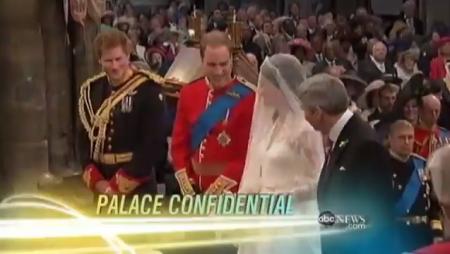
In a rare interview, Prince William gave ABC News the clearest sign yet that he and his wife Kate Middleton are planning to try for a baby soon. In an interview to mark his grandmother’s diamond jubilee – 60 years on the throne – the future king said starting a family is a top priority. Discussing his military plans, Prince William, who will himself turn 30 next month ( Kate Middleton turned 30 this winter), told Katie Couric: “More importantly, I’d rather like to have children. That’s the key thing really.” Katie Couric Interview With Prince William “But I’m just very keen to have a family and both Catherine and I, you know, are very much looking forward to having a family in the future.” When asked whether there was anything he would like to announce, the prince said coyly: “You won’t get anything out of me. Tight lipped.” Fortunately, Couric didn’t overtly ask about the recent pregnancy rumors . William and brother his Prince Harry opened up during an interview at Clarence House in London for The Jubilee Queen , ABC’s special series on her. Watch another portion of the special feature after the jump: Prince William and Prince Harry Interview

Here is the original post:
Prince William "Keen" to Start Family With Kate Middleton

Ray J: Sued for Missing Marc Littlejohn Apparel

Ray J continues to feel the affects of Whitney Houston’s death . This time in the wallet, however, as opposed to the heart. Indeed, the man who made Kim Kardashian famous has been sued by stylist Marc Littlejohn because he allegedly hired Ray J to wear his clothing for a Grammy-related event on February 10. The problem? Those items were supposedly left in the hotel room where Houston died and, according to the lawsuit, have been missing since the day this singer passed away. Littlejohn is therefore suing Ray J for the cost of the clothing ($2,880) and demanding either the cash amount or the duds themselves. He’s had no luck so far in either case when reaching out to the artist or his mother. [Photo: WENN.com]

Go here to read the rest:
Ray J: Sued for Missing Marc Littlejohn Apparel

Adam Lambert Releases Official Music Video for "Never Close Our Eyes"

Adam Lambert has followed up an historic achievement with a brand new music video. The former American Idol runner-up finished atop the Billboard 200 chart last week, becoming the first openly gay musician to ever accomplish that feat. So, what does a talented singer do for an encore? He unveils the official video for “Never Close Our Eyes,” giving fans a futuristic look at a depressing world with not nearly enough color or dancing. But have no fear, Lambert is here! Watch him lead a revolution: Adam Lambert – “Never Close Our Eyes” (Official Music Video) “The one thing that I was really excited about was maybe something sort of science fiction,” says Adam of the shoot. “Something kind of New World Order, in the future. Something not of this reality. When we put that out there, a gentleman called Dori Oskowitz came back with an amazing treatment. This director is a really cool guy, totally on the same page as me.”

Read more from the original source:
Adam Lambert Releases Official Music Video for "Never Close Our Eyes"

Mitt Romney Clinches Republican Presidential Nomination; Can He Beat President Obama?

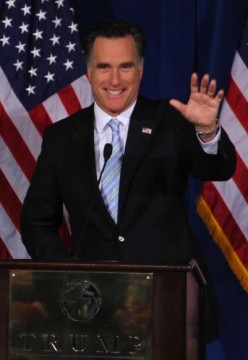
Having effectively won through attrition weeks ago, Mitt Romney officially wrapped up the Republican nomination for president last night with a win in the Texas primary. Romney’s win put an end to the GOP primary as the former Massachusetts Governor began to ramp up his general election message against President Obama. Just after 9 p.m., he Tweeted: “#1144. Thank You. Whatever challenges lie ahead, we will settle for nothing less than getting America back on the path to prosperity.” Despite surpassing the 1,144 delegate threshold, it was just a token evening for the presumptive nominee, whose rivals exited one by one over a month ago. Only Ron Paul is still fighting for delegates. With the White House out of reach, he seeks a prominent role at the party’s convention and in shaping its future. Romney didn’t make a speech last night, but the win was nonetheless symbolic, making him the first Mormon to be a major-party candidate for the presidency. The timing couldn’t have been better, as he is now being treated as an equal to Obama by the national media in what is sure to be a very close 2012 election. He’s pulled almost even with the president in voter surveys, currently trailing by just two percentage points in aggregated national polls, 45.6 to 43.6 percent. Romney probably has a 50-50 chance of being the 45th President of the United States. He’ll distance himself from Donald Trump if he’s smart. Just saying. If the election were held today, for whom would you vote?

Link:
Mitt Romney Clinches Republican Presidential Nomination; Can He Beat President Obama?