Tag Archives: nature

Farmers Find Organic Arsenal to Wage War on Pests

Mark Van Horn, director of the student farm at the University of California, is nearly lost as he walks through a yellow cloud of wild sunflowers around the edge of a field of tomatoes and sweet corn. Research here on wild sunflowers, he says, shows they are home to lady beetles and parasitic wasps, which are good bugs that kill bad bugs. “The sunflowers help us provide a bed-and-breakfast for beneficial insects and keep them going year round,” he said. “And native sunflowers are a lot better at it than domestic. There’s a lot more insect biodiversity in wild sunflowers.” While conventional farmers have a quiver full of chemical arrows to battle the invasion of weeds and pests, the organic farmer has a tougher row to hoe. There simply aren’t organic bug sprays that can match the power of synthetic chemicals and almost nothing in the way of organic herbicides. Instead, there’s a growing understanding among organic farmers of ways to harness natural systems as part of what is called integrated pest management. And there’s a small burst of new research into organic farming techniques as a result of the 2008 farm bill, which finances a range of agricultural programs at a total of $307 billion. For years such research was financed at $3 million a year, and though the funds are still minuscule compared with conventional agricultural research, it’s now $20 million annually for the next few years, and may increase further. Instead of five to seven research grants per year, there are now two dozen. “You aren’t considered a kook anymore if you do this kind of research, as you were in the 1980s,” said Fred Kirschenmann, an organic farmer and a distinguished fellow at the Leopold Center for Sustainable Agriculture in Iowa. Research on organic agricultural ecosystems in the last few years has made some key findings and refined techniques organic growers use. A paper published in Nature this year confirmed what organic farmers have long suspected — that conventional farming can make the pest problem worse. David Crowder, an entomologist at Washington State University and an author of the paper, says that if there are more varieties of plants around the field, and no broad-spectrum pesticides, as in organic farming, it promotes balance among insect species, rather than letting one species dominate. “There are more natural enemies and they do a lot better job in organic fields controlling pests,” Dr. Crowder said. Natural enemies are key to the organic approach. Eric Brennan is the lone full-time organic researcher for the Agriculture Department, and he works in the Salinas Valley, the so-called salad bowl of America, where some 80 percent of the country gets its salad greens. One of the most difficult pests is the lettuce aphid. The treatment of choice for commercial organic lettuce is to plant an ornamental flower called alyssum among lettuce beds, taking up 5 to 10 percent of the total field. Hoverflies live in the alyssum and need a source of aphids to feed their young, so they lay their eggs in the lettuce. When they hatch, the larvae start preying on the aphids. “If you were an aphid on a head of lettuce, a hoverfly larva would be a nightmare,” said Dr. Brennan. “They are voracious eaters of aphids. One larva per plant will control the aphids.” Dr. Brennan is studying the most effective configuration of lettuce and alyssum beds. Some organic strawberry farmers use “trap crops” to lure insects away from their cash crop. Lygus bugs cause the berries to deform. But the bugs like alfalfa better than strawberries, so some farmers plant one bed of alfalfa for every 50 rows of berries. As the lygus bugs crowd into the green growth, a giant tractor-mounted vacuum cleaner comes by and sucks them up. Other farmers simply suck the bugs off the strawberry plants. cont. added by: JanforGore


The Cosmos + Sacred Geometry

We could be living in a small Universe where space is curved in on itself, rather like a football, say researchers in this week's Nature journal. Leonardo da Vinci had the right idea More precisely, we may inhabit a dodecahedral cosmos. It is, according to the scientists, the best way to account for the latest satellite observations. Dodecahedrons, and similar shapes, have long fascinated mankind. Plato believed that the Universe was made up of them. Leonardo da Vinci also studied them, as did the great astronomer Kepler, who thought the structure of the Solar System was based on geometrical shapes. Further observations, especially from space probes yet to be launched, may settle the matter, and may at last reveal the hidden geometry of the Universe. Ripples in the sky The Cosmic Microwave Background (CMB) radiation, the “echo” of the Big Bang, contains a wealth of data about the early history of the Universe, as well as its large-scale structure. If only we had precise enough observations of it to discriminate between competing ideas of what the Universe is like. The scientists were writing in Nature magazine Will it expand forever? Is space infinite? Such profound questions may have their answers in the CMB. Specifically, the answers may be found in the ripples in the CMB – miniscule, regular, fluctuations in its strength over the sky. Data from the US space agency's Wilkinson Microwave Anisotropy Probe (WMAP), which maps the CMB, suggests that at the very largest scales its temperature fluctuations seen across the sky are smaller than would be produced by an infinite Universe. It seems the WMAP data shows the Universe is too small for large fluctuations to be seen in the microwave background radiation. Positively curved space sections Astronomers from the US and France suggest that space itself is not big enough to support such waves. A small, cosmologically speaking, finite Universe, however, made of curved pentagons joined together into a sphere, would fit the observations. The answer could be in the CMB Writing a commentary in Nature, George Ellis of the University of Cape Town, says we live in a Universe “with positively curved space sections and a non-standard topology”. Indeed, a dodecahedral Universe, were you able to traverse it, would have some interesting properties. If you went out to the edge of the dodecahedron, you would come back in through the opposite face. More precise observations made by WMAP and by its successor, the Planck satellite, to be launched in 2007, will tell scientists if the cosmos does have such a shape, or if it is even stranger. http://news.bbc.co.uk/2/hi/science/nature/3175352.stm http://www.youtube.com/watch?v=NbHHr90psIs added by: mattovermatter

Green Gift Guide: The Outdoors Enthusiast (Slideshow)

Photo: TreeHugger It’s likely that the outdoors enthusiast is the person on your holiday gift list that cares the most about getting eco-friendly presents — after all, you’re helping protect his or her favorite playground: Mother Earth. From must-have gear for weekend adventures to durable campsite cookware and engrossing books for rainy days, these gifts will get your nature-fiend in the right place: outdoors. Produced by Mairi Beautyman

See the original post here:
Green Gift Guide: The Outdoors Enthusiast (Slideshow)

Researchers Ditch Toxic Nanoparticle Chemicals for Delicious Cinnamon

Nanoparticles these days are quietly being slipped into products and processes as diverse as electronics, healthcare products (like sunscreen), and pharmaceuticals to fight cancer. http://www.dailytech.com/Arsenic+Nanoparticle+Fights+Breast+Cancer/article19058…. But for all that promise, there's a dark side. In order to make nanoparticles like tiny gold nanoparticles( http://www.dailytech.com/Gold+Nanoparticles+Dont+Just+Look+Pretty+They+Fight+Can… ) or titanium dioxide nanoparticles, caustic chemicals frequently are required. Scientists are concerned that minute quantities of those chemicals could harm the human body( http://www.dailytech.com/Nanotech+the+New+Asbestos+Carbon+Nanotube+Toxicity/arti… ), causing cancer or other diseases. But a University of Missouri research team, led by MU Physics and Radiology Professor Kattesh Katti thinks they have a solution — cinnamon. The team mixed gold salts in water with cinnamon and discovered that they remarkably formed nanoparticles. Typically such particles form only when exposed to an electric field or when toxic chemicals are added to the mix. Fellow radiology professor Raghuraman Kannan, who participated in the study, comments, “The procedure we have developed is non-toxic. No chemicals are used in the generation of gold nanoparticles, except gold salts. It is a true 'green' process.” Professor Katti adds, “From our work in green nanotechnology, it is clear that cinnamon — and other species such as herbs, leaves and seeds — will serve as a reservoir of phytochemicals and has the capability to convert metals into nanoparticles. Therefore, our approach to 'green' nanotechnology creates a renaissance symbolizing the indispensable role of Mother Nature in all future nanotechnological developments.” More serendipitous yet, the cinammon nanoparticles were found to release phytochemicals found in cinnamon debris. These phytochemicals have been shown to kill or reduce the growth of certain types of cancer cells. So not only are these particles non-toxic, but they also fight cancer. Professor Katti elates, “Our gold nanoparticles are not only ecologically and biologically benign, they also are biologically active against cancer cells.” It all sounds too good to be true, but the team insists that the approach is reliable. They hope to ready it for production so that the new cinnamon-gold nanoparticles can replace existing toxic varieties. The study on the work was published in the journal Pharmaceutical Research. http://www.ncbi.nlm.nih.gov/pubmed/20872051 added by: toyotabedzrock

In Norway, a Landscape Hotel Surrounds Its Guests with Nature, But It’s No Cheap Trip

Photos courtesy of JSA Architects + Juvet Hotel The Juvet Landscape Hotel in Gudbrandsjuvet, Norway is accurately named. Its seven rooms (each a separate building) offer spectacular views of the surrounding area: mountains, streams, valleys, and, no one room can be seen from any other. Once you get over staring out the window and get yourself outdoors, you can ski (even in summer), hike, go white water rafting, camp, and visit the Geirangerfjord Mountain Farm, a UNESCO World Heritage Site . … Read the full story on TreeHugger

See the rest here:
In Norway, a Landscape Hotel Surrounds Its Guests with Nature, But It’s No Cheap Trip

Longstanding Cepheid Mass Mystery Finally Solved

Cepheid variable stars – a class of stars that vary in brightness over time – have long been used to help measure distances in our local region of the Universe. Since their discovery in 1784 by John Pigott, further refinements have been made about the relationship between the period of their variability and their luminosity, and Cepheids have been closely studied and monitored by professional and amateur astronomers. But as predictable as their periodic pulsations have become, a key aspect of Cepheid variables has never been well-understood: their mass. Two different theories – stellar evolution and stellar pulsation – have given different answers as to the masses that these stars should be. What has long been needed to correct this error was a system of eclipsing binary stars that contained a Cepheid, so that the orbital calculations could yield the mass of the star to a high degree of accuracy. Such a system has finally been discovered, and the mass of the Cepheid it contains has been calculated to within 1%, effectively ending a discrepancy that has persisted since the 1960s. The system, named OGLE-LMC-CEP0227, contains a classical Cepheid variable (as opposed to a Type II Cepheid, which is of lower mass and takes a different evolutionary track) that varies over 3.8 days. It is located in the Large Magellanic Cloud, and as the stars orbit each other over a period of 310 days, they eclipse each other from our perspective on Earth. It was detected as part of the Optical Gravitational Lensing Experiment, and you can see from the acronym soup that this yields the first part of the name, the Large Magellanic Cloud the second, and CEP stands for Cepheid. A team of international astronomers headed by Grzegorz Pietrzynski of Universidad de Concepci

The 2010 National Geographic Photo Contest

Salvation: Appreciate Life The 2010 National Geographic Photo Contest attracts thousands of imaginative and amazing photos from around the world each year. The entry deadline is November 30, so you still have a few more days to submit your best photos in three categories: People, Places, and Nature – more – – – LINK- – – http://news.yahoo.com/nphotos/The2010-National-Geographic-PhotoContest/ss/events… added by: remanns

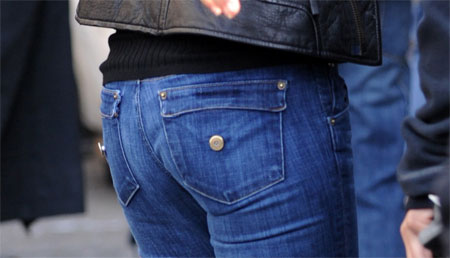
Jennifer Aniston’s Ass in Denim of the Day

I was just complaining to a friend about how the paprazzi fucking suck cuz they never get solid ass shots. It’s like they have contracts with these celebrity cunts that says “no ass allowed” and I’m the kind of guy who needs to look at that shit….but then I came I saw these Aniston ass shots, but that doesn’t really count cuz she’s so fucking desperate to get pregnant, that she’s parading her shit around, hoping anything hits and sticks to her uterus, probably paying the paparazzi to make sure they get her ass, cuz I’ve watched the nature channel and I’ve seen how monkey’s seduce each other when they are ready to get knocked up during mating season…. The desperation has set in, the biological clock has probably stopped ticking, and I am surprised these aren’t pics of her bent over smearing cum she pulled out of a used condom she found on the side of the street inside herself, hoping it works….

See the original post here:
Jennifer Aniston’s Ass in Denim of the Day

Scientists Capture Antimatter Atoms in Particle Breakthrough!

Scientists capture antimatter atoms in particle breakthrough By Thair Shaikh, CNN November 18, 2010 12:21 p.m. EST STORY HIGHLIGHTS * Antihydrogen atoms were trapped in a magnetic field * Matter and antimatter annihilate each other on contact * “It's taken us five years to get here,” says Professor Jeffrey Hangst * CERN's next ambition is to create a beam of antimatter (CNN) — Scientists have captured antimatter atoms for the first time, a breakthrough that could eventually help us to understand the nature and origins of the universe. Researchers at CERN, the Geneva-based particle physics laboratory, have managed to confine single antihydrogen atoms in a magnetic trap. This will allow them to conduct a more detailed study of antihydrogen, which will in turn allow scientists to compare matter and antimatter. Understanding antimatter is one of the biggest challenges facing science — most theoretical physicists and cosmologists believe that at the Big Bang, when the universe was created, matter and antimatter were produced in equal amounts. However, as our world is made up of matter, antimatter seems to have disappeared. Understanding antimatter could shed light on why almost everything in the known universe consists of matter. Antimatter has been very difficult to handle because matter and antimatter don't get on, destroying each other instantly on contact in a violent flash of energy. It's taken us five years to get here, this is a big milestone –Professor Jeffrey Hangst In a precursor to today's experiment, in 2002 scientists at CERN produced antihydrogen atoms in large quantities, but they had an incredibly short lifespan — just several milliseconds — because the antihydrogen came into contact with the walls of their containers and the two annihilated each other. In this latest experiment the lifespan of the antihydrogen atoms was extended by using magnetic fields to trap them and thus prevent them from coming into contact with matter. The researchers created 38 antihydrogen atoms and held on to them for about a tenth of a second, which is long enough to study them says Professor Jeffrey Hangst, one of the team of CERN scientists who worked on the program. Hangst and his colleagues produced a magnet field which was strongest near the walls of the trap, falling to a minimum at the center, causing the atoms to collect there in a vacuum. “We could have held them for much longer… I am just full of joy and relief, it's taken us five years to get here, this is a big milestone,” Hangst told CNN. To trap just 38 atoms, they had to run the experiment 335 times, says Nature which published the report findings. Hangst added: “This was ten thousand times more difficult than creating untrapped antihydrogen atoms. “This will help us understand the structure of space and time. For reasons that no one yet understands, nature ruled out antimatter… this inspires us to work that much harder to see if antimatter holds some secret.” Malcolm Longair, professor of natural philosophy at Cambridge University, told CNN that CERN's results were a considerable achievement. “At the Big Bang we believe the temperatures were very very high and we understand in theory why antimatter disappeared but there is no physical theory to back it up.” Antimatter was first predicted in 1931 by the British physicist Paul Dirac, who theorized that antimatter is ordinary matter in reverse. CERN's next ambition is to create a beam of antimatter which they hope will allow them to unpeel more of the mysteries surrounding it. added by: EthicalVegan

Lindsay Lohan Second Failed Test — Amphetamines

Filed under: Lindsay Lohan , Celebrity Justice Lindsay Lohan ‘s second failed drug test involved amphetamines … TMZ has learned. We broke the story … Lindsay failed two drug tests — One for cocaine, and now we know the second was for amphetamines. Our sources would not divulge the nature of the… Read more

Read the original here:
Lindsay Lohan Second Failed Test — Amphetamines