Tag Archives: ncis

Smart cities (un)paving the way for urban farmers and locavores

Evan Fraser, co-author of the new book Empires of Food: Feast, Famine, and the Rise and Fall of Civilizations, declared on NPR's All Things Considered recently that our entire future is imperiled by a global food system “built on some very, very rickety pillars.” Fraser warns that the U.S. is making the same agricultural missteps that brought down the Roman and Mayan Empires: degrading our topsoil; banking blindly on ever-higher yields at a time when unstable weather patterns and depleted resources will more likely bring reduced harvests; cultivating a monoculture that's economically efficient but ecologically ruinous. And talk about a vicious cycle — our fossil fuel-intensive, forest-and-ocean-destroying farming methods worsen climate change, which makes it ever harder to grow food all over the world. A relocalized food system, or “foodshed” (i.e., the path that our food travels to get from farm to plate) offers city dwellers a sustainable alternative to Agribizness-as-usual. Shorten your supply chain and you stand to reap a long list of benefits: increased food security; green space provided by urban farms and gardens; more fresh, wholesome foods and job opportunities where they're needed most; less pollution and waste; and reinvigorated local economies. A seismic shift toward greater self-sufficiency is rippling through every region. We've seen a dramatic rise in farmers markets and CSAs (community supported agriculture programs), and tremendous enthusiasm for community and school gardens and urban farms. Food policy councils are cropping up all over the country. From Sonoma to Chicago to Sheboygan, these coalitions have brought together policy makers, for-profit and non-profit enterprises, farmers, gardeners, and advocates to figure out how to go about relocalizing our food systems. The first link in this brave new food chain? Land tenure, zoning issues, and other regulatory hurdles that city folks have to contend with in order to grow food to feed themselves or sell to others. They’re also working on how to collect and compost food waste instead of shipping it to the landfill; how to increase the percentage of locally sourced ingredients in schools, hospitals, prisons, and other publicly run institutions; how to facilitate local food production and ease distribution bottlenecks; and how to support all kinds of urban agriculture, from school and community gardens to rooftop farms, aquaculture, chicken keeping, and bee keeping. Zoning in on vegging out There's no shortage of places to grow food in even the most densely built communities. What's in short supply, in some cities, is better access to these spaces, and more secure tenure. With all the sweat equity that it takes to turn a barren lot or a rooftop into an edible oasis, our community gardeners and city farmers deserve to have their cherished plots protected from being plowed under to make way for more condos. Here in New York, hundreds of community gardeners and urban ag advocates turned out at a recent hearing to voice their concerns about proposed regulations that would sow uncertainty like a pernicious perennial weed in their carefully cultivated beds. Even now, despite a development-dampening recession and the resurgence of urban farming, community gardeners can't afford to let down their guard. Detroit has become an international poster child for urban agriculture, with an estimated 40 square miles or so of open land and a mayor, Dave Bing, who's eager to convert those vacant lots into productive farms. But Detroit's current zoning laws “neither define nor set standards for community gardening or commercial agriculture,” according to the city planning commission's urban agriculture draft policy. So, Detroit's thriving farms are off the radar, officially speaking. Mayor Bing is being encouraged to move “quickly to change the city and state legal structure to accommodate them,” as the Detroit News reports; Grist's Tom Philpott has more on the history and future of Detroit's urban-ag scene. Seattle Mayor Mike McGinn has declared 2010 the “year of urban agriculture”, as Tyler Falk reported for Grist, and he means it: the city government this month approved new legislation that allows any would-be urban farmer to grow and sell food, increases the number of backyard poultry allowed from three to eight, and other urban-ag-friendly moves. In Los Angeles, Jason Kim, the young chef behind a hot new Silver Lake eatery named Forage, had the novel idea of letting home gardeners trade their surplus produce for meals at his restaurant. As the word spread, Kim's “Home Growers Circle” grew to include more than a dozen backyard farmers. But four months after he launched the program, Kim was obliged to suspend it after the health department informed him that produce from unlicensed growers would be a liability risk should a customer become ill. After doing a little homework, the folks at Forage and the backyard farmers discovered that the Home Growers Circle could receive the same certification that lets professional farmers sell their produce at farmers markets, just by paying a $63 fee and undergoing an inspection. So, as of July, the Home Growers Circle is back in action, equipped with Certified Producer's Certificates from the county agricultural commission that permit them to sell their backyard surplus to restaurants and markets. Front-yard farmers in Sacramento, meanwhile, are just grateful they're allowed to grow any food at all. It took food activists three years to overturn a ban on front yard food gardens that dated back to 1941. Now, they just have to get to work on Sacramento's mayor, who left food out of the equation when he recently announced a “Green Initiative” to make his city more sustainable. It's an all-too-common oversight. Mayor Bloomberg — famous for championing a soda tax, salt reduction, and calorie counts — mysteriously ignored food when he announced New York City's sustainability blueprint, PlaNYC. So, Manhattan Borough President Scott Stringer stepped up to the plate and collaborated with local good-food folks (disclosure: myself among them) to create FoodNYC, a comprehensive plan to relocalize New York City's foodshed through such initiatives as an Urban Agriculture Program and an Office of Food and Markets. The FoodNYC team has met with the mayor to discuss incorporating their proposals into PlaNYC, but Bloomberg has yet to sign on. San Francisco Mayor Gavin Newsom needs no such prodding to put food policy front and center. In July, Newsom issued an executive directive which has the potential to “dramatically accelerate urban food production,” according to New School professor Nevin Cohen, an urban food policy expert who lauds Newsom's specific mandates as a meaningful step up from the non-binding agreements and resolutions that typify so many food policy initiatives. added by: JanforGore

Lady Gaga Redefines Pop: A VMA Cheat Sheet!

Since the 2009 VMAs, Gaga has become an international sensation. By Jocelyn Vena Lady Gaga at the 2009 VMAs Photo: Christopher Polk/ Getty Images With a whopping 13 nominations, Lady Gaga is bound to take home at least a Moonman or two when the 2010 MTV Video Music Awards go live September 12.

Read the original:
Lady Gaga Redefines Pop: A VMA Cheat Sheet!

Bradley Cooper, Ryan Reynolds To Star In Upcoming Buddy Cop Film

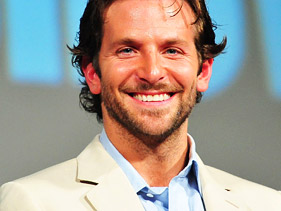
Duo will reportedly play police officers who are forced to work on a case with their fathers. By Adam Rosenberg Bradley Cooper Photo: Jun Sato/ Getty Images Deadpool and the A-Team’s Faceman may soon be fighting crime together. It’s an odd pairing that will be made even stranger by the fact that each will bring his dad along. Heartthrob Ryan Reynolds and equally heartthrobby Bradley Cooper are attached to star together in an untitled action comedy, according to The Hollywood Reporter . The duo will star as a pair of San Francisco cops who are forced to work with their former-cop fathers on a case. THR reports that the comedy is “meant to have an updated ‘Lethal Weapon’ flavor that plays into edgier R-rated territory,” so expect profanity and lewd behavior to go along with the high body count. The script comes from “Up in the Air” scribe Sheldon Turner, who reportedly sold it for a seven-figure sum. The pitch was first developed by producers Neal Moritz and Andrew Panay five years ago with the title “Blowback”; back then, Dwayne Johnson was attached as one of the stars. Moritz and Panay are producing this second crack at the concept, as are J.C. Spink and Chris Bender of the production company Benderspink and Jonathon Komack Martin of Reynolds’ Dark Trick Films. No studio is set yet, but Moritz and Panay are set up at Sony. Reynolds has spent this summer shooting and promoting next summer’s “Green Lantern” adaptation. He’ll show up next month in Lionsgate’s indie thriller “Buried.” Reynolds is also supposed to be reprising his 2009 role as the joke-cracking mercenary Deadpool in a reboot of the character that Robert Rodriguez may direct. Cooper showed up earlier this summer as Faceman in “The A-Team.” He’s got a sequel to the smash 2009 comedy “The Hangover” lined up for a May release. He also recently finished shooting for Neil Burger’s sci-fi thriller “The Dark Fields” with Robert De Niro and Abbie Cornish. What do you think of Ryan Reynolds and Bradley Cooper being in a movie together? Let us know in the comments!

Follow this link:
Bradley Cooper, Ryan Reynolds To Star In Upcoming Buddy Cop Film

Amanpour Offers Bitter-Clinger Variation To Explain Beck Rally Success

Christiane Amanpour just sealed her victory as recipient of my Obama Parrot of the Week Award . .   That’s the dubious prize I give out to on my local TV show to the media member most ardently echoing the Obama party line.  The moderator of This Week sewed up the win with her remarks on GMA this morning, as she sought to explain the big turnout at Glenn Beck’s rally yesterday. Readers will recall that at that ritzy fund-raiser in San Francisco, candidate Obama explained the attitudes of poor rural Pennsylvanians in terms of “bitter” people who “cling” to their religion and values.  Check out Amanpour’s analysis of those attending the Beck rally and other similar events, and see if it doesn’t sound eerily similar. CHRISTIANE AMANPOUR:  Most of the speeches, which were about religion , about God, about the title of the march, which was Restoring Honor, which meant about the military, and every time that the speakers spoke about members of the military at war in Iraq and Afghanistan there were huge cheers. And it was about—as speaker after speaker kept saying—restoring patriotism and proud-to-be-an-American .  I point that out because I think that it was gets such a big cheer from people. And perhaps when we try to figure out why there’s such a huge number of people coming to these rallies, in a period of time when people feel such anxiety, such anger, such sort of worry about what’s going on around them—the economy and the rest—they come here and they hear a feel-good message, and that they respond to. Sounds like Amanpour sees religion and patriotism as . . . the opiate of the masses.

See the rest here:
Amanpour Offers Bitter-Clinger Variation To Explain Beck Rally Success

Open Thread: Terrorist Sings For Canadian Version of ‘American Idol’

For general discussion and debate. Possible talking point: “A man arrested this week as part of a suspected terrorist plot has been identified as an aspiring singer who tried out for Canada’s version of ‘American Idol’ in 2008!” I hope he’s a better terrorist than a singer – errrr, maybe not!

Read the original post:
Open Thread: Terrorist Sings For Canadian Version of ‘American Idol’

CNN Advocates Watered-down Politically Correct Christianity

CNN on Friday disgustingly advocated for a watered-down, more politically correct version of Christianity. Highlighted at its website was research from a Princeton theology professor on the state of Christianity among teenagers. The study found that American churches have fallen for PC feel-good morality that’s afraid of confrontation – and the result is a generation unable to distinguish Christianity from simple theism. The author of the study, Kenda Creasy Dean, said the process was “depressing” as she interviewed one Christian after another describing God as a “therapist” who exists to validate their “self-esteem.” Worse yet, many of them could not give a coherent explanation of the Gospel, content with a general belief that God wants them to “feel good and do good.” And in MSM newsrooms across the fruited plain, there was much rejoicing. Incessant pressure to water down Christianity has finally paid off. CNN reporter John Blake wrote a piece on the sad phenomenon with no introspection as to who might be causing it: If you’re the parent of a Christian teenager, Kenda Creasy Dean has this warning: Your child is following a “mutant” form of Christianity, and you may be responsible. Dean says more American teenagers are embracing what she calls “moralistic therapeutic deism.” Translation: It’s a watered-down faith that portrays God as a “divine therapist” whose chief goal is to boost people’s self-esteem. As to the causes of why this is happening, readers were given a vague explanation: Some adults don’t expect much from youth pastors. They simply want them to keep their children off drugs and away from premarital sex. Others practice a “gospel of niceness,” where faith is simply doing good and not ruffling feathers. The Christian call to take risks, witness and sacrifice for others is muted, she says. “If teenagers lack an articulate faith, it may be because the faith we show them is too spineless to merit much in the way of conversation,” wrote Dean, a professor of youth and church culture at Princeton Theological Seminary. She says pastors often preach a safe message that can bring in the largest number of congregants. The result: more people and yawning in the pews. “If your church can’t survive without a certain number of members pledging, you might not want to preach a message that might make people mad,” Corrie says. “We can all agree that we should all be good and that God rewards those who are nice.” Corrie, echoing the author of “Almost Christian,” says the gospel of niceness can’t teach teens how to confront tragedy. Hmmm, why on Earth would pastors feel pressure to promote a gospel of niceness? Why would they be afraid of making their communities angry? Blake was clueless. There was no more discussion of the PC culture, no research into who came up with spineless Christianity. This NBer decided to help Blake out with a search of CNN’s archives. Turns out, his employer has been pushing angry backlash against fundamental Christians for years. April 23, 2010 saw CNN prime-time anchor Larry King shamefully pit a Christian lesbian against a conservative pastor for an hour of televised demagoguery. Back in 2007, the network aired a documentary in which anchor Christiane Amanpour suggested conservative Christians are akin to the Taliban. And who can forget CNN’s hard-hitting investigation that found a personal commitment to Christ leaves beautiful women “single and lonely.” Whenever evangelicals grow a spine on a particular issue, CNN can be counted on to assure that it will “make people mad.” From gay marriage to abortion to authenticity of Scripture , the network loves to marginalize traditional Christianity. And it isn’t alone. Last November, Fox Network’s hit series “Glee” portrayed evangelicals as heartless jerks who get drunk while watching Glenn Beck. A month later, CBS crime drama “NCIS” preposterously imagined a fictional Christian honor killing – in an episode that aired mere days before Christmas.  Over on the NBC network in 2008, hit series “Law & Order” portrayed an unhinged college evangelical hurling death threats at liberal professors. And in 2007, New York Magazine’s Vulture blog cheerfully listed the 10 Most Anti-Christian Films to come out of Hollywood.  When faced with evidence of systematic cultural mocking toward Christianity, liberals’ fallback argument is to claim that all religions are scorned in American media. Yet some religions seem to be more hated than others. Try searching for a list of anti-Muslim movies on New York Magazine’s website. Or anti-Wiccan. Or anti-Hindu. Hollywood projects that mock those faiths are not so highly celebrated. Try waiting for “Glee” to parallel the sad plight of Muslim American teenagers murdered by their own parents for embarrassing Islam. The show’s producers are willing to exaggerate bigotry among Christians while ignoring real domestic violence elsewhere. Also overlooked is the suffering of pregnant teen girls forcibly dragged into abortion clinics, sometimes at literal gunpoint , by angry parents. No, the real threat to children is Christians who read the Bible, want to preserve every life, and encourage healthy living. Inside the backward mind of liberals, pro-life, pro-family messages are responsible for destroying lives. In such a climate, it’s no wonder pastors are afraid of being confrontational. Having contributed to a weakened, watered-down version of Christianity, CNN is now playing dumb as to how it happened. Blake did not mention a single word about pastors unfairly getting smeared as bigots, or perhaps that these oversensitive communities are being coddled by the media. Controversial Muslims who might be out there “making people mad?” Not so much. Less than a week ago, here’s how CNN introduced the Ground Zero Mosque imam: Video clips posted today by a conservative blogger have set off a new round of bitter debate over the Islamic community center and mosque planned near Ground Zero. Are the clips part of a smear campaign or do the imam’s critics have legitimate concerns? Don’t look for the mainstream media to be reporting on a spineless version of Islam any time soon.

Read more:
CNN Advocates Watered-down Politically Correct Christianity

Jesus was Latino!

Francisco Ramos has the inside scoop on why Jesus was Latino. added by: jubal

Back To School: Officials Plan To Tag Your Kids With Tracking Devices

American public schools look more like youth internment centers, tracking students as district property, tagged and spied upon like criminals. In California officials are outfitting preschoolers in Contra Costa County with tracking devices they say will save staff time and money. In Texas a judge ordered 22 students at Bryan Highschool to carry GPS tracking devices in the name of preventing truancy. Now in Connecticut officials are considering Considers Tracking Devices for Students. READ THE ENTIRE ARTICLE: http://morichesdaily.com/2010/08/school-officials-plan-tag-kids-tracking-devices… added by: MorichesDaily

With Friends Like These, Who Needs Glenn Beck? Racism and White Privilege on the Liberal-Left

His words rang out with an unmistakable certitude. “This is the most racist place I’ve ever lived,” said the man sitting across from me, a black writer and poet whose acquaintance I had only made earlier that day. His expression made it clear that this was no mere hyperbole spat out so as to get a reaction. He meant every word and proceeded in about twenty minutes to lay out the case for why indeed this place where we were talking — San Francisco — was far more racist, in his estimation than any of several places he had lived in the South. Worse than Birmingham. Worse than Jackson, Mississippi. Worse than Dallas. San Francisco. Yes, that San Francisco. From police harassment to profiling to housing discrimination to a persistent invisibility he’d felt since first arriving, there was no doubt that the ostensibly liberal enclave was head and shoulders above the rest. And it wasn’t his opinion alone. I have heard similar feelings expressed about the Bay Area by peoples of color many times since, as well as about Seattle, Portland, and any number of other supposedly progressive paradises where various “alternative” types (of white folks at least) seem to feel at home. Even those who wouldn’t rank a place like San Francisco as the most racist city in which they’d lived, are often quick to insist that its racism is comparable to what they’ve experienced elsewhere, which is to say, no less a problem. When I’ve recounted these discussions with folks of color living in “progressive” cities to my white liberal friends, they have usually recoiled in shock, followed by a kind of white leftie defensiveness that was, sadly, unsurprising. Their responses to the news that black and brown folks don’t find the history of the Haight-Ashbury district, or the Summer of Love all that inspiring — after all, when Jefferson Airplane and the Grateful Dead were entertaining white hippies in the Fillmore, black folks were fighting for their lives across the way in Oakland — often suggest a desire on their part to believe that the people to whom I’d spoken were seeing things. Unfortunately the pattern is all too common. If people of color complain about racism and discrimination in rural Georgia, no one is surprised. In fact, to many the image is comforting as it fulfills every stereotype, regional and political, that so many folks continue to carry around regarding who the bad guys are. But suggest that racism and discrimination are also significant problems in more “progressive spaces,” even among self-proclaimed liberals and leftists themselves — and that it might be unearthed in our political movements — and prepare to be met with icy stares, or worse, a self-righteous vitriol that seeks to separate “real racism” (the right-wing kind) from not-so-real racism (the kind we on the left sometimes foster). And know that before long, someone will admonish you to focus on the “real enemy,” rather than fighting amongst ourselves. “What we need is unity,” these voices say, “and all that talk about racism on the left just divides us further.” But such arguments, in addition to being terribly convenient for the white folks who typically spout them — since it relieves us of having to examine our own practices and rhetoric — are also horribly shortsighted. Only by addressing our own racism (however inadvertent it may be at times) can we grow movements for social justice. By giving short shrift to the subject, internally or in the larger society, we virtually guarantee the defeat of whatever movements for social transformation we claim to support. It’s worth recalling that at the height of the civil rights movement it was not merely conservatives and reactionaries who were the targets of the freedom struggle. Indeed, some of the harshest criticism was reserved for moderates and even liberals, whether the white clergy whom Dr. King was chastising in his “Letter from a Birmingham Jail,” or Presidents Kennedy and Johnson. In the case of the latter two, neither their relative liberalism (when compared to their political opponents) or party affiliation insulated them from the legitimate ire of peoples of color and their white antiracist allies. Going back further we should recall that it was perhaps the nation’s most progressive president, Franklin Roosevelt, who not only OKd the internment of Japanese Americans, but who was also willing to cut out virtually all African Americans from the key programs of the New Deal so as to placate southern segregationists in his own party (1). Capitulating to racism, and even practicing it, has a sad pedigree on the left of the spectrum as with the right. And it is time we faced this fact honestly. Distinguishing Racism on the Left from Racism on the Right That said, and before detailing what liberal and progressive racism often looks like, let me be clear: racism on the left is not exactly the same as its counterpart on the right. Whereas conservative theory lends itself almost intrinsically to racist conclusions, for reasons I explained in the first essay, liberal theory is generally egalitarian and intuitively antiracist. Liberal and left-leaning folks typically endorse notions of equality in both the political and economic realms. Likewise, most all on the left outwardly reject the attribution of biological or cultural superiority to racial groups. And those on the left are quick to acknowledge and decry the systemic injustices that have been central to the creation of racial disparities in the United States. So too, virtually all the activists in the civil rights struggle, contrary to the revisionism of folks like Glenn Beck, were decidedly to the left. Liberals and left-radicals populated the movement and provided its energy, while leading conservatives like William F. Buckley and his colleagues at The National Review published paeans to white supremacy in which they advised that integration should wait until blacks had progressed enough, in civilizational terms, to be mingled with their betters. Dr. King — even as conservatives like Beck have tried to co-opt his message and his legacy — put forth a consistently progressive and even leftist politics, in terms of his views on race, as well as economics and militarism. But despite the overwhelming role of liberals and leftists in the struggle for racial equity, and despite the antiracist narrative that dovetails with left philosophy, liberal and left individuals and groups in practice have manifested racism in a number of ways. Racism 2.0: White Liberals and the Problem of “Enlightened Exceptionalism” For years, the insistence by whites that “some of (their) best friends” were black was perhaps the most obvious if unintentional way for these whites to expose their broader racial views as anything but enlightened. Whenever we as white folks have felt the need to mention our close personal relationships with African Americans, it has usually been after having just inserted our feet into our mouths by saying something racially intemperate or even racist in the presence of someone of color. Nowadays, the assurance that “some of my best friends are black” as a way to demonstrate one’s open-minded bona fides has been supplanted by a more tangible and ostensibly political statement: namely, that “I voted for Barack Obama.” Thus, imply the persons stating it (often quite liberal in terms of their overall political sensibilities), don’t accuse me of racism. … full article at link added by: animalia_libero

In California, pot not just for stoners and sick anymore

John Wade, 43, a San Francisco commercial lighting specialist, takes a quick hit from a marijuana cigarette on the golf course to steady himself before putting. Sarika Simmons, 35, of San Diego County, sometimes unwinds after her children are asleep with tokes from a fruit-flavored cigar filled with pot. And retiree Robert Girvetz, 78, of San Juan Capistrano, recently started anew — replacing his occasional martini with marijuana. http://seattletimes.nwsource.com/html/nationworld/2012632446_potlife16.html?prmi… added by: JackHerer