I never tire of looking at Kristen Stewart. In the new issue of V Magazine , which features the On The Road actress in a 10-page photo spread,by Inez & Vinoodh and on its cover, writer Sarah Cristobal writes that there is “a slightly feral air” to Stewart’s presence, and that’s exactly what makes her so fascinating to watch on and off screen. I wish On The Road had been a more cohesive movie, and a better showcase for Stewart’s talents post- Twilight Saga , but she clearly has no regrets. The actress tells V that the Walter Salles picture has been “a fucking amazing experience. I would have done anything, I would have played any part.” She adds that the character she did play, Marylou, who was based on Beat icon Neal Cassady’s onetime wife LuAnne Henderson, was “remarkable because she has a tough core. When you are a teenager a year can be crippling to maneuver through, you’re just out there questioning things and so to be completely ok with that and not think that there is anything wrong with you, that’s something I’ve recently understood,” says Stewart, who points out that she’s 22 where “Marylou started this whole thing when she was 15.” As Stewart told Movieline , playing Marylou helped her to be “unabashedly” herself , and she elaborates on that theme a bit with V . After a year in which she weathered a storm of overheated Scarlet Letter -style publicity and issued a public apology for cheating on reported boyfriend and Twilight co-star Robert Pattinson with her Snow White and the Huntsman director Rupert Sanders , Stewart tells the publication: “I have realized that you can close yourself off to life if you put walls up, but it’s a difficult thing…people can’t see in and you also can’t see out. So I have gotten quire comfortable with just being unafraid. I keep saying the same thing, its not about being fearless but really just embracing the fears and using them. (..) I don’t want to deprive myself of any bit of life. Oh yes, and if you’re wondering which actresses are on Stewart’s radar, she says there “are many cool girls out there” and name-checks Jennifer Lawrence, Amy Adams and her Twilight Saga and The Runaways co-star Dakota Fanning. Now check out some pictures. Read More on Kristen Stewart: Kristen Stewart Goes ‘On The Road’ & Chats Up Her Racy Role WATCH: Kristen Stewart Channels The Fierce Bella Swan In ‘Today’ Interview [ V Magazine ] Follow Frank DiGiacomo on Twitter. Follow Movieline on Twitter.
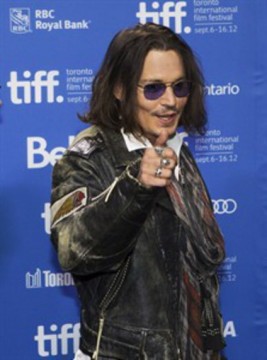
Even as he anticipated the sunset of his filmmaking career recently, Quentin Tarantino is looking ahead to who he’d like to work with, and Johnny Depp tops the list. The Django Unchained director said he’d like Depp to star in a future pic, but will only cement plans once he’s written the perfect part for the Pirates of the Caribbean actor. [ Related: Quentin Tarantino Hints At Retirement And Getting High On ‘Django Unchained’ and Quentin Tarantino Wants You To Feel The Inhumanity Of Slavery In ‘Django Unchained’ ] Tarantino told talk show host Charlie Rose that it would be “magical” to work with the 49 year-old actor, adding: “We would love to work together. We’ve talked about it for years. Not that we get together and talk about it for years, but from time to time.” The two appear to have mutually high esteem for the other, according to Tarantino. But the key is finding the right moment. “We’re obviously fans of each other,” he said according to Contactmusic.com. “I just need to write the right character that I think Johnny would be the right guy to do it with. And if he agrees, then we’ll do it, and then it’ll be magical.” Continuing, Tarantino shared that he hasn’t as of yet, “written the perfect character for Johnny Depp as of yet. Maybe someday I will, maybe someday I won’t. We’ll see.” Tarantino also said he’d like to work with Meryl Streep and Michael Caine. The filmmaker recently unveiled plans for a new movie, tentatively titled Killer Crow , which would again center on people rising up against their overlords, forming a trilogy with the current Django Unchained and 2009’s Inglorious Basterds . [ Sources: Contactmusic.com , Mid-Day.com ]
Top 10s abound, but what the hell, its New Year’s Eve and there are mere hours left (in the Western Hemisphere at least) to look back on the year while it’s still here – Happy New Year Australia, N.Z., Japan and much of Asia. [ Related: Mash-Ups, ‘Moonrise,’ And ‘Miami’ Connections: Jen Yamato’s Top 10 Movie Moments of 2012 and Amy Nicholson’s / Top 10 of 2012 / Written In Haiku ] For those trolling the internet Monday and stumble on this list, I hope it’ll spawn more Top 10s. Either in your own mind or better yet – in the comments below. Or even just give your Top 5 or hell… Just your one favorite. Or even your least favorite. Just go for it, don’t be shy. Below is my ten favorites for 2012. I admit, mine may be loaded with some of the “cold and corny prestige pics and all those ‘respectable’ ‘films’ headed for Oscar gold” as my fab colleague Jen Yamato describes – but there it is… My favorite, Amour , was also the toughest to watch, but it just stayed with me through the rest of the year after having the privilege to see it for the first time in Cannes last May. I saw it again in December and it stayed with me as my favorite even if I was rather numb walking out of the theater. It is one helluva tough one, but so good. Disagree? Go for it and say why in the comments. My top 10 follows with an ever so brief comment and a trailer (admittedly, there are still a couple of ‘key’ movies I still need to see). And what were your faves of 2012? 1. Amour – The toughest movie I, well, loved. 2. Zero Dark Thirty – I knew what the ending would be, but my palms sweat for hours in the lead-up. 3. Silver Linings Playbook – I thought I’d be bored as I was ‘dragged’ to see it at a festival. I completely loved it. 4. Lincoln – I like political intrigue – even of the 19th century sort. Tommy Lee Jones was Amazing. 5. Beasts of the Southern Wild – No stars – fantastic acting and a great new voice in filmmaking in the form of Benh Zeitlin. 6. How to Survive a Plague – It’s hard to hold back the tears watching as these brave people fight for their lives under the scepter of hate. 7. Anna Karenina – Sumptuous. No surprise the Revolution came along. 8. Holy Motors – This movie may go down as one of 2012’s most important. 9. On the Road – Sit down, light up and go for the ride. Garrett Hedlund is a good trip. 10. Argo – Again, you know what the end will be but it still gets the heart racing. The final scenes when the film hits you over the head with how they barely get out is a bit much though.
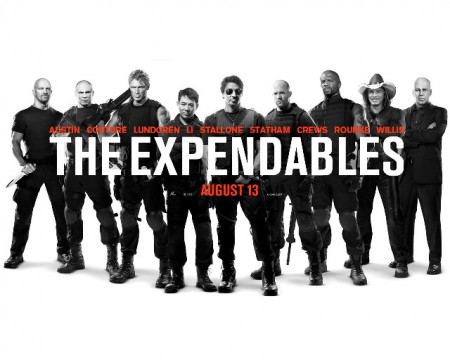
In case you were wondering, action movie cliches are probably public domain. We now know this because a lawsuit alleging that Sylvester Stallone plagiarized a script called The Cordoba Caper for The Expendables has been rejected by federal judge Jed Rakoff, essentially on those grounds. Corporate speechwriter Marcus Webb, writer of The Cordoba Caper , alleged that Stallone’s action hero supergroup film borrowed heavily from his own script, a claim Stallone denies. Stallone admits he based his draft on a different script entitled Barrow by David Callahan, but that he has never seen Webb’s. (Callahan is credited as co-writer on the final Expendables script.) The similarities between Webb’s and Stallone’s scripts are striking at first glance. The Cordoba Caper involves the adventures of highly trained soldiers of fortune, employed by a wealthy benefactor to take out a ruthless despot engaged in genocidal programs related activities. This obviously bears a striking resemblance to the plot of The Expendables , right down to the ‘rescuing a young woman’ subplot. The only problem? It also sounds a lot like about 500 other action films. The judge agreed, finding in his ruling that the plot points used in both films were “simple stock devices that are standard in action movies.” Even The Expendables ‘ most solid similarity to The Cordoba Caper – the villain in both stories is named ‘General Garza’ – was dismissed as such. “As defendants point out,” Rakoff said, “Garza is a common Hispanic surname.” Webb’s script was never picked up for development. He submitted it to several amateur screenwriting contests, none of which he won, prompting Judge Rakoff to note that, “It would require almost endless speculation” to conjure up the means by which Stallone would have laid eyes on it. The bad news? People apparently believe that The Expendables has something resembling a ]script.’ The good news? That screenplay you’ve been tooling with, about the rag-tag team of warriors brought together to right wrongs while delivering tired awesome one liners and dispensing endless rivers of bullet casings can probably go forward. At least you know Stallone won’t sue. [ Source: Variety ]
Now that Les Misérables is expected to surpass its opening-day box-office expectations by $5 million-10 million, director Tom Hooper could pretend that adapting the beloved musical for the big screen was a walk in the park, but he’d be lying. On Thursday, Hooper spoke to Movieline from his Sydney, Australia hotel room and likened the challenge of directing the film to the massive tanker he was watching navigate Sydney Harbor. “It was an extraordinary dance between musical structure and filmic structure,” Hooper explained in a revealing interview about the making of Les Miz . The Oscar-winning filmmaker, who’s expected to snare his second Best Director nomination on Jan. 10, talked at length about his reasons for making the movie and the challenges of pacing and editing a film that is essentially sung through from beginning to end. He also addressed criticism that he relied too heavily on close-ups in the film, divulged Eddie Redmayne’s technique for attaining such exquisite sadness in his performance of “Empty Chairs at Empty Tables” and answered the burning question of the day: whether Anne Hathaway or Hugh Jackman is a bigger musical geek. Movieline: When I saw Les Misérables in New York, I was surprised by the audience’s passionate reaction to the movie. After certain scenes and songs, they were applauding and cheering as if they were actually seeing a live performance. Tom Hooper: It’s quite extraordinary. I’ve never sat in any cinema or any premiere, or any screening of one of my films and seen a response like this. It’s like you’re at some kind of happening, some kind of out-of-body experience rather than a movie. I was at the Tokyo premiere with the Crown Prince of Japan on Monday. It was quite a formal screening and the audience went kind of crazy. The Japanese broke into a standing ovation at the end, and I was told that for people to stand in the presence of the Crown Prince without him having gotten to his feet first was a total break of protocol. Since you had the foresight to make this movie, what do you think is causing audiences to react so effusively? Actually, I want to ask you: What about the movie connected with you? I’m very interested. Oddly enough, I’m not a big fan of movie musicals, but I liked that Les Misérables wasn’t afraid to wear its heart on its sleeve, especially in a year when Lincoln and Zero Dark Thirty, which I also admire, are these relatively cool procedurals. I also thought that your decision to have the actors sing on camera paid off. There are some honest, raw performances in Les Miz and, as a result, the movie ends up being quite a cathartic experience. Yes, I think that’s the word. I always get asked, “Why did you do this film?” The very first time I saw the musical, the ending was what made me want to do the movie. There’s that moment where the hero of the story, Jean Valjean ( Jackman ), has just passed away and you hear the distant sound of “Do you hear the people singing?” — like an angelic chorus. I had a bodily physical reaction and was crying. I remember thinking what, why am I reacting this way? I was crying about my dad. My dad is alive and well and — but I couldn’t help thinking about the fact that this moment is going to come with my father. A few years ago, he went through cancer. He recovered, but when he was facing it, he told me, “Tom, I want to master the art of dying well.” And I said, “Dad, what on earth do you mean by that?” He said, “When I pass away, I want to do it in a way that’s as compassionate to my family as possible and that limits the pain they suffer. These words came to me when I was thinking about the end of this film. I thought, what’s extraordinary about Les Misérables is that it looks death square in the eye and says that if you navigate that moment with love, it’s possible to achieve a kind of peace. Valjean finds peace through his love of Cosette. He has loved this girl furiously since he met her and been a parent to her. Not only that, he’s rescued the man who’s going to marry her. He’s passed the duty of loving her on to someone else so he can leave this world knowing that she’s cared for and protected. And in the moment of his death, he’s able to tell his story. He’s able to say that this is the story of a man who turned from hating to love through Cosette. It’s like the line from “Finale”: “To love another person is to see the face of God.” It basically says that the only way to navigate our mortality, which we all face, is through love. And I think there’s something incredibly true about that message. But I think the thing that makes Les Misérables special is that it offers so many different ways in emotionally for people. It holds up a mirror to either your own suffering or the suffering of someone close to you, and it manages to process that suffering, leaving you feeling better about it by the end of the film. I’ll agree with you there. Over the past year and a half, I’ve lost a couple of friends and some people who played crucial roles in my life. So, “Empty Chairs at Empty Tables” was pretty devastating to me, but I didn’t come out of the theater feeling depressed. I felt like I’d let something go. So much of filmmaking today is avoidance basically. It’s distraction, avoidance, irresponsible fantasy. Les Misérables is somehow not that. It manages to go to the tough places. It’s escapism with a moral compass, and I’m not quite sure people are aware how difficult it was to actually get the film to do what it does. There are some scenes in Les Misérables that aren’t in the stage musical. Can you tell me about what went into your decision to make these changes? There are actually a lot of changes to the screenplay that have gone largely unnoticed. I was working with Claude-Michel Schönberg, Alain Boublil, and Herbert Kretzmer, who were the original creative team on the musical and when the changes are done in a voice that’s so identical to the way it was originally written, they’re hard to detect unless you know Les Misérables really well. Basically, we disassembled and reassembled the musical in order to improve the storytelling. One small example takes place in the factory when the fight breaks out with Fantine (Hathaway). In the musical, there is no reason why Valjean is distracted from dealing with the disruption. He simply says to the foreman, “You sort it out.” The first time I saw the musical, I had the idea: what if the thing that distracted Valjean from focusing on Fantine was the arrival of Javert as the town’s new police inspector? In that moment, he sees this specter from his past and the world falls away. He sees nothing else but that. That led to the scene in the movie where Valjean sees Javert in the factor window. By adding this moment, it better establishes the guilt that Valjean has over the death of Fantine. You upped the emotional impact of Valjean’s relationship to Fantine. Yes, and it sets up this theme about how the ghosts of the past keep coming back to haunt you. You can never be free of them. And it sets up the whole dilemma where Valjean says, “Shall I finally free myself from this past by just admitting who I really am and facing the music?” But that modification required a new piece of music to be composed that went in the middle of the factory scene that, famously, never had had anything in the middle of it. So then, we had the challenge of creating a new melody that marked the drama of that encounter between Valjean and Javert and, yet, didn’t completely fuck up the unity of the factory music. How do you accomplish that? You’ve got to pre-decide on the length of the melody that you need to express this thought, and melodic construction is not that flexible. So Claude-Michel says we can use this bit of melody and Alain works its out and gives you, say, 16 lines. But then you realize that 16 lines is too long and that we’re being repetitive. So, you go back to Claude-Michel and say, “Can you make the melody a bit shorter?” He says it either has to be 16 lines or, say, four lines to work melodically in that context. I don’t have the freedom to make it, say, 10 lines. So, we would say okay, Claude-Michel would play the piano onto his iPhone and email the recording to us so that we had a guide. And then Alain and Herbie would say what we needed to say in four lines. It was unlike anything I’ve ever done or will do because there’s this constant dance between how quickly melody exhausts itself and the amount of words you need to make the point. And I imagine that’s just the beginning of the process. That’s before you get to the edit process. Again, I’ve never done anything like it. The film is now under two-and-a-half hours, but in September it was running around two hours and 42 minutes. So, you spend a few days in the cutting room and let’s say you take five minutes out of the running time. You can’t just press play and watch your film because it doesn’t play. And the reason it doesn’t play is, wherever you changed the length, the music and the orchestration don’t work anymore. So, in order to see how you feel about the edits you’ve made, the composers have got to recompose all the bits where the lengths changed, and then the orchestrators have got to orchestrate it. We had programmers who basically programmed the music using sample sounds so that we didn’t have to spend money on orchestras. They rebuilt the programmed orchestra and then the music editors fit it to the picture. And then maybe about a week later, I could watch it and see the impact of my changes. It was an extraordinary dance between musical structure and filmic structure. Imagine what it does to pacing. With The King’s Speech , I could vary the pace of almost any scene by taking a second out here or a few frames there. In a musical, once the songs start, you can’t change the pace at all. So it was fascinating to learn how to control pace when you don’t have control of the timeline. You learn that there are points where you can actually take a little chunk out of the music, but in order to do that, I literally had to get to the point where I could read music again and read the score in order to work out what secret cuts I could take. So, you’re leaving me with the impression that making Les Misérables was like solving a Rubik’s Cube because the music and the story were so interwoven that you couldn’t just change one aspect of the movie without affecting a large swath of it. Exactly. You’re navigating whole blocks in the movie where the pace is what the music is. And, therefore, you have to use shot selection and editing to create any variations in that pace. The work involved in getting the movie to run under two-and-a-half hours was incredibly complicated. Not only does the stage musical run longer, we added material. So this movie was like an oil tanker. You’ve come in for some criticism in terms of the number of close-ups you use in the movie. What’s your response to that? I find that discussion interesting. I always give myself options. I didn’t assume that the tight close-up was the best way to do a song. So in “I Dreamed A Dream”, there was a close-up of Anne that we used but there were two other cameras shooting from other perspectives. The tight close-ups won out in the cutting room because, over and over again, the emotional intimacy was far more intense than when you go loose. In fact, in the case of “I Dreamed A Dream,” for a long time we were using a mid-shot of her at the beginning of the scene followed by a very slow track and maybe in the last quarter of the scene it was a medium close-up. And then Eddie Redmayne , who’s been a friend of mine since I worked with him on Elizabeth I , said to me: “Why aren’t you using that close-up that you’re using in that teaser trailer?” He was talking about the way you see all the muscles in Anne’s neck work as she sings and the raw power of that, and I thought, God, that’s interesting . So, it was actually Eddie’s suggestion to re-examine that scene, and the moment we put that close-up in, the film played in a completely different way. The level of emotion went up about a hundred percent. So the process of moving toward these close-ups was a process of discovery. Given the challenges that you faced, is there a scene that you’re particularly proud of? If I’m honest, it’s the final scene in the movie, because, on paper, the idea of the barricade covered in the ghosts of the fallen could be really corny and awful beyond relief. Instead, it creates this incredible emotion in people who see it. It’s something that I’m definitely proud of because, like The King’s Speech , I always knew that it was all about the end. And with Les Miz , I always knew it was about the way we go from the grief of Valjean’s death to the hope of the fallen. But it could have felt ridiculous, and the fact that we avoid the many pitfalls that existed in that scene is definitely one thing I’m at peace about. I’m also incredibly proud of what Eddie does with “Empty Chairs at Empty Tables.’ Anne is evidently miraculous during “I Dreamed A Dream,” but I do think that there’s a balance in the movie that’s corrected by how brilliant Eddie is at that point. It’s a powerful performance. Do you know how he connected to his grief in that scene? It’s palpable. He wouldn’t tell me. It’s funny with actors sometimes. One feels that it’s wrong to pry. But he did have a rather unusual idea: Because the song deals with the devastation of the loss of his friends, he suggested that he sing it three times in a row without the camera cutting. That way, the devastation he’d reached at the end of the first singing would become the beginning of the second and so on. He kept pushing himself further and further into the pit of despair. Okay, so you’ve done the Oscar jockeying, and you won. As we get into the thick of awards season, are you approaching your second time any differently? As I sit here right now with the film – it’s opening in Japan today, it’s previewing in Korea and Australia, it’s opening in America on Christmas day — I’m incredibly occupied. It’s about getting through the next few days. But ask me again when I get through this bit. Given what you went through for Les Miz , would you do another movie musical and if so, what would it be? God, I would be open to it. It’s just that this is a very special case. This is arguably the world’s most popular musical and that musical version had never been made into a film until now. There aren’t that many really great musicals that haven’t been made into films. Have you decided what’s next for you? I literally have no idea. I did such crazy hours on this film for the last year and a half. I literally worked every hour I could stay awake and, therefore, I haven’t been able to read any material or any scripts. So, it’s a completely open thing at the moment. Okay, last question: who’s the bigger musical geek, Anne Hathaway or Hugh Jackman? Well, without a doubt, Anne is the bigger Les Misérables geek. It wasn’t just that her mother was in the American tour of Les Miz , she was the understudy for Fantine. So these high points of drama marked Anne’s early life. I remember her saying that, for instance, there would be a phone call telling her that her mother was going to go on as Fantine in Washington and could Anne get there from New York in time to see her mother play the role? So there was this idea that Fantine wasn’t her Mom’s right. It was this scarce gift that occasionally she was given to play, and, for Anne the role defined a certain electricity and audacity. Hugh is different because he’s actually starred in musicals on Broadway and on London’s West End. He’s a bona-fide musical star in his own right, where a lot of Anne’s singing has been in the privacy of her own home or at the Oscars, but not something like [ Les Misérables ]. It’s not something I can say, but Hugh feels that in a way he’s been a force in revolutionizing the way you do a movie musical. And that’s something I know he finds very exciting because I think he’s a real student of the genre and has seen it from so many different sides. [ Deadline ] Follow Frank DiGiacomo on Twitter. Follow Movieline on Twitter. Read More on Les Miz: Early Reaction: Oscar Race Heats Up As NYC Screening Of ‘ Les … INTERVIEW: Samantha Barks On ‘ Les Miserables ,’ Eponine….
The NRA finally broke its week-long silence after the massacre in Newtown, Connecticut today with a press conference — technically a speech, as no questions were answered — that proved once again that reactionaries are as terrible at popular culture as they are at generating positive outcomes from their preferred policies. The real culprit to blame for tragedies such as Newtown, according to NRA Vice President Wayne LaPierre? Movies. In Washington, D.C., LaPierre delivered an obtuse tirade to assembled journalists in which, per the current fashion, he blamed numerous video games like Bulletstorm and Grand Theft Auto before laying into the movie industry. “We have bloodsoaked films out there like American Psycho , Natural Born Killers ,” he said. “They’re aired on propaganda loops called Splatterdays, and every single day.” Yes, he said ‘splatterdays,’ a word no one has ever used. LaPierre also offered the organization’s prescription for solving the problem of frequent mass killings: stuff our schools with guns. LaPierre claimed that rules prohibiting guns in public schools contribute to these killings, suggesting that “We need to have every single school in America immediately deploy a protection program proven to work — and by that I mean armed security.” He then announced that the NRA will be funding a “safety” program for interested schools dubbed the “National School Shield Emergency Response Program” which, if implemented as described in the press conference, would significantly militarize the educational experience. Far be it from me to point out the ridiculousness of blaming films from 12 and 22 years ago for violence which occurred last week — though for what it’s worth, I can’t recall seeing any 24/7 marathon of any of Oliver Stone’s lesser movies. We’ll just note instead that, as if to add a particularly grim punchline, at the same time LaPierre embarrassed himself and his organization on the national stage, another unspeakable tragedy happened: Three people were killed by a Pennsylvania gunman who then took his own life. Notably, guns are not prohibited on Pennsylvania roads. I’ll wait with bated breath for the film the NRA will blame for that. [Via CNN ] Ross Lincoln is a LA-based freelance writer from Oklahoma with an unhealthy obsession with comics, movies, video games, ancient history, Gore Vidal, and wine. Follow him on twitter (@rossalincoln). Follow Movieline on Twitter .
Jack Reacher , protagonist of Lee Child’s brilliant series of airport pulp, has sold nearly 40 million books. He’s also blonde, ugly, 6’5” and 250 lbs, which means the difference between the Reacher that fans love and Tom Cruise , who plays him in his long-awaited film debut, is literally sizable: Ten inches and 90 lbs, to be exact, and a whole lot of handsome. Child’s Jack Reacher is homeless, and for the well-coiffed Cruise, playing a guy who shops as Goodwill is as much of a stretch as hoping no one will notice his larger-than-life ex-military cop is barely taller than his co-star Rosamund Pike . (Which in real life, he’s not — Pike towers over him by two inches.) In the original novel, One Shot , Reacher spends half of the book pacing the surprisingly mean streets of a sleepy Midwestern city trying to unravel a shocking sniper attack that left five civilians dead. The flick opens with the crime — watching through crosshairs as the killer selects his targets is agonizingly tense — and in eight minutes, it’s solved and the murderer is in prison. Unlike in the book, McQuarrie shows us something the police don’t know: the face of the killer is different than the man behind bars. Yet not only is the evidence against the accused so perfect that his lawyer (Pike) merely hopes to get his sentence reduced to life in prison, here comes Jack Reacher, the accused’s old enemy, rolling into town on a Greyhound bus to make sure he gets the death penalty. Reacher is a brute with an odd moral code. When someone has what he wants — be it information he needs or a sports car he wants to borrow — he’ll twist their arms (literally) until it’s his. And he’s not just mean to men: he’ll leave women alone in dark alleys, and he’ll call a barely legal bimbo a “slut.” But if someone hurts that slut — at least, someone besides him — he turns into a heat-seeking missile of muscles, a jackal who won’t stop running until he catches his prey. So bringing Jack Reacher to the screen means Cruise has a lot to measure up to, but instead of swinging for the fences, he bunts. His Reacher is like every other character Cruise has ever played: Tough, cocky, and the smartest guy in the room. It’s the Tom Cruise paradox; he’s a great actor who’s stopped acting. He can’t vanish into a role, but then he doesn’t have to. Audiences show up to his films just to see his latest ass-kicking adventure, which makes Cruise the inverse James Bond — instead of different actors playing the same character, he’s one actor who plays the same character under a dozen different names. You could pretend his entire last decade onscreen is just Ethan Hunt going deep undercover to save the day. Luckily for director Christopher McQuarrie , Jack Reacher is also tough, cocky, and the smartest guy in the room. A former Army policeman and genius investigator, he’s always three steps ahead of his rivals and he loves making sure they know it. He’s so physically gifted that he makes his attackers look like the Three Stooges, and so mercilessly aggressive that he aims straight for his enemies’ eyes, knees and groins. Even hanging up a payphone, his elbow snaps like he’d rather be breaking someone’s neck. And yet, even this film’s last minute name change from One Shot to Jack Reacher does nothing to convince us that we’re watching a fictional Army vet named Jack Reacher — we’re watching Tom Cruise , and for fans of his, that’s enough. For fans of Child’s books, however, the pleasures are more complicated. With, oh, 100 of the book’s 376 pages occupied by Reacher’s inward deductive reasoning, McQuarrie faced the risk of a flick that was all voiceover. Instead, he flips the script; Cruise silently pads around looking smart and we’re meant to see his the gears in his head grinding. The film’s more fun when he finally opens his mouth to insult his ever-growing list of enemies, including a sour DA ( Richard Jenkins ), a cop who accuses him of murder ( David Oyelowo ), some rednecks (Alexia Fast and Josh Helman), a couple of vicious hitmen (Michael Raymond-James and Jai Courtney , co-star of the next Die Hard ) and the big boss, a four-fingered Gulag survivor named The Zec ( Werner Herzog ). Herzog is perfect for the role: he’s made a career of grimly muttering “death” and “murder.” He’s only in the movie for ten minutes — far too short — but he has one stand-out scene where he orders an underling to bite off his own thumb or get shot in the head, an at-any-cost survival instinct that Herzog’s been hunting for in his own films for decades. Alas, the weakness of the film is the weakness of the book. The Zec’s evil plan is both byzantinely complicated and pifflingly mundane. We already know the face of the killer. What we don’t know is why , and the big reveal is more of a “Huh?” McQuarrie, the writer of The Usual Suspects who also adapted One Shot himself, is still finding his legs as a director. Jack Reacher has the bright and empty look of television and is a bit unsteady as it wavers between action and laughs. But the flick is great entertainment as Reacher headbutts his way to the Zec, dutifully and casually giving nods to devotees of the books, even casting Lee Child in a cameo as a police officer who returns to Reacher the only thing he owns: a portable toothbrush. (Explains Reacher in the book Bad Luck and Trouble , “I carry a spare shirt, pretty soon I’m carrying spare pants. Then I’d need a suitcase. Next thing I know, I’ve got a house and a car and a savings plan and I’m filling out all kinds of forms.”) Beat by beat, Jack Reacher is just like Child’s paperbacks in the best possible way: it’s fast, fun, and smarter than it looks. Will it give Tom Cruise another hit action franchise? It deserves to. Hollywood has 17 other Jack Reacher books to pick from, any one of which would fit seamlessly into the Cruise canon. But for Child, the real question is, how many hit films will it take for Cruise fans to remember Jack Reacher’s name? Amy Nicholson is a critic, playwright and editor. Her interests include hot dogs, standard poodles, Bruce Willis, and comedies about the utter futility of existence. Follow her on Twitter . Follow Movieline on Twitter .
This was a terrific year for movies. I don’t know that I have more to say about it as a whole than that, because 2012 was such a varied year in cinema, too. We saw procedurals, Zero Dark Thirty and Lincoln , that dug into the immense work behind known moments in history; movies about the movies, like Holy Motors and The Cabin in the Woods , and sensory creations like Beasts of the Southern Wild and The Master , with their very different protagonists who each seem, at times, tuned into a clearer sense of the universe. This year also saw the continued fade-out of celluloid and the push for new cinematic experiences with the 48fps of The Hobbit: An Unexpected Journey , the 3D wizardry of Life of Pi and the prosthetic and make-up-aided gender and ethnicity crossing-casting of Cloud Atlas . But my biggest pleasures in the theater this year tended to be the old-fashioned type: from a luscious 70mm screening of The Master at the Ziegfeld Theater in New York to the throwback sensibility at the center of Rust and Bone. Then again, it’s contemporary technology that allowed my number-one pick to be shot and smuggled to its Cannes premiere inside a cake. Film is changing, sure, but there’s no arguing its vividly alive. 10. Dark Horse “I know that life has been unfair to you because it has given you every possible advantage,” man-child Abe (Jordan Gelber) is told in a dream sequence, a perfect encapsulation of an existence spent in paralyzing, frustrated inadequacy. Both he and his eventual reluctant fiancée Miranda ( Selma Blair ) are in their thirties and living with their parents in New Jersey, crushed by their inability to prove themselves to be as special in adulthood as they’d always been as children. Todd Solondz doesn’t mock his ridiculous, defensive and unhappy protagonist with the same mercilessness that he used to skewer his back catalog of memorable losers, but he doesn’t allow Abe to be lovable or cuddly either. He’s inherited a dissatisfaction that has kept him caught between entitlement and self-loathing, and stands alone as a marvelously drawn and tragic figure of toxic ingrained American aspirations. 9. The Cabin in the Woods It’s an ingeniously geeky and loving deconstruction of the horror genre. It’s a meta-critique of what we want from slasher flicks and why we enjoy them. It’s a reworking of and an explanation for the silliest recurring habits of scary movie victims, and it’s also, somehow, a workplace comedy. Mostly, though, Drew Goddard and Joss Whedon’s clever, clever film was maybe the best time you could have had in cineplexes this year. It was rewarding both as a reference-laden (bloody) valentine to hardcore film fans and a rollicking standalone feature that offered up far-from-disposable characters and an elaborate high-tech system to explain why they ended up running from baddies in the woods.
Wong Kar Wai ‘s latest will open the 63rd edition of the Berlinale February 7th out of competition. Also in Wednesday’s round-up of news, Angelina Jolie is eyeing her second directorial project for Universal; Jon Voight is eyeing a KGB agent role in an upcoming Ronald Reagan pic; Universal sets a date for Riddick ; and the National Film Registry names titles to its list. Wong Kar Wai’s The Grandmaster to Open 63rd Berlinale The international premiere of the Chinese director’s latest film will open the Berlin International Film Festival February 7th. The film is described “an epic martial arts drama set against the tumultuous backdrop of 1930’s China and inspired by the life and times of the legendary IP Man (Tony Leung Chiu Wai), mentor to Bruce Lee. The plot encompasses themes of war, family, revenge, desire, love, and memory.” The film will screen out of competition. Wong is serving as this year’s president of the jury at the Berlinale. Angelina Jolie to Direct Unbroken Jolie is in final negotiations to direct Unbroken , the unbelievable story of Olympian-turned WWII POW Louis Zamperini. The Universal and Walden Media project is is based on Unbroken: A World War II Story of Survival, Resilience and Redemption , the book by Seabiscuit author Laura Hillenbrand, Deadline reports . Jon Voight Eyes KGB Agent Role in Ronald Reagan Biopic Voight is in negotiations to play a critical part in Reagan , one of at least three upcoming films about President Reagan. His role is playing a Soviet KGB agent whose job it was to track Reagan, the 40th U.S. President. The movie is based on The Crusader and God & Ronald Reagan , two books by Paul Kengor, THR reports . Universal Sets Release Date for Riddick Sci-Fi pic Riddick will open in the U.S. including IMAX September 6, 2013. The feature is the third chapter of the saga that began with 2000′s Pitch Black and 2004′s The Chronicles Of Riddick . Vin Diesel returns as the anti-hero, Riddick, Deadline reports . National Film Registry Names 25 Titles Breakfast at Tiffany’s , A Christmas Story , Dirty Harry and The Matrix are among the “culturally significant” titles to be included in the National Film Registry in the Library of Congress. The NFR was established by Congress in 1989 to preserve U.S. film heritage, Variety reports .