Unemployment is bad, but things like What’s Your Number are apparently worse: “In the overall (all countries) adjusted model, adolescents with higher exposure to alcohol use in movies were significantly more likely to have engaged in binge drinking, even after controlling for age, gender, family affluence, school performance, television screen time, sensation seeking and rebelliousness, and frequency of drinking of peers, parents, and siblings.” The most troubling part of this study might be its definition of binge drinking as five or more drinks in one sitting, which I otherwise tend to refer to as “lunch.” [ Pediatrics (PDF) via Deadline ]
Unemployment is bad, but things like What’s Your Number are apparently worse: “In the overall (all countries) adjusted model, adolescents with higher exposure to alcohol use in movies were significantly more likely to have engaged in binge drinking, even after controlling for age, gender, family affluence, school performance, television screen time, sensation seeking and rebelliousness, and frequency of drinking of peers, parents, and siblings.” The most troubling part of this study might be its definition of binge drinking as five or more drinks in one sitting, which I otherwise tend to refer to as “lunch.” [ Pediatrics (PDF) via Deadline ]
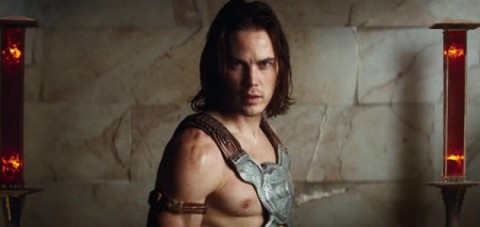
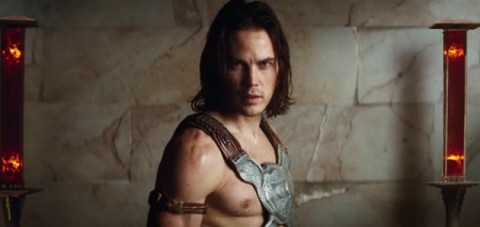
Taylor Kitsch is about to have a very big 2012. In addition to carrying Disney’s ambitious sci-fi adaptation John Carter as the titular Edgar Rice Burroughs hero, a Civil War veteran transported to Mars, he’s also fronting Peter Berg’s alien invasion actioner Battleship and starring in Oliver Stone ’s Savages later this year. But as Kitsch revealed to Movieline, the John Carter job wasn’t easy to get — and the toll it took on him during production was a challenge in itself. So who better to offer pro tips on nabbing the spotlight and handling the pressure of becoming an action hero than Kitsch, on the eve of a new chapter in his career? It should be noted that Kitsch is no stranger to action, having appeared in films like Snakes on a Plane , The Covenant , and X-Men Origins: Wolverine already in his six-year career, and no stranger to the spotlight thanks to his beloved turn as Tim Riggins on Friday Night Lights . But John Carter marks his first starring role and by far his biggest film to date, a sprawling epic set on a vast alien world envisioned in great detail by director Andrew Stanton ( Finding Nemo , WALL-E ). So how did Kitsch land the coveted role? What does his John Carter role share in common with his last one, as the late South African photojournalist Kevin Carter, in The Bang Bang Club ? All this and more as Taylor Kitsch shares his pro tips on landing (and keeping) that action hero gig. 1. Don’t think of yourself as an action star . “That’s you guys labeling me, so me saying yes to that – I can’t say yes to that because I refuse to put myself in that bubble. You saw Bang Bang Club , that’s no action movie. We hope to keep throwing you curveballs so you can’t put me in a spot like that.” 2. Ignore the hype and the naysayers – worry about putting pressure on yourself to do the work so you can sleep at night . “The pressure is what I put myself on in the sense of getting and doing the best I can, and having no regrets with what I put into it. That’s the pressure. The pressure now is that you can overthink everything, from how it’s going to do and how people are going to perceive it, you, this and that. If you want to drive yourself crazy over that you can, but I think that’s why you put so much into it. So you can lay down at night and be okay with what you did and be like, you know what? I still wouldn’t change it. If you say I’m fucking shit, I still wouldn’t change it.” 3. Be picky. Taking on a blockbuster gig is a huge commitment, so make sure you’re doing it for the right reasons. “Hopefully you feel that, you see it. You see the emotion and the energy that it takes to really do what it deserves, potentially. I think that’s what it’s about, and that’s why I’m so picky with the jobs. I’m all in. I’m never going to do a job for the sake of working. So we’re at a point now of looking at the next job, or whatever that is, and my people, my team, have been with me from Day One. If I don’t work for a year, I’m OK with it. We’re not going to do it unless we have to do it. “I was and still am okay with doing indies for the rest of my life. I don’t need to be in the spotlight; if anything, I’ll push it away even more. I live in Austin. I love the work. I love the storytelling, and that’s what the first meeting represented. I could play so many parts in this one character, from the Western, from the guy that doesn’t give a shit, to the guy who’s finally come full circle and become the leader that he’s pushed away for so long. I love that, and I love working with an Andrew Stanton, a Willem Dafoe, a Mark Strong, a Sam Morton, a Thomas Haden Church, a Lynn Collins.” 4. Make sure there is a “there” there. “Man, I will be shit if you give me nothing to play. Any actor will tell you, the more you can give me, the more depth I can escape into, the better it’s going to be on every level.” 5. Flawed characters are more interesting to play, and are worth diving into headfirst — even if it takes a lot out of you. “It’s not the war thing, but the more interesting guys I grew up watching — I like watching the more flawed guys than the perfect guys, and that’s more interesting for me to play. That’s more real to me. I love that and I love bringing people into a performance and it takes so fucking much out of you to do it honestly, but it’s worth it. Kev Carter – you won’t meet a guy more flawed. That crushed me.” 6. Remember to maintain balance with the emotional and physical demands of carrying a tentpole… especially when they require regular, long-term maintenance of action-hero muscles. “I was beyond exhausted in this film. Yeah, six day weeks is what killed me. I think I just pushed myself — I don’t regret it because you see it, but at times I could have had a better balance, maybe, just because waking up that early so often and the lack of sleep and pushing yourself that much, to have that much energy onscreen… for seven months, to be at that aesthetic! It’d be a lot easier if I had one shirtless scene and I could just get toned for that then be OK and balance it out, but it was 11 months that I was on that diet and training regimen. It’s very unreal to do that and to look that way, obviously, but it’s what I guess I demanded out of myself. This goes back to Kev [Carter, of the Bang Bang Club ], too. No one asked me to lose a pound, I wanted to. 7. That said, don’t worry too much about how you look, stud . “Fuck, man. You never want to be that conscious in a scene. That’d mean I’d be so totally out of John Carter mode, if I’m really that conscious of how I look and the lighting. That’s really bad. [But] you definitely have to do what you have to do to put yourself in the moment so it’s connecting to whatever it is. I think you’ve just got to get to a point where you’re okay with how you look and what you’re doing and you leave it and let it lay. Whatever it is, I look at that scene and it is what it is” 8. Go out for a role knowing it’s yours to lose. The audition process for John Carter was particularly grueling, with five actors and five actresses vying for the same roles over the course of two intense days. “Man, I was just so focused, I was so myopic with it. I prepped so much for that audition. I’ve always been an underdog and I came in on this gig that way, but it was like I felt it was mine to lose. I went in with that thinking really, if I can go in all out on this, I’m going to go in and kill it as much as I can. But it was a tough process, for sure. Two 14-hour days… and you’ve got to remember, what’s bizarre about getting roles and auditioning for the most part is you do your prep and everything for the most part after you get the role. It’s like OK, now I’ve got to sit down and really sketch this guy out. It’s a trip. “ 9. Whatever you do, do not go out partying the night before a big audition. “I won’t call the guy out, but I know and it gave me more oomph, put it that way, knowing that this one guy that was up for it was out partying quite hard the night before or two nights before. No matter what, I hear about that and I know I got ya, man. It’s like, good on ya for making it a little bit easier on me.” John Carter is in theaters this week. Read more on the film here . Follow Jen Yamato on Twitter . Follow Movieline on Twitter .
Taylor Kitsch is about to have a very big 2012. In addition to carrying Disney’s ambitious sci-fi adaptation John Carter as the titular Edgar Rice Burroughs hero, a Civil War veteran transported to Mars, he’s also fronting Peter Berg’s alien invasion actioner Battleship and starring in Oliver Stone ’s Savages later this year. But as Kitsch revealed to Movieline, the John Carter job wasn’t easy to get — and the toll it took on him during production was a challenge in itself. So who better to offer pro tips on nabbing the spotlight and handling the pressure of becoming an action hero than Kitsch, on the eve of a new chapter in his career? It should be noted that Kitsch is no stranger to action, having appeared in films like Snakes on a Plane , The Covenant , and X-Men Origins: Wolverine already in his six-year career, and no stranger to the spotlight thanks to his beloved turn as Tim Riggins on Friday Night Lights . But John Carter marks his first starring role and by far his biggest film to date, a sprawling epic set on a vast alien world envisioned in great detail by director Andrew Stanton ( Finding Nemo , WALL-E ). So how did Kitsch land the coveted role? What does his John Carter role share in common with his last one, as the late South African photojournalist Kevin Carter, in The Bang Bang Club ? All this and more as Taylor Kitsch shares his pro tips on landing (and keeping) that action hero gig. 1. Don’t think of yourself as an action star . “That’s you guys labeling me, so me saying yes to that – I can’t say yes to that because I refuse to put myself in that bubble. You saw Bang Bang Club , that’s no action movie. We hope to keep throwing you curveballs so you can’t put me in a spot like that.” 2. Ignore the hype and the naysayers – worry about putting pressure on yourself to do the work so you can sleep at night . “The pressure is what I put myself on in the sense of getting and doing the best I can, and having no regrets with what I put into it. That’s the pressure. The pressure now is that you can overthink everything, from how it’s going to do and how people are going to perceive it, you, this and that. If you want to drive yourself crazy over that you can, but I think that’s why you put so much into it. So you can lay down at night and be okay with what you did and be like, you know what? I still wouldn’t change it. If you say I’m fucking shit, I still wouldn’t change it.” 3. Be picky. Taking on a blockbuster gig is a huge commitment, so make sure you’re doing it for the right reasons. “Hopefully you feel that, you see it. You see the emotion and the energy that it takes to really do what it deserves, potentially. I think that’s what it’s about, and that’s why I’m so picky with the jobs. I’m all in. I’m never going to do a job for the sake of working. So we’re at a point now of looking at the next job, or whatever that is, and my people, my team, have been with me from Day One. If I don’t work for a year, I’m OK with it. We’re not going to do it unless we have to do it. “I was and still am okay with doing indies for the rest of my life. I don’t need to be in the spotlight; if anything, I’ll push it away even more. I live in Austin. I love the work. I love the storytelling, and that’s what the first meeting represented. I could play so many parts in this one character, from the Western, from the guy that doesn’t give a shit, to the guy who’s finally come full circle and become the leader that he’s pushed away for so long. I love that, and I love working with an Andrew Stanton, a Willem Dafoe, a Mark Strong, a Sam Morton, a Thomas Haden Church, a Lynn Collins.” 4. Make sure there is a “there” there. “Man, I will be shit if you give me nothing to play. Any actor will tell you, the more you can give me, the more depth I can escape into, the better it’s going to be on every level.” 5. Flawed characters are more interesting to play, and are worth diving into headfirst — even if it takes a lot out of you. “It’s not the war thing, but the more interesting guys I grew up watching — I like watching the more flawed guys than the perfect guys, and that’s more interesting for me to play. That’s more real to me. I love that and I love bringing people into a performance and it takes so fucking much out of you to do it honestly, but it’s worth it. Kev Carter – you won’t meet a guy more flawed. That crushed me.” 6. Remember to maintain balance with the emotional and physical demands of carrying a tentpole… especially when they require regular, long-term maintenance of action-hero muscles. “I was beyond exhausted in this film. Yeah, six day weeks is what killed me. I think I just pushed myself — I don’t regret it because you see it, but at times I could have had a better balance, maybe, just because waking up that early so often and the lack of sleep and pushing yourself that much, to have that much energy onscreen… for seven months, to be at that aesthetic! It’d be a lot easier if I had one shirtless scene and I could just get toned for that then be OK and balance it out, but it was 11 months that I was on that diet and training regimen. It’s very unreal to do that and to look that way, obviously, but it’s what I guess I demanded out of myself. This goes back to Kev [Carter, of the Bang Bang Club ], too. No one asked me to lose a pound, I wanted to. 7. That said, don’t worry too much about how you look, stud . “Fuck, man. You never want to be that conscious in a scene. That’d mean I’d be so totally out of John Carter mode, if I’m really that conscious of how I look and the lighting. That’s really bad. [But] you definitely have to do what you have to do to put yourself in the moment so it’s connecting to whatever it is. I think you’ve just got to get to a point where you’re okay with how you look and what you’re doing and you leave it and let it lay. Whatever it is, I look at that scene and it is what it is” 8. Go out for a role knowing it’s yours to lose. The audition process for John Carter was particularly grueling, with five actors and five actresses vying for the same roles over the course of two intense days. “Man, I was just so focused, I was so myopic with it. I prepped so much for that audition. I’ve always been an underdog and I came in on this gig that way, but it was like I felt it was mine to lose. I went in with that thinking really, if I can go in all out on this, I’m going to go in and kill it as much as I can. But it was a tough process, for sure. Two 14-hour days… and you’ve got to remember, what’s bizarre about getting roles and auditioning for the most part is you do your prep and everything for the most part after you get the role. It’s like OK, now I’ve got to sit down and really sketch this guy out. It’s a trip. “ 9. Whatever you do, do not go out partying the night before a big audition. “I won’t call the guy out, but I know and it gave me more oomph, put it that way, knowing that this one guy that was up for it was out partying quite hard the night before or two nights before. No matter what, I hear about that and I know I got ya, man. It’s like, good on ya for making it a little bit easier on me.” John Carter is in theaters this week. Read more on the film here . Follow Jen Yamato on Twitter . Follow Movieline on Twitter .
Or, as it’s known around the ML office, BS vs. Zzzz : “Etan Cohen, one of the town’s hottest comedy scribes, is in negotiations to make his directorial debut on Paramount’s horror-comedy Boy Scouts vs. Zombies . With an ‘it’s all in the title’ moniker, Boy Scouts centers on a troop that must save a group of girl scouts from a pack of zombies with designs on spoiling a camping trip.” [ THR ]
Or, as it’s known around the ML office, BS vs. Zzzz : “Etan Cohen, one of the town’s hottest comedy scribes, is in negotiations to make his directorial debut on Paramount’s horror-comedy Boy Scouts vs. Zombies . With an ‘it’s all in the title’ moniker, Boy Scouts centers on a troop that must save a group of girl scouts from a pack of zombies with designs on spoiling a camping trip.” [ THR ]
Two teen-oriented comedies this season share much in common, from a gleeful embracing of the spirit of youthful recklessness to the idea that geeks will indeed inherit the earth. One is among the better comedies we’re likely to see this year; the other is by far, on its face, the sleaziest . Both were penned by the same actor-turned-screenwriter, Michael Bacall , who also captured the slings and arrows of slacker youth heroism in 2010’s Scott Pilgrim vs. the World . So why are Project X and 21 Jump Street so diametrically opposed when it comes to depicting the youth of today? Last weekend’s R-rated party bacchanal Project X was crafted with just the right pedigree for it to become, potentially, the party film of its generation. Produced by Hangover director Todd Phillips (and co-scripted by Matt Drake), cast largely with unknowns, and shot in a first-person verite style, the premise was simple: Three geeky suburban losers throw the biggest party ever to become cool and get the ladies. Critics had plenty to complain about solely on moral grounds – rarely do films so glorify bad behavior without serious, remorse-inducing consequence when it comes to the teenagers onscreen, let alone the ones watching in the multiplex. Reveling in that unapologetic party spirit was much of the point, though; in taking risks and throwing caution (and his parents’ property value) to the wind, protagonist Thomas was handsomely rewarded for his ballsiness as a sign of maturity of sorts. Forget the gross, near-total objectification of women (even the obvious girl next door love interest partakes in a showy swimming pool dip) and the juvenile use of derogatory words like “bitch” or “faggot” — at the film’s end Thomas and Co. may face charges for wrecking his cushy Pasadena neighborhood, but they’ve gained the respect of his fellow party-goer peers. That’s all that really matters, right? Wrong, says Badass Digest’s Meredith Borders . It feels too insufficient a justification for the makers of Project X to hide behind the “teen boy perspective” defense given just how much the film celebrates this skewed point of view. In a post appropriately entitled “Michael Bacall, How Could You?”, Borders details the film’s offensiveness: “ Project X isn’t an outsiders’ perspective of one misguided group. It’s a celebration of that perspective. I simply don’t believe that a screenwriter can write a film that uses the word ‘bitch’ that frequently – said by protagonists whom we are surely meant to support – without being culpable for that sentiment at least in part. Bacall, Drake, [director Nima] Nourizadeh and of course producer Todd Phillips are all responsible for the message in Project X , and the message is execrable.” Meanwhile, Choire Sicha writes at The Awl of Project X ’s selective, seemingly just off-target approach to capturing what the kids today are all about: “Especially for a film directed by an Iranian Brit, who’s supposed to have done ‘hip’ commercials and videos, it’s crazy retrograde. I expect the word ‘faggot’ to get tossed around a lot in a film that’s about three straight guys trying to get laid, but in 2012 we never get a shot of, say, the gay dudes from the high school throwing down at the party? (Despite lingering girl-on-girl softcore tributes even!) Kids today, they like to say ‘faggot’ and they like having homos at their party. And then it all takes place in Los Angeles county, but there’s barely a Mexican to be seen? Come on. Also I expect straight guys to talk about ‘pussy’ a lot, but I also expect the girls to beat them down for it. Instead there’s a bunch of Mean Girls chicks strutting around and ripping off their tops in the pool. As if!” Sicha’s observations, interestingly enough, play into the common defense of Project X – that despite the handheld found footage-aided conceit (a gimmick that suggests some element of “realism” even when we know it’s staged), this is pure 15-year-old boy fantasy. Maybe the three nerdy heroes of Project X don’t live in a real-world scenario to begin with — the kind of post-racial melting pot of diversity and interests united by Twitter and YouTube that kids enjoy these days, at least in places like Los Angeles. Perhaps the world of Project X approximates that of any conventional teen sex comedy where the jocks are macho and the tomboy best friends are model-hot and nerds get pushed into lockers, only it’s told from the nerds’ point of view. “Of course they’re obsessed with sex and think of girls as sex objects,” the apologists cry. “Of course their drug-hazed memories of raucous house parties filled with drunk underage girls look like American Apparel ads! They are teenage boys !” Bacall said as much when prodded for comment by The Hollywood Reporter in the face of Project X criticism: “The criticisms about the movie being amoral because kids are dancing and drinking and having a good time, I think that’s absurd… because kids have been dancing and drinking and altering their states of consciousness for a very long time, and this is nothing new. The thing these guys do turns out to be massively irresponsible and possibly tragic, as we fade to black, but I think the value in it for them is in kind of finding out where their limits are. Granted, there are more productive ways to do that, but this is the path that these guys decided [to take], and given that’s the concept of the movie, we wanted to just make that path as deep as possible.” So it’s possible that Project X is an elaborately conceived manipulation of the collective teen sex comedy movie worlds we grew up watching and that the found footage aspect is a deliberate wrench thrown into the mix to pervert your expectations. Maybe it’s a collective cultural dream for us all to share in which the nerds finally win! (Or: It’s a shared wet dream that Thomas, Costa and JB are simultaneously having after watching Porkys during a sleepover in Thomas’s parents’ basement while the cool kids party elsewhere in the greater Los Angeles County.) Maybe these loser bottom-rung-of-the-social-ladder geeks are so out of the loop that they have no idea how to treat ladies with respect or invite all kinds to their house parties; naturally, if this was simply their fantasy, the conditions of the world would be limited to what they think the outside world is like in their minds. Or maybe I’m overthinking this. Because after watching Project X , I saw Bacall’s next movie, 21 Jump Street , a movie that goes about embracing and identifying the nature of modern teenagerdom in a much clearer — and more positive — way. You might not think so to look at it , but 21 Jump Street — an update of the Johnny Depp cop show about a babyfaced cop sent to pose undercover in high school, here starring Channing Tatum and Jonah Hill — is surprisingly sophisticated. Directed by Cloudy with a Chance of Meatballs duo Phil Lord and Chris Miller, it constantly beats its critics to the punch in explaining its own vulnerable spots, including the very idea of recycling a decades-old idea in 2012. Where it surprises the most, aside from letting Tatum play to his comic strengths, is in addressing just how much has changed in youth culture, and the entertainment industry’s depiction of youth culture, since the 1980s. Tatum’s ex-jock Jenko used to be the big man on campus in high school, where he tormented Hill’s awkward, Eminem-idolizing geek Schmidt. Now they’ve grown into rookie cops and besties, embracing their opposite strengths; they complement one another as a pair, even if the sting and the glory of high school, respectively, still guide their egos. But settling into their new assignment takes some adjustment; in the intervening years since they were teenagers, kids have evolved. Jenko, now ostracized for his meathead tendencies by the popular kids — a diverse gang of forward-thinking, environment-friendly, gay-inclusive honor students — blames the culture of Glee for ruining the old, familiar ways of teenagerdom. It’s a smart approach to turning time-worn clichés on their head, especially since, for the Glee generation, things are different. Maybe not so different everywhere — just take a look at the documentary Bully to see that much — but in today’s hyper-integrated culture the old conventions just don’t ring true anymore. Perhaps that’s a perspective that comes from being on the other side of 18 and looking back, comparing what was then to what is now. By that logic, if one subscribes to the Bacall defense, we can’t possibly expect the youngsters of Project X to know any better, I suppose. Nor are the fans targeted by Project X encouraged to give its critics much thought. A clever campaign for the film saw Warner Bros. strategically partnering with Vice Magazine on a series of college screenings paired with hip-hop shows, culminating in a live-streamed performance last week by Odd Future’s Tyler the Creator and Kid Cudi on a soundstage decorated, appropriately enough, like a middle-class suburban scene. The Vice deal was about as perfect as movie synergy comes, given the publication’s knack for making a business out of the often-skeezy side of party culture. At one point at the end of the night, Kid Cudi (whose anthemic 2009 single “Pursuit of Happiness” serves as the film’s unofficial theme song) brought the extended cast of Project X — including, by all appearances, at least a few underage actors — onstage to do shots in front of the undulating crowd of hundreds. No one seemed even a bit concerned, despite the fact that the moment had been captured by countless camera phones and even, probably, witnessed on the web in the live-stream. The party was just too good — too epic, the characters of Project X might say — to be bothered by something as mundane as moral consequence. Follow Jen Yamato on Twitter . Follow Movieline on Twitter .
You’ve been hearing about it for years , and at last, the fabled Hugh Hefner biopic that will never get made has moved from Universal to Warner Bros. The one and only Jerry Weintraub will produce, at least until he won’t. “While Universal had filmmakers like Brett Ratner attached at one time or another and actors like Robert Downey Jr. and Hugh Jackman mentioned as possibles to play Hef, the project languished,” Mike Fleming writes at ML’s sister site Deadline. “Wentraub would not disclose what part of Hefner’s life he will cover, and he denied that Harry Potter scribe Steve Kloves is being talked to as a potential screenwriter.” Finally! We’re getting somewhere. [ Deadline ]