So we’ve already established that The Artist is going to pretty much dominate next month’s Academy Awards — a certainty that we’ve seen reflected in the behavior of certain awards-season foes who’ve taken aim at the silent film’s ubiquitous wonder dog Uggie. Christopher Plummer led the offensive last week on behalf of his Beginners co-star (and Uggie’s fellow Jack Russell terrier) Cosmo, joined over the weekend by an unlikely ally hoping to raise another dog’s profile as we sleepwalk toward Oscar. Martin Scorsese — yes, the Martin Scorsese, master filmmaker and current Best Director nominee for Hugo — put his name on a cheeky L.A. Times op-ed asking viewers, voters and especially the organizers of the inaugural Golden Collar Awards to consider his film’s fierce Doberman, Blackie. It’s all kind of priceless: OK, let’s lay all our cards on the table. Jack Russell terriers are small and cute. Dobermans are enormous and — handsome. More tellingly, Uggie plays a nice little mascot who does tricks and saves his master’s life in one of the films, while Blackie gives an uncompromising performance as a ferocious guard dog who terrorizes children. I’m sure you can see what I’m driving at. I’m proud of Blackie, who laid it on the line and dared to risk the sympathy of her audience. Let’s just say that on the set, she had a fitting nickname: Citizen Canine. The bath scene alone is a masterpiece of underplaying, with Blackie’s wonderfully aquiline face accentuated by the 3-D. Ohhhh, boy. You really need to read the whole thing, for both a refreshing glimpse at Scorsese’s sense of humor and a bracing example of how dogs — dogs! — have politicized this year’s awards race. Dog News Daily has agreed to add Blackie to its Golden Collar nominees if she receives 500 write-in endorsements today on Facebook. I mean, come on . Blackie is fantastic and all, but Uggie’s 10,000 fans on Facebook say all anyone needs to know about the year’s most formidable four-legged awards contender. Oh, right: Did I mention that Movieline’s Consider Uggie campaign has eclipsed 10,000 supporters worldwide since its launch two months ago? It’s true! With a little less than 30 days remaining before the Academy Awards, we’re on pace for around 15,000 Uggieheads by the big night. I’d hoped for something a little closer to 20,000, so if you haven’t yet joined up, please consider heading over to Consider Uggie HQ and giving our boy a little boost. Tell your friends on Twitter to #ConsiderUggie as well, and continue keeping track of everything he’s up to via Facebook and/or Uggie’s own Twitter page ( @Uggie_TheArtist ). Or as always, keep on eye on Movieline for all your Consider Uggie news and to learn about the next great director to fire across Uggie’s bow. Go ahead, Terrence Malick, I dare you.
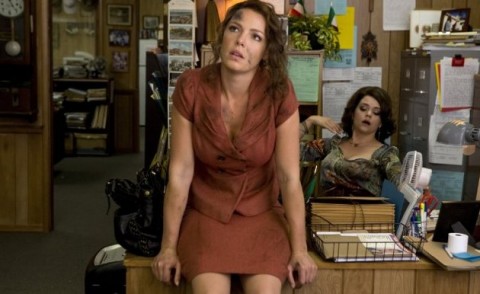
What? We ruined a perfect 0% on Rotten Tomatoes for this? “[Katherine] Heigl herself does an okay job in the role. She never quite pulls off the Jersey persona but she comes close enough. With her dyed brown hair and slightly more curvy appearance she certainly looks better than I’ve ever seen her look. I never thought of her as that attractive before, but she’s quite sexy here. She should definitely keep the dark hair. Despite the weakness of the mystery and the failure of the humor to be as funny as it should be, there is just enough of everything plus a dose of likable charm from Heigl to keep the story moving along.” Get me my pitchfork and torch, please . [ Three Movie Buffs ]
“I’m trying to work in studio movies, but they won’t hire me. I get feedback from my agent saying, ‘She’s too much of an indie queen.’ And then on the other side, my name doesn’t get the financing to do a movie over $1 million. And I’m called ‘the indie queen.’ So it’s really a challenging path because I know so much about the indie side of the business. Because I grew up in it. It’s like I’m back in junior high here at Sundance . There’s John Cooper and Trevor Groth and we all grew up together, you know? But it’s different times. And this stuff gets projected onto me. People are like, ‘You’re here every year, you do so many indie movies.’ And I’m like, ‘No, I did Broken English five years ago.'” [ indieWIRE ]
Some adaptations of great literature become so beloved and important in their own right that it can be hard to separate where the book ends and the movie begins. To Kill a Mockingbird is one of those cases. Released in 1962, two years after Harper Lee’s novel was published, the movie propelled the nationwide discussion on racial inequality and introduced characters that went against the norm yet were easy to relate and aspire to. Scout and Atticus Finch are finding their footing in a challenging environment, not an alien concept for generations of junior high and high school kids who are assigned to read the book. These days, those students might also be shown director Robert Mulligan’s classic film — featuring Gregory Peck in an indelible, Oscar-winning turn as Atticus Finch, a Southern attorney who defends an African-American man unjustly accused of rape — as a complement to Lee’s book. The movie has left an impression on generations of Americans, but two women with a close relationship to it — Peck’s onscreen daughter, Mary Badham, and his actual daughter, the filmmaker Cecilia Peck — found that it steered them into adulthood in a more direct way. (The Atticus role is so inseparable from Peck and his legacy that Badham, herself an Oscar nominee for her performance as Scout Finch, still refers to the actor as Atticus half a century later.) Indeed, an adult revisiting To Kill a Mockingbird will discover a new perspective on the story and its lessons, going beyond the adventures of Scout, Jem and Dill. For Badham and Peck, taking a look back also reveals how Atticus, and the man who played him so perfectly on film, shaped them as adults and as parents. Mockingbird is celebrating its 50th anniversary with a new collector’s edition DVD, due Jan. 31. Movieline caught up with Mary Badham and Cecilia Peck to talk about their memories of Gregory Peck, their affinity for Scout and the influence the film had on them and the nation. What was your relationship with each other at the time, and in the years since? Peck: It’s a family. I was 3, but Mary was like part of the family and has been ever since. Right, Mary? Badham: Yes, she’s the little sister I never had. And, yeah, Atticus was my other daddy. I lost my parents very early in my life. My mom died three weeks after I graduated from high school, and my dad died two years after I got married. So it was nothing for me to pick up the phone, and he [Peck] would be calling to check and make sure I was doing OK. If he was going to be somewhere doing his one-man show, he’d find out if I could come to him, and sometimes he’d come visit me. It was great, and whenever I’m out in California I go visit the family. Atticus and [Peck’s wife, Veronique] were great role models for me as parents, and I just can’t say enough things about what a great role model Atticus was especially. That’s so important for children when they’re growing up, to have a strong male role model. Did you realize at the time of the film’s release how important and beloved the story of To Kill a Mockingbird was? Badham: I had no idea, being all of 9 or 10 years old at the time, anything about the importance of the film at all. Now that I’m an adult, I am so pleased and honored to be a part of something that was so important to so many thousands and millions of people, and that has done so much good in this world. Peck: I had always known that my father was in a great film, and one of the favorite films of all time, and he won the Oscar for it. But for me, when my father was doing that one-man show that Mary mentioned that I filmed for a documentary called A Conversation With Gregory Peck in ’99 and 2000 — and Mary was often there — I heard how many people in the audiences had gone to law school because of Atticus or named their child Gregory or Atticus or named their daughters Scout. It wasn’t until then that I realized how lasting the influence of the film was on our whole nation, or fully became aware of how many generations of people it affected, and still does. Badham: The book is taught in all the high schools. It’s mandatory reading. A lot of my time is spent on the road visiting high schools, colleges, universities, libraries, talking about the importance of the book and the film and doing historical studies of then and when I was growing up, and to now and how it’s pertinent today. Peck: [My son] Harper’s reading it this year, in seventh grade. Badham: There you go! Peck: They’re just starting it. Badham: It’s so great that they teach it. I’ve been to England and Russia with this, and it’s just amazing. It has touched people all over the world. Has Harper seen the film? Peck: Yes, he’s seen the film. He’s seen it ever since he was little, and we all got together and watched it this spring when Mary was in Los Angeles at Grauman’s Chinese Theater as part of the TCM Classic Film Festival. So he was there — which we all were, onstage — and we were all talking about it. I think he does have a sense of what the film means. His school is doing a program on Martin Luther King right now, so reading the book and seeing the film is connected to their studies of the Civil Rights Movement. I think the film, which did come out before the civil rights legislation in our country, and before Martin Luther King’s “I Have a Dream” speech, was one of the ways that allowed people to start the dialogue about racism, which was so important at the time. It was ahead of its time, don’t you think, Mary? It was one of the first films that dealt with that subject. Badham: Exactly. And it gave the nation a way to talk about a subject that desperately needed to be discussed, and people were past ready to talk about it, but they didn’t know how to begin. But this gave them a stepping stone to work through it. That’s the way I understand it. To have a film such as The Help coming out this year, and up for nominations as well — it’s got some nominations for Academy Awards — I really feel it’s interesting that here, 50 years later, we have another film that’s still discussing this. It speaks to so much that’s going on today. To me, the root of all evil is ignorance, and this book speaks directly to the importance of getting an education because ignorance breeds things like bigotry and racism, and all that hatred. We’re still dealing with that, right here in the United States, if we’re talking about Muslims or Mexicans or immigrants, you know, it’s a major deal right now. So we’re still grappling with these issues. It’s just that people have changed their clothes, that’s all. This is not a 1930s black-and-white issue, this is here and now, today. (L-R) Mary Badham, Cecilia Peck and Veronique Peck at a screening of To Kill a Mockingbird in 2011 Do you think the 50th anniversary will shed more light on the film and introduce it to a new generation? Badham: I hope so. Peck: I know the collector’s edition that Universal has put together is such a beautiful gift and keepsake. I don’t know if you’ve seen it yet, Mary … Badham: Not yet. Peck: It’s got great script notes, some of the pages of the script with [Peck’s] notes of shooting, notes in the margin, and there are two documentaries … what else is in there? Harper [Lee] wrote something. My mother wrote something. It’s absolutely beautiful, and just full of treasures. The book, as Mary talked about, is read every year, and the movie is seen every year, but they have a really beautiful new edition coming out. What are each of your relationships with the character Scout Finch, and how would you say it’s changed over the years? Badham: Well, for me, I really feel like Scout was me as a child. I was very much a tomboy. I’ve always been rather outspoken [laughs], headstrong, and I’m pretty much that way to this day. I think that’s why they picked me for the role, and picked each of the actors for their role, because they were, in real life, so much like the character that they would be portraying. Gregory Peck was totally Atticus. I mean, there couldn’t have been anybody else picked for that role. Peck: For me, I think of all the little girls in the world who must have wished that they had Atticus as their dad, being Scout, and I did. And I think my father was so much an Atticus and became even more of an Atticus after playing this role. He parented us exactly like Atticus parented his children, except for the constant presence of his true love, my mother, Veronique. I think I wanted to be Scout, and tried to be like Scout, and look like Scout, too — right Mary? We did look alike … Badham: [Laughing] Yeah! Peck: … and maybe I took on a little bit of that dynamic with him of being a little bit of an outspoken, rebellious daughter, and then getting to have him as a real-life dad. Badham: He was such a proud but gentle daddy. He was the perfect balance, but the best thing about him was he had his sense of humor. Wouldn’t you agree, Cecilia? He loved to laugh and make other people laugh. Peck: Yes, people don’t really know that about him, but he was so witty and so charming, and so much fun to be with. I tried to show that side of him in A Conversation With Gregory Peck, which I did think gave people an insight into how funny he was. Badham: Yeah. Right. I thought you did a brilliant job with that. Peck: He was half Irish, and he had a real Irish wit. Did your view of the Atticus character change as you reached adulthood and became parents yourselves? Badham: I think it made us more mindful of what it is to be a parent. It’s one thing to have children. It’s something else to be a true parent, and the character of Atticus helped lead the way. And we had it in living, breathing reality with him because he embodied that whole sensibility of needing the respect of his children and demanding of himself to be the best role model for us that he could be. Wouldn’t you agree, Cecilia? Peck: Yes. I can’t even separate my dad and Atticus as far as parenting. My dad was extremely strict with us, but also fair and decent, but very strict. I rebelled against it, and we clashed a lot in my teenage years and I felt misunderstood, but now I’m exactly like he was. Badham: [Laughs] Peck: [Laughing] You have to set boundaries when you’re a parent, and you don’t always understand it as a teenager, but it’s so important for the parent to draw the line. How else does your child know where the boundaries are? Badham: And that’s where they find their safety. I’ve heard the saying that to say “no” is the most loving thing that you can say to your children. To Kill a Mockingbird doesn’t shy away from difficult subjects. How did your parents guide you during the making of the film, and what impression did that have on you? Peck: I think it’s a film that exists on so many different levels that you’re able to understand what you’re able to at the time of seeing it. I know that when I was little I was drawn toward the father-daughter story and the Boo Radley story, but I didn’t understand everything about the trial. So it is a movie about parenting as well, about Atticus being a single parent, as well as the issue of racism and the issue of abuse, or rape. I don’t think that my dad addressed that, or my mom, before we were ready to understand it. That’s something I came to later, and now I’m actually doing a documentary on the subject of rape, so it’s definitely something that’s been part of my awareness, and I think as a parent it’s one of the most important subjects to address. I think you get from the book and the film what you’re ready for at the time. Badham: I would agree with that. I don’t think there was any discussion on that subject. It was sort of a larger question of good against evil. And what I found with this book and this film is I have a lot of parents come to me and they say, “I just don’t know if my child is ready for that.” And I say, well, you as the parent are the only one who can judge that, and a lot of times you don’t need to worry about that. Children are going to take away from it what they want to. Most of the time, children concentrate on what the kids are doing in the film, and the trial stuff just goes by the way. So, you know, and then adults focus on the trial because that’s more the adult thing. I think that’s the way our parents approached it. If we didn’t ask, they didn’t talk about it because there was no need to. We weren’t concerned about it. Even as you were making a movie that dealt with issues so straightforwardly? Peck: Scout doesn’t know, sitting on that balcony, exactly what Tom is accused of, right? Badham: Right. I mean, Atticus said it so simply, you know, it was the carnal knowledge of a woman. OK, well, fine. A child back then was so innocent. They had no clue about any of that. What they knew was that this person accusing Tom Robinson was a very bad person. He was a very ignorant, mean person. And what the children were more concerned about was that Atticus was going to try and help Tom, who was innocent, and make everything all right. And then they’re just totally devastated when he doesn’t win. But Atticus knew he was going to lose — and that’s part of the lesson of life. You don’t always win, but you have to try. The 50th anniversary edition of To Kill a Mockingbird arrives Tuesday, Jan. 31, on DVD and Blu-ray. [Photos: Getty Images]
Days after the polarizing Red Hook Summer hit Sundance , co-writer/co-producer James McBride unleashed a passionate missive comparing the black artists’ experience to cultural servitude: “You get to drive the well-meaning boss to and fro, you love that boss, your lives are stitched together, but only when the boss decides your story intersects with his or her life is your story valid. Because you’re a kind of cultural maid. You serve up the music, the life, the pain, the spirituality. You clean house. Take the kids to school. You serve the eggs and pour the coffee. And for your efforts the white folks thank you. They pay you a little. They ask about your kids. Then they jump into the swimming pool and you go home to your life on the outside, whatever it is. And if lucky you get to be the wise old black sage that drops pearls of wisdom, the wise old poet or bluesman who says ‘I been buked and scorned,’ and you heal the white folks, when in fact you can’t heal anybody.” [ 40Acres.com ]
James Franco. Hank Azaria. David Cross. Ron Livingston. It’s a broad range of actors who’ve been enlisted previously to play Beat icon Allen Ginsberg, none of them quite delivering the poet’s intellect and spirit opposite the, er, best minds of his generation. Now comes the news that Daniel Radcliffe will take a shot of his own at Ginsberg in director John Krokidas’s Kill Your Darlings . THR today followed up on news originally hinted at by MTV , confirming that the actor — who’s first post- Harry Potter role in The Woman in Black finally surfaces in theaters next month — will star opposite Elizabeth Olsen, Dane DeHaan and Jack Huston. Set in 1944, it revolves around a murder that “draws together the great poets of the beat generation: Allen Ginsberg, Jack Kerouac and William Burroughs.” Radcliffe originally hesitated to commit to the project, but is enthusiastic enough. “It’s one of the things that’s on the table absolutely,” he told MTV. “It would be amazing and I’m very, very enthused for that script and that young director. It’s an independent film, it’s welcome to the world of independent film — from one day to the next it could happen or not happen. Until I’m there on the set, I’m not going to say anything about it.” Too late! And here I thought Radcliffe would never wear glasses for a role again. Look for KYD in theaters in 2013, meaning a possible fall 2012 festival run. Developing… [ THR , MTV ] [Photo: Getty Images] Follow S.T. VanAirsdale on Twitter . Follow Movieline on Twitter .
Or some other lukewarm cling-monkey: “If I were feeling less generous and more cynical on this holiest of all Oscar-calendar mornings , I might say that to decipher this year’s Academy Awards contest, we need only look for inspiration to the GOP presidential race. The Artist is Mitt Romney — desperate to please, doesn’t stand for anything in particular, not especially popular with the general public, will eventually keep most of its money offshore, and, though dinged up and trash-talked, will probably cross the finish line first by default. The Descendants is Newt Gingrich (emotionally unsteady, hard on wives, doing better than expected, but probably can’t go all the way). Hugo is Rick Santorum (a little slow, doesn’t really like anything that changed in the culture in the last 80 years). And The Tree of Life is Jon Huntsman (believes in evolution, probably a little too classy for this field).” [ Grantland ]
Thanks to the wonders of Twitter, we already know how Albert Brooks feels about this morning’s brutal Oscar-nomination snub. But how is the rest of the Academy’s snubculture faring? We may never know entirely, but at least their unofficial ambassador Patton Oswalt has the fan-fiction angle covered — and it sounds like this group has the Governors Ball beat. Join me for a drink at The Drawing Room, @AlbertBrooks ? Me and Serkis have been here since 6am. Tue Jan 24 15:22:50 via Twitter for iPhone Patton Oswalt pattonoswalt @AlbertBrooks See you later tonight. Might be out of booze — Serkis has Pogues on the jukebox & Fassbender just showed up in a pirate hat. Tue Jan 24 16:22:01 via Twitter for iPhone Patton Oswalt pattonoswalt @AlbertBrooks Oh shit — we’re DEFINITELY going to run out of booze. Charlize & Tilda just pulled up in a stolen police car. Tue Jan 24 16:30:59 via Twitter for iPhone Patton Oswalt pattonoswalt @AlbertBrooks Dude, GET DOWN HERE. Gosling is doing keg stands and Olsen & Dunst LITERALLY just emerged from a shower of rose petals. Tue Jan 24 16:41:17 via Twitter for iPhone Patton Oswalt pattonoswalt @AlbertBrooks Nolte & Plummer just drove past, mooning us. Serkis & Tilda are signing “Is There Life on Mars?” Tue Jan 24 16:44:21 via Twitter for iPhone Patton Oswalt pattonoswalt @AlbertBrooks Oops — Von Trier just pulled up in a pass van dressed as Goering. “Let’s go to Legoland!” With a boozy hurrah, we’re out! Tue Jan 24 16:46:44 via Twitter for iPhone Patton Oswalt pattonoswalt
Everything old was new again this weekend at the box office, with a third sequel and a WWII film cruising to the lead opposite pockets of crummy weather and a pair of NFL playoff games that were about as good as they could possibly be. What hit? What kind of didn’t? Your Weekend Receipts are here. 1. Underworld: Awakening Gross: $25,400,000 (new) Screens: 3,078 (PSA $8,252) Weeks: 1 And with this windfall — combined with the return of original star Kate Beckinsale — the Underworld franchise crosses hallowed box-office milestone threshold of… $300 million? Globally ? Four films, $300 million ? Not that you or I personally would turn our noses up at a check for $300 million, but we’re not making midwinter mass-pop vampire/lycan confections. Thank God for DVD/cable! Keep those revenue streams flowing! Related: I think I am going to throw up. 2. Red Tails Gross: $19,100,000 (new) Screens: 2,512 (PSA $7,604) Weeks: 1 Did you do your part this weekend to support African-American cinema, as George Lucas pleaded ? And if so, what did you think of Pariah ? 3. Contraband Gross: $12,200,000 ($46,100,000) Screens: 2,870 (PSA $4,251) Weeks: 2 (Change: -49.9%) Underworld: Awakening ‘s big huge boring shrug notwithstanding, let’s give Beckinsale some credit for being the first star since — wait for it — Kellan Lutz to have two films in the weekend’s top three finishers. Don’t say you’re not impressed. 4. Extremely Loud & Incredibly Close Gross: $10,545,000 ($11,237,000) Screens: 2,630 (PSA: $4,010) Weeks: 5 (+11,484%) Expanding by more than 2,600 screens, The Daldry admirably battled some of the year’s most vicious reviews to date, settling snugly into fourth place and a (very) modest per-screen average just over $4,000. For those keeping score at home, that would make ELAIC the lowest-averaging Sandra Bullock wide opening in a decade ( Murder by Numbers , $3,495 PSA) and the lowest-averaging Tom Hanks wide opening since 2007 ( Charlie Wilson’s War , $3,750). Playing Jeopardy! , Thomas Horn made more than seven times the amount that most theaters took in over roughly a day and a half of ELAIC screenings. 5. Haywire Gross: $8,410,000 (New) Screens: 2,439 (PSA $3,690) Weeks: 1 Meanwhile, Gina Carano is like, “I quit cage-fighting for this ?” Don’t give up, Gina! You could be the next Kate Beckinsale! Wait, that came out wrong. [Figures via Box Office Mojo ] Follow S.T. VanAirsdale on Twitter . Follow Movieline on Twitter .






 Breaking Sports Video







