Tag Archives: Obama

Newsweek Defends Obama’s Leisure But Mocked Bush’s Working Vacations at Texas Ranch

While Newsweek’s David Graham is hard at work defending President Obama’s summertime leisure — “A Short History of Presidential Vacation Outrage” — by insisting that the press corps always complains about any president’s vacation habits, it’s instructive that he failed to indict his own magazine. “War on terrorism stalled, economy on precipice, time for a month on the Crawford ranch.” Accompanied by a disapproving down arrow, that’s how the August 5, 2002 Newsweek feature “Conventional Wisdom” derided President Bush’s working vacation a mere three months before midterm elections in his first term. Elsewhere in Newsweek’s coverage at the time, writers put the term working vacation into derisive quote marks, and otherwise presented President Bush’s time away from Washington, including a quasi-campaign swing called the “Heartland Tour,” as a nakedly political move to bolster his sagging approval numbers. From Martha Brant’s August 7 “Web exclusive” entitled “Look Who’s Back”: The White House went on the defensive: aides whipped up a WESTERN WHITE HOUSE logo to tack up behind the podium at the makeshift briefing room at the Crawford Elementary School. They cut his vacation short a few days, apparently so it wouldn’t be the longest on record (which is held by Richard Nixon at 31 days). The Republican National Committee did a focus group on the president’s vacation. Pollsters found that most people believe that the president is never really on vacation. That’s the line they’re sticking with this year. The president, Press Secretary Ari Fleischer explained the other day, “is going to bring the White House with him to Crawford.” But all their efforts didn’t stop Letterman from making fun of Bush’s vacation again this year. The other night he gave the “Top Ten Signs President Bush Needs A Vacation.” No. 7: It’s been, what, two weeks since he went fishing? Late-night comedy and the RNC focus group agree on one thing: Bush needs to remain proactive on vacation, especially now with the Iraq situation bubbling up and the economy flagging. This month Bush will meet with his defense secretary as well as the president of Mexico. He will host an economic forum at Baylor University in Waco. And he will visit at least 15 cities, spending about half his vacation time on public events in politically significant states. At least once a week, he’ll attend a so-called “political activity” (read: fund-raiser). But the main thrust of August is what the White House bills as Bush’s “Home to the Heartland” return tour. This is Hughes’s specialty: keeping Bush in touch with average people and their issues. He’ll appear at events with “real Americans,” as one top aide explained, and talk to them about their economic “concerns.” There’s nothing like a photo op with a prize-winning pig at the Iowa State Fair to get out the message: I’m not from Washington, D.C., where pork has a whole different meaning. A year earlier and prior to the 9/11 attacks, Anna Quindlen took a different tack, calling on President Bush in an August 27, 2001 piece to push for European-style August vacations for everyone: Mandate the closing of everything else in the country during the month. The liberals would love the energy savings, the lights off in office buildings, the fossil fuels unburned. Conservationists would be thrilled as national parks and forests revive without the tramp-tramp-tramp of millions of tourists. Health-care professionals would breathe a sigh of relief as Americans walked to the homes of friends, elevating their heart rates and, in the process, seeing people they’ve been meaning to get together with for ages. Republicans could tout the family-values aspect of four weeks in which parents would be more or less forced to stay home and talk to their children. And talk about community activism! Instead of government programs or even nonprofit organizations taking meals to the homebound by van, ordinary Americans could find it in their hearts to carry a nice plate of pasta next door. Newspapers and news magazines would close, too, and television could run previously shown programs. (Whoops! I guess someone already took care of that one!) George W could mash his finger without any snide Gerald Ford comments, and he could take his vacation without any editorializing. No press, no mail, no bills, no sweat. The stock market would have a much-needed timeout; so would Major League Baseball, especially those Tampa Bay Devil Rays. Sure, there would be opposition from conservatives who object to big government’s interfering with the right to develop blocked arteries and sleep difficulties. But research on work habits, as well as observation of the typical American tourist ripping though a European cathedral in record time, suggest that there’s a deep-seated inability to relax in the U.S. of Type A. Each president brings to the job his own ethos, his own character, his own karma. George W. Bush has it in him to become the Vacation President, to lead a grateful and very tired nation to a place in which its citizens can stop and smell the onion rings.  Fast forward nine years to President Obama’s second year in office, and Newsweek’s David Graham all but sighs at the supposed pettiness in the media when it comes to criticizing any president’s vacation habits: Despite White House spokesman Bill Burton’s suggestion that the Obamas are being harassed with unprecedented attack for their recent leisure travels, this is nothing new. As Kenneth Walsh says , criticizing the president’s cottage destination has become a cottage industry in D.C.: “No matter who is the president, the opposition party delights in criticizing him for taking time off, billing it as insensitive to the problems of struggling Americans, demonstrating aristocratic excess, or betraying some hedonistic character flaw.” The only thing new are the creative methods of finding fault with taking time off. Ironically what Newsweek is attempting to do is defend an approval rating-challenged liberal president by capitalizing on the public’s low approval of the press corps. This is further amusing given the magazine’s complaint in the February 1 “Conventional Wisdom” feature that Obama was too docile, not “fighting” hard enough. “Yo, professor: CW wanted someone to fight for us. Not lead a bloodless seminar,” Newsweek huffed as it lamented that “Obama celebrates first year [in office] by losing Kennedy seat to GOP. Will he finally take the gloves off?” Perhaps Newsweek is now convinced that the more pugilistic Obama sounds ahead of the midterms, the more damage he’s likely to do for his allies in Congress. 

Here is the original post:
Newsweek Defends Obama’s Leisure But Mocked Bush’s Working Vacations at Texas Ranch

ABC’s Amanpour Takes Dig at Bush: Relations w/ Muslim World ‘Devastatingly Damaged Over the Previous Eight Years’

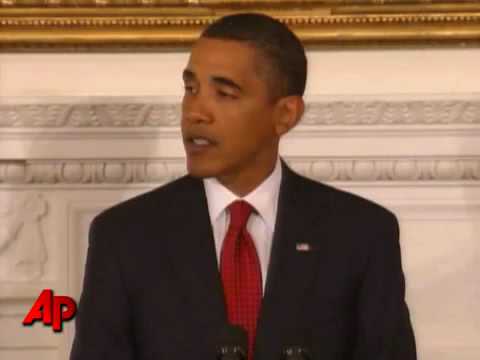
It’s one thing to acknowledge that the Muslim world has had a negative reaction to America ‘s war effort in Afghanistan and Iraq, but, when one starts referring to “the previous eight years” before the Obama administration, it starts to sound like partisan Democratic talking points. As ABC’s Christiane Amanpour appeared on Sunday’s Good Morning America to talk about President Obama’s predicament regarding his speech on the proposed mosque near Ground Zero, Amanpour at one point recounted that relations with the Muslim world had suffered during the “previous eight years” before Obama became President. After host John Berman queried as to “how is this playing in the Muslim world,” Amanpour at one point asserted: “But clearly President Obama from the very beginning went out of his way to try to repair relations with the Islamic world which had been so devastatingly damaged over the previous eight years.” The war in Afghanistan was only seven years old when Obama took office, so her “previous eight years” crack could only be interpreted as a reference to the entire Bush presidency rather than the war itself. Below is a transcript of the relevant portion of the Sunday, August 15, Good Morning America: JOHN BERMAN: There is, of course, another audience here, the international audience, how is this playing in the Muslim world? CHRISTIANE AMANPOUR: Well, all of this will inevitably play. How precisely these last two days of comments and change in comments will play, we’ll wait to see. But clearly President Obama from the very beginning went out of his way to try to repair relations with the Islamic world which had been so devastatingly damaged over the previous eight years . He not only mentioned that in his inauguration speech, in his first interviews, but also with that big speech in Cairo, and obviously, talking about trying to get moderate Muslims also to stand up for their faith and to stand against extremism. And, in fact, the people who are in charge of building this have spoken out against 9/11, have condemned terrorism and are viewed as those in the moderate community. So it’s clearly something that has come a cropper, if you like, since they were able to build this and protests have started. But the question, is vital. What does it actually mean, how far away is suitable? Can a mosque be built there? There are other mosques in that general area. What does it precisely mean when you strip it all down, this political furor that’s been started over this?

Read more:
ABC’s Amanpour Takes Dig at Bush: Relations w/ Muslim World ‘Devastatingly Damaged Over the Previous Eight Years’

Time’s Scherer Blames Press Pool for Obama’s Flipping and Flopping on Ground Zero Mosque

Michael Scherer of Time tried to explain the concept of  “Why Barack Obama Doesn’t Like to Chit-Chat with the Press Corps” — despite their obvious affection for him. The president’s first Ground Zero Mosque comments were “perfectly scripted,” he wrote, and perfectly timed, on a Friday night at a Muslim dinner celebrating Ramadan. Scherer doesn’t get that the venue could be controversial, considering Obama’s allergies to traditional Christian prayer breakfasts. But this “perfect” scenario was ruined by the White House press pool (specifically, CNN’s Ed Henry ): A reporter asked a stray question, and Obama blew all the careful planning of his staff. He varied from his initial remarks, creating a new narrative for a story the White House does not want to linger. Was he adding an asterisk to his remarks, as the Washington Post put it ? Was it a recalibration, as the New York Times put it ? In short, this is a communications disaster. The White House had to release a statement clarifying the new statement, or restatement, or whatever. The president’s opponents, who had been pushing the mosque issue for weeks as a way to get Democrats on the wrong side of the polls in an election year, came out celebrating. Liz Cheney, who can diminish just about any nuanced thought into a barbed cable news talking point , emailed Politico’s Mike Allen from her iPhone. “I guess President Obama was for the mosque before he was against it. You can quote me,” went the message. You can sense the creative tension between the lines for reporters like Scherer. They want their access to top officials, and yet in the Obama era, they very much want those top officials to achieve their “perfect” media calibrations, and not provide grist to nuance-diminishing conservative attack dogs. They think like campaign operatives — oh, shoot, Obama shouldn’t have talked to Ed Henry besides the jokes about whether he’d swim shirtless! Henry’s question was not a hardball, just an invitation for further reflection on the mosque controversy. Scherer added that a previous Obama gaffe murdered the chances for “comprehensive” immigration amnesty: Saturday’s gaffe represents the second time this year that an unscheduled chit chat with the press corps caused him big problems. In late April, he came to the back of Air Force One and said “there may not be appetite” for immigration reform, an admission dubbed by one reporter Obama’s “fatal flinch” that infuriated Senate leaders and Hispanic voters, and effectively ended any hope for the bill passing this year. Isn’t it possible that Obama didn’t fatally wound an amnesty bill, but that there really was no real public appetite for such a bill?

Excerpt from:
Time’s Scherer Blames Press Pool for Obama’s Flipping and Flopping on Ground Zero Mosque

AP Writers Package Months-Old Polling Data As Currently Relevant News

Memo to Alan Fram and Trevor Tompson of the Associated Press and two other writers who contributed to this report (“AP-GfK polls show Obama losing independents”): You should have taken the weekend off. When I saw a shorter, earlier version of the referenced AP report this morning, it didn’t mention when AP’s polling arm AP-GfK Roper had done their work. When I went to the polling home page and found that the most recent entries were from June 9-14, I figured I’d come back later and give the group time to post fresh underlying details. Little did I know that AP’s gaggle of writers were treating the June 9-14 “Poll Politics Topline” as fresh. It gets worse. It turns out that Fram, Tompson et al wasted about 875 words on a report based on polling data that gave equal weights to results from mid-June, mid-May, and mid-April. Considering the primary topic of discussion, independents’ take on the Obama presidency and performance of Congress, this AP report is laughably irrelevant — unless its primary purpose, especially given that earlier versions of the story didn’t identify when the polling took place, was to present data designed to make readers and listeners think that things are better than they really are right now for Democrats heading into the midterm elections. Here are selected paragraph from the bylined AP pair’s non-punctual piece : Independents who embraced President Barack Obama’s call for change in 2008 are ready for a shift again, and that’s worrisome news for Democrats. Only 32 percent of those citing no allegiance to either major party say they want Democrats to keep control of Congress in this November’s elections, according to combined results of recent Associated Press-GfK polls. That’s way down from the 52 percent of independents who backed Obama over Republican Sen. John McCain two years ago, and the 49 percent to 41 percent edge by which they preferred Democratic candidates for the House in that election, according to exit polls of voters. Independents voice especially strong concerns about the economy, with 9 in 10 calling it a top problem and no other issue coming close, the analysis of the AP-GfK polls shows. While Democrats and Republicans rank the economy the No. 1 problem in similar numbers, they are nearly as worried about their No. 2 issues, health care for Democrats and terrorism for Republicans. Ominously for Democrats, independents trust Republicans more on the economy by a modest but telling 42 percent to 36 percent. That’s bad news for the party that controls the White House and Congress at a time of near 10 percent unemployment and the slow economic recovery. … Both parties court independents for obvious reasons. Besides their sheer number – 4 in 10 describe themselves as independents in combined AP-GfK polling for April, May and June – they are a crucial swing group. To try winning them over, Republicans say they will contrast Obama’s campaign promises of change with the huge spending programs he’s approved. Democrats say they will warn independents that a GOP victory will revive that party’s efforts to cut taxes for the rich and transform Social Security into risky private investment accounts. … Independents trust Republicans far more than Democrats for handling national security, but give Democrats a 42 percent to 36 percent edge for dealing with health care – a potential sign that distrust over Obama’s signature issue is receding. Hope is not lost for Democrats. The AP-GfK polls show a narrow 44 percent to 41 percent overall preference for a Democratic Congress. The party is holding its 2008 edge among women and urban residents, and still splitting the vote of pivotal suburbanites and people earning $50,000 to $100,000. Let’s look at just a few relatively current data points from elsewhere relating to the Fram’s and Tompson’s topics: Trust on health care — The antiquated AP-GfK report cites a 49-39 average Democratic edge among all voters across April, May and June (at Page 26 of detailed report; not in AP’s story). A Rasmussen report based on late June polling data shows Republicans with a 51-40 edge. Even that was six weeks ago. Since then we have learned that Team Obama is arguing in court that ObamaCare’s health insurance purchase mandate is a tax after telling the country for months before the legislation’s passage that it wasn’t. There have also been instances where abortion coverage was found in high-risk pool plans in several states, which were only eliminated when the Department of Health and Human Services issued regulations doing so. This exercise proved, as if proof was really needed, that the pro-life Executive Order that supposedly won over the Stupak Stooges — er, the Stupak Six — was nothing but a charade. Trust on the economy — AP-GfK shows a 45-42 average Democratic advantage (again at Page 26 of detailed report). The same Rasmussen report noted previously is 48-39, advantage GOP . Given the wave of weak economic news in the past six weeks, it would notbe surprising to see that the Republican advantage here has increased since then. Preference in who controls Congress — AP-GfK cites a 44-41 Democratic edge. This question has been a virtual dead heat in a Wall Street Journal/NBC poll all year . The latest result based on August 5-9 polling showing a one-point Democratic lead. No AP poll would be complete without a bit of cooking. In this instance, the AP-GfK poll’s average Democratic ingredient outweighed the GOP’s by 44. Gallup’s most recent poll on the topic, admittedly a reversal from most of its results during the past several months, shows the GOP with a 2% edge in party affiliation, including “leaners.” It appears that AP-GfK polls on the topics presented every month. It would thus be reasonable to assume that it has data for July, and that in a few days it will have data for August. Thus, it’s odd that the wire service wouldn’t have simply waited a few days to give us fresher information. Or maybe someone has seen that info, and would prefer not to have to report it at all. Cross-posted at BizzyBlog.com .

See original here:
AP Writers Package Months-Old Polling Data As Currently Relevant News

Amanpour’s Panel Hails Obama’s ‘Courage,’ ‘Leadership’ and ‘Great Global Message’ on Mosque

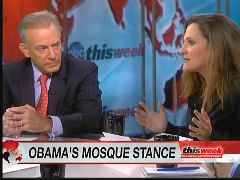
President Barack Obama’s endorsement Friday night of building a mosque near Ground Zero has driven the establishment press corps to find nobility in pursuing conviction even in the face of public opposition, not something MSM journalists admired about the previous President, while suddenly becoming very concerned about protecting private property rights – all while hailing Obama’s “great global message.” “I thought the speech Friday night was a model of political courage, in the sense that he said what he believed knowing that it was going to cost him,” hailed Washington Post Associate Editor David Ignatius on ABC’s This Week with Christiane Amanpour. Picking up on Matthew Dowd’s suggestion Obama was echoing George W. Bush’s “it’s my way or the highway” attitude, Chrystia Freeland , global editor-at-large for Reuters, argued: Another way of talking about that is leadership, conviction, having your beliefs and not governing according to polls. And I think if you ask most Americans what kind of leader you want, if you ask people in the world what kind of leader do you want, you want someone who governs according to conviction….for American leaders to say in the face of, you know, some political pressure from their voters, to say actually we believe sufficiently strongly in diversity, in private property rights for our Muslim citizens, I think that’s a great global message. Ignatius, the Post’s former foreign editor and business editor and now a columnist on international affairs, backed Freeland, contending that doing what upsets Americans is good to do because it protects property right and pleases the world: I agree with that. I think that’s one of our strongest suits. As the world looks at us, if they see that the United States, even in an issue that hurts, and Ground Zero hurts, even on that issue, we still stand up for the freedom of people to dispose of their property as they want. That does count. When I travel, you travel Christiane, we hear comments about that America a lot. I think you shouldn’t minimize the benefits of saying to moderate Muslim, here you are. This upsets a lot of Americans, but we’re going to do it anyway. (Where were Ignatius and Freeland when the Supreme Court allowed eminent domain seizures of homes so local government could sell the land to developers?) In between, Amanpour worried the controversy over the mosque hurts Obama’s efforts to befriend Muslims and “so do you think it’s wise to have this huge hubbub over it, or it should just go forward, this mosque?” Amanpour fretted: I just want to ask you this, but it does go to the heart of what he’s  been doing since the beginning of his presidency, reaching out not just to the Muslim world but Muslims in general. He’s made a very important first interview where he said the United States could not afford to have yet another generation of Muslims viewing it as the enemy. So do you think it’s wise to have this huge hubbub over it, or it should just go forward, this mosque? Earlier in the program, Amanpour put forward Germany’s state capitalism as a model to emulate: “The big story out of Europe this weekend is that Germany has shown stronger than expected growth over the last quarter. Laura, you were saying something about how Germany had taught and trained its workforce to compete in these situations.” From Berkely, California, Laura D’Andrea Tyson, of the President’s Economic Recovery Advisory Board, asserted: “A major part of that is serious vocational training and very serious ongoing training for manufacturing workers in Germany.” She also trumpeted: “Germany manages to do this with a much higher tax rate than we do.” My previous looks at Amanpour’s This Week: From last Sunday: “ Amanpour Elevates British Journalist Who Sees ‘Culture of Hate’ in U.S., Time to Divide Up Our ‘Pie ’” Two weeks ago, reviewing Amanpour’s debut: “ Amanpour Slums to Take on U.S. Politics, Flummoxed Pelosi’s Victories Aren’t Better Appreciated ” A Friday (August 13) Daily Caller article by Caroline May, “ Amanpour’s ‘This Week’ continues to receive negative reviews as viewers express desire for Tapper’s return ,” included my assessment of Amanpour: Brent H. Baker, Media Research Center Vice President for Research and Publications speculated to The Daily Caller that Amanpour’s air of superiority has added to the poor reviews. “Viewer revulsion toward Amanpour is hardly surprising given her condescending attitude toward them,” he said. “In her first two shows, she’s acted like she’s deigning to explain the world to the uninformed rubes, aka Americans, watching, acting as if she’s slumming to help bring the world to the ill-informed Americans.” From the Sunday, August 15 This Week with Christiane Amanpour, segment with Laura D’Andrea Tyson, former New Jersey Governor Jon Corzine, Senator John Corker and Chamber of Commerce economist Martin Regalia: CHRISTIANE AMANPOUR: Let me just quickly go to what you mentioned about being competitive with the rest of the world. The big story out of Europe this weekend is that Germany has shown stronger than expected growth over the last quarter. Laura, you were saying something about how Germany had taught and trained its workforce to compete in these situations. LAURA D’ANDREA TYSON: Right, well Germany has had a long-term commitment to manufacturing. And it has a very strong manufacturing base. It has a much larger share of economy in manufacturing than we do. A major part of that is serious vocational training and very serious ongoing training for manufacturing workers in Germany. And often times a German firm with German workers will retrain and use technology at home rather than offshore those jobs abroad. And I want to point out also that Germany manages to do this with a much higher tax rate than we do. I think there should be corporate tax reform. I agree with a lot of what Senator Corker and Martin Regalia [of the Chamber of Commerce] have said. But we need investment. I would say, in thinking about the share of government and GDP, something the Senator mentioned, we need to distinguish between investment spending by the government — whether it’s federal, state or local – and other spending. A dollar spent for infrastructure is different than a dollar spent for current operations. From the roundtable: MATTEW DOWD: …It feeds a broader narratively about him, which is, it’s my way or the highway. In many ways, to me, it reminds me of Bush, which is, “I don’t care what the American public is on this, I’m going say what is the right thing to do.” He’s done it on immigration in Arizona, he’s done it on this, he’s done it on health care. I think that’s the political problem he has. DAVID IGNATIUS, WASHINGTON POST. Why is that a problem for him? I thought the speech Friday night was a model of political courage, in the sense that he said what he believed knowing that it was going to cost him. The White House has stayed out of this issue knowing that it’s political poison. And I thought the President spoke to it fairly directly. This is America, people have a right to build on property that they own, even if it’s going to be a mosque near Ground Zero. I was sort of sorry that he was trying to walk it back in these more nuanced comments yesterday. CHRYSTIA FREELAND, REUTERS: I totally agree with David. And I think, you know, Matt, to the point of my way or the highway, another way of talking about that is leadership, conviction, having your beliefs and not governing according to polls. And I think if you ask most Americans what kind of leader you want, if you ask people in the world what kind of leader do you want, you want someone who governs according to conviction. And I do think this touches on, Christiane, the economic panel you had earlier. I think that it touches on in two important ways. This point about private property might seem like a parsing, but it is actually essential and  I think to have the President, and we had similar comments from  Mike Bloomberg, coming out and saying, actually, we believe that the rights of private property are so strong, we are not going to change them because the cosmetics are not- …. CHRISTIANE AMANPOUR: I just want to ask you this, but it does go to the heart of what he’s  been doing since the beginning of his presidency, reaching out not just to the Muslim world but Muslims in general. He’s made a very important first interview where he said the United States could not afford to have yet another generation of Muslims viewing it as the enemy. So do you think it’s wise to have this huge hubbub over it, or it should just go forward, this mosque? …. FREELAND: But let’s talk a little bit about the rest of the world. You know, I think that actually, the President’s comment, the comments by Mike Bloomberg are really an important message to the Muslim world. We’re talking about Pakistan later on. For these people — for American leaders to say in the face of, you know, some political pressure from their voters, to say actually we believe sufficiently strongly in diversity, in private property rights for our Muslim citizens, I think that’s a great global message.   IGNATIUS: I agree with that. I think that’s one of our strongest suits. As the world looks at us, if they see that the United States, even in an issue that hurts, and Ground Zero hurts, even on that issue, we still stand up for the freedom of people to dispose of their property as they want. That does count. When I travel, you travel Christiane, we hear comments about that America a lot. I think you shouldn’t minimize the benefits of saying to moderate Muslim, here you are. This upsets a lot of Americans, but we’re going to do it anyway.

Read more:
Amanpour’s Panel Hails Obama’s ‘Courage,’ ‘Leadership’ and ‘Great Global Message’ on Mosque

WaPo: Reid Paints Angle as ‘Dangerously Reactionary,’ and That’s ‘Not Especially Difficult Work’

Saturday’s Washington Post put the Harry Reid-Sharron Angle race on the front page with the headline “In a tight spot, Sen. Reid colors his foe ‘wacky,’ reactionary” . Post reporter Amy Gardner makes it all about the attack on Angle, not on Reid’s record: Few places are as aptly named as a divey little bar in southwest Las Vegas called The Hammer.That’s where the campaign brain trust of Senate Majority Leader Harry M. Reid (D) unwinds over beer and nachos after long days spent trying to discredit his Republican opponent, former state assemblywoman Sharron Angle. All summer long, Reid’s small army of young, eager staffers has bombarded Nevada voters with unflattering, sometimes distorted allegations about Angle. They have scoured old newspapers, government transcripts and video archives for anything she has said or done that might be turned against her. In television and radio ads, Reid’s aides have tried to create and then exploit perceptions that Angle is a dangerous reactionary. It has not been especially difficult work . Angle, a “tea party” favorite, has said many controversial things in her years as a politician. A conservative who is deeply skeptical of government, she called for a phaseout of Social Security and proposed eliminating the departments of Education and Energy. Most recently, Reid claims to have uncovered information that links Angle to an obscure political movement called Christian Reconstructionism, which holds that government should rule according to biblical law. Why is the Post covering a campaign by the Majority Leader of the Senate entirely focused on laying all his opposition research out on the table? Gardner would only address Reid’s record by underlining he doesn’t want to talk about it: He is gaffe-prone, as when he said recently that he didn’t know “how anyone of Hispanic origin could be a Republican.” And in an anti-incumbent year, Reid has chosen not to run on his credentials as one of Washington’s most powerful politicians. Instead, his campaign strategy has been to use his formidable resources to diminish his opponent rather than to promote himself. This is the Post’s first (and so far only) mention of Reid’s gaffe, plopped in paragraph 8, safely inside the paper on page A-5. There’s no mention of Reid’s gaffes about how Obama won election because he was a “light-skinned black” with “no Negro dialect.” There’s no mention of Reid claiming the war in Iraq was “lost” and the surge accomplished nothing. But the Post is more interested in Reid’s Sharron Angle packets: This month, The Washington Post received a 27-page packet linking Angle to Christian Reconstructionism. Similar material appeared in reports by other news outlets. Within days, newspapers, television stations and political bloggers in Nevada began buzzing about Angle’s ties to this largely unknown conservative movement, which says politicians should follow biblical law and should not separate their Christian beliefs from their secular duties. The Reid packet strongly implies that Christian Reconstructionism is a dangerous secret society intent on turning the United States into a theocracy. This is something of a stretch. At its peak in the 1990s, the Christian Reconstructionist movement was small and mostly ignored. The group’s founder, R.J. Rushdoony, tried to start a political party, but it went nowhere. When Rushdoony died nine years ago, the movement dried up. It is true that some of Angle’s views mirror those of Christian Reconstructionists. She has called government entitlement programs a violation of the First Commandment and has objected to church-state separation. The Reid material also points out that Angle was an early member of the Independent American Party of Nevada, the state’s affiliate of the Constitution Party, which seeks “to restore our government to its Constitutional limits and our law to its Biblical foundations.” Of course, to any group of secular leftists, it’s frightening for any conservative politician to talk about God, regardless of whether the Rushdoony arguments have a scintilla of merit. The Post’s video detailing Reid’s opposition research shows footage of Angle talking to CBN about how God called her to the Senate race, and then includes Reid “tracker” footage of Angle telling some elderly women that the left dominates academe, and the media also bends to the left. Apparently, the Washington Post considers this contention “wacky” and “reactionary” — even as its Harry Reid coverage proves it.

Continued here:
WaPo: Reid Paints Angle as ‘Dangerously Reactionary,’ and That’s ‘Not Especially Difficult Work’

More on How Physicians Became Torture Doctors for CIA – Kevin Gosztola – Open Salon

A good amount of documentation on the involvement of psychologists in the torture and abuse of detainees or “terror suspects.” And, a new study( http://rawstory.com/rs/2010/0805/study-cia-doctors-gave-green-light-torture/ ) provides even more revelations on the involvement of physicians making it increasingly clear that medical professionals put limits on ethical standards they were expected to follow in order to help the CIA interrogate detainees. The study, titled “Roles of CIA Physicians in Enhanced Interrogation and Torture of Detainees,( http://www.wepapers.com/Papers/117511/Roles_of_CIA_Physicians_in_Enhanced_Interr… )” authored by Leonard S. Rubinstein, the president of Physicians for Human Rights, and Brigadier General (ret.) Stephen N. Xenakis, a former Army psychiatrists (who is now with the Center for Public Health and Human Rights), utilizes a previously secret document from 2004 and lays out the “guidelines for detainee interrogation” that physicians, psychologists, and other health care professionals developed and followed so they could serve the CIA. Guidelines indicate the doctors, who were working for the CIA’s Office of Medical Services, conducted medical evaluations [experimentations] on detainees “before and during interrogations” and waterboarding “required the presence of a physician.” Physicians documented the effects of “enhanced interrogation techniques” [torture] like waterboarding and decided waterboarding “created risks of drowning, hypothermia, aspiration pneumonia, or laryngospasm.” They ignored “clinical experience/research” and assured lawyers “there was no ‘medical reason’ to believe that waterboarding [would] lead to physical pain.” It was established that “cramped confinement could result in deep vein thrombosis” and death could result from “lengthy exposure to cold water.” And, the physicians, psychologists, and other health care professionals working for the CIA developed “limitations” so that techniques like waterboarding, cramped confinement, sensory deprivation, stress positions, etc could be used on detainees. Limitations included: “exposure to specified temperature either up to time of hypothermia would develop or on evidence of hypothermia,” dietary restrictions up to “body weight loss of 10% or evidence of significant malnutrition,” “exposure to noise just under decibel levels associated with hearing loss,” up to 48 hours of exposure to stress positions “provided hands were no higher than the head” of a detainee, and no more than eight consecutive hours or eighteen hours per day of “confinement in a box.” Much of this took place after 2003, after a CIA Inspector General investigation of “enhanced interrogation techniques” [torture], OMS physicians were asked to provide “opinions to the agency and lawyers on whether techniques used would be expected to cause severe pain or suffering and thus constitute torture.” Slowly, OMS physicians’ work for the CIA transformed into work, which violated “ethical standards,” prohibiting physicians from using “medical skills to facilitate torture or be present when torture is taking place.” The physicians consulted directly with Department of Justice lawyers and were asked to provide legal cover by supporting “legal decisions” that “interrogators who applied enhanced interrogation techniques neither inflicted sever mental or physical pain or anguish and thus did not commit torture.” For techniques like sleep deprivation, they claimed the use thereof “could not lead to profound disruption in the detainees’ senses or personality (the legal definition of psychological torture).” As suggested in the opening paragraph, it has been evident that physicians and psychologists have been involved in torture for some time, especially since Wikileaks leaked the Guantanamo Standard Operating Procedures Manual in November 2007( http://www.wikileaks.org/wiki/Guantanamo_document_confirms_psychological_torture ). The manual indicated that, “incoming prisoners were to be held in near-isolation for the first [four] weeks to foster dependence on interrogators and `enhance and exploit the disorientation and disorganization felt by a newly arrived detainee in the interrogation process.’” It outlines how isolation was to be used on detainees, a technique Physicians for Human Rights said can lead to symptoms of “`bewilderment, anxiety, frustration, dejection, boredom, obsessive thoughts or ruminations, depression, and, in some cases, hallucination'” and, if prolonged, could result in “increased stress, abnormal neuroendocrine function, changes in blood pressure and inflammatory stress responses.” Then, it was known those involved understood how they could be prosecuted for violating international law. As an April 16, 2003, memo from Defense Secretary Donald Rumsfeld explained “Caution: the use of isolation as an interrogation technique requires detailed implementation instructions, including specific guidelines regarding the length of isolation, medical and psychological review, and approvals for extension of the length of by the appropriate level in the chain of command. This technique is not know to have been generally used for interrogation purposes for longer than 30 days. Those nations that believe that detainees are subject to POW protections may view use of this technique as inconsistent with the requirements of Geneva III, Article 13 which provides that POWs must be protected against acts of intimidation; Article 14 which provides that POWs are entitled to respect for their person; Article 34 which prohibits coercion and Article 126 which ensures access and basic standards of treatment. Although the provisions of Geneva are not applicable to the interrogation of unlawful combatants, consideration should be given to these views prior to application of this technique.” The report is yet another indication of the need for more investigation, accountability, and reform from the Obama Administration. Yet, as demonstrated by a comprehensive report (“Establishing the New Normal”)( http://www.aclu.org/national-security/establishing-new-normal ) from the ACLU, the Obama Administration has avoided its obligation to accountability for torture and chosen to follow the dangerous mantra of “looking forward, not back,” a false choice because, as the ACLU states in the report: “a strong democracy rests not on the goodwill of its leaders but on the impartial enforcement of laws. Sanctioning impunity for government officials who authorized torture sends a problematic message to the world, invites abuses by future administrations, and further undermines the rule of law that is the basis of any democracy.” added by: toyotabedzrock

Obama throws support behind controversial Islamic center

Washington (CNN) — President Obama threw his support behind a controversial proposal to build an Islamic center and mosque near New York's ground zero, saying Friday that “Muslims have the same right to practice their religion as anyone else in this country,” according to remarks distributed by the White House. “Let me be clear: as a citizen, and as President, I believe that Muslims have the same right to practice their religion as anyone else in this country,” Obama said, according to prepared remarks released before a speech. “That includes the right to build a place of worship and a community center on private property in lower Manhattan, in accordance with local laws and ordinances,” he said. Obama was speaking at a White House Iftar dinner celebrating the Islamic holy month of Ramadan. The president's remarks drew praise from New York Mayor Michael Bloomberg, who announced his support for the Islamic center last week. Bloomberg compared Obama's speech to a letter President George Washington wrote in support of a Jewish congregation in Newport, Rhode Island. “President Obama's words tonight evoked President Washington's own August reminder that 'all possess alike liberty,' ” Bloomberg said in a statement. “I applaud President Obama's clarion defense of the freedom of religion tonight,” he said. The president invoked the attacks of Sept. 11, 2001, which critics of the Islamic center cite as the main reason for preventing its construction. “We must all recognize and respect the sensitivities surrounding the development of lower Manhattan,” Obama said, according to his prepared remarks. “The 9/11 attacks were a deeply traumatic event for our country.” “The pain and suffering experienced by those who lost loved ones is unimaginable,” he continued. “So I understand the emotions that this issue engenders. Ground Zero is, indeed, hallowed ground.” But Obama argued that American ideals and the Constitution demanded that the project proceed. “This is America, and our commitment to religious freedom must be unshakable,” he said. “The principle that people of all faiths are welcome in this country, and will not be treated differently by their government, is essential to who we are. The writ of our Founders must endure.” The proposed Islamic center has provoked vocal opposition from some families of 9/11 victims and other groups. Nearly 70 percent of Americans oppose the plan, according to CNN/Opinion Research Corporation Poll released Wednesday. The project's leaders say they plan to build the $100 million, 13-story facility called Cordoba House three blocks from the site of the 9/11 attacks. The developer, Sharif El-Gamal, describes the project as an “Islamic community center” that will include a 500-seat performing arts center, a lecture hall, a swimming pool, a gym, a culinary school, a restaurant and a prayer space for Muslims. On Wednesday, the project's developers declined an offer by New York Gov. David Paterson to relocate the project to a state-owned site. Earlier this month, the New York City Landmarks Preservation Commission unanimously denied landmark status for the building where the proposed Islamic center would stand, allowing the project to move forward. added by: TimALoftis

Real Or Fake: A Game Of What Obama Is Spending Your Taxpayer Money On

Real Or Fake: A Game Of What Obama Is Spending Your Taxpayer Money On Spending Fail Map http://www.bankruptingamerica.org/spending-fail-map/ added by: CarlosBobthe3rd

After Bashing Bush on Unemployment, NYT Now Touting ‘Benefits’ of High Unemployment

In late 2009, when high rates of unemployment began looking like a sad fact of life for the foreseeable future, the media started looking for ways to put a positive spin on the situation. Sure, many had predicted the next great depression when unemployment stood at around 6 percent in 2008, but with Democrats in control of the White House and Congress, a number of reporters suddenly found the recession’s many silver linings. “All I Want for Christmas Is a Layoff” read the headline of one ABCNews.com column following employees who would rather get a nice severance package than continue in their dull vocations. Newsweek cheerily noted that since men had been hit harder by the recession than women, they would now be able to help out around the house. The Los Angeles Times coined possibly the most absurd term of the recession to date in ” funemployment ,” and discussed jobless Americans who prefer “hitting the beach” to “punching the clock.” Now the New York Times is celebrating the fact that the 90.5 percent of those who are employed are seeing a pleasant rise in their wages. See, the recession’s not that bad. After the obligatory introduction – a few paragraphs lamenting those Americans who have lost their jobs – the Times started searching for the upside: But since this recent recession began in December 2007, real average hourly pay has risen nearly 5 percent. Some employers, especially state and local governments, have cut wages. But many more employers have continued to increase pay. Something similar happened during the Great Depression, notes Bruce Judson of the Yale School of Management. Falling prices meant that workers who held their jobs received a surprisingly strong effective pay raise. This time around, nominal wages – the numbers people see in their paychecks – have risen throughout the slump, as companies have passed along some of the impressive productivity to their (remaining) workers. Meanwhile, inflation has been almost non-existent, except for parts of last year, when real wages did briefly fall. Obviously, real wages could begin falling again if inflation picks up or more employers cut pay. And many workers are already struggling with big debts and diminished 401(k) accounts. Still, the contrast is pretty stark. The typical jobless person has been out of work six months. The typical worker has received a raise. Yes, the typical worker has received a raise. In fact, fewer than ten percent do not have a job. Say, why isn’t anyone giving Obama credit for the 90.5 percent employment rate? After all, the typical person is still employed. During the Bush years, the Times was of course more concerned about actual employment during a recession. Throughout 2002, the paper bemoaned the “jobless recovery” – despite the fact that the unemployment rate was never more than two percent below pre-recession levels. The Times shunned good news outright, favoring to report the more glum details of the nation’s economic outlook. “Employers Balk at New Hirings, Despite Growth,” was a headline typical of the Times’s attitude. Paul Krugman consistently opined on the ” jobless recovery ,” and some Times reporters speculated that government accounting tricks had shielded the public from seeing just how bad the economy was. The recession beginning in late 2001, though less severe than the one in which the country finds itself now, lasted a good deal longer than this one has lasted so far, as you can see in this graph, courtesy of Calculated Risk .   That is not to say that the 2001 recession more serious. As you can see, our current economic downturn is much deeper, and if it continues on its current trajectory may last even longer than the early-2000s recession. It does mean, however, that the New York Times had ample opportunity to ponder all the benefits of recession economics in an economic environment that was far less severe than the current one. I wonder why we were never informed of all the upsides.

Read the original here:
After Bashing Bush on Unemployment, NYT Now Touting ‘Benefits’ of High Unemployment