Tag Archives: plaintiff

Stan Lee Vs. Stan Lee: The Epic Legal Follies of a Comics Mastermind

In February, a federal court threw out a suit filed by Stan Lee Media Inc. against Paradox Entertainment — a failed attempt for the plaintiff to regain the intellectual-property rights of the Conan comic character. It might seem odd enough that a company sues for a claim to the proceeds of a film that lost tens of millions of dollars last summer, but odder still is that Stan Lee himself — the comic-book mastermind responsible for The Avengers, X-Men, Spider-Man, and hundreds of other iconic characters — was neither the plaintiff nor the defendant in that suit. As has been the case for over a decade, the legal wrangling surrounding Lee has been as convoluted and nonsensical as the script to Elektra , and it will only get more confounding on Thursday, when a new federal case comes to trial pitting SLMI against its namesake himself. That’s right: Stan Lee Media is suing Stan Lee over characters created by Stan Lee. Figuring out how an individual becomes a defendant in a case filed by the company bearing his name is an effort nearly as heroic as his own characters’ feats. It involves Lee bouncing between companies during repeated bankruptcies and determining where he was when activities took place. It also involves a company refusing to back down despite losing numerous judgments, and despite the exodus of the eponymous leader. Much of the acrimony dates back to the 1990s, when Lee was still the figurehead at the then-struggling Marvel. Throughout that decade the comic company over-leveraged acquisitions and hemorrhaged enough money to land in bankruptcy. By 1998, the company used that proceeding to end Lee’s contract of $1 million annual salary for life. Stan Lee left Marvel and started a new company , Stan Lee Entertainment (soon becoming SLMI) as a way to maintain control over his intellectual property. The company was started by Lee with a close friend, Peter F. Paul — a man with a checkered history of federal drug and conspiracy convictions for crimes including, but not limited to, selling $8.7 million worth of ” nonexistent coffee ” to Fidel Castro. Paul was to have an equally troubled future that would soon ensnare his new partner Lee. Initially the company made an impact with online animated comics, developing new characters on Web sites with the expectation of spinning them off into various media. The company enjoyed initial success. The creation known as The 7th Portal, for starters, had been acquired by Fox television for foreign broadcast, and was featured as a 3-D attraction for Paramount Theme Parks. Like so many digitally-based companies of the era, SLMI foundered with the bursting tech bubble. Then, after Peter Paul secured a bridge loan to prop up the struggling enterprise, he and numerous board members dumped large amounts of holdings ahead of the ultimate stock collapse. The Securities and Exchange Commission feared insider trading, and Paul feared the SEC — so he fled for Brazil. The company’s stock price plunged to $.13 per share by the end of 2000, and it filed for bankruptcy in February 2001. Two key events occurred during this time. Sensing both SLMI’s downfall and encroaching legal troubles, Lee founded POW! Entertainment — a new company that was strictly his own. He transferred the rights of his properties to POW! during bankruptcy and then departed SLMI. Additionally, in November of 2000, SLMI had negotiated for ownership of the Conan franchise. This came from purchasing all outstanding shares of rights-holder Conan Properties in exchange for SLMI stock, with a minimum price attached. It didn’t take long for this deal to become compromised: The next month, following the stock dump by Paul and other officers, SLMI was delisted from trading by NASDAQ . Sitting in possession of worthless holdings, Conan Properties sued for a reversal of the sale, and in 2002 a bankruptcy court returned the rights to the company. (It eventually sold those rights to Paradox, a Swedish entertainment entity which shepherded the latest Conan film to the screen with Lionsgate.) The latter events coincided with Marvel’s incredible comeback. Led by Vice Chairman (and longtime Marvel power broker) Isaac Perlmutter, the company had climbed out of bankruptcy by licensing the film rights for several of its highest-profile characters including Spider-Man (which Sony would soon develop into a box-office behemoth), X-Men and the Fantastic Four (both successfully adapted by Fox). In light of this swift, lucrative reversal of misfortune, Lee brought suit against Marvel for terminating his contract and demanding payment on the promise of 10 percent of profits earned by characters of his creation. Yet even while he pursued this lawsuit, Lee — and his intellectual property — returned to Marvel. Here is where the dispute regarding rights to Lee’s characters, and whether they ever actually left Marvel, is focused — a dispute SLMI has been trying to win for years and which this week’s trial will attempt to settle once and for all. In 2005, Marvel and Lee settled their case before going to jury; the court records were sealed, although Marvel later reported a $10 million write-down with regard to Lee. Meanwhile, that same year, Peter F. Paul was extradited from Brazil, earning four years of house arrest and 10 years imprisonment after separate plea deals in his SLMI stock-manipulation case. Once he returned to the States, a new group of his acolytes organized as board of directors for SLMI. Since then the company has been rather adept at filing — if not quite winning — lawsuits. Routinely, its legal attempts at securing the rights to comic characters have been denied or dismissed entirely in courts from New York to Los Angeles to Colorado. One suit sought to unseal the 2005 Lee/Marvel settlement in search of proof that Lee left Marvel in 1998 with the rights to his characters. Such a discovery would seemingly prove that Lee brought those rights to SLMI after Marvel spiked his contract and before fleeing SLMI with them illegally. Ultimately SLMI wants to prove that Lee was colluding with Marvel to cover the rights transfer in their 2005 settlement, thus entitling Marvel to full rights while Lee shared in huge profits. In dismissing that case in February 2011, U.S District Judge Robert Sweet summarized the lack of standing SLMI held as the intervening party, writing, “Their alleged mutual misrepresentations regarding the action’s real party in interest, and their mutual mischaracterization of the nature and effect of the Marvel/Lee Employment Agreement have not been established.” Lack of standing has done little to stop SLMI in its legal lurches. It took nine years following the bankruptcy ruling before the board decided to spring up suddenly with its claim to the rights of Conan; it cannily filed that lawsuit the very day Conan debuted in theaters last August. The judge in that case last month rejected the company’s claims, stating that SLMI could not demonstrate proper standing and harm. That makes sense: The company dissolved one month following the Conan rights deal and had no funds to create any product; hard to show harm when you have nothing to show at all. Rather than a formidable archenemy from Lee’s imagination, Stan Lee Media Inc. instead resurfaces with all the predictability and impotency of a villain defeated repeatedly in a serialized superhero saga. Nevertheless, SLMI forges ahead undeterred with its legal process — largely because the company has nothing to lose; it has not produced anything in over a decade. It doesn’t even have a functioning Web site . Making a play for some of the most lucrative properties in Hollywood is all Stan Lee Media Inc. has in its arsenal, and the potential windfall is enough to motivate continuous torts. In a bit of understatement, Judge Sweet alluded to this possible perpetuity when he wrote, “Because of the success of the characters and the conflicting claims concerning their rights, it has been difficult to achieve finality.” Should a loss in this week’s case send SLMI away for good, it still won’t be the end of the lawsuits regarding these properties. The estate of Jack Kirby, a former collaborator of Lee, has also taken to the courts regarding copyrights of characters he also had a hand in creating. Expect Marvel and its corporate parents at Disney to be gathering an Avengers team of lawyers in their defense for years to come. Brad Slager has written about movies and entertainment for Film Threat, Mediaite, and is a columnist at CHUD.com . His less insightful impressions on entertainment can be found on Twitter . [Photos via Shutterstock ; Illustration: Movieline]

Read the original:
Stan Lee Vs. Stan Lee: The Epic Legal Follies of a Comics Mastermind

Charlie Sheen: A Changed Man?

With the exception of dodging some flying objects over the weekend, Charlie Sheen has remained relatively quiet over the last few weeks. Heck, he’s even made peace with Brooke Mueller . It may be confusing to those of us used to the actor’s Warlock ways, but Emilio Estevez says his brother is “a completely different guy.” This time for good, supposedly. Speaking to Access Hollywood , Estevez says Sheen has his “voice back.” The former Young Guns star credits a couple projects in the works for helping Charlie regain his “focus.” “He’s on a new show [ Anger Management ] and he’s gonna be roasted by Comedy Central – which I think is going to be hysterical,” Estevez says. “I think that he’s really got it together. And he’s very excited about the crew of the show he’s putting together.” [Photos: WENN.com]

Read the original here:
Charlie Sheen: A Changed Man?

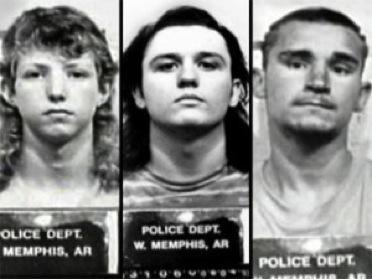
West Memphis Three Free from Prison After Guitly Plea, Insist on Innocence

Damien Echols, Jason Baldwin and Jessie Misskelley Jr. – who were convicted of murdering three Boy Scouts in 1993 and who have come to be known as “The West Memphis 3” – were released today after serving 18 years in prison. In an odd, legal twist, the trio entered a plea of guilty in court… and were subsequently set free. The case grew in stature and publicity over the last few years, as new DNA evidence came to light that cast doubt on the conviction. Two documentaries were made about the West Memphis 3, with celebrities such as Eddie Vedder and Natalie Maines insisting on a retrial, and even showing up in court today. The families of two of the victims even joined forces with the defense, proclaiming that Echols, Baldwin and Misskelley Jr. were innocent. Following the threesome’s guilty plea, the lead prosecutor on the case issued a statement, excerpts from which read: “In light of these circumstances I decided to entertain plea offers that were being proposed by the defense. I NEVER considered ANY arrangement that would negate the verdicts of those two juries. Guilt or Innocence was NEVER ON THE TABLE. “Today’s proceeding allows the defendants the freedom of speech to SAY they are innocent, but the FACT is, they just pled GUILTY. I strongly believe that the interests of justice have been served today.” This arrangement is known as an “”Alford plea,” with defendants essentially admitting there was enough evidence to convict at the time of the trial, yet maintaining the right to state their innocence. Immediately following their release, Damien and Jessie held a press conference and insisted they served 18 years for a crime they “did not commit.” Jason is yet to comment.

See original here:
West Memphis Three Free from Prison After Guitly Plea, Insist on Innocence

Lindsay Lohan Sues Pitbull Over Disparaging Lyrics

Lindsay Lohan is suing rapper Pitbull over disparaging lyrics in one of his songs. He does zing her pretty good, but a lawsuit? Get outta town. The hit song, “Give Me Everything,” contains this line: Hustlers move aside, so I’m tiptoein’, to keep flowin’, I got it locked up like Lindsay Lohan . Oooh, that one hurt! Pitbull – Give Me Everything ft. Ne-Yo, Afrojack, Nayer LiLo claims in her lawsuit that “the lyrics, by virtue of its wide appeal, condemnation, excoriation, disparaging or defamatory statements by the defendants regarding the plaintiff are destined to do irreparable harm to the plaintiff.” Yes, a PITBULL SONG is likely to to her irreparable harm. Lindsay, who LOL-tastically claims she is “a professional actor of good repute and standing in the Screen Actors Guild,” is suing under New York civil rights laws safeguarding one’s name from being exploited for commercial purposes. Lindsay Lohan alleges the song causes her “to be associated in connection with defendants” and seeks to halt broadcasting of the song. Good luck.

More:
Lindsay Lohan Sues Pitbull Over Disparaging Lyrics

Another Day, Another Lawsuit: Ne-Yo Sued By Former Manager For Lack Of Royalty Payment

Damn Shaffer, pay your peoples!! R&B singer Ne-Yo is being sued by his former personal manager – for the second time in five years – for allegedly stiffing him out of royalty payments. In court papers, exclusively obtained by RadarOnline.com, Munir Mahmud is suing for breach of settlement agreement and accounting, and demanding a trial by jury. “This is a civil action for breach of settlement agreement which resolved prior action,” Mahmud’s attorney states in the lawsuit documents. “This is the second time Plaintiff has been forced to file suit against Defendants for failing to pay monies expressly due to Plaintiff.” Mahmud says he previously filed a lawsuit against Ne-Yo, known as Shaffer Smith, but they came to an out of court settlement in 2006, and that lawsuit was ultimately dismissed. But, Mahmud says terms of that settlement have not been met: “in violation of the terms of the settlement agreement, despite repeated inquiries from Plaintiff, Defendants failed to submit to royalty settlements to Plaintiff identifying the amount of royalties paid to Smith in connection with the publishing and performance income, as required.” The suit is seeking a court order for “specific performance in the form of an order requiring Defendants to allow Plaintiff to audit and inspect their books…for the purposes of determining and verifying precision the amounts due and payable to Plaintiff.” Mahmud is also seeking compensatory damages and attorneys fees among other things. Via Radaronline

Read this article:
Another Day, Another Lawsuit: Ne-Yo Sued By Former Manager For Lack Of Royalty Payment

Britney Spears’ ‘Hold It Against Me’ Likely Safe From Copyright Case

Country music duo the Bellamy Brothers are upset over Britney song title’s resemblance to their 1979 hit. By Gil Kaufman Britney Spears and the Bellamy Brothers Photo: Getty Images Chances are, nobody out there is going to confuse the Bellamy Brothers’ slow-rolling, 1979 Tex-Mex country hit “If I Said You Have a Beautiful Body Would You Hold It Against Me” with Britney Spears’ new club grinder “Hold It Against Me.” Yeah, the titles are somewhat similar, but even with the noise the “Let Your Love Flow” sibling act is making over a possible legal challenge to Brit, the chances of winning a case over the borrowing of a song title is pretty slim, according to a noted copyright attorney who spoke to MTV News. “A title is not copyrightable,” said lawyer Brian Caplan, who has more than 20 years of experience in intellectual property and entertainment law. (Caplan does not represent the Bellamy Brothers.) “The expression, either in lyrics or music in a composition is copyrightable, however if something has been used previously by multiple sources, one can argue that it is trite or commonplace and the latter user has no right to it.” David Bellamy conceded to Entertainment Weekly that he first heard the title phrase — a favorite cheesy pick-up line for bar-trollers across the globe — while watching reruns of the classic Groucho Marx show “You Bet Your Life.” The mustachioed comedian used the line on the show one night in an attempt to sidle up to a buxom blonde, Bellamy recalled. “It was just really funny, and I thought, ‘Well, that’d make a really good song title,” Bellamy said, acknowledging that many songs have the same, or similar, titles these days. “But this particular title is kinda hard to disguise, because the title is the song. It’s not like saying, ‘I love you, baby.’ I think songwriters have become watered-down. This makes me sound like an old man again, but I find that songwriters now are not as strong as they used to be in the ’60s or ’70s.” Lawyer Caplan, who had not heard either song when MTV News contacted him to comment, said that just because a title is not copyrightable does not mean a potential case would automatically go away. “It means that there would be a strong argument as it moves forward to have it dismissed, though,” he said. “If you can show through a survey of prior art that that phrase has been used previously by others prior to the plaintiff’s use, then it significantly undermines [the case] and if it’s only used in the title it’s a slam dunk.” As an example, he said if someone wrote a song called “Jersey Girl” or “My Jersey Girl,” despite the fact that Rock and Roll Hall of Fame Inductee Tom Waits wrote his “Jersey Girl” in 1980 — and Jersey boy Bruce Springsteen helped popularize it a year later — as long as the rest of the song is different musically, lyrically and melodically, there would be no case there, either. In the meantime, Spears is burning up the charts with her tune and breaking some records along the way. “Hold It Against Me” immediately shot to #1 on iTunes upon release this week and broke all previous records for most spins upon its release on Monday. Related Artists The Bellamy Brothers Britney Spears

Original post:
Britney Spears’ ‘Hold It Against Me’ Likely Safe From Copyright Case

Woman Sues Google for Bad Directions

One day I was using my cell phone's GPS service to find the nearest Target. I was driving down the road when suddenly my cell phone piped up, “Turn right here.” I looked to the right. There was no road, just a tree and some grass. I chalked it up to a GPS glitch and turned right at the next corner. If I had been Lauren Rosenberg, however, I would have turned right at that very moment, hit the tree, suffered some cuts and minor brain damage, and then turned around and sued Verizon for the glitch in its GPS service. Seriously. Rosenberg, a Los Angeles California native, is suing Google because Google Maps issued directions that told her to walk down a rural highway. She started walking down the highway–which had no sidewalk or pedestrian paths–and was struck by a car. She is suing Google for her medical expenses ($100,000), as well as punitive damages. She is also suing the driver who struck her, Patrick Harwood of Park City, Utah. On January 19, 2010, Rosenberg was apparently trying to get from 96 Daly Street, Park City, Utah, to 1710 Prospector Avenue, Park City, Utah. She looked up the walking directions using Google Maps on her Blackberry. Google Maps suggested a route that included a half-mile walk down “Deer Valley Drive,” which is also known as “Utah State Route 224.” There's not much more to say–she started walking down the middle of a highway, and a car hit her. Who wouldn't have seen that one coming? According to Rosenberg's complaint filing: “As a direct and proximate cause of Defendant Google’s careless, reckless and negligent providing of unsafe directions, Plaintiff Lauren Rosenberg was led onto a dangerous highway, and was thereby stricken by a motor vehicle, causing her to suffer sever permanent physical, emotional, and mental injuries, including pain and suffering.” Google actually does offer up a warning about its walking directions–if you view Google Maps on a computer, it gives you the following message: “Walking directions are in beta. Use caution–This route may be missing sidewalks or pedestrian paths.” added by: 02

Cheating wife sues cell phone company for exposing affair

TORONTO – A married Canadian woman is suing her cell phone company, saying its billing practices exposed her extramarital affair and ruined her life. The Toronto Star reports Gabriella Nagy is suing Rogers Wireless, Inc. for $600,000 for invasion of privacy and breach of contract. The newspaper reports that in 2007, Rogers sent a monthly bill for Nagy's cell phone to her home under her maiden name. In June of that year, her husband decided to add Rogers internet and home phone service to the house. The Star reports the following month that Rogers mailed a “global” invoice to the Nagy home that included an itemized bill for Nagy's cell phone service. Nagy's husband discovered several hour-long phone calls to a single phone number. Nagy tells the paper that her husband called the number and the person on the other end confirmed the affair. “My husband didn't tell me that's how he found out, he just left,” said Nagy. The statement of claim alleges that Rogers “unilaterally terminated its cellular contract with the plaintiff that had been in her maiden name and included it in the husband’s account that was under his surname.” Rogers, in a statement of defense, denies terminating Nagy's contract. It also says the company “cannot be held responsible for the condition of the marriage, for the plaintiff's affair and consequential marriage break-up, nor the effects the break-up has had on her.” Rogers does admit consolidating invoices sent to the couple, saying it saved the couple money and increased administrative efficiency. Since her husband left, Nagy says she was so distraught that she lost her $100,000 per year job. Her statement of claim reportedly states “The plaintiff wept uncontrollably at her workplace … and became incapable of performing her employment duties.” “It was a mistake,” Nagy reportedly said about the affair, “But I didn’t deserve to lose my life over it. “I want others to know what a big corporation has done. I trusted Rogers with my personal information. We had a contract — and agreement that put my life right in their hands.” The couple has two children, ages 6 and 7. added by: MotherForTruth

Oprah Talks It Out, Settles Defamation Suit

Maybe all the plaintiff really wanted was what most women want: a sit-down with Oprah Winfrey. The talk-show queen has reached a settlement in the defamation lawsuit filed against her by…

View post:
Oprah Talks It Out, Settles Defamation Suit

Judge Joe Brown Sued in ‘Nookie’ Case

Filed under: Celebrity Justice TV’s Judge Joe Brown is being sued by a man who was once a plaintiff on the show — a man who claims Joe falsely accused him of trying to pay a woman for sex.The plaintiff, Mark Schweninger, sued a woman on “Judge Joe Brown” for $7,500, claiming he … Permalink

Read more from the original source:
Judge Joe Brown Sued in ‘Nookie’ Case