Mona Scott is at it again! In addition to a second season of “Love And Hip-Hop Atlanta,” VH1 just announced they’ll be airing a new Monami show this Spring called “The Gossip Game.” Here’s the info via release: The Gossip Game ” Premieres Monday, April 1ST at 9PM ET/PT * VH1′s new series “The Gossip Game,” premiering Monday, April 1st at 9:00 PM ET/PT, draws viewers into the lives of seven media personalities covering the fast-paced, competitive urban entertainment beat in New York City. Every day, these ambitious women navigate the ever-shifting landscape of the media industry, where they strive to preserve their place in the ‘pecking order’ while chasing the latest exclusive scoop. These rivals, who often find themselves at the epicenter of celebrity controversy, forge an uneasy alliance of friendly foes as they compete to hit their professional marks by being the first to break the latest news and divulge the intimate details of the enviable lives of hip hop’s movers and shakers. The cast members of “The Gossip Game” are: Angela Yee, co-host of the top rated “Breakfast Club” show on Power 105.1; K. Foxx, co-host of “The Cipha Sounds & Rosenberg Show with K. Foxx” on Hot 97 FM; Kim Osorio, Editor-In-Chief of The Source magazine; Sharon Carpenter, reporter on Russell Simmons’ Global Grind website; Jas Fly, freelance writer, whose pop culture column appears on Vibe.com twice a week; Ms. Drama, host of the MsDramaTV blog and on-air personality at Major Playaz, an on-demand radio show, as well as Everywhere Radio on Sirius 40: Hip Hop Nation; and NYC Gossip Girl (Vivian Billings), whose HipHopGossipSite.com blog provides a taste of what the streets are saying along with exclusive dish on hip hop celebrities. “The Gossip Game” is executive produced by Brian Flanagan, Matthew Ostrom, Laura Palumbo Johnson and Sean Lee for Magilla Entertainment, with Tom Ciaccio serving as co-executive producer. Also executive producing are Tone Boots and Jay Griffin for District Media and Mona Scott-Young for Monami Entertainment. Executive Producers for VH1 are Brad Abramson, Warren Cohen, Shelly Tatro and Jeff Olde. Vivian Gomez is coordinating producer for VH1. Hit the flip to see what the ladies look like…
We’ve all been tailgated by people we felt were following us too closely, but it takes some serious brass to do something about it … let alone what this guy pulled. With the tailgater’s dashboard camera apparently recording, this well-dressed motorist decided to make his point by stopping in the middle of the road . Calmly, he gets out of his car and gives the tailgating driver a stare down … all while wearing a pink power tie. Now that’s how you drive. Like a BOSS. Driver OWNS Tailgater With Power Move Of all the methods to combat tailgating , this is definitely the craziest/ballsiest/awesomest. Please don’t try this at home, unless you feel like getting run over/shot.
As Lena, the spell-casting heroine of Beautiful Creatures , Alice Englert makes it snow in South Carolina, but she was powerless to stop the weather from stranding her in Baltimore for Cinema Society’s New York premiere of the movie. Fortunately, her co-stars Viola Davis and Emmy Rossum were on hand to introduce the movie to a VIP crowd of New Yorkers that, judging from the discussion at the post-premiere party at Cole’s Greenwich Village restaurant, came away impressed by the film’s performances and writing. Although Beautiful Creatures is directed at the Twilight crowd, it’s much smarter and — for a supernatural teen love story — more realistic than the sparkly vampire franchise, thanks to Richard LaGravenese’s witty, thoughtful script and some excellent casting choices. With the exception of Rossum, the main teen cast members in Beautiful Creatures are not cut from the Team Edward, Jacob or Bella molds. Leading man Alden Ehrenreich reminds me of a young Bill Hader from Saturday Night Live with a dash of Jack Nicholson in the eyes and brows, and he’s got real charisma and range as Ethan, the book-devouring smart-ass who dreams of ditching his small-town life for New York City and falls for the exotic but troubled Lena when she transfers to his school. Englert, who is the daughter of Australian filmmaker Jane Campion , also does a great job of conveying the complexity of Lena, who’s tormented by the bitchiness of her Bible-thumping classmates and, yet, has the power to smote them all. She’s also living with the knowledge that, on her 16th birthday in a few weeks, she will either “turn to the dark” and use her supernatural powers for evil, or “to the light.” And yet, though Lena’s fate (and Evan’s role in it), form the core of Beautiful Creatures, the adults get plenty of scenery to chew. Emma Thompson and Jeremy Irons play two rival casters who battle each other over Lena’s fate, and their confrontation at a church meeting is one of the movie’s high points. Irons is particularly memorable as a sardonic, old-school Southern aristocrat fed up with the town’s shabby treatment of his niece. Among the boldfaced names that were in attendance at the screening and party, which Dior Beauty hosted: Ivanka Trump, Debra Winger and her husband Arliss Howard, Crash director Paul Haggis , Girls actor and filmmaker Alex Karpovsky, former Brady Bunch actress Eve Plumb and Dianne Vavra, public relations executive for Dior Beauty, which co-hosted the event with Cinema Society. Follow Frank DiGiacomo on Twitter. Follow Movieline on Twitter.
Dree Hemingway is Ernest Hemingway’s great granddaughter, a relationship she probably never shuts the fuck up about, you know pretending that she wants to break free from his evil literary genius that provided her the good life spell….but deep down inside…and really anytime a restaurant fucks up her reservations….she goes into the “do you know who I am…”….rant..I can assume it was the same rant that made her a model…a model who gets naked but doesn’t show nipple for obscure ad campaigns….no fun.
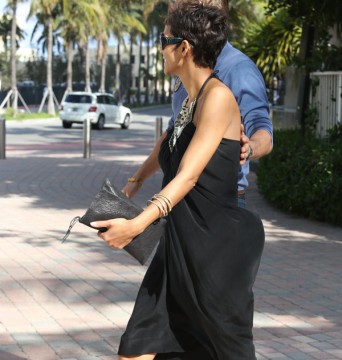
Every once in while Halle Berry positions herself in a way that the wind hits her dress and it makes her really connect with her black roots….you know it gives her a shelf ass her tribal ancestors used to carry water to the village on…something she’ll never actually experience…because she’s whiter than fucking Madonna….raised white, crossed the street when the black dudes were walking towards her late at night, you know typical suburban girl who’s mommy got wild one night in the 60s…. I’m only posting this pic cuz it made me laugh…and laughing is supposed to make us better people….
I don’t know what compelled me to watch an interview with Jessica Alba for Women’s Health’s latest edition….but I did it….I think it had something to do with her being in some kind of crop top showing off where a couple babies ruined her career and motivated her to start some company of her own that I am pretty sure she plugs along the way but can’t be too sure cuz I muted the bitch…something I assume her husband probably wishes he had the power to do….you know ever since she trapped him into marriage by getting pregnant…it was like dude was banging her at her peak and now he’s stuck with her through her demise…but at least she’s not fat….
The biggest upset of this year’s Oscars took place weeks before the actual ceremony, when Zero Dark Thirty helmer Kathryn Bigelow was snubbed for a Best Director nod. Conventional wisdom holds that debates about torture and political bias in the Osama Bin Laden thanato-pic, which began weeks before the film’s release, derailed Bigelow’s chances at a second statuette. But the bigger story – one that’s hardly been told – is that Bigelow’s partnership with the Central Intelligence Agency during the production of ZDT inadvertently shined an unwelcome spotlight on the military-entertainment complex: the surprisingly close and definitely reciprocal relationship between Hollywood and the Pentagon. If, as some have alleged, the CIA did share confidential information with Bigelow and ZDT screenwriter Mark Boal – or lied to them – about the role of torture in the manhunt for Bin Laden, that’s certainly cause for debate, censure, and possibly even stronger measures.(Right.) But it’s not just the isolated cases of Bigelow, Boal and their sources that merit closer political scrutiny: It’s time we took a good, hard look at how the military-entertainment complex operates. Cooperation between Hollywood and the military brass goes back to the 1920s, when the Pentagon helped produce Wings , the first Best Picture Oscar-winner. The relationship between the studios and the armed forces has waxed and waned in the decades since, but tends to get cozier in times of conflict. During World War II, for instance, the Department of Defense enlisted Hollywood as its virtual press agent: one Pentagon memo called wartime Disney shorts aimed at children – tomorrow’s recruits – “an excellent opportunity to introduce a whole new generation to the [newly] nuclear Navy.” According to The Hollywood Reporter , it wasn’t until the 1980s, after memories of Vietnam had begun to fade, that “a steady growth [occurred] in the demand for access to military facilities and in the number of films, TV shows and home videos made about the military.” Sure, the decade saw the release of a number of searing films about Vietnam, such as Platoon and Full Metal Jacket , but most of the military-themed films fed to the public were hyper-macho, bazooka-toting fantasy fare like Top Gun , Red Dawn , Rambo II , and Predator . That increasing synergy between Hollywood and the Pentagon led to the current military-entertainment complex in which studios get to use taxpayer-subsidized military locations, equipment, personnel, and expertise in exchange for giving the military script approval. In this disproportionate exchange of power, the studios get significantly reduced production budgets, while the Pentagon gets to harness the power of cinema (and television) to advance a pro-war, pro-military agenda where multiplexes, flat screens and PCs become virtual recruitment offices. A prime example of this dynamic at work was last year’s Navy SEAL porn flick, Act of Valor , which hit theaters just a few months after SEAL Team Six assassinated Bin Laden. As a film drafted within the Pentagon and pitched to studios — a reversal of standard operating procedure — Act of Valor hails back to the days of World War II, when the military enlisted Hollywood in the production of naked propaganda. (In an inspired but ultimately unsuccessful move, active-duty NAVY Seals also made up the cast.) The film was received as the propaganda that it was; the San Francisco Chronicle wrote in its review that ” Act of Valor is intended to wow audiences with high-test action while planting a giant wet kiss on the smacker of the U.S. military – and it scores at both tasks.” The Military-Entertainment Complex doesn’t just produce overt propaganda, by the way. It has also had a hand in mindless, seemingly apolitical popcorn movies. Take Battleship , director Peter Berg’s board game-based stinker from last summer. (The picture is noteworthy for practically ending the big-screen dreams of Taylor Kitsch and Rihanna .) Along with Act of Valor and the upcoming Captain Philips and Lone Survivor , Battleship was one of four films that the U.S. Navy had a hand in producing last year. U.S. Navy documents, acquired through a Freedom of Information Act request via Muckrock (where you can view them in their entirety), show that the Department of Defense’s decision to work with Berg and Universal hinged on one main question: “Do we believe that [the movie] could have a positive impact on recruiting?” The Navy concluded yes, confidently declaring, “ Battleship will certainly continue to be a conversation starter that carries our ‘brand’ to many Americans who aren’t familiar with their Navy.” Apparently unconcerned that Battleship is about naval forces battling an alien invasion, Navy officials got Universal to agree “to consult with the DoD Project Officer [the technical advisor] in all phases of pre-production, production, and post-production that involve and/or depict the U.S. military” in order to ensure that the script “positively represents our service and our Sailors” and “accurately portray[s] the Navy.” Specifically, that meant the Department of Defense had veto power over every word of the script, with any military-related changes having to go through another approval process. The DoD also mandated contractually obligated screenings of the rough cut, when changes to the film could still be made, as well as a screening of the final cut in Washington, D.C., before the film’s theatrical release. The Department of Defense also insured that its public affairs personnel were able to take pictures and videos of the film’s cast, crew, and sets and were granted full permission to use those images, as well as any of the film’s marketing materials. The Department of Defense Production Assistance Agreement states that the Navy would employ those pictures and videos solely for internal use, but doesn’t guarantee that they won’t be visible to the public. “Some of the imagery may be viewed by the general public if posted on an open DoD web site or on ‘The Pentagon Channel,’ or other publicly-accessible media source,” states the agreement, opening the door to use those backlot shots as a recruitment aid. As if life as a Navy sailor had anything to do with a mission to destroy an alien mothership hovering over Hawaii. In the case of Battleship , the Navy reportedly agreed to participate because “whether or not we supported Battleship , the film was going to be made – it was going to carry our brand and represent who we are to the American people.” That would have been an unfavorable scenario for the Navy, but also an extremely unlikely one, since Battleship ’s production budget – already $209 million with the help of the Navy’s resources, including props, backgrounds, extras, and technical expertise – would have probably been too prohibitive had Universal been forced to bear all those costs. The Navy also considered the question “Can we support a film without impacting our operations?” It answered for itself: “Because filming took place on top of already scheduled training events, it did not impair the exercise and there was no cost to the Navy or American taxpayers.” But the lack of any immediate or upfront costs in this one case doesn’t address the questions of why citizens should subsidize Hollywood films – since all the military expertise and materiel appearing in these films are paid for with taxes – or how Americans would benefit from publicly funded propaganda for state-supported violence. In an interview with the Los Angeles Times , an Army spokesman indirectly responded to those concerns, stating, “We [the military] get asked all the time, ‘Why do you market?’ We’re a nation at war going on 11 years, which is … the longest period of consistent conflict that the U.S. Army’s ever been involved in”. Given the recent news that military suicides surpassed combat deaths and surged to a record high in 2012 and that sexual assault remains a disturbingly frequent and unpunished behavior within the armed forces, you can expect Pentagon brass will be looking for more positive depictions of the lives of U.S. soldiers and sailors in the coming months. And as studio budgets continue to rise and military enlistment continues to decline, neither Hollywood nor the Pentagon has any reason to disengage from the military-entertainment complex. And if studios are going to continue to get into bed with the military then taxpaying moviegoers have a right to know when they are being bombarded with propaganda that they’ve essentially financed. A modest step toward greater transparency – one that’s easy and cost-efficient to boot – would be adding a disclosure tag at the beginning of movies that have involved the participation of the armed forces. The Department of Defense already mandates that all movies the military helps to produce must thank the relevant branch of service, but that acknowledgement typically occurs at the very end of the closing credits. Such a disclosure tag wouldn’t just provide a franker context for the film to come. Given the Pentagon’s less-than-stellar track record with film production, it would also serve as a warning to audiences that they should lower their expectations. Now that’s patriotism. Inkoo Kang is a film critic and investigative journalist in Boston. She has been published in Indiewire, Boxoffice Magazine, Yahoo! Movies, Pop Matters, Screen Junkies, and MuckRock. Her great dream in life is to direct a remake of All About Eve with an all-dog cast. FOIA battleship Follow Inkoo Kang on Twitter. Follow Movieline on Twitter.
The biggest upset of this year’s Oscars took place weeks before the actual ceremony, when Zero Dark Thirty helmer Kathryn Bigelow was snubbed for a Best Director nod. Conventional wisdom holds that debates about torture and political bias in the Osama Bin Laden thanato-pic, which began weeks before the film’s release, derailed Bigelow’s chances at a second statuette. But the bigger story – one that’s hardly been told – is that Bigelow’s partnership with the Central Intelligence Agency during the production of ZDT inadvertently shined an unwelcome spotlight on the military-entertainment complex: the surprisingly close and definitely reciprocal relationship between Hollywood and the Pentagon. If, as some have alleged, the CIA did share confidential information with Bigelow and ZDT screenwriter Mark Boal – or lied to them – about the role of torture in the manhunt for Bin Laden, that’s certainly cause for debate, censure, and possibly even stronger measures.(Right.) But it’s not just the isolated cases of Bigelow, Boal and their sources that merit closer political scrutiny: It’s time we took a good, hard look at how the military-entertainment complex operates. Cooperation between Hollywood and the military brass goes back to the 1920s, when the Pentagon helped produce Wings , the first Best Picture Oscar-winner. The relationship between the studios and the armed forces has waxed and waned in the decades since, but tends to get cozier in times of conflict. During World War II, for instance, the Department of Defense enlisted Hollywood as its virtual press agent: one Pentagon memo called wartime Disney shorts aimed at children – tomorrow’s recruits – “an excellent opportunity to introduce a whole new generation to the [newly] nuclear Navy.” According to The Hollywood Reporter , it wasn’t until the 1980s, after memories of Vietnam had begun to fade, that “a steady growth [occurred] in the demand for access to military facilities and in the number of films, TV shows and home videos made about the military.” Sure, the decade saw the release of a number of searing films about Vietnam, such as Platoon and Full Metal Jacket , but most of the military-themed films fed to the public were hyper-macho, bazooka-toting fantasy fare like Top Gun , Red Dawn , Rambo II , and Predator . That increasing synergy between Hollywood and the Pentagon led to the current military-entertainment complex in which studios get to use taxpayer-subsidized military locations, equipment, personnel, and expertise in exchange for giving the military script approval. In this disproportionate exchange of power, the studios get significantly reduced production budgets, while the Pentagon gets to harness the power of cinema (and television) to advance a pro-war, pro-military agenda where multiplexes, flat screens and PCs become virtual recruitment offices. A prime example of this dynamic at work was last year’s Navy SEAL porn flick, Act of Valor , which hit theaters just a few months after SEAL Team Six assassinated Bin Laden. As a film drafted within the Pentagon and pitched to studios — a reversal of standard operating procedure — Act of Valor hails back to the days of World War II, when the military enlisted Hollywood in the production of naked propaganda. (In an inspired but ultimately unsuccessful move, active-duty NAVY Seals also made up the cast.) The film was received as the propaganda that it was; the San Francisco Chronicle wrote in its review that ” Act of Valor is intended to wow audiences with high-test action while planting a giant wet kiss on the smacker of the U.S. military – and it scores at both tasks.” The Military-Entertainment Complex doesn’t just produce overt propaganda, by the way. It has also had a hand in mindless, seemingly apolitical popcorn movies. Take Battleship , director Peter Berg’s board game-based stinker from last summer. (The picture is noteworthy for practically ending the big-screen dreams of Taylor Kitsch and Rihanna .) Along with Act of Valor and the upcoming Captain Philips and Lone Survivor , Battleship was one of four films that the U.S. Navy had a hand in producing last year. U.S. Navy documents, acquired through a Freedom of Information Act request via Muckrock (where you can view them in their entirety), show that the Department of Defense’s decision to work with Berg and Universal hinged on one main question: “Do we believe that [the movie] could have a positive impact on recruiting?” The Navy concluded yes, confidently declaring, “ Battleship will certainly continue to be a conversation starter that carries our ‘brand’ to many Americans who aren’t familiar with their Navy.” Apparently unconcerned that Battleship is about naval forces battling an alien invasion, Navy officials got Universal to agree “to consult with the DoD Project Officer [the technical advisor] in all phases of pre-production, production, and post-production that involve and/or depict the U.S. military” in order to ensure that the script “positively represents our service and our Sailors” and “accurately portray[s] the Navy.” Specifically, that meant the Department of Defense had veto power over every word of the script, with any military-related changes having to go through another approval process. The DoD also mandated contractually obligated screenings of the rough cut, when changes to the film could still be made, as well as a screening of the final cut in Washington, D.C., before the film’s theatrical release. The Department of Defense also insured that its public affairs personnel were able to take pictures and videos of the film’s cast, crew, and sets and were granted full permission to use those images, as well as any of the film’s marketing materials. The Department of Defense Production Assistance Agreement states that the Navy would employ those pictures and videos solely for internal use, but doesn’t guarantee that they won’t be visible to the public. “Some of the imagery may be viewed by the general public if posted on an open DoD web site or on ‘The Pentagon Channel,’ or other publicly-accessible media source,” states the agreement, opening the door to use those backlot shots as a recruitment aid. As if life as a Navy sailor had anything to do with a mission to destroy an alien mothership hovering over Hawaii. In the case of Battleship , the Navy reportedly agreed to participate because “whether or not we supported Battleship , the film was going to be made – it was going to carry our brand and represent who we are to the American people.” That would have been an unfavorable scenario for the Navy, but also an extremely unlikely one, since Battleship ’s production budget – already $209 million with the help of the Navy’s resources, including props, backgrounds, extras, and technical expertise – would have probably been too prohibitive had Universal been forced to bear all those costs. The Navy also considered the question “Can we support a film without impacting our operations?” It answered for itself: “Because filming took place on top of already scheduled training events, it did not impair the exercise and there was no cost to the Navy or American taxpayers.” But the lack of any immediate or upfront costs in this one case doesn’t address the questions of why citizens should subsidize Hollywood films – since all the military expertise and materiel appearing in these films are paid for with taxes – or how Americans would benefit from publicly funded propaganda for state-supported violence. In an interview with the Los Angeles Times , an Army spokesman indirectly responded to those concerns, stating, “We [the military] get asked all the time, ‘Why do you market?’ We’re a nation at war going on 11 years, which is … the longest period of consistent conflict that the U.S. Army’s ever been involved in”. Given the recent news that military suicides surpassed combat deaths and surged to a record high in 2012 and that sexual assault remains a disturbingly frequent and unpunished behavior within the armed forces, you can expect Pentagon brass will be looking for more positive depictions of the lives of U.S. soldiers and sailors in the coming months. And as studio budgets continue to rise and military enlistment continues to decline, neither Hollywood nor the Pentagon has any reason to disengage from the military-entertainment complex. And if studios are going to continue to get into bed with the military then taxpaying moviegoers have a right to know when they are being bombarded with propaganda that they’ve essentially financed. A modest step toward greater transparency – one that’s easy and cost-efficient to boot – would be adding a disclosure tag at the beginning of movies that have involved the participation of the armed forces. The Department of Defense already mandates that all movies the military helps to produce must thank the relevant branch of service, but that acknowledgement typically occurs at the very end of the closing credits. Such a disclosure tag wouldn’t just provide a franker context for the film to come. Given the Pentagon’s less-than-stellar track record with film production, it would also serve as a warning to audiences that they should lower their expectations. Now that’s patriotism. Inkoo Kang is a film critic and investigative journalist in Boston. She has been published in Indiewire, Boxoffice Magazine, Yahoo! Movies, Pop Matters, Screen Junkies, and MuckRock. Her great dream in life is to direct a remake of All About Eve with an all-dog cast. FOIA battleship Follow Inkoo Kang on Twitter. Follow Movieline on Twitter.
The biggest upset of this year’s Oscars took place weeks before the actual ceremony, when Zero Dark Thirty helmer Kathryn Bigelow was snubbed for a Best Director nod. Conventional wisdom holds that debates about torture and political bias in the Osama Bin Laden thanato-pic, which began weeks before the film’s release, derailed Bigelow’s chances at a second statuette. But the bigger story – one that’s hardly been told – is that Bigelow’s partnership with the Central Intelligence Agency during the production of ZDT inadvertently shined an unwelcome spotlight on the military-entertainment complex: the surprisingly close and definitely reciprocal relationship between Hollywood and the Pentagon. If, as some have alleged, the CIA did share confidential information with Bigelow and ZDT screenwriter Mark Boal – or lied to them – about the role of torture in the manhunt for Bin Laden, that’s certainly cause for debate, censure, and possibly even stronger measures.(Right.) But it’s not just the isolated cases of Bigelow, Boal and their sources that merit closer political scrutiny: It’s time we took a good, hard look at how the military-entertainment complex operates. Cooperation between Hollywood and the military brass goes back to the 1920s, when the Pentagon helped produce Wings , the first Best Picture Oscar-winner. The relationship between the studios and the armed forces has waxed and waned in the decades since, but tends to get cozier in times of conflict. During World War II, for instance, the Department of Defense enlisted Hollywood as its virtual press agent: one Pentagon memo called wartime Disney shorts aimed at children – tomorrow’s recruits – “an excellent opportunity to introduce a whole new generation to the [newly] nuclear Navy.” According to The Hollywood Reporter , it wasn’t until the 1980s, after memories of Vietnam had begun to fade, that “a steady growth [occurred] in the demand for access to military facilities and in the number of films, TV shows and home videos made about the military.” Sure, the decade saw the release of a number of searing films about Vietnam, such as Platoon and Full Metal Jacket , but most of the military-themed films fed to the public were hyper-macho, bazooka-toting fantasy fare like Top Gun , Red Dawn , Rambo II , and Predator . That increasing synergy between Hollywood and the Pentagon led to the current military-entertainment complex in which studios get to use taxpayer-subsidized military locations, equipment, personnel, and expertise in exchange for giving the military script approval. In this disproportionate exchange of power, the studios get significantly reduced production budgets, while the Pentagon gets to harness the power of cinema (and television) to advance a pro-war, pro-military agenda where multiplexes, flat screens and PCs become virtual recruitment offices. A prime example of this dynamic at work was last year’s Navy SEAL porn flick, Act of Valor , which hit theaters just a few months after SEAL Team Six assassinated Bin Laden. As a film drafted within the Pentagon and pitched to studios — a reversal of standard operating procedure — Act of Valor hails back to the days of World War II, when the military enlisted Hollywood in the production of naked propaganda. (In an inspired but ultimately unsuccessful move, active-duty NAVY Seals also made up the cast.) The film was received as the propaganda that it was; the San Francisco Chronicle wrote in its review that ” Act of Valor is intended to wow audiences with high-test action while planting a giant wet kiss on the smacker of the U.S. military – and it scores at both tasks.” The Military-Entertainment Complex doesn’t just produce overt propaganda, by the way. It has also had a hand in mindless, seemingly apolitical popcorn movies. Take Battleship , director Peter Berg’s board game-based stinker from last summer. (The picture is noteworthy for practically ending the big-screen dreams of Taylor Kitsch and Rihanna .) Along with Act of Valor and the upcoming Captain Philips and Lone Survivor , Battleship was one of four films that the U.S. Navy had a hand in producing last year. U.S. Navy documents, acquired through a Freedom of Information Act request via Muckrock (where you can view them in their entirety), show that the Department of Defense’s decision to work with Berg and Universal hinged on one main question: “Do we believe that [the movie] could have a positive impact on recruiting?” The Navy concluded yes, confidently declaring, “ Battleship will certainly continue to be a conversation starter that carries our ‘brand’ to many Americans who aren’t familiar with their Navy.” Apparently unconcerned that Battleship is about naval forces battling an alien invasion, Navy officials got Universal to agree “to consult with the DoD Project Officer [the technical advisor] in all phases of pre-production, production, and post-production that involve and/or depict the U.S. military” in order to ensure that the script “positively represents our service and our Sailors” and “accurately portray[s] the Navy.” Specifically, that meant the Department of Defense had veto power over every word of the script, with any military-related changes having to go through another approval process. The DoD also mandated contractually obligated screenings of the rough cut, when changes to the film could still be made, as well as a screening of the final cut in Washington, D.C., before the film’s theatrical release. The Department of Defense also insured that its public affairs personnel were able to take pictures and videos of the film’s cast, crew, and sets and were granted full permission to use those images, as well as any of the film’s marketing materials. The Department of Defense Production Assistance Agreement states that the Navy would employ those pictures and videos solely for internal use, but doesn’t guarantee that they won’t be visible to the public. “Some of the imagery may be viewed by the general public if posted on an open DoD web site or on ‘The Pentagon Channel,’ or other publicly-accessible media source,” states the agreement, opening the door to use those backlot shots as a recruitment aid. As if life as a Navy sailor had anything to do with a mission to destroy an alien mothership hovering over Hawaii. In the case of Battleship , the Navy reportedly agreed to participate because “whether or not we supported Battleship , the film was going to be made – it was going to carry our brand and represent who we are to the American people.” That would have been an unfavorable scenario for the Navy, but also an extremely unlikely one, since Battleship ’s production budget – already $209 million with the help of the Navy’s resources, including props, backgrounds, extras, and technical expertise – would have probably been too prohibitive had Universal been forced to bear all those costs. The Navy also considered the question “Can we support a film without impacting our operations?” It answered for itself: “Because filming took place on top of already scheduled training events, it did not impair the exercise and there was no cost to the Navy or American taxpayers.” But the lack of any immediate or upfront costs in this one case doesn’t address the questions of why citizens should subsidize Hollywood films – since all the military expertise and materiel appearing in these films are paid for with taxes – or how Americans would benefit from publicly funded propaganda for state-supported violence. In an interview with the Los Angeles Times , an Army spokesman indirectly responded to those concerns, stating, “We [the military] get asked all the time, ‘Why do you market?’ We’re a nation at war going on 11 years, which is … the longest period of consistent conflict that the U.S. Army’s ever been involved in”. Given the recent news that military suicides surpassed combat deaths and surged to a record high in 2012 and that sexual assault remains a disturbingly frequent and unpunished behavior within the armed forces, you can expect Pentagon brass will be looking for more positive depictions of the lives of U.S. soldiers and sailors in the coming months. And as studio budgets continue to rise and military enlistment continues to decline, neither Hollywood nor the Pentagon has any reason to disengage from the military-entertainment complex. And if studios are going to continue to get into bed with the military then taxpaying moviegoers have a right to know when they are being bombarded with propaganda that they’ve essentially financed. A modest step toward greater transparency – one that’s easy and cost-efficient to boot – would be adding a disclosure tag at the beginning of movies that have involved the participation of the armed forces. The Department of Defense already mandates that all movies the military helps to produce must thank the relevant branch of service, but that acknowledgement typically occurs at the very end of the closing credits. Such a disclosure tag wouldn’t just provide a franker context for the film to come. Given the Pentagon’s less-than-stellar track record with film production, it would also serve as a warning to audiences that they should lower their expectations. Now that’s patriotism. Inkoo Kang is a film critic and investigative journalist in Boston. She has been published in Indiewire, Boxoffice Magazine, Yahoo! Movies, Pop Matters, Screen Junkies, and MuckRock. Her great dream in life is to direct a remake of All About Eve with an all-dog cast. FOIA battleship Follow Inkoo Kang on Twitter. Follow Movieline on Twitter.
The biggest upset of this year’s Oscars took place weeks before the actual ceremony, when Zero Dark Thirty helmer Kathryn Bigelow was snubbed for a Best Director nod. Conventional wisdom holds that debates about torture and political bias in the Osama Bin Laden thanato-pic, which began weeks before the film’s release, derailed Bigelow’s chances at a second statuette. But the bigger story – one that’s hardly been told – is that Bigelow’s partnership with the Central Intelligence Agency during the production of ZDT inadvertently shined an unwelcome spotlight on the military-entertainment complex: the surprisingly close and definitely reciprocal relationship between Hollywood and the Pentagon. If, as some have alleged, the CIA did share confidential information with Bigelow and ZDT screenwriter Mark Boal – or lied to them – about the role of torture in the manhunt for Bin Laden, that’s certainly cause for debate, censure, and possibly even stronger measures.(Right.) But it’s not just the isolated cases of Bigelow, Boal and their sources that merit closer political scrutiny: It’s time we took a good, hard look at how the military-entertainment complex operates. Cooperation between Hollywood and the military brass goes back to the 1920s, when the Pentagon helped produce Wings , the first Best Picture Oscar-winner. The relationship between the studios and the armed forces has waxed and waned in the decades since, but tends to get cozier in times of conflict. During World War II, for instance, the Department of Defense enlisted Hollywood as its virtual press agent: one Pentagon memo called wartime Disney shorts aimed at children – tomorrow’s recruits – “an excellent opportunity to introduce a whole new generation to the [newly] nuclear Navy.” According to The Hollywood Reporter , it wasn’t until the 1980s, after memories of Vietnam had begun to fade, that “a steady growth [occurred] in the demand for access to military facilities and in the number of films, TV shows and home videos made about the military.” Sure, the decade saw the release of a number of searing films about Vietnam, such as Platoon and Full Metal Jacket , but most of the military-themed films fed to the public were hyper-macho, bazooka-toting fantasy fare like Top Gun , Red Dawn , Rambo II , and Predator . That increasing synergy between Hollywood and the Pentagon led to the current military-entertainment complex in which studios get to use taxpayer-subsidized military locations, equipment, personnel, and expertise in exchange for giving the military script approval. In this disproportionate exchange of power, the studios get significantly reduced production budgets, while the Pentagon gets to harness the power of cinema (and television) to advance a pro-war, pro-military agenda where multiplexes, flat screens and PCs become virtual recruitment offices. A prime example of this dynamic at work was last year’s Navy SEAL porn flick, Act of Valor , which hit theaters just a few months after SEAL Team Six assassinated Bin Laden. As a film drafted within the Pentagon and pitched to studios — a reversal of standard operating procedure — Act of Valor hails back to the days of World War II, when the military enlisted Hollywood in the production of naked propaganda. (In an inspired but ultimately unsuccessful move, active-duty NAVY Seals also made up the cast.) The film was received as the propaganda that it was; the San Francisco Chronicle wrote in its review that ” Act of Valor is intended to wow audiences with high-test action while planting a giant wet kiss on the smacker of the U.S. military – and it scores at both tasks.” The Military-Entertainment Complex doesn’t just produce overt propaganda, by the way. It has also had a hand in mindless, seemingly apolitical popcorn movies. Take Battleship , director Peter Berg’s board game-based stinker from last summer. (The picture is noteworthy for practically ending the big-screen dreams of Taylor Kitsch and Rihanna .) Along with Act of Valor and the upcoming Captain Philips and Lone Survivor , Battleship was one of four films that the U.S. Navy had a hand in producing last year. U.S. Navy documents, acquired through a Freedom of Information Act request via Muckrock (where you can view them in their entirety), show that the Department of Defense’s decision to work with Berg and Universal hinged on one main question: “Do we believe that [the movie] could have a positive impact on recruiting?” The Navy concluded yes, confidently declaring, “ Battleship will certainly continue to be a conversation starter that carries our ‘brand’ to many Americans who aren’t familiar with their Navy.” Apparently unconcerned that Battleship is about naval forces battling an alien invasion, Navy officials got Universal to agree “to consult with the DoD Project Officer [the technical advisor] in all phases of pre-production, production, and post-production that involve and/or depict the U.S. military” in order to ensure that the script “positively represents our service and our Sailors” and “accurately portray[s] the Navy.” Specifically, that meant the Department of Defense had veto power over every word of the script, with any military-related changes having to go through another approval process. The DoD also mandated contractually obligated screenings of the rough cut, when changes to the film could still be made, as well as a screening of the final cut in Washington, D.C., before the film’s theatrical release. The Department of Defense also insured that its public affairs personnel were able to take pictures and videos of the film’s cast, crew, and sets and were granted full permission to use those images, as well as any of the film’s marketing materials. The Department of Defense Production Assistance Agreement states that the Navy would employ those pictures and videos solely for internal use, but doesn’t guarantee that they won’t be visible to the public. “Some of the imagery may be viewed by the general public if posted on an open DoD web site or on ‘The Pentagon Channel,’ or other publicly-accessible media source,” states the agreement, opening the door to use those backlot shots as a recruitment aid. As if life as a Navy sailor had anything to do with a mission to destroy an alien mothership hovering over Hawaii. In the case of Battleship , the Navy reportedly agreed to participate because “whether or not we supported Battleship , the film was going to be made – it was going to carry our brand and represent who we are to the American people.” That would have been an unfavorable scenario for the Navy, but also an extremely unlikely one, since Battleship ’s production budget – already $209 million with the help of the Navy’s resources, including props, backgrounds, extras, and technical expertise – would have probably been too prohibitive had Universal been forced to bear all those costs. The Navy also considered the question “Can we support a film without impacting our operations?” It answered for itself: “Because filming took place on top of already scheduled training events, it did not impair the exercise and there was no cost to the Navy or American taxpayers.” But the lack of any immediate or upfront costs in this one case doesn’t address the questions of why citizens should subsidize Hollywood films – since all the military expertise and materiel appearing in these films are paid for with taxes – or how Americans would benefit from publicly funded propaganda for state-supported violence. In an interview with the Los Angeles Times , an Army spokesman indirectly responded to those concerns, stating, “We [the military] get asked all the time, ‘Why do you market?’ We’re a nation at war going on 11 years, which is … the longest period of consistent conflict that the U.S. Army’s ever been involved in”. Given the recent news that military suicides surpassed combat deaths and surged to a record high in 2012 and that sexual assault remains a disturbingly frequent and unpunished behavior within the armed forces, you can expect Pentagon brass will be looking for more positive depictions of the lives of U.S. soldiers and sailors in the coming months. And as studio budgets continue to rise and military enlistment continues to decline, neither Hollywood nor the Pentagon has any reason to disengage from the military-entertainment complex. And if studios are going to continue to get into bed with the military then taxpaying moviegoers have a right to know when they are being bombarded with propaganda that they’ve essentially financed. A modest step toward greater transparency – one that’s easy and cost-efficient to boot – would be adding a disclosure tag at the beginning of movies that have involved the participation of the armed forces. The Department of Defense already mandates that all movies the military helps to produce must thank the relevant branch of service, but that acknowledgement typically occurs at the very end of the closing credits. Such a disclosure tag wouldn’t just provide a franker context for the film to come. Given the Pentagon’s less-than-stellar track record with film production, it would also serve as a warning to audiences that they should lower their expectations. Now that’s patriotism. Inkoo Kang is a film critic and investigative journalist in Boston. She has been published in Indiewire, Boxoffice Magazine, Yahoo! Movies, Pop Matters, Screen Junkies, and MuckRock. Her great dream in life is to direct a remake of All About Eve with an all-dog cast. FOIA battleship Follow Inkoo Kang on Twitter. Follow Movieline on Twitter.