Tag Archives: power

The Avengers and the Case of the Near-Disastrous 3-D

About 20 minutes into a 3-D press screening of The Avengers Monday night in Los Angeles, one member of the audience interrupted the superhero theatrics to make it known that all was not right with his viewing experience. “Fix the projector!” the exasperated gentleman bellowed during a conspicuously quiet moment, as Mark Ruffalo ’s contemplative face filled the screen. Something was very off, giving the complainant and others in attendance a less-than-ideal, even disastrous presentation. The only problem? There was nothing wrong with the projector. The issue that led this particular fed up gentleman — who may or may not have been a film critic on assignment, I’m not sure – to shout out in irritated frustration wasn’t any fault of shoddy projection, or texting teens, or (forbid!) an accidental digital file deletion up in the booth, or any of the common complaints audiences have in the age of modern moviegoing. It was a case of faulty 3-D glasses mucking up the picture for the poor guy, giving Joss Whedon’s ZOMG epic 3-D adventure an unsolicited layer of blurriness, blackouts, green tint and/or other visual muck — only he didn’t realize that it was because of the cumbersome contraption on his face and not the projection itself. I know this because about 10 seconds into The Avengers , I realized my pair of theater-provided 3-D glasses were also inoperable — and then spent 15 minutes running back and forth from lobby to darkened theater aisle, sorting through literally dozens of pairs in a frantic attempt to find ones that worked so I could get back to watching Hulk and Co. smash, already. Now, a brief techie aside: The Arclight theaters, which hosted the screening in Hollywood, employ the XpandD active-shutter kind of 3-D glasses — they’re the heavier ones with the rubberized frames and the just-cleaned wet spots, weighty because the active-shutters in each pair are synced to an infrared signal broadcast in the theater which switch alternate right — and left-eye images at high speeds and require batteries. (The alternate kind of 3-D glasses, passive glasses, use polarized lenses and tend to be those lightweight, disposable, hipster-looking shades; these were used at the incident-free Avengers ’ L.A. premiere last month at Grauman’s Chinese, but the Arclight cinemas are XpanD partners.) So the Arclight’s active-shutter glasses were causing a major malfunction for us unlucky attendees who’d grabbed bunk pairs on our ways to our seats. And the exasperated gentleman and I were not alone. In my journeys up and down the hallway I saw many fellow would-be Avengers -watchers doing as I was, all of us locked in a comically desperate dance of grabbing glasses, testing them, returning defeated. Trays upon trays of fresh 3-D glasses were laid out in front of us by the bewildered theater staff, who quickly retired their “These should be working” auto-reply and let us seize handfuls of the damned things at a time. (The Arclight Cinemas declined to comment for this article, by the way.) Critic/journalist Fred Topel , who’d been in the same boat, tweeted about the snafu that night along with an explanation he’d received from the theater manager later, after it had been fixed: @ arclightcinemas 3D glasses broke tonight. Some stayed blurry, some blacked out one of the eyes. I tried 7 before I got one that worked.— Fred Topel (@FredTopel) May 01, 2012 @ Arclightcinemas manager Joshua said they fixed the broken 3D by adding a second emitter in the booth.— Fred Topel (@FredTopel) May 01, 2012 Topel managed to find a working pair before too long, but others weren’t as lucky; of the handfuls of folks I saw leaving their seats to hunt down working 3-D glasses, some, like Screen International critic Brent Simon, gave up the search when he’d decided too much movie had gone by to return to his seat. “My glasses had in-and-out image flickering, one of them went black, and then I had massive green tinting on one pair — sort of like Hulk vision?” he told Movieline. “I tried watching with no glasses for a while, but that was problematic.” After 15 minutes of attempting unsuccessfully to find a working pair, Simon decided he’d have to see the film from the start another time, and left. But unlike those who’d exited altogether or managed to eventually find a working pair, there were the untold folks who, like our exasperated gentleman, either never realized the glasses were the problem or that they’d have to leave their seat and miss parts of the film in order to find a fix. “I had a good vantage point from where I was sitting of how many people were coming back and forth, streaming down the aisles,” said Simon, “and some people were just watching without their glasses.” If you’ve ever watched 3-D without 3-D glasses, you know that watching a film for any amount of time with that kind of consistent blurriness would totally suck. So is every 3-D release worth the potential hassle? Or worth the potential risk ? I’ll put this out there: The Avengers does not need to be seen in 3-D. For starters, it contains a number of scenes that are dark and dimly lit to begin with, notwithstanding the added dimness that most 3-D post-conversions usually suffer. (For example: The entire opening sequence is composed of nighttime action shots that are frustratingly hard to make out.) At moments I glimpsed the screen sans 3-D glasses and the film was brighter, crisper, much more vivid, even gorgeous, and if not for the blurriness of the third dimension I’d have preferred to watch it that way. Whedon seems to have shot for immersive 3-D rather than gimmicky 3-D, which is fine and all, but overall the added dimension doesn’t add that much. If I were to recommend The Avengers to anyone, I’d wholeheartedly push them toward 2-D. Besides, to be in a 3-D film and not get the full 3-D effect — or worse, to sit through a blurry presentation without even realizing something was wrong — would defeat the point entirely. And if 3-D isn’t an essential or notable enhancement to a film, why bother? Just remember: In our brave new world of 3-D dominance, we are all, potentially, that exasperated gentleman. How many of us might continue to sit there, watching through broken glasses, unaware of why the picture was so darn fuzzy? But 3-D continues to be pushed upon us, and while Monday’s minor debacle was just one isolated incident of the technology revolting against its bearer, I simply offer it up as anecdotal evidence of a bump in the road to our moviegoing future; take from this what lessons you will if you see The Avengers in 3-D this weekend. Just don’t rush to blame the blurry curves of ScarJo’s Black Widow getup on the projector. Follow Jen Yamato on Twitter . Follow Movieline on Twitter .

Continued here:
The Avengers and the Case of the Near-Disastrous 3-D


End of Watch Trailer: Everyone Wants to Kill Jake Gyllenhaal and Michael Peña

“From the writer of Training Day … and The Fast and the Furious …” Yeah, OK. The first trailer for the thriller End of Watch is all that lead-plated machismo and more jammed through the chaotic handheld prism of Crank and distilled with the essence of Jake Gyllenhaal until the potency has you lapsing into a cop-buddy-shoot-’em-up swoon, faceplanting helplessly into writer-director David Ayer’s oversaturated L.A. grit. And it’s got Michael Pe

REVIEW: Basic Message of Water-Shortage Doc Last Call at the Oasis? We’re Screwed

If you’re in the mood for something new to keep you up at night worrying (and who isn’t?), Jessica Yu’s new documentary  Last Call at the Oasis will neatly do the trick of refreshing your sense of impending doom. Aside from times of drought, water never seemed as urgent a problem as climate change, peak oil, deforestation and the other issues on our path to world destruction. But  Last Call at the Oasis  makes a convincing case that we’re on the verge of both  Waterworld  and large scale  Erin Brockovich -style scenarios. The real Brockovich appears on-screen in  Last Call at the Oasis , along with experts and activists like Peter Gleick, Jay Famiglietti, Robert Glennon and Tyrone Hayes, who guide the doc through its various sources of alarm. As a topic, water issues are sprawling and more than one feature can really handle — the film bounces between the imminent failure of the Hoover Dam due to the steadily dropping level in Lake Mead to the possibility of draining an area in North Nevada to continue providing water in Las Vegas. California’s Central Valley is the site of a debate between farmers furious their water has been cut off and environmentalists and fisherman trying to protect the watery ecosystems being devastated by the process. Satellites show groundwater disappearing; hormones and steroids from medication aren’t being processed out of what we all then drink; chemicals from factories and pesticides get into the water supply and poison people and animals. Basically, as one scientist puts it, “We’re screwed.” Last Call at the Oasis has more than the usual share of gloom, though it’s too steady with the facts to ever come across as alarmist — and some of its imagery is downright haunting. Hayes, a professor at UC Berkeley, was first hired to research the impact of the pesticide Atrazine on amphibian populations, and took his findings public when the company wanted him to hide his discovery that even at levels deemed safe for human consumption the chemicals caused male frogs to develop female characteristics. Then there’s the green water coming out of the taps of homes in Midland, Texas, indicative of the carcinogenic hexavalent chromium. Manure pools from concentrated animal feeding operations in Michigan bleed chemicals into the ground; dead fish clot watersides. Not even bottled water is safe. Last Call at the Oasis is a Participant Production, and its determined US-centricity seems both calculated and closed-off. The film wanders abroad only to explore situations as they relate to the States. There’s the cautionary tale of Australia, where a decade of drought has shut down dairy farms, their owners weeping and sometimes, as a troubling stat notes, committing suicide. Singapore shows up because it has successfully trained its population to accept recycled water. A visit to the Middle East shows that Yardenit, the Jordan River baptism site, is downstream from heavy pollution, and that some families go for months without water. It’s an irritating way to look at a global problem, especially since, as the film notes in the beginning, America has “the biggest water footprint in the world.” But there’s also something canny (if cynical) about it — problems elsewhere are other people’s problems, and what better way to motivate a population than by showing it things that have only to do with them? Yu is a step above the average problem-doc director — her earlier nonfiction films In the Realms of the Unreal and  Protagonist showcased unusual visual ambition, touches of which show up in this more traditionally structured work. Lakes drain before our eyes, leaving a dock jutting out into the air; dreamy vintage footage shows children wriggling along underwater in a pool. The opening credits appear over shimmering, slow motion shots of splashes of liquid, and a sense of the power of imagery can also be found in the more standard footage: For example, a worker at the Newtown Creek Wastewater Treatment Plant in Brooklyn opens up a hatch to show the condoms bubbling up to the surface of the to-be-treated water. Having presented so much widespread impending disaster,  Last Call at the Oasis can’t quite make its final argument that “the glass is still half full” — there doesn’t seem to be any turning this ship around, only slowing it a little. The film offers some hope in the form of reclaimed water, the most economically and environmentally sound means of slowing our water consumption. It’s sewage water that’s been treated and purified to the point of being potable, though as a psychologist notes, there’s a serious public reluctance to be overcome before anyone will actually want to quaff it — the film even brings in marketing teams and Jack Black to test out what kind of marketing it would take to make it work. Like many of the angles in the film, it’s a question of short-term gains versus long-term survival — arguments about jobs, keeping the Las Vegas Strip in working fountains or squeamishness about where your drink came from start to seem trivial when you consider not having enough safe water to live. Follow Alison Willmore on Twitter . Follow Movieline on Twitter .

Original post:
REVIEW: Basic Message of Water-Shortage Doc Last Call at the Oasis? We’re Screwed

REVIEW: The Avengers Takes a Bunch of Beloved Superheroes and Builds Big Set Pieces Around Them. Is It Enough?

The Avengers is less a movie than a novelization of itself, an oversized, self-aware picture designed mostly for effect: That of reliving the experience of a movie you’ve seen before and just can’t get enough of. The picture is broken down into narrative chunks that ultimately don’t tell much of a story – what you get instead is a series of mini-climaxes held together by banter between characters. The idea, maybe, is that people already love Captain America, Iron Man, the Hulk and Thor so much — like, so, so much — that all a filmmaker really needs to do is put them all into a big stock pot filled with elaborate set pieces and some knowing dialogue and he’s golden. And maybe, given the heightened-lowered expectations of movie audiences, that really is all he has to do: It’s possible to have looked forward to a movie all year, to enjoy watching it, and then to have completely forgotten about it the following week. The Avengers isn’t terrible. It has a welcoming, communal spirit, especially for a big-budget, early-summer picture. But its director, Joss Whedon — who also cowrote the script, with Zak Penn, based on the characters created by Stan Lee and Jack Kirby — seems to have gotten lost in mythology on his way to the story. It’s odd that last year, the arrival (and popularity) of The Artist and Midnight in Paris elicited dozens of cranky essays — or at least Tweets — about how lame it was that these movies traded in “nostalgia,” a sentimental longing for an old-timey world of bowler hats and flapper dresses (or, at least, moviemaking with less green screen). But movies built around comic books never get the same treatment, even though they wouldn’t exist if not for a past kept in boxes under countless beds, a past that you get really mad at your mother for throwing out. We have to carry some of the past along with us. How else do you shape the future? But The Avengers isn’t so much a movie as a kind of G-8 summit for action figures who have finally been allowed out of their cellophane boxes. They do action stuff, then they talk a little, then they do more action stuff. It’s a movie that, for all its dazzle, has forgotten that the whole point of reading comic books is for story and character development. The Avengers certainly doesn’t lack for characters, most of which will be familiar even if you’ve never read a Marvel comic book in your life, provided you’ve been to the movies at least a couple of times in the past few years. As the picture opens, Samuel L. Jackson’s Nick Fury, the godfather of the military law-enforcement outfit known as S.H.I.E.L.D., is just about to put a shiny cube known as the Tesseract away for safe-keeping when out of the sky drops pissed-off alien Viking Loki (played by Tom Hiddleston, who has a fantastic anemic-schoolboy look). Loki possesses a mysterious staff that can steal the hearts of men, even superhuman ones, and he uses this dastardly magical doohickey to take a number of Nick Fury’s employees hostage, among them Jeremy Renner’s Clint Barton, AKA Hawkeye, a bow-and-arrow guy. He also takes possession of the Tesseract, which has the power to destroy worlds and to remove that pesky ring-around-the-collar — seriously, this rock can do anything. Nick needs to get the rock back, and fast, so he summons the most awesome assemblage of superhuman superheroes ever, in the form of Tony Stark, AKA Iron Man (Robert Downey Jr.), Steve Rogers, AKA Captain America (Chris Evans), Bruce Banner, AKA the Hulk (Mark Ruffalo) and Natasha Romanoff, AKA Black Widow (Scarlett Johansson). Later, Loki’s linebacker-sized half-brother Thor (the casually appealing Chris Hemsworth, a collegiate, big galoot of a guy) joins the fray, as Hawkeye does once he’s freed from Loki’s spell. It’s not giving too much away to tell you that these guys do recover the Tesseract, because luckily, someone has had the foresight to build a reversible thingie into the thingie — smart thinking! And maybe, when it comes right down to it, The Avengers doesn’t need much in the way of plotting to deliver base-level blockbuster satisfaction: It moves forward, set piece by set piece, in a way that can easily fool you into thinking it’s exciting, or at least not boring. In one sequence, Iron Man and Thor — his mighty hammer looking looking comically, wonderfully tiny in his gigantic hand — duke it out in a forest; Captain America swoops in to intervene, and the three engage in a vaulting, clanging, technically souped-up version of rock-paper-scissors, each trying to outdo the others with his own personal superhero superpowers — they don’t yet realize that their powers complement each other more than they clash. Later, Thor breaks up more shenanigans among the group with a rebuke: “You people are so petty! And so tiny.” He’s got that right. The Avengers suffers from the thing that mars so many movies peopled with outsize characters: Everyone is jostling for our attention, and naturally, some are going to grab more than others. Ruffalo is characteristically understated as Bruce Banner, which makes his transformation into, as Stark puts it, “an enormous green rage monster” quietly satisfying. Renner’s Hawkeye is a little lost — it can’t be easy, being the bow-and-arrow guy. Similarly, even though Johansson’s sultry Natasha gets a smashing opening — she vanquishes a bunch of thugs even as she’s tied to a chair, a magnificent feat of bondage combat — she’s quickly relegated to the superhero back burner. And Downey’s Stark, strutting around in his off-hours in a Black Sabbath T-shirt, is amusing until his self-important wisecracks begin to wear ruts in the movie. One thing The Avengers doesn’t have going for it — which is hardly the movie’s fault — is that it can never be the sneak attack Jon Favreau’s first Iron Man movie was. That picture stands as the best in a wayward series of Avengers movies that include Kenneth Branagh’s crazy-Wagnerian Thor and Joe Johnston’s well-intentioned but wobbly Captain America: The First Avenger . Of all the characters here, Chris Evans’s Captain America best acquits himself, partly because Evans never looks as if he’s trying too hard and partly, maybe, because his character’s suit — an old-fashioned padded red-white-and-blue number, with matching helmet mask — is so old-school that you never lose sight of the superhuman human being inside it. Maybe that’s also why Gwyneth Paltrow, who appears in only a few scenes as Tony Stark’s main squeeze Pepper Potts, is such a blessed vision: She pads around Tony Stark’s space-age Manhattan headquarters in her bare feet, dressed in a white shirt and cutoff shorts, a sexy vision of down-to-earth braininess — she also happens to be coordinating the technology that makes Stark and his Stark Enterprises such a success. But maybe you don’t really need a Pepper Potts when you’ve got a crashing, galloping extended climax in which a portion of New York City is destroyed by massive flying metal beasties before the Avengers can restore order. Whedon does a pretty valiant job of orchestrating set pieces like these. And yet — is that what we really want from Whedon? In my book, Whedon will always be a genius for creating and shaping Buffy the Vampire Slayer — a show that addressed not just the major traumas of teenagerhood but of this goddamned thing we call life — and shepherding it through seven remarkably sustained seasons. The Avengers is far less intimate than Buffy — a show whose proportions reached majestic heights — ever was. And Whedon’s 2005 feature directing debut Serenity , based on his ill-fated but marvelous television series Firefly , offers the kind of satisfying, bare-bones storytelling that’s lacking in The Avengers . (I also think it’s time for Whedon to retire the idea of the hole in the sky that suddenly breaks open, unleashing horrors upon an unsuspecting world, a device that also features in the smug, tricky, meta-horror movie Cabin in the Woods , which Whedon cowrote and produced. He never met a portal he didn’t like.) The Avengers is at its best when Whedon takes the time to shape small moments between the characters, as when tight-ass Agent Phil Coulson (played by the likeably noodgy Clark Gregg) goes all stammering and tongue-tied in the presence of Captain America, his childhood idol. Coulson’s awkward hero worship is a gentle metaphor for The Avengers ’ whole reason for existence — these are characters people love, for understandable reasons. But the movie’s scale and size does little to serve those characters, and there’s something self-congratulatory about Whedon’s whole approach, as if he were making a movie only for people who are already in on the in-joke. Comic-book aficionados who have always loved the Avengers may very well love The Avengers ; those who wouldn’t know a Tesseract from a Rubik’s Cube may feel differently. That’s the thing about other people’s nostalgia: It’s always a bitch. Follow Stephanie Zacharek on Twitter . Follow Movieline on Twitter .

Read more:
REVIEW: The Avengers Takes a Bunch of Beloved Superheroes and Builds Big Set Pieces Around Them. Is It Enough?

Salma Hayek and François-Henri Pinault dine at Katsuya Brentwood

http://www.youtube.com/v/Uk8topot_ig?version=3&f=user_uploads&app=youtube_gdata

Facebook.com – Become a Fan! Twitter.com – Follow Us! Salma Hayek and her husband François-Henri Pinault dined at Katsuya Brentwood… and the power couple jetted out in style out of the famous sushi restaurant!

See the original post:

Salma Hayek and François-Henri Pinault dine at Katsuya Brentwood

Sofia Vergara’s Nipples for GQ Mexico of the Day

Leave it up to the Mexicans to deliver the fucking goods despite being marginalized for generations by the fat americans we cleean up after…. and it is not even Cinco de Mayo yet…. I mean I don’t think Sofia Vergara has shown her nipples in public in years, you know since she was sucking producer dick / using her Colombian connections to get onto a hit TV show….but the Mexican office of GQ changed that…they said fuck it, soon she’ll be too old to wanna fuck, let’s use these titties like they were on a spring break trip…cuz Mexicans, despite what you racists think, just get it…. Shit…this kind of thing makes me proud to be on of many JESUS MARTINEZ Here are the pics…MEXICO POWER!

Read more here:
Sofia Vergara’s Nipples for GQ Mexico of the Day

Emma Stone Cute Booty Profile Shots

I guess there’s yet another Spiderman movie coming out, like the world needs more of this crap, and Emma Stone is apparently in it. I’m bored already. Anyhow, here she is giving us a good look at her cute little booty in some decently tight denims. I like it I guess. Although I’d prefer her perky little boobs a whole lot more, but I’m not in charge of the paparazzi. Take your top off.

Ice Cube Reflects On The Power Of Music, 20 Years After L.A. Riots

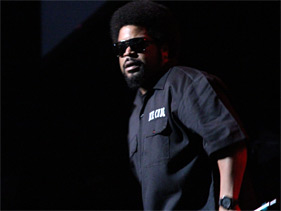
‘I think music always has the power to change, heal, bring understanding and bring people together,’ Cube tells MTV News. By Rob Markman, with reporting by Tamara Palmer Ice Cube performs in Los Angeles on Saturday Photo: Kameron Zach/MTV News On April 29, 1992, Los Angeles erupted after a jury acquitted four LAPD officers accused of beating Rodney King. It was dubbed the L.A. riots, as thousands of people took to the streets in protest. There was looting, arson and widespread violence. The indelible imagery has lived on through archived footage, art and, of course, music. Albums like Dr. Dre’s The Chronic and Ice Cube ‘s The Predator were strongly influenced by the racial tension and social powder-keg conditions that preceded the riots and the aggressions and flared tempers in the aftermath. In many ways, West Coast hip-hop music in the early 1990s helped those outside of L.A. gain perspective on the ongoing power struggle between the black youth and the LAPD officers who police the inner-city neighborhoods. “People have music in their heart. Music ain’t about the charts; it’s about how you feel about a certain song,” Ice Cube told MTV news on Saturday night after KDAY’s annual Krush Groove concert . “I know people who have music, and music changed their life just by hearing a song. It could be an old song, it could be a song that people thought were thrown away and you could hear it and it could inspire you.” Cube dropped The Predator in November 1992, several months after the L.A. riots. On “We Had to Tear This Mother—-a Up,” Cube expertly painted a lyrical picture of the six-day upheaval. “Not guilty, the filthy devils tried to kill me/ When the news get to the ‘hood then n—as will be/ Hotter than cayenne pepper, cuss, bust/ Kickin’ up dust is a must,” he rapped to open the now-classic track. The former N.W.A star didn’t start there. On “Who Got the Camera?,” Cube directly addressed the Rodney King beating, which was famously videotaped. In the song’s lyrics, Cube tells a story about being pulled over and assaulted by police. “Started they investigation/ No driver’s license, no registration/ When I stepped out the car they slammed me/ Goddamn, y’all, who got the camera,” he rapped. For those who didn’t witness the L.A. riots first-hand, Cube’s music helped illustrate some of the issues and frustrations that led to the chaos. Cube believes music is a tool that can bring about change, just as it was 20 years ago when he dropped The Predator. “I think music always has the power to change, heal, bring understanding and bring people together,” he said. Related Artists Ice Cube

More here:
Ice Cube Reflects On The Power Of Music, 20 Years After L.A. Riots

The Road We Really Traveled

http://www.youtube.com/v/2aR1ekUSfyU

Originally posted here:

(John Hinderaker) It’s been a banner 12 months for Justin Folk. Last summer, he won the $100,000 Power Line Prize with his animated video The Spending Is Nuts. In January, he was part of the team that won the $1 million Doritos Super Bowl commercial prize, for the hilarious commercial Sling Baby, starring Justin’s young son. Now, Justin’s company has collaborated with Bill Whittle and Andrew Klavan… Broadcasting platform : YouTube Source : Power Line Discovery Date : 27/04/2012 05:12 Number of articles : 2

The Road We Really Traveled

Martin Scorsese Sure is Guzzling the 3-D Kool-Aid

Martin Scorsese has long proven his mastery of filmmaking, passion for storytelling and an infectious worship of the medium in which he’s produced nearly five decades of singular, sometimes legendary work. Perhaps it should come as no surprise, then, that man of such fervency and skill would take so well to one of the rapidly developing hallmarks of contemporary cinema culture: Trolling. Scorsese joined fellow Oscar-winner Ang Lee on a panel Wednesday at CinemaCon , where the filmmakers told the industry crowd how sincerely they believed in the 3-D renaissance. I mean, sure, Hugo turned out OK ( critically , anyway; commercially, oof ), and Lee’s forthcoming 3-D epic The Life of Pi has plenty worth anticipating with or without the stereoscopic extras. But this … I mean, I just can’t: Martin Scorsese has become so enamored with 3-D filmmaking that he expects to use the technology in all his future projects. The Academy Award-winning director of The Departed told a crowd of theater owners at the CinemaCon convention in Las Vegas on Wednesday that he wishes his landmark films Raging Bull and Taxi Driver had been three-dimensional. Scorsese is so convinced of the power of 3-D, he said he only saw Hugo, his first 3-D movie released to critical acclaim last year, once in 2-D. “There is something that 3-D gives to the picture that takes you into another land and you stay there and it’s a good place to be,” he said. Yes! That land is called Migrainetown, and it is a good place to be if you are director with back-end points and/or an exhibitor selling the eye-cramping privilege for $16 a pop, both shuttered away in the local bank reinvesting the community’s money in more 3-D “infrastructure.” (“Keep them open,” Lee implored, for example, on behalf of Migrainetown’s independent movie houses. “Especially with 3-D, this is a new era coming. We have to keep up with it.”) And then there was… this , which apparently is the stock defense for anyone advocating new technology that completely takes viewers out of the movie : Scorsese compared 3-D to the rise of color movies. He said as a film student at New York University in the early 1960s, he was shocked when he heard predictions that all future movies would be filmed in color. He said anyone harboring doubts about the rising influence of 3-D technology should consider how color movies have taken over the industry. The 3-D craze allows filmmakers to accomplish the original goals of cinema, Scorsese said. “The minute it started people wanted three things: color, sound and depth,” Scorsese said. “You want to recreate life.” Wrong, wrong, wrong — they wanted color, sound and texting . Get it straight, Marty! Also: Come back to us! Also : If what happens in Vegas truly stays in Vegas, then why do I keep smelling sulfur? [ AP via Awards Daily ] Follow S.T. VanAirsdale on Twitter . Follow Movieline on Twitter .

Continued here:
Martin Scorsese Sure is Guzzling the 3-D Kool-Aid