Halle Berry And Oliver Martinez Spotted Out In Beverly Hills Hollyweird mommy-banger Halle Berry was spotted out and about gettin’ her Beverly Hills swirl on with her French fiancee Oliver Martinez as they headed to dinner on Friday night. The lovebirds looked to be enjoying some quality time sans Halle’s little mini-me Nahla, who got to spend some mommy-daughter time earlier this week in Malibu while playing a game of hide-and-seek at a neighbor’s house. Good to see that things seemed to have calmed down for Halle and Nahla now that babydaddy Gabe got his ish together and is no longer acting a fool. Images via SplashNews
If there’s a case to be made that turning one’s dark, twisted fantasies into plays and movies is good for the soul, Martin McDonagh is Exhibit A. The platinum-haired Irishman has given the world some breathtakingly black comedy, such as his 2003 play about a child serial killer The Pillowman and, as of Friday, the slightly lighter Seven Psychopaths . But if he’s nursing a tortured soul, there was very little evidence of it when I interviewed him at the Toronto International Film Festival in September. McDonagh, who looks like a character actor from a Bond film, laughs easily when he talks, often at his own wit. He’s also cheekily confident about his writing, which he should be. His 2008 directorial debut, the hitman buddy flick In Bruges was cinematic poetry, and his bloody but surprisingly deep follow up, Seven Psychopaths, easily propels him into Tarantino territory. I smell a Bond film in his future. There’s been plenty written about the plot of the movie, so I’ll get right to the interview in which McDonagh talked about the unwritten film-industry rule that it’s okay to kill women but not pets in movies, his plans to take a break from psychopaths in the near future and why the next project we see from him will likely be another play. Movieline: What a cast you have. Were they hard to line up? McDonagh: No, strangely I knew four of the boys from before. Obviously, I know Colin [Farrell], and Sam [Rockwell] and Chris [Walken] and I did a play two, three years ago in New York, A Behanding in Spokane . Actually, I knew Sam for about five years before we did that. Woody, strangely, I’ve known for about nine or 10 years because he’s a big theater fan. We hooked up in Dublin about 10 years ago and have stayed in touch since. I’d known a couple of the other actors socially. I met Abbie [Cornish] a year or two before and Olga Kurylenko a year or two before. And they were all first choices. With Woody, there was a situation with someone else. He almost did us a favor really because he came in at the last minute and knocked it out of the park. And Tom Waits I knew a little bit before, too. Chris and Tom have been heroes of mine since I was eight or nine. I got Swordfish Trombones when it came out. I was 11 or so. He’s more than a musician or an actor. He’s an idol and a icon of American letters. I agree. So, to make an offer and have Tom say, “yes” made me go ‘Fuck! I’m going to have to direct these people! What am I going to say? I know nothing! [Laughs] RELATED: McDonagh talks about revisiting the “creepy fucked-up musical” he was working on with Tom Waits called A Very Dark Matter. The role seem tailor made for each of the characters. Is that a function of how good a writer you are? Yes, let’s go with that. [Laughs] None of these parts were written for those boys because the script was written about seven or eight years ago. It was written just after the script of In Bruges but before I made Bruge . I knew at the time that I didn’t have the wherewithal to make this as my first film because there’s so much going on in it and so many cinematic aspects to it. I thought it was best to go with something small-scale like Bruges where you have three characters in one town. It’s almost like a play really. I think it’s a credit to how good they are as actors. They just take it and make it feel like it’s completely natural, as if they’re making this stuff up on the spot. No one talks like Chris. No one breaks up a script like he does. Even with the play we did, I can’t hear anyone else’s voice in that character ever again. Unless the next actor broke it up exactly like he did, it would feel wrong, But, you know, none of that is on the page. Seven Psychopaths is framed by two suicides: You’ve said this movie is about the deranged and the spiritual, and one of the suicides is deranged. The other is spiritual — a sacrificial statement made in an effort to end violence. But isn’t suicide an act of violence? No, I don’t. I mean, it’s horrible, but I could never — I guess lots of my heroes went that way: Kurt Cobain, Richard Brautigan, the Beat writer. But yeah, I could never criticize it. It’s terribly sad, obviously, but I guess there’s some aspect of me that finds something honorable about it. For a movie in which a woman gets shot in the stomach and a head explodes, the final scenes are quite surprising. After all of this outrageous violence and black comedy, it’s quite spiritual and moving. That was the hope: to have all these crazy comic elements but still totally go to that place. I’m glad you felt that way. I kind of feel like we did get there, and I’m happy about that. It’s a much crazier movie than In Bruges was. Bruges was more simple and funny but melancholic and it’s own thing. But this is a crazy bag of lizards — on fire — that had to be spiritual. [Laughs] I loved Sam Rockwell’s riff on Gandhi’s “eye for an eye” line. [See the trailer below.] Is that something you’ve been thinking about for a long time? No, That just came out on the day when I was writing the script. I don’t think there’s anything I could have done about it, but the next line — the punch line almost — always gets missed because there’s a big laugh. Sam says, ‘Gandhi was wrong’ but then what gets missed is “but no one’s got the balls to come right out and say it.” I think that would be good to go on a poster. Violence is a big theme in your work. Where does Gandhi’s pacifism fall into your worldview? I’m a big believer. I just saw Alex Gibney’s Mea Maxima: Culpa Silence in the House of God, and I was thinking you’d be great to direct a dramatic movie or a black comedy about that subject. Can you make a black comedy about sexual abuse these days? I think it’s almost impossible, although what’s that one with Phil Hoffman that Todd Solondz did? Happiness . It’s black and it’s funny, but fuck. That kind of stuff is just too horrific for me to ever want to fool with. Stuff like that is just too depressing to even get into. In the movie, Christopher Walken’s character Hans tells Colin Farrell that psychopaths “get tiresome after a while.” Since your work has dealt with quite a few psychopaths, is that you sending a hint that you’re thinking of moving in a different direction? Probably not! Psychopaths are so much fun to write about. Like Sam’s character in the film: if he doesn’t know what the fuck he’s going to say or do next, then you don’t. That’s a joy as a writer. Although I do want to get away from it a little bit. Gunfights and shootouts are exciting, but I think the next film is going to be much more of a quieter character piece and quite female based. There’s going to be a strong female lead — an older female lead, too. The script is already written. Do you have an actress in mind? Yeah, but I should talk to her first. [Laughs] What else can you tell me about it? I think that all I can say is that there’s a very strong female lead and two other male characters. Do you have a title? It’s convoluted deliberately: Three Billboards Outside of Ebbing, Missouri You really seemed to be having fun with thriller movie conventions in Seven Psychopaths . Christopher Walken tells Colin Farrell that the his dialogue for women is so terrible. [Laughs] Yes. I admire that. My own plays have very strong women characters, so, thankfully, I know that the next movie is going back to strong female leads. I wasn’t accusing you of doing that. Well, you should. It’s true. [Laughs] The female characters are terrible in this. The actresses are fantastic, but they all die. They all have only a scene and a half. Rockwell’s character also a cites a rule that “you can’t let the animals die in a movie. Just the women.” Is that an unwritten rule of movie-making? It is. There were [studio] notes about a gun to a dog’s head and killing or not killing the dog. Not a word about shooting a woman in the stomach. That’s the way it works. How many dead animals have you seen in the last year in movies? And how many dead women have you seen? I know what I’m putting my money on. Did you put that line in before or after the notes? After. You’ve worked with Colin Farrell twice now. Why do you like him so much as an actor? We have a shorthand — we don’t really have to speak. We hardly saw each other for the three years or so in between films, and when we got together to read the script for Seven Psychopaths at his house, it was like not a day had passed since the last day of shooting. He’s very honest and very open to going anywhere and being truthful. And he’s very supportive. With the last film, I came in not having made a feature before. And he was the star. But every day, he’d help me through it. He’s just a lovely guy as well. Not starry at all. Did you have as much fun off the set as you did on it? It was lovely. Colin drove Sam and I out to Joshua Tree about four or five weeks before shooting because you can sense it if people are playing friends or lovers and there isn’t any kind of chemistry. So, I wanted to make sure. They didn’t know each other terribly well before the film, so I wanted to make sure that they were both safe with each other. So we went off for a little weekend. And Sam and I drank too much, but we worked through the script in these little cabins in the desert. It was quiet and real and proper work. But it was also the drive out there. Colin went into a service station and he got Sam that hat he wears in the movie. Right, and the cheese puffs and chocolate milk. Eating cheese puffs and drinking chocolate milk was Colin’s idea. Even when we were doing the play, Sam loves acting and eating at the same time. And there are like ten scenes of him doing that. At the Toronto premiere they had their arms around each other. It sure looked like they had bonded. Yeah, I think they’ve stayed in touch. I’d like to do something with them again, too. And Chris and Sam are the same way. They are really good friends. I guess the play helped, too. So, for me, it was just capturing that love and chemistry, and I hope it’s one of the main things that comes through. What’s your relationship to theater right now? I remember you saying not so long ago that you “respect film and disrespect theater.” I used to say that because it was true. I grew fond of a type of theater that I or Tracy Letts or Mamet or Shepard do. I was disrespectful of that snooty, shitty English type of theater — or shitty American theater. It’s so expensive and sometimes it exudes that snottiness from the stage. So, that was what I was always fighting against. But I won the fight. [Laughs] And I’ll keep coming back to it because it’s fun. It’s also easier to write a play. Or it was. I’m going to go off after this and not do anything for a bit and let whatever story comes to me come. If it’s a play, fine. The play I did with Sam and Colin was done after making In Bruges . It was very easy to do. The good thing about a play is you can get in and out and do one in the course of six months. A film is two straight years. But I kind of like the fact that, having finished a film, it will be there for good. Some of the plays I’ve done in the past — as happy as I’ve been with them, or as well as they’ve been received, they’re gone forever. I could never show you Sam and Chris’s performance. It’s just gone. So, there’s that aspect of it. When you say “after this,” do you mean after the next movie you’re making? No, I’m going to be really lazy. [Terrence] Malick was always one of my heroes and not just for the movies themselves. He could just stop for ages. And now he’s doing the opposite. So we could see a play from you next instead of a movie? Possibly. I think it will probably be the next thing I will write. I’ve probably got two films that are sort of ready to go. And at the same time, I’d like to write something again for all the guys in this film. Whether it’s a pairing or three of them. When you’ve got a relationship like that, you want to keep working with them. I’m dying to know. Have you and Quentin Tarantino ever met? No. Never. That’s interesting. Given that you share a lot of influences, like Sam Peckinpah, for instance, I’m guessing that you guys would either love each other or hate each other . Yeah. I wonder, too. [Smiles] Follow Frank DiGiacomo on Twitter. Follow Movieline on Twitter.
If there’s a case to be made that turning one’s dark, twisted fantasies into plays and movies is good for the soul, Martin McDonagh is Exhibit A. The platinum-haired Irishman has given the world some breathtakingly black comedy, such as his 2003 play about a child serial killer The Pillowman and, as of Friday, the slightly lighter Seven Psychopaths . But if he’s nursing a tortured soul, there was very little evidence of it when I interviewed him at the Toronto International Film Festival in September. McDonagh, who looks like a character actor from a Bond film, laughs easily when he talks, often at his own wit. He’s also cheekily confident about his writing, which he should be. His 2008 directorial debut, the hitman buddy flick In Bruges was cinematic poetry, and his bloody but surprisingly deep follow up, Seven Psychopaths, easily propels him into Tarantino territory. I smell a Bond film in his future. There’s been plenty written about the plot of the movie, so I’ll get right to the interview in which McDonagh talked about the unwritten film-industry rule that it’s okay to kill women but not pets in movies, his plans to take a break from psychopaths in the near future and why the next project we see from him will likely be another play. Movieline: What a cast you have. Were they hard to line up? McDonagh: No, strangely I knew four of the boys from before. Obviously, I know Colin [Farrell], and Sam [Rockwell] and Chris [Walken] and I did a play two, three years ago in New York, A Behanding in Spokane . Actually, I knew Sam for about five years before we did that. Woody, strangely, I’ve known for about nine or 10 years because he’s a big theater fan. We hooked up in Dublin about 10 years ago and have stayed in touch since. I’d known a couple of the other actors socially. I met Abbie [Cornish] a year or two before and Olga Kurylenko a year or two before. And they were all first choices. With Woody, there was a situation with someone else. He almost did us a favor really because he came in at the last minute and knocked it out of the park. And Tom Waits I knew a little bit before, too. Chris and Tom have been heroes of mine since I was eight or nine. I got Swordfish Trombones when it came out. I was 11 or so. He’s more than a musician or an actor. He’s an idol and a icon of American letters. I agree. So, to make an offer and have Tom say, “yes” made me go ‘Fuck! I’m going to have to direct these people! What am I going to say? I know nothing! [Laughs] RELATED: McDonagh talks about revisiting the “creepy fucked-up musical” he was working on with Tom Waits called A Very Dark Matter. The role seem tailor made for each of the characters. Is that a function of how good a writer you are? Yes, let’s go with that. [Laughs] None of these parts were written for those boys because the script was written about seven or eight years ago. It was written just after the script of In Bruges but before I made Bruge . I knew at the time that I didn’t have the wherewithal to make this as my first film because there’s so much going on in it and so many cinematic aspects to it. I thought it was best to go with something small-scale like Bruges where you have three characters in one town. It’s almost like a play really. I think it’s a credit to how good they are as actors. They just take it and make it feel like it’s completely natural, as if they’re making this stuff up on the spot. No one talks like Chris. No one breaks up a script like he does. Even with the play we did, I can’t hear anyone else’s voice in that character ever again. Unless the next actor broke it up exactly like he did, it would feel wrong, But, you know, none of that is on the page. Seven Psychopaths is framed by two suicides: You’ve said this movie is about the deranged and the spiritual, and one of the suicides is deranged. The other is spiritual — a sacrificial statement made in an effort to end violence. But isn’t suicide an act of violence? No, I don’t. I mean, it’s horrible, but I could never — I guess lots of my heroes went that way: Kurt Cobain, Richard Brautigan, the Beat writer. But yeah, I could never criticize it. It’s terribly sad, obviously, but I guess there’s some aspect of me that finds something honorable about it. For a movie in which a woman gets shot in the stomach and a head explodes, the final scenes are quite surprising. After all of this outrageous violence and black comedy, it’s quite spiritual and moving. That was the hope: to have all these crazy comic elements but still totally go to that place. I’m glad you felt that way. I kind of feel like we did get there, and I’m happy about that. It’s a much crazier movie than In Bruges was. Bruges was more simple and funny but melancholic and it’s own thing. But this is a crazy bag of lizards — on fire — that had to be spiritual. [Laughs] I loved Sam Rockwell’s riff on Gandhi’s “eye for an eye” line. [See the trailer below.] Is that something you’ve been thinking about for a long time? No, That just came out on the day when I was writing the script. I don’t think there’s anything I could have done about it, but the next line — the punch line almost — always gets missed because there’s a big laugh. Sam says, ‘Gandhi was wrong’ but then what gets missed is “but no one’s got the balls to come right out and say it.” I think that would be good to go on a poster. Violence is a big theme in your work. Where does Gandhi’s pacifism fall into your worldview? I’m a big believer. I just saw Alex Gibney’s Mea Maxima: Culpa Silence in the House of God, and I was thinking you’d be great to direct a dramatic movie or a black comedy about that subject. Can you make a black comedy about sexual abuse these days? I think it’s almost impossible, although what’s that one with Phil Hoffman that Todd Solondz did? Happiness . It’s black and it’s funny, but fuck. That kind of stuff is just too horrific for me to ever want to fool with. Stuff like that is just too depressing to even get into. In the movie, Christopher Walken’s character Hans tells Colin Farrell that psychopaths “get tiresome after a while.” Since your work has dealt with quite a few psychopaths, is that you sending a hint that you’re thinking of moving in a different direction? Probably not! Psychopaths are so much fun to write about. Like Sam’s character in the film: if he doesn’t know what the fuck he’s going to say or do next, then you don’t. That’s a joy as a writer. Although I do want to get away from it a little bit. Gunfights and shootouts are exciting, but I think the next film is going to be much more of a quieter character piece and quite female based. There’s going to be a strong female lead — an older female lead, too. The script is already written. Do you have an actress in mind? Yeah, but I should talk to her first. [Laughs] What else can you tell me about it? I think that all I can say is that there’s a very strong female lead and two other male characters. Do you have a title? It’s convoluted deliberately: Three Billboards Outside of Ebbing, Missouri You really seemed to be having fun with thriller movie conventions in Seven Psychopaths . Christopher Walken tells Colin Farrell that the his dialogue for women is so terrible. [Laughs] Yes. I admire that. My own plays have very strong women characters, so, thankfully, I know that the next movie is going back to strong female leads. I wasn’t accusing you of doing that. Well, you should. It’s true. [Laughs] The female characters are terrible in this. The actresses are fantastic, but they all die. They all have only a scene and a half. Rockwell’s character also a cites a rule that “you can’t let the animals die in a movie. Just the women.” Is that an unwritten rule of movie-making? It is. There were [studio] notes about a gun to a dog’s head and killing or not killing the dog. Not a word about shooting a woman in the stomach. That’s the way it works. How many dead animals have you seen in the last year in movies? And how many dead women have you seen? I know what I’m putting my money on. Did you put that line in before or after the notes? After. You’ve worked with Colin Farrell twice now. Why do you like him so much as an actor? We have a shorthand — we don’t really have to speak. We hardly saw each other for the three years or so in between films, and when we got together to read the script for Seven Psychopaths at his house, it was like not a day had passed since the last day of shooting. He’s very honest and very open to going anywhere and being truthful. And he’s very supportive. With the last film, I came in not having made a feature before. And he was the star. But every day, he’d help me through it. He’s just a lovely guy as well. Not starry at all. Did you have as much fun off the set as you did on it? It was lovely. Colin drove Sam and I out to Joshua Tree about four or five weeks before shooting because you can sense it if people are playing friends or lovers and there isn’t any kind of chemistry. So, I wanted to make sure. They didn’t know each other terribly well before the film, so I wanted to make sure that they were both safe with each other. So we went off for a little weekend. And Sam and I drank too much, but we worked through the script in these little cabins in the desert. It was quiet and real and proper work. But it was also the drive out there. Colin went into a service station and he got Sam that hat he wears in the movie. Right, and the cheese puffs and chocolate milk. Eating cheese puffs and drinking chocolate milk was Colin’s idea. Even when we were doing the play, Sam loves acting and eating at the same time. And there are like ten scenes of him doing that. At the Toronto premiere they had their arms around each other. It sure looked like they had bonded. Yeah, I think they’ve stayed in touch. I’d like to do something with them again, too. And Chris and Sam are the same way. They are really good friends. I guess the play helped, too. So, for me, it was just capturing that love and chemistry, and I hope it’s one of the main things that comes through. What’s your relationship to theater right now? I remember you saying not so long ago that you “respect film and disrespect theater.” I used to say that because it was true. I grew fond of a type of theater that I or Tracy Letts or Mamet or Shepard do. I was disrespectful of that snooty, shitty English type of theater — or shitty American theater. It’s so expensive and sometimes it exudes that snottiness from the stage. So, that was what I was always fighting against. But I won the fight. [Laughs] And I’ll keep coming back to it because it’s fun. It’s also easier to write a play. Or it was. I’m going to go off after this and not do anything for a bit and let whatever story comes to me come. If it’s a play, fine. The play I did with Sam and Colin was done after making In Bruges . It was very easy to do. The good thing about a play is you can get in and out and do one in the course of six months. A film is two straight years. But I kind of like the fact that, having finished a film, it will be there for good. Some of the plays I’ve done in the past — as happy as I’ve been with them, or as well as they’ve been received, they’re gone forever. I could never show you Sam and Chris’s performance. It’s just gone. So, there’s that aspect of it. When you say “after this,” do you mean after the next movie you’re making? No, I’m going to be really lazy. [Terrence] Malick was always one of my heroes and not just for the movies themselves. He could just stop for ages. And now he’s doing the opposite. So we could see a play from you next instead of a movie? Possibly. I think it will probably be the next thing I will write. I’ve probably got two films that are sort of ready to go. And at the same time, I’d like to write something again for all the guys in this film. Whether it’s a pairing or three of them. When you’ve got a relationship like that, you want to keep working with them. I’m dying to know. Have you and Quentin Tarantino ever met? No. Never. That’s interesting. Given that you share a lot of influences, like Sam Peckinpah, for instance, I’m guessing that you guys would either love each other or hate each other . Yeah. I wonder, too. [Smiles] Follow Frank DiGiacomo on Twitter. Follow Movieline on Twitter.
I am a Hitchcock fan…but then again who isn’t…I’ve seen a lot of his movies….all are pretty fucking awesome and I’m down with this movie about him… I’m just not down with Scarlett Johansson playing Janet Leigh and not because I’m a die hard fan or into things being totally representative or authentic…I don’t care about that shit…I just don’t like seeing her get work… She’s overrated, people think she’s hot when she’s really not, and her getting work isn’t I saw this trailer yesterday and felt Scarlett Johansson as Janet Leigh, or as I like to call her, “the uterus that makes tranny babies who go on to be Jamie Lee Curtis”…..and it is hilarious….. I could look at these bad acting screenshots all day…they are better than that worst death scene i a movie viral…. TO SEE THE TRAILER FOLLOW THIS LINK
Ti West ( House of the Devil , The Innkeepers ) delivers a slow burn with a killer pay-off in his contribution to this weekend’s horror anthology V/H/S , a road trip-cum-nightmare starring fellow indie veterans Joe Swanberg , Sophia Takal, and Kate Lyn Sheil. Before departing to Georgia to film his next feature, The Sacrament , West rang Movieline to discuss his V/H/S short, filmed on the road with a camera and no crew other than his three actors, how to recreate their L.A.-to-the-Grand Canyon V/H/S adventure, the creative struggles involved in making personal independent films at increasing scale, and — of course — the magical phenomenon that transforms strangers into compatriots within the confines of a karaoke bar. What was your first reaction to the idea of a found footage anthology horror movie and how did you find your way into your segment? I don’t have a real aversion to found footage but they told me the idea and I thought, ‘I don’t know.’ But I went on a road trip and in the back of my mind I was like, ‘Do I have any ideas for this thing? I don’t think so.’ But by the end of the road trip I realized the road trip I went on was the idea. So I put together this paragraph and emailed them thinking they’d probably say no but they liked it, and within a month I’d gotten Joe and Sophia and Kate flown to L.A. and we rented a car and went back on the exact same road trip that I had just been on, and made the movie along the way at all the spots I’d been. So it was really weird but similar to The Innkeepers in the sense that on House of the Devil we stayed at the hotel and went back to the hotel to make [ Innkeepers ]. I realized on this that’s probably a trend for me. I went on this trip and I thought, ‘I have an idea based on something I just lived – let’s go do that.’ That is most unusual. Joe and Sophia had never seen the Grand Canyon and I was like, ‘We can see that along the way, it’s pretty amazing!’ We were able to have a fun experience and make a movie. That was a lot of the motivation behind it, to sort of not have such a terrible time. Was it literally just the four of you? No additional crew or anything? Yes – it was the four of us, that’s it. We had nothing. No lights, no nothing. We didn’t even have a boom. I was curious how that worked since Joe and Sophia are also directors, actors, editors – they’ve got experience serving multiple roles in front of and behind the camera, which must have helped. That’s why I cast them, because I knew if I were to give them a camera and send them out to do something with some ideas, they’d be able to handle it. Did you write a script or give them more broad scenarios for them to play out? There was a pretty specific outline, although I didn’t write dialogue. They read that then when we got there I said, ‘Here’s what we’re going to do, here’s what I want to happen…’ I would shoot it or if I couldn’t shoot it I would be like, ‘Sophia, I want you to do these things with it – do it however you want, but make sure you get this, that, and the other thing.’ Then Kate and I would go hide in the bathroom of the hotel room and they would shoot, and when they were done I’d come out and watch it and go, ‘Let’s do it again, but focus more on this and that…’ We’d do three or four takes, and we’d do everything in big long chunks and that was it. Then we’d go do karaoke in Flagstaff. Are you kidding? How was the karaoke out there? Oh, we did so much karaoke on this movie. Every night. There was actually one night where we decided we needed to work a little extra the next day because we’d been doing too much karaoke. Well, you’ve now ruined road trips for the rest of us. You should map out the V/H/S road trip so people could take the tour in real life. It’s a great trip from L.A. You can do it in a weekend. If you’ve never been to the Grand Canyon, it’s incredible. You can’t overhype it – it sounds like something that would be cool but when you actually stand there it’s kind of breathtaking. It’s pretty amazing. What was the Wild West town you guys shot in, where Joe and Sophia get their fortune out of the machine? With the donkey? That’s on the way. Oatman. If you’re ever on your way to Arizona, Oatman is the town to stop in. It’s a weird little town and kind of tricky to get there because you take one road essentially out to Arizona and along the way everything runs parallel to the main road. There’s this one section where that town is where you have to go through all these weird mountain switchbacks and it’s kind of a dangerous drive, and you come down a hill and boom, there’s this little town. It’s very Wild West, there are donkeys that roam the streets. You’ve got to go to the Grand Canyon and you’ve got to go to Flagstaff. The town that’s near both of those places, Williams, Arizona, is a tourist trap but there’s something really appealing about that area. It’s also really scary because there are a lot of weird meth hitchhikers everywhere. It’s cool. I’m into it. You’ve done so much horror but you’ve also said you don’t necessarily want to be known as a horror specialist. What is it about the genre? Why do you think you’re so good at scaring people? Do you see the potential for terror in every normal, everyday situation? Well, maybe. Why I’m interested in it, I don’t know, but as far as an ability to do it, it’s like telling a joke. You can tell a joke and make the whole room laugh and then someone can tell the exact same joke and it just bombs – even though it’s verbatim, it’s the delivery of it that made it work. For whatever reason, I can just tell this joke. I’m able to read the room and do it that way. I don’t know where it came from or why I’m interested in it. I think I might be a slightly dysfunctional weirdo and that could be part of it. But it wasn’t my goal to do this. I enjoy doing it, and these are the movies that people will give me money to make, so I keep doing it. But I don’t know; the joke is the best analogy I have to make sense of it. Here’s what I think will scare people, and I have to trust that I’m going to try it and it’s going to work. In the same way as when you tell a joke, it’s the pauses and the way that you deliver it and the way that you talk to the people you’re telling it to. It’s how it’s done, it’s not actually the material itself. When you watch V/H/S with an audience, do they react to your segment the way you intended or hoped they would? My segment is the most rooted in realism and it doesn’t necessarily play to an audience, whereas all the other segments play very heavily to an audience. Mine is sort of the weird slow-burn one, of course, and I will say I think I get the biggest scare in the movie. I was surprised by how much that was effective. But I made a much more low-key psychological segment and it plays well with an audience because that one moment really shines, and it kind of informs me that it must have worked – the fifteen minutes leading up to it must have been going well. An upcoming non-horror project is the sci-fi Side Effects . What’s the latest with that film? Side Effects is still out there. Because it’s a science fiction movie it costs a whole bunch more money than usual, and we have most of the money but not all of the money. It’s a very slow-moving process, which is very frustrating to me, but it’s coming together. What’s your perspective now on how much you get to make the movies you want to make and what your options are in the marketplace? I think if it’s a movie for a million dollars or less and it’s a horror movie, my options are pretty decent because I could create my own thing and go out there and probably talk somebody into getting it made. But I’ve done so many of those now, six of them, that I don’t really want to do that anymore because it feels like the same old thing. So that’s where projects like Side Effects come in; I want to do a science fiction movie that’s going to cost five times as much as The Innkeepers because it’s going to take place in space, and it’s going to be great, and we’ve got Liv Tyler – but I got The Innkeepers made in a conversation at Sundance, and three months later we were shooting it. When it’s more money it becomes a whole nightmare of putting too many things together. But I’ve gotten to the point where the really small movies are great because I can do my own thing with them and that’s important to me, but I’m starting to do my own same thing over and over again and that’s really unpleasant to me, to repeat myself. So there’s that, and there’s the option of doing the bigger gun-for-hire movies, which is very appealing from a financial standpoint; I would love to make a movie where I could make tons of money, have a really cushy schedule, have celebrities in it, and have it be on billboards everywhere. I’d love to do the big sell-out thing. The problem that I have is that to me, when you work as a gun-for-hire my attitude would be as a gun-for-hire. The way I look at that is, ‘This is great – I don’t have to stress out as much.’ When you make your own little personal movie, every choice is like, if I don’t do it exactly this way it will be embarrassing because this is important to me . When you go do some sequel to a big goofy comic book movie, I understand that all they want is cool stuff. I can show up and just make it cool, I know how to do it although it’s not something I aspire to do. The problem is, they don’t want you to show up and be a gun-for-hire – they want you to care just as much as you care about your own personal movies. But to me that’s silly, because I’m making a big goofy thing. So that’s my struggle. Every time I start working on it we get to a certain point in the process where I’m either too checked out to care enough to keep doing it, or they’re onto the fact that I don’t really care and they want to get someone who cares more. And even though I don’t care that doesn’t mean I won’t do a good job and try really hard, it just means that when I go home at night I’m not going to panic, because the content isn’t that important to me. I’m trying to find that movie where I can do that but I would always much prefer to make my own independent stuff – it’s just that the independent world has gotten so small. It’s not a matter of me wanting so much more out of the independent world, or wanting to make more money; it’s solely that I’d love to make movies that don’t take place in one location. I’d love to make movies with a bunch of people in it. I wish I could pay a famous actor that wants to do the movie but we can’t afford, but we can’t, because they won’t come unless they can fly first class and we can’t fly them first class. I’d love to not have to deal with that dumb shit anymore, to get past that and keep doing my own thing. You seem to have made a lot of careful career choices along the way, but you had a well-documented brush with the studios on Cabin Fever 2 . What did you learn from that experience? I have enough options and certainly shouldn’t complain, but as you said I’ve made careful choices. I made one choice that turned out to not be a careful choice and it was really difficult to deal with and I don’t want to deal with that again. So with all of the bigger movies I’ve been involved with, at any moment that they feel like they could go in the Cabin Fever 2 direction, I bail out. You’ve recently done some acting as well for Joe Swanberg, in Drinking Buddies , in a reversal from your V/H/S roles. How did he get you involved? He just said, ‘Come to Chicago and be in this movie’ and I said, OK. He’s one of my best friends so it was a no-brainer. I don’t have a big aspiration to act and I don’t even think I’m very good at acting, but he had me come there and just be kind of an idiot and I was like, I can do that! It was a really great thing to be a part of Joe’s biggest movie to date, and the cast was really great. To see Joe have more money and have a more deliberate schedule and this great cast, but still hanging out making a Joe movie, was really fun. Because of our shared love of karaoke: What do you think your karaoke song choices say about you? Hmm. I don’t know. Lately I’ve been doing “She’s Like The Wind” by Patrick Swayze and feeling pretty good about it. I enjoy karaoke because it removes all snootiness from the environment, and L.A. is a very snooty, stuck-up city. When you go out to bars in L.A. everyone’s there just looking miserable. But when you go do karaoke in L.A., everybody’s having a good time. And there’s nothing like a great song choice where you can catch people off guard and they’re like, ‘Whoa, this is awesome.’ V/H/S is in select theaters today. Read more here . Follow Jen Yamato on Twitter . Follow Movieline on Twitter .
Also in Wednesday evening’s round-up of news briefs, Toronto winner Silver Linings Playbook makes its U.S. move. Christopher Lloyd, Robert Vaughn, and Jerry Stiller set for a fete. And Focus Features unveils its winners for an African film program. Friar’s Club to Fete Christopher Lloyd, Robert Vaughn, and Jerry Stiller Christopher Lloyd, Robert Vaughn, and Jerry Stiller will be honored with the “Best Ensemble Cast of Yesterday and Today” award for their new film, Excuse Me for Living October 9th. The comedy written and directed by Wayne Knight, centers on a “charming, suicidal druggie must obey his rehab-clinic’s demand to lead a seniors men’s group or face incarceration and lose the love of his psychiatrist’s daughter.” Silver Linings Playbook to Open Film Independent Forum The film by David O Russell, which won the People’s Choice Award at last month’s Toronto International Film Festival, will open Film Independent’s Forum, taking place October 19 – 21. The event helps indie filmmakers bring their projects to the screen. Focus Features Names Winners of its Africa First Program For a fifth consecutive year, five filmmakers have been selected for Focus Features’ Africa First Program. The worldwide film company’s initiative earmarked exclusively for emerging filmmakers of African nationality and residence, will award the filmmakers $10,000 apiece. The winning filmmakers for 2012 are Mr. Vincent Moloi (from South Africa); Mr. Jeremiah Mosese (from Lesotho); Ms. Ekwa Msangi-Omari (from Tanzania); Ms. Samantha Nell (from South Africa); and Mr. William Nicholson (from South Africa). Around the ‘net… Gael Garcia Bernal Joins Matthew McConaughey in the Dallas Buyer’s Club The drama from Canadian director Jean-Marc Vallee ( The Young Victoria ) initially had Hilary Swank attached, but has since dropped out. In the film Garcia Bernal will play an effeminate member of the club, a fellow AIDS patient who meets Woodroof in the hospital, THR reports . Julianne Nicholson Joins August: Osage County Nicholson will play Ivy Weston, one of the sisters to Julia Robert’s Barbara in the adaptation of the Oklahoma family clan drama. She will be the middle daughter to Violet, played by Meryl Streep, Deadline reports .
Poor thangs! Vince Young ain’t the only one… Via ESPN : According to a 2009 Sports Illustrated article, 60 percent of NBA players are broke within five years of retirement. For 78 percent of NFL players, it takes only three years. Sucked into bad investments, stalked by freeloaders, saddled with medical problems, and naturally prone to showing off, many pro athletes get shocked by harsh economic realities after years of living the high life. Drawing surprisingly vulnerable confessions from retired stars like Keith McCants, Bernie Kosar and Andre Rison, as well as Marvin Miller, the former executive director of the MLB Players Association, this fascinating documentary digs into the psychology of men whose competitive nature can carry them to victory on the field and ruin off it. Director Billy Corben (The U, C0caine Cowboys, Limelight) paints a complex picture of the many forces that drain athletes’ bank accounts, placing some of the blame on the culture at large while still holding these giants accountable for their own hubris. A story of the dark side of success, “Broke,” is an allegory for the financial woes haunting economies and individuals all over the world. We’re glad that somebody decided to address the issue on film because it seems like every other day we are reporting about another one of these dummies spending up all their money on dumb isht. We can’t wait to see this one. Will you be watching? “Broke” airs tonight Oct. 2 at 8pm EST on ESPN
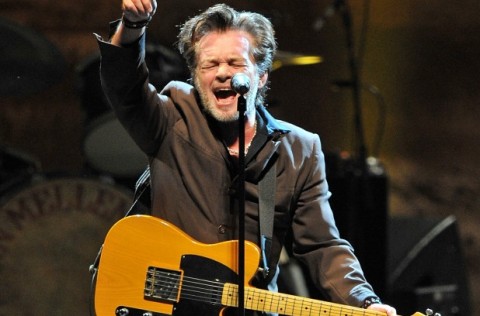
This is a little ditty about John Mellencamp’s vaguely annoyed reaction to Bradley Rust Gray’s Jack & Diane. If you were born after the 1980s, you might not know that Gray’s “werewolf-lesbian-psycho-drama,” as it has been described, takes its title from Mellencamp’s giganto-1982 number-one hit and little else. (The National Endowment for the Arts chose the tune as one of the “Songs of the Century,” as in 20th, in 2001.) Mellencamp’s song is about a teenaged boy and girl living the so-slow-it-hurts Midwestern life of sucking down chili dogs outside the Tastee Freeze. Gray’s movie is about, well, two lesbians, one of whom happens to be a werewolf. With the movie now on VOD, Mellencamp, whose nickname is “Little Bastard,” apparently has been fielding a lot of questions about how his song ended up as the title of a movie — both use an ampersand — that has nothing to do with said tune, and on Monday afternoon issued an irritated sounding statement via his spokesman Bob Merlis. “You don’t hear my song in the film, and I played no part in suggesting or offering this title. It’s most apparent that the lead characters were named with the hope that the familiar title might resonate in some people’s minds,” Mellencamp said in the statement. “I guess that’s OK to do, strictly from a legal perspective, but riding on someone else’s coattails and having a moral compass is left up to each individual.” Merlis explained that Mellencamp “is not making a value judgment on the film. I don’t believe he’s even seen it,” he said. “He’s just wondering why this particular combination of names was chosen, with an ampersand joining them, for the title. It does hearken back to his song. Follow Frank DiGiacomo on Twitter. Follow Movieline on Twitter.
Wow. These new synthetic drugs are no joke. Via NBC News: Johnny Lewis, an actor in the popular “Sons of Anarchy” motorcycle-gang cable drama, died early Wednesday in Los Angeles, suspected of killing his 81-year-old former landlord, Catherine Davis, and possibly himself. Police think the 28-year-old rising star, who played Kip ‘Half-sack’ Epps on the FX show, may have been under the influence of a drug few have heard of, a substance known informally as “Smiles.” It’s part of a new wave of synthetic drugs finding their way onto America’s streets and into its clubs. With the chemical name 2,5-dimethoxy-4-iodophenethylamine, it is known by drug agents and chemists as 2C-I, part of a closely-related family of “2C” drugs. Like all the 2C drugs, it’s a psychoactive, hallucinogenic chemical that alter the brain’s balance of dopamine and serotonin. Smiles is particularly powerful, binding to serotonin receptors in the brain at 20 times the rate of another drug used in schizophrenia research, according to an experiment performed by Purdue University chemists. The effects of 2C-I, like those of LSD, can last up to eight hours. But because the effects can take time to appear, users may think they haven’t taken enough to get the desired high, and so take more, risking overdose. The drug can be taken as small tablets, on pieces of blotter paper like LSD, or in powder form, often mixed with something else, like chocolate. Labs, often located in Europe or Asia, can use legal, common chemicals to produce huge batches of the drugs. Once one formulation is discovered, and banned, all the chemists have to do is slightly alter the structure of the molecules to create another, potentially legal, substitute until that one is banned. There is no known geographic hot spot for the 2C drugs, unlike, say, methamphetamine, which became known as a rural, small-town problem. The U.S. Drug Enforcement Administration believes that most, if not all, the 2C drugs are being imported to the country, not made domestically.
Research on the street drug known as “bath salts” has uncovered some disturbing findings… via UK Daily Mail : As lethal bath salts continue to take young lives, researchers have discovered the shocking strength of a key ingredient that leaves users struggling with the after effects for days. MDPV, commonly found in the street drug is ten times stronger than “yayo”, according to the National Science Foundation. It causes users to become paranoid, violent and agitated, at times leading to hallucinations. But unlike with other drugs, such as “yayo” or “molly,” doctors are noticing a worrying trend of people suffering these symptoms for days after snorting the legal high. ‘They’re selling time bombs,’ Louisiana Poison Control Center Director Dr. Mark Ryan told ABC News. ‘We’ve had some people show up who are complaining of chest pains so severe that they think they’re having a heart attack. They think they’re dying. They have extreme paranoia. They’re having hallucinations. They see things, they hear things, monsters, demons, aliens.’ One such victim was 21-year-old Dickie Sanders. He suffered severe hallucinations after snorting a packet of bath salts, labelled ‘Cloud Nine’, became convinced he was being hunted by police and sliced at his throat with a kitchen knife. Saunders survived his horrific injuries, returning home with stitches and telling his mother: ‘I can’t handle what this drug has done to me. I’m never going to touch anything again.’ The side effects persisted, Saunders’ father ended up having to sleep beside him, holding his son in his arms and trying to comfort him. He eventually calmed and drifted off to sleep. But hours later, suddenly and without warning, Saunders left the protective arms of his father and in the midst of another psychotic episode shot himself with a rifle. As Saunders’ tragic became mirrored in more and more incidents across the country, Ryan compiled a database of every bath salts-related case in Louisiana, hit especially hard by the problem, and Kentucky. Ryan noticed that upon snorting the powder, labelled with names including Hurricane Charlie, NOLA Diamond and Bayou Ivory Flower, users all suffered repetitive psychotic episodes. ‘Some patients were in the hospital for 5 days, 10 days, 14 days,’ Ryan said. ‘In some cases, they were under heavy sedation. As you try to taper off the sedation, the paranoia came back and the delusions.’ ‘MDPV is irreversible, it won’t let go,’ his colleague Louise De Felice said. ‘I don’t know of any other drug that has that same feature of not allowing you to escape from it.’ Scientists ran tests to try to determine the drug’s chemistry, finding it to be laced with MDPV, ten times the potency of cocaine. The dangerous combination of the drug’s ingredients ‘flood the brain,’ they said, leading to repeated episodes of psychotic behaviour. In December the Louisiana Poison Centre received more than 110 calls about bath salts, compared with four in October and 24 in November. That trend was being mirrored all around the states. Drastic measures were taken early January to ban the five ingredients commonly found in bath salts products: MDPV and mephedrone, methylone, methedrone and flephedrone. What’s worrying is that drug makers have simply tweaked the formula, skirting around the law. ‘What [drugmakers] are looking for is the side effects,’ said Jimmy Guidry, Louisiana State Health officer. ‘They just have to change the chemistry, and they’ve got something that’s not on the list, and it’s not illegal. They continue to make it legal to have these horrible side effects.’ ‘It’s like that arcade game Whac-a-Mole,’ Ryan added. ‘Every time you think you’ve got a handle on it — boom — it pops up in three different places.’ We never planned on trying bath salts in the first place, but this information is even more disturbing than we imagined — there is a drug that people can’t come down from — the side effects of this isht is PERMANENT! It seems like users either end up killing themselves or others before it’s all said and done. That said — who is making this stuff? Clearly not your average neighborhood drug dealer… So how did something that was made in a lab get into the hands of all these people across the country? That’s what we really want to know!