Photo of KStew arm-wrestling Kellan Lutz has ‘Twilight’ Tuesday psyched for all the scenes that show off Bella’s newfound super strength. By Kara Warner Kellan Lutz and Kristen Stewart in “Breaking Dawn – Part 2” Photo: Summit Entertainment
Resiliency Tested In Black Men To overcome Hardships Black men, especially those living in low-income, urban areas, face many societal stressors, including racial discrimination, incarceration and poverty. In addition, these men have poorer health outcomes. Now, a University of Missouri faculty member has studied these men’s efforts to negotiate social environments that are not designed to help them attain good health and success. “Too often, researchers focus on Black men’s weaknesses rather than their strengths,” said Michelle Teti, assistant professor of health sciences in the MU School of Health Professions. “By understanding what’s working, we can reinforce those positive behaviors and help men make healthier choices.” The study explored resilience–how individuals demonstrate positive mental health regardless of stress and adversity–among low-income Black men living in urban areas. Through interviews, the researchers learned about societal stressors in the men’s lives, including racism, incarceration, unemployment and surviving rough neighborhoods. Despite these hardships, many research participants had found ways to overcome their adversities through five primary forms of resilience: perseverance, commitment to learn from hardships, reflecting and refocusing to address difficulties, creating supportive environments and obtaining support from religion and spirituality. “Resilience is not a psychological trait that you either are born with or not; resilience can be taught and nurtured,” said Teti’s co-author and principal investigator of the study, Lisa Bowleg, an associate professor in the School of Public Health at Drexel University in Philadelphia. “Accordingly, our findings suggest we can use resilience strategies used by men in our study to teach other low-income Black men how to better protect themselves and their sexual partners from risk despite some harsh social-structural realities.” Teti and Bowleg say community members and government officials should do more to prepare Black men for success rather than failure and, in particular, to teach them protective behaviors against HIV. “It is admirable that these men are resilient in the face of such severe challenges; however, the men’s efforts only can be translated into success if they are supported by social environments and policies that change the odds against them,” Teti said. “Low-income, Black, urban men desperately need jobs; they need quality educations; they need policies designed to keep them out of prisons. They need opportunities to make living wages for themselves and their families; they need safer neighborhoods,” Bowleg said. “The most disconcerting aspects of our research on resilience were the narratives of men who were doggedly trying to be resilient in the face of seemingly insurmountable social-structural obstacles.” Discuss… Source
Atlanta’s own Usher has another sticky situation on his hands. According to TMZ, Darshelle Jones-Rakestraw, who is claiming to be Usher’s wife, was admitted to a psych ward. Raymond spotted Rakestraw on…
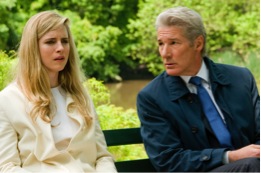
Richard Gere gets the golden line in this trailer for Sundance 2012’s drama-thriller Arbitrage , the feature directorial debut from Nicholas Jarecki ( The Outsider ). “World events all revolve around five things, M-O-N-E-Y,” he says, perhaps taking a cue from Wall Street ‘s own philosophy courtesy of Gordon Gekko (though he preferred the more direct g-r-e-e-d). Of course Susan Sarandon, who plays his wife has a zinger herself with, “How much money do we need? Do you want to be the richest person in the cemetery?” In the film, New York hedge-fund magnate Robert Miller (Gere) is the epitome of success, but behind the facade he’s in way over his head. He’s desperate to sell his trading empire to a big bank before the truth comes out, not only to colleagues but also his admiring wife and his daughter and heir-apparent Brooke (Brit Marling). And to complicate things further, he’s carrying on an affair with a French art-dealer, Julie (Laetetia Casta). But on the eve before he’s about to sell his plague-ridden holdings, he gets into further trouble (as tipped off in the trailer below) and he must now juggle family, business and crime with the help of someone from his past, Jimmy Grant (Nate Parker). The trailer seems to be pretty thorough in telling the story, so take a look. The only thing left is the final question: will he make it out from under the brink? [ The feature will begin its roll out September 14 courtesy of Lionsgate and Roadside Attractions. ]
To say there’s nothing on the contemporary movie landscape like Alex Kurtzman’s People Like Us is to suggest that the picture is a groundbreaking work with special effects unlike any we’ve ever seen, that it’s fresh and original in its use of characters or situations from old movies (or even older comic books), that its 3-D wow factor rivals that of Avatar . But People Like Us is something odder: This is a straightforward family comedy-drama, a movie made for adults, and one that actually gives its actors – among them Chris Pine, Elizabeth Banks, Michelle Pfeiffer and Philip Baker Hall – something to do. That’s more of a rarity on today’s landscape than it should be. Twenty or thirty years ago, you might have called a movie like People Like Us pedestrian, something not very special – it isn’t, for example, nearly as acidic or pointed as Alan Parker’s Shoot the Moon . And still, People Like Us , despite the fact that it’s been given a title that dooms it to failure (more on that later), seems to be motored by a quiet urgency. The picture gives off the sense that there’s something at stake here, and there is. What big studio wants to bankroll this kind of movie anymore? Who wants to see this sort of thing? It’s all just feelings, and who needs them? We’ve got foreign movies and indie movies for that stuff. But I love the way People Like Us so defiantly carves a space for itself in a genre that no longer exists, the mainstream fractured-family drama. The picture has flaws: It could have used a great deal of pruning, especially in the last half. But Kurtzman — who co-wrote the script, with Roberto Orci and Jody Lambert — has structured the movie as a gentle mystery, and though it does have a genuine surprise ending, it still allows for the biggest mystery of all: Why do people we love sometimes behave in indefensible ways? People Like Us doesn’t pretend to have the answers; what it does suggest is that there’s honor in handling your own disappointment like a grown-up. Chris Pine plays Sam, a corporate failure who, as the movie opens, isn’t having a particularly good day. It gets worse when he arrives home and his girlfriend, Hannah (Olivia Wilde), springs some bad news: His father has died suddenly, which means he’ll have to head to Los Angeles from New York right away. Sam’s response to the news is oddly passive; in fact, he seems to want nothing to do with his father, an old-school record producer, who, until he died, was a living legend. And when Hannah finally gets Sam to Los Angeles, his mother, Lillian (Michelle Pfeiffer), greets him with a literal slap in the face. “The linens are in the closet upstairs,” she says icily. She waits a beat and then says, in the same dry, flat voice, “I’m glad you’re home.” It turns out Sam has been estranged from his father — and by association, his mother — for years. His reasons are at first vague, but they become more comprehensible as the movie goes on. Now that the guy’s dead, Sam is at least hoping for some kind of payoff: Instead, his father’s lawyer (played by the always-marvelous Baker Hall) hands him a Dopp kit containing a roll of bills — $150,000, to be exact — and a mysterious instructional note that leads him to the door of a single mom, Frankie (Elizabeth Banks), and her bright but too-precocious son, Josh (Michael Hall D’Addario). If you’ve seen the trailer for People Like Us , you already know the nature of the relationship between Sam and Frankie. That’s a shame – whatever happened to the idea of letting an audience discover a movie for itself ? – but it doesn’t necessarily mar the picture’s modest but potent pleasures. For years Kurtzman and Orci have been writing Hollywood blockbusters, big, fat moneymakers like Transformers , Mission: Impossible III and Star Trek . People Like Us is their attempt to make something quieter and more personal, and in places the experiment is wobbly: Kurtzman knows what to put in, but doesn’t always seem to know what to take out, and the score, by A. R. Rahman, is too syrupy for the subtle earth-tremor emotions Kurtzman teases from his actors. But the performers keep the picture moving, even through its sloggy patches. Sam’s dad has left him no money, but he has bequeathed him a killer record collection: Carefully categorized and shelved, this precious stash of vinyl covers the walls, floor-to-ceiling, of a magical man cave. (Anyone who has ever loved vinyl will sigh at the Ali Baba-ness of it all.) Pine, for such a young actor, has an old-soul kind of face. Sam is closed off at first, and Pine plays that repressed anger as a kind of recessiveness, a retreat into blankness. His dad’s album collection is, at first, a legacy that just pisses him off, chiefly because it’s not money. But later, as he comes to know Josh, and sees both how bright and how lost the kid is, he remembers that music can be a portal into a better world, one that’s somehow easier to cope with. He admonishes Josh against stealing from a local CD shop: “You can’t shoplift from a record store, it’s like kicking a dead man.” And he gives the kid an essential listening list that includes Gang of Four, the Clash, the Buzzcocks and Television. Pine plays Sam as a man who needs to reconnect with his old enthusiasms, his old self, and he has just the right amount of gravity to make that believable. He’s got the right degree of surliness, too: There are moments where Sam doesn’t appear to be the nicest guy, and you wonder if his complaints about his father are of the “apple doesn’t fall far from the tree” variety. Banks, so often a crazy-wonderful presence in the movies, is more grounded than usual here, but she shows more depth, too. And Pfeiffer, looking beautiful in a way that’s believable for her age, is terrific. Pfeiffer embraces rather than recoils from the steeliness of her character, and her fearlessness makes all the difference. Everyone in People Like Us comes through with the goods. Which brings us to our last question: What’s with the movie’s stupid title? In a recent New York Times article , Stacey Snider, one of the principals at Dreamworks, explained that the title was changed from its original Welcome to People (a reference to a ’70s kids’ pop-psychology record album featured in the film) because, Snider said, “ ‘Welcome to People’ didn’t suggest anything to anyone.” She added, “It told you nothing about the content of the movie, the size of the movie, the genre of the movie.” So thanks, geniuses, for giving the movie a new title that tells us nothing about anything and which is almost impossible to remember. Who in their right mind would run, not walk, to see a movie called People Like Us ? Not people like you and me, that’s for sure. But if there were ever a time to defy a studio’s crap marketing strategy, it’s now. People Like Us is about all the ways in which our parents fail us – and about how one of the loathsome chores of adulthood is having to get over that, and over ourselves. That’s either not a big enough subject to fill a whole movie, or too much ground to cover in one picture. Welcome to people: They’re completely horrible, except when they’re totally awesome. Follow Stephanie Zacharek on Twitter . Follow Movieline on Twitter .
Elmo impersonators roaming New York are nothing new, but one going off on racist tirades – ranting horrifically about Jews while harassing tourists – certainly is. The NYPD was forced to remove a man wearing the familiar furry, red Elmo costume from Times Square after he exploded into an obscenity-laced rant. It’s less funny and more scary than it sounds. Here’s the NSFW video: Elmo Racist Tirade Other Elmos around New York said they recognized the man from prior clashes and worry that this incident could tarnish their collective reputation. In between posing for photos and harassing tourists for tips, the offending Elmo would go off on xenophobic and anti-Semitic tirades for some reason. The man, whose name was not released because he was not arrested, was taken to Metropolitan Hospital Center for a psychological evaluation. The man would shout “crazy stuff” about the other impersonators, said one witness, adding that people tried to keep a wary distance from Elmo. One can certainly see why. Red dude’s got some anger issues.
Summit Entertainment has released the trailer for director Rob Cohen’s Alex Cross, opening in theaters on October 19. Alex Cross follows the homicide detective/psychologist (Tyler Perry), from the worldwide best-selling novels by James Patterson, as he meets his match in a serial killer (Matthew Fox). The two face off in a high-stakes game of cat and mouse, but when the mission gets personal, Cross is pushed to the edge of his moral and psychological limits in this taut and exciting action thriller. Rachel Nichols, Edward Burns and Jean Reno co-star.
From the time it detonated public consciousness at Sundance last January, Benh Zeitlin’s dazzling magic realist feature debut Beasts of the Southern Wild has occasioned its own peculiar brand awe and wonder. After winning the grand jury prize and an award for best cinematography in Park City, the movie continues to conquer the world. Last month at Cannes, it captured the prestigious Camera d’Or for best first feature. Fox Searchlight acquired the movie during Sundance and is preparing the movie’s national rollout with platform opening runs in New York and Los Angeles on June 27th. It has been very heady times for the 29-year-old Zeitlin, the New York-born, New Orleans-based filmmaker who made the (reportedly less than $1 million film) under the auspices of his film collective, Court 13. Zeitlin developed the script at the Sundance Lab with the playwright Lucy Alibar, inspired by her play, Juicy and Delicious . He also collaborated on the evocative, bluegrass score with Dan Romer. Most impressively, Zeitlin does marvelous work with the nonprofessional ensemble, the most electrifying is the movie’s remarkable six-year-old protagonist Hushpuppy (Quvenzhané Wallis), who also narrates the movie. Set in the southern coast of Louisiana in a fictional dispossessed community known colloquially as “the Bathtub,” named for its pervasive, ramshackle clutter and populated by sharecroppers, bootleggers and itinerant musicians, the movie follows the tough-minded, industrious young girl and her father, Wink (Dwight Henry), as they desperately try to hold on to their threadbare existence despite warnings of impending storms and government orders to evacuate. Her mother having “floated away,“ Hushpuppy exists in a state of perpetual motion. The story is more anecdotal than linear, shaped by a succession of incidents and discursive moments related through the girl’s fevered consciousness. During an interview, Zeitlin talked about the movie’s creation, his influences, and his work with the nontraditional actors. More than 3,500 young girls auditioned for the lead role. Quvenzhané Wallis is expressive and dynamic, but you couldn’t have know that beforehand. What was it about her that made you cast her? I met her on the first call back. We had eight different casting teams. When she first walked in, she was defiant towards me. Most of the times you figure you can easily puppeteer a kid, but she was not like that at all. She was refusing to do this thing that I asked her to, because she didn’t it was right. I wanted her to throw something at somebody, and she said, ‘No, that’s not right to throw something at somebody you don’t know.’ She was the youngest person we looked at. She snuck into the audition. She was five-years-old and six was our cutoff. I just thought, she’s going to bring her own morality, her own worldview, to the part. What was your collaboration like? I worked with her like an actor. Movie sets are sometimes very stressful, high-pressure environments. Children don’t respond if it doesn’t feel like a game, if it doesn’t feel fun, it makes them uncomfortable. A lot of work was done to play during the shoots, and once we set up everything about the shot, we‘d come and throw water bottles back and forth, or she‘d mess up my hair. She stayed a kid. The material originated as a play, and you developed the script at the Sundance Lab. How did the script change? We came to the Sundance Lab with a raw first draft. It was something I wrote in two weeks, more a pack of ideas. It was at the lab that we found what the film was about. You had to discipline your choices and find the core. I had great imagery, a cow flies through someone’s roof, but I couldn’t find a connection to the heart of the story. The film became this emotional experience of how do you survive losing the things that made you. What about literary or other film influences. I was reminded of the escaped convict story in William Faulkner’s Wild Palms , or the tenant farmers in Jean Renoir’s The Southerner. I haven’t read or seen those. I tried not to watch a ton of fiction films. I was largely inspired by documentaries and people writing about the South. I’m extrapolating tons of things from the world and creating a pastiche. Interestingly enough, the further away the film plays from Louisiana, it’s seen in the context, as something magical or realistically a portrait of their life. What about your own early experiences in New Orleans? I went there a couple of times when I was a kid, the first time when I was about 13, and I was very haunted by it. There’s conflict, a heightened reality. Everything felt connected. In New Orleans, something there just resonates, both a joyousness and a darkness. When I came back, I felt, as though, this is where I come from in some very abstract way. You come back and you recognize certain aspects, like people who comes from the outside walking into a book that you love. When I was making an earlier, live-action short [ Glory at Sea ], a local guy named Jimmy Lee auditioned for a part and then he came back four hours later, carrying a bunch of stuff, like Greek columns. He said, ‘I heard you were making a boat out of junk, and I figured you could use this.’ That’s what the film is about, manifesting itself in our lives. A guy starts building and it transforms the thing, this crazy mission, and the story was reflecting that. You shot the movie in super-16mm, and the image is definitely more stable and the colors more vibrant. I’m a sentimental bastard. My first [live-action] short, I shot in 16mm and cut it on a flatbed. I realize for most people, the [differences] are totally imperceptible, but there is something magical about a series of still pictures linked, and a little bit of magic that is lost when digital turns it into something else. The grittiness of the [super-16mm] image fits ‘The Bathtub.’ One of the ideas [of the community] was there’s no technology. Hushpuppy had never seen a keyboard, for instance. Also, film is organic, and in order to get good photography in the location, it’s the easiest and cheapest way. To get digital to look right, you have to light it like crazy, and where we were shooting, on the backend of boats, 15 miles off the coast, there was no data managing. You can’t get power, and you can’t control scrims or bounce boards. You can still point and shoot [super-16] on location, and the image really holds together. The movie has been a sensation. You’re about to go into a very brutal marketplace, are you concerned about a backlash at all? I never really worry about what people are going to think. Obviously I care about what people think. I’m very proud of it and I’m very happy with it. Once I feel good about it along with the rest of the crew, that the movie expressed what we’re trying to express, I’m not worried about it. I believe in the film. It’s honest and says what I want it to say. We all know it’s an amazing ride we’re on, and it could explode. Beasts of the Southern Wild opens in limited release this week. Follow Movieline on Twitter .
From the time it detonated public consciousness at Sundance last January, Benh Zeitlin’s dazzling magic realist feature debut Beasts of the Southern Wild has occasioned its own peculiar brand awe and wonder. After winning the grand jury prize and an award for best cinematography in Park City, the movie continues to conquer the world. Last month at Cannes, it captured the prestigious Camera d’Or for best first feature. Fox Searchlight acquired the movie during Sundance and is preparing the movie’s national rollout with platform opening runs in New York and Los Angeles on June 27th. It has been very heady times for the 29-year-old Zeitlin, the New York-born, New Orleans-based filmmaker who made the (reportedly less than $1 million film) under the auspices of his film collective, Court 13. Zeitlin developed the script at the Sundance Lab with the playwright Lucy Alibar, inspired by her play, Juicy and Delicious . He also collaborated on the evocative, bluegrass score with Dan Romer. Most impressively, Zeitlin does marvelous work with the nonprofessional ensemble, the most electrifying is the movie’s remarkable six-year-old protagonist Hushpuppy (Quvenzhané Wallis), who also narrates the movie. Set in the southern coast of Louisiana in a fictional dispossessed community known colloquially as “the Bathtub,” named for its pervasive, ramshackle clutter and populated by sharecroppers, bootleggers and itinerant musicians, the movie follows the tough-minded, industrious young girl and her father, Wink (Dwight Henry), as they desperately try to hold on to their threadbare existence despite warnings of impending storms and government orders to evacuate. Her mother having “floated away,“ Hushpuppy exists in a state of perpetual motion. The story is more anecdotal than linear, shaped by a succession of incidents and discursive moments related through the girl’s fevered consciousness. During an interview, Zeitlin talked about the movie’s creation, his influences, and his work with the nontraditional actors. More than 3,500 young girls auditioned for the lead role. Quvenzhané Wallis is expressive and dynamic, but you couldn’t have know that beforehand. What was it about her that made you cast her? I met her on the first call back. We had eight different casting teams. When she first walked in, she was defiant towards me. Most of the times you figure you can easily puppeteer a kid, but she was not like that at all. She was refusing to do this thing that I asked her to, because she didn’t it was right. I wanted her to throw something at somebody, and she said, ‘No, that’s not right to throw something at somebody you don’t know.’ She was the youngest person we looked at. She snuck into the audition. She was five-years-old and six was our cutoff. I just thought, she’s going to bring her own morality, her own worldview, to the part. What was your collaboration like? I worked with her like an actor. Movie sets are sometimes very stressful, high-pressure environments. Children don’t respond if it doesn’t feel like a game, if it doesn’t feel fun, it makes them uncomfortable. A lot of work was done to play during the shoots, and once we set up everything about the shot, we‘d come and throw water bottles back and forth, or she‘d mess up my hair. She stayed a kid. The material originated as a play, and you developed the script at the Sundance Lab. How did the script change? We came to the Sundance Lab with a raw first draft. It was something I wrote in two weeks, more a pack of ideas. It was at the lab that we found what the film was about. You had to discipline your choices and find the core. I had great imagery, a cow flies through someone’s roof, but I couldn’t find a connection to the heart of the story. The film became this emotional experience of how do you survive losing the things that made you. What about literary or other film influences. I was reminded of the escaped convict story in William Faulkner’s Wild Palms , or the tenant farmers in Jean Renoir’s The Southerner. I haven’t read or seen those. I tried not to watch a ton of fiction films. I was largely inspired by documentaries and people writing about the South. I’m extrapolating tons of things from the world and creating a pastiche. Interestingly enough, the further away the film plays from Louisiana, it’s seen in the context, as something magical or realistically a portrait of their life. What about your own early experiences in New Orleans? I went there a couple of times when I was a kid, the first time when I was about 13, and I was very haunted by it. There’s conflict, a heightened reality. Everything felt connected. In New Orleans, something there just resonates, both a joyousness and a darkness. When I came back, I felt, as though, this is where I come from in some very abstract way. You come back and you recognize certain aspects, like people who comes from the outside walking into a book that you love. When I was making an earlier, live-action short [ Glory at Sea ], a local guy named Jimmy Lee auditioned for a part and then he came back four hours later, carrying a bunch of stuff, like Greek columns. He said, ‘I heard you were making a boat out of junk, and I figured you could use this.’ That’s what the film is about, manifesting itself in our lives. A guy starts building and it transforms the thing, this crazy mission, and the story was reflecting that. You shot the movie in super-16mm, and the image is definitely more stable and the colors more vibrant. I’m a sentimental bastard. My first [live-action] short, I shot in 16mm and cut it on a flatbed. I realize for most people, the [differences] are totally imperceptible, but there is something magical about a series of still pictures linked, and a little bit of magic that is lost when digital turns it into something else. The grittiness of the [super-16mm] image fits ‘The Bathtub.’ One of the ideas [of the community] was there’s no technology. Hushpuppy had never seen a keyboard, for instance. Also, film is organic, and in order to get good photography in the location, it’s the easiest and cheapest way. To get digital to look right, you have to light it like crazy, and where we were shooting, on the backend of boats, 15 miles off the coast, there was no data managing. You can’t get power, and you can’t control scrims or bounce boards. You can still point and shoot [super-16] on location, and the image really holds together. The movie has been a sensation. You’re about to go into a very brutal marketplace, are you concerned about a backlash at all? I never really worry about what people are going to think. Obviously I care about what people think. I’m very proud of it and I’m very happy with it. Once I feel good about it along with the rest of the crew, that the movie expressed what we’re trying to express, I’m not worried about it. I believe in the film. It’s honest and says what I want it to say. We all know it’s an amazing ride we’re on, and it could explode. Beasts of the Southern Wild opens in limited release this week. Follow Movieline on Twitter .