Tag Archives: research

The New Push for a Global Currency

You surely didn’t think that the governing elites would let this economic crisis pass without pushing some cockamamie scheme for control. Well, here is the cloud no bigger than a man’s hand, a revival of a 60-year-old idea of a global paper currency to fix what ails us. The IMF study that calls for this is by Reza Moghadam of the Strategy, Policy, and Review Department, “in collaboration with the Finance, Legal, Monetary and Capital Markets, Research and Statistics Departments, and consultation with the Area Departments.” In other words, this paper shouldn’t be ignored. It’s a long-term plan, but the plan has the unmistakable stamp of Keynes: “A global currency, bancor, issued by a global central bank would be designed as a stable store of value that is not tied exclusively to the conditions of any particular economy…. The global central bank could serve as a lender of last resort, providing needed systemic liquidity in the event of adverse shocks and more automatically than at present.” The term bancor comes from Keynes directly. He proposed this idea following World War II, but it was rejected mostly for nationalistic reasons. Instead we got a monetary system based on the dollar, which was in turn tied to gold. In other words, we got a phony gold standard that was destined to collapse as gold reserve imbalances became unsustainable, as they did by the late 1960s. What replaced it is our global paper money system of floating exchange rates. But the elites never give in, never give up. The proposal for a global currency and global central bank is again making the rounds. What problem is being addressed? What is so desperately wrong with the world that the IMF is floating the idea of a world currency? In a word, the problem is hoarding. The IMF is really annoyed that “in recent years, international reserve accumulation has accelerated rapidly, reaching 13 percent of global GDP in 2009 — a threefold increase over ten years.” You see, monetary policy isn’t supposed to work this way. In their ideal world, the central bank releases reserves and these reserves are lent out, leading to a boom in consumption and investment and thereby global happiness forever (never mind the hyperinflation that goes along with it). But there is a problem. The current system is nationally based and so the economic conditions of one country turn out to have an influence on the borrowing and lending markets. Without borrowers and lenders, the money gets stuck in the system…. Continued at: http://www.campaignforliberty.com/article.php?view=1049 added by: Dagum
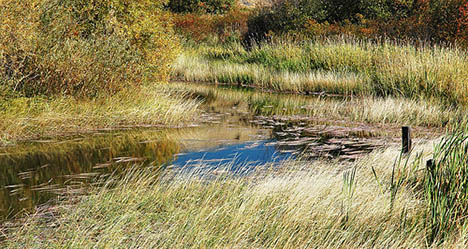

Planted or Un-Planted, Manmade Wetlands Make Good Carbon Sinks – New Research Shows How

photo: Dean Forbes via flickr Restoring wetlands is great way to reestablish natural carbon sinks –a low-risk geoengineering method–and reap the benefits of the ecosystem services they provide. Now researchers from Ohio State University have demonstrated that after 15 years, it doesn’t matter if those wetla… Read the full story on TreeHugger

Read more from the original source:
Planted or Un-Planted, Manmade Wetlands Make Good Carbon Sinks – New Research Shows How

Will Other States Pass Anti-ObamaCare Mandate Initiatives Like Missouri’s?

See the original post:
Will Other States Pass Anti-ObamaCare Mandate Initiatives Like Missouri’s?

American Public: Too Much Chelsea, Not Enough Real News

If you thought the media’s obsession with Chelsea Clinton’s July 31 wedding went a little overboard, you’re not alone. A new poll has found that a majority of Americans think there was too much coverage of the wedding at the expense of real news. The News Interest Index Survey, conducted July 29 through August 1 by the Pew Research Center for the People & the Press,  found  that 58 percent of respondents felt there was “too much” coverage of the Clinton wedding. As the Culture and Media Institute  reported , the three broadcast networks – ABC, CBS and NBC – aired 87 stories about Clinton’s nuptials between July 25 and August 1. That represented a 48-percent increase over coverage of former first daughter Jenna Bush’s wedding in 2008. Networks had reporters on the scene in Rhinebeck, N.Y., and brought in gossip columnists and celebrity wedding planners to dish on the event. But at what cost? Other news happened over the weekend, after all, including continued drama in the Gulf of Mexico and fallout over the leak of classified documents related to the war inAfghanistan, as well as economy and immigration issues. Americans noticed, according to the survey. While half believed the media delivered the “right amount” of coverage on the oil spill, pluralities felt there was “too little” coverage of the “Afghan War Diary” leak (41 percent) and the economy (42 percent).

BlackBerry Torch UI walkthrough

A brief look at the BlackBerry Torch’s UI. By engadget Tags : 9800 , blackberry , blackberry 9800 , blackberry torch , blackberry torch 9800 , research in motion , review , rim , torch , torch 9800 , ui , user interface

Read the rest here:
BlackBerry Torch UI walkthrough

BlackBerry Torch browser test

A quick comparison of browser speeds. By engadget Tags : 9800 , blackberry , blackberry 9800 , blackberry torch , research in motion , rim , torch

The rest is here:
BlackBerry Torch browser test

What Physics Says About Smooth Balls

It’s probably not all that surprising that this year’s World Cup has had its share of controversial goals, controversial offside calls, controversial foul calls, and controversial foul non-calls. A bit more surprising is the controversy caused by the tournament’s ball. Adidas created the Jabulani especially for the South African World Cup. It’s made from thermally bonded panels, instead of the traditional 32 panels of pentagons and hexagons. That makes it a lot smoother, but has given the players fits. “You might think if you make a ball very, very smooth, it will fly through the air better than a ball that is rough,” says John Eric Goff, chair of the physics department at Lynchburg College and author of Gold Medal Physics: The Science of Sports. You might think that, but you’d be wrong. “As the air goes around a sphere, or one of these sports balls, it forms a little layer near the surface of the sphere called the boundary layer,” says Goff. A rough surface makes that boundary layer break down at lower speeds. “And what that means is the drag force on the ball, the air resistance, goes down slightly,” he says. With only eight panels, you might think the Jabulani would be much smoother than a traditional ball, but you’d be wrong. Adidas has added grooves on the Jabulani that make up for the missing seams. Still, there seems to be less drag, less air resistance on a Jabulani when it’s traveling very fast than on a traditional ball. But more difficult than speed for player’s to get used to is what’s called the knuckling effect. This is when the ball starts behaving erratically because the boundary layer is breaking down at different places around the ball. “There is an ideal speed for the maximum knuckling effect,” says Rabindra D. Mehta, chief of the Experimental Aero-Physics Branch at the NASA Ames Research Center in California. For a traditional soccer ball it’s around 30 miles per hour. But for the Jabulani, it’s more like 40 or 45 mph. So it’s flying more erratically at faster speeds. Incidentally, despite what you might have seen in blogs or newspaper reports, NASA has not investigated the Jabulani. Mehta says he and some colleagues did a demonstration of the aerodynamics of flying objects for local school children, and used the Jabulani as an example. “There’s a lot of media coverage with all sorts of crazy headlines claiming NASA is doing this and that. We’re not doing anything,” says Mehta. “We just wanted to demonstrate soccer ball aerodynamics to children.” That may be so, but it’s hardly a headline grabber. added by: TimALoftis

More Frequent Extreme Heatwaves Commonplace Across the US by 2040

image: Noah Diffenbaugh/Stanford Univ. Just as one extreme snowstorm in winter not meaning the world isn’t continuing to warm, one summer heatwave doesn’t prove it. That said, the trend is definitely towards more extreme heatwaves , as new research from Stanford University confirms. Writing in the journal Geophysical Research Letters , the scientists say that exceptionally long heatwav… Read the full story on TreeHugger

Excerpt from:
More Frequent Extreme Heatwaves Commonplace Across the US by 2040

Cell Phones to Get Clean Energy Boost, Increasing by 41%

Photo via Abi Skipp A new report from Pike Research forcasts good news for renewable energy and mobile base stations (the wireless communications station used to connect cell phone networks). Clean energy will power 4.5% of base stations by 2014, and while that doesn’t sound like much, it’s a boost up from the mere 0.11% in 2010, or a 40.9% increase. But even more exciting is the percentage of base stations powered by renewable energy in developing countries will jot up to 8% by 2014. With

More:
Cell Phones to Get Clean Energy Boost, Increasing by 41%

New ultra-battery is the most powerful non-nuclear energy storage ever

What do you get when you combine some xenon, some fluoride, and pressures similar to those found at the center of the Earth? You get an ultra-battery, capable of storing more condensed energy than any other battery ever built. The material used to make the “battery” is xenon difluoride (XeF2), a white crystal primarily used to etch silicon conductors. The crystal was placed in a diamond anvil cell, a tiny device that measures only two inches by three inches. The cell uses two tiny diamond anvils (as you might expect, considering its name) to produce incredibly high pressures in tiny, contained spaces. Normally, the molecules in xenon difluoride stay relatively far apart. The squeezing process the crystals underwent in the diamond anvil cell forced the molecules closer and closer together. At first, the squeezing caused the crystal to become a two-dimensional semiconductor, but then something even more remarkable happened. When the pressure reached a million atmospheres, similar to the pressure found halfway to the center of the Earth, the molecules formed 3D metallic “network structures”, which forced all the mechanical energy of the compression process to be stored as chemical energy within the molecular bonds. At a million atmospheres, that's a whole lot of stored energy. Heading up this research is Washington State chemistry professor Choong-Shik Yoo, who says this “is the most condensed form of energy storage outside of nuclear energy.” The possible applications of the material pretty much all include the word “super”: superconductors, super-oxidizing materials that can destroy chemical and biological agents, not to mention new fuels and, most obviously, an energy storage device. http://io9.com/5579571/new-ultra+battery-is-the-most-powerful-non+nuclear-energy… added by: pjacobs51