Tag Archives: researchers

Ecstasy Used In Therapy To Treat PTSD

Approximately 18 percent of U.S. soldiers returning from the Iraq and Afghan wars in the first decade of the 21st century have been diagnosed with Post Traumatic Stress Disorder (PTSD), a condition characterized by debilitating anxiety. New research published in the Journal of Psychopharmacology investigated the safety and efficacy of MDMA, a controlled substance known on the street as “ecstasy,” for treatment of PTSD. The researchers found 58 percent of subjects experienced improved symptoms compared to placebo. This double-blind pilot study involved 20 test subjects. To be eligible, they had to meet all the criteria for crime or war-related chronic PTSD. Their symptoms had to be moderate to severe, as well as resistant to at least three months of prior treatment with traditional PTSD drugs. The researchers split the test subjects into two groups. In the experimental group, 12 subjects underwent two 8-hour psychotherapy sessions while dosed with MDMA. In the control group, 8 subjects underwent two 8-hour psychotherapy sessions while dosed with a placebo. To measure the outcomes, the researchers used the Clinician-Administered PTSD Scale (CAPS) test to assess the subjects’ symptoms before treatment, four days after treatment, and two months after treatment. At all three measured points in time, 10 of the 12 MDMA-treated patients (83 percent) showed a clinical response to the treatment, whereas only 2 of the 8 placebo-treated patients (25 percent) did. Furthermore, those in the placebo group were offered to be treated with MDMA after they completed the first trial and 100 percent no longer met the criteria for PTSD. An unexpected result of the study was the return of three participants to work, who were previously unable due to PTSD symptoms. Treatment with MDMA was safe, though subjects showed elevated blood pressure and body temperature while on the drug, these effects did not last. PTSD poses a significant risk to those afflicted with it. Traditional drug therapy for PTSD effectively treats about 45 to 47 percent of the patients. Victims of the condition tend to experience much higher incidences of disability, emotional suffering, drug abuse, and suicide. The researchers suspected that MDMA might help PTSD patients because the drug is known to “decrease feelings of fear while maintaining a clear-headed, alert state of consciousness.” added by: singrrr

Mass Extinction Threat: Earth on Verge of Huge Reset Button?

Mass extinctions have served as huge reset buttons that dramatically changed the diversity of species found in oceans all over the world, according to a comprehensive study of fossil records. The findings suggest humans will live in a very different future if they drive animals to extinction, because the loss of each species can alter entire ecosystems. Some scientists have speculated that effects of humans — from hunting to climate change — are fueling another great mass extinction. A few go so far as to say we are entering a new geologic epoch, leaving the 10,000-year-old Holocene Epoch behind and entering the Anthropocene Epoch, marked by major changes to global temperatures and ocean chemistry, increased sediment erosion, and changes in biology that range from altered flowering times to shifts in migration patterns of birds and mammals and potential die-offs of tiny organisms that support the entire marine food chain. Scientists had once thought species diversity could help buffer a group of animals from such die-offs, either keeping them from heading toward extinction or helping them to bounce back. But having many diverse species also proved no guarantee of future success for any one group of animals, given that mass extinctions more or less wiped the slate clean, according to studies such as the latest one. Looking back in time, the diversity of large taxonomic groups (which include lots of species), such as snails or corals, mostly hovered around a certain equilibrium point that represented a diversity limit of species' numbers. But that diversity limit also appears to have changed spontaneously throughout Earth's history about every 200 million years. How today's extinction crisis — species today go extinct at a rate that may range from 10 to 100 times the so-called background extinction rate — may change the face of the planet and its species goes beyond what humans can predict, the researchers say. “The main implication is that we're really rolling the dice,” said John Alroy, a paleobiologist at Macquarie University in Sydney, Australia. “We don't know which groups will suffer the most, which groups will rebound the most quickly, or which ones will end up with higher or lower long-term equilibrium diversity levels.” What seems certain is that the fate of each animal group will differ greatly, Alroy said. His analysis, detailed in the Sept. 3 issue of the journal Science, is based on almost 100,000 fossil collections in the Paleobiology Database (PaleoDB). The findings revealed various examples of diversity shifts, including one that took place in a group of ocean bottom-dwelling bivalves called brachiopods, which are similar to clams and oysters. They dominated the Paleozoic era from 540 million to 250 million years ago, and branched out into new species during two huge adaptive spurts of growth in diversity – each time followed by a big crash. The brachiopods then reached a low, but steady, equilibrium over the past 250 million years in which there wasn't a surge or a crash in species' numbers, and still live on today as a rare group of marine animals. cont. added by: JanforGore

Live On From Beyond The Groove: Have Your Ashes Pressed Into Vinyl

TreeHugger has reviewed many different, greener things to do with our bodies after we have shuffled off the mortal coil, from freeze-drying to composting . Now an English company offers a new option: Have your ashes pressed into vinyl record albums. … Read the full story on TreeHugger

See original here:
Live On From Beyond The Groove: Have Your Ashes Pressed Into Vinyl

New Bee Species Discovered During Downtown Toronto Commute

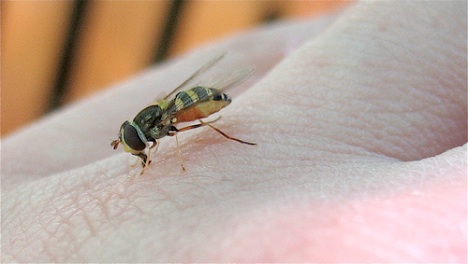
Example of a sweat bee — Metallic colored sweat bee species are diverse, and difficult to identify to which species a specimen belongs; photo via zackzen Researchers Jason Gibbs who was working on a study of sweat bees discovered a new species while commuting from downtown Toronto to York University. It is one of 19 new species he found while examining 84 species of sweat bees in Canada — so named because they are attracted to perspiration — which are common in North America. His study goes a long way in cataloging a variety of bee that has proven a “nightmare” to study. … Read the full story on TreeHugger

Read more here:
New Bee Species Discovered During Downtown Toronto Commute

Depressed People Really Do See a Gray World

“Researchers at the University of Freiburg in Germany had previously shown that people with depression have difficulty detecting black-and-white contrast differences. In new research, published in the journal Biological Psychiatry, the team had 40 patients with major depression and 40 healthy individuals view a sequence of five black-and-white checkerboards of different contrasts. Meanwhile, the researchers measured the pattern electroretinogram, which is similar to anelectrocardiogram (ECG) of the retina of the eye. The depressed patients had dramatically lower retinal responses to the varying black-and-white contrasts than healthy individuals. The results held regardless of whether patients were taking antidepressants. “These data highlight the profound ways that depression alters one's experience of the world,” said Dr. John Krystal, editor of the journal. “The poet William Cowper said that 'variety's the very spice of life,' yet when people are depressed, they are less able to perceive contrasts in the visual world. This loss would seem to make the world a less pleasurable place.” http://www.livescience.com/culture/depressed-people-see-gray-world-100720.html added by: DeliaTheArtist

Vaccine patch may replace needles

Hate needles? Well here is some good news, after it is reported scientists at Emory University have developed a vaccination patch. Unlike the processes of using one needle the patch is covered in microscopic needles, which dissolve into the skin and vaccinate the patient against flu. The scientists claim the test performed on mice show the patch method is better at protecting the immune system against flu than the current system does. The study into the technology is continuing, but with this break through some are saying the patch will mean people can vaccinate themselves from home via a home delivery. Human trails are set to carry out over the next few years. “If proven to be effective in further trials, the patch would mean an end to the need for medical training to deliver vaccines and turn vaccination into a painless procedure that people could do themselves. It could also simplify large-scale vaccination during a pandemic, the researchers said. Although the study only looked at flu vaccine, it is hoped the technology could be useful for other immunisations and would not cost any more than using a needle.”-BBC added by: Mcellie

Amazon Storm Killed Half a Billion Trees

A violent storm ripped through the Amazon forest in 2005 and single-handedly killed half a billion trees, a new study reveals. The study is the first to produce an actual tree body count after an Amazon storm. An estimated 441 million to 663 million trees were destroyed across the whole Amazon basin during the 2005 storm, a much greater number than previously suspected. In some areas of the forest, up to 80 percent of the trees were killed by the storm. A severe drought was previously blamed for the region's tree loss in 2005. “We can't attribute [the increased] mortality to just drought in certain parts of the basin — we have solid evidence that there was a strong storm that killed a lot of trees over a large part of the Amazon,” said forest ecologist and study researcher Jeffrey Chambers of Tulane University in New Orleans, La. From Jan. 16 to Jan. 18, 2005, a squall line — a long line of severe thunderstorms — 620 miles (1,000 kilometers) long and 124 miles (200 km) wide crossed the whole Amazon basin. The storm's strong winds, with speeds of up to 90 mph (145 kph), uprooted or snapped trees in half. When trees die, they release their stored carbon into the atmosphere, which contributes to climate change. In a vicious cycle, these storms could become more frequent in the future due to climate change. To calculate the number of trees killed by the storm, the researchers used satellite images, field studies and computer models. They looked for patches of wind-toppled trees, which allowed them to distinguish from trees killed by the drought. “If a tree dies from a drought, it generally dies standing. It looks very different from trees that die snapped by a storm,” Chambers said. The storm wiped out between 300,000 and 500,000 trees in the area of Manaus, Brazil, alone. The number of trees killed by the 2005 storm was equal to 30 percent of the total human-caused deforestation in that same year for the Manaus region. The researchers used the tree loss in Manaus to estimate the tree loss across the entire Amazon basin. “It's very important that when we collect data in the field we do forensics on tree mortality,” Chambers said. “Under a changing climate, some forecasts say that storms will increase in intensity. If we start seeing increases in tree mortality, we need to be able to say what's killing the trees.” The study, funded by NASA and Tulane University, will be detailed in a future edition of the journal Geophysical Research Letters. added by: JanforGore

Air-Purifying Road Surface Eats 45% of NOx Pollution

Photo: Flickr , CC NOx, NOM NOM NOM Researchers at the Eindhoven University of Technology in the Netherlands have tested pollution-eating concrete on about 1,000 square meters of roads in the town of Hengelo. We already knew it worked in the lab, but this was a real-world test and the results are pretty impressive: a 25 to 45% reduction in oxides of nitrogen (NOx) over the special roads. This could mean that someday our roads and other concrete structures could be used to clean up the air. How does it work? Read on for the details…. Read the full story on TreeHugger

Go here to see the original:
Air-Purifying Road Surface Eats 45% of NOx Pollution

Blue Jeans Hold Secret To Making Better Solar Cells

Photo via lifecreations Researchers at Cornell University have found a seemingly simple solution to creating more efficient solar cells. It turns out that particular molecules found in blue jeans and some ink dyes can be used in a process for assembling a structure called “covalent organic framework” or COF, which can help create cheaper, flexible solar cells. While organic materials haven’t proven very easy to use so far for creating solar cells, the researchers are finding that these molecules found in every-day materials might be just w… Read the full story on TreeHugger

See the original post:
Blue Jeans Hold Secret To Making Better Solar Cells

Latest Casualty of the BP Spill: Strip Clubs

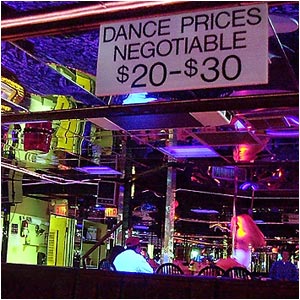
Image via Sports Illustrated Lest you think the economic damage from the BP spill be limited to the seafood trade , tourism, and such industries directly dependent on an un-oiled Gulf of Mexico, we turn to one of the more unlikely institutions that’s seen its business dry up in the wake of the disaster: Strip clubs. … Read the full story on TreeHugger

See the original post here:
Latest Casualty of the BP Spill: Strip Clubs