‘I’m not engaged. I’ve worn this same ring on this finger since November!’ Cyrus tweeted on Monday in response to rumors. By Christina Garibaldi Miley Cyrus at her Pilates class in Beverly Hills Photo: Splash News Miley Cyrus is putting those engagement rumors to rest. On Monday (March 26), the Internet was abuzz that Cyrus and her “Hunger Games” star boyfriend Liam Hemsworth were going to tie the knot after photos surfaced of her wearing a large sparkler on her ring finger. I’m not engaged. I’ve worn this same ring on this finger since November! People just wanna find something to tal about! It’s a topaz people! — Miley Ray Cyrus (@MileyCyrus) March 26, 2012 But Cyrus took to Twitter on Monday to shoot down the rumors, saying, “I’m not engaged. I’ve worn this same ring on this finger since November! People just wanna find something to [talk] about! It’s a topaz people!” Speculation began last week after Cyrus tweeted a photo of her new manicure and the ring. Most recently, she was spotted sporting the large stone on Saturday as the two posed for pictures on the red carpet at Muhammad Ali’s Celebrity Fight Night XVVIII in Phoenix. Even though they won’t be planning a wedding anytime soon, the couple, who have been dating on and off since 2009, have a lot to be excited about. “The Hunger Games” had the third-biggest opening weekend of all time, beating out all of the “Twilight Saga” movies when it raked in $155 million. Hemsworth and Cyrus will next be seen together on an upcoming episode of MTV’s “Punk’d,” where the former “Hannah Montana” star tells her boyfriend that two naked people have locked themselves in her car, a prank Hemsworth doesn’t seem to be too fond of. “I knew she was doing the show. I honestly thought she had enough respect for me not to do me, and she got me really good,” Hemsworth recently told Ellen DeGeneres. “Your girlfriend comes running around and she’s yelling hysterically and you see two naked people in your car… I think my instincts were pretty right.” Related Artists Miley Cyrus
‘I’m not engaged. I’ve worn this same ring on this finger since November!’ Cyrus tweeted on Monday in response to rumors. By Christina Garibaldi Miley Cyrus at her Pilates class in Beverly Hills Photo: Splash News Miley Cyrus is putting those engagement rumors to rest. On Monday (March 26), the Internet was abuzz that Cyrus and her “Hunger Games” star boyfriend Liam Hemsworth were going to tie the knot after photos surfaced of her wearing a large sparkler on her ring finger. I’m not engaged. I’ve worn this same ring on this finger since November! People just wanna find something to tal about! It’s a topaz people! — Miley Ray Cyrus (@MileyCyrus) March 26, 2012 But Cyrus took to Twitter on Monday to shoot down the rumors, saying, “I’m not engaged. I’ve worn this same ring on this finger since November! People just wanna find something to [talk] about! It’s a topaz people!” Speculation began last week after Cyrus tweeted a photo of her new manicure and the ring. Most recently, she was spotted sporting the large stone on Saturday as the two posed for pictures on the red carpet at Muhammad Ali’s Celebrity Fight Night XVVIII in Phoenix. Even though they won’t be planning a wedding anytime soon, the couple, who have been dating on and off since 2009, have a lot to be excited about. “The Hunger Games” had the third-biggest opening weekend of all time, beating out all of the “Twilight Saga” movies when it raked in $155 million. Hemsworth and Cyrus will next be seen together on an upcoming episode of MTV’s “Punk’d,” where the former “Hannah Montana” star tells her boyfriend that two naked people have locked themselves in her car, a prank Hemsworth doesn’t seem to be too fond of. “I knew she was doing the show. I honestly thought she had enough respect for me not to do me, and she got me really good,” Hemsworth recently told Ellen DeGeneres. “Your girlfriend comes running around and she’s yelling hysterically and you see two naked people in your car… I think my instincts were pretty right.” Related Artists Miley Cyrus
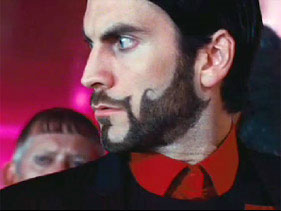
One box-office watcher tells MTV News the book adaptation was ‘the hottest party around and nobody wanted to be left out.’ By Kevin P. Sullivan Wes Bentley as Seneca Crane in “The Hunger Games” Photo: Lionsgate We all knew “The Hunger Games” would debut to enormous opening-weekend numbers, but few could have predicted just how quickly the fire would spread. The YA adaptation opened to an incredible $155 million weekend, passing up “The Twilight Saga: New Moon” and “Spider-Man 3” to have the third-highest opening weekend behind “The Dark Knight” and “Harry Potter and the Deathly Hallows, Part 2.” Early predictions had “The Hunger Games” opening at a respectable $70 million, not even half the actual total and in range of this year’s “The Lorax,” another recent box-office surprise. As the release drew nearer, analysts bumped up the predicted total to a range of $125 million to $130 million. The reason for the initially low prediction lies with another YA series, according to Jeff Bock of Exhibitor Relations . “Many people were comparing this to the original ‘Twilight’ film, which grossed $69 million its opening weekend,” Bock said. “Even though the book series was a huge success, many other young adult novels have been translated to film recently and failed to produce the next ‘Harry Potter’ or ‘Twilight,’ so, as an unproven commodity, expectations were tempered a bit with ‘The Hunger Games.’ Even Lionsgate was estimating that the film would debut with a three-day weekend gross of $75 million earlier in the week; they certainly didn’t expect it to nearly eclipse that number on opening day.” Wanna win a Hunger Games special edition HP laptop from MTV News? Click here to enter! The strong push out of the gate came from a combination of an aggressive marketing campaign by Lionsgate and groundswell created by fans of Suzanne Collins’ best-selling books. Gitesh Pandya of Box Office Guru said it was a precise combination of those key factors that led to such an explosive opening weekend. “The record opening was driven by the loyal fanbase, which is humongous, along with a carefully crafted marketing push that intrigued them and also drew in new audiences in time for the movie’s release,” Pandya said. “Marketing was a key component to the massive debut, as the film wasn’t over-promoted to the point of repelling people. Lionsgate turned the opening weekend of ‘Hunger Games’ into the hottest party around and nobody wanted to be left out.” Lionsgate is certainly not wasting any time in trying to repeat the magic of their biggest hit to date. Production on the sequel, “Catching Fire,” is scheduled to begin this summer with a release tentatively set for November 2013. Pandya believes the next adventure of Katniss Everdeen could even go bigger. “Studios knew to stay out of the way of ‘Hunger Games,’ which is why no other film opened wide this weekend. But now they know how big of a juggernaut it is, and if history is any indicator, the opening of ‘Catching Fire’ will be even bigger in November 2013,” Pandya said. “And unless Disney changes its superhero date, we’re going to see a big-brother battle as Liam Hemsworth’s ‘Catching Fire’ will open just one week after Chris Hemsworth’s ‘Thor 2.’ ” What did you think of The Hunger Games? Give us your review on Facebook ! Check out everything we’ve got on “The Hunger Games.” For young Hollywood news, fashion and “Twilight” updates around the clock, visit HollywoodCrush.MTV.com . Related Videos MTV Rough Cut: ‘The Hunger Games’ Related Photos Inside ‘The Hunger Games’ Capitol ‘Hunger Games’ Cast Hits NYC
One box-office watcher tells MTV News the book adaptation was ‘the hottest party around and nobody wanted to be left out.’ By Kevin P. Sullivan Wes Bentley as Seneca Crane in “The Hunger Games” Photo: Lionsgate We all knew “The Hunger Games” would debut to enormous opening-weekend numbers, but few could have predicted just how quickly the fire would spread. The YA adaptation opened to an incredible $155 million weekend, passing up “The Twilight Saga: New Moon” and “Spider-Man 3” to have the third-highest opening weekend behind “The Dark Knight” and “Harry Potter and the Deathly Hallows, Part 2.” Early predictions had “The Hunger Games” opening at a respectable $70 million, not even half the actual total and in range of this year’s “The Lorax,” another recent box-office surprise. As the release drew nearer, analysts bumped up the predicted total to a range of $125 million to $130 million. The reason for the initially low prediction lies with another YA series, according to Jeff Bock of Exhibitor Relations . “Many people were comparing this to the original ‘Twilight’ film, which grossed $69 million its opening weekend,” Bock said. “Even though the book series was a huge success, many other young adult novels have been translated to film recently and failed to produce the next ‘Harry Potter’ or ‘Twilight,’ so, as an unproven commodity, expectations were tempered a bit with ‘The Hunger Games.’ Even Lionsgate was estimating that the film would debut with a three-day weekend gross of $75 million earlier in the week; they certainly didn’t expect it to nearly eclipse that number on opening day.” Wanna win a Hunger Games special edition HP laptop from MTV News? Click here to enter! The strong push out of the gate came from a combination of an aggressive marketing campaign by Lionsgate and groundswell created by fans of Suzanne Collins’ best-selling books. Gitesh Pandya of Box Office Guru said it was a precise combination of those key factors that led to such an explosive opening weekend. “The record opening was driven by the loyal fanbase, which is humongous, along with a carefully crafted marketing push that intrigued them and also drew in new audiences in time for the movie’s release,” Pandya said. “Marketing was a key component to the massive debut, as the film wasn’t over-promoted to the point of repelling people. Lionsgate turned the opening weekend of ‘Hunger Games’ into the hottest party around and nobody wanted to be left out.” Lionsgate is certainly not wasting any time in trying to repeat the magic of their biggest hit to date. Production on the sequel, “Catching Fire,” is scheduled to begin this summer with a release tentatively set for November 2013. Pandya believes the next adventure of Katniss Everdeen could even go bigger. “Studios knew to stay out of the way of ‘Hunger Games,’ which is why no other film opened wide this weekend. But now they know how big of a juggernaut it is, and if history is any indicator, the opening of ‘Catching Fire’ will be even bigger in November 2013,” Pandya said. “And unless Disney changes its superhero date, we’re going to see a big-brother battle as Liam Hemsworth’s ‘Catching Fire’ will open just one week after Chris Hemsworth’s ‘Thor 2.’ ” What did you think of The Hunger Games? Give us your review on Facebook ! Check out everything we’ve got on “The Hunger Games.” For young Hollywood news, fashion and “Twilight” updates around the clock, visit HollywoodCrush.MTV.com . Related Videos MTV Rough Cut: ‘The Hunger Games’ Related Photos Inside ‘The Hunger Games’ Capitol ‘Hunger Games’ Cast Hits NYC
Movie events have become deadly little things, highly mechanized gadgets thrown by studio marketing departments into an audience’s midst in advance; then we just stand around and wait for them to explode. The Hunger Games , adapted from the first of Suzanne Collins’ hugely successful trio of young adult novels, was decreed an event long before it became anything close to a movie: More than a year ago its studio, Lionsgate, launched a not-so-stealthy advertising campaign that made extensive use of social media to coax potential fans into convincing one another that they had to see this movie. The marketing was so nervily persuasive that you had to wonder: How could any movie – especially one that, as it turns out, is largely and surprisingly naturalistic, as opposed to the usual toppling tower of special effects – possibly hope to measure up? The surprise of The Hunger Games isn’t that it lives up to its hype – it’s that it plays as if that hype never even existed, which may be the trickiest achievement a big movie can pull off these days. The picture takes place in a dystopian future, in a dictatorship called Panem that’s a thinly disguised version what used to be the United States. Panem’s richest and most privileged citizens live in the capitol city – called, conveniently, Capitol – while everyone else toils away in the 12 outlying districts to provide everything those Capitol dwellers might need, from food to coal to luxury goods. At some point in Panem’s history, the underlings in the districts revolted, French Revolution-style. As punishment, each district must now offer up two of its youngsters between the ages of 12 and 18, a boy and a girl chosen by lottery, to compete in a televised yearly event called the Hunger Games. The young people, called Tributes, kill one another off in an elaborately controlled stadium environment until there’s just one left standing: That kid earns accolades for his or her home district – and, more importantly, food. As allegories go, this is a pretty obvious one, particularly in the era of the 99%, although neither Collins nor Gary Ross, director of the movie version, really needs to belabor the point: The focus, in the book and in the movie, is on the storytelling: If the larger ideas are pretty elephantine ones, at least they emerge from the story rather than obscure it with their meaty flanks. Jennifer Lawrence plays 16-year-old Katniss Everdeen, a denizen of the poorest section of Panem, District 12, which specializes in coal production – Katniss’ father, a miner, was killed in a mining accident, leaving the young woman to fend for the family by using her crackerjack archery skills to hunt game (illegally) in the nearby forest. When Katniss’ impossibly young and extremely fragile sister Prim is chosen to compete in the Hunger Games – the announcements are made on a national holiday known, creepily, as Reaping Day – Katniss steps forward as a volunteer, desperate to take Prim’s place. Her male counterpart is the baker’s son, Peeta Mellark (Josh Hutcherson, who played Laser, Annette Bening and Julianne Moore’s son in The Kids Are All Right ), and the complication, as you might guess, is that he’s been sort-of-secretly in love with Katniss since childhood. Now the two will be life-and-death adversaries, and Katniss’ mistrust of Peeta’s motives – complicated by her own confused affections, given her exceedingly independent nature – provides the movie with some strong but delicate bone structure. The Hunger Games may offer some reasonably effective metaphorical statements about class divisions in this country — and about the house-of-cards crassness of reality TV – but in the end, it works because of its deft handling of an even more universal theme: This is a movie about an independent-minded girl who just isn’t sure she can trust a boy, as true to the spirit of the Shirelles as it is to Greek myth. There’s action here, too, and a great deal of vitality that feels true both to the spirit of Collins’ book and to the idea of movie entertainment as it exists – or ought to exist – outside the framework of mere movie marketing. Ross previously brought us the 1998 Pleasantville , as well as the disappointingly perfunctory 2003 Seabiscuit , and there are ways in which The Hunger Games (whose script he adapted, along with Collins and Billy Ray) feels workmanlike instead of genuinely inventive. For one thing, Ross overuses the handheld camera, particularly in scenes that are supposed to be intimate and deeply emotional: When Katniss gets Prim ready for her first Reaping Day, she tucks in the tail of the little girl’s shirt with the kind of efficient tenderness that the best big sisters have in their DNA. The family lives in what appears to be a simple wooden house, if not a shack. In the book, Collins notes that District 12 is located in what used to be called Appalachia, and if the movie doesn’t stress that outright, it at least implies as much: Ross and cinematographer Tom Stern channel the mood of Walker Evans and Dorothea Lange with their muted — though not blanched — color palette and austere compositions. (James Newton Howard wrote the movie’s restrained score, and there’s additional music by roots-music craftsman T. Bone Burnett, which tells you something about the picture’s commitment to capturing the aura of this distinctly American landscape.) Ross’ instincts are so good that you wonder, particularly in the District 12 scenes, why he didn’t just screw the camera into the damned tripod: The stillness would have been classical and elegant and better suited to the emotional tone and texture of this part of the story. Still, there’s so much in The Hunger Games that Ross gets right. He understands the nature of visual storytelling, trusting the audience to follow the narrative without spelling out every little thing in actual dialogue. He trusts us to pick up on telling details – for example, the lacy, little-girl anklets worn by the youngest Tribute, a sparkplug named Rue (played beautifully by a young actress named Amandla Stenberg), when she appears for her pre-competition televised interview. And The Hunger Games , mercifully, doesn’t suffer from overproductionitis. The picture, like the book it’s based on, has a number of fantastical elements – the glossy, gleaming futuristic edifices of the Capitol; a competition arena that resembles the natural world but can be controlled by technicians to create extra challenges for the participants, like rolling balls of fire and snarling creatures that are half-dog, half-lion. Even so, it relies mostly on a deceptively soothing kind of naturalism. These trees look like real trees; the sunlight certainly seems bright and strong. Their familiarity only adds to the story’s sense of menace, particularly when the going gets really ugly, as it inevitably does: At one point a crew of bloodthirsty Tributes surround a tree Katniss has climbed for safety, exhorting one of their members to “kill her.” The action in The Hunger Games is often a bit of a jumble – it’s sometimes hard to tell who’s coming from where. But Ross takes care to give the violence — which is discreet but visceral — the proper amount of weight. These are, after all, young people killing other young people. And one scene, in particular, conjures just the right level of Ophelia-floating-down-the-river grace — the simplest wildflowers become a kind of benediction. The picture makes room for a number of standout supporting actors: Stanley Tucci as an unctuous yet sympathetic games commentator; Elizabeth Banks as the fluttery, ineffectual official helper-outer Effie Trinket; Woody Harrelson as Katniss and Peeta’s boozy mentor; and Lenny Kravitz, sadly underused, as Cinna, who’s in charge of “styling” the District 12 entrants. (At one point in the pregame festivities, he puts Katniss in a dress whose fluttery, feathery skirt turns to fire as she twirls.) Wes Bentley has a turn as a smooth, unnerving semi-villain, and Donald Sutherland shows up as a malevolent elder statesman, a role he digs into with sly gusto. But Lawrence holds the real key to the effectiveness of The Hunger Games , and she plays Katniss as the best kind of fallible heroine. Hutcherson may be teen-heartthrob material – in other words, wholly nonthreatening — but he has the right amount of prickly sweetness to make the character of Peeta work: He can’t be too much of a sap, or you’d wonder what the hell Katniss sees in him. And as Lawrence plays her, Katniss – a sturdy girl, both physically and emotionally – deserves the best. There’s something primal about the way Katniss strides through the forest in the movie’s early scenes, stalking a deer with a rudimentary bow and arrow. She aims for the head and then, distracted by a District 12 pal (his name is Gale, and he’s played by Liam Hemsworth), misses. Lawrence has all the boldness and delicacy of her intended prey: Like that deer, she doesn’t miss a trick — her senses are aquiver every moment. Her Katniss is both tender and fierce, a character with contours and shadows, not just a cutout-and-keep role model. When she succumbs at last to Peeta’s earnest charms, it’s as if she’s finally captured the most elusive of prey, if only temporarily: She’s at peace with herself, but her very restlessness is part and parcel of that peace. As Katniss, Lawrence never stops moving: Even in her stillness, she always hits her mark. Read more on The Hunger Games here . Follow Stephanie Zacharek on Twitter . Follow Movieline on Twitter .
You have to admire the chutzpah, if not necessarily the filmmaking skills, of Jay and Mark Duplass, the duo behind the stay-at-home-son comedy-drama Jeff, Who Lives at Home . With their 2005 debut, The Puffy Chair , the Duplass brothers took an uninteresting story fleshed out with lackadaisical dialogue and, using barely rudimentary camera skills, fashioned a noodly tale about love, life and relationships. It’s easier, maybe, to admire the Duplasses’ boldness more than the actual product, but you have to say this much for them: They sure do keep moving. Jeff, Who Lives at Home is the duo’s fourth feature, and if their sense of craftsmanship hasn’t grown by leaps and bounds in the past seven years, it has surely improved. Which raises the question: At what point do we stop applauding the Duplass brothers for their gumption and stick-to-itiveness and admit that, maybe, their storytelling just isn’t so hot? Or that their characters sometimes seem more like groovy-cute constructs than believable people? For example, the protagonist of Jeff, Who Lives at Home , played by Jason Segal, believes that everything and everyone in the universe is interconnected. Why? Because he keeps watching M. Night Shyamalan’s Signs over and over again. In the movie’s prologue, we hear him in voiceover as he writes in his diary, “It keeps getting better every time I see it.” Even if the movie’s title didn’t give it all away, you could probably guess that’s a setup for a story about a schleppy 30-ish guy who still lives at home with his mother (in this case, Susan Sarandon) but who will somehow find his purpose in life – his own sense of interconnectedness – during the course of the movie. And you’d be right. The whole conceit feels a little too manicured, too neat, even though the filmmaking around it is still pretty Duplassy – in other words, its earmarks are lots of (somewhat) shaky handheld camera moves and a decidedly uncinematic sense of composition. But there is, at least, a story here, and Jeff, Who Lives at Home suggests that the Duplass brothers really do want their movies to be better and better. Like the duo’s last movie, the 2010 Cyrus , Jeff deals with an adult son who isn’t, for vague yet understandable reasons, quite equipped to live in the real world. Sarandon’s Sharon, hoping to give him at least some purpose in life, just wants him to help out a little around the house – she sends him on a mission to buy some wood glue to repair a cupboard door’s broken slat. Jeff heads out to the store via bus, gazing out the window in a state of semi-wonder as it makes its way past some of the nondescript gas stations and fast-food eateries of Baton Rouge. He never makes it to the store: A mishap surrounding his certainty that the name “Kevin” is somehow of cosmic significance leads him into contact with his estranged brother, Pat (Ed Helms), whose wife, Linda (Judy Greer), has just given him the gate for being a fiscally irresponsible loser. (She seems to be right.) Jeff and Pat forge a tentative reconnection, reminiscing about their dead father and gradually – perhaps too gradually – wending their way toward a climax that gives real meaning to their lives. There’s some genuine sweetness in this story: Jeff may be a clueless galoot who overthinks everything, but he’s really searching for something here, and as Segel plays him, he does have a degree of lumpy charm. But even though much of the dialogue in Jeff is improvised, there’s still something deeply calculated about the picture: It has the distinction of feeling unshaped and sloppy and at the same time meticulously planned out in terms of what it’s asking us to feel. The picture demands that we feel protective of Jeff, and so we do. But we’re also supposed to find it gratifying when Jeff learns that the signs he’s learned to read by watching Signs really are signs. How you feel about the ending of Jeff, Who Lives at Home will depend on your capacity for cosmic delight, but I will say that one man’s date with destiny is just another man’s handy plot device. still, there’s one area in which the Duplasses’ instincts serve them well: The movie features a subplot in which Sharon learns she has a secret admirer at work. She’s pleased and flattered, but she has no clue who it is, and she shares her flutter of confusion with her co-worker and friend, Carol (played, with marvelous suppleness and grace, by Rae Dawn Chong). Everything Sarandon does here feels believable and natural — that’s in addition to the fact that she looks lovely, like a woman who’s happy to be living in her own skin instead of trying to shape it into a mask. She’s the kind of actress who can do a lot with a little, and it’s a pleasure to watch the way small gradations of feeling play across her face like the shifting sunlight on a half-cloudy, half-bright day. Her scenes with Chong (whom the Duplass brothers, God love them, also cast in Cyrus ) are superb, and they suggest that the Duplasses’ improvisational MO can work beautifully with the right kind of actors. Like the Duplass brother’s other movies, Jeff, Who Lives at Home worships at the altar of the small moment, without recognizing that some moments are just, well, small. But occasionally, the Duplasses hold their cracked magnifying glass up to something very real. And oddly enough, it’s the crack that makes all the difference. Follow Stephanie Zacharek on Twitter . Follow Movieline on Twitter .
You have to admire the chutzpah, if not necessarily the filmmaking skills, of Jay and Mark Duplass, the duo behind the stay-at-home-son comedy-drama Jeff, Who Lives at Home . With their 2005 debut, The Puffy Chair , the Duplass brothers took an uninteresting story fleshed out with lackadaisical dialogue and, using barely rudimentary camera skills, fashioned a noodly tale about love, life and relationships. It’s easier, maybe, to admire the Duplasses’ boldness more than the actual product, but you have to say this much for them: They sure do keep moving. Jeff, Who Lives at Home is the duo’s fourth feature, and if their sense of craftsmanship hasn’t grown by leaps and bounds in the past seven years, it has surely improved. Which raises the question: At what point do we stop applauding the Duplass brothers for their gumption and stick-to-itiveness and admit that, maybe, their storytelling just isn’t so hot? Or that their characters sometimes seem more like groovy-cute constructs than believable people? For example, the protagonist of Jeff, Who Lives at Home , played by Jason Segal, believes that everything and everyone in the universe is interconnected. Why? Because he keeps watching M. Night Shyamalan’s Signs over and over again. In the movie’s prologue, we hear him in voiceover as he writes in his diary, “It keeps getting better every time I see it.” Even if the movie’s title didn’t give it all away, you could probably guess that’s a setup for a story about a schleppy 30-ish guy who still lives at home with his mother (in this case, Susan Sarandon) but who will somehow find his purpose in life – his own sense of interconnectedness – during the course of the movie. And you’d be right. The whole conceit feels a little too manicured, too neat, even though the filmmaking around it is still pretty Duplassy – in other words, its earmarks are lots of (somewhat) shaky handheld camera moves and a decidedly uncinematic sense of composition. But there is, at least, a story here, and Jeff, Who Lives at Home suggests that the Duplass brothers really do want their movies to be better and better. Like the duo’s last movie, the 2010 Cyrus , Jeff deals with an adult son who isn’t, for vague yet understandable reasons, quite equipped to live in the real world. Sarandon’s Sharon, hoping to give him at least some purpose in life, just wants him to help out a little around the house – she sends him on a mission to buy some wood glue to repair a cupboard door’s broken slat. Jeff heads out to the store via bus, gazing out the window in a state of semi-wonder as it makes its way past some of the nondescript gas stations and fast-food eateries of Baton Rouge. He never makes it to the store: A mishap surrounding his certainty that the name “Kevin” is somehow of cosmic significance leads him into contact with his estranged brother, Pat (Ed Helms), whose wife, Linda (Judy Greer), has just given him the gate for being a fiscally irresponsible loser. (She seems to be right.) Jeff and Pat forge a tentative reconnection, reminiscing about their dead father and gradually – perhaps too gradually – wending their way toward a climax that gives real meaning to their lives. There’s some genuine sweetness in this story: Jeff may be a clueless galoot who overthinks everything, but he’s really searching for something here, and as Segel plays him, he does have a degree of lumpy charm. But even though much of the dialogue in Jeff is improvised, there’s still something deeply calculated about the picture: It has the distinction of feeling unshaped and sloppy and at the same time meticulously planned out in terms of what it’s asking us to feel. The picture demands that we feel protective of Jeff, and so we do. But we’re also supposed to find it gratifying when Jeff learns that the signs he’s learned to read by watching Signs really are signs. How you feel about the ending of Jeff, Who Lives at Home will depend on your capacity for cosmic delight, but I will say that one man’s date with destiny is just another man’s handy plot device. still, there’s one area in which the Duplasses’ instincts serve them well: The movie features a subplot in which Sharon learns she has a secret admirer at work. She’s pleased and flattered, but she has no clue who it is, and she shares her flutter of confusion with her co-worker and friend, Carol (played, with marvelous suppleness and grace, by Rae Dawn Chong). Everything Sarandon does here feels believable and natural — that’s in addition to the fact that she looks lovely, like a woman who’s happy to be living in her own skin instead of trying to shape it into a mask. She’s the kind of actress who can do a lot with a little, and it’s a pleasure to watch the way small gradations of feeling play across her face like the shifting sunlight on a half-cloudy, half-bright day. Her scenes with Chong (whom the Duplass brothers, God love them, also cast in Cyrus ) are superb, and they suggest that the Duplasses’ improvisational MO can work beautifully with the right kind of actors. Like the Duplass brother’s other movies, Jeff, Who Lives at Home worships at the altar of the small moment, without recognizing that some moments are just, well, small. But occasionally, the Duplasses hold their cracked magnifying glass up to something very real. And oddly enough, it’s the crack that makes all the difference. Follow Stephanie Zacharek on Twitter . Follow Movieline on Twitter .
Detachment , the first feature from American History X director Tony Kaye to see theaters since his stunning 2006 documentary Lake of Fire , is a film about a high school substitute teacher that often comes across like the creation of a precocious student. I don’t mean that to be a damning critique, though Detachment is a mesmerizing misfire — it’s just that it has the uncomplicated earnestness and hyperbolic melodrama of teenage poetry. It’s a film that starts with a quote from Camus (“and never have I felt so deeply at one and the same time so detached from myself and so present in the world”) and has a main character named Henry Barthes, played by Adrien Brody at his most puppy-dog-eyed, who in his off hours befriends and chastely takes in a pixie of an underaged prostitute named Erica (Sami Gayle). Henry’s just started at a new school in which all of the attendees are troubled, indifferent or violent, and the embattled staff struggles to remain engaged and not give in to despair as they wage what feels like a hopeless war on behalf of a student body that simply doesn’t care. Detachment was written by Carl Lund, a former public school teacher, and compresses a lot of thoughts about “kids these days” into a concentrated dose that’s too over-the-top to be realistic but that muddles any signifiers of how heightened it’s meant to be. The individual students who emerge from the crowd represent composites of ideas, not characters — the arty chubby girl, the hyper-aggressive African-American boy, the blame-assigning mother, the chick dressed like a stripper, the budding sociopath. The instructors and administration get more personality: Ms. Madison (Christina Hendricks) is a young teacher who has still managed to hold on to some of her idealism despite a pupil’s spitting in her face in her first scene, while Mr. Charles Seaboldt (James Caan) is entertainingly jaded about everything (he asks a skimpily dressed girl if he can see her nipples, not as a request but as a confirmation of fact). Mr. Wiatt (Tim Blake Nelson) stands in the yard clutching a chain link fence while on break, convinced that he’s just as invisible at school as he is when he goes home to a wife and child who can’t be bothered to look up from their TV and computer screens. Lucy Liu is the counselor who weeps that she’s “a total burnout,” and Principal Carol Dearden (Marcia Gay Harden) is getting ousted at the end of the school year for not playing along with the politics of No Child Left Behind and private contractors. Above all this turmoil stands Henry, our martyr of the substitutes, who visits his senile grandfather, weeps while riding the bus and is haunted by the memory of his unstable, dead mother. Henry believes he’s chosen a noncommittal life free of attachments, but of course he’s anything but indifferent, as seen in his caring for Erica, in the attention he offers to the talented, unhappy Meredith (Betty Kaye, the director’s daughter), in his devotion to his only ailing relative despite what the man may have done when younger, and in the fact that he’s actually a devoted teacher. Henry’s intended numbness is brought to light in a monologue delivered to camera that the film sporadically cuts to, as the tastefully disheveled Brody sighs that “Most of the teachers here, they believed at one point they could make a difference.” The film’s amplified qualities could be looked at as an expression of Henry’s inner state of being, except that plenty of scenes take place without him around, as when Carol returns home to the husband (Bryan Cranston) she can no longer connect with or Meredith is told by her father to lose weight and “paint something cheerful.” Detachment is overwhelming and didactic, intolerably so in some moments, as when a suicide is telegraphed from far away, or a segment in which no one comes to Parents’ Night and two of the long-term teachers meet by chance in an empty classroom, reminiscing about the good old days. But there’s no ignoring the power or rawness of its emotions, which seem to warp the feverish visual style. They’re sincerely meant and clarion clear even when the film gives off a whiff of overdetermined bullshit, like its angel-faced child streetwalker or its glimpse of an oppressively fancy living room with curtains the same pattern as the wallpaper. There’s no subtext to the film: It bluntly lays its agenda in the open, and its characters are mouthpieces for a uniformly bleak vision of the public education system that’s actually summed up with a final image of the school, empty and decrepit, papers blowing everywhere. The final product has a touch of Taxi Driver to it, without the distance of knowing that this protagonist is in the midst of a breakdown — Detachment appears to fully buy into Henry’s self-crucifixion and his vision of an abandoned, uncaring generation of kids speeding down their separately chosen roads to nowhere. Follow Alison Willmore on Twitter . Follow Movieline on Twitter .