‘We tryna make this thing to be the greatest thing to ever happen in music,’ Juicy J tells ‘RapFix Live’ of first-ever solo album, Stay Trippy . By Rob Markman Juicy J Photo: MTV News
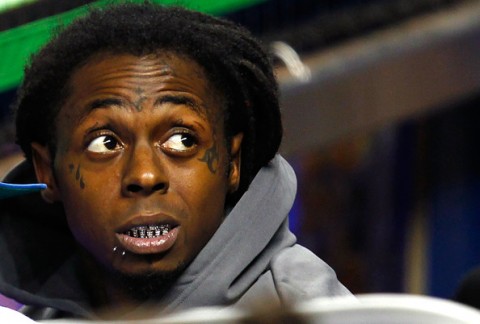
YMCMB rapper opens park in his hometown with help from and pro skateboarders Paul Rodriguez and Theotis Beasley. By Nadeska Alexis Lil Wayne at the opening of Trukstop skate park in New Orleans Photo: AP Photo / Gerald Herbert
Lindsay Lohan is freaking PISSED that Jose Rodriguez claims she drilled him with her car and ” reeked of booze ” at the time, so she’s suing her alleged hit-and-run victim, according to reports. Lindsay was arrested for the hit-and-run last week. Rodriguez claims Lohan hit him with her Porsche SUV outside Manhattan’s Dream Hotel, then drove off. The hotel surveillance video below suggests he exaggerated the claims (at best). Lindsay Lohan Hit-and-Run Video Rodriguez also gave an interview to a reporter claiming Lindsay was slurring and “smelled like alcohol real bad” at the time, but she was at Slash’s concert NOT drinking just 45 minutes earlier. More importantly, police who arrested Lindsay even say alcohol was not involved. The troubled star believes she could lose work if she continues being accused of things she didn’t do (like drive drunk and hit people), so she’s planning on suing Rodriguez for defamation. While lame opportunists undoubtedly have and will continue to target her to score a quick paycheck, the 26-year-old may want to take precautions beforehand, such as hiring a car service. She may not be a drunk driver, but she’s a pretty terrible one.
All we can do is “SMH” at this lady’s ‘fit… Airlines give many reasons for refusing to let you board, but none stir as much debate as this: How you’re dressed. A woman flying from Las Vegas on Southwest this spring says she was confronted by an airline employee for showing too much cleavage. In another recent case, an American Airlines pilot lectured a passenger because her T-shirt bore a four-letter expletive. She was allowed to keep flying after draping a shawl over the shirt. Both women told their stories to sympathetic bloggers, and the debate over what you can wear in the air went viral. It’s not always clear what’s appropriate. Airlines don’t publish dress codes. There are no rules that spell out the highest hemline or the lowest neckline allowed. That can leave passengers guessing how far to push fashion boundaries. Every once in a while the airline says: Not that far. “It’s like any service business. If you run a family restaurant and somebody is swearing, you kindly ask them to leave,” says Kenneth Quinn, an aviation lawyer and former chief counsel at the U.S. Federal Aviation Administration. In short, since airlines and their planes are private property and not a public space like the courthouse steps, crews can tell you what to wear. In the early years of jet travel, passengers dressed up and confrontations over clothing were unimaginable. They’re still rare — there aren’t any precise numbers — but when showdowns happen, they gain more attention as aggrieved passengers complain on the Internet about airline clothing cops. It’s unwelcome publicity for airlines, which already rate near the bottom of all industries when it comes to customer satisfaction. Critics complain that airlines enforce clothing standards inconsistently. The lack of clear rules leaves decisions to the judgment of individual airline employees. Clashes over clothing and other flash points seem to be increasing, says Alexander Anolik, a travel-law attorney in Tiburon, Calif. He blames an unhappy mix of airline employees who feel underpaid and unloved, and passengers who are stressed out and angry over extra fees on everything from checking a bag to scoring an aisle seat. Anolik says that passengers should obey requests from airline employees. If passengers don’t, they could be accused of interfering with a flight crew — a federal crime. He says passengers should wait until they’re off the plane to file complaints with the airline, the U.S. Department of Transportation or in small-claims court. “They have this omnipotent power,” Anolik says of flight crews. “You shouldn’t argue your case while you’re on the airplane. You’re in a no-win scenario — you will be arrested.” Thoughts on this?? Source
Like we told you, Lil Wayne likes paying producers about as much he likes NYC. Two beatsmiths—DJ Infamous and Drew Correa—are suing the New Orleans rapper’s Young Money Entertainment label for unpaid royalties, reports TMZ. Two different producers — Andrews “Drew” Correa and Marcos “Infamous” Rodriguez — filed federal lawsuits this week against Wayne’s label, Young Money Entertainment… Continue
Searching For Sugar Man , which tells the improbable story of how a singer-songwriter named Sixto Rodriguez rose, fell, and found superstardom in what amounts to a parallel universe, is an elegy in several keys. One is clear and familiar: Upon his excited discovery by a noted producer, the music business circa 1969 ate Rodriguez for breakfast, and a talent still acknowledged by his peers went to waste. The second is more personal, and although Swedish director Malik Bendjelloul leaves a distinct and ultimately frustrating berth around the man at the center of his documentary, it becomes poignantly clear that an abbreviated resume and a family to feed didn’t keep Rodriguez from living an artist’s life. And then, perhaps most resonant and abstract, there is the film’s charting of the confluence of circumstances that can create a legend and shape lives – a confluence whose particularities are less and less possible in an information-glutted age. Sugar Man opens with much but fleeting stylistic fanfare. Over a blend of vivid landscapes, a steady-cam tour of bleak and snowy Detroit, moody recreations of key scenes and a neat effect that moves from image to illustration and back, various players (beginning with a Cape Town record-store owner called “Sugar”) recount the film’s heavily fragmented story of a mysterious musician out of Detroit who, South African legend has it, staged “probably the most grotesque suicide in rock history.” Why “South African legend,” you might ask, and the answer is what takes Sugar Man ’s story from sad but common to extraordinary. In many ways that story belongs to the men who stand in for what was apparently a solid chunk of the South African populace in the 1970s, when apartheid was in full swing and the country was under totalitarian rule. A hilarious origin story has an American girl bringing a single Rodriguez album into the country, patient zero-style, with bootlegs and label requests proliferating from there. With sizable cuts from Rodriguez’s two studio albums of Dylan-esque folk rock accompanying them, those men (musicians and music fans) describe how songs like “I Wonder” and “Anti-establishment Blues” sparked something – a glimmer of rebellion, the comfort of fellow feeling – in them. Elsewhere referred to as an “inner city poet,” if Rodriguez’s lyrics lack a certain prosody they are written squarely and straightforwardly in the protest tradition of the time. A grassroots process that had to sidestep censors and a heavily restricted media helped foment a folk hero in the public’s imagination. Rodriguez, we are told, is bigger than Elvis in South Africa, and certainly bigger than the Rolling Stones. His sonorous tenor is sweet but strong and pleasingly clear – somewhere between Cat Stevens and Neil Diamond. Even so, the truth is that, though skilled and even singular, of the songs we hear nothing astonishes or even comes close; a couple sound too dated to be great. But then we’re not supposed to be evaluating his music for signs of greatness, not really. Perhaps under different circumstances, like the ones in South Africa, he might sound different; he would be different. Much discussed is the lack of personal details that fueled the Rodriguez enigma; his mystery was part of what made him great. Bendjelloul upholds that idea, whether he likes it or not, after a rambling exposition of how a couple of amateur Cape Town sleuths finally tracked the very much alive Rodriguez down. Mexican by birth and extremely reticent by nature, Rodriguez is an uneasy interview; we learn more about him just watching his delicate form move down a snow-laden sidewalk like an exotic but flightless, black-coated bird trapped in a crummily ordinary world. Interviews with his three daughters are sweet but a little unsatisfying, and in its final third – which details his triumphant arrival in South Africa and introduction to an adoring audience of twenty thousand – Sugar Man falters. Various threads of the story (including the rather major question of how an estimated half a million records sold resulted in zero royalties) are left to fray. It isn’t clear that the director recognized the most prominent among them: Bendjelloul is enamored not with the deeply organic nature but the novelty of this “instant” success story. And yet Sugar Man is most interesting when it touches on the conditions that combined to draw a cult hero out of some decent music and a generously enabled, imagination-firing mystique. I imagine even the wise and thoughtful Rodriguez himself would insist that more than one man’s third act justice, this is a story about time and a swiftly vanishing context. Follow Michelle Orange on Twitter . Follow Movieline on Twitter .
Director Robert Rodriguez announces the casting in a tweet. By Gil Kaufman Charlie Sheen Photo: Like father, like son. Charlie Sheen could follow pops Martin into the White House in an upcoming big screen role as the president in director Robert Rodriguez’s sequel to his “Grindhouse” action pic, “Machete.” Rodriguez announced the casting on Thursday in a tweet that read , “I just cast Charlie Sheen in #machetekills as the President of the United States! Who better? More soon…” Sheen retweeted the message, which also included a photo of the “Anger Management” actor leaning his arm on Rodriguez’s shoulder. A spokesperson for Sheen confirmed that negotiations are under way to have him join the film, according to the Hollywood Reporter . If Sheen ends up in the movie, he’ll be the second member of his family to take on the role of command-in-chief, following in the footsteps of Martin, who played the fictional President Josiah Bartlet for seven seasons on Aaron Sorkin’s “The West Wing.” The original over-the-top 2010 revenge fantasy starring tattooed badass vigilante Danny Trejo began life as a fake B-movie trailer in Rodriguez and Quentin Tarantino’s 2007 throwback exploitation flick “Grindhouse.” It featured a galaxy of stars, including Robert De Niro, Jessica Alba, Michelle Rodriguez, Cheech Marin and Lindsay Lohan. The sequel will again feature Trejo, Alba and Rodriguez, along with Mel Gibson , Demian Bichir, Amber Heard, Sofia Vergara and Zoe Saldana. Rodriguez announced in a tweet on June 12 that principal photography on the film had begun. The second chapter of a planned trilogy, due out in 2013, finds Machete being recruited by the U.S. government to stop a cartel leader and an arms dealer who have deployed a weapon in space. Related Photos The Highs And Lows Of Charlie Sheen
Celebrities Known For Their Wigs Women loved to get dolled up. Celebrity women, especially. And to avoid having to deal with diffcult hair or to make an interesting statement, they throw on special wigs. Some are just practical and nice. Others are outrageous and attention-slore-y. Whatever, they become pretty popular. Just take a look at the famous wigs of our time.
SMH… Some Latino folk have serious “complexion” issues — and have gone to extremes to keep the kids lightskinned! Just ask Michelle Rodriguez , who recently learned that many of her ancestors wed their first cousins. Michelle Rodriguez Learned Her Ancestors Practiced Incest To Keep The Bloodline Lightskinned “Lost” hottie MICHELLE RODRIGUEZ is the product of kissing cousins! The 33-year-old actress recently learned that her great-great grandparents on her father’s side were first cousins — and that several more of her dad’s relatives practiced inbreeding! “I guess my father’s side loved to do it in the family,” quipped Michelle, who soared to stardom in the 2000 indie hit “Girlfight.” Researchers discovered her family’s incestuous link when Michelle’s genealogical background was explored on the PBS show “Finding Your Roots with Henry Louis Gates, Jr.” she also Learned that three of her great-grandfathers were brothers, and that her father’s Puerto Rican ancestors deliberately married family members in a practice known as endogamy. They inbred in a bid to maintain the family’s lighter skin color because they believed lighter-skinned people were more high class than dark-skinned folks. The “Avatar” actress, who was born in San Antonio, Texas, said that she witnessed the effects of endogamy first-hand as a child when her father’s light-skinned Puerto Rican family looked down on her mother’s darker relatives from the Dominican Republic. Her parents divorced when she was 8, and Michelle — who has several DUI busts under her belt — credits her difficult childhood for her tough-girl image both on and off the screen. “My dad was so clouded and miserable part of the time, so he just hit the bottle hard,” she said. “My mom wasn’t about that stuff.” On the PBS show, the “Machete” star was also stunned to learn that her DNA lineage was 72 percent European, 21 percent black and 6 percent Native American. “I’m appalled,” said Michelle. “I’m European? Ewww! I wanted to be Native American!” As for the news that she’s got a lot of African- American blood, Michelle said: “I need to shoot over there (Africa) and get in touch with my roots.” And commenting on her ancestors’ marital history, the still-single beauty told a pal: “Even though my great-grandparents were first cousins, I don’t think I’ll ever go down that path if I ever get married.” So does this mean Michelle will settle down with a nice brownskinned lady partner when she’s ready? Source
What do a former Real-Housewife-turned-stripper , an ex-Charlie Sheen play thing and someone who had sex with Hugh Hefner have in common? They can all be found at Dial-A-Star! Yes, this new service gives regular folks the chance to speak with Z-listers such as Danielle Staub, Capri Anderson and Crystal Harris on the phone, for as low as $10/minute! According to founder Gina Rodriguez, the celebrities are in charge of their rate and no one is doing better than Staub, who has reportedly raked in $1,000 in an hour. “I think recording artists will do really well,” Rodriguez tells The Huffington Post. “Imagine if Lady Gaga did it.” So, how much are these nobodies bringing in? Tila Tequila asks for $20/minute; Dina Lohan $18/minute; OctoMom $12/minute and Michael Lohan $10/minute. AND PEOPLE ARE PAYING IT!!! Which, of course, forces us to ask: which of these “stars” would you most want to chat with on the phone?