Tag Archives: russia

Biden Tells Leno He Wanted To Send Rush Limbaugh to Russia in Spy Swap

Vice President Joe Biden on Friday told Jay Leno that he wanted to send Rush Limbaugh to Russia as part of last week’s spy swap. As a special guest of the “Tonight Show,” Biden was asked why we traded ten of their spies for four of ours.  “Well, we got back four really good ones,” joked Biden. Leno then showed a picture of Anna Chapman and asked, “Do we have any spies that hot?” Biden stammered, “Let me make it clear, it wasn’t my idea to send her back…I thought maybe they’d take Rush Limbaugh or something” (video follows with transcript and commentary, relevant section at 0:55):  JAY LENO, HOST: I want to ask about this Russian spy swap. We traded ten for four. Now, I know our math skills are not as good as they should be, but that doesn’t seem fair. Why, why did we trade ten for four? VICE PRESIDENT JOE BIDEN: Well, we got back four really good ones. LENO: Yeah. [ Laughter ] BIDEN: And the ten, they’ve been here a long time, but they hadn’t done much. LENO: Are they just sort of like moles, they just sort of plant people here and say, “See what you can find out?” Or do they come with a specific mission, “You’re going to go work for Lockheed” or “You’re going to work for…” BIDEN: The former. LENO: Yeah. Okay. Now, show him, this Russian woman here, let me ask you something. And you would know this, Mr. Vice President. Do we have any spies that hot? [ Laughter ] BIDEN: Let me make it clear, it wasn’t my idea to send her back. [ Laughter ] Wasn’t mine. [ Cheers and applause ] I wanted, anyway. [ Laughter ] I thought maybe they’d take Rush Limbaugh or something. LENO: There you go. BIDEN: You know what I mean? That would have been a good — a good move. This would be a great joke if it didn’t have such underlying truth to it. After all, the way this administration has treated its adversaries in the media, you think they would ship all their detractors to foreign lands if they could. 

Read the original:
Biden Tells Leno He Wanted To Send Rush Limbaugh to Russia in Spy Swap

Ex Russian Spy From Peru to get $2000 a Month for Life

Spy for Russia, get caught, and get paid $2000 a month for life. Some would say that this is not justice served in the face of laughing in the face of National Security. In a rapidly arranged spy swap, the U.S. government agreed Thursday to send Russia 10 agents who had burrowed into American society — two of them in Seattle — and in return won the release of four jailed Russians accused of passing information to the West. The 10 agents, who pleaded guilty Thursday to acting as unregistered foreign agents, were deported hours later. They had endured only a few days in jail since their arrests in the United States last month. In previous cases, spies spent years behind bars before being exchanged. U.S. officials said there was no point in holding the Russian agents, since authorities had monitored their activities for years and had unraveled their network. Obama administration officials said they had been eager to win the release of the four Russians, some of whom had spent long stretches in prison and were in poor health. The deal was expected to remove an irritant from the U.S.-Russian relationship, which has improved markedly under the Obama administration. But one senior administration official, speaking on condition of anonymity, acknowledged that “vestiges of an old Russia” were evident in the case. “Frankly, that's why we were as aggressive in rolling up this operation as we were,” the official said. Peruvian-born Vicky Pelaez, the only non-Russian among the agents, began crying after she saw a loved one among the onlookers. Anna Chapman, the Russian diplomat's daughter whose photos have become an Internet sensation, played with her red hair. Most of the others were stony-faced. Pelaez's attorney, John Rodriguez, said a private plane had been expected to take the 10 to Russia. He said his client had been given only 24 hours to say yes or no to the “all or nothing” deal for deportation. He said in court that the Russian government had promised Pelaez $2,000 a month for life, housing and documents to allow her children to visit Russia and have all their expenses paid. She decided to go home to her native Peru instead. Peru's foreign minister, Jose Antonio Garcia, said Pelaez had committed no crime in her homeland and would be “received like any other Peruvian citizen.” http://1.bp.blogspot.com/_Gl2yhEUbdg8/Sm-clhCBaWI/AAAAAAAAGlo/SWO2V_FeOkY/s400/d… added by: jubal

One Year After Ontario Ban: Over 80% Decline of Most Common Pesticides in Surface Waters

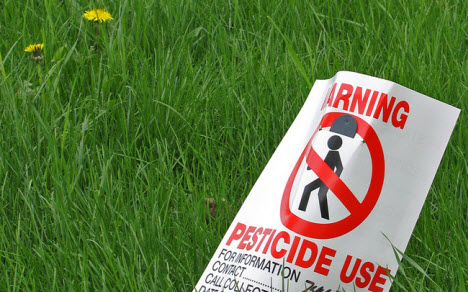
Image: Greencolander, Flickr In April 2009, it became illegal to sell or apply pesticides for cosmetic lawncare in Ontario, Canada. It seems like a no-brainer risk versus benefits analysis: the benefit is …hmmm, just cosmetic…while the risks are real, documented, and pervasive. But somehow the allure of a green, weed-free lawn keeps conquering rationality. A year later, does the preliminary data on the effectiveness of Ontario’s cosmetic pes… Read the full story on TreeHugger

Read the original post:
One Year After Ontario Ban: Over 80% Decline of Most Common Pesticides in Surface Waters

What’s Lurking in Your Shampoo Bottle?

Image credit: Good Most shampoo consists of about 50 percent water. What’s in the other 50 percent or so, however, might surprise you: surfactants, actives, preservatives, color, and fragrance all play a role. Knowing exactly what these ingredients are—and what they do to hair and health—is important when talking about a product most people use several times a week—if not every day…. Read the full story on TreeHugger

The rest is here:
What’s Lurking in Your Shampoo Bottle?

Russia Creates Nature Reserves the Size of Switzerland!

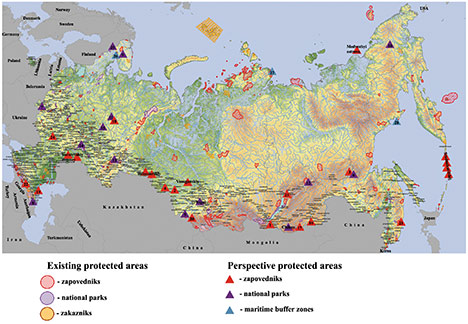
Image: WWF 3% of Russian to be National Parks by 2020 Some good news out of Russia, a country that hasn’t always been very good at protecting its ecosystems. The Russian government is establishing 9 new nature reserves and 13 national parks covering a total area of over 3.8 million hectare by 2020. It’s also introducing marine buffer zones of over 1 million hectare. To get an idea of the scale, this is almost the size of Switzerland!… Read the full story on TreeHugger

View original post here:
Russia Creates Nature Reserves the Size of Switzerland!

The Facebook Adventures of Accused Russian Spy Mikhail Semenko [Exclusive]

Accused spy Anna Chapman wasn’t the only suspected Russian agent on Facebook . A tipster with access to co-defendant Mikhail Semenko ‘s Facebook photos sent us some of his pictures. Want to see an alleged spy in a Bill Clinton costume? More

Obama jokes that Twitter could replace Cold War-era red phone…

Washington (CNN) — Now that the leaders of Russia and the United States have Twitter accounts, perhaps communications can move past Cold War-era technology, President Barack Obama joked Thursday. At a joint news conference with visiting Russian President Dmitry Medvedev, Obama noted that his counterpart set up a Twitter account this week during a visit to Twitter Inc. in California. “I have one also, so we may be able to throw away those red phones that have been sitting around for so long,” Obama said to laughter. The red phone is an icon of the Cold War that was first established after the Cuban Missile Crisis. It served as a direct line between the White House and the Kremlin in the event of a nuclear confrontation that required immediate consultation. added by: eden49

Ten Stories In The News That The BP Oil Spill Is Overshadowing

Corporate media does it’s best to keep you uninformed… The mainstream media is running a 24 hour news cycle focusing purely on the BP oil spill, a disaster, as we have shown, that is being intentionally hyped in order to sell cap and trade legislation and moves to nationalize big business. In the wake of this, big important news stories are being overlooked. Here are just some of the stories, in no particular order, that you should be hearing on the nightly news, but of course, are not. 1. Israeli nuclear submarines positioned close to Iran: Three German-built Israeli submarines equipped with nuclear cruise missiles are to be deployed in the Gulf near the Iranian coastline. The first has been sent in response to Israeli fears that ballistic missiles developed by Iran, Syria and Hezbollah, a political and military organisation in Lebanon, could hit sites in Israel, including air bases and missile launchers. The submarines of Flotilla 7 — Dolphin, Tekuma and Leviathan — have visited the Gulf before. But the decision has now been taken to ensure a permanent presence of at least one of the vessels. ** 2. Iran war propaganda: US intelligence has shown Iran could launch an attack against Europe with “scores or hundreds” of missiles, prompting major changes to US missile defenses, Pentagon chief Robert Gates said on Thursday. The anti-Iran rhetoric has amplified following the revelation that many Bilderberg members, including Zbigniew Brzezinski, are now in favor of U.S. air strikes on Iran and are “leaning towards war,”. “Some of them in Europe are saying no we shouldn’t do it but most of them are in favor of American air strikes on Iran,” Bilderberg sluth Jim Tucker relayed from the recent meeting in Spain. “They’re tilting heavily towards green lighting a U.S. attack on Iran.” ** 3. The continuing economic slide: The greatest bankster heist in history and the looming greatest depression rumbles on. Gold has hit record highs as the dollar slumps and the Euro continues to face complete collapse. Unemployment figures in the U.S. are through the roof and U.S. consumer prices posted their largest fall in nearly 1-1/2 years in May. Rumours in Europe persist regarding an impending bailout for spain, while Russia says it is ready to found a “new economic world order“. ** 4. FCC ready to restrict the Internet: The federal government would have “absolute power” to shut down the Internet under the terms of a new US Senate bill being pushed by Joe Lieberman, legislation which would hand President Obama a figurative “kill switch” to seize control of the world wide web in response to a Homeland Security directive. Lieberman has been pushing for government regulation of the Internet for years under the guise of cybersecurity, but this new bill goes even further in handing emergency powers over to the feds which could be used to silence free speech under the pretext of a national emergency. 5. Obama/Blagojevich story As the Blagojevich trial continues and important details emerge, linking Obama to possible political corruption, Federal prosecutors are seeking a gag order to keep the ex-Governor and his lawyers from making public comments. ** 6. UN small arms treaty Secretary of State Hillary Clinton recently announced that the Obama Administration would be working hand in glove with the U.N. to pass a new “Small Arms Treaty.” Congressman Paul Broun warns that, “With willing one-world accomplices in Washington, D.C., gun-grabbers around the globe believe they have it made.” Broun characterizes the U.N.’s Small Arms Treaty as “nothing more than a massive, GLOBAL gun control scheme.” The treaty would force national governments to acquiesce to a global gun registry, while strengthening licensing procedures so as to make it almost impossible for a citizen to legally purchase a gun. It would also ban the private sale of semi-automatic weapons and ultimately lead to the confiscation and destruction of all “unauthorized” firearms owned by citizens. By encapsulating the gun grab within a treaty, the Obama administration could claim that no Senate approval is needed to authorize any such move against the right to bear arms – although whether a treaty trumps the Constitution is a very murky area of debate. ** 7. Mexicans riot in LA/Land given over to Mexico Violent scenes following the LA Lakers’ championship-clinching win over the Boston Celtics in the NBA finals saw angry mobs smashing their way through the streets waving Mexican flags as they went. Meanwhile, a massive stretch of Arizona has become effectively off limits to Americans, Prompting questions over whether the Obama administration is giving a major strip of the south-west back to Mexico. ** 8. Obama Plans To Sneak Through Carbon Tax By Stealth President Obama is planning to sneak through his job-killing, economy wrecking carbon tax by stealth according to the Washington Post, by passing a weakened bill and then adding in cap and trade provisions after the heat is off following the November elections. Described as the “lame duck climate strategy,” Obama is planning to secure enough votes in the Senate to pass a weakened energy bill and then drag out the conference long enough to ensure the stronger provisions contained in the original House version are added “after lawmakers have faced voters in November, thereby cushioning the vote’s political impact.” ** 9. Afghanistan Mineral Riches Story Is War Propaganda News that the U.S. has suddenly discovered $1 trillion-worth of mineral deposits in Afghanistan, and descriptions of the bounty as a “game changer” by the corporate media, represent nothing more than crude war propaganda designed to reinvigorate public support for a failing and ever more pointless occupation. The “newly discovered” riches have been known about since the 1970s and further revelations indicate that the Pentagon report cited by the New York Times as their source for the story did not even mention the untapped mineral deposits in Afghanistan. ** 10. Free Speech Gag Bill Moving in House H.R. 5175, The so-called DISCLOSE Act would severely limit the ability of political groups to communicate to their members and the general public. Politico reports that , the NRA bargained for an exemption for itself and other large, established groups while trampling the rights of private citizens, new political groups, like Ron Paul’s Campaign for Liberty, and other small organizations. As John Bresnahan reports, “The proposal would exempt organizations that have more than 1 million members, have been in existence for more than 10 years, have members in all 50 states and raise 15 percent or less of their funds from corporations… The NRA, with 4 million members, will not actively oppose the DISCLOSE Act, according to Democratic sources.” added by: im1mjrpain

Welcome to Hershey, Cuba

Hershey first visited Cuba in January 1916. It is said that he fell in love with the country at first sight. It was a country of eternal spring, where the inhabitants found it hot if the temperature went up over eighty degrees and cold if it dropped to seventy. Hershey was excited by the immense sugar plantations in Cuba. In 1916 the world was embroiled in the first great war and sugar, essential to milk chocolate production, was in short supply. During his first visit to Cuba, Milton Hershey decided to purchase sugar plantations and mills so that he could mill and refine his own sugar for use in his Hershey chocolate factory. True to style, once he had made the decision, Milton Hershey moved rapidly to carry it out. Within a few weeks of his arrival in Cuba, he had explored the country for sixty miles east of Havana, bought a small sugar mill, Central San Juan Bautista, (central is the Cuban term for a sugar mill and its surrounding town) selected the site on which to build a larger mill, and started to build a railroad to service it. When he returned home to Hershey, Pennsylvania in early April, the Cuban enterprise was already well under way. The flagship of Hershey's Cuban holdings would be a new mill and town, Central Hershey, located near Santa Cruz. To provide for his workers at Central Hershey, Mr. Hershey constructed a town or “batey.” In addition to comfortable homes for rent, there was good health care, a free public school, recreational facilities including a baseball diamond, golf course and sport club, and a general store. As in Hershey, Pennsylvania, the railroad permitted employees to choose where they would live. Hershey's presence and manner of doing business in Cuba were in sharp contrast to most foreign businessmen who exploited the country and its people and took their profits home with them. Cuba praised and honored Milton Hershey with many awards including the highest honor that the country could bestow: The Grand Cross of the National Order of the Carlos Manuel de Cespedes. Hershey's Cuban holdings were sold in 1946 to the Cuban Atlantic Sugar Company. At the time of the sale the operations included 60,000 acres of land, 5 raw sugar mills, a peanut oil plant, a henequen plant, 4 electric plants, and 251 miles of railroad track with sufficient locomotives and cars. _____________________________________________________________________________ Fast forward to 2002: Why are you taking pictures?” a local woman asks me in Spanish. “There’s no history here.” Five minutes later, a young man walks up and says: “Cuba is a museum.” Such are the ironies of this small town near Havana, officially known as Camilo Cienfuegos, unofficially referred to by its original name, Hershey. In 1917 Milton Hershey built a mill here to process sugar cane for his chocolate factory in Pennsylvania. Around the mill, he built a town featuring American-style bungalows and sprawling fieldstone mansions. There was a golf course, a cinema and a hotel. Six years later, the Hershey Electric Train journeyed from Havana to Matanzas, stopping in the town of Hershey. Fast forward to the present: I wait, with a growing crowd of Cubans at the train stop outside Guanabo, in the countryside just east of Havana. We’re surrounded by towering royal palms and a distant ridge of hills. Every few minutes a beat-up car putts past, or a horse and buggy, or a clunker bicycle. The Electric Train pulls up only half an hour late. Rust has turned its roof reddish brown. On top is a transformer that looks older than electricity. Four bent poles reach for the sagging cables that miraculously manage to deliver power to the engine. Slowly, we sway through miles of overgrown fields, some seats swaying considerably more than others. I feel like I’m inside the skeleton of a double-jointed contortionist. We stop in one-shack hamlets to pick up peasants dressed in their business best for a trip to the city of Matanzas. Several riders get off with me at the clay-roof Hershey station. The first thing I notice is the mill, now a jumble of twisted frames and patchy sheet metal. Fidel Castro’s government took it over after the 1959 revolution and sold sugar to the Soviet Union. In the 1990s, when the Cuba’s Russian lifeline fell away, there were few markets and fewer spare parts to keep the industry afloat. Efficiency went down and sugar prices dropped. In 2002 Cuba shut down half its sugar mills, including this one. Hershey became a one-industry town without an industry, hollow at the core. Today, the mill is still being dismantled. Ancient Russian trucks rumble around the un-building site, preparing to ship any useable parts to other functioning mills. Behind many homes I see storage sheds made of scrap metal. Cheerful billboards pop up all over town, with messages like, “The Electric Railway will be rejuvenated,” “Sports are the right of the people” and “This revolution was made with the humble, for the humble, and by the humble,” a quote from Camilo Cienfuegos, a comandante who played a major role in the overthrow of Batista. The paint is peeling on the tiny bungalows surrounding the mill, but they still look like they were transplanted directly from the post-war suburbs of America. Each has its own porch and wee lawn outlined in pebbles. I feel like I’m in a Communist Pleasantville, twice-frozen in time, evoking two opposing dreams. I meet one believer, the man who described Cuba as a museum. He’s a mechanic in one of the post-mill industries, fixing ailing trains dragged here at all hours from all over Havana Province. His workshop could pass for a museum, crammed with turn-of-the-century trains from Russia, Romania, the U.S., France and Spain. He poses for a photo beside a massive cast-iron funnel spray-painted green. The letters embossed on its surface read, “New Doty Mfg Co, Janesville, Wis.” “I love my job!” he exclaims. “I love trains! I love Che!” I believe him, even though his boss is standing right there. I keep believing when I see what the other laid-off mill workers are doing. Many have gone back to school, continuing to receive their government salaries. One man repairs umbrellas on the front porch of a house. Others work on an organic farm in the middle of town, where I buy two shining eggplants for one Cuban Peso. My optimism deflates in a dingy snack bar near the train station, when I bite into my long-awaited sandwich. A closer examination reveals a mystery meat like bologna decorated with large chunks of fat. Poor fuel for a revolution. I can’t wait to get back to Guanabo and cook my eggplants. As the vegetables sizzle on the frying pan, my host asks me why I spent the whole afternoon in such an obscure place with no tourist attractions. My answer comes in pieces. It was the surrealism, the wild juxtapositions, the way the town made me believe, if only for a moment, against all odds. _____________________________________________________________________________ In the video, see the old timers of Hershey, Cuba reminisce about the past. Not everywhere does the future signal progress. In some places it means regression. Welcome to Hershey, Cuba and to the story of hundreds of towns across Cuba. [See pictures of the town of Hershey I added on the comments section, as it was before the Revolution] Check it out folks. The film is called “Model Town”… added by: UrbanGypsy

Alternative World Cup awards

A South African fan with a fake World Cup and the infamous vuvuzela. Photo: AFP By the time you read this with your Sunday morning cornflakes, the World Cup will be well underway.

Continue reading here:
Alternative World Cup awards