Tag Archives: swiss

The Girl From Nowhere Takes Top Locarno Film Festival Honors

French film The Girl From Nowhere took top honors at the 65th Locarno Film Festival over the weekend, winning the Swiss festival’s to Golden Leopard (Pardo d’oro) prize, while Ying Liang won Best Director for When Night Falls . American director Bob Byington’s Somebody Up There Likes Me won the second prize at the event. The Girl From Nowhere centers on Michel, a retired math teacher who has lived alone since his wife’s death and occupies his time writing an essay about the beliefs that shape daily life. One day he comes across Dora, a young homeless woman, who shows up injured on his doorstep, and puts her up until she recovers. Her presence brings something new to Michel’s life, but gradually the apartment becomes the site of mysterious happenings. The winners follow with information provided by the Locarno Film Festival (Film descriptions can be found at Locarno’s website ) : Concorso internazionale Pardo d’oro 
 La Fille de Nulle Part (The Girl From Nowhere) by Jean-Claude Brisseau, France Premio speciale della giuria 
 Somebody Up There Likes Me by Bob Byington, United States Pardo per la migliore regia (Best Director)
 Ying Liang for the film Wo Hai You Hua Yao Shuo (When Night Falls), South Korea/China Pardo per la miglior interpretazione femminile (Best Actress) 
 An Nai for the film Wo Hai You Hua Yao Shuo (When Night Falls) by Ying Liang, South Korea/China Pardo per la miglior interpretazione maschile (Best Actor) 
Walter Saabel for the film Der Glanz Des Tages (The Shine of Day) by Tizza Covi and Rainer Frimmel, Austria Special mention
 to the extraordinary character Candy from the film A Ultima Vez Que vi Macau due to her powerful presence through absence which resonated for the Jury as representing the immense courage of Portuguese cinema in times when the failures of government and social systems threaten the cinematic arts worldwide.   Concorso Cineasti del presente Pardo d’oro Cineasti del presente – Premio George Foundation 
 Inori by Pedro González-Rubio, Japan Premio per il miglior regista emergente (Best Director) 
Joel Potrykus for the film Ape United States Premio speciale della giuria Ciné+ Cineasti del presente 
 Not In Tel Aviv by Nony Geffen, Israel Special Mention
 Tectonics by Peter Bo Rappmund, United States   Opera Prima Pardo per la migliore opera prima (Best First Feature) 
 Ji Yi Wang Zhe Wo (Memories Look At Me) by SONG Fang, China Special Mention
 Ape by Joel Potrykus, United States   Pardi di domani Concorso internazionale Pardino d’oro for the Best International Short Film
 The Mass of Men by Gabriel Gauchet, United Kingdom Pardino d’argento 
 Yaderni Wydhody (Nuclear Waste) by Myroslav Slaboshpytskiy, Ukraine Special Mention
 Los Retratos (Portraits) by Iván D. Gaona, Colombia Locarno short film nominee for the European Film Awards – Premio Pianific
 Back of Beyond by Michael Lennox, United Kingdom The Film und Video Untertitelung Prize
 O Que Arde Cura (As the Flames Rose) ba João Rui Guerra da Mata, Portugal Concorso nazionale Pardino d’oro for the Best Swiss Short Film 
 Radio Active (Radio-active) by Nathan Hofstetter, Switzerland Pardino d’argento 
 L’Amour Begue (Stammering Love) by Jan Czarlewski, Switzerland Premio Action Light for the Best Swiss Newcomer
 Il Vulcano (The Volcano) by Alice Riva, Switzerland   Piazza Grande Prix du Public UBS 
 Lore by Cate Shortland, Germany/Australia/ United Kingdom Variety Piazza Grande Award
 Camille Redouble by Noémie Lvovsky, France

Read the original:
The Girl From Nowhere Takes Top Locarno Film Festival Honors
Michel Morganella, Swiss Soccer Player, Booted from Olympics Due to Racist Tweet

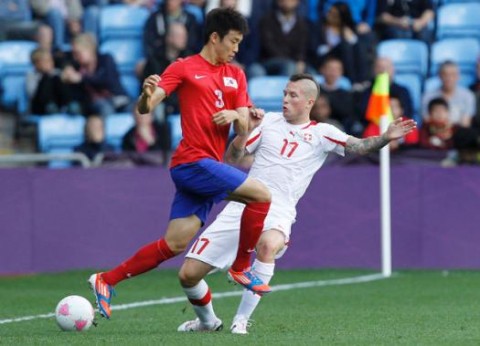
Michel Morganella has become the second Olympic athlete sent home from the Summer Olympics due to an offense message on Twitter. Two days before the Games even started, Voula Papachristou of Greece was given the boot after disrespecting African-Americans in a joke about West Nile mosquitoes. Now Morganella – a member of the Swiss soccer team – has suffered the same fate after a defeat to South Korea resulted in a Tweet that included references to wanting to “punch” and “burn” the victors from that nation. “As a member of the Swiss Olympic mission he gravely discriminated, insulted and violated the dignity of the South Korean football team and the South Korean people,” Swiss team chief Gian Gilli told reporters. “As a consequence of this behavior Michel Morganella, having conferred with the Swiss Football Association, is immediately stripped of his Olympic accreditation and all future participation in the Olympic tournament.” Morganella subsequently took responsibility for his actions, saying: “I made a huge mistake after the disappointing result. I wish to apologize to the people in South Korea and their team, but also to the Swiss delegation and Swiss football in general. I obviously accept the consequences for my actions.” The Swiss are third in Group B and play Mexico on Wednesday in their next match.

The rest is here:
Michel Morganella, Swiss Soccer Player, Booted from Olympics Due to Racist Tweet

Ai Weiwei: Never Sorry (And the World’s Most Important Artist) Under the Lens

Chinese artist Ai Weiwei lead ArtReview magazine’s list of the 100 most powerful artists in the world last October. The Beijing-based artist, photographer, documentarian, architect, activist, dissident, avid-Tweeter and charismatic father made a splash on the international scene when he helped Swiss architectural firm Herzog & de Meuron design Beijing’s National Stadium – more commonly known as the Bird’s Nest due to its design – which served as both corner stone and bragging material for the Beijing Olympics by the government. While immensely proud of the project, Mr. Ai denounced the regime and famously criticized officials for its treatment of dissenters and its human rights record in the lead-up to the event. Freelance journalist Alison Klayman met the artist through her roommate in 2008 by chance as he prepped an exhibition of photos he took while living in New York in the ’80s and early ’90s. Initially commissioned to do a short video on the fly, Klayman, who lived in China from 2006 – 2010 producing shows for PBS Frontline , National Public Radio and A.P. took on a larger doc about Ai Weiwei. In the film, Ai Weiwei: Never Sorry which will be released this weekend via IFC Films, she captured him being assaulted by police, confronting police, promoting his view of human rights and traveling to acclaim overseas. But it’s his political activism that has brought him both fame and danger at home. Authorities have “minders” in unmarked cars outside his home and studio in the Chinese capital as well as cameras pointed at his compound, which is filled with his beloved cats where he lives with his wife. The film also delves into his personal life and reveals the backstory about his very young son and his passion for Twitter and the internet. The latter were surprises for Klayman as she edited the film, which debuted earlier this year at the Sundance Film Festival – an event Ai Weiwei did not attend, likely due to restrictions he now lives under following an 81 day detention by authorities. ML spoke with Klayman last week about her film and spending time in the glare of Ai Weiwei’s spotlight. How did it work out that you came into contact with Ai Weiwei in Beijing and get him to work with you on this documentary? Yeah. The the answer to that pretty much answers like a whole host of questions like, ‘how did you hear of him and how did you get a chance and the access and all that stuff.’ I was already living in China.  I went there after school and I was there for two years already.  My roommate was curating a show for him at a gallery… So you speak Mandarin? By 2008, I did. In 2006 I went with a few sentences that I could use upon arrival.  I worked really hard.  I had a lot of jobs, which I saw all as vehicles for adventure and also on the job language-learning.   By 2008 I was waiting to get a press credential which was coming through and my roommate was working on an exhibition of Ai Weiwei’s for a local gallery.  It was his New York photographs – all the black and white. There were 10,000 of them and I would look through them at the kitchen table because she’d bring her work home and she’d tell me about it.  So that’s really how I even first heard of him. I didn’t know about him before I went to China or anything like that.  And she asked me if I wanted to do a video for the exhibition – just do one of those things that plays in the lobby on loop.  I was really excited to try my hand.  I wanted to do more video film documentary, and so the first time I met Ai Weiwei it was just like, “Here’s Alison.  She’s here to do a video for the show.” So I came with the gallery team and they introduced me. There was never a transition from like being a random person to being the person who films him.  It was just ‘this is Alison, she’s here to film you’ and, you know, it really – even in those first few weeks—his personality totally won me over and made me curious.  I wanted to know about him.  I felt like he could absolutely carry a longer piece than this kind of 20-minute thing.  I just felt like to do a character portrait of him would really not only be entertaining but also it would illuminate something about a side of contemporary China that I felt like I was just encountering for the first time through him.   Our conversations were already [developing] about his blog and censorship and the upcoming earthquake campaign.  All stuff that just wasn’t going to fit in the video about New York photographs.  So I was definitely feeling that at least I needed to follow up with this guy and he liked the video that I did for the exhibition.  So that was also a good way to keep moving forward. So when you decided to continue going forward, were there any boundaries that you had set as far as what areas of his life you could explore, because you’re following him in his home, not just when he’s out traveling and being the public persona of Ai Weiwei. Totally true.  I mean, in terms of my working style, I feel like I push, but I’m not pushy in the sense that he would sometimes chastise me. He’d be like, “Why do you always ask?  You’re always so polite.  Just do it.”  But filming in his home is a really good point. At one point, I [spoke to] his wife about the fact I was coming around a lot and asked her, “I recognize that this is your home and there really aren’t any separations here so please tell me if you ever like – if I’m doing something you don’t like, or if you ever want me to turn off the camera.”  And she was really sweet.  She was like, “Oh, it’s totally fine.  You can film me doing anything, but I don’t want to do it a sit down interview.  That really freaks me out.”  She has a very different personality than him in terms of media savvy and kind of playing with it.   So actually much, much later I asked her for an interview, but on the whole I just felt like with him you certainly should never be embarrassed to ask.  And through asking there were usually no boundaries, except his kind of private life in terms of his son.  When he was first born, he said, “Oh, you should meet him.  He’s the smartest baby in the world.”  He was already the proudest dad ever.  He said, “You know, so you want to come meet him?”  I said, “Yeah, can I bring my camera?”  And then he’s like, “Come on, no.  That’s a baby.”  And really it wasn’t a complicated situation. I found some boundaries, so I guess he had to get a little older before he kind of felt comfortable [with shooting him].” And it was interesting.  I mean, we’ll get more into his activism side in a moment, but it was interesting though that the backstory behind his son actually came out while you were filming Ai Weiwei doing separate interviews with various press. There were two. The first one was in Beijing with the New Yorker correspondent, and then the second one was the BBC guy at the Tate Modern. For me to sit down and ask him about something that he knew I already knew the answer to was not really going to work.  I feel like he does enough interviews a day that he doesn’t need to talk if he doesn’t want to talk.  So I felt like [filming him doing a separate interview about his son] was probably going to be the only way for him to explain it and I think it’s really instructive to see how he deals with different people as well. Ai Weiwei has been called “the most powerful artist in the world today,” and certainly if not the most famous living artist, then definitely in the very top tier.  After your time with him, what is your take on his approach to art, political activism and how he connects the two? Well, if there’s a question whether they are related, I would say yes. For me, the artist side is trying to be as relevant and engaged and fostering more conversations.  To me, that’s definitely the most interesting.  I think how you feel about his artwork and museum [exhibitions] is up to people’s taste.  I personally really like so many of his works because I think that they actually don’t say something specific. I think they are kind of really hard to read and complicated and they leave a lot of room for you to say what the meaning possibly is. When he gives an interview or posts a Tweet, he’s pretty direct about his criticisms and what he says he thinks.  So it’s all about his artistic practice and it’s kind of in its entirety. And he does have all these different ways of speaking – whether it’s in a populous way or in a fine art way.   I think from the beginning I was definitely told that he was a very famous artist, and not being from the art world, I just had to take people’s word for that.  When I went to his show in Munich I think that was really the first time when I really appreciated that this guy is really, really famous.  He has a very big audience and following in Germany, but I mostly saw him in the context of Beijing.  So that was my first exposure to how the art world treats him. Then there’s also the news world.  He was one of the few prominent people who would actually tell you what they thought on the record when you needed a more critical voice.  In a way, I felt like I was doing something about someone who was kind of over exposed but still room to do something that had more quality and substance. I was so focused on that, that I didn’t know what the movie was like, but I just I needed to be filming as much as possible in all these different parts of his life and stay really open and not draw conclusions on a lot of questions until I was in post-production.   For example, I heard him for years talking about the internet, which was always the subject he would turn to in interviews.  I feel sometimes I was like rolling my eyes in my head maybe a little bit.  I didn’t think I was making a movie about the power of the internet because I hadn’t really examined it that much.  When I went back and thought about the meaning of his life’s work and progress, and also what’s going on with the realities of contemporary China, and the world – and all this pre-dated the Arab Spring and WikiLeaks and all this stuff –  suddenly I was like, “No, this is totally on point.”  I don’t think I got it at first. It was interesting to learn he had lived in New York for ten years. And he had already at least participated in some protests against the regime in China while living here – of course with comparatively much less fanfare than his protests and criticisms since returning to China. But I nevertheless found it curious that he was still asked and participated in the design of the Bird’s Nest stadium for the Beijing Olympics. The thing with the Olympics is it always gets short-handed that he was asked but that wasn’t actually how it happened.  I tried as much as I could to make this clear in the film, because the film doesn’t say he was asked but maybe it’s not fully clear enough how it happened.  The Swiss architectural firm Herzong & de Meuron wanted to do more projects in China and they were introduced to Weiwei by a former Swiss ambassador and a really big collector.  

See the original post here:
Ai Weiwei: Never Sorry (And the World’s Most Important Artist) Under the Lens

Locarno Film Festival Unveils World and International Premieres for Competition

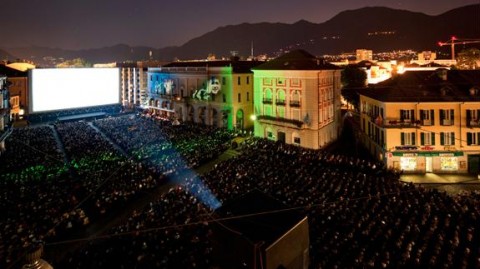
The Locarno Film Festival is one of the world’s oldest. The Swiss lake-side summer event regularly attract thousands including U.S. filmmakers during its ten-day run. The fest has raised its profile in recent years and this year the event will feature 19 films screening as international or world premieres competing for the event’s top “Pardo d’oro” grand prize. U.S. entries include Jack and Diane , Compliance , Museum Hours , Somebody Up There Likes Me and Museum Hours . The festival will open with the world premiere of Nick Love’s The Sweeney August 1st The festival also has a nightly out of competition “Piazza Grande” lineup of films, which are screened outside on the (you guessed it…) Piazza Grande against the backdrop of the city’s picturesque lake. The competition and Piazza Grande lineups follow. The lineup in the festival’s other sections can be found on their website (http://www.pardolive.ch/en/Pardo-Live/today-at-the-festival.html;jsessionid=A6B115468942A214FBD6F7D199332475). Locarno runs August 1 – 11. Competition – A jury will choose one of the 19 competing fiction or documentary features, which are screening as world or international premieres, to win the festival’s top prize: the Pardo d’oro. A Última Vez Que Vi Macao (The Last Time I Saw Macao) by João Pedro Rodrigues and João Rui Guerra da Mata
 Portugal/France – 2012 – 85 min 
with João Pedro Rodrigues, João Rui Guerra da Mata, Cindy Crash 
World Premiere

 Berberian Sound Studio by Peter Strickland
 United Kingdom/Germany/Australia – 2012 – 89 min 
with Tobey Jones, Tonia Sotiropoulou, Susanna Cappellaro, Cosimo Fusco 
International Premiere

 Compliance by Craig Zobel
United States – 2012 – 90 min
 with Ann Dowd, Matt Servito, Dreama Walker, Pat Healy, Phillipp Ettinger – 
International Premiere

 Der Glanz Des Tages (The Shine of Day) by Tizza Covi and Rainer Frimmel
Austria – 2012 – 90 min 
with Philipp Hochmair, Walter Saabel 
World Premiere

 Image Problem by Simon Baumann and Andreas Pfiffner             Switzerland – 2012 – 92 min 
Documentary
 First Feature – World Premiere

 Jack and Diane by Bradley Rust Gray 
United States – 2011 – 106 min 
with Juno Temple, Riley Keough, Cara Seymour, Kylie Minougue – 
International Premiere                La Fille De Nulle Part (The Girl from Nowhere) by Jean-Claude Brisseau
France – 2012 – 91 min
 with Jean-Claude Brisseau, Virginie Legeay 
World Premiere

 Leviathan by Lucien Castaing-Taylor and Verena Paravel
 United Kingdom/United States/France – 2012 – 83 min
 Documentary 
- World Premiere

 Los Mejores Temas (Greatest Hits) by Nicolás Pereda Mexico/Canada/Netherlands – 2012 – 102 min
Production: Interior13 Cine – World Premiere

 Mobile Home by François Pirot
Belgium/Luxembourg – 2012 – 95 min 
with Arthur Dupond, Guillaume Gouix, Jackie Berroyer, Jean-Paul Bonnair, Eugénie Anselin 
First Feature – World Premiere 

 Museum Hours by Jem Cohen
Austria/United States – 2012 – 107 min
 with Mary Margaret O’Hara, Bobby Sommer, Ela Piplits – 
World Premiere 

 Padroni Di Casa (The Landlords) by Edoardo Gabbriellini
 Italy – 2012 – 90 min
 with Valerio Mastandrea, Elio Germano, Gianni Morandi, Valeria Bruni Tedeschi – 
World Premiere

 Playback by Sho Miyake
Japan – 2012 – 113 min 
with Jun Murakami, Kiyohiko Shibukava, Masaki Miura, Makiko Watanabe
 First Feature – World Premiere

 Polvo by Julio Hernández Cordón
 Guatemala/Spain/Chile/Germany – 2012 – 80 min 
with Agustin Ortíz Pérez, Eduardo Spiegeler, Alejandra Estrada, María Telón Soc – 
World Premiere                                                 
 Somebody Up There Likes Me by Bob Byington
 United States – 2011 – 76 min
 with Keith Poulson, Nick Offerman, Jess Weixler, Stephanie Hunt, Marshall Bell – International Premiere 

 Starlet by Sean Baker 
United States – 2012  – 104 min
 with Dree Hemingway, Besedka Johnson, Stella Maeve, James Ransone, Karren Karagulian – International Premiere

 The End of Time by Peter Mettler
 Switzerland/Canada – 2012 – 109 min
Documentary – 
World Premiere 

 Une Estonlenne a Paris by Ilmar Raag
 France/Estonia/Belgium – 2012 – 94 min
with Jeanne Moreau, Ita Ever, Fabrice Colson, Laine Mägi – 
World Premiere

 Wo Hai You Hua Yao Shuo (When Night Falls) by Ying Liang
 South Korea – 2012 – 70 min
 with Nai An, Kate Wen, Sun Ming – 
International Premiere The Piazza Grande – which seats up to 8,000 viewers a night, is both the heart of the festival and its showcase. Bachelorette by Leslye Headland 
United States – 2011 – 91 min 
with Lizzy Caplan, Kirsten Dunst, Isla Fisher, James Marsden
 – International Premiere

 Bonjour Tristesse by Otto Preminger 
United States – 1958 – 94 min
 with Deborah Kerr, David Niven, Jane Seberg, Mylène Demongeot, Geoffrey Horne
Retrospettiva Otto Preminger

 Camille Redouble by Noémie Lvovsky
 France – 2012 – 115 min 
with Noémie Lvovsky, Samir Guesmi, Yolande Moreau, Michel Vuillermoz
 – International Premiere

 Das Missenmassaker (The Swiss Miss Massacre) by Michael Steiner Switzerland – 2012 – 95 min
 with Meryl Valerie, Lisa Maria Bärenbold, Patrick Rapold, Mike Müller, Martin Rapold, Nadine Vinzens – 
World Premiere

 Lore by Cate Shortland
 Germany/Australia/United Kingdom – 2012 – 110 min 
with Saskia Rosendahl, Kai Malina, Nele Trebs, Ursina Lardi
 – International Premiere 

 Magic Mike by Steven Soderbergh 
United States – 2012 – 110 min 
with Channing Tatum, Matthew McConaughey, Olivia Munn, Alex Pettyfer

 More Than Honey by Markus Imhoof
 Switzerland/Germany/Austria – 2012 – 91 min
Documentary – 
World Premiere – Closing Film 

 Motorway by Soi Cheang 
Hong Kong – 2012 – 90 min 
with Anthony WONG, Shawn YUE, GUO Xiaodong  
European Premiere – Pardo alla carriera Johnnie To

 Nachtlarm (Lullaby Ride) by Christoph Schaub
 Switzerland/Germany – 2012 – 94 min
 with Alexandra Maria Lara, Sebastian Blomberg, Georg Friedrich – 
World Premiere

 No by Pablo Larraín 
Chile/United States/Mexico – 2012 – 110 min 
with Gael Garcia Bernal, Alfredo Castro, Antonia Zegerz, Luis Gnecco
 Quelques Heures de Printemps by Stéphane Brizé
 France – 2012 – 108 min with Vincent Lindon, Emmanuelle Seigner, Hélène Vincent – 
World Premiere

 Ruby Sparks by Jonathan Dayton and Valerie Faris
 United States – 2012 – 104 min
 with Paul Dano, Zoe Kazan, Antonio Banderas, Annette Bening, Steve Coogan, Elliott Gould, Chris Messina
International Premiere

 Sightseers by Ben Wheatley
 United Kingdom – 2012 – 89 min
 with Alice Lowe, Eileen Davis, Steve Oram, Monica Dolam 

 The Black Balloon by Josh and Benny Safdie
 United States – 2012 – 21 min with Larry Sloman, Eleonore Hendricks, Mustafa Bekiroglu, Kennon Bltut, William Skinner – 
International Premiere 

 The Sweeney by Nick Love 
United Kingdom – 2012 – 90 min
 with Damian Lewis, Hayley Atwell, Ray Winstone, Paul Anderson
 – World Premiere – Opening Film

 While We Were Here by Kat Coiro 
United States – 2012 – 83 min
 with Kate Bosworth, Iddo Goldberg, Jamie Blackley, Claire Bloom
 – International Premiere

 Wrong by Quentin Dupieux 
France – 2012 – 94 min 
with Jack Plotnick, Eric Judor, Alexis Dziena, Steve Little
European Premiere

Go here to see the original:
Locarno Film Festival Unveils World and International Premieres for Competition

Celebrity Cribs: Gianni Versace’s Legendary Miami Mansion Hits The Market For $125 Million! [Photos]

Take a look inside the world’s most famous designer’s swagged out pad! Gianni Versace’s Miami Mansion Is On Sale For $125 Million Talk about living in style: Casa Casuarina, the former home of the late fashion designer Gianni Versace, has just hit the market for a whopping $125 million. Though the price tag may seem unnaturally steep to most, for this level of luxury real estate, it’s no surprise. The world famous home, built in Miami Beach in 1930, sprawls across 19,000 square feet. It features 10 bedrooms, 11 bathrooms, a 54-foot-long pool lined in 24-karat gold and ornate, Medusa-emblazoned front gates (the same gates at which Versace was fatally shot in 1997). “This is not only the most well-known property on South Beach,” says listing agent Jill Eber of Coldwell Banker, “it’s also known worldwide for its attention to detail throughout every room, its elegance and its style.” Its link to one of the world’s most iconic fashion designers probably doesn’t hurt, either. Versace bought the home and its adjacent lot in 1992 for just under $10 million, and then invested another $33 million in the property. The haute couture designer added a 6,100-square-foot south wing, a mosaic-covered courtyard, frescoes on the home’s walls and ceilings, and the aforementioned gold-lined pool. Three years after Versace’s death, telecom entrepreneur Peter Loftin purchased the property for $20 million and turned it into a luxury boutique hotel with restaurant. The multi-million-dollar listing joins a slew of former homes of late celebrities currently on the market, including Michael Jackson’s California chateau, Beatle George Harrison’s Swiss manor and Amy Winehouse’s London apartment. Images via SplashNews Source Hit the flip side for more pics.

See the article here:
Celebrity Cribs: Gianni Versace’s Legendary Miami Mansion Hits The Market For $125 Million! [Photos]

The Real Housewives of New Jersey Recap: Uncivil Unions

This week’s episode of The Real Housewives of New Jersey, “Uncivil Union,” had nothing to do with the upcoming gay wedding and everything to do with the family drama between friends and siblings … what else is new. We break down all the crass comments and wardrobe disasters in THG’s +/- recap! Caroline’s brother Jaime is getting married to his partner Rich at their place in Chicago which looks like a cross between a Swiss chalet and a miniature golf course. I can’t say I’ve ever seen anything like it but Plus 20 to the happy couple. Too bad the rest of their family and friends can’t follow their example. The dress code for the big day consists of floral prints and pastels and an emphasis on hats for the ladies. Plus 10 because who hasn’t wanted an excuse to wear one of those ridiculous looking English hats.

Right Wing Leftovers – 5/10/12

http://www.youtube.com/v/egxB0dTajb4

Read the rest here:

Liberty University says the late Jerry Falwell would be “proud” that Mitt Romney will be speaking at this weekend’s graduation ceremony. Michele Bachmann has already withdrawn her Swiss citizenship. Al Mohler calls President Obama’s support for marriage equality “a sad day for America.” The National Organization for Marriage says it “will cost Obama [his] re-election bid.” And finally, FRC has responded… Broadcasting platform : YouTube Source : Right Wing Watch Discovery Date : 10/05/2012 21:50 Number of articles : 2

Right Wing Leftovers – 5/10/12

Kate Upton Terry Richardson Outtakes of the Day

If you have been on the internet the last 2 days you will probably have seen this video of a sloppy bodied Kate Upton who is going to end up fat, but who is currently not fat….except in her tits…dancing in a skimpy fucking bikini for Terry Richardson ….shit went viral fast…cuz she’s the biggest deal in internet tits…he’s the biggest deal in fashion photography…both underserving…but who cares….here are the outtake pics…topless and busty….

Visit link:
Kate Upton Terry Richardson Outtakes of the Day

Michelle Hunziker is a Hot Mom in a Bikini of the Day

Michelle Hunziker is the hottest thing to come out of Switzerland since chocolote, expensive watches, neutrality, and Swiss bank accounts used to hide your fortunes…..a fortune that Michelle Hunziker hides in her bikini…because the miracle of this bitch is that she’s the mom of a fucking 16 or 17 year old….making them both legal to fuck in Canada…making them both the hottest mom/daughter threesome fetish since Shauna Sand and her 12 year old…..or Dina and Lindsay Lohan coke fueled orgy….or Kris and Kim Kardashian all filled with fat and tacky glamor….or Angelina Jolie and her army of asian babies that would be hookers in their home country if it wasn’t for her….I don’t know I’m not good at this game…but I am good at looking at the Hunziker bitch in a bikini….and apparently she’s good at being in a bikini TO SEE THE REST OF THE PICS FOLLOW THIS LINK

See the original post:
Michelle Hunziker is a Hot Mom in a Bikini of the Day

‘Jetman’ Uses High-Tech ‘Wingsuit’ to Soar Over the Swiss Alps at 125 MPH

http://vimeo.com/moogaloop.swf?clip_id=40477489

View original post here:

Yves Rossy (a.k.a. Jetman) gives new meaning to the word “wingsuit.” While most of the stories we’ve done on wingsuits involve daredevils jumping from a high precipice in a specialized suit that looks similar to that of a flying squirrel, the wingsuit used by Jetman is a high-powered jet-pack with wings. (Related: Video: ‘Jetman’ flies in formation with two jet planes over Swiss Alps) In 2006, Jetman… Broadcasting platform : Vimeo Source : The Blaze Discovery Date : 20/04/2012 02:38 Number of articles : 2

‘Jetman’ Uses High-Tech ‘Wingsuit’ to Soar Over the Swiss Alps at 125 MPH