To cast Sergeant Calhoun, the no-nonsense video game heroine with a heart in Wreck-It Ralph , director Rich Moore looked no further than Hollywood’s favorite ball-busting dynamite gal: Jane Lynch . Alongside John C. Reilly, Sarah Silverman, Jack McBrayer and a cast of fellow character actors and comic veterans, Lynch brings Calhoun to life with pathos and dimension, not to mention a burning passion for blasting evil space bugs into pixelated oblivion. Movieline sat down with Lynch to talk Wreck-It Ralph , the fun of bringing Calhoun to life, and how the film’s deeper themes of self-determination and destiny resonated with the once-aspiring actress who left home to pursue her dreams. But first, the whip-smart Glee fave spitballed an impromptu back story for her space warrior alter ego, known in the film only as Sergeant Calhoun… Only after watching the movie did I learn that your character’s full name is Sergeant Tamora Jean Calhoun. How much of a life before the game within the movie did you imagine for her? Tamora Jean. Tammy Jean! Get out of town. I’m going to write a whole story about her right now: She grew up as Tammy Jean in Alabama, and when she joined the military right after high school she said, “I’m no longer Tammy Jean – I’m not even Tamora Jean. I’m just Calhoun !” You know, there was a back story for my character that is revealed in the film; she was in love, and her husband-to-be was killed by the Cy-Bugs. Cy-Bugs! Her mortal enemy ! I wasn’t sure if anyone involved had seen MacGruber , but MacGruber shared a similar fate. With Will Forte? I love him. I wonder if we ripped it off from him… Did it mean a lot to you to be a part of a Disney film like this? How did you get the call to voice Calhoun? It was huge working with Disney – I mean, to be in a Disney animated film was so preposterous it wasn’t even on my bucket list. So that was a huge thing. Then John Lasseter, who heads up Disney Animation these days, invited me and Jack [McBrayer] and Sarah [Silverman] and a bunch of other great character actors to fly up to San Francisco about two and a half years ago to do a table read. It was like a field trip, we all met at the airport and jumped on a plane, then jumped on a bus… We spent the day with John and within six months we were recording here in L.A. They showed us a rough rendering of our characters and everything involved; Richard, our director, has been working on this for four years. He’s been in a little cave literally for four years and is just now seeing the light of day. Researching arcade games must have been more fun than your average movie prep work. I learned a lot about this world because I’m not a gamer, and am still not a gamer. But the whole world of the arcade, that resonates with a lot of kids. It’s geared toward children of today who know games like Call of Duty, which Hero’s Duty is based on, but there’s a lot more for the now-grown adults who played 8-bit games as children decades ago. Were those games in your life at all when you were a kid? Not a lot. I think I played Pac-Man a couple of times and I played Asteroids in college, but not obsessively or anything. Just at the bar. Your character is, interestingly enough, one of the only representations in Wreck-It Ralph of modern gaming – she’s the heroine of a first-person shooter called Hero’s Duty , and one of the sole female characters in this male-dominated world. But she’s also got a soft core inside that Jack’s character, Fix-It Felix, is able to find . He fixes my heart! And he doesn’t even need to use his magic hammer. No, just by looking at me with the honey glow. “Well, I’m getting the honey glow!” You two have so many great lines; were they all written beforehand or did you slide in some improvisation? They were all written, so I can’t take credit for them. We did improvise a little bit because I got to work with Jack in the sessions, but not a lot, but that always brings the chemistry element into it. Rich really loved that and the stuff we did in those sessions, he used it all. My favorite Calhoun line is “Flattery doesn’t charge these batteries.” I might try to use that in real life, maybe in a bar situation. Go for it! [Laughs] The big theme in this film for Ralph is that he’s turning 30 years old, facing a life crisis. He’s turning 30! I’d never looked at it that way – I’ve been going into adulthood, have been doing the same thing for 30 years and now I’ve got to shake it up. Wondering if you’re on the right path in life, or if that’s even something you can change – is that something you feel you can relate to? Oh, yeah. More about when you’re 20 and stuff like that, but when you’re going into 30 there’s a certain set of expectations that you should be into your adult life now, you should be into your purpose, and a lot of people aren’t. And, you know – should’ve, would’ve. Who knows when the right time is for that? But I think Ralph is at a point where he’s been doing the same thing over and over for years, how many times a day, countless times a day, and he’s not getting any appreciation for it. He’s not enjoying it. He’s not getting invited to any of the parties; he sleeps in the garbage dump. It’s awful. So he says, “You know what? I’m not going to do this anymore.” He thinks being a hero is about getting a medal, but he finds out that being a hero is all about his relationships. He meets Vanellope and cares about her and champions her, and he comes back to where he started, like Tennyson says, and it’s like he’s seeing it for the very first time. Everybody appreciates him now because when he left the game fell apart; he’s like the prodigal son. He takes pride in his work and he knows it’s not about a medal. I love the end of the movie; I burst into tears at that moment. Have you had any Ralph-like moments of revelation in your own life? Getting out of my hometown; going to college was what everybody did, but when I went to graduate school I didn’t have any support for that. Wanting to be an actress, it was like, find something you can do and learn to type. I got offered a scholarship to Cornell to go to graduate school and although my parents were like, “Wow! That’s really great,” they were like, “Theater? Theater ?” I was like, I’m going to do it anyway. I hopped on a train and went to Ithaca, New York. I worked to make money and was given a fellowship, and I taught a class in order to make money, but I did it on my own. What did you teach? Acting. It was part of my fellowship. I think we made $120 a week or something, but it was enough. It was enough in those days, anyway, to pay my rent and keep me in beer and coffee. The essentials! So I think we all have those things where we go, you know what – I’m not getting a lot of support here for this, but I just have to go. I have to go do what I need to do, and I have to take the chance. I can’t take one more day of being in the doldrums because that hurts too much. That’s what I love about this film; these are games, but they’re such metaphors for life. You’re playing your game, but you can “jump” your game. Wreck-It Ralph is in theaters; read along as Movieline gets way existential with star John C. Reilly here . Follow Jen Yamato on Twitter . Follow Movieline on Twitter .
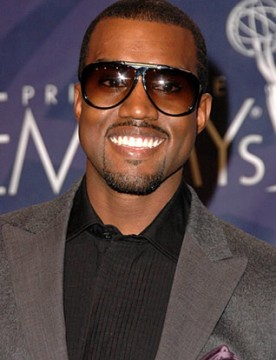
It’s been a Cruel Fall so far in the Northeast, but Kanye West is already looking ahead to Winter. The rapper has followed up his Cruel Summer mix tape with a Cruel Winter short. The film, directed by Austin Christianson for West’s production Donda shows bare trees and trembling branches with other ghoulish accoutrement. The footage also includes a speech by George H.W. Bush. The trailer suggests a feature on the way, but does not reveal any release date – only Coming Soon . Last time around, West’s GOOD Music label released its Cruel Summer compilation. West then traveled to Cannes to debut his 30-minute short titled Cruel Summer . West directed that film himself, with shots of Kid Cudi in the in the Gulf state of Qatar, using songs by Big Sean, John Legend, Raekwon and a remix of Coldplay’s Paradise . The film has not had a wide release. Rapper Q-Tip (a GOOD artist) hinted about the Cruel Winter album last month. “If there’s a Cruel Summer then there’s got to be a Cruel Winter, right?” he told MTV News. “That’s all I’m saying.” [Source: The Guardian ]
Is Wreck-It Ralph a video game flick for kids, or the saga of a destructive 30-year-old loner on an existential journey of rediscovery? We put the bigger questions to John C. Reilly , whose smash-happy villain Wreck-It Ralph goes game-jumping through his arcade world in search of his inner hero — crashing a first-person shooter and a candy-colored racing game in the process — in the Disney animated adventure. There’s a lot for children to enjoy in Wreck-It Ralph , but adults may find even more to grasp onto in Ralph’s story – he’s basically just turned 30, is having an existential crisis, unsure of his destiny and his job and what he’s supposed to be doing with his life. It’s no accident that Disney is over the moon with the age range of people that are enjoying the movie already. Yeah – there are some deep things said in the movie, in a very fun, video game world kind of way. The kids watching it may not understand some of these life crises for a few decades. They will one day! Was that something you had in mind as you gave voice to Ralph? Did you see him as a 30-year-old in crisis? I wasn’t so focused on the time span of it, and I wasn’t thinking of it so much as a mid-life crisis or existential crisis kind of thing. It was much more emotional, and it was immediate, too – “Why doesn’t anyone like me?” “Because you smash things!” I know, but that’s just what I do for a living! Give me a break! To me, the thing I was most conscious of was someone in the beginning of the story who doesn’t know himself, and he can’t accept who he is, because he doesn’t really know who he is. That’s one of the things that the journey he goes on gives him when he’s put into these tight spots and is called upon to be something bigger – he rises to the challenge and learns who he is, and accepts who he is. And then everything’s fine! Don’t give away the ending! Well… I was talking about people in general. But everything might be fine in the movie. Who knows? Do you relate to Ralph’s quandary of being defined by the job that he does? Yeah. I think that’s true – I noticed, working in France, that’s just not something people do. “What do you do?” That’s not the first thing they ask you at a party. I can’t remember what is the first thing they ask, but they’re a lot more private and people don’t share personal information quite so readily there, for whatever reason, they’re a little more formal. But here the first thing anyone asks is “What do you do?” So that’s the first bit of information where people start to judge you or size you up. That’s Ralph’s problem, that everyone sees him as what he does. In your own life and career have you felt that similar feeling of being typecast, or thought of in a way that you wanted to break out of? Every time I did, I did something else. It doesn’t happen very often. But I’ve done a lot of different stuff over the years and people are always surprised at what I end up in. I’m sure they’ll be surprised to see me in this. You had an interesting start to your career, with Brian De Palma. Casualties of War ! Do you remember that experience vividly still? Yes, of course! It was a big, life-changing experience. I’d never been on an airplane before, I’d never been out of the Midwest before, I’d never been in a movie before. I met my wife on that movie. There were a lot of big changes. All these characters we meet, the hundreds or thousands who exist in Ralph’s world from his game and the other games connected to his via power lines, are just the characters within this one arcade. Right. So here’s the big question: If there are, say, hundreds or thousands of similar arcades out in world beyond the confines of Litwak’s Family Fun Center, does that mean there are potentially many more Ralphs out there? And are they all going through the same existential journey at the same time, in their respective arcades? Duplicate Ralphs?! Multiple souls, maybe? What’s going on here? Wow . I never even thought about that. That’s surprising, after three days of a press junket, to think about that for the first time. I don’t know! Are they all experiencing the same thing at the same time, or is it a Matrix -like situation? This is the next creative leap. The next leap of imagination that people can make after they see the movie. The first one is like, what is it like to be inside a video game, to be a video game character – that could be a sequel, or something. And could you go into the surge protector and into the electricity network… That could be the next destination. I think you’re cooking up a sequel here! Meanwhile, there’s a moment in the film when Ralph fantasizes about being the toast of the town, and there’s a shot of him on the disco floor. Was that a nod to Boogie Nights ‘s Reed Rothchild in some way? It wasn’t a nod on my part, because I had nothing to do with that. Unless there was dialogue in the scene, I most likely wasn’t even aware of it. What were you most surprised by when you watched the film, having taken part in just that one aspect of it? The level of detail and how many people are in those scenes. The racing scenes in the candy world, it’s insane the amount of work that went into that. I was also surprised at how funny Jane [Lynch] and Jack McBrayer’s scenes were, because I literally didn’t see any of it, I didn’t even see rough cuts of those. You were paired in the recording booths together with Sarah Silverman, as Jane and Jack were. What’s your fondest memory from recording with her? She’s awfully fun to be around, she’s a real sweetheart and very funny so it was always fun to work with her. The ‘doody’ line gets a big laugh in the film. There were probably six more that she had that were not in the movie! But I like the scene where I have to break her heart, because Sarah was really good in that dramatic scene. That was kind of traumatic actually, that day – for both of us. We’re both right there recording it and she’s screaming, “No, Ralph!” It was a pretty heavy day. Follow Jen Yamato on Twitter . Follow Movieline on Twitter .
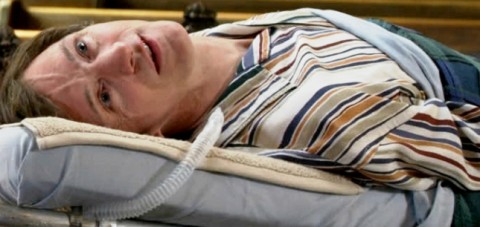
Ben Lewin’s The Sessions (formerly The Surrogate ) emerged as the undisputed hit of Sundance 2012, landing a $6 million sale with the unlikeliest of subjects: A paralyzed man’s quest to lose his virginity, based on the life and writings of Bay Area poet Mark O’Brien. Thanks to Lewin’s sensitive and honest script and an impressive turn by indie favorite John Hawkes — who shines with wit and grace in a physically demanding performance as O’Brien, who has no use of his limbs due to polio but begins to explore his sexuality with the help of a hands-on sex therapist (Helen Hunt) – The Sessions earned consecutive standing ovations and got critics buzzing with the possibilities for next year’s Academy Awards. Movieline sat down with Hawkes after the film’s Sundance debut to discuss the indie labor of love, why O’Brien’s story resonates so powerfully, and how opportunities have expanded for him since breaking out two years ago in Park City with his Oscar-nominated turn in Winter’s Bone . I grew up close to Berkeley and was a little familiar with Mark O’Brien before seeing the film, but it captured that sense of place for me – especially with little touches like Pink Man to set the atmosphere. Yes, of course! That’s good, because we shot in Los Angeles because we couldn’t afford to shoot up there. We had to make our own Pink Man and everything. [Laughs] Luckily there are a couple of Victorian streets in Los Angeles that we were able to utilize. How familiar were you with O’Brien’s story beforehand? I was minutely aware of Mark because I had heard of Jessica Yu’s amazing, Academy Award-winning short doc about Mark, called Breathing Lessons . I’d just vaguely kind of remembered that, and I may have seen an article about him at that time, but it was a new kind of story to me when I picked up the script and read it. I was pretty taken with the script itself, by Ben Lewin, and knowing he was going to direct the film which is often a wonderful thing – it’s the person who wrote the script, directing the movie. I just thought he was an extraordinarily interesting man, a polio survivor himself and very uniquely qualified to tell the story. When the project came to you – a very challenging role, to say the least – what made you decide you had to do it? My first question to Ben, as we sat down to meet before he’d offered the role and before I’d accepted the role, was ‘Why not a disabled actor?’ And he assured me that he had taken the last couple of years, he’d put out feelers to disabled groups, and had auditioned several people – a couple of them are in the film – and just felt like he hadn’t found his Mark. So with that huge question answered, I talked to Ben a lot about how he saw the film as a whole, how he saw the character of Mark; I had my ideas, we chatted and seemed to get along really well, so it was a good fit. We went forward from there. And this is a very small project. Ben raised the money by appealing to friends, basically, and so this tiny little script suddenly attracting William H. Macy, Helen Hunt, and a bunch of other wonderful actors – it’s vindicating to read something and think, ‘This is really good!’ And then you realize other people think so too. I’m not insane, it is a great script! How challenging was the shoot itself, physically? It was very challenging – again, a minute amount of the challenge that a disabled person faces, moment to moment, but certainly it was physically challenging. I helped invent a device that we used to curve Mark’s spine, basically a large piece of foam that we nicknamed ‘The Torture Ball’ because it would lay under the left side of my body and curve my spine for every shot in the movie. Sometimes I’d have to lay on that for an hour at a time, and it was hard – it apparently displaced my organs. [Laughs] My chiropractor told me that my organs were migrating and to hopefully finish the movie soon. I have minor health issues that may relate to laying on that thing, but nothing compared to what many people suffer daily, and it’s a small price to pay for what’s turned out to be a really beautiful film. To paraphrase Mark himself in the film, it may have hurt – but it was worth it? Yes! Definitely. It’s an interesting choice that Ben made to present Mark’s story here not as a straight biopic but with a focus on his relationship with his sex surrogate. What do you think that shifted angle brings, as opposed to a more conventional portrayal? Interesting. I think Ben originally had seen the movie as a biopic and then began to realize that the part of Mark’s life that interested him the most was his quest to learn his sexual possibilities as a disabled man. I think it’s a really wise choice; biopics are interesting, but I’d rather see a documentary of a person’s whole life, and I’d much rather see a narrative feature focused on a small piece of their life. And if you can focus on a small piece of someone’s life and tell it well enough, I think it informs the whole of their life. And there’s a real interesting story there – there’s a relationship that develops, certainly heightened in our film, but with the blessing of the real surrogate, Cheryl Cohen Green, to heighten and complicate their relationship a bit and to make it a love story of sorts. The subject matter, as you describe it, doesn’t have wide appeal but I think it has so much humor and so much truth, it’s a breath of fresh air. Mark’s voice really comes through – the same painfully honest, witty spirit you can see in his writings. It was important to me to fight self-pity at every turn, and for the film as a whole to fight sentiment as much as possible. He certainly never wanted people to feel sorry for him . No! The idea that he was a courageous person and stuff, he thought was bullshit. Like, how do you presume to know what I feel, what I go through? I think through his articles he was very interested in the political and social aspects of his disability. One thing that’s striking about Jessica Yu’s film, and I believe I also read something Mark wrote about it, is that to the taxpayer – to those of us who help support disabled people by paying taxes – it was half or maybe one-third of the cost of him being in an institution and live on his own, to pay rent, to hire attendance, way less of a strain on the taxpayer than keeping him an institution, where he was sadly stuck for a few years of his life when his parents were too old to take care of him. Luckily, the University of California, Berkeley in the ‘70s said, we’ll take care of any student who qualifies, who can pass our admission – it doesn’t matter what their disability. There’s an amazing photograph of his iron lung, 800 lbs. of it, hanging from a crane right outside his dorm room window as they’re trying to get it inside. So I know Mark always had a really felt beholden to Berkeley and felt a wonderful debt to that college and that town. They opened up his life, he was kind of reborn in his 30s in Berkeley. Sex and love are central to Mark’s journey in this film, and it’s such a fascinating terrain to explore – the relationship between disability and sexuality, and sexuality and manhood, and what they all might have meant to him. I can’t exactly speak in exact detail to his innermost thought, but he was quite effusive in his writings. In Jessica Yu’s film there is a brief mention of his surrogate time. Bill Macy’s made the point that he worked with a group, and disabled people, like able-bodied people, want to be independent as much as possible and live their lives that way, and they also want to love and be loved. Those are commonalities among people everywhere, and certainly disabled people are no exception. I think that Mark mainly was interested in sex because he was more largely interested in love and in a relationship with someone, and I think that he felt that if he ever met someone he could love, that he would want to have explored his possibilities, sexually. So that’s where the surrogate comes in. The minute that the first screening here ended, folks were buzzing about next year’s Oscars. It’s a little early! [Laughs] It’s a lot early. I mean, there may be twenty more amazing films that come out in the next year. I hope so! So who knows? It’s way too early and it doesn’t exactly make me nervous, I just turn a deaf ear to it because low expectations have always been the key to happiness for me. I don’t want to expect things to happen as much as hope, and if those Oscar predictions come true, fantastic – because it will bring more people to this film. After the success of Winter’s Bone , perhaps, how much did things change for you? Has the way that you’ve chosen projects in the last few years evolved at all? No, though I’ve certainly been afforded the opportunity to choose what I might be a part of. It’s not like every director in every movie is seeking me out by any means, there are a lot of things I’m not suited for, a lot of things I’m not interested in, and a lot of things that directors wouldn’t be interested in me for. What are you interested in? I’m interested in amazing stories told by talented people, and to get to play a terrific role. The three things I try to find are story, parts, people. Has it gotten easier to find the great characters? You know, I think it maybe is. It’s certainly changed for me because when I first got to Los Angeles 20 years ago, I had worked a lot of my life and was still working regular jobs. Acting was more fun to me, and paid better when I could get the gigs, so in order to avoid any further carpentry and restaurant work and things I’d been doing for many years, I just took whatever came my way. I was happy to be able to pay rent and eat. Certainly I’m freer now; I don’t get to do everything I want to do, but I no longer have to do things I don’t want to do – so that’s good. This interview previously ran as part of Movieline’s Sundance 2012 coverage. Follow Jen Yamato on Twitter . Follow Movieline on Twitter .
Jason Blum had produced a dozen projects before he hit upon 2007’s sleeper phenomenon Paranormal Activity , a micro-indie horror pic with no stars that in turn became the model for Blumhouse Productions, his own genre-leaning multimedia label. Fast forward just five years and Paranormal Activity 4 is set to continue the series’ low-budget thrills (with webcam technology!) next week, while the Blum-produced Sinister , about a writer (Ethan Hawke) contending with a house haunted by insidious forces, opens today. (For a third new venture, The Blumhouse of Horrors, Blum & Co. take over a historic theater in downtown Los Angeles. More info here .) Movieline caught up with the man behind many of the most profitable — and cost-effective — horror hits in recent memory for a peek behind the curtain: What’s the Blum secret to success? What was it that first interested you in Sinister , these filmmakers, and this story – and given your past horror projects, how do you think it fits into your portfolio? I’m super happy with the movie. I think it works because very simply [writer C. Robert] Cargill and [director Scott Derrickson] did a terrific job on it. They first pitched it to me a year and a half ago and the movie they first described to me in my office and the movie you’ll see are very close, they’re virtually the same thing. All I did was give these guys the creative freedom to make what they wanted to make. Your name has been so closely associated with the Paranormal Activity franchise and its success – how do you feel about being known for these particular films? I love genre movies. I’ve made a handful of other ones in addition to the Paranormal movies, and my favorite thing about what Paranormal allowed our company to do is that the company is based on this idea of betting on yourself. That’s what Oren Peli did on Paranormal Activity , that’s what James Wan did on Insidious , and that’s what Scott and Cargill did on Sinister . It’s given birth to all these movies and I’m really pleased that our company is associated with them. I’m really interested in genre, but I’m also doing TV shows and a haunted house in L.A. Having Paranormal and it allowing my company to expand in all things genre, I feel really lucky. Has the Paranormal franchise gotten a bad rap, a reputation it doesn’t deserve? It’s been so successful and the more these sequels charge on the more complaints you hear about found footage, or sequel fever, and all that. I’m sort of proud of the way the franchise has evolved. We’ve taken directors with very specific visions – Kip Williams was a real art house director and Henry and Rel who did 3 and 4 did Catfish . All the directors of the sequels of Paranormal , none of them had ever done genre movies before. And not that we would do that or not do that specifically going forward, but I feel that’s kept it fresh. The way each sequel has built on what’s come before and evolved the mythology has been fresh, but how much can you keep innovating? How much more difficult does it then become to find a new angle for the next one? The cool thing about Paranormal is now we have a real built-in mythology, of the demon and the family that the demon has upset, so it allows for a lot of places to go. And obviously technology changes so fast, so found footage can shift. Paranormal Activity 4 uses Skype webchat technology, which is new to movies – but it was also used recently in V/H/S . I did see that in V/H/S . It’s an interesting coincidence, that both of these films picked up on that same emerging technology at the same time. Sure. And I think I’ve seen it in some other movies too. I think because Skype is becoming so much more prevalent and you’re looking at someone else on a screen it’s going to work its way into movies and TV shows in all different ways, which I think is really cool. Where do you go from there? In this franchise alone you’ve gone through film, video, home movies, now Skype – are cell phone cameras and iPads and the rearview camera on my Prius next? I hope so! I think surveillance, and cameras are so prevalent everywhere that it allows for different possibilities for found footage. I wish I could see the future but I can’t, but I do think that cameras are everywhere now, and they’re so inexpensive. That’s a great thing. I read an interview where someone said “It’s a shame that anyone can make a movie now” and I feel the exact opposite. It’s much less cost-prohibitive… and to answer your question, that will allow Paranormal hopefully to grow and be different each time out. You came across Paranormal Activity early on, and that was a case in which the film was almost curated and then brought into the mainstream consciousness. The idea of discovering a micro-budget independent film and having that platform to bring it to audiences, is that a formula that’s easy to replicate — and is that even your plan at this stage? A hundred percent. I saw Paranormal as a rough cut, but I felt my job on Paranormal and my job on Sinister weren’t wildly different. I’m proud of Sinister because Scott and Cargill did a great job on the movie and I set up a framework for them to make what they wanted to make. They gave me the idea and I figured out how to get it out into the world. Oren did the same thing. I don’t have any aspirations to be a writer or director; I really like identifying a story or a pitch, whether it’s a script or a rough cut of a movie that resonates with me, and trying to get it out into the world. That’s what our company does and that’s what, personally, I’m passionate about. That’s kind of our mission. This is a big question, but: What is the state of horror cinema now, in your eyes? The realm of independent horror and studio-released mainstream horror are divided, with independent original stories balancing against studio-released sequels and remakes. Where do you feel you stand in the grand scheme of it all? I feel the state of horror cinema is the same as it’s been for the last ten or 20 years. When there’s a great horror movie, people are like, “Horror’s back!” And when there’s a series of not so good ones, “Horror’s dead.” I think it’s all about the quality. When there are one or two good horror movies in a row, people come out interested again. I think our company’s specific role is that we straddle both of those worlds. We make all of our movies independently – with the exception of the sequels of Paranormal – but Sinister , Insidious , and the first Paranormal Activity were made completely outside of the studio system but then distribution is through the studio system. Paranormal Activity was the model for what my company does, from that experience. For me, and I can’t speak to other people, it’s the best of both worlds. We get to make these movies with the director’s vision and a singular vision, and to me that’s the definition of an independently made film – it’s one person’s vision. The movies that our company is involved with have the director’s vision, and then we get the great benefit of studio distribution – which no one has figured out a way to compete with. Maybe in five years someone will but at the moment it’s virtually impossible to compete with the studios in terms of distribution. You’ve used the word “independent” to describe your films, but when I think of indie horror I think of the You’re Next and V/H/S filmmakers. They seem to be in a separate camp within the world of indie horror, while you tend to bring in directors from outside the genre community and work with studios. Do you see that as a distinct separation? From a consumer’s point of view I don’t think there’s a separation. You’re Next is going to come out wide from Lionsgate. I loved the movie, I think it’s a terrific movie. I think it’s a very commercial movie. It’s going to be released by a studio and was made independently, so I don’t think from a consumer’s perspective it’s radically different from the movies we’re doing. You have identified something; we tend to work with directors who have a few movies under their belt. You’re opening a haunted house attraction in L.A. – The Blumhouse of Horrors. Where did that concept come from? It’s a great extension of what we’re doing in movies and TV – almost all of our movies shoot in L.A. and we work with the same crews, so we approached the haunted house as if it was a movie production. We got a big crew of people who’ve been prepping for about as long as it takes to prep a movie and we took over a building in downtown L.A. It’s going to be a really cool live experience that’s scary, and hopefully great. That sounds like a clever extension of horror culture, taking it off the screen. But horror cinema has been going increasingly meta in recent years – look at Cabin in the Woods , for example – and it already feels like the serpent is eating its tail. What happens after horror comes all the way full circle ? Boy, I wish I had the answer to that. I just love that people are into it and I’m just really passionate about exploring all different media to scare people, whether it’s a haunted house or a reality show or a scripted show or a movie, it’s a really fun, creative place to be playing in. But what eventually happens… your guess is as good as mine. Follow Jen Yamato on Twitter . Follow Movieline on Twitter .
Jason Blum had produced a dozen projects before he hit upon 2007’s sleeper phenomenon Paranormal Activity , a micro-indie horror pic with no stars that in turn became the model for Blumhouse Productions, his own genre-leaning multimedia label. Fast forward just five years and Paranormal Activity 4 is set to continue the series’ low-budget thrills (with webcam technology!) next week, while the Blum-produced Sinister , about a writer (Ethan Hawke) contending with a house haunted by insidious forces, opens today. (For a third new venture, The Blumhouse of Horrors, Blum & Co. take over a historic theater in downtown Los Angeles. More info here .) Movieline caught up with the man behind many of the most profitable — and cost-effective — horror hits in recent memory for a peek behind the curtain: What’s the Blum secret to success? What was it that first interested you in Sinister , these filmmakers, and this story – and given your past horror projects, how do you think it fits into your portfolio? I’m super happy with the movie. I think it works because very simply [writer C. Robert] Cargill and [director Scott Derrickson] did a terrific job on it. They first pitched it to me a year and a half ago and the movie they first described to me in my office and the movie you’ll see are very close, they’re virtually the same thing. All I did was give these guys the creative freedom to make what they wanted to make. Your name has been so closely associated with the Paranormal Activity franchise and its success – how do you feel about being known for these particular films? I love genre movies. I’ve made a handful of other ones in addition to the Paranormal movies, and my favorite thing about what Paranormal allowed our company to do is that the company is based on this idea of betting on yourself. That’s what Oren Peli did on Paranormal Activity , that’s what James Wan did on Insidious , and that’s what Scott and Cargill did on Sinister . It’s given birth to all these movies and I’m really pleased that our company is associated with them. I’m really interested in genre, but I’m also doing TV shows and a haunted house in L.A. Having Paranormal and it allowing my company to expand in all things genre, I feel really lucky. Has the Paranormal franchise gotten a bad rap, a reputation it doesn’t deserve? It’s been so successful and the more these sequels charge on the more complaints you hear about found footage, or sequel fever, and all that. I’m sort of proud of the way the franchise has evolved. We’ve taken directors with very specific visions – Kip Williams was a real art house director and Henry and Rel who did 3 and 4 did Catfish . All the directors of the sequels of Paranormal , none of them had ever done genre movies before. And not that we would do that or not do that specifically going forward, but I feel that’s kept it fresh. The way each sequel has built on what’s come before and evolved the mythology has been fresh, but how much can you keep innovating? How much more difficult does it then become to find a new angle for the next one? The cool thing about Paranormal is now we have a real built-in mythology, of the demon and the family that the demon has upset, so it allows for a lot of places to go. And obviously technology changes so fast, so found footage can shift. Paranormal Activity 4 uses Skype webchat technology, which is new to movies – but it was also used recently in V/H/S . I did see that in V/H/S . It’s an interesting coincidence, that both of these films picked up on that same emerging technology at the same time. Sure. And I think I’ve seen it in some other movies too. I think because Skype is becoming so much more prevalent and you’re looking at someone else on a screen it’s going to work its way into movies and TV shows in all different ways, which I think is really cool. Where do you go from there? In this franchise alone you’ve gone through film, video, home movies, now Skype – are cell phone cameras and iPads and the rearview camera on my Prius next? I hope so! I think surveillance, and cameras are so prevalent everywhere that it allows for different possibilities for found footage. I wish I could see the future but I can’t, but I do think that cameras are everywhere now, and they’re so inexpensive. That’s a great thing. I read an interview where someone said “It’s a shame that anyone can make a movie now” and I feel the exact opposite. It’s much less cost-prohibitive… and to answer your question, that will allow Paranormal hopefully to grow and be different each time out. You came across Paranormal Activity early on, and that was a case in which the film was almost curated and then brought into the mainstream consciousness. The idea of discovering a micro-budget independent film and having that platform to bring it to audiences, is that a formula that’s easy to replicate — and is that even your plan at this stage? A hundred percent. I saw Paranormal as a rough cut, but I felt my job on Paranormal and my job on Sinister weren’t wildly different. I’m proud of Sinister because Scott and Cargill did a great job on the movie and I set up a framework for them to make what they wanted to make. They gave me the idea and I figured out how to get it out into the world. Oren did the same thing. I don’t have any aspirations to be a writer or director; I really like identifying a story or a pitch, whether it’s a script or a rough cut of a movie that resonates with me, and trying to get it out into the world. That’s what our company does and that’s what, personally, I’m passionate about. That’s kind of our mission. This is a big question, but: What is the state of horror cinema now, in your eyes? The realm of independent horror and studio-released mainstream horror are divided, with independent original stories balancing against studio-released sequels and remakes. Where do you feel you stand in the grand scheme of it all? I feel the state of horror cinema is the same as it’s been for the last ten or 20 years. When there’s a great horror movie, people are like, “Horror’s back!” And when there’s a series of not so good ones, “Horror’s dead.” I think it’s all about the quality. When there are one or two good horror movies in a row, people come out interested again. I think our company’s specific role is that we straddle both of those worlds. We make all of our movies independently – with the exception of the sequels of Paranormal – but Sinister , Insidious , and the first Paranormal Activity were made completely outside of the studio system but then distribution is through the studio system. Paranormal Activity was the model for what my company does, from that experience. For me, and I can’t speak to other people, it’s the best of both worlds. We get to make these movies with the director’s vision and a singular vision, and to me that’s the definition of an independently made film – it’s one person’s vision. The movies that our company is involved with have the director’s vision, and then we get the great benefit of studio distribution – which no one has figured out a way to compete with. Maybe in five years someone will but at the moment it’s virtually impossible to compete with the studios in terms of distribution. You’ve used the word “independent” to describe your films, but when I think of indie horror I think of the You’re Next and V/H/S filmmakers. They seem to be in a separate camp within the world of indie horror, while you tend to bring in directors from outside the genre community and work with studios. Do you see that as a distinct separation? From a consumer’s point of view I don’t think there’s a separation. You’re Next is going to come out wide from Lionsgate. I loved the movie, I think it’s a terrific movie. I think it’s a very commercial movie. It’s going to be released by a studio and was made independently, so I don’t think from a consumer’s perspective it’s radically different from the movies we’re doing. You have identified something; we tend to work with directors who have a few movies under their belt. You’re opening a haunted house attraction in L.A. – The Blumhouse of Horrors. Where did that concept come from? It’s a great extension of what we’re doing in movies and TV – almost all of our movies shoot in L.A. and we work with the same crews, so we approached the haunted house as if it was a movie production. We got a big crew of people who’ve been prepping for about as long as it takes to prep a movie and we took over a building in downtown L.A. It’s going to be a really cool live experience that’s scary, and hopefully great. That sounds like a clever extension of horror culture, taking it off the screen. But horror cinema has been going increasingly meta in recent years – look at Cabin in the Woods , for example – and it already feels like the serpent is eating its tail. What happens after horror comes all the way full circle ? Boy, I wish I had the answer to that. I just love that people are into it and I’m just really passionate about exploring all different media to scare people, whether it’s a haunted house or a reality show or a scripted show or a movie, it’s a really fun, creative place to be playing in. But what eventually happens… your guess is as good as mine. Follow Jen Yamato on Twitter . Follow Movieline on Twitter .
The first half hour of Here Comes the Boom is so good moviegoers might be fooled into expecting something better than an obvious wish fulfillment fantasy so patently implausible it’s almost insulting. Sadly, those moviegoers would be wrong. Star, producer, and co-writer Kevin James creates a witty, confident everyman in the first act, only to sacrifice him to the pic’s demands for formula and sentimentality thereafter. James plays Scott Voss, a Boston high school biology teacher sunk in a bog of laziness and apathy. He’s the kind of cartoonishly bad educator who arrives late to class every morning and ignores his students while reading the paper with his feet propped on his desk. Yet Scott’s extremely likable all the same: he’s smart, funny, and not too jaded to be inspired by Marty (Henry Winkler), the goofy but saintly music teacher. There’s even a hint of sexual charisma in his failed flirtations with the school nurse (a pleasingly age-appropriate Salma Hayek). The plot gets rolling when the principal (Greg Germann) announces that budget cuts will force the imminent shutdown of the music program. Knowing that Marty is the school’s best teacher, and the father of a surprise late-in-life baby, Scott vows to raise the $48,000 needed to keep the music program running. This promise first leads him to teaching citizenship classes at night school, then inexplicably becoming a cage fighter. Here’s a thought experiment: Is there any way Scott’s four-month journey from middle-aged lug with a few spare tires to mixed-martial artist fighting against professional pugilists half his age could work? Maybe if James was replaced with Tom Hardy or one of the Expendables in their prime. James’ arms are as thick as most men’s calves here, but he still looks more like he’s eaten a professional fighter than become one. It doesn’t help that the movie makes the mistake of having Scott recover as quickly as Wile E. Coyote, further defying its viewers’ suspension of disbelief. Scott’s hare-brained scheme to join the UFC world doesn’t just give the film a serious plausibility problem. It also lowers the character’s IQ by several dozen points even before his opponents punch him repeatedly in the head. Scott just doesn’t seem as smart afterward. The jokes get lazier too. The sharp zingers of the first act are blunted into broad gags, though the pic’s one gross-out scene — which stems from James’ consumption of a batch of bad homemade applesauce — is a hilarious surprise. Worst of all, the sheer unlikelihood of Scott’s victory sends the movie on the fast track to Clichéville, where underdogs win every fight and all fat slobs are secret mensches who deserve hot tamales like Hayek. Luckily, Here Comes the Boom has retired UFC fighter and sports personality Bas Rutten to inject some wild-card energy back into the film. A craggily handsome Dutch giant with a body built for hurting, Rutten is an UFC superstar and one of the hyperviolent league’s most winsome advocates. He’s also a delightfully affable screen presence and pretty much saves the film from drowning in its own cheesiness. Rutten plays Nico, a former fighter and current aerobics instructor who’s a student in Scott’s citizenship class. Nico doesn’t think Scott has what it takes to succeed as a MMA fighter, but he’s a supportive friend and a dedicated coach. Rutten’s character comes with an injured neck in his backstory, so the only ones duking it out in the ring are James and some anonymous muscleheads. The fight scenes are cursory and exist only to trace plot points, not to provide visceral thrills. There’s no movement, no chase, and thus no pleasure. The film’s climactic brawl, between Scott and a tattooed tornado of muscle (MMA fighter Krzysztof Soszynski), is shot UFC-style, at close range with leering, lo-res cameras. The black wire cage that locks the fighters in the ring feels claustrophobic. And yes, there is an alarming amount of blood. Here Comes the Boom is the first R-rated movie in James’ career, and thus feels like a risky project despite its reliance on well-worn tropes. The movie gives the genial actor a makeover by knocking out Paul Blart: Mall Cop and Zookeeper and replacing them with an edgy tough guy who sweats blood and knocks strangers out cold. You know, for the children. It’s that weird dichotomy between gooey values and enthusiastic violence — both the character’s and the film’s — that makes Here Comes the Boom so schizophrenic — and therefore, so interesting. It’s too bad the film’s far-fetched premise and R-rating will mean few viewers will be eager to swallowing James’ strange concoction of sugar and blood. Inkoo Kang is a Boston-based film journalist and regular contributor to BoxOffice Magazine whose work has appeared in Pop Matters and Screen Junkies . She reviews stuff she hates, likes, and hate-likes on her blog THINK-O-VISION . Follow Inkoo Kang on Twitter. Follow Movieline on Twitter.
Mary Elizabeth Winstead needed to prove herself. After years of hopping from genre to genre, she wanted to shed her Scott Pilgrim vs. the World dye job and bloody Final Destination 3 history and find a complex role that would be a game-changer for her career. Luckily, the stars aligned and landed her in front of Smashed director James Ponsoldt, where she not only impressed him enough that he didn’t audition anyone else for the role, but she also helped him cast her leading man, Aaron Paul . Mary Elizabeth sat down with Movieline ahead of the film’s Oct. 12 release to talk about crafting her recovering alcoholic character, Kate Hannah, preparing for the role without meeting anyone first — except for one wild night with Aaron — and sharing her modest, yet poignant, reaction to all of the well-deserved Oscar buzz. And as for all of those big blockbuster roles she’s been “passed over for” throughout the years? She spills about that, too, opening up about the truth behind failed negotiations and what she wants her career path to look like after Smashed . Smashed is a departure from your previous roles, including comedies like Scott Pilgrim and bloody gore like Final Destination 3 . Was it refreshing to play such a dynamic, dramatic character? Yeah, I mean it was such a change of pace. It was almost like changing careers because it was so different. It was great, and it was what I’ve wanted to do for a long time. I’ve needed to sort of prove myself in this capacity for a long time — I needed to show, at least to myself, that I could carry a really complex role, so I knew that I needed to do it for me. The fact that people are actually responding to it is sort of above and beyond what I even was hoping for. How did this role come to you? Did James [Ponsoldt] say, ‘Hey, I want you for this role?’ or did you audition? I had been seeking out smaller scripts. I had been really trying to find something small and intimate, so I had a meeting with Jonathan Schwartz, who is the producer of the film. I didn’t know what he was producing at the time, but I just wanted to meet him because I knew that he had some scripts in the pipeline. After he sent me this script, I just flipped out over it and called him immediately and was just like, ‘Please let me know what I can do to just get my foot in the door and be considered for it!’ So then he set up a meeting with me and James, which went really well. After that, I just sort of took it upon myself to do an audition tape; I taped probably like seven, eight scenes from the movie and sent it to James. And after he and the producers talked it over, they cast me, which was crazy! I expected them to sort of see every actress in Hollywood and go through that whole process, but they didn’t. They didn’t see anyone else. And so it was really, really, amazing. It’s hard to imagine anyone else but you in the role — you embodied Kate to a T. How did you prepare? Is there anything you did in the audition tape that made it into the film? Luckily whatever I did in the audition tape was enough to get me the part, but from my perspective, in retrospect, I feel like it’s terrible! [Laughs] I did so much more work on the character by the time I actually shot it that to me it’s like night and day. When I look at that audition tape, I feel like I’m acting , and I feel like I was able to get to a place by the time I shot the film where it wasn’t acting anymore. I was sort of scared, even after I did the audition tape and got the part, because I still didn’t feel like I had a handle on it at all. So it was scary to me almost to get the part because I was like, ‘Ooh, but I don’t know how to play this!’ So I worked really hard. I really wanted to make sure I did the part justice, and I did whatever I could. I spent a lot of time in AA meetings, I spent a lot of time with James just really carving out Kate’s backstory and becoming really, really specific about that. And just spending a lot of time on myself and my own issues emotionally. It was a lot like, just, therapy. Working through my own stuff. That ended up being the most important thing, the thing that connected me the most to the character — sort of relating my struggles to her struggles and my issues to her issues, and sort of linking those two things up. It was an amazing experience. Is there anything from Kate’s backstory that we didn’t see that you worked together with James on? We talked about her entire life. There are hints at it throughout the film — you see her relationship with her mom, you know there’s probably a lot of pain there, especially childhood pain. And so we fleshed that out quite a bit with her dad leaving and what age, what age did she start drinking and why, and what age did it become her identity to be the fun drunk girl, and how that became so much easier to be than to be herself. How it became easier to be the drunk girl than to be the girl with all of these problems. So that was the thing that we really focused in on. You said you went to some AA meetings to prepare. Was there anything else that you did? I’m sure you didn’t go on any drinking binges to get into your character… Yeah, I went on one! I went on one with James and Aaron! [Laughs] I hope you weren’t on a bike. No, not on a bike. James was our designated driver. And it was in part to get into character, but it was mostly for us to feel the dynamic with each other — what we’re like when we’re drunk. Because the couple is like that so much; it’s how they spend their lives together, is drunk. So we wanted to kind of start off with that. And also it helped because Aaron and I didn’t have any rehearsal time. We had only met each other once before. It was a good way for us to get to know each other really fast. You know, when you sort of go out and get drunk with someone, you become close pretty quickly. [Laughs] It was a nice way to sort of expedite that process. And by the time we showed up [on set], we felt close enough to be able to go to those places together. Was Aaron cast before you or after you? After me. Everyone was cast after me. It was like a total shock. It was so crazy. I had no idea that the supporting roles were going to end up being these incredible actors. I mean, that really took it to a whole new level. I knew it was an incredible script, I knew it was an incredible part I was dying to play, but I sort of thought it was a tiny movie, that it was probably going to be all unknowns, and we were kind of just going to try to get people to see it and do our best. And then when they started telling me who was going to be playing the other roles, I was like, ‘Oh, people are going to see this! This is a real movie! This is really happening!’ [Laughs] So, yeah, that was incredibly exciting. And you mentioned that you and Aaron had only met once or twice before. Did you do a chemistry read together or did you meet at all? No. I kind of knew that Aaron was everybody’s favorite. He was my favorite, he was everybody’s favorite. [Laughs] We had talked about a lot of people for that part, but he was the only one that everyone agreed on. We’d come up with other names, but it would be very polarizing. Like, one person would be like, ‘That person would be great!’ and another person would be like, ‘No! Definitely not!’ [Laughs] But Aaron was the first name that came up that everyone went, ‘Yeah! That would be great.’ I still wanted to meet him, just because I didn’t know him personally. I knew he was an incredible actor and I had such admiration for him, but I also knew that I needed to work with somebody in that role who was going to be really open and who was going to be someone I felt comfortable with, because you have to go to a lot of humiliating places doing a role like this. You don’t want it to be someone who you feel like is going to be closed off or is going to be too cool to really give anything back. From the moment I met him, he was so open and warm and genuine and lovely, and just the sweetest person. And now I feel like everybody else knows that he’s the sweetest person in the world, but I’m like, how didn’t I already know that? [Laughs] I shouldn’t have even had to have met him to find that out. But it was great, and after I met him, I sort of told everybody that he was perfect, and then he came back. Honestly, your chemistry reads like you’ve known each other for years. Although their love story is far from perfect, If you take the alcohol out, could you see their relationship continuing? For me, having learned a lot about alcoholism and AA from researching the character, I’m very much of the feeling that they can never be together, as heartbreaking as that is. Just because no matter what they have that co-dependency that they’re naturally going to want to fall back into. And it would be such a struggle for them to have a normal, healthy relationship that it would make them both really tempted to go back to alcohol. And I think as an alcoholic, you have to really keep yourself in the most healthy of environments at all times. So I think for her it would just be a mistake to put herself back into that really unstable place. But I do love the fact that the end is so hopeful for him; that he is going to figure his life out. And that one day, I do think that they could be really great friends. I think there’s a lot of love there and they will be able to be in each other’s lives, but I don’t see them ever being a couple. The craziest part for me was that you don’t really see how damaged Kate’s life is until she really hits that downward spiral. That’s the thing. It certainly isn’t a message movie by any means, but we are kind of making a point that even if you stop drinking, it doesn’t mean your life suddenly becomes easier — it actually becomes harder in a lot of ways because you have to deal with your pain. It’s better, but it’s hard. It felt like a very realistic portrayal of alcoholism, especially with Kate’s two split personalities. How did you balance the dynamic of both opposing sides of her persona? What’s great about it is that it just felt like, for the first time to me, that I was playing a really whole person. Because we all have so many different sides to our personalities, but you just never see that on screen. I think that’s why it’s so surprising that it feels so different, because we’re not used to seeing people on screen show so many different sides of themselves — we’re not usually really allowed to since characters are usually more one-dimensional. So I loved that; I loved being able to do that. I felt like I was able to bring all the different shades of my own personality to her, and there was nothing that I had to shut off. Your chemistry with the entire cast — including Nick Offerman’s offbeat character, Megan Mullally as your boss, and Octavia Spencer as your sponsor — was incredible. How did you form that dynamic? I think it was just luck, and James casting the right people. We didn’t have any rehearsal time — we didn’t even meet! Aaron was the only person I even met before we started working. Did you all even do a read through together or did you just jump into it? No, we just showed up and just did the scenes! It was just one of those lightning in a bottle things where everything just comes together and everyone was so wonderful. We were very lucky. The most surprising part was that most of the cast were comedic actors playing straight. What was that like, both in and out of character? It was just really lovely. It was such an amazing group of people who are all just lovely human beings. They’re all super funny, but not in that way that they have to constantly be telling a joke or constantly getting attention — not in that way at all. Just lovely people to be around. So it was a comfortable, relaxed environment, and it was sort of like the film. We would go from laughing together to talking about more serious things. We just felt like a family. It just felt like a place that you could really be yourself, which was the ideal environment for a film like this. Now that you’ve done such a big drama, what’s next? Rom-com? Adventure? I know you’ve seemingly been passed over for some of those big blockbuster roles, including Cobie Smulders’ role in The Avengers . But if you took that role, do you think you would be where you are now? And do you have any hopes to be that big blockbuster star? Yeah, I mean, it’s funny, because some of those roles — well, the majority of them, I was just plain passed over for them [Laughs] — but some of them I actually chose not to do as well because I don’t really just want to be the blockbuster star, and I don’t necessarily want to sign onto seven films in a role that I’m not really passionate about. That’s actually happened several times as well, where in the news it sort of seems like, ‘Oh, she lost the part,’ but in reality, it just falls apart in the negotiation process and you realize that this isn’t really something I’m passionate enough about to agree to ‘X, X, and X,’ and sign the contract on. [Laughs] So that’s happened a bunch, too. Because I do really want to do films like this. That’s the majority of stuff I want to do. But unfortunately, you don’t get paid to do films like this! [Laughs] You get enough to go to a nice dinner. That’s basically the money that you get paid. So you do have to think about your career and making a living and how you’re going to do that. Going forward, I would love to work with directors like Rian Johnson and Joss Whedon; people like that who are doing big films but do have really independent voices. That’s kind of what I want to focus on, is always working with people with at least an independent point of view, even if it’s not an independent film. Well, on that note, congratulations! For this film, you already have a lot of Oscar buzz. What, in the perfect situation, would you like to happen next whether you win an award or not? I think for most actors, because we sort of have to tell ourselves this, we always say, ‘Oh, it doesn’t mean anything to win an Oscar!’ It certainly isn’t a goal that you want to set yourself up for, because then you’re just setting yourself up for disaster. Because how many people actually win an Oscar? So I would certainly never imagine that for myself, but the thing about those kind of awards are that they are completely life-changing. You’re given a power that so few other people in the industry have. And so that’s the thing, that I would sort of just want to use … for good! [Laughs] I sound like a superhero. But to help make good movies. I would love to be in the position where my name is a name that is large enough in some capacity to make things happen in the industry. To be able to fund a small film or be able to discover a new voice and give them a platform. That’s something I would really love to to do. Smashed hits limited theaters in New York and Los Angeles on Oct. 12. Alyse Whitney is an editor at Wetpaint Entertainment. You can follow her on Twitter @AlyseWhitney .
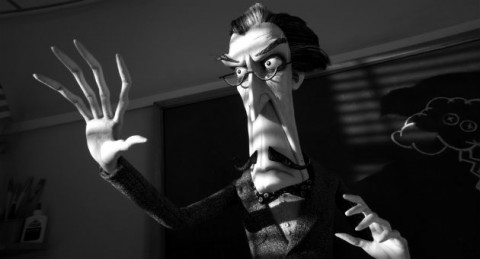
Hollywood veteran Martin Landau earned an Oscar in his first collaboration with Tim Burton , 1994’s Ed Wood , and for Burton’s latest and most personal picture, Frankenweenie , the filmmaker cast his erstwhile Bela Lugosi as the eccentric but inspirational Mr. Rzykruski — the science teacher who nurtures young Victor Frankenstein’s budding talents and encourages him to forge his own path. It’s a fitting role for the 84-year-old Landau, who lit up as he discussed Frankenweenie and his longtime parallel career as an acting coach to the likes of Jack Nicholson, Anjelica Huston, and many more Hollywood greats under Lee Strasberg at the Actors Studio. Tim Burton cast you as Mr. Rzykruski, Victor’s teacher and he’s quite the character: At first imposing and foreboding, he’s revealed to be one of Victor’s only kindred spirits. What did you make of him at first and how did you find his quirks? It’s a fun character, and the thing that amazed me is that I saw an arc and if I could play it on camera I’d play it exactly the same. I did [the voice recording] first and the animators animated after. It was just my voice, but Tim sent me pictures of the character and it looked like me years ago, or Vincent Price and me mixed up, a caricature of me with dark hair and such. I saw him as a loving man, but eccentric as hell and passionate! And also, European – but not specifically from a country. It said that; it said it’s a generic accent. It’s not German, it’s not Russian, it’s not Hungarian, but it’s European. [In Mr. Rzykruski’s voice] So I lowered the voice . The relationship between Victor and Mr. Rzykruski is the best child-adult relationship in the film, and probably the most important one. He’s the one who inspires the kid, with science and the frog! He’s somewhat outlandish and certainly not a diplomat. If you’re a teacher you don’t call your students’ parents stupid. It’s a great line, though. It’s a funny line, and I knew it. But again, the movie is funny, moving, and scary in equal parts and I love that. This is a movie Tim wanted to make three decades ago and couldn’t. He made a short live-action version of it, but the one blessing is that if he had done it then it wouldn’t be in 3-D. But it’s not stuck on 3-D, things coming at you to shock you. You also happen to be a teacher off-screen, having spent many years with the Actors Studio where so many talents passed through over the decades. It was a different time. A lot of my contemporaries have passed away, which is sad, but I still run the Actors Studio on the West Coast with Mark Rydell – [Al] Pacino, [Harvey] Keitel and Ellen Burstyn run the New York Actors Studio so we’re in touch with each other all the time. And I work with a lot of young actors and help them. Why did you first begin teaching? I started teaching when I was in my 20s because Lee Strasberg asked me to, and he didn’t do that with a lot of people. Why do you think he did? At the Actors Studio when I got in, he’d ask for comments and I’d raise my hand and critique the actors succinctly and helpfully, and I think he noticed that. One day he said “I want you to teach – I’ve got a waiting list and I’m going to send some of my people to you.” He sent me off, teaching. Jack Nicholson was my student for three years, and Harry Dean Stanton, Anjelica Huston; a lot of people have studied with me. It’s paying my dues, because as a young actor I benefited from getting in. The year I got into The Actors Studio, Steve McQueen and I were the only two accepted that whole year. Two people, Steve and me. It’s still tough to get in. Lifetime membership. Who was your favorite student? That’s hard – they’re all my kids. I’ve got two daughters and it’s impossible for me to say one of them is a favorite. Fair enough! Was there one actor who surprised you the most over the years? Nicholson did, but he had some problems. He would kind of surround a moment that he didn’t want to embrace. I found that those things were probably the richest part of his talent, which he was avoiding because it was very hurtful. But I wanted him to know that it wasn’t going to hurt him. You can’t perish because of your own feelings, you have to embrace those things as an actor because it’s part of your palette. How did you help him? I had him do a bunch of exercises that would connect his voice, his body, and emotions. A lot of actors lead with their voices and their bodies follow; they’re split, they’re not together. The instrument is not working as a unit. To get them to become good actors… all an audience wants to believe is that what’s going on up there is happening for the first time ever. You don’t want to see the rehearsals, you don’t want to see the work. You want to see two people in conflict or people connecting, but I don’t see a lot of that. There are some movie stars who are considered good actors who put me to sleep. I’m not going to mention their names! You could be talented but if you don’t use that talent well you’re depriving yourself. Craft is about talented people who shut down easily because they’re vulnerable, they’re hypersensitive, where your talent actually short-circuits you. People who are less vulnerable are usually not that interesting. [Laughs] So when your own talent acts as a deterrent, you’ve got to pay attention to that. How do you open that up? How do you create relaxation when you start getting tense because you’re sensitive to a situation? Tension will shut you down. Your sphincters will all close up. Talented actors have problems; it’s like a violin playing a violinist, where the instrument itself shuts the talent down. It’s a matter of managing that, then. Getting the actor to trust his talent and trust his instrument. No one tries to cry. Bad actors try to cry. Good actors try not to cry. How a character hides his feelings tells us who he is. No one shows their feelings except bad actors! No one tries to laugh! If I tell you a racial joke and you laugh, you’re telling me something about yourself – you’re revealing something. A drunk doesn’t try to be drunk; he wants another drink! One of the most studied things is a drunk picking up a full glass of booze [affects drunken mannerism, grabbing an invisible glass]… and bringing it to his mouth. It’s not sloppy. [Slurring] It’s ve-rrry … concentra-aated . Anyway, I never met two people who were alike so I’ve never approach a character as the same character. They’re physiologically different, environmentally different, emotionally different – they’re all different, and that’s what makes it exciting, still, for me. What’s your relationship with Tim like, after years of working together? Well, we kind of understand each other. He doesn’t have to say a whole lot to me. But I’m rarely directed by anybody. I really haven’t been directed by anybody in 30 years. A good director hires good actors and creates a playground, and you play. You come up with stuff that no one could quite envision. I saw this character not only vocally but physically, behaviorally, and to my pleasure what they came up with was exactly as I would have done it if I’d been acting and it wasn’t animation. That thrilled me, because it was like, wow – they caught it from the voice and it’s exactly as I saw it! Because I saw the arc. There was an arc; he gets fired and gives the kid advice, but it’s sad in a certain sense. He doesn’t restrain himself, this guy. Rzykruski seems to understand why his progressive thinking doesn’t fly in the suburbs. He is who he is, and I love that about him. He’s a zealot. He loves science, and the fact that people don’t understand it in the way that they need to upsets him. He sees this kid and he immediately thinks, “This kid’s okay.” He doesn’t know what the kid’s doing, because from the frog’s reaction the kid channels lightning… but Tim loved Frankenstein. He loved Dracula as a kid. This has been festering in him all these years. He never lost this movie, and you think about that – it’s three decades later and this is probably the most Tim Burton film. Edward Scissorhands was as well but he wanted to do that as an animated film and couldn’t, but that was fortuitous in that it introduced him to Johnny Depp, and that became very important to him and to Johnny – and to me too, in a way, because I loved working with Johnny and Tim in Ed Wood . Ed Wood is fantastic. The relationship between you three on that project really jumps off the screen. It’s a fun movie. We had a good time. A great time, actually. Johnny and I hit it off, Tim and I hit it off. You also started out as a cartoonist early in your career. Do you think that had something to do with you and Tim getting on so well? You kind of see things visually, and maybe that’s a little bit of it. Tim and I draw differently; I have a bit of an Art Deco style. Do you still draw? Oh, all the time! I’ve got thousands of what I call doodles, although they’re not doodles. Tim’s seen them. But yes – the visualization is there for me too, in a way. I see the character, and then I work on all of those things into a subjective form. They’re objective, and I make them part of me. We’re all capable of it. Where do you go from here? The next thing I know I’m doing is I’m going to London to do more work for Frankenweenie . I’d like this picture to do well. And the BFI is giving me a lifetime achievement award. How does that feel, to receive an honor like that? Well I’ve got a lot of those now. I keep saying, “I’m not done!” Follow Jen Yamato on Twitter . Follow Movieline on Twitter .
Ti West ( House of the Devil , The Innkeepers ) delivers a slow burn with a killer pay-off in his contribution to this weekend’s horror anthology V/H/S , a road trip-cum-nightmare starring fellow indie veterans Joe Swanberg , Sophia Takal, and Kate Lyn Sheil. Before departing to Georgia to film his next feature, The Sacrament , West rang Movieline to discuss his V/H/S short, filmed on the road with a camera and no crew other than his three actors, how to recreate their L.A.-to-the-Grand Canyon V/H/S adventure, the creative struggles involved in making personal independent films at increasing scale, and — of course — the magical phenomenon that transforms strangers into compatriots within the confines of a karaoke bar. What was your first reaction to the idea of a found footage anthology horror movie and how did you find your way into your segment? I don’t have a real aversion to found footage but they told me the idea and I thought, ‘I don’t know.’ But I went on a road trip and in the back of my mind I was like, ‘Do I have any ideas for this thing? I don’t think so.’ But by the end of the road trip I realized the road trip I went on was the idea. So I put together this paragraph and emailed them thinking they’d probably say no but they liked it, and within a month I’d gotten Joe and Sophia and Kate flown to L.A. and we rented a car and went back on the exact same road trip that I had just been on, and made the movie along the way at all the spots I’d been. So it was really weird but similar to The Innkeepers in the sense that on House of the Devil we stayed at the hotel and went back to the hotel to make [ Innkeepers ]. I realized on this that’s probably a trend for me. I went on this trip and I thought, ‘I have an idea based on something I just lived – let’s go do that.’ That is most unusual. Joe and Sophia had never seen the Grand Canyon and I was like, ‘We can see that along the way, it’s pretty amazing!’ We were able to have a fun experience and make a movie. That was a lot of the motivation behind it, to sort of not have such a terrible time. Was it literally just the four of you? No additional crew or anything? Yes – it was the four of us, that’s it. We had nothing. No lights, no nothing. We didn’t even have a boom. I was curious how that worked since Joe and Sophia are also directors, actors, editors – they’ve got experience serving multiple roles in front of and behind the camera, which must have helped. That’s why I cast them, because I knew if I were to give them a camera and send them out to do something with some ideas, they’d be able to handle it. Did you write a script or give them more broad scenarios for them to play out? There was a pretty specific outline, although I didn’t write dialogue. They read that then when we got there I said, ‘Here’s what we’re going to do, here’s what I want to happen…’ I would shoot it or if I couldn’t shoot it I would be like, ‘Sophia, I want you to do these things with it – do it however you want, but make sure you get this, that, and the other thing.’ Then Kate and I would go hide in the bathroom of the hotel room and they would shoot, and when they were done I’d come out and watch it and go, ‘Let’s do it again, but focus more on this and that…’ We’d do three or four takes, and we’d do everything in big long chunks and that was it. Then we’d go do karaoke in Flagstaff. Are you kidding? How was the karaoke out there? Oh, we did so much karaoke on this movie. Every night. There was actually one night where we decided we needed to work a little extra the next day because we’d been doing too much karaoke. Well, you’ve now ruined road trips for the rest of us. You should map out the V/H/S road trip so people could take the tour in real life. It’s a great trip from L.A. You can do it in a weekend. If you’ve never been to the Grand Canyon, it’s incredible. You can’t overhype it – it sounds like something that would be cool but when you actually stand there it’s kind of breathtaking. It’s pretty amazing. What was the Wild West town you guys shot in, where Joe and Sophia get their fortune out of the machine? With the donkey? That’s on the way. Oatman. If you’re ever on your way to Arizona, Oatman is the town to stop in. It’s a weird little town and kind of tricky to get there because you take one road essentially out to Arizona and along the way everything runs parallel to the main road. There’s this one section where that town is where you have to go through all these weird mountain switchbacks and it’s kind of a dangerous drive, and you come down a hill and boom, there’s this little town. It’s very Wild West, there are donkeys that roam the streets. You’ve got to go to the Grand Canyon and you’ve got to go to Flagstaff. The town that’s near both of those places, Williams, Arizona, is a tourist trap but there’s something really appealing about that area. It’s also really scary because there are a lot of weird meth hitchhikers everywhere. It’s cool. I’m into it. You’ve done so much horror but you’ve also said you don’t necessarily want to be known as a horror specialist. What is it about the genre? Why do you think you’re so good at scaring people? Do you see the potential for terror in every normal, everyday situation? Well, maybe. Why I’m interested in it, I don’t know, but as far as an ability to do it, it’s like telling a joke. You can tell a joke and make the whole room laugh and then someone can tell the exact same joke and it just bombs – even though it’s verbatim, it’s the delivery of it that made it work. For whatever reason, I can just tell this joke. I’m able to read the room and do it that way. I don’t know where it came from or why I’m interested in it. I think I might be a slightly dysfunctional weirdo and that could be part of it. But it wasn’t my goal to do this. I enjoy doing it, and these are the movies that people will give me money to make, so I keep doing it. But I don’t know; the joke is the best analogy I have to make sense of it. Here’s what I think will scare people, and I have to trust that I’m going to try it and it’s going to work. In the same way as when you tell a joke, it’s the pauses and the way that you deliver it and the way that you talk to the people you’re telling it to. It’s how it’s done, it’s not actually the material itself. When you watch V/H/S with an audience, do they react to your segment the way you intended or hoped they would? My segment is the most rooted in realism and it doesn’t necessarily play to an audience, whereas all the other segments play very heavily to an audience. Mine is sort of the weird slow-burn one, of course, and I will say I think I get the biggest scare in the movie. I was surprised by how much that was effective. But I made a much more low-key psychological segment and it plays well with an audience because that one moment really shines, and it kind of informs me that it must have worked – the fifteen minutes leading up to it must have been going well. An upcoming non-horror project is the sci-fi Side Effects . What’s the latest with that film? Side Effects is still out there. Because it’s a science fiction movie it costs a whole bunch more money than usual, and we have most of the money but not all of the money. It’s a very slow-moving process, which is very frustrating to me, but it’s coming together. What’s your perspective now on how much you get to make the movies you want to make and what your options are in the marketplace? I think if it’s a movie for a million dollars or less and it’s a horror movie, my options are pretty decent because I could create my own thing and go out there and probably talk somebody into getting it made. But I’ve done so many of those now, six of them, that I don’t really want to do that anymore because it feels like the same old thing. So that’s where projects like Side Effects come in; I want to do a science fiction movie that’s going to cost five times as much as The Innkeepers because it’s going to take place in space, and it’s going to be great, and we’ve got Liv Tyler – but I got The Innkeepers made in a conversation at Sundance, and three months later we were shooting it. When it’s more money it becomes a whole nightmare of putting too many things together. But I’ve gotten to the point where the really small movies are great because I can do my own thing with them and that’s important to me, but I’m starting to do my own same thing over and over again and that’s really unpleasant to me, to repeat myself. So there’s that, and there’s the option of doing the bigger gun-for-hire movies, which is very appealing from a financial standpoint; I would love to make a movie where I could make tons of money, have a really cushy schedule, have celebrities in it, and have it be on billboards everywhere. I’d love to do the big sell-out thing. The problem that I have is that to me, when you work as a gun-for-hire my attitude would be as a gun-for-hire. The way I look at that is, ‘This is great – I don’t have to stress out as much.’ When you make your own little personal movie, every choice is like, if I don’t do it exactly this way it will be embarrassing because this is important to me . When you go do some sequel to a big goofy comic book movie, I understand that all they want is cool stuff. I can show up and just make it cool, I know how to do it although it’s not something I aspire to do. The problem is, they don’t want you to show up and be a gun-for-hire – they want you to care just as much as you care about your own personal movies. But to me that’s silly, because I’m making a big goofy thing. So that’s my struggle. Every time I start working on it we get to a certain point in the process where I’m either too checked out to care enough to keep doing it, or they’re onto the fact that I don’t really care and they want to get someone who cares more. And even though I don’t care that doesn’t mean I won’t do a good job and try really hard, it just means that when I go home at night I’m not going to panic, because the content isn’t that important to me. I’m trying to find that movie where I can do that but I would always much prefer to make my own independent stuff – it’s just that the independent world has gotten so small. It’s not a matter of me wanting so much more out of the independent world, or wanting to make more money; it’s solely that I’d love to make movies that don’t take place in one location. I’d love to make movies with a bunch of people in it. I wish I could pay a famous actor that wants to do the movie but we can’t afford, but we can’t, because they won’t come unless they can fly first class and we can’t fly them first class. I’d love to not have to deal with that dumb shit anymore, to get past that and keep doing my own thing. You seem to have made a lot of careful career choices along the way, but you had a well-documented brush with the studios on Cabin Fever 2 . What did you learn from that experience? I have enough options and certainly shouldn’t complain, but as you said I’ve made careful choices. I made one choice that turned out to not be a careful choice and it was really difficult to deal with and I don’t want to deal with that again. So with all of the bigger movies I’ve been involved with, at any moment that they feel like they could go in the Cabin Fever 2 direction, I bail out. You’ve recently done some acting as well for Joe Swanberg, in Drinking Buddies , in a reversal from your V/H/S roles. How did he get you involved? He just said, ‘Come to Chicago and be in this movie’ and I said, OK. He’s one of my best friends so it was a no-brainer. I don’t have a big aspiration to act and I don’t even think I’m very good at acting, but he had me come there and just be kind of an idiot and I was like, I can do that! It was a really great thing to be a part of Joe’s biggest movie to date, and the cast was really great. To see Joe have more money and have a more deliberate schedule and this great cast, but still hanging out making a Joe movie, was really fun. Because of our shared love of karaoke: What do you think your karaoke song choices say about you? Hmm. I don’t know. Lately I’ve been doing “She’s Like The Wind” by Patrick Swayze and feeling pretty good about it. I enjoy karaoke because it removes all snootiness from the environment, and L.A. is a very snooty, stuck-up city. When you go out to bars in L.A. everyone’s there just looking miserable. But when you go do karaoke in L.A., everybody’s having a good time. And there’s nothing like a great song choice where you can catch people off guard and they’re like, ‘Whoa, this is awesome.’ V/H/S is in select theaters today. Read more here . Follow Jen Yamato on Twitter . Follow Movieline on Twitter .