Tag Archives: the movieline interview

Barry Sonnenfeld On His Post-Converted Men in Black 3: It’s ‘The Best Use of 3-D’

Director Barry Sonnenfeld exudes a nervy confidence that extends from his blithe dismissal of reported troubles in the making of Men in Black 3 (“The story is if the movie works when it’s finished…”) to the navy blue stingray leather cowboy boots he rocked as he sat with Movieline for a chat (“They’re fish. Feel ‘em!”). And with the sci-fi comedy threequel earning pleasing grades from critics, marking box office titan Will Smith ’s return to the screen, Sonnenfeld is already basking in another coup — his first, effective, foray into 3-D filmmaking : “I think this is — I’ll just say it — the best use of 3-D.” In a landscape dominated by James Cameron ’s groundbreaking advances in 3-D, and with filmmakers like Peter Jackson and Douglas Trumbull pushing technology further, Sonnenfeld’s triumph comes from the impressive new way in which he uses the added dimensionality. Most surprising: He did so, by choice, via post-conversion. “Up until I think this movie, everyone thinks conversion is a second hand citizen,” he said recently in Los Angeles. “We shot a lot of tests with a lot of 3-D rigs, and I actually decided on conversion. Because I use wide lenses, I feel that the audience physically thinks they’re in the room with the actors. If you look at Michael Mann movies or Michael Bay or Tony or Ridley Scott, they use long lenses and they’re really good filmmakers, but I always feel very slightly emotionally removed and distant, like I’m watching something.” The major difference in Sonnenfeld’s approach is in where depth appears to the viewer — the former cinematographer filmed in ways that brought his actors forward out of the screen, rather than taking the audience beyond it. “Unlike every movie you’ve seen in 3-D, we’ve put the convergence at the screen and put most of the depth in front of the screen,” he explained. “A lot of the new 3-D stuff, the aesthetic was kind of created by James Cameron, and if you think about everything James is — how he likes to go underwater and look through small holes, deeply underwater — the 3-D depth in those movies feel that way. The depth is in the back of the screen. So to me, I think this is — I’ll just say it — the best use of 3-D, because the actors are actually with the audience.” Sonnenfeld sat for a chat with Movieline about coming back to his Men in Black franchise ten years after Men in Black II , why those reports of catastrophic delays in the film’s production are moot, his most inspired casting choices, memories of shooting the Coen brothers’ Raising Arizona 25 years ago, and more. When did plans to make a third installment, after so long of a gap, really start coming together — and why did you feel Men in Black 3 should be made? Well, I was not involved in that decision; I came in after a script had been written, so I’ll guess that Sony felt that even though it had been a long time between the movies that it’s shown so often on DVDs and cable television and network television that, even though it had been ten years, even young kids were aware of the franchise. That they weren’t saying ‘It’s been way too long and no one will remember this stuff’ because it’s on so often. The challenge for them was how to make it both similar to the first two so that we love Will and Tommy and all that, for instance, but fresh enough so that it didn’t feel stale or old. And that’s where Will’s idea came in. You know, the idea for Men in Black 3 is based on something Will said to me one night, one late, cold night on some ranch in the valley when we were shooting Men in Black II . Will said, ‘You know, I have an idea for Men in Black 3 — something happens in the beginning of the movie and Tommy’s character is gone, and I realize that an alien has traveled back in time and done something to Tommy and I have to go back to some other era where I have to save him.’ I mean, it was that simple and basic of an idea. Did you love the idea back then? Well, what I said to Will was, ‘Can we just finish this movie?’ I thought it was a good idea, but time travel is both interesting and incredibly challenging. How would you describe the creative dynamic between you and Will and your other collaborators, hashing out where the Men in Black 3 story would go given the unusual, highly publicized development process you went through? There was a script that Will and I read, and we started early pre-production, which means working on the script and hiring crew and all that. Will has really good ideas, but so does a writer, so do I, so does a producer… and we were a team, trying to make the best version of the script possible. But it was never a Will ego or ‘Will says we have to do this’ situation. Will is a really good collaborator with me, we get along incredibly well and totally see the same movie, so that was really easy to do. And I think without knowing how every movie gets made, every movie goes through stages where you’re re-writing the script, you’re throwing out scenes, you’re putting scenes back in that you had taken out… the first Men in Black , we totally changed the plot after we shot it, in post-production. On Addams Family , a week and a half before we were shooting, the entire cast rebelled and demanded that Fester be the real Fester and not an imposter. And you’ve said that, in retrospect, you think that was the right decision. In retrospect, that was the right decision. Scott Rudin and I were wrong, and luckily Christina Ricci, who was 10 at the time, was incredibly articulate and convinced us. So I think there’s not a story there. I think the story is if the movie works when it’s finished. Well, particularly in the wake of John Carter , reports of troubled productions make you wonder. Right, but I’ve never heard more horrible stories coming out of production than what a disaster Titanic was going to be. So my feeling is it doesn’t matter how it gets there, it matters if the movie works or not works when people see it — not if it took longer, if it was written on a Mac on a PC… That’s why I find those stories intriguing, because I’ve been to events that I’ve read about in the New York Times that I go, ‘That’s not what happened.’ You mentioned there was some studio concern about Josh Brolin playing the Tommy Lee Jones character, how that would come off, until they saw the first dailies… It was not about Josh Brolin, it was about the writing of the character. That some people felt that the young Agent K should be much happier and much different than older K. My feeling was that if you do that, and it’s totally different, then you start to go, ‘Well, what happened to Tommy Lee Jones?’ Yet by Brolin being very similar to Tommy but being more optimistic, you think you’re still watching Tommy Lee Jones. So for me, I felt — and Josh felt — that we should not have a huge difference in personalities. Some other people felt there should be bigger differences between old and new K, but once they saw it, it went away. Brolin’s a great fit in the role, but he’s just the latest in a line of some great casting moves you’ve made during your filmmaking career. That said, you’ve credited your wife with the idea of casting Will in Men in Black in the first place. Yeah, Sweetie’s pretty smart! Will Smith was Sweetie’s idea for the first movie, Tommy Lee Jones was mine… Josh Brolin was my idea. We’ve had some other great castings. But here’s the funny thing; [John] Travolta is fantastic in Get Shorty but the person I wanted to play that role was actually Danny DeVito. Weirdly. And Danny ended up producing the movie, but I saw Danny in that role. He wasn’t available and had to take a smaller role. But you know, casting is so important, and the chemistry between Will and Tommy both on the set and off the set is pretty tremendous. They’re very relaxed and funny together. In Men in Black 3 you cast two actors who’ve recently worked with the Coen brothers — Josh Brolin and Michael Stuhlbarg. Was there any deliberate connection in that, or was it purely coincidental? Oh, Stuhlbarg! No, I met Josh through Joel and Ethan because we were at some award shows together and stuff, so that’s how I physically met Josh, which was great. Stuhlbarg is totally accidental, but I will say that I thought Michael was extraordinary in A Serious Man for Joel and Ethan, and he’s pretty great in our movie, too. He’s a lovely actor. He’s my new favorite alien. Speaking of your work with the Coens, we’re coming on 25 years for Raising Arizona . I think Raising Arizona would be a really good movie to convert to 3-D. [Laughs] You know, it was a lot of fun working with Joel and Ethan on that movie – I shot their first three movies, Blood Simple , Raising Arizona , Miller’s Crossing — and you look at Nic Cage, Fran McDormand, who was in Blood Simple … you look at Joel and Ethan’s career, and it’s pretty extraordinary. But I’ll always resent how the grips and the electricians were paid more than I was on that movie. How was that possible? Ask Ethan! Now, the 3-D is a huge component in Men in Black 3 , and it looked amazing. I have to admit I was surprised at how well it was used — and in a way that 3-D is not frequently utilized. Thanks. I think that this looks a lot different than most 3-D movies, because most 3-D movies put all the 3-D behind the screen. And I thought, ‘What a waste’ — because that distances you. And also the way I see movies, just like with Raising Arizona , is that I use very wide lenses which invites the audience in. But I’m really proud of the 3-Dness of it. I think it helps the movie. Men in Black III is in theaters Friday. Follow Jen Yamato on Twitter . Follow Movieline on Twitter .

Continued here:
Barry Sonnenfeld On His Post-Converted Men in Black 3: It’s ‘The Best Use of 3-D’
Meet Guy Pearce, Action Hero: The Lockout Star Talks Cameo Roles, Prometheus, and Lawless

He’s played cops, a count, Houdini, a time traveler, a king, and even a drag queen, but in this week’s Lockout , Guy Pearce treads new ground as an all-out action hero — not that he necessarily sees things that way. “People used to say that about L.A. Confidential ,” he recalled to Movieline recently in Los Angeles. “They’d go, ‘Wow, so you’re an action hero!’ I’d be like, action hero? It’s a ‘50s film noir!” Even still, after 20+ years of acting, most recently in a string of acclaimed supporting turns (see: The King’s Speech , The Hurt Locker , Animal Kingdom , Mildred Pierce ), it’s only now that Pearce is laying claim to the title, guns blazing. Lockout , unlike even the grittiest and bloodiest of Pearce’s films to date, falls confidently into a cinematic lineage peppered with some of the greatest wisecracking action antiheroes in movies. Like Snake Plisskin, Pearce’s government agent Snow is forced, against his will, into a dangerous solo mission in the sci-fi-tinged near-future: Save the President’s daughter (Maggie Grace, who appeared in producer/writer Luc Besson’s Taken ) from inmates running loose in a maximum security space prison, or face sentencing for a crime he didn’t commit. In the spirit of Han Solo, he winds up falling for his capable charge, with whom he exchanges no shortage of barbed banter. Pearce chatted with Movieline about the Luc Besson -produced Lockout , how his cameo and supporting turns in films like The Hurt Locker are actually more difficult than starring roles, why he’s embarrassed to be congratulated on the success of the Oscar-winning The King’s Speech , the extent of his work in Ridley Scott ‘s Prometheus , and the “odd” character he created for John Hillcoat’s Lawless (formerly known as The Wettest County ). One of the refreshing surprised about Lockout is how funny it is. Was that humor element always there from the start? I think that’s what [co-directors Stephen St. Leger and James Mather], but particularly Stephen – that’s what he wanted from the outset. He said that particularly to me: ‘I want a character that’s funny, I want a film that looks like an action movie, and feels like an action movie, and a character that looks like an action hero, but ultimately I just want him to not care and be funny.’ And I said okay, sure. Snow seems to be borne of a grand tradition of ‘80s and ‘90s action heroes – the wisecracking tough guy antihero. That’s right, and he was a big fan of those films. I think that’s what I found appealing about it because really, as a piece of entertainment, I personally don’t enjoy watching action movies just for the sake of action movies. I’d rather it be either really clever, or at the least amusing. So it’s kind of an interesting story, obviously, but I think the fact that he is amusing and he is irreverent and he doesn’t really care about the President’s daughter was quite funny in itself. I wouldn’t necessarily suggest it’s comedy – but I don’t know how you would categorize this movie. How do you categorize it, do you suppose? It’s definitely got a sarcastic comedic bent to it – or at least, the character does. Well I’m glad that works, if it works. Because you never know, and I never usually do comedies, so you never quite know how much is too much, you know? A fair amount of the set-up evokes Snake Plisskin and Escape from New York – how much of a conscious influence was that film and that character for you? Not at all. You sometimes want to go back and look at all the films that are like the one that you’re making, but in a way I think it’s better not to. You’ve got to be careful you don’t plagiarize something without realizing you’ve done it. I think sometimes by taking those things on so presently and consciously you can also inadvertently copy them more than you want to as well. I know that when we did Mildred Pierce , for example, Kate [Winslet] I think started watching the old movie and after ten minutes said, “I just don’t want to see any more!” Because it can just get in your way. So really it was just about concentrating on the script and talking with Steven a lot – and I’m sure that he was far more conscious of those films than I was. So if I have plagiarized anything, I can blame him. [Laughs] That works, because then it filters down the creative chain… That’s right, and you’re sort of creating your own version of what it is that they’re writing. How would you describe Snow’s attitude toward women? Things even out later in the film but when we first meet him – and when he first meets Maggie Grace’s character – he’s quite rough and rude. He even punches her in the face! So how does Snow feel about women – and how does this movie feel about women? I think he probably exhibits some misogynistic qualities, and some fairly typically clichéd male qualities – but in order, I think, to be put back in his place by a woman. So for the purpose of the film, yes, I don’t particularly admire him. And there was a moment in the film that I really wanted to stay in; they’re in the middle of this crisis and they’re trying to figure out how he’s going to get on the ship, and he’s trying to chat up some girl who works at the space station. So he clearly is very attracted to women, he just doesn’t hear them. But you want him to be able to sort of wake up a little bit, through the film, which is one of Maggie’s abilities in the film – to kind of go, ‘Oy, dumb guy, wake up!’ Would you consider Snow in Lockout to be your first true blue action hero role? I guess so. People used to say that about L.A. Confidential , though. They’d go, ‘Wow, so you’re an action hero!’ I’d be like, action hero? It’s a ‘50s film noir! Is that action? I don’t understand the delineation of genre. I don’t know when something moves from being a horror movie to being an action movie to… so I do not understand the categorization of movies. I know the extreme versions, obviously, but I don’t know how to categorize this film. I don’t know where you would draw the line. I would call this your most action-oriented film. Sure! You’re probably right. It’s funny though, because in every movie you seem to be running around shooting people, getting into fights. So to me, I’ve done it many times before – Count of Monte Cristo , it’s not really an action movie, it’s an adventure movie – but it also has fighting in it… it’s hard to say. Take me back to the decision to take the role and the appeal of working with Luc Besson, doing this kind of film… I was trying to remember what I’d been doing when I met Luc. I met Luc here [in Los Angeles], so I’d just done Hungry Rabbit Jumps , which is now called Seeking Justice . Whoever came up with that title needs to not continue in their job. I’d just done that in New Orleans and I was here having a break, waiting to go to New York to start on Mildred Pierce, and during that break I met with Luc. Often I’ll take something on as a real change from what I’ve just been doing or what I’m about to do, and I think to go from Mildred Pierce , this beautiful ‘30s period drama/TV miniseries with Todd Haynes and Kate Winslet, to go to a futuristic sci-fi, green-screen action-oriented type of thing seemed like a fun kind of change. In Serbia! In Serbia, that’s right! So I sat down with Luc, and I’d not met Luc before, and he gave me an outline of the story. It sounded appealing, I read the script and found it quite funny, and while I was in New York I met Stephen and James and found their attitude about the whole thing to be exactly like what Luc had talked about. Things just seemed to sort of fit. It’s not usually the kind of thing that I pursue, I suppose – you know, action-oriented kinds of films – but I liked the character and where he sat in the middle of all that, just as a variation from things that I had done. How conscious are you now or were you ever of what each project might mean for your career? Well, even if I am conscious at all you still don’t necessarily know if it’s going to work out that way — you still don’t know if a film is made well or not seen, or seen or not made well. You kind of go, well, I have no say over that anyway. So to me I have to just respond to what my internal interests are, I suppose. Like, I wouldn’t have chosen Memento to gain a whole lot of attention and yet Memento has probably gotten me more attention than any other film I’ve ever done. So you never really know what the outcome’s going to be. So I tend not to think about it too much, to be honest. I’ve had discussions; my agent has said, ‘Well, you might want to do this, this is something that might be kind of big, it’s going to be seen by a lot of people,’ and I kind of don’t really hear it, necessarily. I need to understand the character and understand the director. So I’m aware of that stuff but I just don’t know what to do with it. You’ve become well known in recent years for a number of great supporting turns, so to see you step into the spotlight is a welcome change of late. And look, it might have been from my point of view as well, because I had done a lot of cameos and supporting roles and stuff. So to actually be offered something that is carrying a film… but having said that, it can’t just be anything that’s carrying a film, it would have to work for me. It would have to feel real or have some credibility to it, etc. So it’s not just that but I think I probably was interested in doing something that carried the story through. Because it’s kind of frustrating doing cameos and supporting roles, because you never really bond with everybody. And a big part of what you feel of making a movie is the time that you have making the movie. There is the movie itself, but then there is the time you have making the movie, and to just sort of waltz into something and do two weeks and kind of not really learn anybody’s names and then leave – then a year later you go and do the promotion for the movie and you don’t really feel like you were connected to that movie… I mean, people come up to me and go, ‘Oh my God, The Hurt Locker ! Congratulations, incredible! The Hurt Locker , you, fantastic, The Hurt Locker !’ I’m like, I was there for like three days. It’s sort of embarrassing to accept the congratulations. I’m like, Jeremy Renner and Anthony Mackie and Brian Geraghty were slogging their guts out for months on end – you shouldn’t even be talking to me! So you get something great out of really living the experience with people when you make a film. When you just pop in and out… I had a couple of years there where I just did cameos and supporting roles, and at the end of the year I went, well, I don’t really feel like I did anything this year. You sort of feel like you maybe did a commercial or did an appearance on a talk show, you just did these little one-off quick things that haven’t really absorbed. So it’s fantastic – it’s fantastic – when you get in the trenches with people for three or four months, personally. It’s hard work as well, but then it’s a memorable experience. And that says a lot, I think , about my need to bond with people and my nostalgia. And it also takes me a while to formulate a character, and most of the time you don’t get rehearsals on film so you need a couple of weeks to really get up and running and really feel like you know who this character is. And if you only have two weeks on a movie, you’re sitting on the plane home to Australia going, ‘Still not quite sure that I got King Edward…’

Read the original post:
Meet Guy Pearce, Action Hero: The Lockout Star Talks Cameo Roles, Prometheus, and Lawless

Lenny Kravitz on His Hunger Games Call, Jennifer Lawrence, and Cinna’s Sexuality

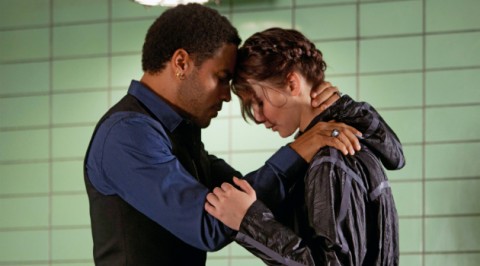
Preparing for a battle to the death in which the odds are most definitely not in her favor, Jennifer Lawrence’s Hunger Games heroine Katniss Everdeen feels utterly alone, trapped within the deceptively cushy confines of the Capitol. Thankfully, she has at least one key ally on her side: Her stylist Cinna, played gracefully by rock star-turned-actor Lenny Kravitz , who discovered only after being cast that he’d be sharing the screen with one of his daughter’s close friends. “I asked, ‘Who’s playing Katniss?’” Kravitz recalled to Movieline. “‘It’s Jennifer Lawrence.’ And I was like, ‘Wow, she was just in my house cooking breakfast!’” Their previous friendship (through daughter Zoe, who co-starred with Lawrence in X-Men: First Class ) helped lend a natural rapport to scenes between Katniss and Cinna , moments that evoke the stalwart tribute’s hidden fears and anxieties on the eve of The Hunger Games ’ death Olympics. For Kravitz’s part, his take on Cinna is at once subtle and fresh; cast on the strength of his acting debut in Lee Daniels’ Precious , he lends Cinna unexpected warmth and complexity and breathes confident life into one of the books’ most beloved supporting characters. Kravitz spoke with Movieline about the call from Gary Ross offering him the part of Cinna, the all-night reading sessions that caught him up on Suzanne Collins’ page-turner, and why, in this age of media oversaturation and reality TV fame, The Hunger Games rings scarily true. (Also discovered: Lenny Kravitz totally watches Hoarders .) Revealing the real-life inspirations for his take on Cinna – described in the books as a gold-eyeliner wearing fashionista who is also the most “normal” person Katniss encounters in The Capitol – Kravitz answered Movieline’s burning question about Cinna and his intentionally ambiguous sexuality, a question that’s led to much discussion of Collins’ more subtle commentaries on modern culture. Is Cinna gay? [ GALLERY: Jennifer Lawrence & Co. shine at the Hunger Games premiere ] So, you weren’t familiar with the books beforehand and only heard about them when you got the call for Cinna? Yes, through Gary Ross – I had no idea. Did you know Gary beforehand? I had met Gary once at a dinner, a random dinner. He and I had a conversation about film in general, and I was completely taken by the fact that he had written Big and it was his first thing, off the cuff – ‘Oh, I’ll write this movie called Big …’ But that was it! I’d met him once at a dinner. Never saw him again, didn’t have his phone number. How did he track you down for this phone call? I’m in the Bahamas, recording my album, and I’m in the booth somewhere. The engineer knocks and says, ‘There’s a Gary Ross on the telephone.’ I had kind of forgotten, you know? I pick up the phone and he’s like, ‘It’s Gary! Remember, we had dinner…’ I was like, ‘Oh! Gary Ross . Cool. What’s up?’ He said, ‘I’m doing this movie called Hunger Games and there’s a character called Cinna. If you want it, you’ve got it – just tell me. You won’t have to audition.’ I’m sitting there like, what? But in the back of my head I’m thinking, who’s Cinna and what’s Hunger Games ? I had no idea what it was. So I said, ‘Thank you, I’m sure I’d want to do this but – I don’t know what it is, so let me get the book.’ I was in the Bahamas in a small town, not a lot of internet around, so I’m with my iPad trying to get a signal to download this entire book… and I began to read, began to read, and at the end of Chapter One I thought, oh shit – I can’t put it down. I’ll just read another chapter. It was at night and I had been working all day so I’m tired and I figured I’ll make a chapter or two before I put it down, but I couldn’t. I was like, wow, this is a really good story! So I called him the next day and said, ‘I’ll be there.’ Your scenes in the film are mostly comprised of just you and Jennifer Lawrence as Katniss, and you two share a great chemistry together. But you had already known her prior through your daughter Zoe, who was also in X-Men . What was your relationship like with her before making the movie together? She used to come over, and I’d go to London and see them. I mean, I fell for her the day she walked in my house. This girl is family. She’s so funny, such a joy to be around. She brings sunshine to any situation. And obviously it was a plus to find out, because when I told Gary I would do the movie I asked, ‘Who’s playing Katniss?’ ‘It’s Jennifer Lawrence.’ And I was like, ‘Wow – she was just in my house cooking breakfast!’ Did Gary know about this connection when he called to offer you the part? Did he know? No, he didn’t know. I told him and he said, ‘Really? Well, that makes it even better because there’s going to be a natural chemistry already.’ That definitely was a plus. Did you read the whole book in a day? At night, and then the next day. Quickly. I could not put it down. What a great opportunity! And the fact that he’d called me – he said he’d seen Precious and he thought that Nurse John and Cinna, even though they’re completely different characters, had similar characteristics as far as being nurturing and all that. Certainly, they do. When it comes to Cinna, though, maybe given the fact that he’s a fashionista some readers of the books infer that he’s gay, even though his sexuality remains ambiguous. Right, they assume. And that was a question: How far do we take it? If we had gone the outrageous route, it would have been just another stereotypical statement. Immediately I’m thinking science fiction, crazy costumes, this sort of possibly effeminate costumes. I started thinking Chris Tucker in The Fifth Element , because I didn’t know where Gary was going stylistically. Then when I got to the set I thought, this is really smart. The look of the Capitol and the way everybody dressed, it was real – it wasn’t this outrageous costumey stuff. There were a lot of outrageous colors and big statement, but there were a lot of old things and new things mixed, just like it is now. We’re in 2012 and we’re still wearing clothes that look like clothes. We’re not wearing silver space suits with helmets and all that… well, some of us are. [Laughs] Did you take inspiration in terms of Cinna’s style or carriage from any real life figures? I thought about Yves Saint Laurent and Tom Ford, who are both very inspiration design characters for me. And both of them are kind of right down the middle and very classically dressed, not say, like a Galliano or someone who is more outrageous and flamboyant in dress. That was the way we decided to play him and I think that was definitely the right choice. So then: Is Cinna gay? I have no idea. I have no idea. I played him right in the middle, and one of the inspirations is a friend of mine, actually, who I grew up with. He’s bisexual and you could think he’s gay, you could think he’s straight, you’re not really sure. It’s very subtle. You wouldn’t know it, but Cinna’s speech patterns and the way he enunciates was kind of based on this person that’s just a friend of mine, who I thought was a good example. It’s worth noting that the way you play Cinna, what stands out a bit more than in the books is that he comes off as more of a strategist than a stylist. Was that an important element to highlight? Most definitely. When people think at first, ‘So, what is Cinna?’ I play a stylist, but it’s hard to just say I play a stylist. What does that mean? He’s not that, he’s trying to help Katniss make an impression and he’s trying to save her life, and he wants people to like her because that’s part of the game. So that’s a good word, strategist. Given how much of a stark contrast he is to most people in the Capitol, more sensitive and grounded and restrained in his sense of style, it feels as if he’s infiltrating Capitol culture. Right. He’s clearly on Katniss’s side, doesn’t agree with the Capitol groupthink. No, he’s doing his job, trying to stay alive and do his thing and not get on the bad side of the government… How much of Cinna’s backstory did you cultivate with Gary or Suzanne Collins in terms of where Cinna comes from, even if that backstory isn’t included in the film? Not a lot, really. I just thought about him as being a person who’s been there for a few years; he hasn’t been there forever, he’s not that old, and he’s one of those people that kind of wishes or wants to break out and it’s not the time, necessarily. So he’s going to keep things even but he’s going to show his talent, he’s going to be fierce about it – he’s making these fire costumes and all this stuff – and he obviously is talented and likes using his talent. I’m sure he’s cared about everybody that’s come his way over the years, but now he’s met this girl that he really sees something in, and she’s the biggest underdog there is, and he’s going to do his best to help. Do you see a contradiction between the wariness in the books of mass media and the dangers of entertainment as a means of cultural control, and the fact that the Hunger Games movie is a now studio franchise involving hundreds of millions of dollars that will likely dominate pop culture when it comes out? Especially given your unique position as a successful recording artist, how do you view that fine line? It’s a very interesting time we live in. You know, it took me a long time to join this party of Facebook and Twitter and reality TV – I mean, I still don’t really watch it, but sometimes when I’m on the tour bus late at night trying to bring my brain back to a neutral place I’ll flip past these shows, and when I stop it’s because I’m really blown away that I’m watching this… that it exists . There’s a show for people that don’t know how to throw away their garbage! Or guys who have a pawn shop. Last night I was flipping channels for a bit before I went to bed and there was a show for guys in prison and how they function in prison and all their secrets! This one guy’s making moonshine liquor and they’re getting him to show us and it’s like, my god, what’s going on? Well, some of those shows are amazingly insightful, but then you have the other kind of reality TV shows… You have the bad behavior being glorified, and they’re becoming role models. Kids, everybody just wants to be famous now. I mean, I grew up saying I wanted to be a musician. Did I want to make it and be famous? Why not, sure. But I never said I wanted to be famous, I wanted to be a musician . Now it’s just all about fame. They’re showing everything. It’s quite interesting, but I think the movie is trying to show us where we are. We’re not yet in arenas killing people, but it happened thousands of years ago. Could it happen again? How much is it going to take to keep quenching our thirst? Look at where we are now. How’s it going to be a hundred years from now? People are going to be numb. That’s the great thing about the novels; it’s a young adult series and could be dismissed on first glance as a children’s property… But it’s not! That’s what’s so interesting. That’s why I think this is going to be very successful. The Hunger Games is in theaters March 23. Read more here. Follow Jen Yamato on Twitter . Follow Movieline on Twitter .

Originally posted here:
Lenny Kravitz on His Hunger Games Call, Jennifer Lawrence, and Cinna’s Sexuality

Pat Healy on The Innkeepers, Paycheck Roles, Auteur Heroes, and the Indie DIY Film Community

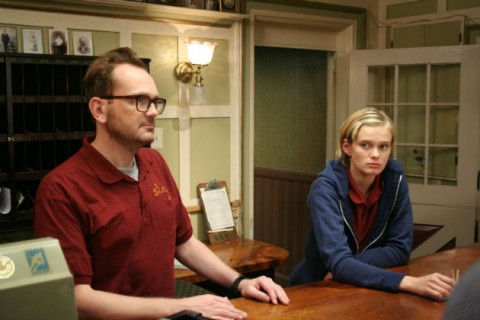
Every performer must pay their dues, but with this week’s old school-flavored ghost pic The Innkeepers character actor Pat Healy cashes in over a decade of memorable supporting turns and guest spots for the spotlight at an auspicious moment in his career. Having popped up in a number of great films over the years ( Magnolia ! Ghost World ! Rescue Dawn !) Healy stars with Sara Paxton in the Ti West film as a sardonic desk clerk at the Yankee Pedlar Inn, where spooky happenings are afoot; meanwhile, Healy also earned writing credits on the award-winning In Treatment and recently took Sundance by storm with Craig Zobel’s controversial Compliance . And to think: It all began with the one-two punch of My Best Friend’s Wedding and Home Alone 3 … I want to start out by asking you something of great importance: Why is there no Wikipedia page for Pat Healy the actor? I don’t know! There’s one for Pat Healy – The MMA fighter? Yes, do you know of him? Pat “Bam Bam” Healy! There’s a competitive hurler with your name as well. I didn’t know that – that sounds like a vomiter. There’s a local newsman, there’s a New York Times… Are you acutely aware of these other Pat Healys in the world? I had become, since There’s Something About Mary in 1998, with Matt Dillon’s character. I was like, ‘I thought I was the only one!’ And for a long time, this might still be true because a lot of those guys are Patricks, I was the first Google one. Bam Bam might be surpassing me now, MMA is very popular. Did you somehow cross the Farrelly Brothers, years ago? No, the guy who works for them who was like a line producer guy and I think is a writer or director now too, in some way, because I remember he was making a movie at one point and I started getting calls from people like, ‘Hey, comin’ in to see you next week!’ And I was like, ‘I don’t know what the hell you’re talking about…’ But yeah, no one started one. I guess I am maybe not the greatest self-promoter, I’m getting more comfortable with it now. I’m not a reluctant star or anything like that, but maybe I was naïve early on about how all this stuff works, with publicists and all that kind of stuff. And you’re not anymore? I feel like now I’m doing the things I want to do because my career as a screenwriter is affording me to not have to just be a guest star on every dumb crime procedural show on TV. I can do the things I want to do which are the more interesting things, like working with Ti [West] or working with Craig Zobel again. Those are more significant roles in better films. I might make more money in the short term having a few scenes in Pearl Harbor and the residuals are good, but nobody’s offering me other jobs off of that, whereas this community of people, we all know each other or know of each other and know each other’s work. How did you get together with Ti for this film? Innkeepers came about because Ti and I were at the LA Film Festival in 2007, met briefly – he was there with Trigger Man , I was there with Great World of Sound , Craig’s movie. He saw it, and I was a huge fan of House of the Devil ; I’d just seen it and I got a call from Amy Seimetz, our mutual friend, and she said ‘He wants to use you in a movie.’ I was ready to say yes without ever reading it, but then I read it and it was great, it was a great part and everything. So it works out that way. It’s just better for me now, I can afford to do these films and I enjoy the work – and people end up seeing what I can actually do, as opposed to saying ‘He was in that.’ If it leads to more jobs in the long term, it’s a better living for me. What was your plan in the beginning when you started acting? When I was a kid, when I was a real little kid, my family were always into movies and one of my older brothers, Jim – he’s two years older than me – he and I were just into movies and seeing everything we could see, watching everything on television, getting all the books and all that kind of stuff. Interestingly enough, we both have the jobs we wanted as little kids: I’m making films and he’s in film restoration. He ran the George Eastman Archive for a long time in Rochester, New York and now runs the Cinematheque at UW Madison. He loves watching them and showing them and talking about them and I love making them. So I came into this loving movies, and acting was something I knew how to do from an early age, just being a ham and being a performer, doing theater; that was sort of my way in. Doing some professional theater opened the door in Chicago, where I’m from, to commercials, and movies came through town, TV shows… Speaking of which, can we talk about Home Alone 3 ? [Laughs] Home Alone 3 is my first real movie! I was hired on My Best Friend’s Wedding , that Julia Roberts movie, and I was actually hired to be in the opening scene of that movie as this waiter and I was in make-up and costume and everything, and they just rewrote the scene as we did it and never shot me. But I got my SAG card and I think maybe six months later I got [ Home Alone 3 ], which if you haven’t seen it… all the little kids have seen that one on video a million times and it’s a perennial residual earner because kids like it and it’s on at the holidays. I played the FBI agent who was behind the guy who had all the lines, but I think they kind of forgot about me for a while because I was on hold, which they never do now because they watch the budget so tightly, but I made a lot of money off of it because I was on hold for about five weeks even though I only shot five days on it. And residuals are based on the time you worked on it, so the residuals have stayed really good. You mentioned the creative community that brought you in touch with Ti, and in recent years maybe more than ever I’ve noticed all these ties between indie filmmakers in this community. Yeah, it’s really different now. I think the movement in a way sort of started in this current incarnation through David Gordon Green , who I met through my brother in 2000 after George Washington had premiered in Berlin; he fostered a real sort of community spirit. Certainly all those people he went to school with, like Danny McBride , Jody Hill, Paul Schneider and now Jeff Nichols – all these people are doing great things, and encouraged people like Joe Swanberg. And all the satellite people from Joe, who is somebody who’s just going out there and making this stuff on his own, doing a lot… Joe and Ti and Sophia Takal and Larry Levine, Andrew Bujalski, Bob Byington, there’s a whole Austin contingent – we all know each other, too, and even people like Michael Shannon , who is my friend, who I started in theater with in Chicago with, is working with Jeff a lot. Craig [Zobel] also went to school at North Carolina School of the Arts. In my mind, as someone who was around a little bit before that, it seemed to spur a new DIY movement and a sense of community because David is an extremely loyal person and all of those people have gotten opportunities, including myself, because of him. I think that his films as well as his spirit and his generosity have inspired this new generation. People bring up mumblecore and I think a lot of people can point to George Washington as the first movie in that genre, if you can include it – it’s certainly bigger and more ambitious. But there’s a real sense of community, especially at the festivals when you’re there and seeing each other. That’s frankly where a lot of the work comes from, too. People meet and decide to work on something together, or somebody sees someone in something… It’s intriguing to watch those connections interweave from the outside, watching this community grow with each project. Yeah – and somebody like Robert Longstreet, who David Green saw in a small movie called Ding-a-ling-Less many years ago, and David put Robert in a movie and he met all these people, and then last year Robert was in like 10 movies at Sundance! So it is great, and it’s also not just real young people, either. It’s people of all ages, like some of the actors in Compliance like Ann Dowd, a woman in her fifties who’s done a lot of theater work and she’s just staggeringly brilliant in the movie. I know a lot of people are going to see that and want to work with her. You saw that thing sort of happen with Melissa Leo a few years ago, and those are all people who are working but they go to these independent movies because they get to show what they can do, really, and really spread their wings. Then all of a sudden Hollywood comes calling once they either do a television series or do a good part in an independent movie. In this, in Innkeepers , and in Compliance and Great World of Sound , I get to show what I can do and people can see it and it comes back to me. So I love what’s going on now. It’s cool and I think it’s coming out of both social and economic factors, but it’s fostering a lot of great activity and a lot of production. With Innkeepers , it seems like the entire process of making this was very condensed. Why did you initially respond to the material? I loved House of the Devil and was just ready to do whatever. [ The Innkeepers ] was a horror movie but it had a really good central relationship in it, and there were some different colors to get to play – certainly a lightness in the character, I like that dry sense of humor and sensibility. You’re exceptionally good at that, actually. I think it’s my natural rhythm and I think maybe Ti saw that as much personally as he did in any work that I’ve done, with the exception of Great World of Sound which is heavier and more serious. But that comes naturally to me. I certainly liked the heartbreak of that character, the unrequited love aspect. Even the tragedy in his failings is utterly amusing. And the fact that it is very tragic and heartbreaking to play, and to sit in the audience and it’s very funny… because it’s that comedy of uncomfortability, like Albert Brooks or Ricky Gervais – that really reality-based ‘I’m so uncomfortable I have to laugh…’ I like that about it a lot, and I like that the scares and the tension came from the building of the relationships so that you actually care about these people. There are so many movies where in the third act it’s like where everything’s flying this way and that and you’re like, ‘Okay, that happened.’ Filming Innkeepers you all actually lived in the hotel, on top of which you and Sara Paxton only met right before shooting, yet you managed to strike a really great chemistry together. It was taking a big risk – it was like a 17-day shoot, living, working, and eating in the hotel, a weird place, and we met the day before. I knew very little about her, I think I saw Last House on the Left and that’s a much different part so I wasn’t really sure what to expect. She’s just a really buoyant, funny, fun, lovely person so my guard went down pretty quickly. Luckily the two of us really liked each other, and the movie’s pretty much shot in sequence so we just developed that relationship. But I think a lot of credit can go to Ti for creating that environment; it was cool to be in that weird environment in the hotel itself, and to be in the camp-like atmosphere of all living together, screwing around and joking and all that stuff. Ti recently wrote an open letter imploring people to pay to see and support small indie films, which made a lot of sense. Yeah, some people were surprised that that is the reality of things. Somebody I know had recently pirated an indie movie… Did you shame them? I did, and they gave me crap because it wasn’t playing anywhere near them and they really wanted to see it. I just thought, well, it didn’t make any money — maybe you couldn’t have seen it when it came out, but you can see it on Netflix or rent it or whatever. It’s not like I get a dollar if you watch it; I don’t get anything, really, though I might in the long run if it makes a lot of money on DVD. But like [Ti] said, the reason they keep making dumb movies is because we keep paying to see them, and then we don’t pay for the other ones. I feel like people know you even if they don’t realize they know you because of some of those bigger movies you were in, like Magnolia , Rescue Dawn , Ghost World . How do you look back on those films now? Even though I wasn’t in a position to choose what I wanted to do, I was fortunate enough to be working with people like Paul Thomas Anderson in Magnolia . That was something that was really exciting to me, I’d loved Boogie Nights and all that stuff. At that time – and I didn’t know what I had because I was 26 years old or something, and the sad thing is when I think about it he’s only a year older than me – but I think that I just naturally ended up in those things. I was a fan of Dan Clowes’s comics and Terry Zwigoff, who made Crumb , so I think I ended up in Ghost World because unconsciously my drive to be in those things made me work hard to get them. Or working with Herzog on Rescue Dawn … Did you just put a little something extra into those auditions? I guess I just really cared about those things, and there are so many that I don’t, and I get some of those too. But something like a Western with Andrew Dominik and Brad Pitt and all those people in Jesse James , I really want to do that. But I’m not conscious of it so there must be something that gets me into those rather than the other ones. There are actors’ careers that are built on parts I didn’t get. Now I think I’m a little older, and I’m writing and certainly making a living at that, and I can be a little pickier to a certain degree – though I can always use more money. But now I’m being cast in things I would choose to do, you know? Now that you’re screenwriting and directing, do you feel like you’ve picked up advice or lessons from the various auteurs you’ve worked with? All of them. Without a doubt. The main thing that I would say about all these people – Anderson, or Herzog, or Zwigoff, or Zobel, or Ti West – is a sense of leadership, a real devotion by their cast and crew, because of the kind of people they are. They’re not only masters who know what they’re doing, but they’re really great at revving you up. You like them and they really like and respect you and you feel support and freedom to do your best. That’s such a great quality in a director; you are the captain of a ship. You have to do your homework like you do as an actor, be prepared and show up and know what you’re going to do, but that’s the commonality among the people that I’ve worked with that do great things – they really know how to be leaders and to rally the troops. Were you not surprised, then, when Werner Herzog saved Joaquin Phoenix from that car crash? Nothing Werner does shocks me! He’s a really remarkable guy, and I think some of his life is cinema. He crafts these moments and certainly makes sure people know about them. But I just saw his most recent documentary, Into the Abyss , which is great, and he introduced it. Even the way he came out and framed the movie for the audience, sort of directing how people see the movie, really enhanced my enjoyment of that movie so much, so he’s even a master in that way. As is Paul Anderson too; he controls every aspect of it through the publicity and marketing and everything. So by this token, would you say Ti West has something in common with, say, Michael Bay? I mean, he might tell you that. [Smiles] But as with these guys, or with Kubrick or Polanski or Hitchcock – Ti’s really exacting, he writes and meticulously casts it, he shoots it and knows exactly how he wants it to look, and then he spends so much time in the editing, which he does himself. He’s meticulous and exacting in post with Jeff Grace, the composer, and Graham Reznick, the sound designer – and then going to the theater and making sure the specs are right, going through the poster design and all that stuff. That’s him. I think if you really want to see your vision through to the end… Terry Malick does that too, you’re sending note to the theater telling them how loud it should be played and all that stuff. It’s tiring, thankless work – but it matters to them, you know? Given all of this, what sort of writer/director do you want to be – what kind of projects do you see yourself creating? The things that I’ve written are dramatic but they all have an inherently bent sensibility to them, an offbeat humor that’s not broad but is sort of unusual. It’s sort of the way that I see things, I think. If I were to compare myself to someone, contemporary people like Alexander Payne comes to mind, or Hal Ashby or Michael Ritchie – those sort of satirical looks at everyday life. But I’m a kid of the ‘80s and ‘90s too, and I love the big action movies too. So those strange conventions find their way into some of the things I write, too. I just hope that whatever it is, and I know that whatever it is, I will be an auteur. I can’t do anything – I can’t do a performance on a crappy TV show, or write a script, or write a Tweet, that isn’t inherently me. I couldn’t if I tried, and if I did it’s like cardboard, it stinks, it’s bland. I’ve tried. It’s trusting what’s there, and whatever I end up making, good or bad, it’ll be a true expression of who I am. It’s taken me a long time to get to that place, but I feel like I’m in that place. For more with the makers of The Innkeepers check out the Movieline Interviews with Ti West and Sara Paxton . The Innkeepers is in select theaters this Friday. Follow Jen Yamato on Twitter . Follow Movieline on Twitter .

Read more from the original source:
Pat Healy on The Innkeepers, Paycheck Roles, Auteur Heroes, and the Indie DIY Film Community

Spike Lee and Co. Talk Religion and Representation in Red Hook Summer

In his new Brooklyn-set drama Red Hook Summer , director/co-writer Spike Lee tackles the complex topics of religion and redemption within the modern African American experience, as filtered through the eyes of a spoiled Atlanta teenager (Jules Brown) forced to spend one hot, explosive summer with his preacher grandfather in the projects of Red Hook, Brooklyn. It’s a richly conceived portrait of the Brooklyn neighborhood as microcosm for the black community at large, very much a Lee joint through and through. But, as the filmmaker reminded audiences this week at Sundance , where he railed against the Hollywood system, “it’s not a sequel to Do the Right Thing !” It’s tempting to draw parallels to Lee’s incisive 1989 Oscar nominated drama – he does, after all, appear in Red Hook Summer as his Do the Right Thing character Mookie (who’s still delivering pizzas for Sal’s, though he and Tina have parted ways). But fast forward to 2012 and there are new complications to be explored now that gentrification, secularism, reverse-migration, and the evolution of culture have altered the composition of the community – and Lee, with co-writer James McBride, seeks to explore every nook and cranny of this expansive 21st century terrain. Into the evolving world of Red Hook comes young Flik (newcomer Brown), who resents the old-school rules of his grandfather, charismatic minister Enoch (Clarke Peters). A local girl (Toni Lysaith) helps Flik acclimate to the hood, but unexpected, volatile events shift this coming of age outsider tale into a polemic on faith, the church, and community that’s proven difficult for some festival audiences and critics alike to swallow. Lee, speaking with Movieline after the divisive debut of his film, wasn’t worried about leaving some viewers unsatisfied. “There are a lot of questions in the film that we don’t necessarily have the answers for, and I think a lot of the time that’s good,” he said. “I know there have been a lot of references back to Do the Right Thing , but one of the major criticisms of Do the Right Thing when it came out was that I didn’t have the answer for racism at the end of the movie. But who has that answer?” Red Hook Summer paints a picture, in vibrant colors and heightened dialogue, of a community anchored by faith and led by Peters’ charismatic, Bible-thumping minister – the lone figure leading the charge against crime, apathy, and dissolution within the neighborhood. A pointed jab at Tyler Perry seems to declare Lee’s intent to do better and be less jingoistic to the black faith-based crowd. Asked to declare his position on Perry, Lee paused. “I respect his business savvy. It’s great.” Still, he couldn’t resist inserting a mock Madea poster into his film. “What, Fat, Black and Crazieee ?” he laughed. “It’s coming this summer to a theater near you! Where Red Hook Summer goes in its last act makes it much more than a superlative version of a Perry film, suggesting that religion and blind faith can only go so far in tempering the ugliness of the world around us before personal accountability comes into play. “All one has to do, I think, is read a newspaper, because the marketing for this film is being done daily in the newspapers and on television,” explained Peters. “What Spike has done is hold a mirror up to that for you to look into, safely, and make your own judgments and hopefully govern yourselves accordingly.” The nature of the film, and the scope of Lee’s provocative vision for it, may explain why he says mainstream Hollywood studios balked at backing the project. “They know nothing about black people,” he said at the Q&A following his Sunday premiere. “Nothing!” Striking out on his own, Lee financed and filmed Red Hook Summer himself, shooting over the course of a few weeks on location, using the church founded by McBride’s parents as the film’s central backdrop and casting his two young actors from local Brooklyn schools. “Obstacles don’t bother us,” he told Movieline. “They’ve never bothered me. I’ve always been an independent filmmaker. Just because I did Inside Man , that doesn’t mean I left it.” But the studios weren’t the only ones hesitant about Lee’s project; according to McBride, “a lot of actors [wouldn’t] do it. They don’t want to be affiliated with this kind of film.” Even actor Nate Parker, who plays a former congregation member-turned-gang leader and also appears in George Lucas’s Red Tails , was advised not to take the role. “People on my team said, ‘Aren’t you afraid that people won’t want to work with you because you’re only doing these types of films? Aren’t you afraid that you’ll miss your window?’” “No,” he continued. “We need to give ourselves more credit. We need to give the world more credit. To say that the world is so short-sighted that they don’t want to see people like us – human beings doing human things? Religion is universal.” It’s not just the citizens of the contained streets of Red Hook or Brooklyn who are primed for these re-examinations of faith. Co-scripter McBride on the one hand wrote Red Hook Summer drawing on his own history with the place, but he also hopes it’s applicable to other communities. “There are a people who believe in God and need God badly, and there are people who deliver His word well, and who have some corrupt elements in their lives,” he said. “This issue of religion is something that affects white people, in fact, probably more than black folks. Look at where we are politically in this country – look how the Republican party has fallen apart as a result of this religious zealotry, which is misguided and misplaced and used as a baseball bat to divide us.” And so, in the face of studio apathy, polarized reviews, and a collective reluctance to discuss faith and its place in life, Lee and Co. are something of an underdog force chipping away at a largely unspoken topic within a vastly underrepresented community. Still, the idea that Red Hook Summer will inspire discussion and debate is, perhaps, victory enough. “With a team like this I hope that we’re on the scrimmage line all the time, moving that ball down the film inch by inch,” enthused Peters, “because we can’t do long passes! We’ve got to do it in increments. And this is just another bite into that.” Follow Jen Yamato on Twitter . Follow Movieline on Twitter . For more of Movieline’s Sundance coverage here .

More:
Spike Lee and Co. Talk Religion and Representation in Red Hook Summer

W.E.’s Andrea Riseborough on Madonna, Understanding Wallis Simpson, and the Mania of Venice

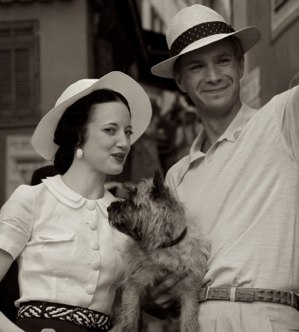
W.E. wasn’t just an undertaking for Madonna, who directed her Wallis Simpson/Edward VIII biopic with all the lavish heft of a gigantic watercolor landscape. It was also a labor of love for Andrea Riseborough, the 30-year-old actress playing Simpson, the American socialite whose romance with Edward led to his abdication of the throne in 1936. The film’s most enjoyable asset, Riseborough was saddled with making the polarizing Simpson a wholly charismatic figure — an Evita without the benefit of torch songs. She succeeds, and with her thoroughly photogenic Edward (James D’Arcy) in tow, she softens W.E. ‘s melodrama with fantastic ease. We caught up with Riseborough to discuss her fascinating director , her feelings about the subject matter, and the zaniness of the Venice Film Festival . You’ve been promoting this movie nonstop for months! Are you sick of corsets and gorgeous costuming at this point? Are the constraints of the couture caving in on you, so to speak? That’s very funny! No, I’m very much enamored with every different period. It’s so funny because people often say — or people talk about period pieces — and I never really faction different periods or divide them from one another. I just think that really everything is of a specific period whether it be 2016 or 1810. It was extraordinary, the architectural feats that some of the couture gowns entailed on W.E. entailed. You have no idea. It was extraordinary. But is it daunting to think of committing so much to the look and feel of a period piece again? It’s something I’m very familiar with. Because whether it is 2016 or 1810, it’s very arduous. Specificity in any project, even if it exists in the abstract [Laughs] or it exists in an alternate reality, there’s always a vision that everybody adheres to. Everybody very much passionately leans toward expressing that vision and the way we share it with the world. It’s something that’s very familiar to me, actually, I suppose is the answer to that. It’s something I enjoy very much. It’s transporting. You are stunning in this movie. You really have the face of a beautiful silent screen star, or a young Bette Davis. Have you seen Dark Victory ? Oh I have, yes! Very much a part of my lexicon as a child. Did you think your throwback looks would aid you in getting cast? Because you would definitely fit in with the stars of Wallis Simpson’s time. Not really, because when I’d been sent the script, I thought it was very unique. I wanted to explore a little more and was interested certainly in the character that was Wallis Simpson, when I went to meet with the director — but when I met her, I actually had what could only be described as sandy blonde hair and a false tan. I was playing a modern character elsewhere. I’d never seen myself in one particular period. I know that my face is pretty plain and can look reasonably attractive but can also look horribly unattractive, and it’s been something that’s been a real benefit to me — being a blank canvas. Muscularly, I can mold it anyway that I want to, if need be. Or I can completely relax it! So, no, I didn’t think that — no. What I saw ahead was like with any role, the journey of a transformation that was something so utterly far away from myself. It was something and is something I’m very fulfilled by. For the record, James D’Arcy also looks just like Anthony Perkins. You can tell him I said so. [Laughs.] Nobody’s ever told him, but I can e-mail him if you like! [Laughs again.] E-mailing him now. Madonna is known for being able to choose forthcoming trends, own them, and bring them to the pop culture fore. Before you met her, did you have any idea what would impress her, based solely on your knowledge of her before W.E.? Did you use that insight to get cast in the film? My desire was not to impress; I wanted to see what fueled her passion for the story. I wanted to know what her vision was for it, and whether she would respond to what I could her offer her as a potential duchess. I think it would’ve been — I would’ve been somebody else, actually. It’s not who I am, I suppose. I was interested to see what our complicit working relationship would be. That was exciting to me. The story of the duchess was something I thought would be potentially interesting to excavate. I wanted to see within what framework that might possibly happen. She, very fortunately, responded to what I had to bring to her. Really, we were artistically complicit from that point on, from the outset really. She’d seen me play Margaret Thatcher and this other character before, so she had a good grasp on the reality that I could inhabit somebody who existed and somebody who was young and innocent — this other character was young and innocent. One interesting thing about W.E. is the sheer continental difference in knowledge about Wallis Simpson. In the U.K., everyone knows. In the U.S., plenty of people know nothing about that era of British history. Oh, don’t do yourself down! I’m trying not to! But there’s definitely a gap in awareness about who Wallis Simpson was. How do you feel addressing that with different markets for the film? I think, really, the story transcends any historical context you might feel you need to put it in. Interestingly, of course, it was a reality. But what we have portrayed is our perception or version of the truth, Madonna’s version and vision of a woman who really existed. The heart of the piece is the thing that’ll tap on the door of the common man, if you will. Because, I hope, that was the thing that originally tapped on the door of the common man — every one of the working class areas that Edward visited, the working men so very much appreciated him, took him into their homes in a way that a prince had not been taken in before. It’s that same honesty and love and truth, I think, that people will feel and respond to. Wallis, she’d seen the writing on the wall. She ended up being as trapped as she imagined she would be, if he should abdicate, which he did as you know. It’s impossible for any one person — I mean, let’s not even reduce it to gender — it’s impossible for any one person to live up to the responsibility of the kingdom. How does one man fulfill a partner who has given up such an awful, awful lot for their relationship? Do you find yourself sorting out the fair criticism of W.E. from what might be considered a biased response to your director? Has the criticism been fair? I really believe that people have their own relationship with it. And I say “with it,” I mean everything that the film is. We were all part of making it. They can choose to absorb it and gain what is valuable from it any which way. I really have no opinion on it, to be truly honest, Louis. I know I’m incredibly honest to be part of something I found beautiful. That’s really all I know. Talk about the Venice Film Festival, where the world got its first taste of W.E. and the first swarm of responses to the film hit. Seemed pretty manic at the time. How do you remember it? It felt incredibly special. It was almost like our first offering at something we’d been so lovingly baking. The explosion that then ensued was quite breathtaking. It was almost funny being so surrounded by love. I’m just speaking as honestly as I felt it! Lastly, I heard you say that you and Madonna connected deeply in researching the “geeky” minutia of Wallis Simpson’s life. How deeply did that fixation go? Oh my gosh, that is such a long answer, Louis. Her fastidious research has no bounds! And that’s where the answer lies. When you approach something that you’re ignited by and are passionate about in such a way, really, until it seems to you’re getting to the point where no stone is unturned, only then can you stop. When you imagine chronicling an entire woman’s life from age 29 to 70, everything that went before 29 — since it must be taken into account — and everything that went after, you can imagine that’s no small feat. I ferociously lapped that up. I enjoyed it so much. But none of that is worth anything if you can’t just trust that it’s been inside of you so you can be present when you’re living out what might’ve been their life. Follow Louis Virtel on Twitter . Follow Movieline on Twitter . [Top Photo: WireImage]

More:
W.E.’s Andrea Riseborough on Madonna, Understanding Wallis Simpson, and the Mania of Venice

Nick Frost on Tintin, Spielberg Love, The World’s End, and Snow White and the Huntsman

In the decade or so since Nick Frost first made a name for himself on the BBC comedy series Spaced , much has happened. For starters, he’s not waiting tables at that Mexican restaurant. He’s moved with ease from television to film, most famously in genre riffs Shaun of the Dead and Hot Fuzz (with Spaced comrades Edgar Wright and Simon Pegg ), and in the alien geek ode Paul (which he co-wrote and stars in with Pegg). Also notably, Frost has ventured out from the fold in films like Pirate Radio and the forthcoming Snow White and the Huntsman . And, with this week’s The Adventures of Tintin , he notches another milestone: Working with his hero, Steven . Steven Spielberg . Frost, Wright, and Pegg may be stretching their wings a bit after coming to prominence as “The Guys Who Made Spaced / Shaun of the Dead / Hot Fuzz /Etc.” but they all come together, with buddy Joe Cornish (whose directing debut, this year’s Attack the Block , features Frost as a dope dealer), in Spielberg’s motion-capture adventure adaptation Tintin — Wright and Cornish scripting, with Pegg and Frost as the comically bumbling Scotland Yard detectives Thomson and Thompson. Movieline spoke with Pegg in New York about his ten years since Spaced , maintaining the Wright-Pegg “unit” while establishing himself as his own entity, his directorial aspirations, working on the upcoming Snow White and the Huntsman , completing the “Blood and Ice Cream” trilogy, how he really feels about Indiana Jones 4 , and why he missed his first phone call from Spielberg for a very, very good reason. You, along with Simon, got to do a riff on Star Wars , he’s in Star Trek , and now you’re working with Spielberg… What was the riff on Star Wars — the College Humor thing we did? Yes, in which you betrayed a deep, deep knowledge of the Star Wars universe. I was quite impressed with my sad droid noise. Do you want me to do it for you? Please! [Makes mewling R2-D2 noise] It’s so evocative. Yeah, it is! It’s just one little noise and you think, he’s crying! He’s sad . That’s what that noise says. So what remains to cross off of your geek bucket list? I don’t know, what have we had — zombies… have there been any ghosts? Aliens, we’ve had a space ship. I don’t know, I think I’d like to do lots and lots of things but I’m not necessarily going to glue myself to the genre side of it. I think it’d be quite daft to do that. I think it’s possible to have your cake and eat it, and we’ve been very lucky that we have been allowed to do what we want. And now, because of that, we are able to branch out — Simon doing Mission: Impossible , Edgar doing Scott Pilgrim , and this… We’re pretty lucky. Looking back, it has been about 10 years since the end of Spaced , and the three of you have come so far since then. Yeah, right? I was just saying, it was like 10 years ago I was serving shitty food to fucking horrible businessmen in a Mexican restaurant… Wait — during Spaced ? Yeah, after the first series I went back to work there. That was quite odd. Sometimes people would ask for the bill and then say, “Are you Mike from Spaced ?” [Hangs head] “Yes… yes, I am.” Ten years is the kind of milestone that makes you look back and reflect, isn’t it? Yes — I read something in the Times a few months ago that 10 years, or 10,000 hours, is what you need to master anything. An instrument, a language, to become a good dentist… Anything you want to do, you can learn to be great at it in 10 years, or 10,000 hours. What would you say you’ve learned in the last decade? You know what, I watch a lot. I watch what everyone does, and I’m interested in what everyone does on a set. I didn’t train as an actor so I think it would be quite stupid of me to just act, you know? I want to direct a film, films , I want to produce. Me and Simon have always said this is about the long game. This is it now, forever — this is my job. This is what I love doing. So I think it’s silly just to sit around and wait for the phone to ring, for someone to offer you a part. I might as well write it myself and shoot it myself. And you have all thrived in the arena of creating opportunities for yourself, it seems. Yeah, but that can be a double-edged sword actually, because people can also look at that and the unit that we are a part of and say, “Well, that’s all they do.” So people will not offer you things because they think you wouldn’t do it because you just hang out in this kind of unit. You think this happens to you because of the Spaced gang? Absolutely, I do. You do have this very close partnership, which people know you for, but you must also need to define yourselves separately. And that’s what it seems like you, Simon, and Edgar are all doing right now. Absolutely. And there’s no time limit on it. As long as we’re happy and working, you can go on forever in this job. Edgar and Joe [Cornish] wrote this, but how exactly did you and Simon come to be cast in Tintin ? Simon met with Steven — Spielberg … Ah, yes. That Steven. [Smiles] I’ve been doing that a lot in the past few weeks, just in case people didn’t know that I’ve been working with Steven Spielberg … [Laughs] I think Simon had a meeting with Steven, potentially to see if he would come onboard with Edgar and Joe, after Steven did his draft, to see if maybe he wanted to have a little go at the script. But that just didn’t work out, and then I think Steven said to Simon, “Do you want to be in it?” Simon did a little fanboy squeal, and shut his legs as if he was going to do a wee, and then I think Steven said to him, “Well, do you know anyone that you work with, well, that you’d want?” That guy wasn’t available, so he came to me. That was that! No hesitation, I assume, in taking the job? For me? No! Not at all! Well, his office rang me up one night, one evening. It was like 9 o’clock at night. They said, “Steven’s going to ring you in 10 minutes if you could be available,” but I was cooking my wife’s dinner. She wasn’t in, I was cooking her a meal. And it got to a really crucial point in the preparation which meant I could not answer that phone call without ruining my wife’s dinner. So I dropped it — I dropped the call! How romantic! [Laughs] It was a really confused message from Steven saying, “Um… hey, Nick. Did my office phone you? Anyway, give me a call back.” I phoned the office back and he’d gone to a meeting and I was thinking, “I’ve really fucked this up.” But eventually we got to talk to one another and, you know, we did it. I was so pleased! He’s a hero, he’s an icon of mine in terms of filmmaking, and a lot of my cinematic touchstones are films that he’s made. That said, you can’t bring that with you on set. I think me and Simon allowed ourselves like two hours of fanboy dancing, and then… Then you put on your professional hat. Yeah, absolutely. That said, sometimes we’d be sitting around the monitor and Steven would be telling a story about how they shot something in Close Encounters and I’d kind of nudge Simon under the table, and we knew that both of us were thinking, “This is fucking amazing ” When I spoke with a few of the Super 8 kids earlier this year they had pretty much the same story. Oh, cool! I watched that this morning, again. I think it’s great, I love it. It does evoke that magical something in Spielberg’s films, doesn’t it? Yeah! Well, you know, we tried to do it on Paul and J.J. did it — it’s just a big, lovely love letter to Steven. I think it says a lot about Steven’s legacy to people of J.J.’ s and my age and Simon’s age that it stayed with us, it affected us through our lives. As a self-avowed Spielberg fan, let me ask you this: How do you feel about Indiana Jones 4 ? [Takes a sip of tea] Well, you know. It’s tricky, obviously… but it’s still an Indiana Jones film. It’s still Harrison Ford as Indiana Jones! I still got that feeling when I heard the music. It’s an Indiana Jones film, you know? It’s a Steven Spielberg film. [Pauses] Yes, it’s different. It’s the same kind of things about the original Star Wars films and Phantom Menace . But that said, I am a fan of the originals. Clearly. There are generations of teenagers who prefer the new ones, and that doesn’t make them any less valid. They’re just different. If I’m trying to be democratic about things… and it’s the same with Indiana Jones 4 . I liked it. It was weird, and it was different, but it was unmistakably a Steven Spielberg film, and that’s fine with me. You just finished filming another movie. Tell me about your experience on Snow White and the Huntsman — or, as the fans call it, SWATH . SWATH ! It was great. I saw a picture of you and your fellow dwarfs in your dwarf gear and your dwarf hair . Yeah, they shaved me bald every day just to put hair on me, which was weird. It was like, well, I had hair anyway, and you shaved it all off… to then put a wig on. You’re in great company with the other seven dwarfs. What was that cast like? It was fantastic! I got to hang out with Toby Jones, Eddie Marsan, Johnny Harris, Bob Hoskins, Ray Winstone, for God’s sake. I got to just sit around and listen to those guys tell stories. I like the idea of Kristen Stewart , of all people, sitting in the middle of that group of men — and also the colliding of worlds, your universe and fan base overlapping with Twilight . Exactly! I was sitting next to Bob Hoskins and Bella Swan! Please tell me you and Bob Hoskins and Kristen Stewart talked Twilight on set. Not really. I think she’d be pretty sick to the bloody back teeth of listening about Twilight . On set she’s another actress, and a lot of the time actors just talk about nothing. Talk about shit, they just chew the fat. That’s what you do! And did you sign on for multiple SWATH films as well? Three, yeah. We’ll see where it goes. We were talking about it on set the other day, where it would start and what it would be. We’ll have to see how well it does, I guess. But I think we’d all love to do another one. We had a real laugh every day. Lastly, you’ve been talking about finishing the trilogy that begun with Shaun of the Dead and continued with Hot Fuzz . What’s the latest development — do you know when you might do it? We’d rather do it sooner than later. There is a script in place, and it’s just a question of finding the time when we can all fit it in, and when it works. But we are all really keen to just crack on. Next year has been bandied around, maybe, but I couldn’t tell you. Follow Jen Yamato on Twitter . Follow Movieline on Twitter .

See the rest here:
Nick Frost on Tintin, Spielberg Love, The World’s End, and Snow White and the Huntsman

Nick Frost on Tintin, Spielberg Love, The World’s End, and Snow White and the Huntsman

In the decade or so since Nick Frost first made a name for himself on the BBC comedy series Spaced , much has happened. For starters, he’s not waiting tables at that Mexican restaurant. He’s moved with ease from television to film, most famously in genre riffs Shaun of the Dead and Hot Fuzz (with Spaced comrades Edgar Wright and Simon Pegg ), and in the alien geek ode Paul (which he co-wrote and stars in with Pegg). Also notably, Frost has ventured out from the fold in films like Pirate Radio and the forthcoming Snow White and the Huntsman . And, with this week’s The Adventures of Tintin , he notches another milestone: Working with his hero, Steven . Steven Spielberg .

Read the rest here:
Nick Frost on Tintin, Spielberg Love, The World’s End, and Snow White and the Huntsman

Christopher Plummer on Dragon Tattoo, Beginners Luck and Laughing Off Oscar

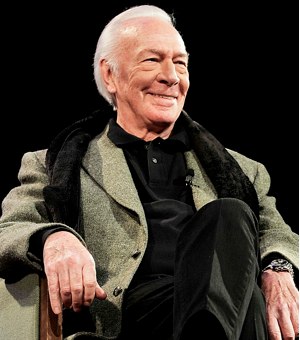
One week removed from his 82nd birthday, Christopher Plummer is winding up what one could arguably call a career year. And it’s been a long career — more than half a century’s worth of stage and screen roles comprising such milestones as The Sound of Music , The Man Who Would Be King , The Insider and The Last Station , the latter of which earned the Canadian legend his first-ever Academy Award nomination. But as the curtain closes on a memorable 2011 — most notably his acclaimed stage adaptation Barrymore , his awards-worthy performance in Beginners and this week’s blockbuster hopeful The Girl With the Dragon Tattoo — you’d be hard-pressed to find a time when Plummer wasn’t more beloved.

Read the original:
Christopher Plummer on Dragon Tattoo, Beginners Luck and Laughing Off Oscar

Jeremy Renner on Mission: Impossible, Tom Cruise’s Action Advice and The Bourne Legacy

After earning back-to-back Academy Award nominations — in 2010, for his breakout role in Kathryn Bigelow’s The Hurt Locker and in 2011, for his supporting part in Ben Affleck’s Boston crime drama The Town — Jeremy Renner decided to dive headfirst into the action genre with four consecutive big-budget action projects. The first, Mission: Impossible – Ghost Protocol , which co-stars Renner as a mysteriously overqualified IMF agent assisting Tom Cruise’s Ethan Hunt on his latest globe-sweeping assignment, premieres this weekend in IMAX. The next three films, Hansel and Gretel: Witch Hunters , The Avengers and The Bourne Legacy , will all hit theaters next year, making the California-raised actor the busiest action star of 2012.

See original here:
Jeremy Renner on Mission: Impossible, Tom Cruise’s Action Advice and The Bourne Legacy