Tag Archives: times

Bozell Column: Medal of Dishonor

In today’s world, video war games are all the rage. The military knows that video games make young men more interested in military service, and can even make them better soldiers. As is so often the case, some of the producers of these games have taken the simulation too far. For the latest version of its wildly popular shooter game “Medal of Honor,” Electronic Arts chose to set the game in post-9/11 Afghanistan. But now it also allows players to fight as the Taliban and kill American troops. This was too much for the military. Army, Air Force, and Navy bases have announced they will refuse to sell the game out of respect to our troops who have been killed by the Taliban. “You know how many of my friends have been killed by the Taliban?” Staff Sgt. William Schober, a fan of the earlier “Medal” games, asked the New York Times. “One of my friends was sniped in the head by them. That’s something you want to have fun with?” It’s another American popular-culture embarrassment. In the international community, defense ministers in countries that have lost troops to the Taliban have also experienced outrage. Britain’s Liam Fox said he was “disgusted and angry” and “would urge retailers to show their support for our armed forces and ban this tasteless product.” Canada’s Peter MacKay added  “I find it wrong to have anyone, children in particular, playing the role of the Taliban.” The lifelike simulations of combat are manufactured out of a close working relationship between game producers and the military. EA made “Medal of Honor” with the consent and assistance of the Army, which gave them access to a replica of an Iraqi village used for training at Fort Irwin in California. But an Army spokesman insisted the Army wasn’t aware that users would have the capability of fighting against U.S. troops and underlined the review process would be more thorough in the future. But why continue a partnership when you’ve been conned? An EA spokesman stressed that the game was intended to celebrate American soldiers. But with the popularity of online multi-player showdowns (where one guy in Virginia can play against another guy in Idaho), game makers have increasingly offered users the options of embracing the role of bad guy. EA’s last version of the game, set in World War II, allowed players to fight against the Allied forces. As tasteless as that is, it’s history. Right now, American boys are dying every day. They deserve this nation’s highest respect, not this final insult. The amorality of these professional war-gamers can be astonishing. Last year, hundreds of parents protested Activision’s game “Call of Duty: Modern Warfare 2” for a scene in which players could take part in a terrorist group’s machine-gun massacre of civilians at a Russian airport. The player acts as a special-ops agent infiltrating the terrorist cell that can either choose to join in the civilian-shooting to remain “credible,” or refrain from the bloodbath. EA’s Frank Gibeau complained to the media that video games are unfairly singled out: “At EA we passionately believe games are an art form, and I don’t know why films and books set in Afghanistan don’t get flak, yet [games] do. Whether it’s ‘Red Badge Of Courage’ or ‘The Hurt Locker,’ the media of its time can be a platform for the people who wish to tell their stories.” Here we go again, the scoundrel’s final defense: It’s “art.” Video games are amazing technological products, but they are not “stories” like a book or a movie. Parents don’t worry about their kids reading Taliban books. I don’t know of any movies where the Taliban are the heroes. It’s only video games where children enter an imaginary (but most realistic and therefore, dangerous) world in which they are the main characters. In a video game, every player is the author and the movie director. The game maker only sets the parameters, and lets the player finish the story. In this case, EA has created a plot in which children can be absorbed for hours in the virtual reality of killing American solders, the best and most honorable product our nation has to offer. The idea that game makers just can’t comprehend why this would be singled out for condemnation is ludicrous. They know exactly what they’re doing as the thirty pieces of silver jingle in their pockets.

Book Review: NY Times Reporter Kate Zernike Still Finding Tea Party Racism in "Boiling Mad"

New York Times political reporter Kate Zernike’s thin new book ” Boiling Mad — Inside Tea Party America ,” is among the first of what will surely be a flood of related books by journalists. Like her reporting for the Times, “Boiling Mad” covers the movement from a mostly hostile perspective that only intermittently becomes something like empathy when she’s talking to one of the invariably pleasant Tea Party citizens themselves. Behind the (of course) red-as-a-Red State-cover lies a mere 194 pages of text, not including a 33-page reprint of an old, biased Times poll on the Tea Party. While not wholly a notebook dump, there’s little new, and Zernike evinces little sympathy or feel for conservative concerns. Her expertise is instead finding racism everywhere she looks in Tea Party land. Even such benign conservative boilerplate as opposition to the minimum wage is racially suspect in Zernike’s eyes, as proven in her dispatch for the Times criticizing Glenn Beck’s gathering on the National Mall on the anniversary of Martin Luther King’s March on Washington: Still, the government programs that many Tea Party supporters call unconstitutional are the ones that have helped many black people emerge from poverty and discrimination….Even if Tea Party members are right that any racist signs are those of mischief-makers, even if Glenn Beck had chosen any other Saturday to hold his rally, it would be hard to quiet the argument about the Tea Party and race. Zernike once wrote that Tea Party members “tend to be white and male, with a disproportionate number above 45, and above 65. Their memories are of a different time, when the country was less diverse.” And during the Conservative Political Action Conference in D.C. in February, Zernike falsely accused conservative author Jason Mattera of using a racist “Chris Rock” voice in a speech (turns out Mattera just has a thick Brooklyn accent). So it’s no surprise Zernike quickly reestablished her race obsession on page 3 of “Boiling Mad,” reflecting on a Tea Party speaker “looking out at the sea of faces, almost all of them white.” The book’s index reveals that 23 pages worth of the book’s slim content refer to”race and racism.” Unlike many mainstream journalists, Zernike grasps shades on the right, noting the Tea Party’s social-media savvy young are “largely libertarian,” and interestingly described the odd mix of young activists and retirees as a “May-to-September marriage of convenience.” But “Boiling Mad” lacks a cohesive narrative, which may be an accurate rendition of the decentralized, libertarian nature of the movement but doesn’t make for a satisfying organic read. That’s partly the function of a merciless pre-electoral book deadline leaving crucial questions unanswered. Will the movement lead the GOP to take back Congress or cause it to blow a historic opportunity? Besides her chapter on the Kentucky Republican primary won by Rand Paul, Zernike uncovers few clues about the political possibilities of the movement. And Zernike’s empathy only goes so far. Showing a touching (and Timesian) trust in government statistics, Zernike marveled at the Tea Party’s ignorance, “impervious to reports from the Congressional Budget Office…that the federal stimulus had cut taxes and created millions of jobs and that the health care legislation passed in 2010 would reduce the federal deficit.” If Zernike truly thinks the CBO is the last word on those issues, she is more gullible than any Tea Partier, especially with new indications health spending is on the rise since Obama-care was enacted. Zernike reaches back to the California’s anti-property tax movement of the 1970s for more racial subtext. “Race was more subtle in conservative populist movements like the tax revolts than began in California and spread across the country in the late 1970s.” So subtle that only liberal journalists can spot it. While loathing the movement’s aims, Zernike genuinely seems to like her individual subjects, like Keri Carender, perhaps the first Tea Partier, a 29-year-old Seattle woman with a nose ring who Zernike called “an unlikely avatar of a movement that would come to derive most of its support from older white men.” Zernike followed resident Jennifer Stefano’s evolution from a random visit to a park in Bucks County, Pa., where she encountered a Tea Party rally in progress, to being nearly arrested barely a year later outside a polling place while trying to get Tea Party candidates on the Republican state committee. She allows activists to have their say, like two women at a rally “agitated that government could force you to wear a seatbelt but left it to women to ‘choose’ whether to have an abortion.” But whenever Zernike steps back to take in the movement as a whole, her observations can be gruesomely unfair. Zernike consistently portrays the movement as antediluvian and racially suspect: To talk about states’ rights in the way some Tea Partiers did was to pretend that the twentieth century and the latter half of the nineteenth century had never happened, that the country had not rejected this doctrine over and over. It was little wonder that people heard the echo of the slave era and decided that the movement had to be motivated by racism. Little wonder indeed! The most unfair section of the book, predictably, involves accusations of racism — the controversial claim that Obama-care protesters shouted racial slurs at John Lewis, black congressman and civil rights hero, during the heated debate before Congress voted on Obama-care. Zernike claimed the Tea Party had “organized the rally,” then took advantage of its loose structure to blame the entire group for any possible bad behavior by any individual in the vicinity, something the Times has never done when covering the truly violent acts committed by some at loosely organized left-wing rallies: It was difficult, if not disingenuous, for the Tea Party groups to try to disown the behavior. They had organized the rally, and under their model of self-policing, they were responsible for the behavior of people who were there. And after saying for months that anybody could be a Tea Party leader, they could not suddenly dismiss as faux Tea Partiers those protesters who made them look bad. Oddly, Zernike’s colleague at the Times, Carl Hulse, wrote an unsympathetic piece on the protesters the day afterward that didn’t mention the Tea Party at all. And the paper actually corrected the same charge when made in its pages by political writer Matt Bai, saying he had “erroneously linked one example of a racially charged statement to the Tea Party movement. While Tea Party supporters have been connected to a number of such statements, there is no evidence that epithets reportedly directed in March at Representative John Lewis, Democrat of Georgia, outside the Capitol, came from Tea Party members.”   Another recurring theme of “Boiling Mad” is anger: “The supporters were angry, but the activists were angrier.” The April 15 rally on Capitol Hill was “a blend of jingoism and grievance,” concerns which Zernike only occasionally attempted to explain. She spent just as much time pulling back her focus to chide the movement with civics lessons: “People might get frustrated with Congress or the federal bureaucracy. But they did not want to leave old people relying on the whims of the market or charity for health and security in their sunset years.” Vulgar critics of the Tea Party movement (“tea-baggers,” anyone?) are left out of her narrative, contributing to the sense of imbalance. Even that back page poll, supposedly a true-to-life snapshot of the movement, is blurred in the paper’s liberal prism. Here’s Question 72: “In recent years, do you think too much has been made of the problems facing black people, too little has been made, or is it about right?” Besides the unsympathetic slant, the problem with “Boiling Mad” is that it’s hard to draw conclusions about a political movement yet to test itself in a nationwide election. The subject needs time to steep. Months premature, “Boiling Mad” is all steam, no substance.

Read the original here:
Book Review: NY Times Reporter Kate Zernike Still Finding Tea Party Racism in "Boiling Mad"

NYT: ‘Defeating Tea Party Nominees Imperative to Avoid National Embarrassment’

The panic over a looming conservative takeover of Congress in November is becoming palpable in today’s liberal media. Take Thursday’s editorial in the New York Times for example: For both parties and certainly the broad swath of independent voters, defeating this new crop of Tea Party nominees has become imperative to avoid the sense of national embarrassment from each divisive and offensive utterance, each wacky policy proposal.   Yep. According to the Gray Lady, defeating Tea Party nominees is imperative to avoid national embarrassment.  But that’s just the beginning: [F]or voters of all stripes, Tuesday’s primaries should illuminate the growling face of a new fringe in American politics – and provide the incentive for level-headed voters to become enthusiastic about the midterm election. Republican leaders have to decide if they want the tiny fraction of furious voters who have showed up at the primary polls to steer them into the swamp for years ahead. They have a chance to repudiate the worst of the Tea Party crowd and show that they can govern without appealing to the basest political instincts. So far, they have preferred to greedily capitalize on the nuclear energy in the land without considering its destructive effects. Democrats, especially beleaguered incumbents and the White House, need to counter the toxic message of the Tea Party so voters have an alternative. Not surprisingly, the Times went on to lambaste Delaware’s Republican nominee for Senate Christine O’Donnell and New York’s Republican nominee for governor Carl Paladino. As such, with Obama and the Democrats plummeting in the polls, the unemployment rate at 9.6 percent and likely climbing, and the Party that has been in power for approaching four years having absolutely nothing positive to run on, the Gray Lady has decided to run its own attack ad disguised as an editorial. It sure is going to be an interesting roughly six-plus weeks heading up to Election Day.

See the original post here:
NYT: ‘Defeating Tea Party Nominees Imperative to Avoid National Embarrassment’

Brooks: ‘Tragedy’ If Republicans Reject More Government, Higher Taxes

If a RINO is a Republican In Name Only, let’s coin a new acronym for David Brooks: RINYTO: Republican In New York Times Only.  For only in the Gray Lady’s bailiwick could Brooks be considered much of a Republican. Take his current column in the Times.  Brooks warns Republicans on the verge of regaining power that it would be nothing short of a “tragedy” if they were to oppose . . . more government and higher taxes. Excerpt [emphasis added]: If the current Republican Party regards every new bit of government action as a step on the road to serfdom , then the party will be taking this long, mainstream American tradition and exiling it from the G.O.P. That will be a political tragedy. There are millions of voters who, while alarmed by the Democrats’ lavish spending, still look to government to play some positive role. They fled the G.O.P. after the government shutdown of 1995, and they would do so again. It would be a fiscal tragedy. Over the next decade there will have to be spending cuts and tax increases. If Republicans decide that even the smallest tax increases put us on the road to serfdom , then there will never be a deal, and the country will careen toward bankruptcy. Brooks apparently believes we don’t have enough government and that taxes are too low.  I’d say that makes him a Republican only in the rarefied air of 8th Ave. between 40th & 41st streets.

See the original post:
Brooks: ‘Tragedy’ If Republicans Reject More Government, Higher Taxes

Another Fact Ignored in NYT Boehner Hit Piece: Pelosi Gets Far More Lobbyist Cash

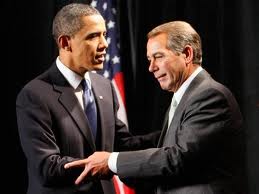
“Mr. Boehner’s ties to lobbyists seem especially deep,” New York Times reporter Eric Lipton wrote of the House Republican Leader yesterday. Well, they’re not, and therein lies the problem: Lipton apparently premised his article not on facts and data, but on what he thought seemed reasonable. Had Lipton stooped to investigate some of the serious claims he was making, he might have discovered that Nancy Pelosi has raised almost twice as much money from lobbyists this cycle as has Boehner. He might also have revealed that Sens. Harry Reid, Chuck Schumer, and Blanche Lincoln all raised more money from lobbyists this cycle as Boehner has since 1999. Washington Examiner columnist Tim Carney, who did the legwork on these numbers, also noted that Boehner’s name does not appear on the Center for Responsive Politics’s list of the top 20 recipients of lobbyist cash. Eighteen House Democrats have received more such money than Boehner has this cycle. “Sure, Boehner is too close too lobbyists,” Carney writes, “but the money trail says he isn’t closer than Nancy Pelosi.” So why didn’t this (quite obvious) fact make it into Lipton’s Sunday article? It doesn’t fit the narrative. As I wrote yesterday , the Times has spent the past two years playing up GOP connections to lobbyists, while all but ignoring prominent Democrats’s blatant connections to powerful industry groups and their paid representatives. The Times’s omissions are all the more shady given the timing of Lipton’s piece – it came mere days after the Democratic attack machine set its sights on Boehner. Press Secretary Robert Gibbs heavily promoted the piece on the White House press office’s Twitter feed. This week, the DNC is slated to run a series of television ads targeting Boehner’s lobbyist ties. Hypocrisy in the political realm is nothing shocking. Politicians are not “objective,” and they don’t claim to be. But the New York Times seems to be throwing its weight, and its self-proclaimed mantle of non-partisanship behind a political attack ground in total hypocrisy. Perhaps the Gray Lady should adopt a strict policy of reporting what is, not what “seems” to be. Isn’t that the purpose of the news media?

Excerpt from:
Another Fact Ignored in NYT Boehner Hit Piece: Pelosi Gets Far More Lobbyist Cash

NYT Tees Up DNC Talking Points With Ethically Questionable Piece on Boehner’s Lobbyist Ties

The New York Times’s lobbyist double standard lives on. Since Barack Obama became president, the paper has routinely overlooked the vast disconnect between his rhetoric on lobbying’s role on the political process – there really isn’t one, if you believe Barack – and his actions on the issue. But while the Gray Lady all but ignores Obama’s deep ties with lobbyists and the industry groups they represent, the paper has hammered Republicans for their ties to “special interests.” The latest such attempt is a hack job in Sunday’s New York Times. Reporter Eric Lipton claims that House Miniority Leader John Boehner “maintains especially tight ties with a circle of lobbyists and former aides representing some of the nation’s biggest businesses, including Goldman Sachs, Google, Citigroup, R. J. Reynolds, MillerCoors and UPS.” The story makes some serious allegations – the most damning of which was sourced to an anonymous lobbyist. Intriguingly, some of the same claims undergird an upcoming DNC ad blitz against Boehner. The Leader’s staff, meanwhile, claim they were not asked for comment before the story went to press. Byron York reported Saturday: Boehner spokesman Michael Steel says he received a fact-checking email from Times reporter Eric Lipton Friday evening asking if Boehner did in fact oppose the cap on greenhouse gases, the tax change for hedge fund executives, the debit card fee cap, and increased fees on oil and gas companies. “Yes, that is correct,” Steel responded to Lipton, adding “I can tell you why, if you care.” Steel says he received no further notes from Lipton. Steel says Boehner has long held those positions and does not hold them as a result of lobbying. Hours after the email exchange, the Times story was published online, with the statement from the lobbyist that he had “won” Boehner’s backing on those matters. After Boehner’s aides complained, the paragraph was changed to read, emphasis added: One lobbyist in the club — after lauding each staff member in Mr. Boehner’s office that he routinely calls to ask for help — ticked off the list of recent issues for which he had sought the lawmaker’s backing: combating fee increases for the oil industry, fighting a proposed cap on debit card fees, protecting tax breaks for hedge fund executives and opposing a cap on greenhouse gas emissions. Mr. Boehner’s office said these were positions he already agreed with. The statement that a lobbyist “won” Boehner’s backing was changed to one in which a lobbyist “sought” Boehner’s backing. That’s a rather critical change. The Times also added Boehner’s defense that these were long-held positions. To call Boehner’s aides angry at the account would be an understatement. “They were offered the opportunity to find out if this was true, and they chose to rely instead on the word of an anonymous lobbyist,” says spokesman Michael Steel. “They intentionally refused to get the information to prove that this allegation was false.” That allegation itself is pretty serious. But it would hardly be out of step for a paper that has previously sought to demonize Republicans’ relationships with lobbyists in either complete ignorance of or contradictory to the facts. Remember Vicki Iseman? The New York Times suggested in a February 2008 article that Iseman, then a lobbyist with Alcalde & Fay, had a romantic relationship with then-presidential candidate John McCain. Not a shred of evidence was offered to support the allegation, and the Times later printed a correction claiming it had no intention of making that suggestion. If making baseless accusations against Republicans and their relationships with lobbyists were not sordid enough, the Times has also made a habit of blindly accepting any claim made by President Obama regarding ethics and lobbying at simple face value. Here’s a sampling of Times headlines since 2008: On First Day, Obama Quickly Sets a New Tone Obama’s Transition Team Restricts Lobbyists’ Role Victory for Obama Over Military Lobby ‘All Kinds of Yelling’ Expected From Obama’s Lobbyist Crackdown Obama Returns Lobbyist’s Donations Obama Issues Sharp Call for Reforms on Wall Street White House, Lobbyists Still at Odds The President Orders Transparency The Times does occasionally run watered-down, statistic-ridden pieces such as “As Donors, Lobbyists Often Favor One Party” (since it’s not in the headline, I’ll bet you can guess which party). But neither the immeasurable hypocrisy of this administration’s rhetoric on “special interests” nor the administration’s ties to those special interests are explored in any detail. So when President Obama claimed that he had “excluded lobbyists from policymaking jobs” despite the 50 lobbyists he employed (and continues to employ) in policymaking jobs, the Times failed to note any disconnect. Instead, the paper ran a story claiming Obama’s new lobbyist rules would “revolutionize how lobbyists disclose their activities and contribute money to candidates for federal office.” Beyond simply ignoring the specific hypocrisies in Obama’s rhetoric, the Times has taken a see-no-evil approach to the president’s extensive ties to the largest industry groups, while trumpeting relationships between Republicans and “special interests.” The pattern was on full display this summer, when the Times had to be reminded that Obama received seven times as much in campaign contributions from Goldman Sachs as George W. Bush did from Enron. Yet while the Times had vaguely alleged some sort of unethical relationship between the defunct energy company and the Bush administration, it made no such suggestions concerning Goldman. Given its history, the Times’s approach to the Boehner story is, though underhanded, hardly shocking. The agenda in its coverage of lobbyists and lawmakers is quite clear. And given the Times’s clear willingness to toe the Democratic line on this issue, it’s worth pondering this interesting chain of events. Just this past week, President Obama began directing his ire towards congressional Republicans, and Boehner specifically. Mere days later, as Yid With Lid notes , the Times also took up that line of attack. Then, Sunday morning, as NewsBusters reported , White House press secretary Robert Gibbs tweeted a series of quotes from and laudatory remarks about the Times piece, from the official Twitter feed of the White House press office. The Times’s piece also plays pefectly into the DNC’s election strategy. In fact, it kicks off a week in which Democrats are hoping to paint Boehner, well, exactly as he is painted by the Times piece. A DNC official told Talking Points Memo : We are going to tell Americans exactly who he is: a special interest and lobbyist loving typical Washington politician who always puts the well heeled and well-to-do ahead of middle class families and small businesses and who would, if he became speaker, return the capitol to the anything goes, DeLay-Abramoff days and ways of doing business.  So the Times blasted Boehner in the Sunday paper with a line of attack taken up by President Obama last week and touted by the White House the morning of its publication, and teed up a week of Boehner-bashing by offering the laughable veil of objectivity to de facto Democratic talking points. Ladies and gentlemen, I give you the mainstream media.

View post:
NYT Tees Up DNC Talking Points With Ethically Questionable Piece on Boehner’s Lobbyist Ties

Ed Schultz to Speak at Hastily Arranged DC Rally He Claims Not in Response to Glenn Beck’s Rally

Remember the Seinfeld episode where George Costanza pretended to be an architect? Seinfeld thought it was a bad idea, suggesting Constanza would do better as a fake marine biologist, leading Constanza to complain, “You know I’ve always wanted to pretend that I was an architect.” Ed Schultz, liberal radio host and MSNBC flamethrower, is done pretending to be an architect. Schultz garnered plenty of attention last week with his huff-and-puff claim he could outdraw the estimated 300,000 people who attended Glenn Beck’s Restoring Honor rally in Washington on Aug. 28. What made Schultz’s boast so insipid was his insistence that he not actually organize or take part in a rally to exceed Beck’s draw, if only in spirit. Schultz’s suggestion alone would suffice. No need to actually draft a blueprint or break a sweat. Perhaps the Labor Day weekend knocked some reality into Schultz. According to Brian Maloney at The Radio Equalizer , Schultz has decided to appear at the “One Nation Working Together” rally on the mall in Washington on Oct. 2, exactly one month before the midterms. Here’s Schultz talking about this on his radio show yesterday (audio available at Radio Equalizer) — The march is on, Oct. 2. Will you march with me?  And thousands upon thousands. Oh, we’ll get three hundred grand. We’ll get 300,000, absolutely. We’ll show you conservatives out there when big Eddie starts cranking on something we don’t back down until it gets done. It’s happening on Oct. 2. I appreciate all of you going to our website at wegoted.com, there’s a consortium of groups that are coming together. You see, the Republicans, they want you to quit. They want you to think that there’s a tsunami coming. What tsunami? Ain’t no tsunamis coming! Nothing’s lost until you give up! If you give up, then they have a chance. I don’t buy the polls, I don’t believe it, I believe America is smarter than this, and I think Americans don’t want to go back. … Many of you are out of work. Many of you can’t make it to the rally but a lot of you will. We have been inundated with all kinds of communication from wonderful listeners and viewers and I will be a featured speaker. There will be other speakers and there will be some groups that are going to be obviously helping out with all of this, just like FreedomWorks and the billionaires and the six months of promotion helped out the Beckster. And I want to get something very clear right now. If Beck had not done his rally, this would have happened, OK? This is about the country. This is about making sure that information is where it has to be, with the American people. And now it’s about passion, now it’s about emotion. And by the way, there will be some old and there will be some white people at the Oct. 2 rally on the mall in Washington, D.C. They just won’t be angry. And they won’t be motivated by hate and they won’t be race-baited. Schultz asserts that “if Beck had not done his rally, this would have happened” anyway. Maybe so, and I’ll temporarily set aside my well-deserved skepticism of anything claimed by Schultz. But the whiff of desperation wafting from Schultz’s reversal makes me wonder if Beck hasn’t put the fear of God in him.

Originally posted here:
Ed Schultz to Speak at Hastily Arranged DC Rally He Claims Not in Response to Glenn Beck’s Rally

Imam Rauf’s NYT Op-ed Completely Ignores Ground Zero Mosque Polls

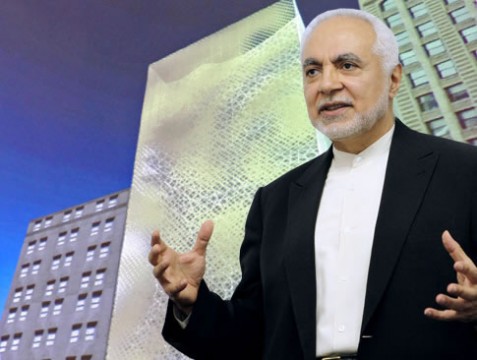
The Imam in the middle of the Ground Zero mosque controversy finally spoke about the issue Wednesday by publishing a New York Times op-ed without once mentioning the overwhelming public opposition to the location of this Islamic center. Somewhat curiously, he didn’t even refer to last week’s poll by the Times finding two-thirds of New York city residents against the building of such a facility two blocks from where radical Islamists killed thousands of innocent people almost exactly nine years ago. But that didn’t stop Feisal Abdul Rauf from putting a happy face on an issue that has deeply saddened much of the nation he is also a citizen of: We are proceeding with the community center, Cordoba House. More important, we are doing so with the support of the downtown community, government at all levels and leaders from across the religious spectrum, who will be our partners. I am convinced that it is the right thing to do for many reasons. Yes, but not with the support of the very community this mosque would serve. Let me remind the Imam of what the very paper he wrote in Wednesday reported just five days prior: The poll, however, reveals a more complicated portrait of the opposition in New York: 67 percent said that while Muslims had a right to construct the center near ground zero, they should find a different site. Most strikingly, 38 percent of those who expressed support for the plan to build it in Lower Manhattan said later in a follow-up question that they would prefer it be moved farther away, suggesting that even those who defend the plan question the wisdom of the location. Weeks prior, a CNN/Opinion Research Corporation poll found similar opposition nationwide. How could a man claiming his “life’s work has been focused on building bridges between religious groups” not recognize in his call for unity the overwhelming opposition to this mosque from the very people he says he wants to build bridges between? Shouldn’t the beginning of such a process be to validate the existence of powerful resistance and concern? By ignorning the volume and intensity of these sentiments, the Imam was actually offending those that possess them. Instead, he continued to make his pitch like a salesman ignoring negative feedback from his prospects: Our broader mission – to strengthen relations between the Western and Muslim worlds and to help counter radical ideology – lies not in skirting the margins of issues that have polarized relations within the Muslim world and between non-Muslims and Muslims. It lies in confronting them as a joint multifaith, multinational effort. From the political conflicts between Israelis and Palestinians to the building of a community center in Lower Manhattan, Muslims and members of all faiths must work together if we are ever going to succeed in fostering understanding and peace. Great thoughts indeed, but you can only convert your opponents by recognizing their existence. By ignoring them, you run the risk of further alienating those you claim to be reaching out to. With this in mind, if Times editorial page editor Andrew Rosenthal had any input to what Rauf wrote before it was published, one has to wonder if he suggested to the Imam that it might be a good idea to mention last Friday’s poll. He may have balanced this by referring to the Times own editorial the same day wherein the Gray Lady spoke in favor of the mosque despite the poll’s findings. After all, the absence of both suggests regardless of the optimistic title “Building on Faith,” either Rauf had little faith his readers could handle the truth or he is refusing to face it himself. Whichever the reality, it didn’t paint a picture of a religious figure trying to build bridges.  As a result, this op-ed might act to further the divide concerning this mosque rather than unify a nation with many remaining questions about its possible construction.

Continued here:
Imam Rauf’s NYT Op-ed Completely Ignores Ground Zero Mosque Polls

A Brutally Liberal Cartoonist: The Secret to Newspaper ‘Credibility and Prestige’?

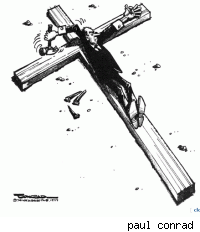
Long-time Los Angeles Times political cartoonist Paul Conrad has died, but the most interesting paragraph of his obituary in The Washington Post is the little hint by Post writer Matt Schudel that great newspapers only gain that reputation once they become liberal: He won his first Pulitzer in 1964, then left Denver for Los Angeles. Mr. Conrad’s incisive cartoons, which he drew six days a week, helped raise the reputation of the once-moribund Times, which had parroted the Republican Party line for decades . A similar version of this trope appeared in the Los Angeles Times itself in a story by James Rainey, but at least it suggested that there might be a difference between mediocre reporting and a Republican viewpoint. Conrad viciously attacked Nixon and Reagan with his pen, which was and is apparently the secret of media prestige: In the early 1960s, The Times was just beginning to rouse itself from decades of mediocrity. The newspaper had been politically and economically dominant in Southern California but a laughingstock in most of the country because of its mediocre journalism and blatant Republican boosterism. Otis Chandler took control as publisher in 1960 and, with Editor Nick Williams, decided to hire top talent to lift the paper to a higher level. The duo, determined to bring Conrad to Los Angeles, impressed him with their resolve. “The one thing I said,” Conrad recalled, “was, ‘Nobody tells me what to draw.'” The arrival of Conrad jarred many Times readers, not least the ultra-conservative members of the extended Chandler family, who already were displeased that their more liberal cousin, Otis, had taken control of the family business. “Nick [Williams] saw that Paul was this strident and very dedicated liberal and Nick thought that I would take a real beating, which I did,” Chandler said in a 2006 PBS documentary about the cartoonist. “But it was worth it, because he’s a real genius. He brought enormous credibility and prestige to The Times .”

See the original post here:
A Brutally Liberal Cartoonist: The Secret to Newspaper ‘Credibility and Prestige’?

Tom Friedman Rips Obama: ‘Completely Over-read Mandate…Never Seen Worse Communicating Administration’

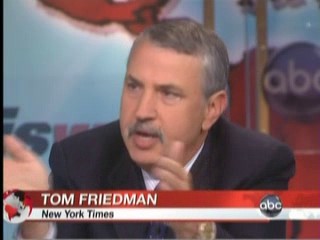
New York Times columnist Tom Friedman on Sunday accused Barack Obama of badly misreading his Election Day mandate, and said the current White House is the worst communicating administration he’s ever seen. Appearing on the Roundtable segment of ABC’s “This Week,” Friedman blasted the President saying, “I’m for more health care. I’m glad we’ve extended it to more Americans. But the fact is there’s a real, I think, argument for the case that Obama completely over-read his mandate when he came in.” Friedman continued, “He was elected to get rid of one man’s job, George Bush, and get the rest of us jobs. I think that was the core thing, and by starting with health care and not making his first year the year of innovation, expanding the economy and expanding jobs, you know, I think looking back, that was a political mistake.” Moments later, the Times columnist said, “I’ve never seen a worse communicating administration” (video follows with partial transcript and commentary): TOM FRIEDMAN, NEW YORK TIMES: Walter Shapiro had a column the other day which I think made a good point. Look, I’m for more health care. I’m glad we’ve extended it to more Americans. But the fact is there’s a real, I think, argument for the case that Obama completely over-read his mandate when he came in. He was elected to get rid of one man’s job, George Bush, and get the rest of us jobs. I think that was the core thing, and by starting with health care and not making his first year the year of innovation, expanding the economy and expanding jobs, you know, I think looking back, that was a political mistake. Not surprisingly, Friedman’s colleague at the Times blamed it all on Republicans. PAUL KRUGMAN, NEW YORK TIMES: He needs now to say it’s the other guys who are blocking action. He needs to lay out a philosophy. I’m not sure if there’s any way to save the House, but if he can, it can do it not by actually changing the economy in the few weeks remaining, but by making this an issue. Do you really want these guys’ economic plan? And then he has to campaign for it. Amanpour then referred to an article by Richard Cohen about to be published in the Washington Post talking about Obama as the incredible shrinking president. CHRISTIANE AMANPOUR, HOST: He says, “The folks who ran a very smart presidential campaign in ’08 have left the defining of the Obama presidency to people on the edge of insanity.” But then he goes on to talk about his Oval Office address this week, about Iraq, about turning to Afghanistan and the economy. He says, “It was only his second Oval Office address, and so great importance was attached to it. He should have had something momentous to say.” Is that fair? FRIEDMAN: I think it is fair. You know, one of the criticisms certainly I’ve had and many others have had, this is not I think original, there’s been no narrative to this administration. To me, I think Barack Obama was elected for one thing – which I’m not sure he ever fully understood – to do nation building at home, to do nation building in America. That to me was the central tent pole. Under that was health care, jobs, you know, economy, innovation, education, energy, okay? He’s never tied it together it seems to me under one single narrative. And then, therefore, he’s fought each issue against a different constituency. There’s never been a unifying message. I’ve worked here since 1989. I’ve personally just as a reporter, columnist in Washington, I’ve never seen a worse communicating administration, just at the basic technical level of, hey, we’ve got a good plan, you know, maybe someone out there would be interested in writing about it, since I’ve been to Washington. More and more it’s becoming clear this President is losing his once gushing and fawning press. If only these same folks would have actually examined the junior senator from Illinois’ record before jumping on his bandwagon in 2007. I guess that would have been too much like journalism.  

View original post here:
Tom Friedman Rips Obama: ‘Completely Over-read Mandate…Never Seen Worse Communicating Administration’