For those you with Armed Forces friends and family, please pay attention… Violent sex crimes committed by active U.S. Army soldiers have almost doubled over the past five years, due in part to the trauma of war, according to an Army report released on Thursday. Reported violent sex crimes increased by 90 percent over the five-year period from 2006 to 2011. There were 2,811 violent felonies in 2011, nearly half of which were violent felony sex crimes. Most were committed in the United States. One violent sex crime was committed by a soldier every six hours and 40 minutes in 2011, the Army said, serving as the main driver for an overall increase in violent felony crimes. Higher rates of violent sex crimes are “likely outcomes” of intentional misconduct, lax discipline, post-combat adrenaline, high levels of stress and behavioral health issues, the report said. There is no excusing this kind of behavior whatsoever, but as we saw last week, soldiers may be dealing with mental health issues that may severely affect their judgment and attitude. The top five violent felony offenses committed by soldiers in 2011 were aggravated assault, rape, aggravated sexual assault, forcible sodomy and child pornography. Soldiers suffering from issues such as Post-Traumatic Stress Disorder (PTSD), traumatic brain injury, and depression have been shown to have higher incidences of partner abuse, according to the report. Soldiers with PTSD are up to three times more likely to be aggressive with their female partners than those without such trauma, the report said. This is as sad as it is disturbing. If you have Armed Forces members amongst your family or friends, encourage them to seek counseling and treatment if they appear to be having trouble readjusting to civilian life. Source More On Bossip! Get Your Life Together: 10 Classic Junk Food Snacks That Will Turn You Into A Paula Deen Chubby-Lumpkins Visitation Hours: Famous Dads That Are Always With Their Kids Even Though It Didn’t Work Out With Mommy X-Rated Bangers: The Hottest Black Adult Movie Stars In The Biz…Would You Wife Any Of Them? Part 3! Beautifully Coupled Up: Look At This Atlanta Falcons Player And His Boo’s Engagement Pics
In a career spanning three decades Michael Biehn has notched a number of iconic roles in beloved genre fare, from future freedom fighter Kyle Reese in The Terminator to Corporal Hicks in Aliens to one of his personal favorites, Tombstone villain Johnny Ringo. And that work has borne him witness to his share of tense, chaotic sets under some of the strongest personalities in the business. But no shoot of Biehn’s was as intense as the friction-filled production of this week’s The Divide , Xavier Gens’ bleak horror tale about strangers trapped in a basement after the apocalypse, which Biehn says was fueled by the “hatred” and “bitterness” of combative actors turning on each other under claustrophobic conditions. “The actual film shoot was absolutely brutal… the actors hated each other,” Biehn admitted to Movieline in Los Angeles, describing a set atmosphere seemingly designed by director Gens, Biehn says, to encourage conflict among performers. (Among Biehn’s castmates: Milo Ventimiglia , Lauren German, Rosanna Arquette, Courtney B. Vance, Ashton Holmes, and Michael Eklund, who play an assortment of neighbors in an NYC apartment building that quickly lose their humanity, and their sanity, down below.) Bickering over script changes, on-the-fly adjustments, and dueling egos all factored into the strife, which got so heated the actor says producers had to be called to intervene. “I’ve worked with [William] Friedkin , I’ve worked with Michael Bay ,” Biehn said pointedly, “and there was more tension on this set than any set that I’ve ever been on.” Yet it all worked out in the end — at least for Biehn, who’s proud of the film and happy that Gens allowed his actors to help shape their characters extensively, even if that’s what led to clashing interests on set in the first place. For Biehn that meant having the freedom to give his bigoted antagonist character Mickey a 9/11-themed backstory and a shot at redemption — not to mention a relatability in the face of what Biehn perceives as real-world terrorist threats. (“I think something like this could happen very easily, in my lifetime, where something bad happens… I mean, go on YouTube and look at the video of what they were doing to Qaddafi.”) And ultimately, Biehn says, the final film was satisfying enough that all the bitter infighting, stress, manipulation, and conflict was worth it. “It worked,” he smiled. “I think it worked — and I enjoyed it.” You’ve played so many iconic characters over the years, but at any point did you feel like you needed distance from Kyle Reese or Corporal Hicks? What’s your relationship to those characters now? I didn’t realize they were really iconic until recently. I now have 15-year-old boys and girls that approach me and go, “Johnny Ringo is my favorite character of all time,” or “Hicks is my favorite character,” or “I’m in love with Reese” –- and they weren’t even born when I made the movie. So I’ve come to realize that those three movies are, call them what you call them, they’re classics. My son, who is eight years old, and his boys the other day, at school they were playing The Terminator ! One was the Terminator, one was Kyle Reese, one was Sarah Connor. And he went over and said, “My dad was in The Terminator !” Does that mean he automatically gets to call dibs on Kyle Reese? [Laughs] Yeah! It’s just kind of rewarding to have a young kid come up and say that, so it’s not something that I shy away from at all. They’re great movies and I owe a lot to Jim Cameron and I’m proud to be in them, and they’ll always be around. Do you have a favorite? I have two favorites, and that’s Kyle Reese and Johnny Ringo. Kyle Reese to me is the great hero because he not only was a hard-fighting tough guy, he was also a lover at the same time, so much in love with Sarah. And Johnny Ringo to me was just the best antagonist that I’ve ever played, because I played him as a guy who has a death wish and had done everything that he wanted in life. As far as he was concerned, a gun fight was about as exciting as it was going to get. There’s this moment I have with Val [Kilmer] at the end of the movie where he says he’s serious, and I look at him and say “All right,” and there’s a look in my eye which I think is one of my best moments on film. Like “Oh, this is exciting. This is going to be fun.” It’s not sitting around a bar drinking, it’s not cows, it’s not women, it’s just excitement. From that great antagonist to your latest, your character in The Divide is the firebrand who ratchets up the tension from the start – and this is a movie that gets intense immediately, from the start, as doomsday erupts outside this apartment building. How do you view your character in moral terms? First of all, Xavier [Gens] let us do whatever we wanted with our characters, so I wrote that character. What was on the page to begin with? A bad guy, a crude guy, a racist who’s racist against all creeds. Very negative, cursing all the time. Just a pig who ends up being the antagonist and ends up doing bad things to other people and so forth. Xavier basically brought all of his actors together at the beginning of the making of this movie and said, “You can do whatever you want. This is a sandbox for you to play in.” You could do improv, you could write scenes, you could change your characters -– you could do anything you want. I made that character go from a guy –- everybody was losing their humanity, and I wanted to take this character who originally had no humanity and try to give him back a little humanity. That’s what I tried to do. Basically I wrote with a writer that was helping all the actors write for about three or four days, a week or so, and I kept sending back material. He finally said, “Michael, just write it yourself.” So I basically kind of wrote the character, created the whole back story of the wife and 9/11 and the firemen and all that kind of stuff. That’s an element that I feel is significant, because we open on the New York cityscape being destroyed in a fiery attack. From the very first seconds the film triggers a visceral familiar reaction, and then we find out that Mickey’s a former NYC fireman who’s lost his way. Yes. Basically it’s post-traumatic stress disorder. This is a guy who took one of his teams into the Twin Towers and it came down and he was the only one left standing. He loses, like a lot of men do who are under such wartime circumstances, and he loses his wife and children and starts drinking. He loses his job and turns into this paranoid survivalist and that’s where we find him at the beginning of the movie. You have some understanding of why he’s a racist and why he is the way he is, because of what happened to him. That was his back story, and he is a guy that really down deep was a good person but circumstances just destroyed him. Do you see The Divide as a bleak film, ultimately? Yeah, it’s bleak! It’s about as bleak as it could possibly get. I call it dark, I call it a psychological horror movie. I think what we’re looking at in life right now is bleak. I think everybody should open up their eyes, because this country and this world is not the same one that I grew up in. There’s a lot of stuff going around that is scary, and the world is getting smaller and smaller. I think something like this could happen very easily, in my lifetime, where something bad happens. So I think people should be aware. Is there any way, do you think, to truly prepare oneself for what would happen if placed in the situation characters face in the film? No. No, not really. You could move to Idaho and build yourself a bunker but sooner or later somebody’s going to get you and your family, or your children or your grandchildren, or your grandchildren’s children. It’s crazy to think how entirely possible it feels for human beings to devolve so extremely under circumstances like these. It is, and I think we’re this close. I mean, go on YouTube and look at the video of what they were doing to Qaddafi. I can’t even bring myself to do that. Well, it’s pretty nasty stuff. When you see that, you see what mankind is capable of. That was in the spirit of anger pent up for years and years and years, but they were raping him with a fucking metal rod and shit. Mankind, you know. And it’s not just there; it’s Afghanistan, it’s Pakistan, it’s Africa, it’s in a lot of places that stuff’s going on. And North Korea -– who knows what’s going on with that situation. Do you feel like films like these are a necessary reflection of life? I think that they’re not necessary, but to look at a movie like this and go ‘My God, that was horrible – nothing like that would ever happen’… I think something like that could happen very easily and you have to be prepared to know how you would react, and try to go out with a little bit of humanity. Did the actual film shoot mirror this sort of tension? The actual film shoot was absolutely brutal. The actors hated each other. Why? Was that a product of the filming environment, being stuck in a bunker for so long? It was a product of the fact that Xavier basically said, “If you want to improv something, you can improv something; if you want to write something, write something.” Basically, people would do improvs and somebody would be doing a scene that they thought was their scene for the day and somebody else would be doing an improv and the camera would move over on them and the other actors would get mad. Some actors were more physical than other actors and the other actors were upset with that. Some people felt like their roles were being taken away from them, that they were being upstaged, and they absolutely hated each other. They broke into groups. I’ve worked with [William] Friedkin, I’ve worked with Michael Bay, and there was more tension on this set than any set that I’ve ever been on. Producers were continually called down to the set to break up fights -– not fistfights, not real fights, but it got close. Were you involved in any of this? Well, no. The thing that was good about me is that I didn’t take sides. I didn’t have any sides, I was my own person. So basically I as an elder actor on this set tried to keep some peace between the other actors, and said, “Listen –- just fucking calm down, it’s just a movie.” But there was a lot of hatred and a lot of bitterness on that movie. It was nasty, and we were working in a confined space and everybody stayed in that space because they wanted to be there. These guys, like Michael [Eklund] and Milo [Ventimiglia], they went for it, man. They lost weight; they lost 20 pounds because they didn’t eat, they didn’t shave, they didn’t shower. And they were, you know… you look at Milo’s performance and it’s out of this world, I think, to see the breakdown of his character. And Rosanna [Arquette] is so good in it. It’s just the best ensemble movie I’ve ever been in. So despite the chaos, do you think the final film was worth all of that trouble? Yeah, I do. I think that basically Xavier was smart enough to set it up that way. I think he realized from the beginning that if he did this, he was going to piss off some actors and turn some actors against other actors. I think he knew from the very beginning that the actors weren’t going to get along very well and it went downhill from there. The producers kept having to be called down to set… it was crazy. As a performer, how do you feel about that kind of directorial manipulation? It worked. [Smiles] I think it worked, and I enjoyed it. I was given full freedom to take a character and do anything I wanted with him. He basically said, “Michael, if you don’t like what’s written you write what you want to write,” and I wanted to show a guy that was not just a bad guy all the way through. Michael Eklund, who basically didn’t have hardly anything in that movie -– there was nothing really written in the script for him, not much, maybe a few lines here and there –- was so good that he ends up kind of turning into the bad guy. That was from doing improvs, from writing stuff, and from Xavier just loving his work so much that he ends up turning into the antagonist. Then I was able to take my role and turn him from being the antagonist into somebody that had kind of redeemed himself. And it happened while we were shooting -– I mean, the movie was moving off in different directions as people were improvising and doing different things, and nobody knew what was going on from day to day. That’s somewhat fascinating as a deliberate choice on Xavier’s part, but it seems like it might be scary… It was scary! It wasn’t scary to me, but there were people on set that were scared, that’s for sure. Did you ever worry about how the film would end up? Well, I never worry. It could be either good, or it could not be so good. People like it or they don’t like it. But I’ve done like 60 to 70 movies, and some are good, some aren’t. This one I’m pretty proud of. I like the comparison of the Divide set as being more tense than any you’ve been on, considering the directors you’ve worked with. Yeah, and that’s Billy Friedkin. That’s Jim Cameron. That’s Michael Bay! Speaking of directors, you’ve recently made a foray into directing. What’s the latest with your film The Victim ? We just got picked up by Anchor Bay today, so we’re real excited about that. We were talking to a few different companies for a while and negotiating, then Anchor Bay stepped up and they gave us a deal we’re really happy with. We’re going to release the movie on 50 college campuses; every college has got a movie theater. It’s getting a lot of attention! Congratulations! You’ve described it as a sort of grindhouse movie. Can you elaborate? It’s basically a little grindhouse movie I shot in 12 days, wrote it in three weeks, and did pre-production, cast it, crewed up, went to the Screen Actors Guild, did locations -– did all that stuff in three weeks while I was writing it, then we rolled it into a 12-day shoot. And we got The Victim ! I think we got lucky, people seem to be enjoying it. Now we’ve got people that are going to sell it for us, and that are happy to sell it for us. Lastly, I’ve wondered — of all of the iconic and memorable roles that come up for you with fans, does anybody ever bring up Coach [Biehn’s 1978 starring debut, about a high school athlete who has an inappropriate love affair with his lady coach]? No! I mean, people talk to me about Coach , but not as an iconic piece. Well, consider this a first. There’s something about Coach that is so great, so of an era… [Laughing] These days, she’d go to jail for that! The Divide is in limited release this Friday. Follow Jen Yamato on Twitter . Follow Movieline on Twitter .
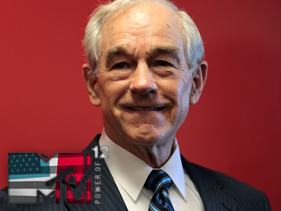
One young voter described the choice this year as between ‘freedom and tyranny.’ By Gil Kaufman Ron Paul Photo: Getty Images MANCHESTER, New Hampshire — “They call it the Department of Education … Let’s put an end to the Department of Indoctrination!” That kind of sentiment was flowing like extra-hoppy craft beer on Sunday night at Manchester’s only brewpub, Milly’s Tavern. It was the site of the “Slam Free or Die” poetry open-mic event in honor of Republican presidential candidate Ron Paul. And while the sentiment onstage was often dripping with elegantly worded sarcasm, the boots on the ground had plenty of sobering thoughts on the suddenly surging candidate who refuses by play by his party’s staid rules. Nearly a week after the Iowa caucus , Congressman Paul’s rivals continued to take digs at one another in an attempt to win over traditional GOP voting blocs and prove their family values bona fides. Libertarian Paul’s pull with younger voters, meanwhile, was inspiring the kind of enthusiasm that motivated his followers to drive in from as far as Philadelphia and Washington, D.C., to attend the slam and volunteer in the Granite State in the lead-up to Tuesday’s primary. A common theme among the Paul faithful who spoke to MTV News for the channel’s ongoing Power of 12 series was a disappointment with the Obama administration and a feeling that the promises of change touted four years ago have not come to fruition as they expected. “I think there were a lot of disillusioned voters in ’08 who thought Obama would be a good solution to the problems presented by Bush,” said Pericles Niarchos, 26, who like the 50 or so other Paul-ites in the bar was firmly focused on the poetry rather than the nail-biting Steelers-Broncos NFL playoff game being shown on the bar’s flat-screen TVs. “And after the last four years, we’ve seen the wars extended, we’ve seen [the terror detention center at] Guantanamo Bay remain open … the war on drugs continues on, we see bailout of the corporate elite that started under Bush. So, a lot of those supporters … [feel] Dr. Paul has a consistent record on these issues.” Niarchos, who recently completed a history degree with a political science minor from Drexel University, is among those who drove in from Philly to volunteer for the campaign, and he had a lot of issues on his mind. But one of the foremost was the various overseas military entanglements that are taking young lives and, he said, bankrupting the country. As to what it is about Paul — at 76, the oldest candidate in the running — that is speaking to teens and twentysomethings, Ryan Kuch, 24, said it is concerns about the economy and the libertarian call for a society that is “bottom-up … organic … people doing things, rather than top-down … people in Washington deciding what we should do to stimulate the economy.” Plus, he said, alluding to Paul’s non-interventionist theory of foreign policy, it’s his generation that will continue to pay for the wars in Afghanistan and Iraq, long after they are over. And not just with higher government debt but with issues like post-traumatic stress disorder and physical wounds that won’t heal. “Dr. Paul’s message seems to be more about sincerity and that you should be free to determine your own future,” said Niarchos. “A lot of young people today feel like they’re growing up in a world where they’re no longer free to determine their own future. They’re living in a set amount of circumstances that are being defined by older generations who don’t really understand what we’re going through. What our perspective is on the world is, what we want and what our values are … in my whole lifetime I don’t think the U.S. has been at peace for more than four years, and it’s really refreshing to see someone who advocates that so thoroughly.” “We need a cranky old president who keeps his money in a mattress,” said one poetry slam reader. Another read a piece entitled “Upholding Miserable Everywhere,” in which he selectively quoted the candidates in their own words. “I’m reciprocal,” he said, reiterating former Utah governor Jon Huntsman’s line . Another lamented that he missed the recent televised GOP debate because he was being arrested backstage after trying to “occupy” the event, and yet another referred to the various politicians as “New Hampshire’s deadbeat uncle,” who only comes around every four years when he needs something. What’s fascinating about Paul’s followers is that this poetry slam is not an isolated, election year event. They say that this is what Paul’s people do: They get together and lament the economic inequities of Pell grants, the tyranny of government’s tentacle-like reach into our pockets, the worthlessness of the Fed continually printing more money, the stifling of entrepreneurship by overzealous regulation and benefits of a free market system in the same way their peers discuss fantasy football stats. Emily O’Neill, 23, a member of the National Guard and self-described “misfit and contrarian” and “1920s feminist” who works in human resources in Washington, D.C., said the first time two Paul supporters meet each other, the opening topic is how they discovered their political icon. Dressed in cherry-red high heels, a gray skirt, ruffled white shirt and blue blazer, the New Boston, New Hampshire, native said she planned to wave signs and make calls on behalf of her candidate on Monday (January 9). “Let’s not kid ourselves, it’s not about left versus right,” she said. “We all agree on freedom and more government is not working. We’re less prosperous now than when we started off even a decade ago … people now want their freedom. Especially young people. This is the Internet generation. We can go online and find the answers and find out who the politicians are who are complete hypocrites. We know the truth so there’s no kidding us anymore.” Along with her friend Josh Luedtke, 26, a Roanoke, Virginia, reservist who just returned from his second tour of duty in Afghanistan, O’Neill said she might typically have been a Mitt Romney supporter. But not this time. “I came to the conclusion that what other people do, as long as it doesn’t hurt me, doesn’t affect me,” said Luedtke, who sported a red, white and blue Paul campaign T-shirt emblazoned with the word “liberty,” as well as a baseball hat that reads “Dysfunctional veteran … Leave me alone.” Inspired by the Occupy movement and the grassroots nature of Paul’s latest campaign, O’Neill said young voters are feeling motivated to get involved and be part of a new solution. “I hope that the difference between [the election of] 2008 and 2012 is that in 2008 young people came out and said, ‘We want the government to give us things.’ And in 2012, young people are going to come out and say, ‘We want the government to leave us alone.’ ” As for his peers who might be considering sitting this election out because they don’t like the options, Luedtke said they have two choices. “Freedom and tyranny. You can either vote for Ron Paul and take hold of your future with a government that is going to leave you alone … or you can choose tyranny and vote for anyone else.” Romney has a decisive lead in New Hampshire, where he’s polling at more than 41 percent, followed by Paul at 17 percent, which is not surprising given that 40 percent of the state’s voters describe themselves as independents. MTV is on the scene in New Hampshire! Check back here around the clock for up-to-the-minute coverage on the primary caucuses, and stick with PowerOf12.org throughout the presidential election season. Related Videos Barnstorming The Iowa Caucus With Andrew Jenks
The best-known Hollywood swordsman this side of Warren Beatty passed away on New Year’s Day: Bob Anderson, an Olympic fencer who once wounded Errol Flynn on set and whose subsequent swordfight choreography spanned 60 years and such franchises as Star Wars , The Lord of the Rings and the James Bond series, is dead at the age of 89. Wind up your day rewatching a few of his finest battles. Anderson actually borrowed the Darth Vader get-up from actor David Prowse for the climactic fights at the ends of both Empire Strikes Back (below) and Return of the Jedi : Elsewhere, one of Anderson’s devotees helpfully spliced together a medley of Anderson more swashbuckly pieces of work, led by The Princess Bride ‘s classic duel between Westley and Inigo Montoya: And finally, here’s Anderson explaining some of his technique and history, with back-up from Viggo Mortensen. R.I.P., good sir.
Let’s play a little game of Would You Rather, felony crime edition: Would you rather sit through all of Alvin and the Chipmunks: Chipwrecked , or have a naked man flash your children from the first row of a movie theater? That’s the conundrum some parents were faced with last weekend in a Chicago area multiplex when one Edward L. Brown interrupted an afternoon showing of the latest Fox chipmunk sequel. Details inside! (And it only gets weirder!) According to the Riverside-Brookfield Landmark (via Jim Vejvoda at @StaxIGN ), 34-year-old Brown gave fellow patrons at the North Riverside Park Mall’s Classic Cinemas theater a shock on December 29: About a half hour into the 4 p.m. showing of the kiddie feature Alvin and the Chipmunks: Chipwrecked , police say an entirely naked Edward L. Brown stood up from his seat in the front row, faced the crowd of 86 theater-goers, stretched out his hands and displayed his genitalia for all to see before sitting back down to enjoy the movie. (Note reporter Bob Uphues’s detail that the butt-naked Brown displayed himself “before sitting back down to enjoy the movie.” Nice touch.) Even better than Brown’s bizarre naked nonchalance? The explanation he gave police when they promptly arrested him onsite: According to the police report, Brown told officers that he had been let inside the movie theater for free by an unknown female who allegedly told him to have a seat in the front row of the theater, take off his clothes and wait for her, so they could have sex, smoke crack and do heroin. Classy! And really strange! Sounds like someone may have gotten punk’d. Just sayin’. Brown was charged with “three felony counts of sexual exploitation of children, aged 4, 6 and 6; one misdemeanor count of sexual exploitation of a minor aged 14; and one misdemeanor count of disorderly conduct;” the theater patrons, meanwhile, were given refunds and ticket vouchers to see the rest of Chipwrecked another time. And so I ask, which is worse: Being flashed by some weirdo sex-crazed drug user at the movies, or having to sit through Chipwrecked twice? And consider Brown himself. He may have landed in jail with multiple gross felony counts to his name, but at least he didn’t add insult to injury by paying to see Chipwrecked . And in fairness, those Chipmunks don’t wear pants, either. • Naked man interrupts ‘Chipmunks’ at North Riverside Mall theater [Riverside-Brookfield Landmark]
Who’s excited for 2012? I said, Who’s excited for 2012? Oh. Well, it’s coming whether you want it or not, and Mayan doomsday predictions and a U.S. presidential election aside, there is stuff to look forward to. Get your calendars ready and read on for 20 dates worth saving at the movies alone. Jan. 6 : The Devil Inside becomes the millionth exorcist movie to open in theaters, thus netting a $3 million cash prize and earning the producers and 20 of their closest friends a free party and Dave and Buster’s. Jan. 15 : In a craven, ruinous grab for ratings, the Hollywood Foreign Press Association invites a suicide bomber to host the Golden Globe Awards. Jan. 20 : Coriolanus makes its official post-Oscar-qualifying debut in theaters. Take Stephanie and Louis and my words for it: You really should see it. Feb. 10 : Watch a Michael Caine paycheck role come alive as you’ve never seen it before — in the eye-popping 3-D family adventure Journey 2: The Mysterious Island . Feb. 26 : “Ziss ees for you, Uggie”: Jean Dujardin dedicates his Best Actor prize at the 84th Academy Awards to his criminally underrecognized canine co-star . March 2 : Holy shit, they really made Hansel and Gretel: Witch Hunters ? With Jeremy Renner, Gemma Arterton and Famke Janssen? Wow. OK. Anyway, this opens today. March 9 : Disney commences counting how much money it lost on the ultra expensive, roundly buzzless John Carter . March 23 : Fangirl civil war erupts as The Hunger Games makes its first incursion against the creaky, sparkly Twilight empire. The rest of us, faced only with the sad counterprogramming spectacle of A Thousand Words , flee to art-house refugee camps nationwide. April 27 : The crackerjack comic duo of Jason Segel and Emily Blunt Alison Brie and Jacki Weaver co-star in The Five-Year Engagement June 22 — Abraham Lincoln: Vampire Hunter winds up a distressing month of predatorily-titled blockbusters including Snow White and the Huntsman , Jack the Giant Killer and Madagascar 3: Europe’s Most Wanted . Which is fine, because you’re going to be watching the awesome-looking , June 8-opening Prometheus for the fifth time this weekend, anyway. July 20 — The Dark Knight Rises opens! To quote Bane, the film’s excited villain: “ Fghrlkdjhafskdfbldkbsj .” July 27 : Tyler Perry’s The Marriage Counselor reaches theaters, finally exposing audiences everywhere to the subtle dramatic charms of Kim Kardashian. I smell a Verge ! Or maybe it’s just Valtrex. Aug. 17 : Boldly leaping to the front of the Oscar-season line, the Los Angeles Film Critics Association moves up its awards-voting date to Aug. 20 after seeing The Expendables 2 . Sept. 28 : The year of Taylor Kitsch — previously comprising John Carter and Battleship — concludes with the only one of his films any grown-ass adult wants to actually see: The Oliver Stone pot-cartel thriller Savages , co-starring Beinicio Del Toro, Salma Hayek, Uma Thurman, John Travolta, Blake Lively and Emile Hirsch. Oct. 12 : From Kevin James and his Zookeeper director Frank Coraci comes the teacher-turned-MMA moonlighter comedy Here Comes the Boom . I only bring it up because Jesus will weep so copiously that you might start filling and stacking sandbags now . Oct. 19 : Ryan Gosling. Emma Stone. Josh Brolin. Sean Penn. Gangster Squad . That is all. Nov. 16 : The Twilight Saga: Breaking Dawn – Part 2 concludes the billion-dollar franchise, instantly prompting millions of prodigious sobbing binges. But enough about Taylor Lautner’s management team. Nov. 21 : The visionary filmmaker Alfonso Cuaron returns with Gravity , which draws a robust opening-weekend crowd with its promise of showing Sandra Bullock shot into space. Dec. 19 : Kathryn Bigelow’s as-yet-unnamed Osama bin Laden movie — working title: Banned in Pakistan — reaches theaters. Dec. 25 : A very DiCaprio Christmas gets underway with Django Unchained and The Great Gatsby . Enjoy 2012, everyone! Follow S.T. VanAirsdale on Twitter . Follow Movieline on Twitter .
I found 2011 to be a great, overstuffed year in film, though the sweeping trend of nostalgia that peaked during this awards season left me a little cold. Hugo , War Horse , The Artist , The Adventures of Tintin , The Help , even the self-aware looking back of Midnight in Paris — when it’s been such a turbulent 12 months beyond the movies, the comfort of evoking the past, especially the cinephilic past, is understandable, particularly with attendance down once again. But the features I really loved tended to be more prickly, vital affairs, about tragedy and life messily, stubbornly going on in its aftermath — ones that reminded us that film can not only be a great escape, but can also engage and reflect the outside world. 10. Shame Steve McQueen’s sophomore effort took flack from some who found it moralizing in its portrayal of sex addiction, but it’s not a film about a condition, it’s a film about damage. Michael Fassbender plays a man who’s left a traumatic childhood behind and has shored himself up in the city that never sleeps with an immaculate condo and a high-powered job that almost hide his underlying desperation and his inability to connect or open up to anyone on anything other than a physical level. It’s one of the loneliest portraits of urban living I’ve ever seen. 9. Warrior The neglected blockbuster of our Occupy Wall Street era, Warrior drapes Rocky trappings over characters and settings more immediate than you’d ever expect at a multiplex. Its two brothers, in what should have been star-making turns from Tom Hardy and Joel Edgerton, head to the cage after taking beatings elsewhere — one’s left the Marines on less than ideal terms after the death of colleague, the other’s upside down on his mortgage and unable to support his family on a teacher’s salary. Add to that the fact that the tournament in which they both compete was started by a former Wall Street type putting up the money to see “who the toughest man on the planet is,” and you have a rousing, violent fight film with a seriously bittersweet edge. 8. The Arbor Andrea Dunbar grew up in run-down Bradford council estates, drank heavily, had three kids by different fathers, wrote a trio of acclaimed plays about the life she knew and died at age 29. Clio Barnard’s documentary about the playwright brilliantly stages its interviews as their own performance, lip-synched by actors in the settings in which Dunbar and her children grew up and lived, and offering a piercing glimpse of how tragedy is taken up — her second work Rita, Sue and Bob Too was made into a film directed by Alan Clarke — and passed down, to her heroin-addicted eldest Lorraine. 7. Certified Copy It’s never clear which part of Juliette Binoche’s antiques dealer and William Shimell’s writer’s relationship is the pretense — are they strangers who play at being married, or a married couple playing at meeting as strangers? The thesis of Shimell’s book may or may not line up with that of Abbas Kiarostami’s film — the relationship between art and reproduction, original and copy — but the figuring out, and the slippery nature of the connection the pair on screen, is delicious. 6. The Tree of Life It’s a film about a family that stretches from the beginning of the universe to a possible vision of the afterlife — if it may not be wholly lovable, its ambition alone should earn respect. But it’s the evocative immersion on childhood that lingered with me after Terrence Malick’s more grandiose imagery had faded, the tactile sense of that Texas street, the house, the endless possibility, uncertainty and wonder of being young and new to the world, the flashes of memory — the offering of a drink to a prisoner, the caress of a baby’s foot, the goading of a younger sibling to touch a light socket — that break up the more iconic moments with startling specificity. 5. Margaret Messy, vivid and wonderful, Kenneth Lonergan’s difficult production has become a critics’ cause, in part because of how tough it’s been to actually see. It’s worth the trouble, and in some ways better because of the long wait in reaching the few theaters it did — it now looks less like a movie about post-9/11 New York and more one about the city in all of its anonymous, chaotic glory, about a teenage girl’s first horrific brush with mortality and about the strange places that life leads us. 4. Take Shelter Few films have attempted to capture our age of anxiety like Jeff Nichols’s drama, about catastrophic dreams that may be caused by mental illness, but seem just as much to spring from the sense of uncertainty with which we’ve all been infected. Anchored by a stunning performance from Michael Shannon, Take Shelter presents a look at quiet breakdown spurred on by a desire to protect one’s loved ones, and pairs it with frightening scenes of monstrous storms and shadowy attackers that rival any of this year’s horror movies. 3. Into the Abyss Trust Werner Herzog to find stories so strange and moving in a terrible small-town triple murder over an automobile. The Texas of this film is recognizable, but it’s also near-mythic — a place of universally broken families, sudden violence, prison reunions and hard-earned redemption. Taken alone, the interviews with Melyssa Burkett or Jared Tolbert would be enough to make the film. As part of a kaleidoscope of suffering and hope, they’re highlights in something dark, funny and expressly moving about the persistence of human nature in the face of loss. 2. A Separation A marriage falls apart over the decision of whether or not to leave Iran in Asghar Farhadi’s magnificent drama, and encompasses in its disintegration a snapshot of the fractured nation that’s so nuanced, empathetic and complex it quickens the heart. Certainly the smartest film of the year, both as a self-contained work and in the respect it offers the audience, A Separation is unadorned by a score or flashy camera tricks — it doesn’t need them. 1. Melancholia The opposite of love isn’t hate, it’s indifference, and in Lars von Trier’s film it’s the awesome force of Kirsten Dunst’s depression-fueled disinterest that exudes a gravitational drag on everyone around here even before the arrival of the destructive planet of the title. Before the breathtaking apocalyptic imagery appears — the object looming closer in the sky, the static sparking from fingertips — Melancholia is already a devastating look at an illness that leaves you unable to connect to what life has to offer, even on an extravagant wedding day that seems to compress half a lifetime into a night. But it’s that the film turns to offer a sympathetic eye to Charlotte Gainsbourg’s anxious sibling in the second half that makes it great, and that gives it a soul. As she struggles to hold everything together in the face of approaching disaster, even Dunst’s depressive is moved to offer her a conciliatory gesture as the world ends. Follow Alison Willmore on Twitter . Follow Movieline on Twitter .
I found 2011 to be a great, overstuffed year in film, though the sweeping trend of nostalgia that peaked during this awards season left me a little cold. Hugo , War Horse , The Artist , The Adventures of Tintin , The Help , even the self-aware looking back of Midnight in Paris — when it’s been such a turbulent 12 months beyond the movies, the comfort of evoking the past, especially the cinephilic past, is understandable, particularly with attendance down once again. But the features I really loved tended to be more prickly, vital affairs, about tragedy and life messily, stubbornly going on in its aftermath — ones that reminded us that film can not only be a great escape, but can also engage and reflect the outside world. 10. Shame Steve McQueen’s sophomore effort took flack from some who found it moralizing in its portrayal of sex addiction, but it’s not a film about a condition, it’s a film about damage. Michael Fassbender plays a man who’s left a traumatic childhood behind and has shored himself up in the city that never sleeps with an immaculate condo and a high-powered job that almost hide his underlying desperation and his inability to connect or open up to anyone on anything other than a physical level. It’s one of the loneliest portraits of urban living I’ve ever seen. 9. Warrior The neglected blockbuster of our Occupy Wall Street era, Warrior drapes Rocky trappings over characters and settings more immediate than you’d ever expect at a multiplex. Its two brothers, in what should have been star-making turns from Tom Hardy and Joel Edgerton, head to the cage after taking beatings elsewhere — one’s left the Marines on less than ideal terms after the death of colleague, the other’s upside down on his mortgage and unable to support his family on a teacher’s salary. Add to that the fact that the tournament in which they both compete was started by a former Wall Street type putting up the money to see “who the toughest man on the planet is,” and you have a rousing, violent fight film with a seriously bittersweet edge. 8. The Arbor Andrea Dunbar grew up in run-down Bradford council estates, drank heavily, had three kids by different fathers, wrote a trio of acclaimed plays about the life she knew and died at age 29. Clio Barnard’s documentary about the playwright brilliantly stages its interviews as their own performance, lip-synched by actors in the settings in which Dunbar and her children grew up and lived, and offering a piercing glimpse of how tragedy is taken up — her second work Rita, Sue and Bob Too was made into a film directed by Alan Clarke — and passed down, to her heroin-addicted eldest Lorraine. 7. Certified Copy It’s never clear which part of Juliette Binoche’s antiques dealer and William Shimell’s writer’s relationship is the pretense — are they strangers who play at being married, or a married couple playing at meeting as strangers? The thesis of Shimell’s book may or may not line up with that of Abbas Kiarostami’s film — the relationship between art and reproduction, original and copy — but the figuring out, and the slippery nature of the connection the pair on screen, is delicious. 6. The Tree of Life It’s a film about a family that stretches from the beginning of the universe to a possible vision of the afterlife — if it may not be wholly lovable, its ambition alone should earn respect. But it’s the evocative immersion on childhood that lingered with me after Terrence Malick’s more grandiose imagery had faded, the tactile sense of that Texas street, the house, the endless possibility, uncertainty and wonder of being young and new to the world, the flashes of memory — the offering of a drink to a prisoner, the caress of a baby’s foot, the goading of a younger sibling to touch a light socket — that break up the more iconic moments with startling specificity. 5. Margaret Messy, vivid and wonderful, Kenneth Lonergan’s difficult production has become a critics’ cause, in part because of how tough it’s been to actually see. It’s worth the trouble, and in some ways better because of the long wait in reaching the few theaters it did — it now looks less like a movie about post-9/11 New York and more one about the city in all of its anonymous, chaotic glory, about a teenage girl’s first horrific brush with mortality and about the strange places that life leads us. 4. Take Shelter Few films have attempted to capture our age of anxiety like Jeff Nichols’s drama, about catastrophic dreams that may be caused by mental illness, but seem just as much to spring from the sense of uncertainty with which we’ve all been infected. Anchored by a stunning performance from Michael Shannon, Take Shelter presents a look at quiet breakdown spurred on by a desire to protect one’s loved ones, and pairs it with frightening scenes of monstrous storms and shadowy attackers that rival any of this year’s horror movies. 3. Into the Abyss Trust Werner Herzog to find stories so strange and moving in a terrible small-town triple murder over an automobile. The Texas of this film is recognizable, but it’s also near-mythic — a place of universally broken families, sudden violence, prison reunions and hard-earned redemption. Taken alone, the interviews with Melyssa Burkett or Jared Tolbert would be enough to make the film. As part of a kaleidoscope of suffering and hope, they’re highlights in something dark, funny and expressly moving about the persistence of human nature in the face of loss. 2. A Separation A marriage falls apart over the decision of whether or not to leave Iran in Asghar Farhadi’s magnificent drama, and encompasses in its disintegration a snapshot of the fractured nation that’s so nuanced, empathetic and complex it quickens the heart. Certainly the smartest film of the year, both as a self-contained work and in the respect it offers the audience, A Separation is unadorned by a score or flashy camera tricks — it doesn’t need them. 1. Melancholia The opposite of love isn’t hate, it’s indifference, and in Lars von Trier’s film it’s the awesome force of Kirsten Dunst’s depression-fueled disinterest that exudes a gravitational drag on everyone around here even before the arrival of the destructive planet of the title. Before the breathtaking apocalyptic imagery appears — the object looming closer in the sky, the static sparking from fingertips — Melancholia is already a devastating look at an illness that leaves you unable to connect to what life has to offer, even on an extravagant wedding day that seems to compress half a lifetime into a night. But it’s that the film turns to offer a sympathetic eye to Charlotte Gainsbourg’s anxious sibling in the second half that makes it great, and that gives it a soul. As she struggles to hold everything together in the face of approaching disaster, even Dunst’s depressive is moved to offer her a conciliatory gesture as the world ends. Follow Alison Willmore on Twitter . Follow Movieline on Twitter .
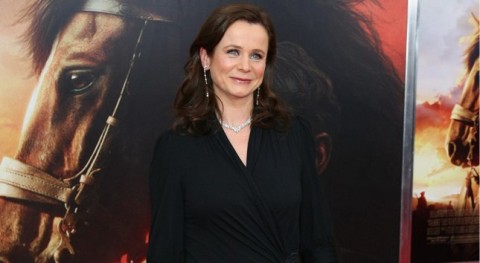
Never one to let inhibitions stand in the way of a great creative opportunity, Emily Watson put aside her equinophobia for a while to join up with Steven Spielberg’s new War Horse . Along the way, she also got to know the film’s irrepressible goose, its neophyte leading man and its legendary filmmaker’s one-of-a-kind facility with epic storytelling. Watson explained more recently in a chat with Movieline. I don’t know about you, but I am War Horse -d out, Can we talk about something else? What else is going on? What else is going on? I was interested in a comment you made in the press conference about how everyone on a set should have a T-shirt that says, “It’s not about you.” Can you elaborate on that? I just mean that as a storyteller, when you get out of the way, that’s when the magic starts. If you’re paranoid about your performance or your status or how you look, or if there’s something stopping you from giving yourself over to a story? Actors, directors, cameramen — if everybody’s just there to tell the story, then you can get some great work. And so it’s not about Spielberg on the set? No, it’s not. He is one of those rare creatures who is compelled to tell stories. He’d be like a fish with no water — he’d be deprived of air if he wasn’t telling stories. Robert Altman was the same. Paul Thomas Anderson was the same. It’s like a muscle that has to be exercised. Everything he’s saying and everything he’s about is, “How can we best deliver this moment in time?” Now, everybody has a different way of doing that, but it’s all from the utter urgency of being a storyteller. What about a guy like Lars von Trier, who’s perceived as almost inseparable from his films? [Long pause] Yeah, I’d say. I think the stories that he’s compelled to tell are quite… You know, in a way, all storytellers are philosophers. They’re searching for meaning in everything. He’s quite close to the edge and extreme, but in the same way, he’s really searching for meaning somehow. Are you really afraid of horses? Mm-hmm. [Laughs] But I didn’t let on. Yes, I am. I’m not good around animals, generally. Oh — at all? I don’t mind dogs and cats and all that, but… What is it about horses? They might kick me! They’re big, powerful creatures? I think it’s my own ignorance. I don’t know what to do, and I don’t know how to read the signs of a horse. But if I’d been on it… I love the sound of the boys’ training camp. To be able to learn to do something like that? It sounds amazing. And I love the whole cavalry charge. It’s stupendous! I love it. Have you ever had to learn a skill for a role? I had to learn the cello for Hilary and Jackie , which was a big deal. It was a difficult thing to learn. How long did it take? Well, I say I learned the cello. I was miming to playback in the film. But I did learn pretty accurate fingering and the right bowing and the sense of expression. If you actually heard what I was playing, it would be excruciating. How long did it take? Two months? Two or three months? I think I had about 20 different pieces of music that I had to play, and I sat down and meticulously learned the tune for each one. And then I learned the fingering for each piece, and then I learned the bowing. Then I put them together. It was very scientific! Back to the animals: Was the goose in this movie as bad-ass as it looked? [Laughs] Yeah, it was. You were totally afraid of the goose, right? No, not really. I did sort of a photo op with the geese at one point, and they were really sweet. I just kind of held them. They had brilliant handlers as well, the geese. They could run and hit marks. It was mindblowing what these animals could do. But the goose is from the play. Have you seen the play? I haven’t. There’s a fabulous goose puppet. It’s great. I mean, War Horse is great and everything, but I’m really holding out for War Goose . “A miraculous goose.” Right! Anyway, this is Jeremy Irvine’s first screen role . What kind of relationship did you have behind the scenes? I felt very protective towards him. Just being a proper grown-up; he’s say, “I’m fine, I’m fine,” but you could see how terrified he was — how much he was having to absorb and learn every second. But he had a great attitude. He had a great sense of humility and a great sense of wanting to learn and be as good as he could be, which is lovely to watch. Do you remember the first Spielberg film you saw? I think it was E.T. I loved it. I wept. What your relationship with Spielberg films as a viewer? Are they must-see theater viewing? Not always, but yeah — it’s an event, isn’t it? What else is out that you like? I liked Warrior very much. Have you seen that? I thought the fight sequences were absolutely brilliant — so committed, so real. You always tend to go, “Yeah, yeah — they’re faking it.” And that didn’t look like faking it. I love Tom Hardy. I think he’s wonderful. I loved Beginners . I loved it. I found it very affecting and real. When you know somebody like I know Ewan [McGregor], whom I’ve known for a while, it’s quite difficult to forget and be transported by them. And I really was. I thought he was wonderful. What else have I seen? I liked Tinker, Tailor, Soldier, Spy . It’s classy. It’s classy . Oldman’s amazing in that. Have you worked with him before? No. It’s interesting you say that about McGregor versus someone like Oldman. Does that always tend take you out of the experience? Absolutely. You know their ways of doing things; you know them as a person. Like Phil[ip Seymour] Hoffman: I’ve worked with him several times, and he’s in so many things and I just… [Pauses] Now, having said that, he’s brilliant. He’s absolutely brilliant. But it does make it harder to suspend your disbelief when you know somebody. What are you up to next? I just wrapped on a film called Little Boy , which is directed by Alejandro Monteverde; it’s about a little boy in California during the second World War who thinks he can bring his dad home from a Japanese prisoner-of-war camp using his magic powers. And I play his mom. It’s kind of a grown-up fairy tale. And I’m doing a few days on Joe Wright’s Anna Karenina . I’m playing Countess Lydia — a nasty piece of work. Ohhhh. Are you looking forward to it? I am. I’ve already done one day. Oh, yeah. You sound like a fan of the book. I am. I’ve read it a few times in my life. It’s a very interesting book, because you see it very differently when you’re young. As your age changes, you read it very differently. I was shocked when I read it the last time. What was different? Well, when I was young, I think I really identified with Anna and wanting to be that in love and the terrible tragedy of it all. I don’t know if I wanted to kill myself at the end of it. Then you read it now, and you realize the decisions she makes about her children– to leave her children — for the sake of this affair is… [Winces] I have children of my own, so… Anyway, it changes. Follow S.T. VanAirsdale on Twitter . Follow Movieline on Twitter .
With all this laudatory talk of the best of the year and Nelson Muntz-style “HA hah”-ing at the worst, isn’t it time to spare a thought for all the films in between, the ones that are neither remarkably good nor jaw-dropping awful? 2011 saw hundreds of films hit theaters, some only on offer for a week or two before being shunted off to other platforms, others providing an adequate or mildly disappointing few hours of entertainment at the multiplex. But just because a movie is middling doesn’t mean it can’t have some memorable, even exceptional scenes. Here are five from flicks that likely won’t be on many year-end lists, but that still deserve a second look. Paranormal Activity 3 : The babysitter in the kitchen The third installment of this lo-fi horror series took its suburban surveillance shocks back to the ’80s, but otherwise kept to the familiar formula of grainy footage, door slams, strange noises and vague demon mythology. The one exception? A camcorder mounted to the base of a rotating fan, slowly turning between the kitchen and the open living room of the haunted family’s California tract home, allowing for spooky scenarios to develop between the two places as we are kept to the automatically toggle of the unmanned camera. In the best sequence, a babysitter does her homework at the kitchen table, unaware that in the other room a figure wearing the sheet she had used to tell her charges a ghost story has appeared, the camera swings slowly away, and when it turns back the would-be specter is directly behind her. It’s an amazing example of how timing and a sense of space can make something simple into something improbably frightening.