Tag Archives: trauma

The Brain Speaks: Scientists Decode Words from Brain Signals

Sept. 7, 2010 — In an early step toward letting severely paralyzed people speak with their thoughts, University of Utah researchers translated brain signals into words using two grids of 16 microelectrodes implanted beneath the skull but atop the brain. “We have been able to decode spoken words using only signals from the brain with a device that has promise for long-term use in paralyzed patients who cannot now speak,” says Bradley Greger, an assistant professor of bioengineering. Because the method needs much more improvement and involves placing electrodes on the brain, he expects it will be a few years before clinical trials on paralyzed people who cannot speak due to so-called “locked-in syndrome.” The Journal of Neural Engineering's September issue is publishing Greger's study showing the feasibility of translating brain signals into computer-spoken words. The University of Utah research team placed grids of tiny microelectrodes over speech centers in the brain of a volunteer with severe epileptic seizures. The man already had a craniotomy – temporary partial skull removal – so doctors could place larger, conventional electrodes to locate the source of his seizures and surgically stop them. Using the experimental microelectrodes, the scientists recorded brain signals as the patient repeatedly read each of 10 words that might be useful to a paralyzed person: yes, no, hot, cold, hungry, thirsty, hello, goodbye, more and less. Later, they tried figuring out which brain signals represented each of the 10 words. When they compared any two brain signals – such as those generated when the man said the words “yes” and “no” – they were able to distinguish brain signals for each word 76 percent to 90 percent of the time. When they examined all 10 brain signal patterns at once, they were able to pick out the correct word any one signal represented only 28 percent to 48 percent of the time – better than chance (which would have been 10 percent) but not good enough for a device to translate a paralyzed person's thoughts into words spoken by a computer. “This is proof of concept,” Greger says, “We've proven these signals can tell you what the person is saying well above chance. But we need to be able to do more words with more accuracy before it is something a patient really might find useful.” People who eventually could benefit from a wireless device that converts thoughts into computer-spoken spoken words include those paralyzed by stroke, Lou Gehrig's disease and trauma, Greger says. People who are now “locked in” often communicate with any movement they can make – blinking an eye or moving a hand slightly – to arduously pick letters or words from a list. University of Utah colleagues who conducted the study with Greger included electrical engineers Spencer Kellis, a doctoral student, and Richard Brown, dean of the College of Engineering; and Paul House, an assistant professor of neurosurgery. Another coauthor was Kai Miller, a neuroscientist at the University of Washington in Seattle. The research was funded by the National Institutes of Health, the Defense Advanced Research Projects Agency, the University of Utah Research Foundation and the National Science Foundation. Nonpenetrating Microelectrodes Read Brain's Speech Signals The study used a new kind of nonpenetrating microelectrode that sits on the brain without poking into it. These electrodes are known as microECoGs because they are a small version of the much larger electrodes used for electrocorticography, or ECoG, developed a half century ago. For patients with severe epileptic seizures uncontrolled by medication, surgeons remove part of the skull and place a silicone mat containing ECoG electrodes over the brain for days to weeks while the cranium is held in place but not reattached. The button-sized ECoG electrodes don't penetrate the brain but detect abnormal electrical activity and allow surgeons to locate and remove a small portion of the brain causing the seizures. Last year, Greger and colleagues published a study showing the much smaller microECoG electrodes could “read” brain signals controlling arm movements. One of the epileptic patients involved in that study also volunteered for the new study. Because the microelectrodes do not penetrate brain matter, they are considered safe to place on speech areas of the brain – something that cannot be done with penetrating electrodes that have been used in experimental devices to help paralyzed people control a computer cursor or an artificial arm. EEG electrodes used on the skull to record brain waves are too big and record too many brain signals to be used easily for decoding speech signals from paralyzed people. Translating Nerve Signals into Words In the new study, the microelectrodes were used to detect weak electrical signals from the brain generated by a few thousand neurons or nerve cells. Each of two grids with 16 microECoGs spaced 1 millimeter (about one-25th of an inch) apart, was placed over one of two speech areas of the brain: First, the facial motor cortex, which controls movements of the mouth, lips, tongue and face – basically the muscles involved in speaking. Second, Wernicke's area, a little understood part of the human brain tied to language comprehension and understanding. The study was conducted during one-hour sessions on four consecutive days. Researchers told the epilepsy patient to repeat one of the 10 words each time they pointed at the patient. Brain signals were recorded via the two grids of microelectrodes. Each of the 10 words was repeated from 31 to 96 times, depending on how tired the patient was. Then the researchers “looked for patterns in the brain signals that correspond to the different words” by analyzing changes in strength of different frequencies within each nerve signal, says Greger. The researchers found that each spoken word produced varying brain signals, and thus the pattern of electrodes that most accurately identified each word varied from word to word. They say that supports the theory that closely spaced microelectrodes can capture signals from single, column-shaped processing units of neurons in the brain. One unexpected finding: When the patient repeated words, the facial motor cortex was most active and Wernicke's area was less active. Yet Wernicke's area “lit up” when the patient was thanked by researchers after repeating words. It shows Wernicke's area is more involved in high-level understanding of language, while the facial motor cortex controls facial muscles that help produce sounds, Greger says. More at link… added by: Almibry

‘Going The Distance’ Stars Share Romantic Gestures Gone Awry

Drew Barrymore recalls an ex’s unsuccessful love letter, while Justin Long’s flower purchase backfires. By Kara Warner Justin Long and Drew Barrymore Photo: Kevin Winter/Getty Images The topic of love and relationships is a loaded one. It’s full of drama, angst, joy — basically a smorgasbord of complex emotions that, no matter how serious and life-changing, can also be rife for comedic interpretation. One such interpretation is Drew Barrymore and Justin Long’s R-rated romp “Going the Distance,” which opens Friday. In the film, the are-they-or-aren’t-they-dating Barrymore and Long play a new couple who try to make a long-distance relationship work. There are expensive plane tickets, romantic gestures, arguments, etc. Speaking to the romantic gestures, because there are a few in the film, we asked Barrymore and Long if they had ever had one backfire. “I once got sent an e-mail that was written in a sarcastic tone, but the person buried the lead and didn’t say he was joking,” Barrymore said of an ex’s attempt at a love letter. “So everything in it was as horrible as you can imagine. That wasn’t funny. That was a really poorly executed romantic gesture. I remember another boyfriend, he bought me a cameo [silhouette pendant], and he said it reminded him of me. And I thought, ‘This old, silhouetted lady reminds you of me? Huh. OK.’ ” Long (who was not the giver of the aforementioned cameo) revealed that his good-intentions-gone-bad gesture involved an unfortunate mix-up of an ex’s preference in flowers. “This was actually a Valentine’s Day thing,” he said. “I went to the florist, and I saw these amazing orchids. There were, like, six orchids. It was tons of money … but I thought, ‘I’m going to do it. These are beautiful, and I’m pretty sure this person loves orchids,’ ” Long recalled. “I brought them home. She was always so appreciative of just the smallest gestures I did, so I was like, ‘Her head’s going to explode.’ ” Unfortunately for Long, his memory was a little skewed. “She was like [ he winces ] ‘I … oh … thank you,’ ” Long re-enacted. “She had this story that was like a really troubling, traumatic experience that had happened to her that involved orchids that she had told me. I knew there was something with orchids, I just didn’t remember that it was an awful association. It was bad. She was molested by a guy named Fred Orchid,” he joked. Have you had any romantic gestures go bad? Share your memories in the comments! Check out everything we’ve got on “Going the Distance.” For breaking news, celebrity columns, humor and more — updated around the clock — visit MTVMoviesBlog.com . Related Videos Drew Barrymore And Justin Long Are ‘Going The Distance’ Related Photos ‘Going The Distance’ Premieres In L.A.

Read more here:
‘Going The Distance’ Stars Share Romantic Gestures Gone Awry

Real Housewives of New Jersey Reunion Part 1: By the Numbers

Uh, so, who watched the first part of the Real Housewives of New Jersey reunion last night? It was an emotionally scarring, 75-minute display of primal Jersey rage punctuated by hair touch-ups, crocodile tears, and Andy Cohen’s sh*t-shirring questions . Because it was so spectacularly explosive, profanity-laced, and over-the-top, I decided to recap last night’s trauma by the numbers rather than using Movieline’s standard reality check format (because we can all agree that everything seen last night was very real, beginning with Andy Cohen’s fear). As Danielle would say, I promise this will be very “therapeutical” for everyone.

See the original post here:
Real Housewives of New Jersey Reunion Part 1: By the Numbers

Lindsay Lohan Tells Vanity Fair: “I Want My Career Back”

Troubled actress says she’s learned from her mistakes. By Gil Kaufman Lindsay Lohan on the cover of the October issue of Vanity Fair Photo: Condé Nast In the first major interview published since Lindsay Lohan spent time in jail and rehab, the troubled actress told Vanity Fair that she’s determined to get her career back on track. She also addressed suggestions that she was on a downward spiral of drug and alcohol addiction and talked about how heartrending it was to see her younger sister Ali in the courtroom during her sentencing earlier this summer. “I don’t care what anyone says. I know that I’m a damn good actress. … And I know that in my past I was young and irresponsible — but that’s what growing up is. You learn from your mistakes,” said Lohan, who can be seen in “Machete” and who is slated to start working on the Linda Lovelace biography “Inferno” in November. Lohan also spoke candidly about her alleged struggles with illicit substances and alcohol in the interview, which was conducted one week before she spent 13 days of a 90-day sentence in jail. “If I were the alcoholic everyone says I am, then putting a [SCRAM] bracelet on would have ended me up in detox, in the emergency room, because I would have had to come down from all the things that people say I’m taking and my father says I’m taking–so that says something, because I was fine,” Lohan told the magazine about the alcohol-detection bracelet she was required to wear. Her SCRAM bracelet was triggered on the night of the MTV Movie Awards in June; her lawyer said the cause was an accident in which someone spilled a drink on Lohan’s ankle . But that incident helped set off the chain of events that landed Lohan in jail for 13 days of a 90-day sentence on a probation violation from her 2007 DUI conviction. “I think everyone has their own addictions and hopefully learns how to get past them,” Lohan explained. “I think my biggest focus for myself is learning how to continue to get through the trauma that my father has caused in my life.” Lohan is estranged from father Michael Lohan, but she said watching the reactions from him and her sister Ali when the actress was sentenced to three months in jail was incredibly difficult. The article describes Lohan, 24, as “visibly upset” when talking about watching her sister cry in the courtroom, but it notes that she was torn by Michael Lohan’s presence at the hearing. “The worst part of it is you turn around and you see your dad crying and normally you’d be, like, happy that your father’s there,” she said. “But then he has to go and do an interview right after.” Though Lohan was reportedly taking a number of prescription medications before reporting to jail, the “Mean Girls” star adamantly denied ever abusing prescription drugs . “I never have — never in my life. I have no desire to,” she said. “That’s not who I am. I’ve admitted to the things that I’ve done–to, you know, dabbling in certain things and trying things ’cause I was young and curious and thought it was like, OK, ’cause other people were doing it and other people put it in front of me. And I see what happened in my life because of it.” In addition to serving a short sentence in jail, Lohan was sprung from a 90-day rehab sentence early . Like a lot of young stars who come to Hollywood, Lohan said she got caught up in the party scene and ended up running with the wrong crowd. She blamed that group for some of her troubles, saying they pretended to care about her for the wrong reasons and were only there for the party. When she first moved to Los Angeles as a teenager, Lohan said the atmosphere was,” very go-go-go and I had a lot of responsibility; and I think just the second I didn’t have [structure] anymore — I was 18, 19 — with a ton of money and no one really here to tell me that I couldn’t do certain things … And I see where that’s gotten me now, and I don’t like it.” And while she denied tipping off the paparazzi to her whereabouts to get more press, Lohan confessed that she often relied on tabloids as her main news source and that she was influenced by the blanket coverage of other bad girls like Britney Spears. “I would look up to those girls,” she said. “And I would be like, ‘I want to be like that.’ ” The interview with Lohan runs in the October issue of Vanity Fair , which hits newsstands in New York and Los Angeles on Thursday (September 2) and nationwide on September 7. Related Videos Lindsay Lohan: Crime And Punishment Related Photos Lindsay Lohan’s ‘Inferno’ Photo Shoot Lindsay Lohan Goes To Court The Highs And Lows Of Lindsay Lohan Related Artists Lindsay Lohan

Follow this link:
Lindsay Lohan Tells Vanity Fair: “I Want My Career Back”

Canadian Government Decides Penis-Measuring Lie Detector for Children Not Such a Great Idea

Oh boy—where even to start with this one. Use of penile plethysmography (PPG), which measure your penis for arousal while viewing questionable content, is being ceased by the Canadian government. After being used on kids for 25 years. PPG testing, almost too perverse to believe it was actually a government-sanctioned procedure, was employed in British Columbia as a means of interrogating child sex offenders. A sensor was strapped to a child's penis, monitoring blood flow while the kid was subjected to images of other nude children, and audio descriptions of rape. Reread that sentence if necessary. The reasoning—if you can even call it that—behind the test was to discern whether a child offender was lying about his or her desires, though we have a feeling this treatment probably created far more sociopaths than it screened. As Boing Boing points out, and as any adolescent can tell you, erections aren't exactly the most objectively predictable phenomenon, refuting entirely the purpose of the test. British Columbia's Minister of Children and Family Development has put an end to PPG after the revelation that a technician administering the test was himself a sex offender. The levels of perversion-within-perversion here are dizzying. The Canadian government will now begin an official inquiry into trauma victims among the children subjected to PPG over the past decades—an investigation we have a feeling will not be a short one. added by: Omnomynous

Jessica Simpson’s Large Back has Found Love of the Day

I used to live in a foster home and the daughter of the family I was living with was this bigger, greasy, ugly as fuck girl who I guess was fucking horny as shit, cuz she would always make sure to walk around half naked, or flash me without panties, all to seemingly be innocent, but really to try to get me turned on and into her, but at 14 years old, I didn’t really know how to deal with these things, mainly because my hormones weren’t strong enough for me to ignore how ugly she was….It went on for months, where I knew this monster wanted to jump me. I’d wake up and she’d be in my bed, I’d catch her masturbating, but I didn’t react like a normal dude, I’d run away freaked the fuck out cuz she was really that gross…but then she tricked me…she found dirt on me and realized that if she told her parents I was the one trying to fuck her, I’d get in fucking trouble, and really who would believe a 14 year old foster kid over their daughter, so one thing lead to another cuz I didn’t want to get set to the horrible foster home and next thing you know I’m giving her back massages, and despite how fucking pimply and broad the shit is, I get hard and next thing you know I’m as sucked in as Jessica Simpson’s boyfriend….only I didn’t have the choice to run…I became her sex slave and I had no where else to go and just had to suck it up…big back and all…so when I see this dude intentionally getting with this back….I realize that maybe big back isn’t the problem….and the girl who the big back is on is…cuz Jessica Simpson, in all her desperate to get knocked up glory and in all her fatness, is still Jessica Simpson and you’d have to be an idiot to not fuck her the second you have the chance..no matter how much you hate or are traumatized by big back…and that’s the life lesson of the day…it’s not the size of the back that counts, but the pussy it is attached to. Pics via Bauer

Continued here:
Jessica Simpson’s Large Back has Found Love of the Day

Colorado Springs Is PTSD City: Scenes from Vanguard

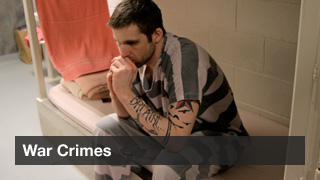
In this scene from Vanguard's “War Crimes,” correspondent Kaj Larsen investigates why Colorado Springs has become ground zero in what may be a coming tsunami: the alarming rise in the number of soldiers who have been traumatized by war and are now accused of bringing the violence home. Since the start of the Iraq War, 17 soldiers from nearby Fort Carson have been charged with murder or attempted murder. Of the more than 2 million men and women who have served in the recent wars in Iraq and Afghanistan, as many as a third of them may now have post-traumatic stress disorder, or PTSD. A growing number of these vets are being charged with violent crimes, and Kaj travels to prisons and mental health facilities in Arizona, Colorado and Oregon to hear their stories. “War Crimes” premieres Wednesday, July 7 at 10/9c on Current TV. “Vanguard,” airing weekly on Current TV Wednesdays at 10/9c, is a no-limits documentary series whose award-winning correspondents put themselves in extraordinary situations to immerse viewers in global issues that have a large social significance. Unlike sound-bite driven reporting, the show's correspondents, Adam Yamaguchi, Kaj Larsen, Christof Putzel and Mariana van Zeller, serve as trusted guides who take viewers on in-depth real life adventures in pursuit of some of the world's most important stories. For more, go to http://current.com/vanguard . added by: Kaj

War Crimes

Kaj Larsen investigates the connection between post-traumatic stress disorder and the rise in veterans being charged with violent crimes.

See the original post:
War Crimes

War Crimes: Vanguard Trailer

Correspondent Kaj Larsen investigates the alarming rise in the number of soldiers who have been traumatized by war and are now accused of bringing the violence home. Of the more than 2 million men and women who have served in the recent wars in Iraq and Afghanistan, as many as a third of them may now have post-traumatic stress disorder, or PTSD. A growing number of these vets are being charged with violent crimes, and Kaj travels to prisons and mental health facilities in Arizona, Colorado and Oregon to hear their stories. “War Crimes” premieres Wednesday, July 7 at 10/9c on Current TV. “Vanguard,” airing weekly on Current TV Wednesdays at 10/9c, is a no-limits documentary series whose award-winning correspondents put themselves in extraordinary situations to immerse viewers in global issues that have a large social significance. Unlike sound-bite driven reporting, the show's correspondents, Adam Yamaguchi, Kaj Larsen, Christof Putzel and Mariana van Zeller, serve as trusted guides who take viewers on in-depth real life adventures in pursuit of some of the world's most important stories. For more, go to http://current.com/vanguard . added by: Kaj

Kristen Stewart Says ‘The Love Triangle Is Real’ In ‘Eclipse’

‘It took a while for her to know herself well enough to make a decision,’ Stewart tells MTV News of Bella. By Jocelyn Vena, with reporting by Josh Horowitz Kristen Stewart Photo: MTV News We all know that Bella chooses Edward, but in “Eclipse,” Jacob has a shot for, like, a hot minute at maybe stealing the would-be vampire away from her true love. Kristen Stewart said that’s one of the things she loves about the film: Bella, now on the brink of making a major life decision, is finally empowered enough to feel like Jacob could be the guy for her. “I feel like she goes through so many traumatic events, and when she gets to the end of them, she feels a little bit more righteous than she did before,” she told MTV News. “A little bit more knowing and sort of like, ‘I’ve lived. Take my word for it. I know what I want.’ And nobody ever puts any stock in what she’s saying.” Instead, Stewart said, “Bella’s just sort of the dumb young girl who doesn’t know what it’s like to be a vampire, and it’s not about that for her. This whole vampire thing is going to be hard, but she’s a strong girl and she can make sacrifices. “What I like about ‘Eclipse’ is that … she really, actually looks at someone else, and it shatters her ideals,” Stewart added. So what does that mean for Bella, Edward and Jacob? “The love triangle is real,” Stewart said. “In [‘Eclipse’], she is just older and a little bit more [wise]. Now you really believe her. It took awhile for her to know herself well enough to make a decision.” We’ll be live at the L.A. premiere of “The Twilight Saga: Eclipse” on Thursday, June 24. Tune in to Movies.MTV.com at 9:30 ET (8:30 Central) for our red-carpet webcast, and watch us chat with Robert, Kristen, Taylor and all your favorite stars. And don’t forget to submit your burning ‘Eclipse’ questions ! Check out everything we’ve got on “The Twilight Saga: Eclipse.” For young Hollywood news, fashion and “Twilight” updates around the clock, visit HollywoodCrush.MTV.com . Related Videos MTV Rough Cut: Kristen Stewart

View original post here:
Kristen Stewart Says ‘The Love Triangle Is Real’ In ‘Eclipse’