Tag Archives: trauma

Shannon Price: I Didn’t Kill Gary Coleman!

Gary Coleman’s ex-wife Shannon Price is speaking out, defending her actions the day of his eventually fatal fall as well as her decision to take him off life support. Calling Coleman her spouse – even though they were secretly divorced – Price indignantly tells TMZ: “Why would I want to kill my husband? Are you kidding me?” Strangely, Price said that she’s heard speculation that she pushed Gary, which caused him to fall and his brain to hemorrhage. Price insists she didn’t push Gary. As she said during the Gary Coleman 911 call , Shannon adds that the two of them were on different floors at the time he fell, so how could she have pushed him? An odd statement, since no one has actually accused her of this. Shannon Price, who married the former child star in 2007 and divorced him in 2008, adamantly denies pushing Gary Coleman, which no one suggested happened . Of her decision to pull the plug on the life support machines keeping Coleman alive, Shannon says she didn’t want Gary to be like Muhammad Ali or Terri Schiavo. “The doctors told me that even if they had done surgery on him, he would have bled to death and died during surgery … if they took a chunk out of his brain, he would not be the same. He would be like Muhammad Ali. It would have been so traumatic.” She wants us to put ourselves in her position. Admittedly, it’s a position no one should ever have to endure, yet something about her conduct seems a little off. On a happier note, Shannon Price fondly mentions that Gary Coleman did a lot for her, like buy her a car. Of his own volition. That was, like, really nice of him.

Read more here:
Shannon Price: I Didn’t Kill Gary Coleman!

Bruce Beresford-Redman to Friends: Help!

Bruce Beresford-Redman stands accused of murdering his wife . But the TV producer claims he’s innocent , and is now asking friends to help him prove it. In a mass email obtained by TMZ, Beresford-Redman writes to acquaintances and requests their assistance in convincing a Mexican judge that he deserves bail. Bruce writes: “…my wife Monica was killed on our recent trip to Mexico, and now unfortunately, the Mexican authorities have decided to charge me with the crime. I am innocent and intend to fight in court both here and in Mexico.” Bruce and Monica had two children, and Beresford-Redman cites their well-being when adding: “As I am likely to be detained in the U.S. while fighting extradition, I am asking you if you are willing to write a letter on my behalf.

Shannon Price: Secretly Divorced From Gary Coleman, Still in Control of Actor’s Medical Decisions

Was Shannon Price in the right by taking Gary Coleman off life support? After the Gary Coleman 911 call was released yesterday, that question is being hotly debated, given her strange comments and behavior on the phone. She’s likely to come under even more scrutiny now that documents have surfaced proving that Coleman and Price secretly got divorced back in 2008. They wed in 2007 but split, legally, a year later due to “irreconcilable differences.” A judge signed off on the divorce, and they did not get re-married. Yet they were in bed together the night of Gary’s ultimately fatal injury. Shannon Price and (apparently) her ex-husband Gary Coleman . Price was the one who called 911, as we know, one week ago now, reporting that Coleman had fallen down in their Utah home and was unconscious. According to the Santaquin Police Department, The Diff’rent Strokes star was bleeding from a laceration on his head when the paramedics arrived. He was able to answer their questions and was also able to walk to the ambulance that transported him to the hospital, the incident report states. Price stayed upstairs once paramedics arrived, telling them she “didn’t want to be traumatized.” Officers stated they observed “nothing suspicious.” Coleman, who had been in a weakened state when he fell after undergoing a four-hour kidney dialysis treatment, later suffered a brain hemorrhage . He slipped into a coma was taken off life support on Friday by Shannon Price, who identified herself as Coleman’s wife, despite the fact that she isn’t. Prince wasn’t asked to provide documented proof, prompting Coleman’s divorce lawyer, Randy Kester, to question if Shannon had power of attorney. Apparently, she did, despite the couple’s non-marital status . Shannon Price was no longer Gary Coleman’s wife, but the actor trusted her with his life anyway. The legal documents that are in place establish this. He signed the paperwork authorizing her to make medical decisions for him if he was incapacitated and unable to do so, as Price tragically had to. So even though she technically told an untruth by telling hospital workers she was Gary Coleman’s wife, she didn’t cross more questionable lines. “Mr. Coleman had completed an Advanced Health Care Directive granting Shannon Price permission to make medical decisions on his behalf if he was unable to do so,” reads a statement released by Utah Valley Regional Medical Center. “An Advanced Health Care Directive remains in effect regardless of a patient’s marital status, unless modified by the patient. It is a private medical document which the hospital does not have permission to release.” “However, we received permission to confirm that the document was in effect at the time of Mr. Coleman’s death.” No other info is available due to privacy statutes, and it is not known when Coleman signed the form. However, Price looks to be legally in the clear. If any more details on Coleman’s sad and increasingly strange death become available, you will know as soon as we do. Stay tuned.

Read more here:
Shannon Price: Secretly Divorced From Gary Coleman, Still in Control of Actor’s Medical Decisions

Gary Coleman 911 Call: Shannon Price Doesn’t Wanna Be Traumatized!

The 911 call made when Gary Coleman fell last week at his home in Utah is not for the faint of heart. Be forewarned: It is graphic, upsetting material. Well, unless you’re his wife, Shannon Price. She didn’t seem too moved by the whole situation – at least not enough to drive Coleman to the hospital. “I don’t know what happened,” Price told the dispatcher, asking them to “send someone quick because I don’t know if he’s going to, like, be alive.” Gary was conscious during the call, but Shannon says he’s “like, not with it.” She added that “I’m gagging. I’ve got blood on myself. I can’t deal.” On the call, Shannon initially refused to walk over and assess Gary’s condition because she was stressed and she doesn’t “want to be traumatized.” Gary Coleman 911 Call She also told him numerous times to put pressure on a cut on the back of his head and to “Sit down!” as if he were some sort of animal. It’s sad. We realize Shannon Price suffers from seizures and was in the throes of trauma, but she certainly doesn’t come off very sympathetic … or useful. The 911 call was placed Wednesday, before the actor was hospitalized. Gary Coleman died Friday morning when Shannon took him off life support. Might his brain hemorrhage have been prevented or treated more effectively after a swifter response? Might she have waited to see if he recovered? There’s no way to know. But it makes you wonder. Just saying.

See original here:
Gary Coleman 911 Call: Shannon Price Doesn’t Wanna Be Traumatized!

From Snow to Sweat Lodges: Making "Rape on the Reservation"

Joanne Shen co-produced “Rape on the Reservation,” premiering as part of Vanguard's fourth season on Wednesday, June 2, at 10/9c. A few weeks before Christmas last year, my co-producer John Henion and I flew to South Dakota to begin researching the story that would become “Rape on the Reservation.” We landed in Rapid City and drove three hours east to two of the poorest reservations in America, Pine Ridge and Rosebud reservations, home to members of the Lakota (Sioux) nation. The point of the trip was to make contacts and figure out if it was even feasible to do a television documentary about the sexual assault on Indian reservations. We had been repeatedly warned over the phone that outsiders were regarded with suspicion and it would it would be especially difficult to get people talking about such a sensitive subject like rape. First impression: in the dead of winter, rural South Dakota has got to be one of the coldest places in America. The poverty makes it feel all the more bleak. The impoverished conditions that many people on the reservation live under are among the worst I’ve ever seen in the U.S. A trailer home will be packed with more than a dozen adults and children living under one roof. Sub- zero temperatures are exacerbated by the fact that some residences still lack electricity or indoor plumbing. I remember going with the Pine Ridge police department on a ride-along. We entered the home of an elderly man when neighbors complained that his young nieces had been partying on the premises (alcohol is illegal on Pine Ridge, a so-called “dry” reservation”). I noticed that all four gas burners on his stove were on full-blast, which I thought was odd and dangerous, considering there were 2 or 3 toddlers running around the premises. I pointed this out to the man because I thought he might have left the stove on accidentally. He ignored me. Later, I learned that this was one of the many creative ways people on “the rez” kept their houses warm. Like any shoot, this one had its own logistical challenges. When we go to foreign countries, we know we have to play by someone else’s rule—and visiting an Indian reservation is no different. Reservations are legally recognized sovereign nations within the geographical boundaries of the U. S. and the rhythm of life is definitely different. They call it “Indian time,” and it means that schedules are fluid. Television producers live and die by adhering to strict schedules so that they can pack as much filming in a day as possible. But, as with almost every Vanguard shoot I’ve ever been on—efficient Japan being a notable exception—being super-flexible to work with your subject’s schedule has usually paid off with getting great access in the end. Before you do, you’re likely to spend some time that feels wasted, like standing outside for half an hour in bracing 20-below weather waiting for a source to show up at a traditional Lakota funeral, as we did. Or braving the other temperature extreme—an Indian sweat lodge—in the hopes of convincing a medicine man to let us film a traditional healing ceremony. It was no easy feat, considering I was 23 weeks pregnant at the time. In the end, I literally couldn’t take the heat and left my co-producer to sweat it out (pardon the puns) with our subjects. Ultimately, we met amazing individuals who were brave enough to share their stories with us. In spite of the dark subject matter, I was frequently struck by the resilience of the people we met along the way. I remember interviewing one of our subjects about the murder of her daughter. She’d be in tears one moment and then, in the very next moment, be able to laugh genuinely at some silly joke I’d crack out of sheer nervousness. Later on, Tillie Black Bear, the head of White Buffalo Calf Woman Society, an important women’s organization on Rosebud Reservation, told me that this was characteristic of the Lakota—to be able to switch quickly from deep sorrow to moments of joy and laughter—and it was probably one way they have been able to survive psychologically, in the face of their traumatic history. And that’s the way I remember my time there: hearing countless heartbreaking stories from some of the toughest people I’ve ever met. Watch the trailer for “Rape on the Reservation” after the jump, and tune in on Wednesday, June 2 at 10/9c to watch on Current TV. added by: joanneshen

Adrien Brody vs. Gay Goats

It’s not easy to be an actor who inexplicably owns a castle ! So says Adrien Brody, who had a recent problem with the gay goats he accidentally bought: “The more well-endowed goat took a liking to the other one and I swear it was traumatic. There was a lot of crying and goat noises and I felt incredibly guilty and I didn’t know what to do…It’s best when you have goats that are that gay to just let them free.” [ Ace Showbiz via Towleroad ]

Go here to see the original:
Adrien Brody vs. Gay Goats

VA Docs Prohibited From Recommending Medical Marijuana to Returning Vets

The U.S. Veterans Administration (VA) recently adopted a policy prohibiting VA physicians from recommending medical marijuana to their patients, even if marijuana is the safest and most effective medicine to treat Post-Traumatic Stress Disorder (PTSD) and other service-related conditions. No doubt the policy stems, in part, from the VA's efforts to address the serious problem of drug abuse among returning veterans. Veterans' advocates and organizations like the Drug Policy Alliance (DPA) certainly share this concern; last fall, DPA issued a report calling for immediate policy changes to improve veterans' substance abuse and mental health treatment. Yet seen from the larger perspective of helping veterans adjust to civilian life, the VA's stance on medical marijuana is counterproductive and harmful. The ban means that–despite their service to our country–veterans who reside in the 14 states that have legalized medical marijuana are denied the same rights as every other resident of these states. At minimum, the VA should be actively studying whether cannabis and its unique chemical ingredients can be used to reduce post-combat trauma without contributing to drug dependency. Ample research and anecdote strongly suggest this is the case. Patient reports and published research indicate that marijuana can be a highly effective treatment for PTSD, a condition afflicting nearly one in five veterans of the wars in Iraq and Afghanistan. And overwhelming scientific evidence has already proven marijuana's safety and efficacy for treating conditions like chronic pain, which affects many combat-injured veterans. Marijuana, moreover, carries none of the risks associated with prescription drugs used to treat PTSD, which have been implicated in the tragic overdose deaths of several current conflict veterans. “I've run the gamut of different medications at the VA, and basically I was at my limit,” said decorated U.S. Army veteran Paul Culkin, a New Mexico medical marijuana patient who suffers from PTSD after serving in Iraq. “The medications were turning me into a zombie…medical cannabis made me a father and a husband again. It's been a blessing.” http://www.huffingtonpost.com/bob-kerrey/va-docs-prohibited-from-d_b_587763.html added by: JackHerer

*EYE OPENER* – Our Psychiatric Civilization -by: Dr. Peter Breggin

It has been a routine week in my clinical and forensic practice. I evaluated a malpractice case involving a woman on the West Coast whose family doctor from a decade earlier kept prescribing Prozac to her for ten years without ever seeing her again. When she ran into emotional difficulty, she called this doctor who simply raised the dose and added a new drug, still without seeing her for a decade. This woman, a respected professional and parent in her community, then landed in a hospital where her adverse drug reaction was mistaken for a mental illness, more psychiatric drugs were added, and she soon killed herself in a most horrendous fashion. In this same past week of routine events, one of my own patients came to the office for an emergency session. He had sought my help to come off a cocktail of psychiatric drugs that had been prescribed for him during a personal crisis. We had recently cut back on his tranquilizers and he had become unable to sleep all night. He was feeling anxious and scared. “Am I going crazy, or is it drug withdrawal?” It turned out to be a withdrawal reaction that was easily handled by a slower taper of his medication. A very bright, creative young man, he had a series of traumatic events in his background. He needed counseling and encouragement, not a psychiatric diagnosis and drugs. Meanwhile, my wife Ginger has been handling the flood of mail we get from our books, websites, and public appearances. People email and call the office identifying themselves as “bipolar” or “clinically depressed.” Or they describe their children in the same terms, as well as “ADHD.” By the time they contact our office, their lives or those of their children have been deeply complicated, compromised and sometimes ruined by psychiatric drugs. They can no longer separate their original emotional problems from their complex array of drug side effects. They devote themselves to adjusting their diagnoses and their drugs instead of addressing their lives. After yet another week like this, Ginger tells me, “You've got to write about our Psychiatric Civilization.” The culture is so imbued with biological psychiatry — which is to say, modern psychiatry — that self-defined patients diagnose themselves, sometimes with the help of a one-minute TV ad. They visit their family doc, give him the diagnosis, “I think I have an anxiety disorder,” and get the appropriate drug. If they arrive a few minutes early, or the doctor is a few minutes late, they'll get a chance to get educated by a flat screen TV in the waiting room which instructs them about the symptoms of the psychiatric diagnosis de jour as well as its treatment with a propriety drug. I can't tell you how many times a new patient has looked at me with a mixture of apprehension and eagerness, and asked, “Do you think I have bipolar disorder?” We all hope to find a magic key to this hard business of being human. And if we cannot find community through our shared humanity, we will find it through our shared diagnoses. This rampant diagnostic labeling puts an end to all other human considerations and concerns. This labeling does far more than imposing a pseudo-medical diagnosis on you, it defines you as a person. “I'm bipolar.” Not “I'm full of life” or “I have trouble managing all these marvelous passions” or “I need to find a way to direct my creative energies” or “I'll have to find the courage and make the effort to make my dreams come true in the real world.” No, never mind about all of that, “I'm bipolar.” Your diagnosis becomes your personal final solution to your most vital challenges in life. In the Age of Aquarius, we greeted each other with “What's your sign?” In our more mundane and pseudo-scientific times, it's “What's your diagnosis?” As our definitions of normal get squeezed tighter and tighter by the increasing breadth of the official Diagnostic and Statistical Manual of Mental Disorders, Woodstock could never reoccur. All those 60s weirdos would be sitting around taking psychiatric drugs and diagnosing themselves with borderline personality disorder. In the sixties, if you panicked on LSD, your friends knew it was a “bad trip” and they “talked you down” from it. That bit of wisdom is lost in our Psychiatric Civilization. Doctors rarely acknowledge it when they cause a horrendously disturbing reaction with one of their psychiatric drugs and it won't occur to anyone to keep you company while you recover. Want to experience how deeply psychiatric our civilization has become? Go to any minister, priest or rabbi — even your most conventional Catholic priest or Orthodox rabbi — and explain that you're feeling “depressed.” Forsaking the most important role of any spiritual consoler, to help those in emotional anguish and despair repair their lives with meaning, even your most orthodox minister, priest or rabbi is likely to send you off to a psychiatrist for a diagnosis and a drug. It is dismaying to see how the leaders of our religious faiths so eagerly sacrifice their flock before the altar of psychiatry. What does this say about our shared values as a culture? Are we ultimately a society of rugged individualists? No more. Are we members of a Judeo-Christian community and tradition? No one dares to say that in public. So if we are not seeking to promote our own self-interest nor seeking salvation through God, what is our first and last resort in time of need? Psychiatric drugs. We want, above all else, to be pain free and emotionally undisturbed. At the first inkling of an existential crisis, we seek to be … less full of feeling. We're not the dumbed-down society, we're the numbed down society. Psychiatric diagnoses reflect the lowest common denominator of humanity. We lose ourselves in our diagnoses. Psychiatric drugs, by blunting our spirit, level our experience of our souls. Patients ask me, “Should I join a bipolar support group?” If I were flippant, which I never am with patients, I could respond, “Only if you want support in believing you're bipolar and need to take psychiatric drugs.” So what is our sense of community? It's not religion and, except for occasional moments when we feel gravely threatened by outside events, it's not politics. Is the nation becoming one gigantic psychiatric support group? Depersonalization has become the norm. Bare yourself to others — your family, friend, your teacher, your minister, your doctor or your therapist — and they will urge you to “get help.” Of course, you were trying to get help from them when you shared your feelings; but they mean, “Get help elsewhere.” Everyone will shunt you off to a pill provider. Even psychologists, social workers and other therapists are taught that they cannot handle a patient's more powerful emotions without first dampening them down with psychiatric drugs. It is said that this facilitates therapy; but there can be no effective therapy when people are afraid of their emotions or have lost them in a drug-induced fog. We can't get close to our own emotions for fear of thinking we're abnormal and in need of diagnosis and treatment. The Psychiatric Civilization reinforces our worst tendencies to be out of touch with our selves, to be burdened down by self-diagnosis, and to seek false solace in drugs, prescribed or otherwise, rather than in the comfort of each other's company. We human beings have always found life difficult. Indeed, we're born, we struggle, and we die. But how will we struggle? With passion, creativity, love, and principled living? Or confined within our diagnoses and our drug-impaired brains? Read Remaining Article… http://www.huffingtonpost.com/dr-peter-breggin/our-psychiatric-civilizat_b_58649… added by: PepsiJuror


Man Sucked Into Sausage Machine

Police said a cleaning man was taken to a hospital after being sucked into a machine at a sausage-making company in Danvers. The accident happened Thursday night as the man was cleaning the vacuum-type machine that is used to season the meat at DiLigui Sausage Co. Police said the man's head and shoulders became stuck in the machine after it somehow activated while being cleaned. Lt. Carole Germano told The Salem News that the man – whose name was not released – was freed from the machine and showed no obvious sign of trauma, but was taken to a hospital as a precaution. http://www.huffingtonpost.com/2010/05/23/man-sucked-into-sausage-m_n_586373.html added by: unimatrix0

What’s On: Whole Kitchen Caboodle

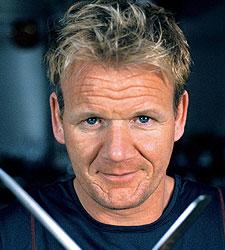
Gordon Ramsay’s tying up the second season of Kitchen Nightmares with a traumatizing version of a retrospective. Will knives be hurled? Will faces be eaten? Bien sur! Hopefully the featured restaurateurs will have learned from their last run-ins with Ramsay, who’s revisiting them with the blind hope that they’ve changed their laggard, Yankee ways.

Link:
What’s On: Whole Kitchen Caboodle