With the deadline for Academy Award nominations just two days away, perhaps it’s not the best time for Jennifer Lawrence to be talking about how acting is “stupid.” But that’s what she does in the new issue of Vanity Fair . The actress, whose performance in David O. Russell’s Silver Linings Playbook should put her in the running for a Best Actress Oscar, is the cover girl for the magazine’s February issue in which she’s named “The Most Desirable Woman of 2013.” But her perspective on acting may not sound so desirable to actors casting their votes for the first stage of the Oscar sweepstakes. “Not to sound rude, but [acting] is stupid,” Lawrence says. “Everybody’s like, ‘How can you remain with a level head?’ And I’m like, ‘Why would I ever get cocky? I’m not saving anybody’s life. There are doctors who save lives and firemen who run into burning buildings. I’m making movies. It’s stupid.’” Okay, so Lawrence hasn’t pulled a Joaquin Phoenix and declared the awards race “the stupidest thing in the whole world.” The context of her comment is unclear because Vanity Fair has yet to release the full story in which this quote appears, but Lawrence sounds like she’s merely being self-deprecating in a safely provocative way. And yet, as much as I admire candor, if I was part of Lawrence’s management team, I’d be telling her to can the “acting-is-stupid” comments until after awards season. I have to imagine that there are a fair number of self-important Academy voters/actors who don’t want to hear their profession belittled, especially since they’re not getting the kind of sought-after roles that Lawrence keeps getting. [ Vanity Fair] RELATED: Oscars E-Voting Too Hard For Tech-Illiterate Academy Members, Also Get Off My Lawn Follow Frank DiGiacomo on Twitter. Follow Movieline on Twitter.
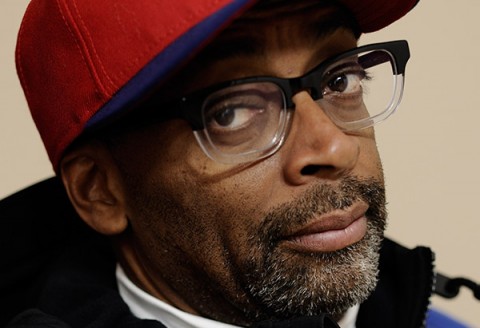
So, right before 2012 ended, Training Day director Antoine Fuqua piped up from Capri, Italy to assert that Spike Lee should not have publicly criticized Quentin Tarantino’s Django Unchained for the movie’s spaghetti-western-style depiction of slavery. And to that I can only say, “Huh?” If ever there’s a movie made to be publicly, loudly — and heatedly — debated, it’s QT’s anti-slavery epic. If you were offline for the holidays, here’s a recap of the situation: As Movieline’s Brian Brooks reported on Dec. 27, Lee declared that he has no intention of seeing Django Unchained . “I can’t disrespect my ancestors,” the Red Hook Summer director told Vibe magazine. He further elaborated via Twitter that “American Slavery Was Not A Sergio Leone Spaghetti Western. It Was A Holocaust.” Enter Fuqua, who took issue with the noisy way that Lee’s expressed his criticism. While at the Capri, Hollywood Film Festival in Italy, Fuqua told The Hollywood Reporter told the publication: “That’s just not the way you do things….If you disagree with the way a colleague did something, call him up, invite him out for a coffee, talk about it. But don’t do it publicly.” (Fuqua further defended Tarantino, albeit without actually having seen Django. ) For starters, I have to say that the idea of Spike Lee quietly and politely expressing his opinion — about anything — is pretty funny. Lee is a New Yorker, and a filmmaker who has succeeded precisely because he has no reservations about giving voice to controversial ideas, whether verbally, in written form, or through his preferred medium of film, that the average person and a lot of establishment filmmakers would be afraid to tackle. But whether Lee is talking about his beloved New York Knicks or Tarantino’s portrayal of slavery in Django Unchained , he’s going to speak his mind and he’s going to do it in a way that will insure a lot of people hear him. Back in 2008, Lee tangled with Clint Eastwood when he criticized the veteran filmmaker for not including any black soldiers in two movies about World War II, Flags of Our Fathers and Letters From Iwo Jima . “Many veterans, African-Americans, who survived that war are upset at Clint Eastwood . In his vision of Iwo Jima, Negro soldiers did not exist. Simple as that. I have a different version,” Lee said at the Cannes Film Festival that year. Eastwood eventually responded that Lee should “shut his face,” and the Do The Right Thing director fired back: “We’re not on a plantation.” In 2012, Lee also sounded sour on the subject of Star Wars creator George Lucas’ movie about the Tuskegee Airmen, Red Tails . In response to comments that Lucas had made in the media about the studios inability to market black action films, Lee told The Daily Beast: “Here’s a question—this is very important—did George Lucas not understand that the marketing departments of all these Hollywood studios are all white? He only discovered that for Red Tails ?! I’ve been saying this stuff for years. It’s not new!” It’s Lee’s nature to be argumentative and controversial, and Tarantino should welcome his fellow filmmaker’s barbs. For one, thing, Tarantino likes to stir the pot, too, albeit it in a more politically correct way. Before Christmas, he appeared on a Canadian talk show to contend that slavery still exists in the United States via the war on drugs and America’s penal system — on that issue, I suspect he and Lee would see eye to eye — and he has also suggested that a true debate on slavery and its ramifications has been avoided. (“People are a little too sensitive to talk about stuff,” Tarantino said during his on-camera time in Canada.) Samuel L. Jackson made a similar point when I interviewed him about Django . “We’ve been avoiding really talking about it,” he told me, and he’s right. So, with all due respect to Fuqua, I applaud Lee’s decision to speak his mind, and I’d love to see Tarantino answer him. What would really be great is to get Tarantino, Django Unchained producer and filmmaker Reginald Hudlin , Fuqua, Jackson and Lee to debate this issue loudly, publicly — and heatedly. It’s time. Read More On Django Unchained: Quentin Tarantino Says Slavery Still Exists Via ‘Mass Incarcerations’ & The ‘War On Drugs’ Quentin Tarantino’s ‘Django’ Klansmen Inspired By John Ford: ‘To Say The Least, I Hate Him’ [ The Hollywood Reporter , Huffington Post , The Daily Beast ] Follow Frank DiGiacomo on Twitter. Follow Movieline on Twitter.
We all know producers can be a bunch of real, ah, prickly people. They kind of have to be, since their job, so long as it’s their actual job and not just a title given to them because they invested a couple of mil into the production, is to make sure everything goes smoothly, the film stays within budget, and the money isn’t wasted on limos when it could be wasted instead on expensive CG effects that look completely dated within 3 years*. As a result, these guys tend to be blunt as hell and not afraid to hurt some mothaf*ckin’ feelings when they rolling deep through the movie hood , as it were. Take Joel Silver , the famously take-no-prisoners producer of the Lethal Weapon and Die Hard films.** Screenwriter Doug Richardson, the guy who Wrote Die Hard 2: Die Harder , and Bad Boys , has shared a story from the making of Die Hard over on his official site , and it’s a most triumphant example of producer due diligence at the expense of expensive furniture you’ll ever hear. Remember the scene in Die Hard when the roof of Nakatomi Plaza explodes, and the penthouse lobby and fountain area is completely trashed? You might have noticed there’s an expensive looking couch in that scene; You might have also noticed that it appears to survive the initial explosion, only to show up seconds later completely aflame. There’s a reason for that — the couch wasn’t just expensive looking , it actually cost $5,000 back in 1988 which in today’s money is about 5 trillion dollars.*** Apparently, the scene drew cheers and high fives from everyone on the crew after they pulled it off during the shoot; except for Silver that is, whose eagle-eyed penny-pinching powers detected something odd, or as Richardson puts it, “possible sabotage.” To set the scene for what happens next, you might want to find a copy of Who Framed Roger Rabbit and check out Silver’s blustery cameo as the director of the Baby Herman cartoon. Joel called for the entire crew to assemble on the nearly-demolished set, gathering the mob around a gorgeous, leather Roche-Bobois sofa. Estimated value, five thousand dollars. The couch, despite the conflagration that they’d all just witnessed, was in showroom condition. Untouched by destructive fire, explosives, or water. “I wanna know,” Joel shouted, “Who just ruined my shot!” You see, Joel had been around more than a few movie sets. He knew how things worked. He understood how the occasional underhanded crew member operated. In this case, he suspected that one crew member had paid off another crew member on the special effects crew to make certain that the five-thousand-dollar sofa survived the wreckage. “Somebody on this crew,” announced Joel, “Decided to furnish their home at the expense of the movie.” Can you blame them though? I mean, this was the ’80s, and we didn’t have Ikea to make giant couches affordable yet. With that, Joel produced a bottle of lighter fluid, doused the expensive sofa in accelerant, and tossed a match to it. The lesson ended as the couch erupted in flame. The set was cleared again. And camera operators were ordered to “roll film.” Five grand must seem a trivial sum for a movie with a $28-million budget, but damned if you can’t respect someone for making sure every dollar spent on the movie ended up onscreen. I just wonder if he hummed “Ode To Joy” while torching some lowly grip’s living-room dreams. No word from Richardson if similar hijinks happened during the making of Die Hard 2. Probably not, I mean, how many times can the same thing happen to the same guy? * I kid, I kid! ** And a jillion others of course. He helped Walter Hill get The Warriors and Streets of Fire made! *** I’m guessing this is the case based on the way people are freaking out about raising the minimum wage. [ Source: Movies.com ] Ross Lincoln is a LA-based freelance writer from Oklahoma with an unhealthy obsession with comics, movies, video games, ancient history, Gore Vidal, and wine. Follow Ross Lincoln Twitter. Follow Movieline on Twitter .
Year on year, Hollywood’s box office receipts rise. And while the 2012 numbers came in higher than 2011, the year marked a specifically good turn for the movie industry: the number of actual tickets sold went up for the first time in three years. The year’s big numbers come despite a generally slow summer blockbuster season. The number of admissions have had a general decline for a decade, with the number of tickets sold flat lining in 2011 with 1.29 billion, which was the lowest number since 1995, according to A.P. Dollar amounts typically rise despite the decline of audiences numbers due to the rise in ticket prices. But for 2012, ticket sales rose 5.6 percent to 1.36 billion by December 31. The number is still significantly below the peak of 1.6 billion sold in 2002. On the overall revenue side, the domestic box office should top out 6 percent ahead of the $10.2 billion figure last year and also top Hollywood’s previous $10.6 billion record set in 2009. Leading the list of box office hits was Disney’s The Avengers with $623 million domestically ($1.5 billion worldwide) and Warner Bros.’ third Batman installment The Dark Knight Rises with $448 million domestically ($1.1 billion worldwide). Lionsgate’s The Hunger Games grossed over $408 million ($686.5 million) while Sony’s James Bond pic Skyfall reached nearly $280 million as of Sunday (and will likely surpass $1 billion this week); The Twilight Saga: Breaking Dawn Part 2 has a domestic total so far of nearly $282 million ($759.1 million worldwide); The Amazing Spider-Man topped out at just over $262 million in the U.S. ($752 million worldwide). Other big 2012 titles included Madagascar 3: Europe’s Most Wanted ($216 million) and Ice Age: Continental Drift ($161 million). And Peter Jackson’s The Hobbit: An Unexpected Journey has totaled $157 million domestically since opening December 14th in the U.S. While it’s good news for Hollywood, the future of the box office dollar continues to like overseas. International audiences used to amount to less than half of a typical release, but that figure has swelled to two or even three times dollars spent domestically. Even pics such as Battleship and John Carter which tanked in the U.S. came out decently overseas ($209.7 million abroad for John Carter and $237.6 million for Battleship ). The domestic market has also been hampered with the advent of ever-sophisticated home entertainment systems, portable devices and video games. Still, most agree the big screen experience with an audience is the best way to see a movie. “Every home has a kitchen, but you can’t get into a good restaurant on Saturday night,” Dan Fellman, head of distribution for Warner Bros told A.P. “People want to escape. That’s the nature of society. The adult population just is not going to sit home seven days a week, even though they have technology in their home that’s certainly an improvement over what it was 10 years ago. People want to get out of the house, and no matter what they throw in the face of theatrical exhibition, it continues to perform at a strong level.” [ Sources: A.P. , Box Office Mojo ]
Academy ballots were mailed out last week to 5,586 voting members, the most significant news on the Oscar front. Not that it was a quiet week in Lake Globesbegone. The New York Times ’ critics A.O. Scott and Manohla Dargis both named Amour 2012’s best film, as did the Los Angeles Times ’ Kenneth Turan. The AP triumvirate of Christy Lemire, David Germain and Jake Coyle anointed Argo , Moonrise Kingdom and Amour , respectively. The flyover states also weighed in: The Kansas City Film Critics Circle named The Master best film, while the Chicago and Austin Film Critics Associations went with Zero Dark Thirty . The Southeastern Film Critics Association backed Argo , as did the Nevada, St. Louis and Florida Film Critics. The criticspalooza that is the Village Voice Top 10 poll (86 – count ‘em) named The Master best film, while The Atlantic ’s lone Christopher Orr picked Zero Dark Thirty . Put them together and what have you got? Mostly Oscar pundits still gobsmacked that Nicole Kidman got a Best Supporting nomination from the Screen Actor’s Guild and the Hollywood Foreign Press. The Voice ’s Michael Musto pondered whether she could be one of a handful of actors to have earned nominations for Oscar and a Razzie for the same performance . In the immortal words of Max Bialystock, “Worlds have turned on such thoughts.” From here on, those little intangibles that John Gavin so rhapsodically preached to Maureen O’Hara about in Miracle on 34th Street (Merry Christmas, by the way) come in to play. Will Academy members filling out their ballots be influenced by Reese Witherspoon’s open letter to The Impossible ’s Naomi Watts (“Not since Meryl Streep’s performance in Sophie’s Choice …) in Entertainment Weekly , moved by Hugh Jackman welling up during his recent “60 Minutes” interview, or swayed by journeyman character actor Ann Dowd’s plucky self-financed campaign to distribute screeners of her career pinnacle performance in Compliance ? Let’s go to the Gold Linings Playbook to see how the Oscar field shifted last week. And Academy Members: Complete your ballots before the Jan. 3 deadline, lest you fall off the Oscar cliff. Best Picture To paraphrase Oscar Wilde, the only thing better than being nominated for a SAG award or Golden Globe is not being nominated. That may be the case for Beasts of the Southern Wild , whose non-union production was deemed ineligible for Screen Actors Guild consideration. It was also snubbed by the Hollywood Foreign Press. Now everyone’s talking about the beauty of the Beast and the producers are rekindling adoration for the art house darling with stepped-up promotion. Zero Dark Thirty and Lincoln remain Best Picture front-runners, but while the former continues to be preoccupied with answering a rising tide of critics (“Senators condemn Zero Dark Thirty torture,” reported USA Today ) all the latter has to do is look presidential (“ Lincoln aims to enlighten as it entertains,” praised a Los Angeles Times feature). Argo , too, is assured a Best Picture nomination, and while Zero Dark Thirty is getting critics awards buzz (as well as detractor’s brickbats), Argo , to its credit, has built up enormous good will. It’s a rousing, real-life “America, f*** yeah” that Hollywood could still rally around. Django Unchained ’s stock with critics continued to rise last week, although Spike Lee set off a Twitter firestorm Saturday when he said that slavery was a holocaust, “not a Sergio Leone spaghetti western” and that he would “honor” his ancestors by not seeing the film. The Drudge Report splashed an incendiary headline across its home page regarding the film’s prodigious use of the “n-word.” It also remains to be seen how the film’s graphic violence will play with audiences in the wake of the incomprehensible tragedy in Connecticut. 1. Lincoln 2. Zero Dark Thirty 3. Argo 4. Silver Linings Playbook 5. Les Miserables 6. Django Unchained 7. Life of Pi 8. Best Exotic Marigold Hotel 9. Beasts of the Southern Wild 10. Moonrise Kingdom Ones to watch: Amour, The Dark Knight Rises, The Impossible, The Master, Skyfall Best Director Sure, the Golden Globes are Hollywood’ most reliable punchline (except maybe for Rob Schneider), but Gold Derby gives them their props as “one of the most reliable Oscar crystal balls.” That doesn’t bode well for Les Miserables director Tom Hooper, who was snubbed, leaving wiggle room for David O. Russell, but Quentin Tarantino is, as ever, the wild card. Like Spielberg, his name alone has a Hitchcockian mass appeal and recognition. As he observed in his recent Playboy interview, “I was actually quite proud when I read that Django is one of the most anticipated movies coming out this year. It’s a black Western. Where’s the anticipation coming from? I guess a lot of it is me. That’s pretty f***ing awesome.” 1. Steven Spielberg ( Lincoln ) 2. Kathryn Bigelow ( Zero Dark Thirty ) 3. Ben Affleck ( Argo ) 4. Ang Lee ( Life of Pi ) 5. David O. Russell ( Silver Linings Playbook ) Ones to watch: Paul Thomas Anderson ( The Master ), Michael Haneke ( Amour ), Tom Hooper ( Les Miserables ), Quentin Tarantino ( Django Unchained )
Judd Apatow has conquered comedy. Will Broadway be next? In an interview with GQ magazine that appears in the January issue, the This Is 40 director tells writer Amy Wallace that he’s writing his first play. And it may not be funny. Here’s the passage from Wallace’s profile: “I have a great idea. Maybe like the best idea I’ve ever had,” he says. “It requires me to create characters and situations that have absolutely nothing to do with my experience.” When he reveals the idea, off the record, I can see what he means. The subject matter (all he’ll let me say about it is “It’s about victims of the criminal-justice system and the challenges they face”) is unlike anything he’s tackled before. It’s not remotely autobiographical. It’s complicated, relevant, political even. “I am excited to write something which has a social conscience,” he e-mails me later when I push him to reveal more. “That is not something I have attempted before, and I hope I am up for the challenge.” Will it be funny? “I don’t know yet,” he says. “I think it will. But it might stop being funny.” The idea sprung from Apatow’s wish that “there was another part of my relationship with the crowd,” he tells GQ. “I miss doing something where I’m interacting more with the audience. I like the idea of writing something and rewriting it every night based on how it’s playing.” He could call it 12 Funny Men. If it’s funny, that is. [ GQ ] Follow Frank DiGiacomo on Twitter. Follow Movieline on Twitter.
Damon Lindelof may be leaving Ridley Scott’s Alien universe on a vague, quasi-philosophical note that leaves no one feeling fully satisfied, indicating this week that he won’t be penning the sequel to Prometheus . Speaking to Collider , Lindelof talked first about the possible direction the Prometheus franchise-within-a-franchise could take, and then explained why he won’t be returning for round two. While he doesn’t quite come out and say it plain, he does admit circumspectly that the popular response to his script may have had a small influence on his decision. “I think what ended up happening,” Lindelof said, “was that the movie came out, and there was a reaction to the movie.” There’s far more to it than that, of course. Lindelof is, despite the haters, very busy. “…I got really wrapped up in [ Star Trek Into Darkness ] and really wrapped up in this movie that I’m producing and writing with Brad Bird,” he said, referring to the Disney film currently code-named 1952 . Lindelof also cited an upcoming TV project he’s passionate about, all of which led him to conclude he wouldn’t be able to make the kind of commitment a project like Prometheus 2 would require. Fortunately, according to his telling of events, Scott was fine with it. “I said to him, ‘I really don’t think I could start working on this movie until I do this other stuff. And I don’t know when the other stuff is going to be done.’ And he was like, ‘Well, okay, it’s not like I asked you anyways.'” But do we even need a sequel? To my mind, a continuation of Prometheus would just be an exercise in throwing good money after horrendously convoluted money. But what about you, readers? Do you want to see a return to the Alien universe? Does Lindelof’s exit from the series make you happy, or as frustrated as when you found out that the castaways were (spoiler alert) in purgatory? Sound off in the comments. [via Collider ] RELATED ARTICLES: Jon Spaihts’ Original ‘Prometheus’ Script: Better Than The Film? There Were Supposed To Be Facehuggers! ‘Prometheus’ Screenwriter Spills Secrets Of Early Scripts Prometheus Secrets Revealed: What Did David Say to the Engineer? Ross Lincoln is a LA-based freelance writer from Oklahoma with an unhealthy obsession with comics, movies, video games, ancient history, Gore Vidal, and wine. Follow him on twitter (@rossalincoln). Follow Movieline on Twitter .
The group gave Zero Dark Thirty its top Best Picture and Best Director prizes in addition to Best Actress for Jessica Chastain , while Lincoln ‘s Daniel Day-Lewis took Best Actor with the Chicago Film Critics Association Monday. [ Related: Golden Globes Unveil 70th Edition Nominees And ‘Zero Dark Thirty’ Takes Top National Board Of Review Honors ] [ Related: LA Film Critics Name ‘Amour’ Best Picture, Boost ‘The Master,’ Jazz Up Oscar Race ] The wins follow: Best Picture: Zero Dark Thirty Best Director: Kathryn Bigelow, Zero Dark Thirty Best Actor: Daniel Day-Lewis , Lincoln Best Actress: Jessica Chastain , Zero Dark Thirty Best Supporting Actor: Phillip Seymour Hoffman , The Master Best Supporting Actress: Amy Adams , The Master Best Original Screenplay: Zero Dark Thirty by Mark Boal Best Adapted Screenplay: Lincoln by Tony Kushner Best Foreign Language Film: Amour Best Documentary: The Invisible War Best Animated Feature: ParaNorman Best Cinematography: Mihai Milaimare Jr. , The Master Best Original Score: Jonny Greenwood , The Master Best Art Direction: Moonrise Kingdom Best Editing: William Goldenberg & Dylan Tichenor , Zero Dark Thirty Most Promising Performer: Quvenzhané Wallis , Beasts of the Southern Wild Most Promising Filmmaker: Benh Zeitlin , Beasts of the Southern Wild [ Related: NY Film Critics Circle Spices Up Oscar Race With ‘Zero Dark Thirty’ Best Picture Pick ]
It’s impressive how much J.J. Abrams and the folks at Bad Robot manage to pack into the new teaser trailer for Star Trek Into Darkness without revealing, well, the actual plot of the summer 2013 sequel. Space action! Benedict Cumberbatch ! That darned hands-on-glass scene that just screams ” I have been and always shall be your friend !” Watch the action-packed teaser below and let’s get to piecing together the puzzle. The teaser is big on setting up an ambiguous adversarial relationship between Kirk (Chris Pine) and Cumberbatch, but Captain Pike’s voice over seems more telling of the themes Star Trek Into Darkness will hit: Kirk’s bravado, and the danger it poses to his crew. Despite the out of context flashes of intriguing set pieces — Star Wars ian spaceship action, that leap off a cliff, that other leap off a building, and what appears to be the Enterprise crash-landing in water — the hands moment ends the tease with a clear nod to Wrath of Khan , although we can’t tell who’s on what side of the glass. Still, something tells me there are more clues hidden in this teaser than we might think, like this brief shot of Noel Clarke’s as-yet unidentified character. As seen in the first nine minutes of the film , Clarke plays a man whose ailing daughter Cumberbatch approaches at a London hospital and offers to save. Here we see him in a possibly-Starfleet uniform as he appears to drop a thumble full of something into a glass of water — perhaps fulfilling his end of his deal with the Cumber-Devil? What intriguing bits and clues do you see in the teaser? Chime in below. Star Trek Into Darkness hits theaters May 17, 2013. Follow Jen Yamato on Twitter . Follow Movieline on Twitter .
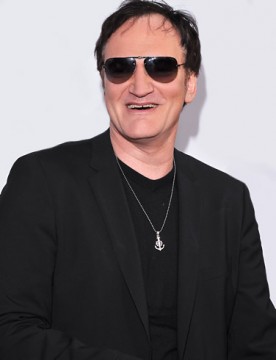
Filmmaker Quentin Tarantino defended the heavy dosage of violence in Django Unchained , his latest film starring Jamie Foxx , Christoph Waltz , Leonardo DiCaprio , Kerry Washington and Samuel L. Jackson . As with many of his past offerings, Tarantino’s Oscar hopeful includes a graphic depictions of blood and gunshot victims. Tarantino was asked about the violence over the weekend in New York in the wake of the tragedy in a Connecticut elementary school that left 26 dead, most of them children. At a Saturday press event, Tarantino said that real-life violence is the fault of perpetrators and didn’t appear to accept a correlation between incidents like the weekend’s massacre in Newtown, CT and violence on the big screen. “I think you know there’s violence in the world, tragedies happen, blame the playmakers,” he said according to BBC, adding, “It’s a Western. Give me a break.” Django Unchained received five Golden Globe nominations last week and is a strong contender for Oscar nominations next month. Still, Django star Jamie Foxx did say he believes the big screen can influence people’s actions. “We cannot turn our back and say that violence in films or anything that we do doesn’t have a sort of influence. It does,” he said. In the spaghetti-western style feature, Foxx pays a freed slave who sets out to rescue his wife from a ruthless plantation owner, played by Leonardo DiCaprio. Representing more divide among the Django crew that is perhaps a microcosm of society generally, Christoph Waltz said he didn’t believe films provoke violence, adding that the film contained violence because it was in fact part of American history. “The media’s responsibility is greater than the story teller is because… Django is violent, but it’s not inspiring violence,” said Waltz. Kerry Washington offered up that violence in film can serve as an important learning vehicle, educating audiences about historical atrocities such as slavery. “I do think that it’s important when we have the opportunity to talk about violence and not just kind of have it as entertainment, but connect it to the wrongs, the injustices, the social ills,” said Washington. Meanwhile, Paramount decided to move premiere events in Los Angeles and Pittsburgh for Tom Cruise’s new action pic Jack Reacher “out of honor and respect for the families of the victims whose lives were senselessly taken.” The feature opens with sniper shooting several people. And Sunday night, new episodes of Family Guy and American Dad were dropped, with Fox network opting for repeats of the shows in order to avoid showing any potentially sensitive content. A scheduled repeat of The Cleveland Show was also swapped out. Twenty six children and six adults died at Sandy Hook school in Newton, CT. The gunman is identified as Adam Lanza, 20. He killed his mother before heading to the school Friday. [ Source: BBC ]