
Tag Archives: tv guide

The Running Man: Abel Ferrara on 4:44, Staying Busy and Bad Lieutenant at 20

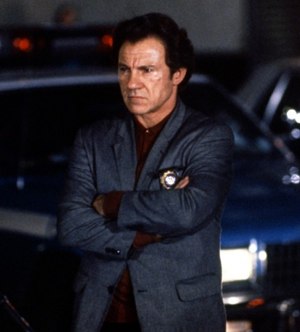
I met Abel Ferrara in a café on Mulberry Street. In an hour’s time, he didn’t once take his seat. The filmmaker makes a couple of phone calls, goes to the bathroom twice, shows me the new Web series that he’s developing with Vice TV on, and points me to two different articles about his movies. Unkempt and energetic, the Bronx-born director of such New York notorieties as Ms. 45 , King of New York , Bad Lieutenant , The Funeral and this week’s 4:44 Last Day on Earth is exactly what you’d imagine he’d be like if he were one of his movie’s characters. In a way, he is. 4:44 features Willem Dafoe and Shanyn Leigh as a couple spending their last hours together before the world ends. They’re each in their own separate but related worlds: she paints and listens to Buddhist philosophy while he talks to friends via Skype and decides if he should end two years of sobriety by getting high one last time. The loose nature of 4:44 ’s scenario speaks to the Cassavetes-inspired, improv-oriented nature of Ferrara’s dramas, which are often collaborative processes between actor and filmmaker. This is especially characteristic of Ferrara’s working relationship with Dafoe. “If Willem wasn’t going to play it,” Ferrara told me, “I don’t think I would have wrote the script.” The film marks Ferrara and Dafoe’s third film together, coming after 1998’s New Rose Hotel and the 2007 ensemble piece Go Go Tales (which itself almost became a series on HBO). But more importantly, 4:44 further refines a working relationship that involves Dafoe co-creating not only his character, but also the scenes that, as Ferrara tells it, the actor is “comfortable with, that he believes in, that he understands.” “[We have] confidence with each other that comes from working together,” Ferrara continued. “I wrote the character so that the character I wrote is something he can play. And then, to create a stage for him, a place where he’s going to act, a set, which is a place that’s going to be conducive for him to do his best work. There’s nothing throwing him off…” Paradoxically or not, Ferrara then interrupted himself to perform one of a seemingly Herculean list of multi-tasks. Ultimately, performance is key to Ferrara’s movies because his characters are always performing for each other. They change in almost every scene they’re in, keeping the films that contain them endlessly revelatory, even shocking. Take Bad Lieutenant , which this year celebrates its 20th anniversary of Harvey Keitel’s searing work as a sex-, drug- and gambling-addicted cop seeking both vengeance and kicks as he pursues the men who sexually assaulted a nun. His detour into depravity culminates in an infamous scene where he pulls over two young women, making them simulate giving him oral sex while he masturbates. It’s the type of blunt-force intimacy that has preoccupied Ferrara all the way through 4:44 but arguably reached its flashpoint with the NC-17 Lieutenant . Two decades on, the 60-year-old director looks back on the controversy with similarly matter-of-fact zeal. “It had to be unrated,” he said. “It had to be rated X. It was the opposite: it couldn’t be rated R. We had to be what Hollywood couldn’t be. It was reverse censorship.” Not that he minds the continuing existence of an R-rated version necessitated by such once-powerful video chains as Blockbuster: “That’s just a joke; I’m not counting on anybody watching that.” The editing process is just another way Ferrara fulfills his all-encompassing role as director-cum-emcee. From early conception — “A script is not a piece of literature,” he explained, “it’s a process” — to post-production, Ferrara officiates over his films the way Ray Ruby, Dafoe’s hero from Go Go Tales , presides over his embattled burlesque dominion. He works with regular collaborators like cinematographer Ken Kelsch and production designer Frank DeCurtis to give his actors a proper setting. Then, led by their maestro, they all perform in front of and behind the camera together. But collaboration shouldn’t be mistaken for compromise, that ever-present threat to the natures of complex characters like Keitel’s Lieutenant and Dafoe’s Cisco and even to Ferrara’s singular vision itself. “There’s no such thing as a non-final cut director,” Ferrara said, R-rated Bad Lieutenant notwithstanding. “If you don’t have final cut, you’re not a director. There’s no point making a film. Citizen Kane is a masterpiece, but if I go into the editing room for three hours, I can change Citizen Kane .” Meanwhile, the endlessly moving Ferrara has more important projects than Citizen Kane to worry about: His own, including a planned take on the Dominique Strauss-Kahn case starring Gerard Depardieu — about which the filmmaker wishes to remain tight-lipped. “It takes six months to shoot a film,” he said. “We’re [always] perfecting what we’re doing.” Read Stephanie Zacharek’s review of 4:44 Last Day on Earth here . Simon Abrams is a NY-based freelance film critic whose work has been featured in outlets like The Village Voice, Time Out New York, Vulture and Esquire. Additionally, some people like his writing, which he collects at Extended Cut . [Top photo: Getty Images]
The rest is here:
The Running Man: Abel Ferrara on 4:44, Staying Busy and Bad Lieutenant at 20

Exclusive: Jonah Hill to the Rescue in Sitter Deleted Scene

With both an Oscars appearance and a No. 1 movie within the last month, Jonah Hill’s 2012 is on pace to exceed even his stellar 2011. And the folks behind The Sitter know it, dropping the David Gordon Green-directed comedy on DVD and Blu-ray this week for prime placement amid Jonahmania. But they also know, as Green mentioned in interviews last year, that the 81-minute movie yielded a trove of deleted scenes — one of which Movieline is debuting right here and now. Behold J.B. Smoove breaking up a conference between Hill’s hapless babysitter Noah and the film’s drug dealer freak-o Karl (Sam Rockwell). Or maybe Smoove’s character is the freak-o. Or maybe both of them are. There is no shortage of freak-os in this clip, is what I’m trying to say (it’s mostly SFW, for the record): Who hasn’t been there? Right? OK. Stay tuned for more coverage of The Sitter in this week’s installment of Inessential Essentials at Movieline. Follow S.T. VanAirsdale on Twitter . Follow Movieline on Twitter .

Read more:
Exclusive: Jonah Hill to the Rescue in Sitter Deleted Scene

Even the Humane Society Won’t Give Uggie an Award

Who does the most accomplished canine performer in Hollywood have to lick to get some hardware around here? “He’s the toast of this year’s award season, now Uggie, the Jack Russell star of this year’s Academy Award-winning silent film The Artist , will walk the red carpet and serve as a presenter at the only major award show where animals take center stage – The Humane Society of the United States’ 26th Genesis Awards. ‘The Genesis Awards are about honoring the animal protection message, not the performance, but if we had an award for a dog who’s become a poster animal for people not giving up on their unruly companion animals, we’d give it to Uggie… now, there’s a thought!’, says Beverly Kaskey, senior director and executive producer of the annual Genesis Awards.” [ Genesis Awards ]

See original here:
Even the Humane Society Won’t Give Uggie an Award

REVIEW: Madre de Dios! Will Ferrell and Co. Make Casa de Mi Padre One Long, Perfunctory Inside Joke

For a movie with a comedic premise this simple – essentially: can you believe we made a movie with a premise this simple? – Casa de Mi Padre can feel pretty exhausting. Its comic arsenal is laid bare by the end of the credits sequence: There is Will Ferrell playing a Mexican ranchero and speaking Spanish; Diego Luna and Gael García Bernal as narco peacocks; telenovela melodrama played absurdly straight; self-conscious B-budget goofing; and plenty of guns and flames for ambiance. Are you not entertained? A credits sequence or SNL sketch or Funny Or Die video is the natural habitat for this kind of hit-and-run goof. Conan O’Brien, playing the fiery Conando, made his telenovela riff Noches de Pasión a regular feature on his show a few years back, and a few minutes is really all it takes to get the job done. Ferrell has worked with his collaborators – director Matt Piedmont and writer Andrew Steele – at both SNL and Funny or Die, and like last year’s Your Highness , Casa de Mi Padre has the feeling of a very inside joke. The story of how the cowardly dupe Armando Alvarez (Ferrell) defends his family from drug-war fallout is told in terms so self-consciously broad that the “joke” becomes obscure again, suggesting that rarefied sense of what’s funny that comedians often develop after a couple of decades on the job. For most of the rest of us it quickly becomes a struggle to find – or desperately root out – humor in much of the re-heated genre spoofing. The house of the title belongs to Miguel (Pedro Armendáriz Jr., who passed away this December), father to Armando and the prodigal Raul (Luna), who returns home at the beginning of the film with a fiancée to die for named Sonia (Genesis Rodriguez). When it turns out that Raul has actually made his fortune running drugs, he earns the scorn of his brother and a bounty on his head, levied by fellow drug lord Onza (Bernal). Armando and Sonia clamp eyes on each other frequently and for long, fraught moments: Is she the worthless coke whore she seems to be or the woman of his dreams? Ferrell is eminently silly as a Latin buffoon with “the eyes of a small chicken” and a heart of gold, and Luna and Bernal are as fun to watch in polyester leisure suits as they are out of them. A blend of location shooting and obvious sets contribute – along with purposefully jumpy edits and one long memo from the second camera assistant explaining the omission of a coyote attack – to the general celebration of shitty aesthetics. There are also boisterous campfire songs about the joy of knowing nothing, mildly subversive slaps at the DEA and an America full of drug-hoovering babies, lavish shoot ’em ups that linger over the explosion of visible blood packets, and one love scene comprised of extensive butt-kneading and Ferrell’s seamless transition into mannequin form and back again. Every once in a while a laugh might take you by surprise – the chicken eyes line did it for me – but the downfall of this kind of long-con comedy is that too often its terminal drollery feels like having the same joke explained to you, over and over again. At the same time the ironic layering feels tiresome rather than intuitively clever or witty, adding barriers between you and the funny part. Ferrell and company reportedly made the Hispanic audience – a huge moviegoing market – a big part of the plan of making and selling Casa de Mi Padre . Weirdly, that kind of calculation feels completely in line with a comedy that manages to be both as “crazy” and as perfunctory as this one. Follow Michelle Orange on Twitter . Follow Movieline on Twitter .

See more here:
REVIEW: Madre de Dios! Will Ferrell and Co. Make Casa de Mi Padre One Long, Perfunctory Inside Joke

Gareth Evans on Remaking The Raid — and The Raid 2’s 4-On-1 Car Fight

This week at SXSW Movieline caught up with director Gareth Evans, whose Indonesian martial arts actioner The Raid: Redemption is set to knock your socks off later this month courtesy of Sony Classics. (Haven’t heard of the martial arts form silat? You will, come March 23.) With his film steadily collecting kudos left and right, Evans is already thinking ahead to his Raid sequel (working title: Berandal ), and an insane, dangerous-sounding four-on-one car fight he plans on working into the mix. First up, though, is the U.S. remake currently in the works at Screen Gems. The original film worked with the unique (and relatively new to most audiences) martial arts form silat , employed dynamically in a fairly basic setup: A SWAT team trapped inside a tenement building locked down by a vicious gangster must fight their way out. The American remake will build on the elements of The Raid , with Evans on hand as executive producer and Raid stars/fight choreographers Iko Uwais (who plays hero Rama) and Yayan Ruhian (who steals scenes as the sadistic Mad Dog) working on the remake’s fight choreography. “There will be elements of silat in there, which is kind of cool because there’s a respect for the original,” Evans said. “And I’m curious because the thing is yes, silat is an Indonesian martial art, but it’s practiced all over the world. There are schools of silat in London, there are schools of silat in America, there are schools of silat in France, and they have international championships as well. So there are a lot of people that know silat around the world, so it’s not a far-fetched idea that someone in America could know silat, the same way that it’s not far-fetched for a guy in America to know kung fu or muy thai.” While screenwriter Brad Inglesby has been recruited to script the remake, a director has yet to be found. Whoever it is, Evans isn’t worried about passing the reins to another filmmaker’s vision. “For me it’s like this: the storyline and the central concept is streamlined,” he explained. “It’s a very straightforward action film. So there’s room for improvement, and I think that director, whoever it is, has to be given the kind of creative freedom to push it in whatever direction he wants to push it and not have somebody standing over his shoulder saying, ‘You can’t do this, or you can’t do that.’ I think it should be that person’s decision.” After his Raid promotional tour is done, Evans will turn to pre-production on the sequel, with plans to begin filming next January. But how do you follow a film that’s already packed with non-stop, relentless, wall-to-wall, inventive action? “By going in a slightly different direction,” he teased. “If I try to replicate and copy it’ll fall on its ass, so I want to do something kind of different. We’re going to take the story out now and go onto the streets. So everything that was scary about that building and about that boss is small fry compared to the gangs we meet in the sequel — now we meet the people who let him have that building. And we expand the world out, we explore certain characters that were kind of hinted at in this but not expanded upon, and we ramp up some of the set pieces as well.” Evans’s Raid films will always retain their focus on silat, only showcased within different environments. Like, for example, the limited confines of a moving automobile. “We’ll have one fight scene,” Evans said, “a four-on-one fight inside of a car, and Iko’s going to be kicking people out through the windows, and it’s going to be nuts. What we’re doing now is we have to figure out how to shoot that without killing anyone. “Once we get that sorted,” he continued with a laugh, “then we’ll start shooting that.” Read more from SXSW here . Follow Jen Yamato on Twitter . Follow Movieline on Twitter .

Go here to read the rest:
Gareth Evans on Remaking The Raid — and The Raid 2’s 4-On-1 Car Fight

Atlas Shrugged Part II is Hiring! No Résumés Required!

Remember the snoozy, clip-art-looking ad campaign for the low-budget Atlas Shrugged Part I ? Those days are over, if the producers — and maybe you or any designers you know — have anything to say about it : ART DIRECTOR Full-time position working on the Atlas Shrugged Movie Marketing team (may work remotely). Must be proficient in Photoshop and Illustrator and posses depth of knowledge in Web related Graphics and design. HTML, CSS, and Usability huge pluses. Experience with Adobe Premiere helpful. Responsibilities to include evolving the foundational Atlas brand, creating collateral and assets for print & web. DO NOT send resume. Not very Objectivist of them! Oh, and there’s a paid internship opening, too, for the enterprising youngster with the best “brief 3 paragraph essay answering the question ‘Who is Ayn Rand?'” In any case, please disregard that two more new jobs were just created on Obama’s watch. Thanks! [ Atlas Shrugged Blog ]

See the rest here:
Atlas Shrugged Part II is Hiring! No Résumés Required!

GALLERY: Jennifer Lawrence Dazzles at the Hunger Games Premiere

Now here’s an image that could inspire a rebellion: Jennifer Lawrence hit the premiere of The Hunger Games in shiny, glowing gold, joining cast mates Josh Hutcherson, Liam Hemsworth, Elizabeth Banks, Woody Harrelson, and more to celebrate the upcoming YA event movie. Well, OK — that number’s not quite bow and arrow, running-through-the-woods killing people-friendly, but JenLaw destroyed everyone else on that black carpet, including guest (and… secret Hunger Games fan?) Sylvester Stallone. Photos after the jump! Click to launch the slideshow . Get more on The Hunger Games , in theaters March 23.

Read this article:
GALLERY: Jennifer Lawrence Dazzles at the Hunger Games Premiere

REVIEW: The Dardennes’ The Kid with a Bike May Not Move So Fast, But Its Young Star Sure Does

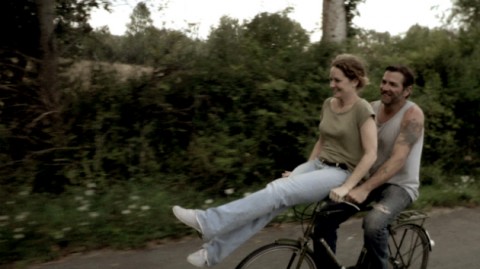
In strict dramatic terms, almost nothing occurs in the Dardenne brothers’ The Kid with a Bike . Some characters show a lack of empathy, even cruelty, but there’s more than enough kindness elsewhere to make up for it, and the terrible things you fear might happen simply don’t. Those qualities make the movie seem slight, almost inconsequential, as if the merest breeze would blow it off-course. But the real strength of The Kid with a Bike is the cautious but generous warmth of its storytelling. Not much happens in The Kid with a Bike , but it leaves you grateful that the worst doesn’t happen — with these characters, you might not be able to bear it. The Kid with a Bike starts out as your standard child-at-risk story. Cyril (played by the fine young actor Thomas Doret, in his debut) is an 11-ish redhead with a buzz cut who’s in perpetual movement from the movie’s first minute: Peripatetic, quizzical and persistent, Cyril is obsessed with reconnecting with his father (played by Dardennes regular Jérémie Renier), who has essentially abandoned him to a local home for displaced or problem kids. Cyril also wants his bike back — he believes it’s still in the apartment his father has recently also abandoned — and with the help of a quietly compassionate hairdresser he meets by chance, Samantha (Cécile De France, in a relaxed but extremely focused performance), he does get it back. Recognizing, in some basic, primal way, that he’s found someone who might be able to give him the care and affection he needs, Cyril latches onto her, figuratively and even at one point literally — he clamps his arms around her in an ironclad, monkeylike embrace. He also makes a bold request, asking her outright if she’ll let him live with her on the weekends, even though she barely knows him. With no hesitation she agrees. But even under Samantha’s guidance and care, Cyril is still something of a lost kid, which causes him to fall under the spell of a local hood, who hopes to enlist him in a life of petty crime. On the basis of previous pictures like The Son or L’Enfant , you might think Jean-Pierre and Luc Dardenne would lean heavily on the suspense card: The Belgian writing-directing duo aren’t exactly the cheeriest guys on the planet, and if they were to follow their more dour instincts, they might have fixated on the question of whether or not Cyril would succumb to thuggery. But they’re after something more delicate here, and if it doesn’t completely work — the movie is so muted it comes off as being a bit wayward in its emotional and narrative focus — there’s still something admirable in their outright rejection of desolation and despair. (The picture won the Grand Jury Prize at Cannes last May.) The ending of The Kid with a Bike holds out a very real possibility for redemption. It doesn’t hurt that the picture, set in an unnamed provincial town and filmed in some gorgeously bucolic parts of Belgium, is also beautifully shot (by DP Alain Marcoen): The images have a clean, crisp, no-nonsense look that’s almost a metaphorical counterpart to Cyril’s confident physicality as he whizzes from here to there. Doret, for all his preternatural confidence in this role, is still an unassuming and sympathetic presence. With that strawberry-blond perpetual-summer haircut, and a reckless scattering of freckles across his nose, he looks like the kind of kid you’d see on a ’50s bread wrapper. But his face is solemn and purposeful, and his mannerisms are too: When he makes or takes a call on his cell phone, he conveys information with just-the-facts-ma’am efficiency. His body is gangly and puppet-like in that pre-adolescent way, but every movement is resolute: When he chases after the various kids who, repeatedly, try to steal his precious bike, he throws off sparks of grim determination, like a single-minded marathon runner. Maybe, in the end, he outruns the movie. But it’s hard to take your eyes off him as he sprints into the distance. [Editor’s note: This review appeared earlier, in a slightly different form, in Stephanie Zacharek’s 2011 Cannes Film Festival coverage .] Follow Stephanie Zacharek on Twitter . Follow Movieline on Twitter .

Go here to see the original:
REVIEW: The Dardennes’ The Kid with a Bike May Not Move So Fast, But Its Young Star Sure Does

Finally, Clint Eastwood’s Wife Gets a Reality Show

Mark your calendars for May 20! Or not: “Chronicling the lives of Dina Eastwood, the wife of Oscar-winning film legend Clint Eastwood, and their daughters Francesca (18) and Morgan (15), and the all-male six member vocal group from South Africa managed by Dina, ‘Overtone,’ Mrs. Eastwood & Company is an unprecedented look at the surprisingly normal extended and blended family behind one of Hollywood’s most iconic superstars. This series invites viewers to witness their lives and proves that familial bonds are shaped by more than DNA.” [ E! ] [Photo of (L-R) Dina Eastwood and daughters Francesca and Morgan via Getty Images]

See the rest here:
Finally, Clint Eastwood’s Wife Gets a Reality Show

SXSW: Melissa Leo Considers Post-Oscar Offers, Animal Ethics, and Her Minimalist Tour de Force Francine

Despite nabbing an Academy Award last year with her self-financed and controversial “ Consider ” campaign, Melissa Leo says that neither life, nor the frequency of juicy Hollywood offers coming her way, is much different now that she’s an Oscar-winner. “The projects you think have been offered to me have not, I guarantee you,” she told Movieline this week at SXSW in Austin, where she and directors Melanie Shatzky and Brian M. Cassidy screened their minimalist character study Francine to critical applause. Still, Leo perseveres. And as the intimate acting showcase demonstrates, there’s plenty of reward to be had in smaller and more daring projects. Francine follows the quiet, often disorienting moments in the experience of a woman recently released from incarceration (Leo) who is now slowly and cautiously adjusting to life on the outside. Taking on a number of jobs and tentative friendships, Francine finds herself increasingly comforted by stray animals she adopts, only further alienating herself from the people around her. Filming in New York’s Hudson Valley region, co-directors Shatzky and Cassidy tapped their photography and documentary film backgrounds to capture Francine’s attempts and failures at human interaction with a sensitive observational style that allows Leo the space to fully, and courageously, inhabit the character. Prior to Francine ’s SXSW premiere (which garnered high praise for Leo’s performance and the directors’ minimalist use of visual and aural elements), Leo spoke with Movieline about why she sought and lobbied for the lead in Francine , how things haven’t changed all that much since winning her Oscar, the emotional scene in which a dog appears to be euthanized onscreen, and why it was important to show Hollywood that she could “show up.” How did you come to meet these folks and hear about their idea? It was the summer before last sometime in the springtime, and the Hudson Valley film commissioner is a good friend of mine – he and his wife run the Woodstock Film Festival – and I get little blurbs from them online about what’s going on in the Hudson Valley. It was a casting call, but not for Francine – for the various and sundry characters she meets along the way, and a lead lady was required for this film. The name was Francine, after all! They were going to do something very interesting and tell a story largely through the pictures and not so much dialogue; that sounded like a really interesting notion, so I inserted myself through Laurent [Rejto] and said if they’d be interested in considering me for Francine I would love to talk to them about it. And this was before you’d even seen a script? From a paragraph, really, which I think was based on their own words. Just a little paragraph of what it was. You sought this out from a single paragraph description, which makes me wonder: What sort of projects do you look for, and are you always searching? Constantly looking is a very good way to put it, but I don’t know that I’m looking for one thing or another in particular. Something specific, but it could be a lot of things that are specific. And this project sounded A) very specific, B) a leading role, and this notion of taking film – young, young, film – into yet another realm – really taking it back to its basics, of the images . The sound in Francine is a very important element in the film, both the music that’s laid in and the sound – just like in The Artist ! That’s not a silent movie; you don’t hear the actors’ dialogue but again in that film the sound is such an important aspect of the film. That all really intrigued me, but probably first and foremost the thing that caught my attention was the chance to do a lead. But you’re Melissa Leo! Are lead roles still hard to come by? Who’s that? [Laughs] I say that to you because that’s what most people even today still say. Cab drivers… and then there’s this embarrassing moment when they say, ‘Oh, I’m so sorry, I didn’t realize!’ It’s really ok! Maybe I should wear a stamp on my forehead. But more seriously, the life of an actor is not what one imagines, and I find too that the life of an Oscar-winner is not what one imagines. For an actor, for an Oscar-winner, life is no different than for all the rest of us. We must try each day to be our best selves and make our best choices. Maybe we have a finer array of choices put in front of us, but the process is no less different. My experience, 365+ days later? The projects you think have been offered to me have not, I guarantee you. It will happen in time, if I persevere. But if I expect something to return because I took a beautiful golden statue and a lot of prestige home, I’m going to miss out on the second half of my life. You still operate, then, the same way you always have when it comes to career choices? I hope to continue to grow as I think I’ve done all my life, to continue to be my genuine self all at the same time. We’ll see how it goes! Did you shoot in sequence? No, which is why it’s really important that they’re able to share with me this project as a whole. If we would have shot sequentially, this idea of withholding is a very important notion for a director. There is an advantage in withholding, there is an advantage in telling everything; you’ve got to weigh out when to do that. If you had been going sequentially I would wager to guess they could have withheld more. When we shot 21 Grams , which is told in this beautiful poetic way that [Guillermo] Arriaga wrote it, but we shot it in sequential way which is one of the things that makes 21 Grams land in reality the way that it does. Because Benicio [Del Toro] and I and the kids all knew every moment before this that we’re shooting right now, as we shot. But that’s the key to this project and in the aftermath of getting to see it now and talking to you guys and Brian and Melanie, it has been endless growth and education to me, and I think to Brian and Melanie also, of how these two uses of film – my experience in 30 years as an actor and their experience of light through celluloid, and the sounds that accompany it! – it’s a fascinating marriage. Your performance in Francine feels so alive and in the moment, especially compared to more heavily constructed films – almost theatrical in a way. Is this kind of work particularly rewarding compared to projects with more artificial constraints? I take that as a compliment – I think that it can happen both on the stage and in film, where the film over takes what’s being shot. I’ve read some scripts of films that we might whine about – ‘Oh god, that one was so bad, and they spent how many millions of dollars on it?’ – and my heart goes out to the actors that lead in those films, because those characters aren’t written as characters in a story, they’re written as vehicles in a film. Francine might well be a very nice vehicle for me, I saw that, but it is not conceived of as such. She’s conceived of as a character, and that is Brian and Melanie’s gift to me.

Originally posted here:
SXSW: Melissa Leo Considers Post-Oscar Offers, Animal Ethics, and Her Minimalist Tour de Force Francine





