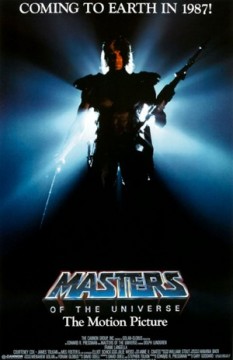
“All I did was write the press notes and visit the set, once. I remember very little because I knew it was a cheeseball enterprise from the get-go and I didn’t give a shit about any of it. The idea of the Golan & Globus machine attempting to arouse the geek/comic-book fanbase was hopeless from the start… pathetic. Everyone knew it was a tank early on so there was this air of funereal resignation all through production and post-production… everyone just going through the motions.” [ Hollywood Elsewhere ]
The much-anticipated Daniel Radcliffe ghost-story thriller The Woman in Black opens Feb. 3. This calls for a giveaway! But considering what you stand to win (including an iPod Nano and a signed WIB poster), we’re going to make you work for it. (Sort of.) Welcome to Movieline’s Daniel Radcliffe Mini Fan Fiction Sweepstakes! [ UPDATE 2/2: Contest is now closed — thanks to all who participated! Scroll down for the winning submission. ] First things first: The prize line-up!
It’s the biggest, most important question of the season, people: Whom will Reese Witherspoon choose, between pillow-lipped Brit Tom Hardy and confident playboy Chris Pine , in the spy vs. spy love triangle rom-com This Means War ? While you won’t get any spoilers here for the Valentine’s Day release, let Hardy and director McG tease you with the envelope-pushing alternate ending ideas that didn’t quite make it to the final cut. (And no — McG didn’t learn from Terminator: Salvation , which he admitted he “pussed out on.” Hindsight, my friends.) [To the hardcore spoiler-averse who don’t even want to know what doesn’t happen in the film, a mild warning for what follows…] The McG-helmed romantic action-comedy This Means War , written by X-Men: The Last Stand scribe Simon Kinberg, finds Reese Witherspoon dating Hardy and Pine at the same time, unaware that they are CIA spies and best friends. As both men find themselves falling for her she must decide which beau she truly wants to be with. At a press conference today in Los Angeles, McG revealed one idea that was tossed around early on for ending the film in an unconventional way – by releasing two endings into theaters simultaneously, one in which Witherspoon ends up with Hardy and another where she chooses Pine, with no indication to moviegoers of what they were in for. “We wanted to have flexibility and even talked about two endings and releasing it on 3,000 screens — 1,500 have this [ending] and 1,500 have that one, and just not saying anything,” McG said. “But it felt a little gimmicky in the end.” Releasing two endings into theaters in wide release? Now that would have been interesting, possibly even a worthy financial gamble if moviegoers enjoyed the film enough to see it again, either on home video or in theaters, just to see the alternate ending; the most famous predecessor to do this is probably Jonathan Lynn’s Clue , which was distributed to theaters with three different surprise endings. Clue , of course, was a financial failure (though admittedly deserving of its cult status ), so perhaps following this precedent was ultimately unwise for McG and Co., but let’s put it out there: Hollywood, why not try breaking the mold sometime? That said, there was another idea for concluding the film that would have defied Hollywood convention, story-wise. “There’s even an ending where the two boys end up in each other’s arms,” joked McG. “That should have been the ending,” added Hardy from across the podium. “It would have been a really groundbreaking ending! You should have gone for it, really gone for it.” “I know, I know,” McG answered. “I pussed out on the ending of Terminator 4 … so I should’ve gone for the dark ending of this one.” Stay tuned for more on This Means War to come in my forthcoming junket diary, posting next week… Follow Jen Yamato on Twitter . Follow Movieline on Twitter .
The current Twitter trend ” RIP Eddie Murphy ” has gripped the unwashed microblogging masses with equal parts earnest apoplexy (“Idiots on twitter, why would anyone want to trend something like that”) and predictable cheap-shottery (“Hey Eddie: ‘RIP Eddie Murphy’ is God trying to tell you something about your career.”) — not that unlike the last time Murphy “died” on Twitter . The most we can take away from this experience? People are very eager to paint Twitter itself — what with its frequent death hoaxes and other misinformation — as the worst mass killer since… well, you name it: WTF Is RIP Eddie Murphy Trending,He didnt pass away, twitter is killing people more than Jason Voorhees — It’s Shadoe Bitch (@MeganFoxFanNYC) February 3, 2012 RIP Eddie Murphy, god twitter kills more people than Rebecca Black’s Friday! #JustSayin — Michael Booth (@M__Booth) February 3, 2012 RIP Eddie Murphy? WTF, Twitter killed more people than Hitler. — GrandadjFreeman (@GrandadJFreeman) February 3, 2012 RIP Eddie Murphy. He’s not even dead? Twitter kills more people than Bin Laden. — r.e.b.e.c.c.a. (@TW_Fever) February 3, 2012 RIP Eddie Murphy? God, Twitter kills more people than Voldemort — Dumble-fucking-dory(@Evil_Dumbledore) February 3, 2012 RIP Eddie Murphy? Is it me or do more people die on Twitter than Texas’ Death Row? — American Humor (@AmericanHumor) February 3, 2012 RIP Eddie Murphy? Twitter kills more people than fried chicken. — gurdeep singh virdi (@gurdeepsv) February 3, 2012 RIP Eddie Murphy? Man, Twitter kills more people each year than cars, airplanes and trucks combined! — Anonymous (@YourAnonNews) February 3, 2012 RIP Eddie Murphy twitter kills more people than midsummer murders — Courtney Carey(@NathanSykesXOXO) February 3, 2012 RIP Eddie Murphy twitter kills more people than Detroit city! — father of all stee (@JOYRDTONE) February 3, 2012 RIP Eddie Murphy is trending… Twitter has killed more people than the Titanic disaster. #smh — Dan Cooper (@mrmadchef) February 3, 2012 “RIP Eddie Murphy” – This is not true. Ignore it. Twitter kills more people than ______ (insert evil well known killer here) — Laurice Fattal (@LauriceF) February 3, 2012 Er, I have nothing. Go for it. Long live Eddie Murphy. Follow S.T. VanAirsdale on Twitter . Follow Movieline on Twitter .
On the one hand, the guy who made The Elephant Man , Blue Velvet and Mulholland Drive is entitled to some kind of lifetime exemption to direct whatever he wants whenever he wants — Duran Duran concert videos , Dior commercials , debt-ceiling riffs , pop albums , whatever . On the other hand, David Lynch may as well be the art-house Donald Trump at this point, pursuer of nominal glories bordering on the fetishistic at best and the gratuitously stupid at worst. Take this new coffee ad, for example — probably better than anything you’ll see on Super Bowl Sunday , but still an ad for a beverage branded by a master filmmaker turned hobbyist mythmaker. There’s nothing here you didn’t see 22 years ago in an episode of Twin Peaks ; there is no other new Lynch cinema in any legitimate stage of development. Or maybe that’s just how it feels! Your mileage may vary. Related: Here’s Lynch writing about his love for coffee , also old news . I am running out of things to give up on! [ AdWeek via THR ]
There’s a big old mammal heart beating softly but steadily at the center of Big Miracle , which recounts the true story of how, in 1988, humans from all over the world raced to save three California gray whales trapped by rapidly forming Arctic Circle ice. The whales’ plight made great television footage, captivating viewers everywhere; it also galvanized plenty of people who wanted to use their alleged or sort-of genuine concern for these poor creatures as a political tool or a means to financial gain. With whale-sized good intentions, Big Miracle works hard to capture the drama of the situation and also sweep an adequate quota of feel-good vibes into its wide-ranging net. But there’s so much going on in Big Miracle that the biggest miracle of all – the whales at the center of the story, magnificent, crusty beasts dotted with barnacle appliques, as if the sea gods had gone nuts with their own version of the Bedazzler – get lost amid all the criss-crossing love stories, political wheeler-dealing and well-intentioned but inadequate rescue missions. Maybe that suits the whales just fine – they are unassuming-looking creatures, after all – but they still deserve a little more majesty than the movie gives them. John Krasinksi plays Adam Carlson, a TV news reporter doing a series of stories set in sleepy Barrow, Alaska. It’s at least a small stroke of inspiration to cast Krasinski as a TV newsguy: He’s got the rubbery-handsome face of a cartoon-character — like a human Scooby Doo — and like so many of those TV guys, he manages to look both enthusiastic and nonplussed at the same time. Just when he thinks he’s exhausted the number of stories to be found in Barrow – his missives include a report on the world’s northernmost Mexican restaurant – he finds himself out on the ice one day and, gazing into the distance, spots first one gray nub, then another, emerging from a hole in the surface. These are the three whales, unable to continue the route they’ve been swimming because the Arctic ice has formed faster than expected; being mammals, they have to poke their snouts above the water’s surface in order to breathe. Adam jumps on the story, which is then picked up by the major TV networks. It also attracts the attention of Greenpeace activist Rachel Kramer (Drew Barrymore, done up to look mousy, though not even the drab, no-makeup look can tamp down her natural radiance), who also happens to be Adam’s ex-girlfriend. Rachel both exasperates Adam and inspires protectiveness, and her arrival on the scene rattles him, not least because she distracts him from his longtime ambition: He dreams of getting out of sleepy Alaska and going to work for a “real” TV station in the lower 48. But there’s not much time for any chemistry to develop – or redevelop – between Adam and Rachel. Before long, a host of individuals, each toting his or her own kit bag of self-interest, descend upon the frigid little berg of Barrow: There’s frosty Los Angeles TV-news reporter Jill Jerard (Kristen Bell), who temporarily puts stars in Adam’s eyes; oil tycoon J.W. McGraw (Ted Danson), who’s interested in raping the land but who also harbors at least a semi-genuine desire to help; Reagan henchwoman Kelly Meyers (Vinessa Shaw), who’s dispatched to the North to make the president look adequately concerned about this big-news issue and thus secure the upcoming election for George Bush; and Colonel Scott Boyer (Dermot Mulroney), the guy in charge of moving an ice-breaking hovercraft into the area in a valiant attempt to cut an escape path for our nobbly-headed gray friends. The framing story involves a young Inupiat boy named Nathan (Ahmaogak Sweeney) who’s more obsessed with his Walkman than he is with whale sounds (though you can bet that changes). Also, at various times in the movie, assorted Inupiat characters pop up to espouse whale-oriented wisdom. Admittedly, director Ken Kwapis (director of the 2005 Sisterhood of the Traveling Pants, as well as episodes of The Office and The Bernie Mac Show ) had his work cut out for him in trying to organize all these interlacing stories. (The screenplay is by Jack Amiel and Michael Begler, adapted from Thomas Rose’s book Freeing the Whales .) And there are a few moments of grace here and there, including a sequence in which Rachel dons a wetsuit and dips into the water – brrr! – to swim with these magnificent prisoners of the ice. The resulting encounter is less underwater ballet than woman-to-whale mind-meld; as Rachel shimmies around these prehistoric-looking beasts, she seems to understand them less and respect them more, and we do, too. Kwapis wants, of course, to keep the tone light, and so he does. It’s fun to see James LeGros show up as a toque-clad Minnesota guy, one of the inventors of a device that helps get the whales swimming on their way. (It’s named, rather delightfully, the Hootkin De-Icer.) And at the end, look for a Sarah Palin cameo, thanks to the wonders of vintage video footage. Big Miracle is harmless and big-hearted, and it’s also handsomely shot (by the reliable John Bailey). But it could use a lot more bite. The battle for the whales, who become PR pawns in the process of just trying to survive, isn’t sharply delineated: Everyone wants a piece of these poor guys for their own gain, but the movie underplays that angle –by the windup, everybody forgets their differences and winds up in a group hug. And the victory for the whales, in the end, is bittersweet. Their story has more pathos and depth and nuance than that of the humans – there’s no way to give them dialogue, but they could have had more of a voice. Follow Stephanie Zacharek on Twitter . Follow Movieline on Twitter .
News surfaced on Wednesday that Kodak, the once-proud photography giant whose heavy-duty film shackles have tripped it into bankruptcy, has gone to court to get out of its 20-year naming agreement with the owners of the Kodak Theater. Of course, the Academy Awards can’t just be held at any anonymous old auditorium in the heart of Hollywood. This calls for creative solutions, and fast. Naturally, that’s where Movieline readers come in. While personally I have a fondness for Mark Lisanti’s suggested switch to “In-N-Out Arena,” theater owners CIM Group are going to need as many options to draw from as they can once the Kodak name is retired. Maybe “Meryl’s Curse Shack and Seafood Alley”? “The Crash Taste-Memorial Pavilion”? Ohhhh — how about ” The Uggieseum “? OK, fine. Do your worst! [ THR , Grantland ; photo via Shutterstock ]
It’s a little difficult for the specialists at Movieline’s Institute for the Advanced Study of Kudos Forensics to come into work these days, what with the pall of predictability settling in over the awards landscape and the painstaking studies into backlash physics yielding less and less of practical substance. What’s a frustrated kudologist to do? Besides drink for the next four weeks straight, I mean. Let’s look for ideas and encouragement for all in this week’s Oscar Index. The Final 9: 1. The Artist 2. The Help 3. Hugo 4. The Descendants 5. Midnight in Paris 6. Moneyball 7. The Tree of Life 8. The Daldry 9. War Horse The Artist followed up its ostensible Oscar-clinching Producers Guild win with triumphs at last weekend’s Directors Guild and Screen Actors Guild awards — sort of. Michel Hazanavicius did somewhat soundly establish his front-running creds over sentimental favorite Martin Scorsese, supplementing along the way his film’s chances in Best Picture. And Jean Dujardin nabbed SAG’s Best Actor prize over presumed favorite George Clooney, further reinforcing The Artist ‘s standing among actors. But then, also at SAG, came The Help — first with Viola Davis taking a commanding lead over Meryl Streep (and thus Harvey Weinstein, the season’s resident awards Merlin who distributed The Iron Lady and, of course, The Artist ) in Best Actress and, more surprisingly, The Help swiping Best Picture to close out the night. Factor in Octavia Spencer expected Supporting Actress sweep, and you’ll spot all the signs of a surge stirring where it matters the most: in the Academy’s Actors Branch, the most populous voting bloc in an organization whose final Oscar ballots just went out today. Nice timing, there. Still: Does it matter? Maybe so, comes the word from some corners of the awards commentariat. “[W]henever you watch history being made you feel the power of what these silly and otherwise pointless awards shows can sometimes do: move the needle ever so slightly,” observed Sasha Stone at Awards Daily. “No movie has taken three SAG awards since Chicago , which went on to win Best Picture — as did three of the last four movies to win the Cast award,” notes Mark Harris at Grantland. Or maybe not, suggest others. “Tate Taylor’s debut didn’t land a best film editing Oscar nomination,” wrote Gregory Ellwood at HitFix. “The last time a film won best picture without an editing nod? Ordinary People in 1981, 31 years ago.” Womp womp . All that being said, I increasingly doubt that this is a race that will come down to historical precedents — at least not statistical precedents, anyway. In fact, Harris offered the most provocative “data” of the week, which was ultimately just conjecture (but very interesting conjecture): Front-runners can’t be taken down abstractly; votes need to coalesce around a single opposition candidate, and even if there had been a chance of that happening this year, the unexpectedly wide field of nine nominees probably would have demolished it. Remember, The Artist doesn’t need to be a consensus choice to win Best Picture — depending on the way the ballots fall, it could technically win by receiving just 12 percent of the votes, and very credibly win with three out of four Academy members voting against it. I happened to be in the Oscar auditorium the year Crash won Best Picture, and I can report that what sounded on TV like a gasp of surprise resonated in the theater as something closer to horror. Very few people I ran into that night had voted for Crash . But it didn’t matter, because the vast majority of Oscar voters weren’t anywhere near that theater. They were at home watching TV. And a lot of them loved Crash . And a lot of them love The Artist . This would mean that Best Picture is shaping up as the kind of hearts-and-minds battle we’ve all seen before. Which, despite all my confidence in The Artist on Monday (and despite even Oscar oracle Harris’s conclusion that “[t]here’s no reason to assume it isn’t going all the way”), suggests that peer respect for the Help ensemble, persisting conversations about race during awards season , and the Academy’s enduring white guilt are precisely the types of influences that The Help needs to shepherd that aforementioned 12 percent of votes out of The Artist ‘s stable and into its own. Think of it this way: It already has at least the 5 percent of first-place votes required just to be nominated. In that respect, The Help and The Artist are on even turf. Each will have its devotees beyond that; it’s anyone’s guess how they match up. But if you were told that you were an underdog versus a favorite against whom you’ve rallied demonstrable support among working actors and writers , and you could build a game plan around a franchise player like Viola Davis, wouldn’t you feel like you had a pretty good shot at the frontrunner? Especially with the Weinsteins facing a hilariously timed lawsuit over other, erstwhile Oscar bait and with DreamWorks able to reinforce The Help ‘s aesthetic powers with its commercial muscle. Plus they can turn around and say it’s not even the biggest awards-darling in its native France . That’s got to be worth something, right? In other, lower-wattage news, Madonna — an Academy member herself — is stridently Team Tree (which, incidentally, got a rare, favorable Academy allowance to list four producers as its Best Picture nominees): ” Tree of Life is stunningly beautiful. That’s my favorite,” she told the L.A. Times . “I think it’s a spiritual, deeply profound movie. My mouth was hanging open the entire time I was watching it.” Talk about winning hearts and minds! Suck it, The Daldry . The Final 5: 1. Michel Hazanavicius, The Artist 2. Martin Scorsese, Hugo 3. Alexander Payne, The Descendants 4. Terrence Malick, The Tree of Life 5. Woody Allen, Midnight in Paris And that’s not all! Check out what Madge said about Terrence Malick: “He really does make the movie he wants to make. It’s completely and utterly authentic. And I feel like he really is channeling something without anybody else’s input. No one’s saying he should do that, he shouldn’t do that. He gets amazing performances out of his actors.” Enh, really I’ve got nothing here beyond the DGA Awards usual. Hazanavicius is either the utmost symbol of his film’s imminent supremacy or the last high-voltage blast of Artist glory you’ll see before The Help pulls its plug. I lean toward the former, but imagining Malick getting up onstage at the Kodak Theater and quietly asking the producers to “Please turn that clock off; this will take a few hours” is a dream worth savoring. The Final 5: 1. Viola Davis, The Help 2. Meryl Streep, The Iron Lady 3. Michelle Williams, My Week With Marilyn 4. Rooney Mara, The Girl With the Dragon Tattoo 5. Glenn Close, Albert Nobbs I don’t have much to add about Davis that wasn’t either covered above or elucidated in Nathaniel Rogers’s exquisite tribute this week at The Film Experience: I think the true indicator that Viola Davis is the likely winner of the Best Actress Oscar is not the win itself with SAG, which has a much wider more diverse voting body than Oscar, but the crowd response. Reducing co-stars to tears is probably no great achievement. They were in the trenches with you, so naturally Jessica Chastain, Octavia Spencer and Cicely Tyson were crying their eyes out. But making Zoe Saldana and Angelina Jolie all misty? Boosting Dick Van Dyke’s mood when he was already high on life? I think what it comes down to is the unruly power of emotion, or “heart” as its sometimes called in movie parlance and awards narratives. The heart wants what it wants and for a lot of people, that means Viola Davis in The Help this season. There’s more where that came from . I recommend it — as well as takes from Kristopher Tapley (at Davis’s Santa Barbara Film Festival appearance), Jimi Izrael (“There are flaws in the film, but Viola Davis is not one of them”) and Ryan Adams , who had the definitive reaction to Davis’s extraordinary SAG acceptance speech: “Anyone who thinks I’m wrong to be angry about a sneering attitude toward this speech, come at me, bro. Come at me.” That’s OK! The Leading 5: 1. Jean Dujardin, The Artist 2. George Clooney, The Descendants 3. Brad Pitt, Moneyball 4. Gary Oldman, Tinker, Tailor, Soldier, Spy 5. Demi
I don’t know who makes this stuff up, but either way, this Super Bowl spot for Volkswagen featuring a fat dog, the interspecial scalawags from Star Wars ‘s Mos Eisley cantina, and a certain climactic cameo is A) superior to any of that 3-D Lucasian mess heading to theaters next weekend and B) just refreshing enough to flush the taste of Matthew Broderick’s Honda ad from one’s mouth. It’s also a little less sense-bludgeoning than that other new-ish Volkswagen dog ad that shall not be named. Win? [via LAT ]
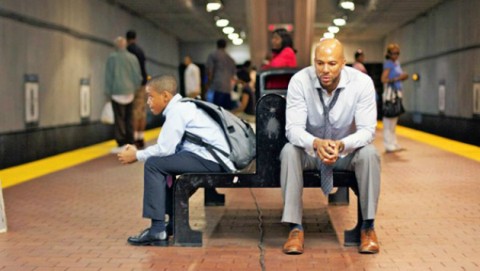
He’s certainly no stranger to the world of entertainment, but Grammy-winning musician Common only recently began channeling his energies into acting. (His first film: Joe Carnahan ’s Smokin’ Aces ). And yet, relative newbie status be damned! The hip-hop veteran, currently seen on AMC’s Hell on Wheels , sat down last week with Movieline to discuss his Sundance pic LUV , a Baltimore-set family/gangster tale from director Sheldon Candis, and his goals for future greatness: “God willing, I’ll become one of the great actors of our day.” It was the first visit to Park City with a film for the self-professed “Sundance virgin,” marking a maturity in his developing acting career: Not only does Common lead the cast of LUV as Vincent, an ex-con shepherding his young nephew (standout newcomer Michael Rainey, Jr.) on a tour along the underbelly of Baltimore, he also earned his first producing credit on the indie production. Movieline queried Common on his filmmaking interests, how his acting career might affect his music, why the media fuss over Maya Angelou and his new record The Dreamer, The Believer was “disappointing,” and how he came to beef with rap upstart (and fellow Sundancer) Drake. How did you become involved with LUV in the first place? It came to me through my agent at the time, and he said it was a cool script, story was great, and he thought this character would be great for me. I read it and was like, I like the story and I know I could really do some things with this character – he’s a human being who’s just trying to do something in life, be somebody in life. I feel like that was a good thing for me to chase after as an actor, because so many people no matter what nationality or age group you are wants to be somebody and to achieve something in life. A friend of mine told me he thought it was like a street version of Pursuit of Happyness . [Laughs] I said ‘Ok, I’ll take that! I like that.’ Why was it important to also come onboard as producer? Once I was asked on as an actor I felt that I could bring some things as a producer, helping to bring cast members and give my creative input and just be in support of Sheldon, the director. It was one of those things where I could network to help bring in more cast members. That can be key to helping many small scale movies get made. Yes – get made, get seen, get attention… and to get a great cast, to make it quality. Who were some of the cast members you helped bring onboard? For me, Michael K. Williams… And he brings an interesting Baltimore connection to the film! Yeah, exactly! We thought it was so great to get him to play a cop instead of a street guy. And a sensitive cop at that – he has a great moment with [eleven-year-old] Michael Rainey Jr. in the film. Yeah! Michael Rainey Jr. is great. This guy is special. We were seeking him out. He’s a special human being, and we searched in a lot of places. It was one of those things where a friend suggested somebody and Sheldon drove up to New York, was waiting in the lobby and met this kid and was like, ‘Man, we got the guy.’ I was really keen on having a little boy who could do everything. You two make quite the dapper pair together. Thanks! You know, even when we weren’t filming we were bonding. He’s a natural. This little guy can sing old rap songs, like Wu-Tang! Everything is probably so new and overwhelming, and he’s just grateful. Some scenes were shot under the gun, with really limited time to capture the best take. What was the experience like for you as an actor under those circumstances and having to find the magic in a moment like that? As much as I always want to do a take over, knowing you only have one or two takes – I like that pressure, too. The last scene, Michael and I were literally in the van at five in the morning and he was asleep, but you’re put in that position and you have to deliver. This is why, if you want greatness and want to be a great actor, you have to deliver when called upon. In those situations you’ve just got to get to the art of things, you’re there as an actor to bring these people to life so you can’t really worry about things. The sun is coming up and we’ve only got two takes and we won’t be able to do this again – you just go for it. It was fun, in a way, the adrenaline, and you have to use your creative minds and ideas. It’s similar to doing an art project, where you’re working with creative people and it’s not somebody who’s not a creative person trying to tell you what to do. So even if you make your mistakes, it’s okay – that’s a part of what art is. There’s something to be said of creativity borne of constraints. There is – literally our crew was doing things that, I mean, there would be scenes where we didn’t have the right amount of extras and one person from the neighborhood would just step in and be in the scene. So there were a lot of natural elements there that I think serve for making good movies. Sheldon wanted you to feel the world of Baltimore; you get real people from Baltimore and you don’t have to try to get them to have a Baltimore accent, they have the Baltimore energy. It’s just there. To me it’s like when you see The Departed or The Fighter , you’re in the world no matter what. Looking at your career overall, you have so many interests and pursuits these days. How do you feel your perspective on your music may be changing the more you immerse yourself in Hollywood and acting? I think my perspective on music becomes a lot more confident and free because the more I grow as an actor the more confident I become in my career. I believe in my career as an actor and it allows me to free up the pressure of doing an album that’s going to be the biggest selling album, or doing an album that has to fit into the format of what’s going on in music. And though I always would go into my own world to create albums, there’s even more of a liberty to create music because acting has shown me more freedom as an artist. Acting has helped me learn more about myself and to be not as inward, to have fun and not be so self-conscious. There’s also the dichotomy of the personal nature of your music vs. acting, in which you become somebody else… Yeah, you do. And when I first began acting I was like, ‘I love getting to be this other person because I get to express things that Rashid – Common – can’t express.’ That was one of the greatest joys about being able to become this other person, but again the way I do things is sometimes within the acting process you’re dealing with your own things. So that’s what I mean in saying you learn more about yourself, even just from acting classes. Acting classes for me were the incubation, the beginning, the seed that made me say ‘I want to act.’ I want to go to acting classes – I mean, obviously I’d rather do films or plays – but I enjoy acting classes, too. Many actors say that the validation is all in the act of doing the work. Yes, and for me obviously you learn certain things in classes and different techniques and you get better, but when you get on a movie set there are new things to learn, too. Like even just learning, ‘Okay, you’re waiting around for 8 hours and they call you do a scene – you’d better be ready.’ ‘Okay, the light broke right when you were in the middle and fired up – you’ve got to chill and get back to the scene.’ I’m looking forward to doing plays and television, too; I mean, I’m doing television with Hell on Wheels ! That’s a role that I’m really enthused about because that character gives me a lot to do. I can develop and evolve with it and I like the responsibility that I possess with that character, because to play an African American in that time is a responsibility. So many times we’ve seen black people from that time as being depicted as downtrodden and oppressed and beat down, and the character I play is strong, a leader, intelligent. In a random Sundance coincidence, both you and Drake are in town during this year’s festival. Can you explain your well-publicized beef with him? I mean, to be honest I feel I said everything I needed to say on the song. I looked at this whole thing as a part of hip-hop [culture], MCs battle sometimes. One person says this, another person says that. That’s what it’s been for me. So it was more of a fun thing for you? It was fun for me, and I’m not personally invested in it. It’s not like I feel anything toward him as a human being. It’s more like, ‘You said something about me? I’m in the boxing ring too, so I’m gonna let you know…’ He felt offended by a song I did, so then he did it. On that record that I did a verse about him, he said some things about me that were more subliminal but I knew they were about me. [Laughs] I just decided to be outward with it and to be direct, and to say, hey – if you’re going to throw some blows at me, I’m about to throw them back. I mean, it’s hip-hop. It’s interesting to see you, at this moment in your career of going forward in a relatively new direction into acting and at the same time reach back to your roots and to hip-hop battle culture. Yeah, it is a dichotomy but it’s also who I feel like I am as a human being. I’m also a warrior, too – I’m a peaceful person, but I’m an MC. I love MCing. God willing, I’ll become one of the great actors of our day. I want to grow to be that type of actor, but I still think I’ll be writing songs even if it’s for a jazz club crowd. You say that one day you hope to be one of the greatest actors, which tells me you’re constantly seeking improvement. How do you see yourself at this point in your acting evolution? Oh yes, definitely. I recognize that I’m a baby in terms of acting. It’s only been a few years; 2007 is when Smokin’ Aces came out. I know that I have a long way to go, but I want to go that way. I’m learning at each time I get a chance I get to do it, and I’m going to keep working to improve and keep working to grow. Do you feel that LUV was an important film in your growth as a performer? I feel like I learned a lot, and we had to shoot in such a short amount of time and in difficult situations. Every day getting new lines, coming up with stuff there. It’s hard to see it just one time to see if it was my best performance, but it may be because it was the performance where I had to do the most, and it had the most emotional depth to it. I played the lead in a romantic comedy, Just Wright , but I didn’t have as much to do. This time I had a lot to do, and I’m a lead. I actually think my character in Smokin’ Aces was a great character, I really loved that character and he had depth too, but he wasn’t a lead so you didn’t see him as much. What films are coming up next for you? I did this film called Pawn , an independent starring Michael Chiklis, Forest Whitaker, and Ray Liotta. It’s a cool suspense thriller about these people who hijack a diner, and I play a negotiator. I’m about to film this movie called Now You See Me , which stars Jesse Eisenberg and Isla Fisher and Michael Caine and Mark Ruffalo – I’d say it’s an action movie, about these magicians. It’s dope. I’m going down to film that soon. And I’m looking to do more great, quality films – independent, studio, action, drama, comedy, animated… and I’m promoting The Dreamer, The Believer , which is my new album. What was your reaction to the fuss made over Maya Angelou’s comments about that album? That was that journalist really twisting things, because basically she doesn’t condone the use of the n-word. She is aware that I use that word; she told me, ‘I would like for you not to use it,’ but she understands. She knows I’m going through a process, people go through a process. She participated in my album with her heart and soul, and the writer wrote something to try to cause dissension but [Angelou] came out publicly and said look, Common is like my son. I love him and I don’t condone the use of the word but you can’t separate or divide us. She was acknowledging that she was happy to be on the album. I really was disappointed, especially because in hip-hop that’s a really profound thing to have Maya Angelou performing on a hip-hop song. So it was kind of like, yo – let us have this. This is something that is great. This is someone who is living history on a hip-hop album. Let’s just enjoy the fact that we have an elder that wanted to participate in hip-hop, reaching out for us. Follow Jen Yamato on Twitter . Follow Movieline on Twitter . Get more of Movieline’s Sundance coverage here .